

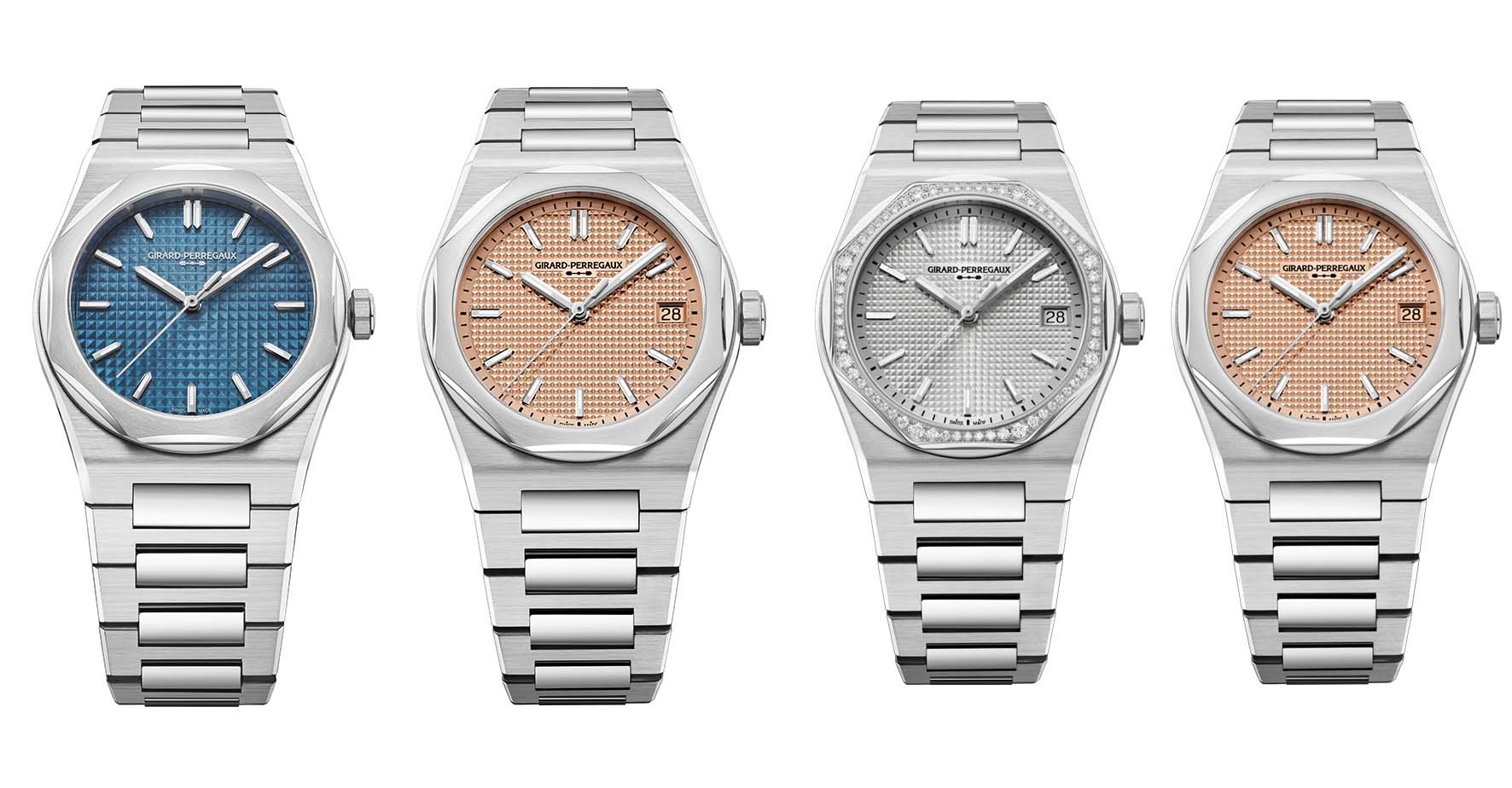
Girard-Perregaux expands the Laureato Fifty collection with four new 39 mm and 36 mm steel models, introducing a blue enamel dial for the first time in the line’s history. The new additions also include new variants with an 18-carat gold dial and a version with a diamond-set bezel, all powered by the GP4800 in-house automatic calibre.
In 2025, the Laureato reached the milestone of 50 years, an anniversary celebrated through the Laureato Fiftycollection, created to reinterpret one of the Maison’s most iconic models whilst keeping its aesthetic identity intact. We had already explored the first celebratory interpretation of the model in our article dedicated to the Girard-Perregaux Laureato FIFTY Limited Edition, a model that introduced some of the stylistic elements now revisited and evolved in the new versions.
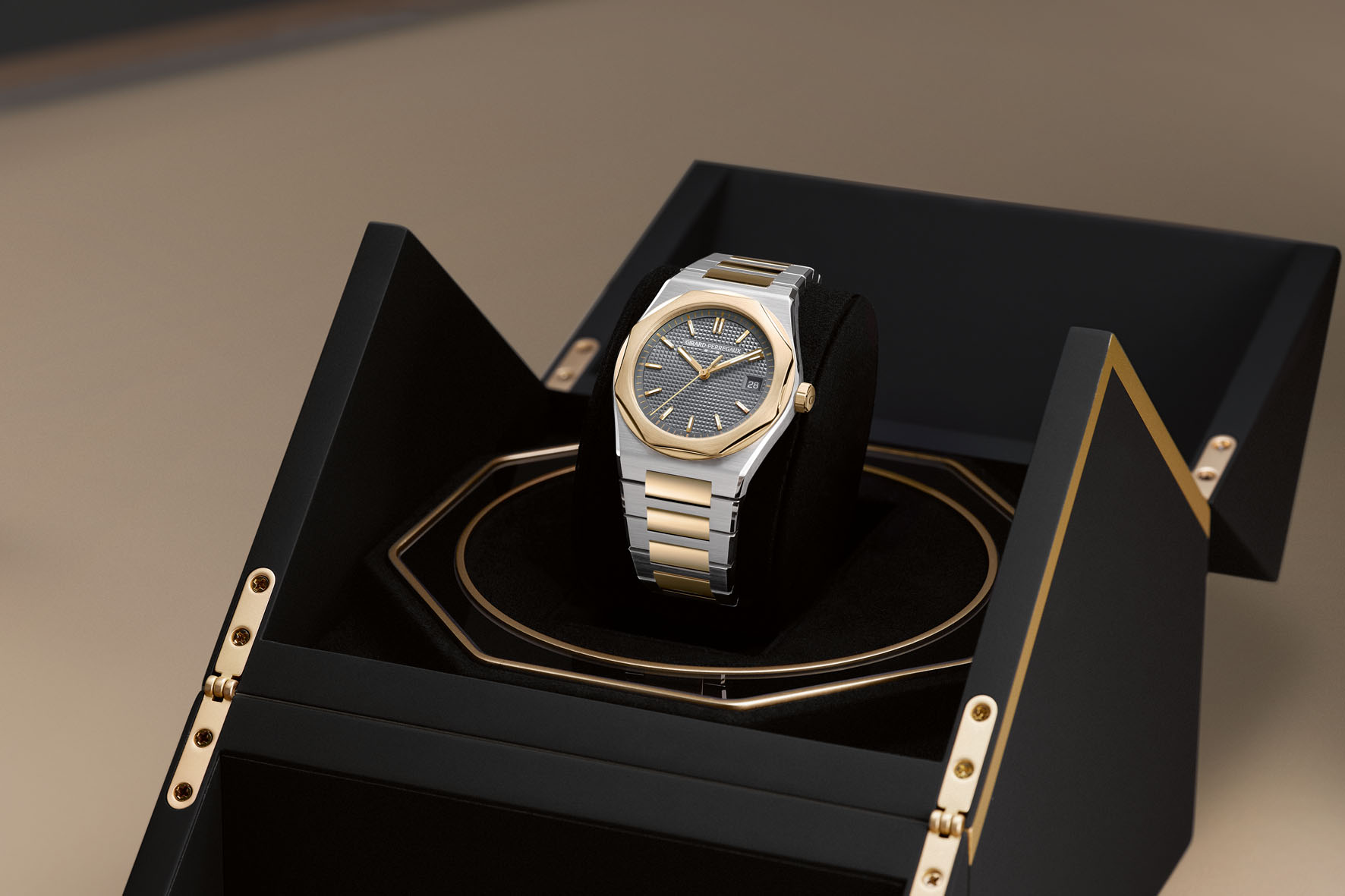
For 2026, the La Chaux-de-Fonds-based manufacture continues to develop this direction through new proportions, a focus on comfort, and dials featuring precious materials such as gold or artisanal finishes like enamel, rather than relying on steel or a combination of steel and gold. In terms of the movement, the oscillating weight of the GP4800 calibre is in rose gold rather than yellow gold as in the 2025 Laureato Fifty, and the bridge is also in rose gold rather than steel.
More than just a celebratory collection, the Laureato Fifty represents a more sophisticated take on one of the most recognisable elegant sports watches in contemporary haute horlogerie.
GIRARD-PERREGAUX LAUREATO FIFTY 39 MM
Let’s start with the two new 39 mm models, a size introduced with the Laureato Fifty celebrating the brand’s 50th anniversary and which has quickly become familiar to fans of the collection.
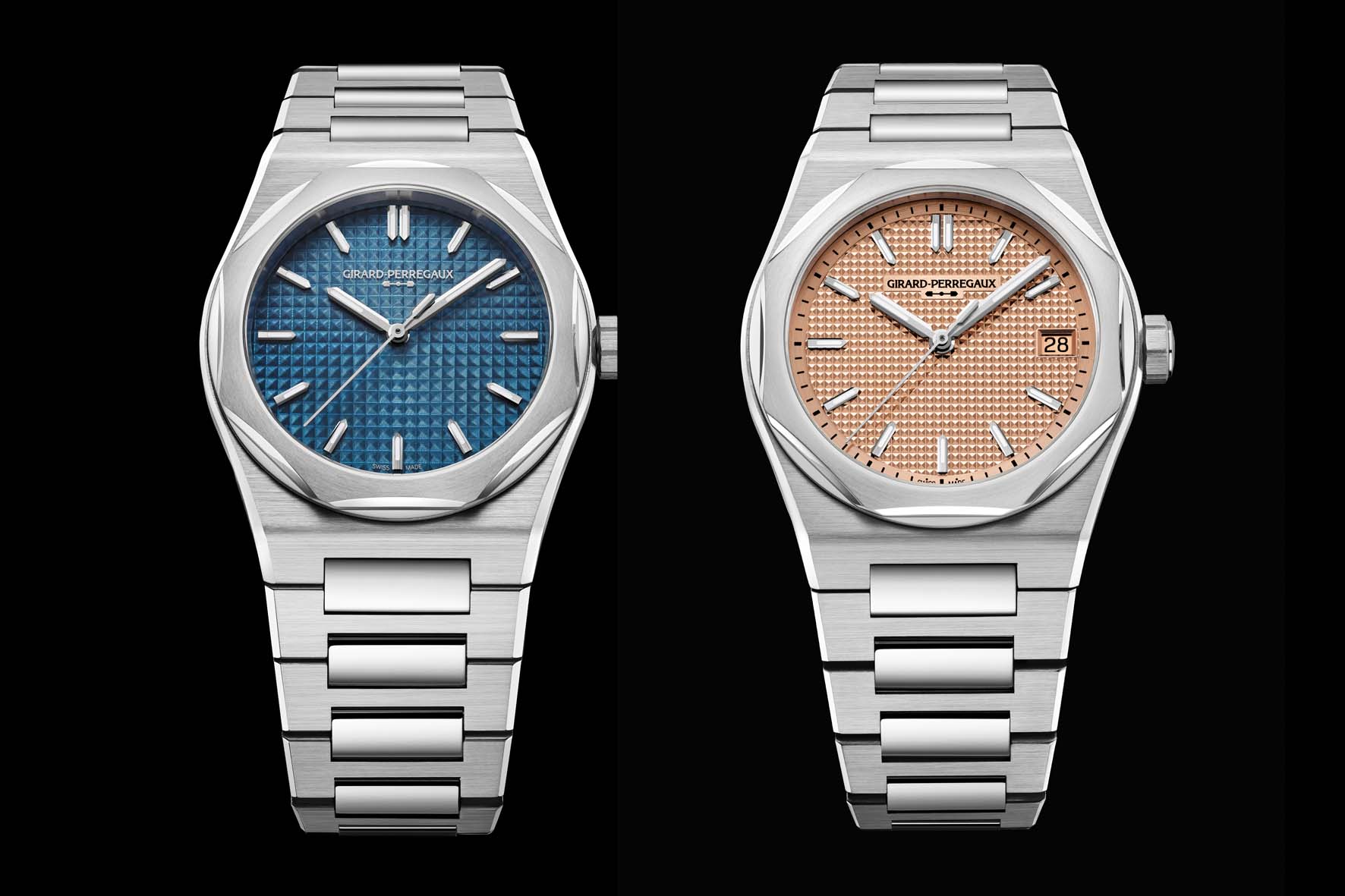
For both versions, Girard-Perregaux uses steel for both the case and the integrated bracelet, alternating polished and satin-finished surfaces that enhance the geometric interplay of the design. The distinctive octagonal bezel, a stylistic signature of the Laureato, features the new, more sloping bevel introduced in the Fifty line. The upper surface has a circular satin finish, whilst the polished ring beneath creates a sense of depth that further emphasises its presence on the wrist.
The dimensions remain exceptionally well balanced: 39 mm in diameter and 9.8 mm thick, a combination that ensures comfort and everyday versatility. The case also features anti-reflective sapphire crystal, a sapphire crystal casebackand water resistance up to 150 metres (15 ATM).
THE DIALS OF THE GIRARD-PERREGAUX LAUREATO FIFTY 39 MM
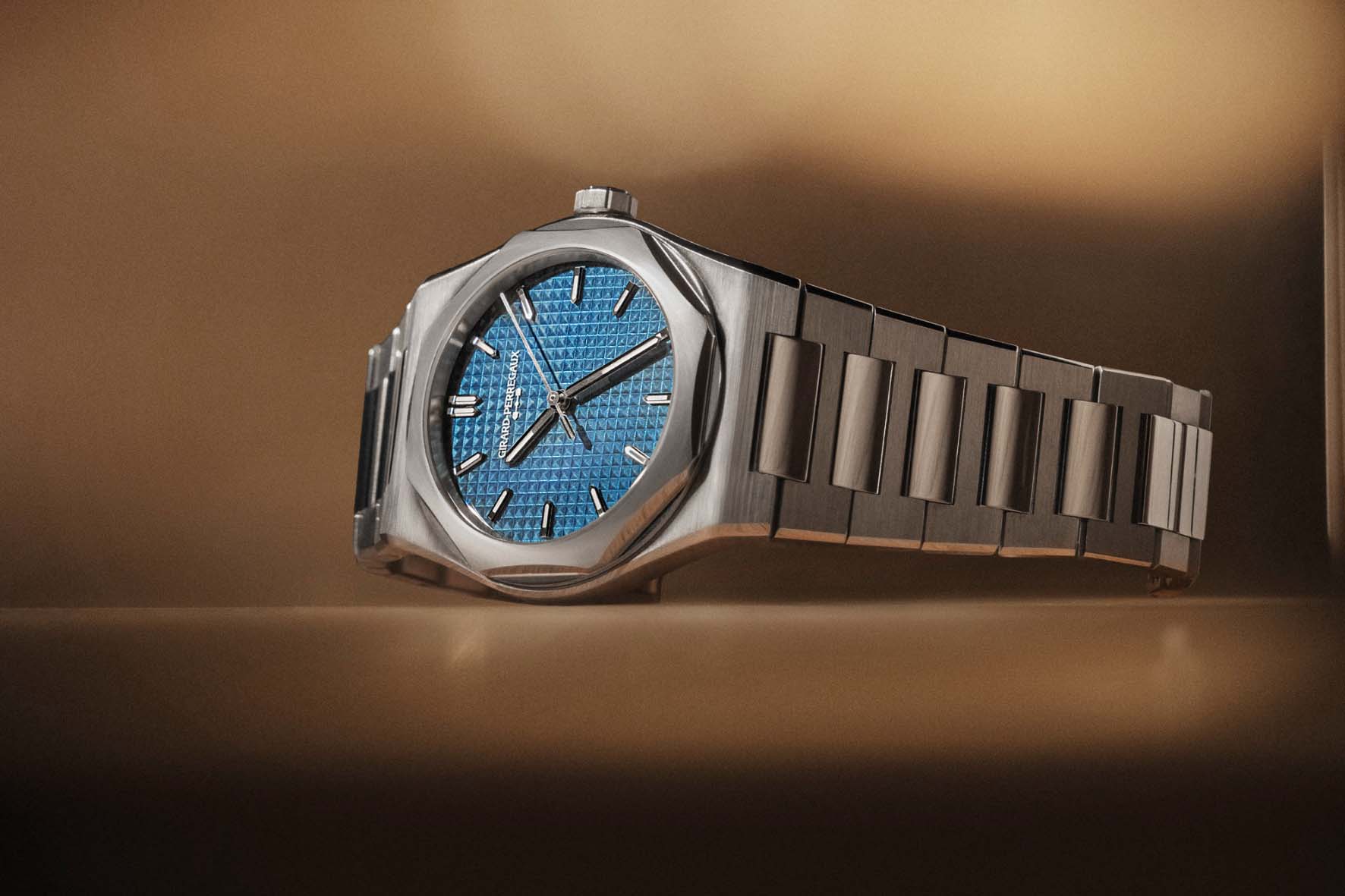
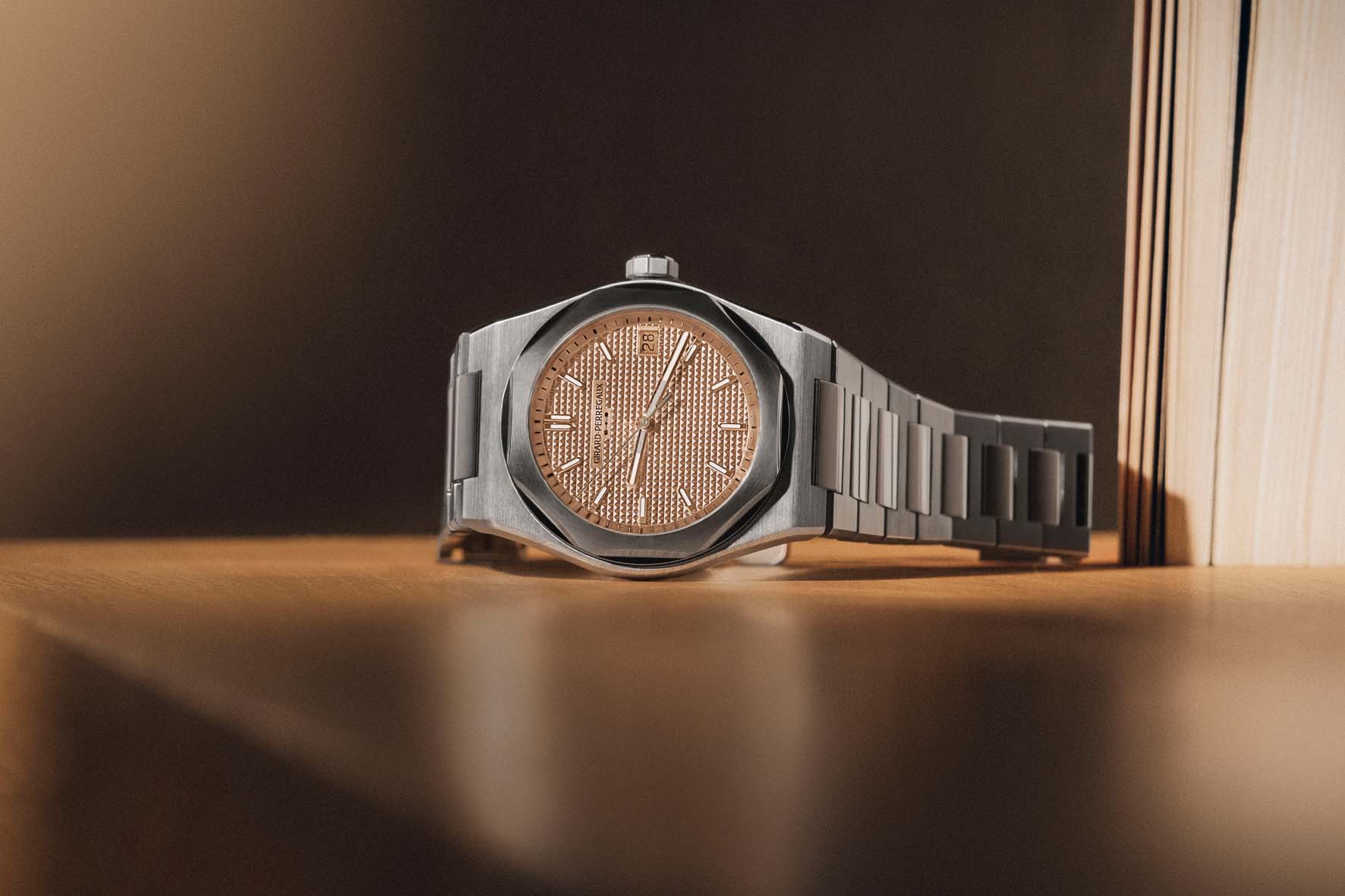
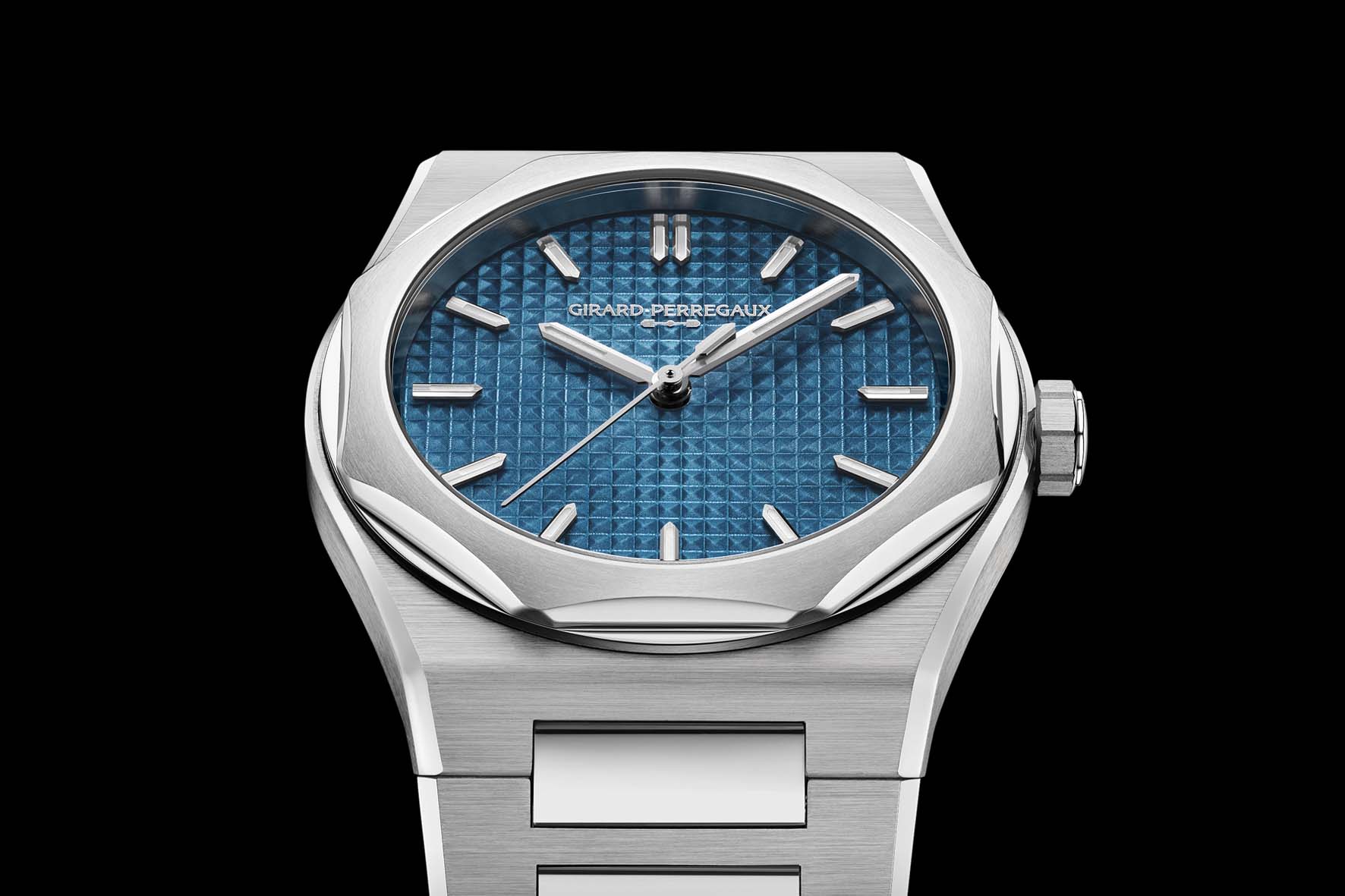
One of the most interesting features of the new 39 mm models is the dial. Girard-Perregaux introduces two profoundly different interpretations: a version with blue enamel applied to the “Clous de Paris” motif and a second with an 18-carat gold dial.
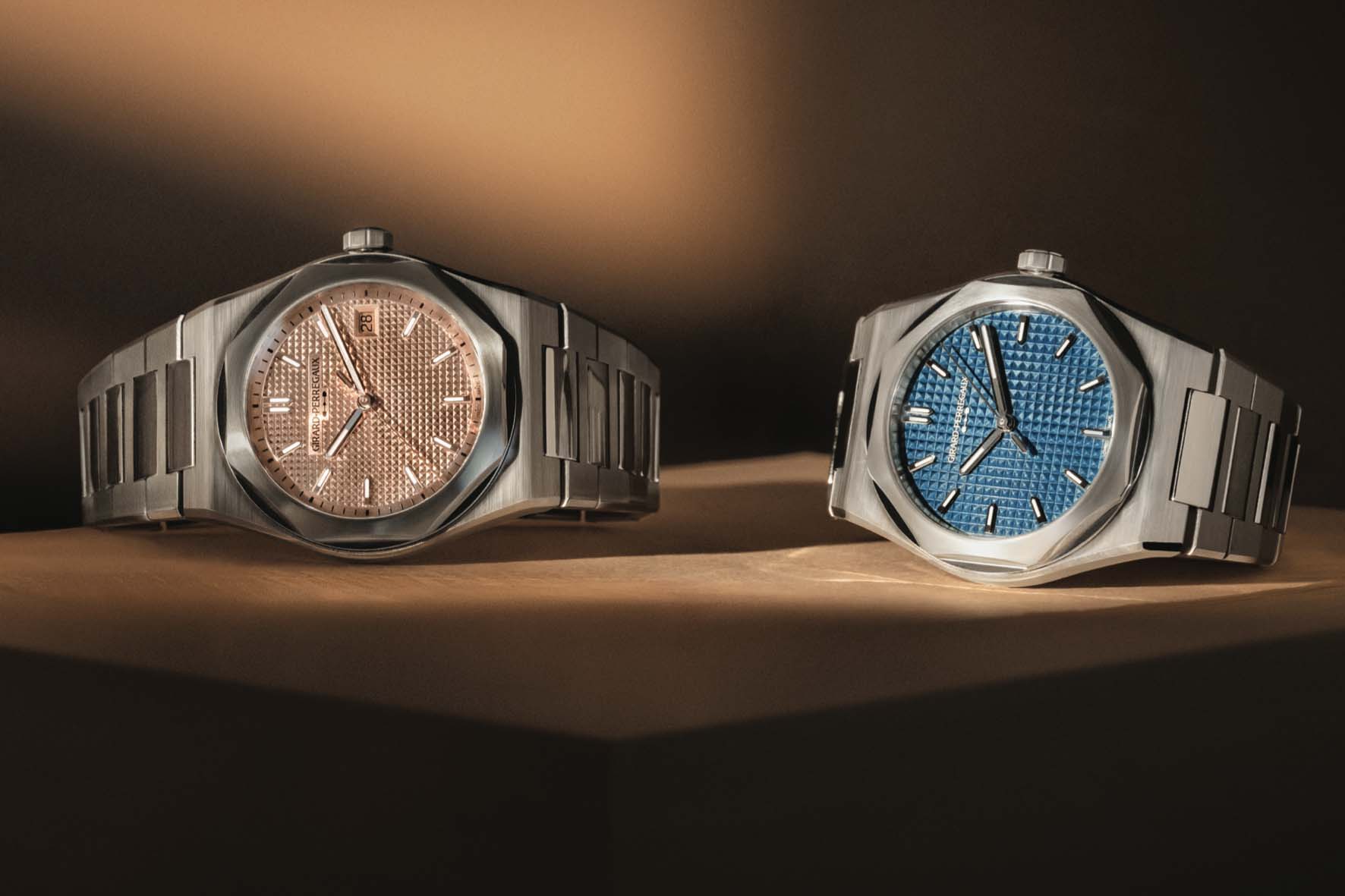
The blue enamel version represents a complete novelty for the Laureato collection. The Maison’s craftsmen undertook a particularly complex process to adapt the enamel to the surface’s characteristic three-dimensional pattern. Entirely produced in-house, this technique creates effects of depth, transparency and continuous chromatic variations that shift with the light.
The version with an 18-carat gold dial, on the other hand, achieves the same depth through a different interplay of light. The interaction between the “Clous de Paris” texture and the surface creates a continuous transition between warm reflections, shadows and luminosity.
The baton hands and 18-carat white gold hour markers ensure legibility thanks to the presence of blue-emitting luminescent material. It is worth exploring the work carried out by Girard-Perregaux on both the enamel and gold dials, given the high degree of craftsmanship and exclusivity that characterise them.
THE FINISHES OF THE ENAMEL DIALS
Specifically, there are three types of enamel: translucent, opalescent and opaque. In the case of the Laureato 39 mm, translucent enamel is used, so that the underlying “Clous de Paris” pattern is visible through the blue colour of the enamel.
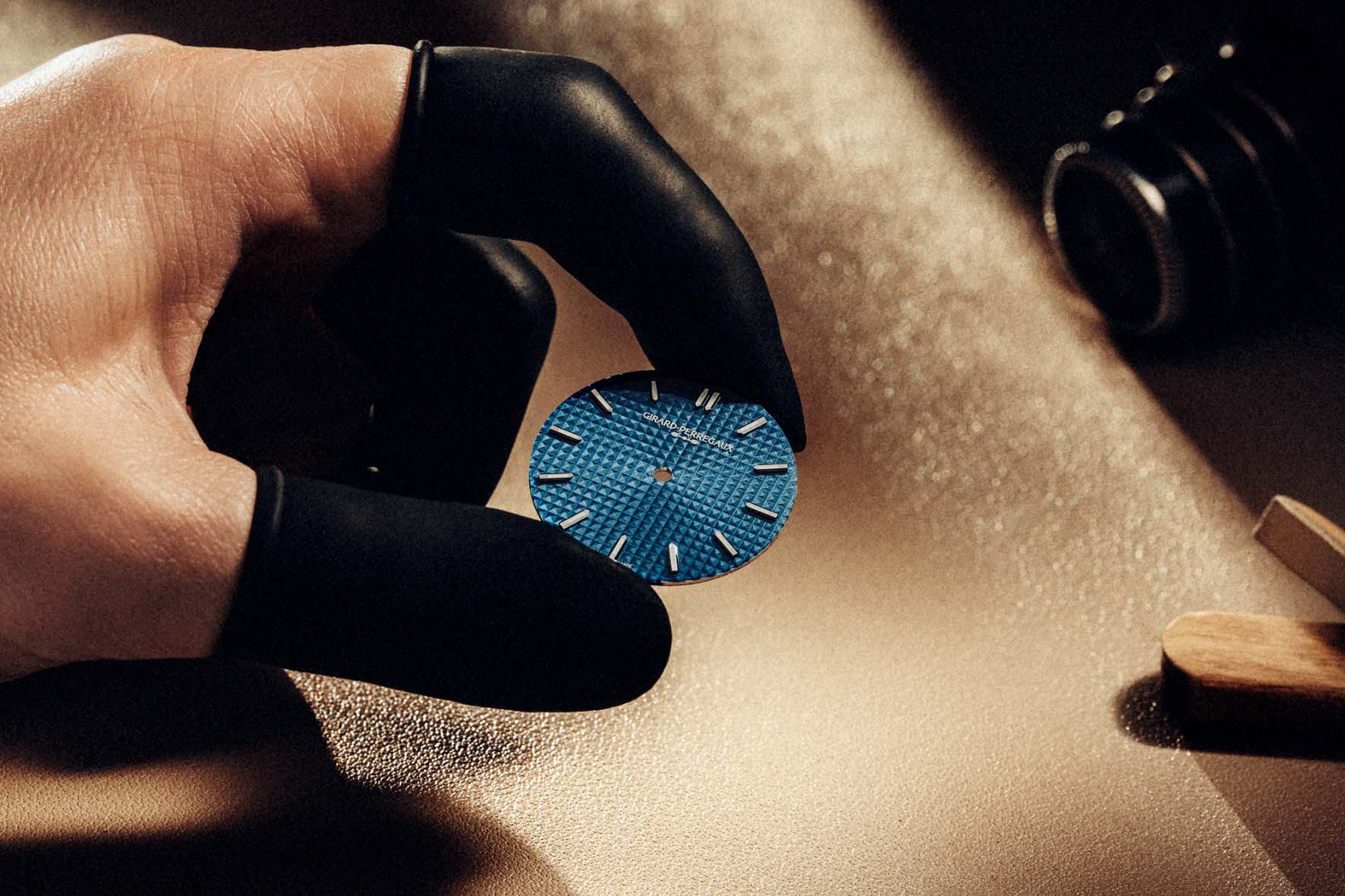
Enamelling involves firing the enamel powder at high temperatures (around 800°C) to melt it and make it adhere to the surface to which it has been applied, in this case the dial. At least five firings are required to achieve a perfectly glossy and intense colour. The complexity of enamelling lies in the repetition of the firings, which can cause cracks, air bubbles or colour variations.
Mastering every stage of the process requires meticulous attention to detail, and a certain amount of waste is inevitable. From the production of the enamel powder to the final touches on the dial, this art form is carried out by hand by master enamellers. As there are no formal schools, knowledge and expertise are passed down from experienced craftsmen to younger generations.
Furthermore, enamelling is not simply a matter of applying and firing enamel onto a watch component. It actually requires significant preparatory work to achieve the desired colour. Several tests are needed to check how the colour reacts with the silver dial plate after firing. Once the colour has been determined, numerous challenges must be overcome to achieve a perfect result.
The dials are enamelled ‘on both sides’, i.e. on the reverse as well. This reduces the risk of warping that could cause cracks during the cooling process as soon as they come out of the kiln. The enamel is then applied to the front of the dial, made of silver, which has previously been decorated with the ‘Clous de Paris’ stamped pattern that will stand out once enamelled.
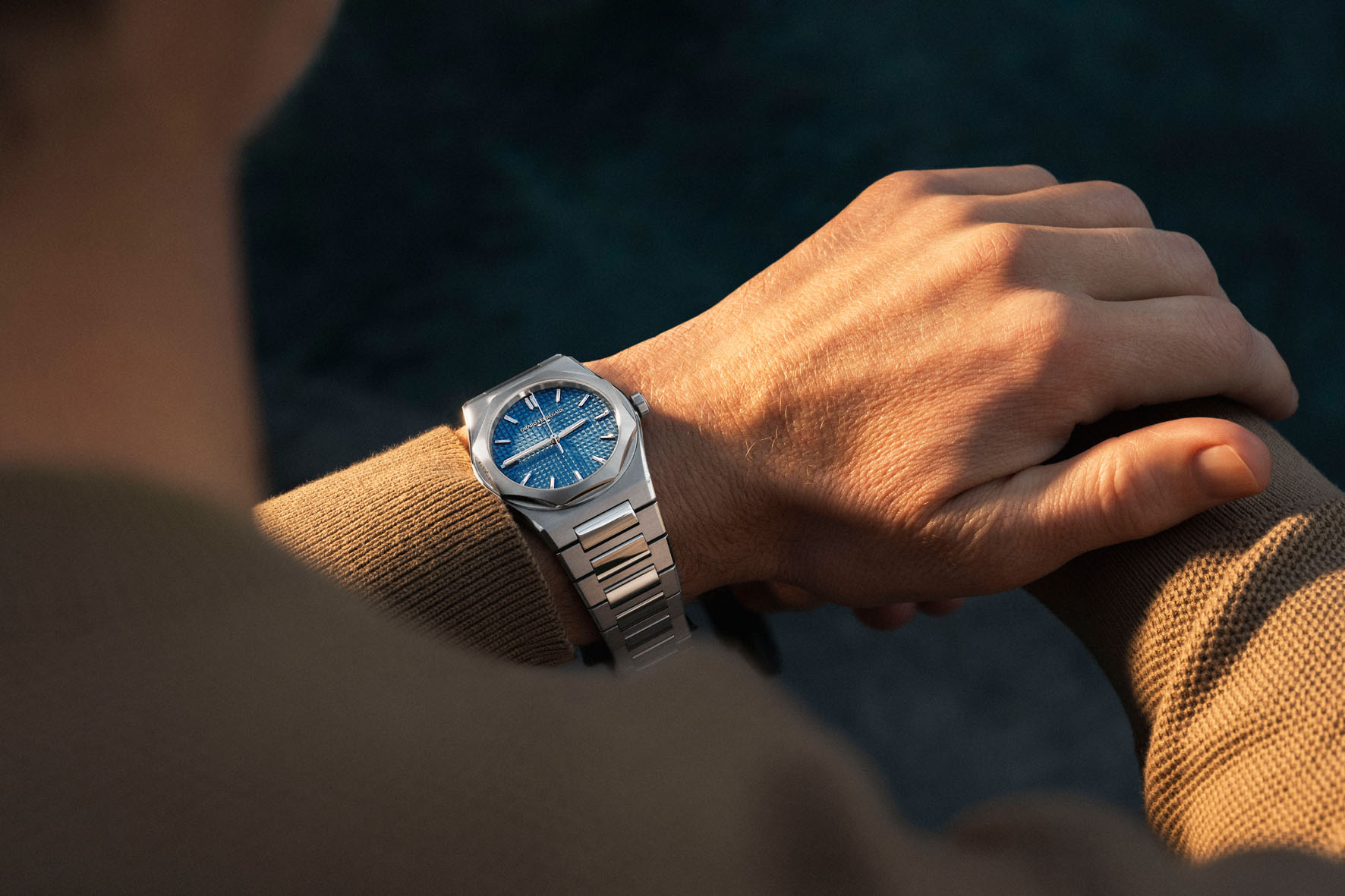
Enamelling remains an extremely demanding process due to the unpredictability of the firing and the subsequent stages, manual polishing, drilling, applying the enamel logo with a stamp, and manually fitting the hour markers and hands, each of which carries the risk of damaging or breaking the dial. In fact, out of every 10 dials produced, only 3 or 4 generally pass final quality control and can ultimately be used.
THE MANUFACTURE OF GOLD DIALS
The same attention to craftsmanship is applied to the creation of gold dials. The traditional “Clous de Paris” pattern is also retained on these, created through stamping, a technique that involves pressing a raw base to give it a specific shape.
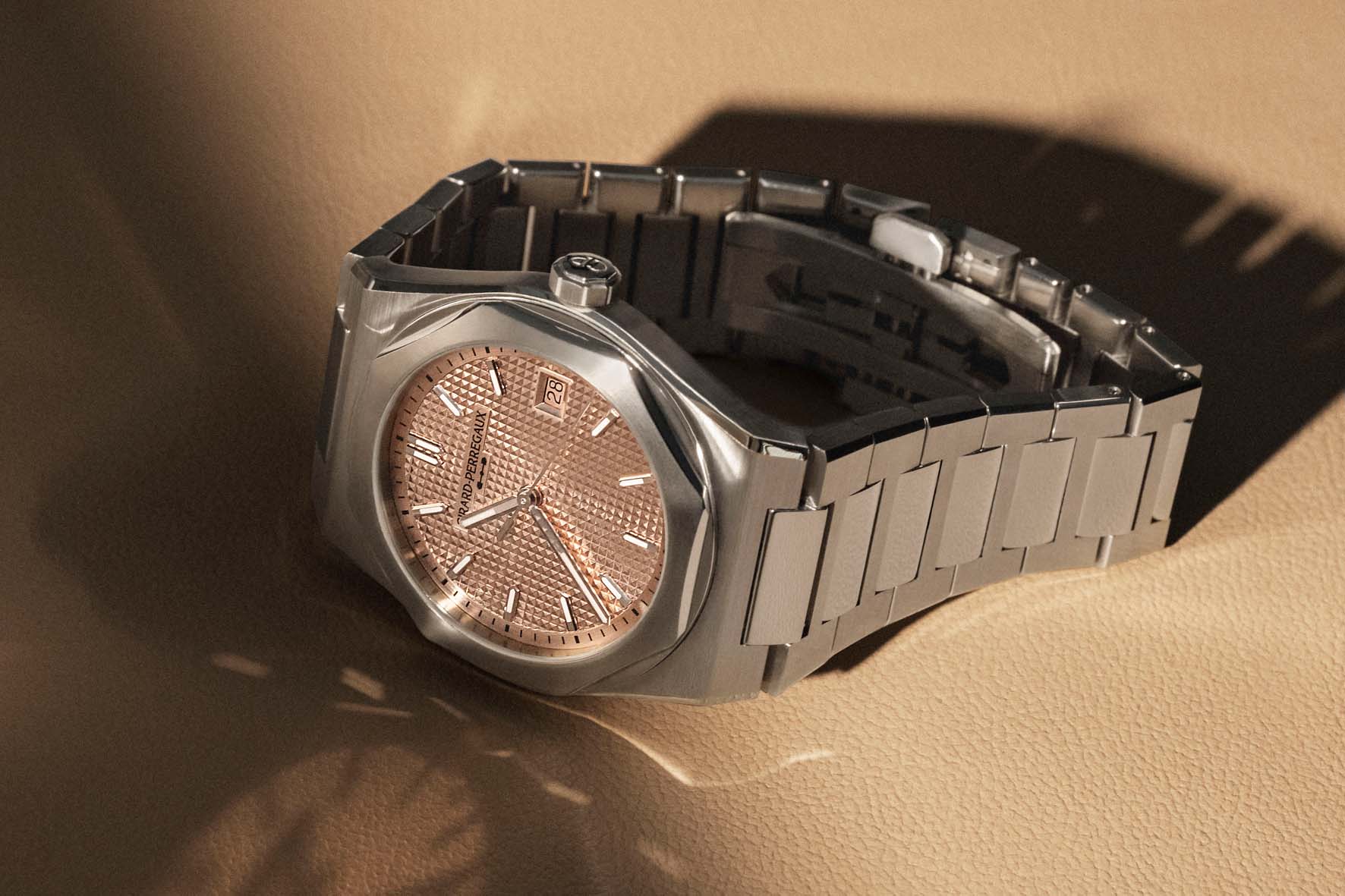
For the new Laureato Fifty models with gold dials, Girard-Perregaux first produces a machine-finished dial. This is then used as a template to create a ‘negative’ of the final dial, which serves as the mould into which the production dials are pressed.
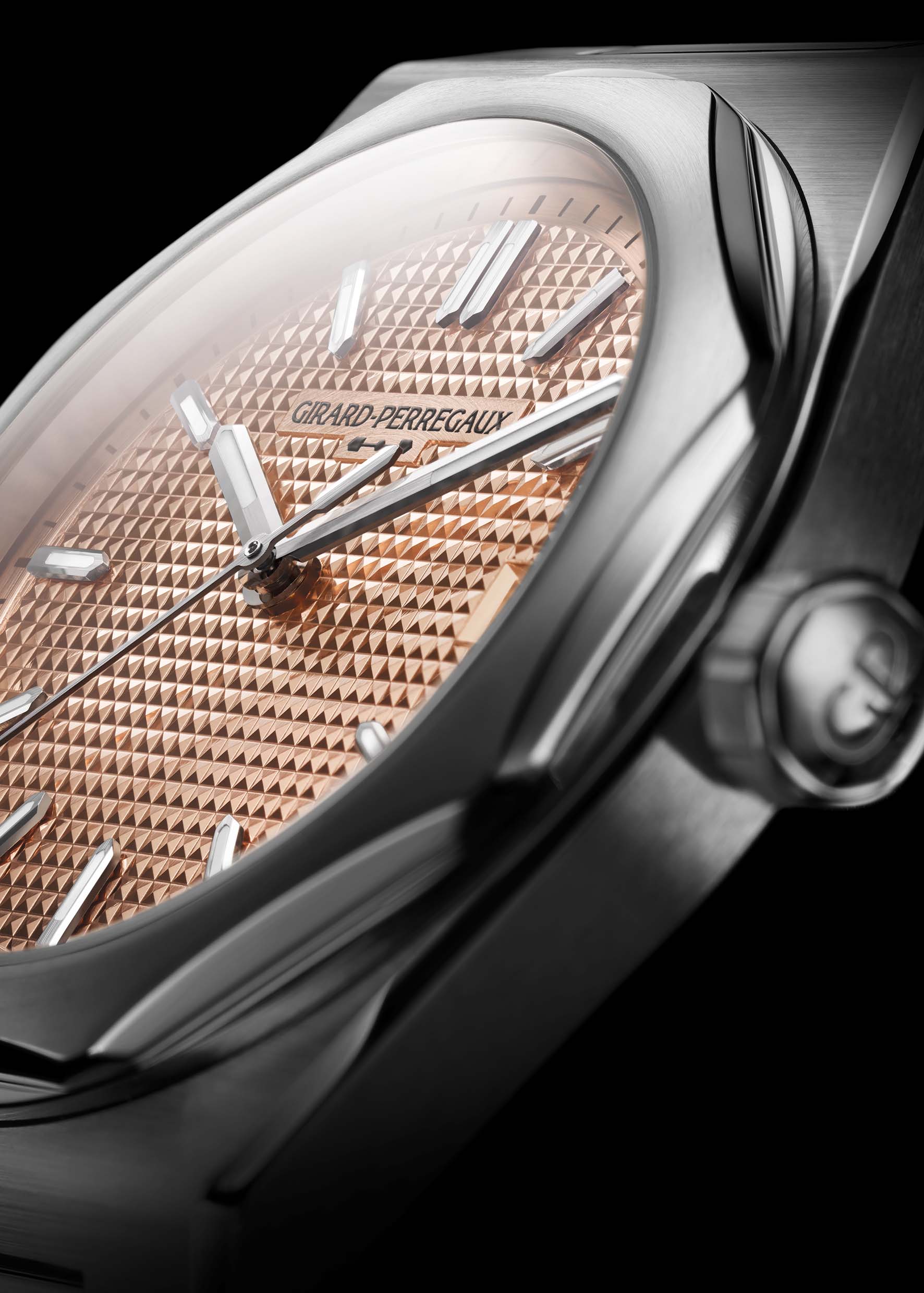
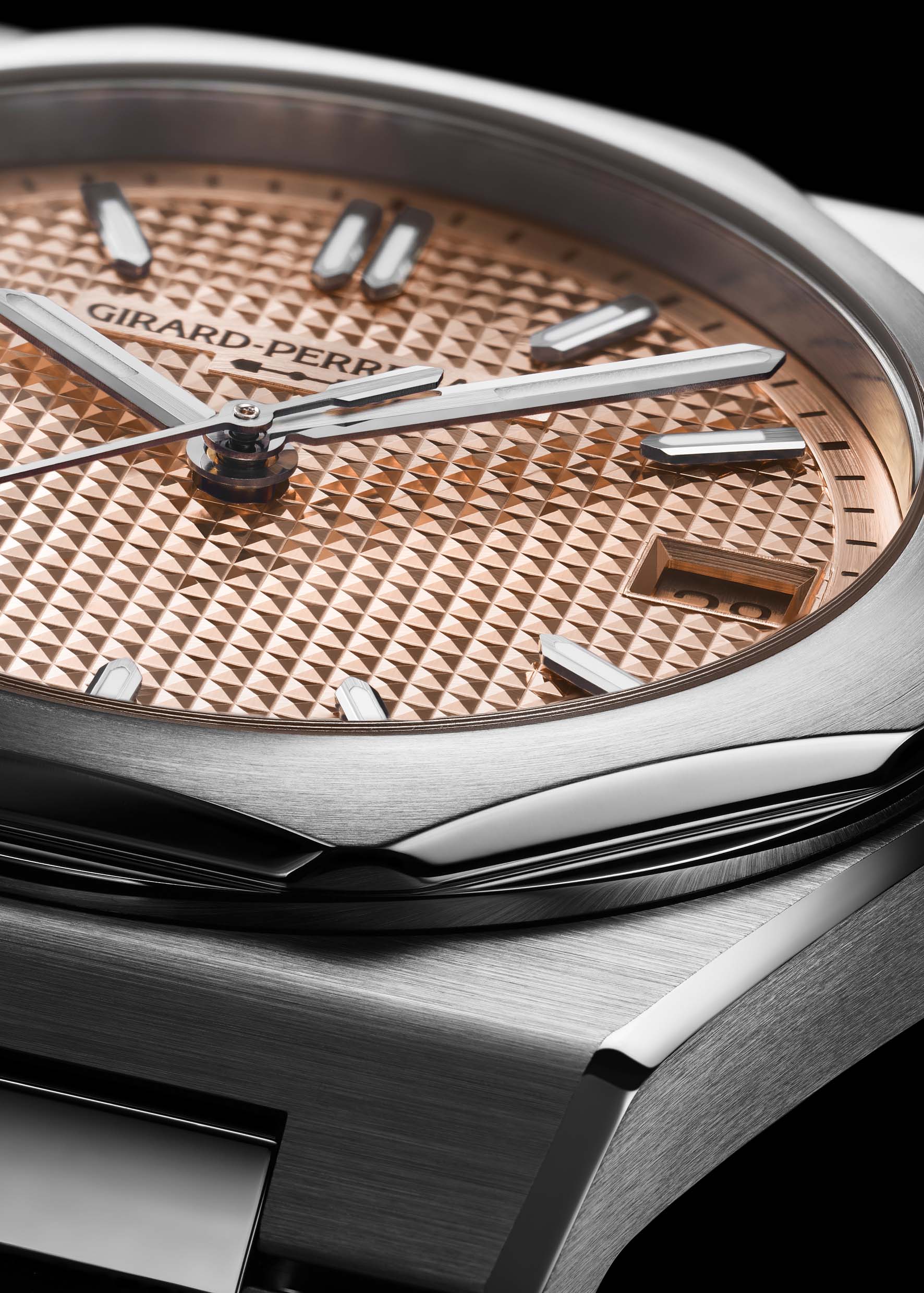
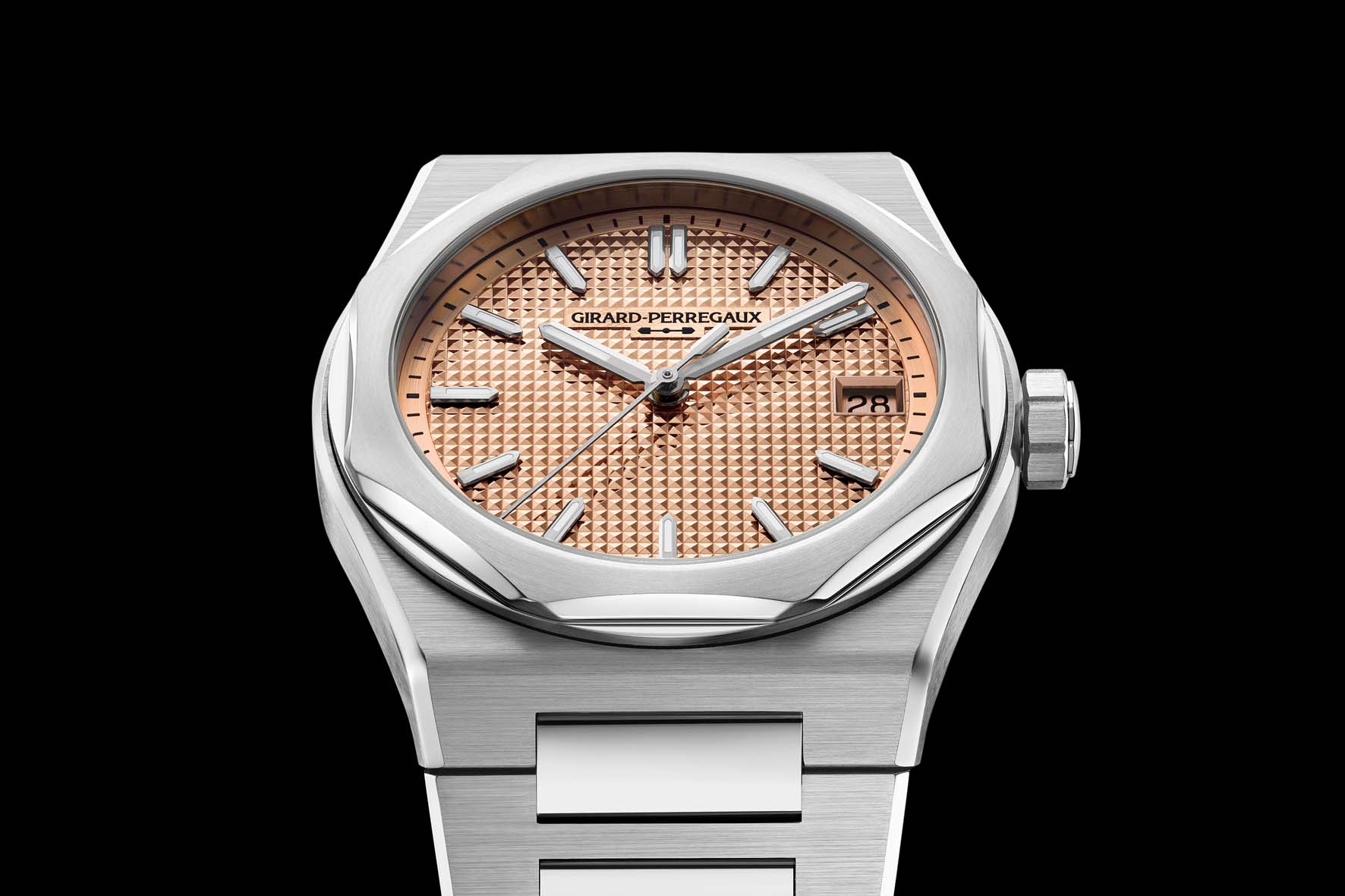
Depending on how the initial reference dial was made and reproduced as a “negative” on the mould, different effects are achieved. The dimensions of the Clous de Paris vary, adapting to each model: they measure 1.15 mm in the blue enamel version and are reduced to 0.8 mm in the 39 mm solid gold version and to 0.7 mm in both 36 mm models. The moulding tool, based on the machine-finished “negative” dials, produces a glossy, mirror-like effect, as seen on the gold dial of the 39 mm and 36 mm Laureato models.
THE TWO GIRARD-PERREGAUX LAUREATO FIFTY 36 MM
The two 36 mm models offer a more compact and proportionate take on the Laureato, a size that many collectors have always appreciated for its elegance, versatility and fidelity to the spirit of the original design.
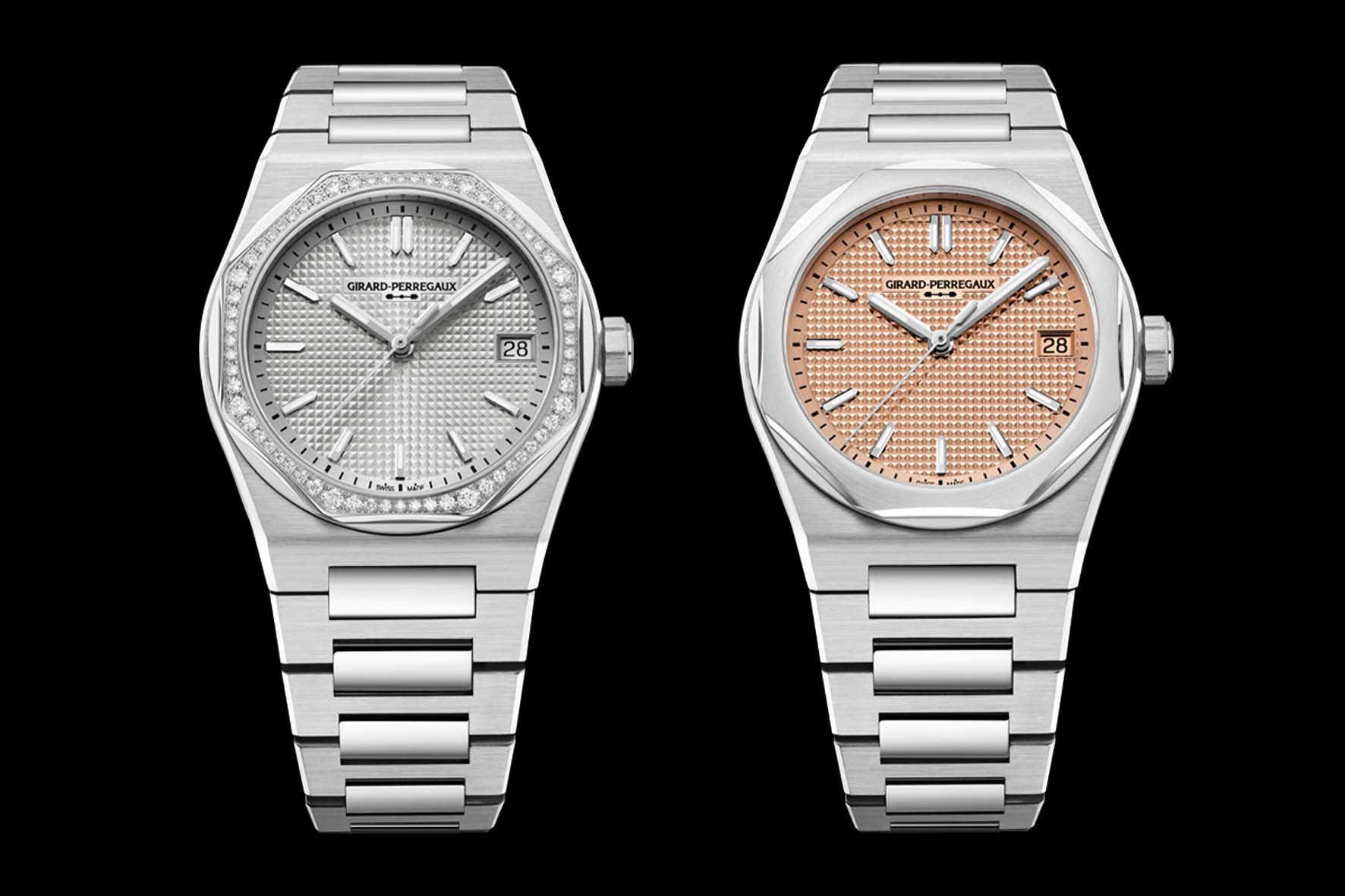
One of the two versions features an 18-carat gold dial, maintaining the same aesthetic refinement as the 39 mm models but with more compact proportions that further emphasise the purity of the design. This is a perfect size for both men’s and women’s wrists, designed for those who prefer smaller diameters that respond to the growing demand for proportions reminiscent of vintage watches.
The other version, however, features a silvered “Clous de Paris” mirror-finish dial, paired with a bezel set with 64 brilliant-cut diamonds totalling 0.55 carats.
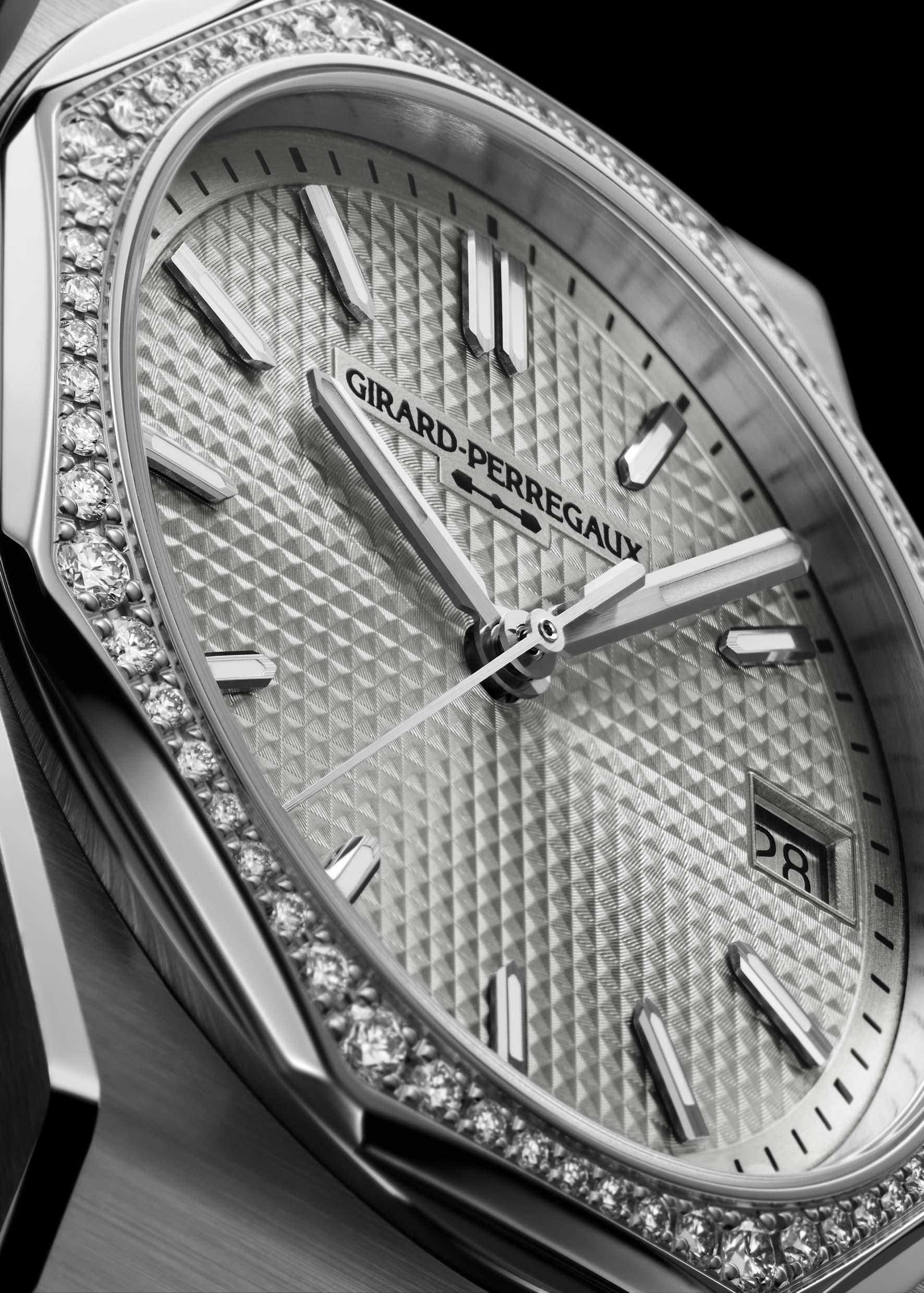
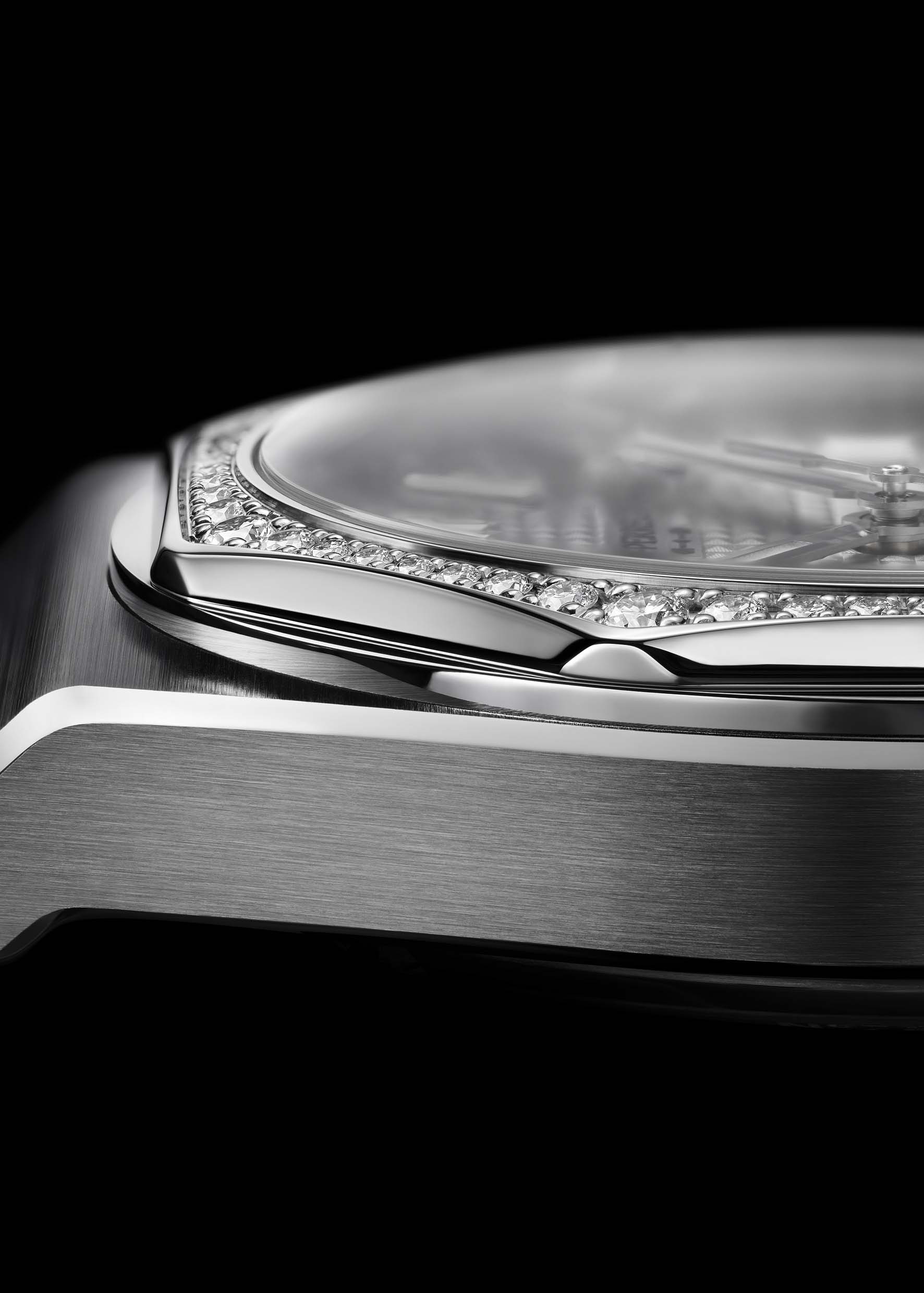
All four models retain the classic integrated bracelet with H-shaped links, completed by a triple folding clasp with micro-adjustment of up to 4 mm, a solution designed to further enhance comfort on the wrist.
THE GP4800 CALIBRE: ARCHITECTURE, BALANCE AND FINISHES
Powering all the new models is the GP4800 in-house automatic calibre, developed, assembled and finished entirely in-house by Girard-Perregaux. The movement operates at 28,800 vibrations per hour (4 Hz) and offers a 60-hour power reserve.
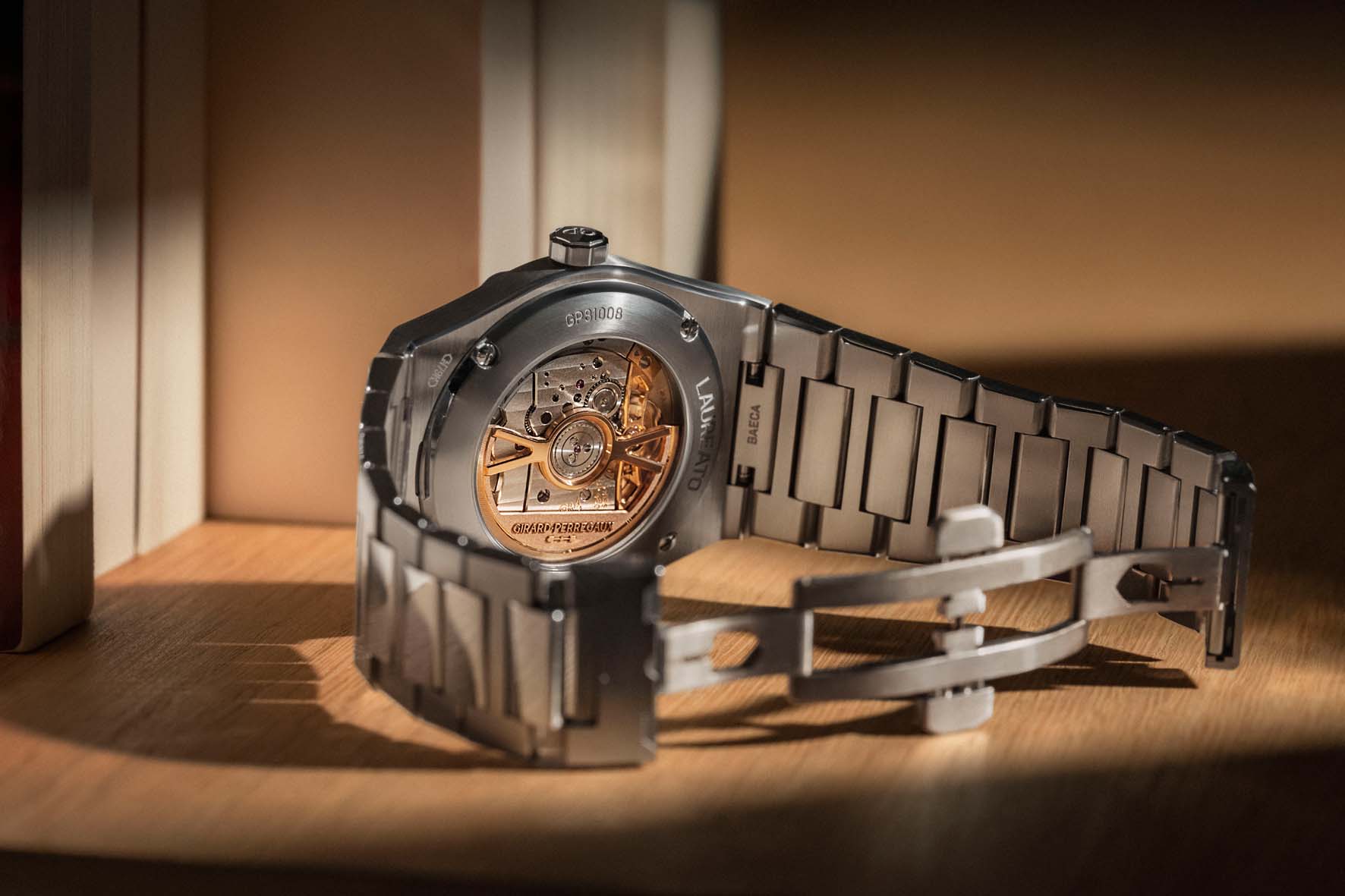
The movement’s architecture draws on the Three Bridges tradition, reinterpreting some of its construction principles through a contemporary lens. Visible through the sapphire caseback, the GP4800 also introduces a detail exclusive to this collection: a rose gold balance bridge, accompanied by an 18-carat rose gold oscillating weight, elements that help to enhance its visual depth and aesthetic identity.
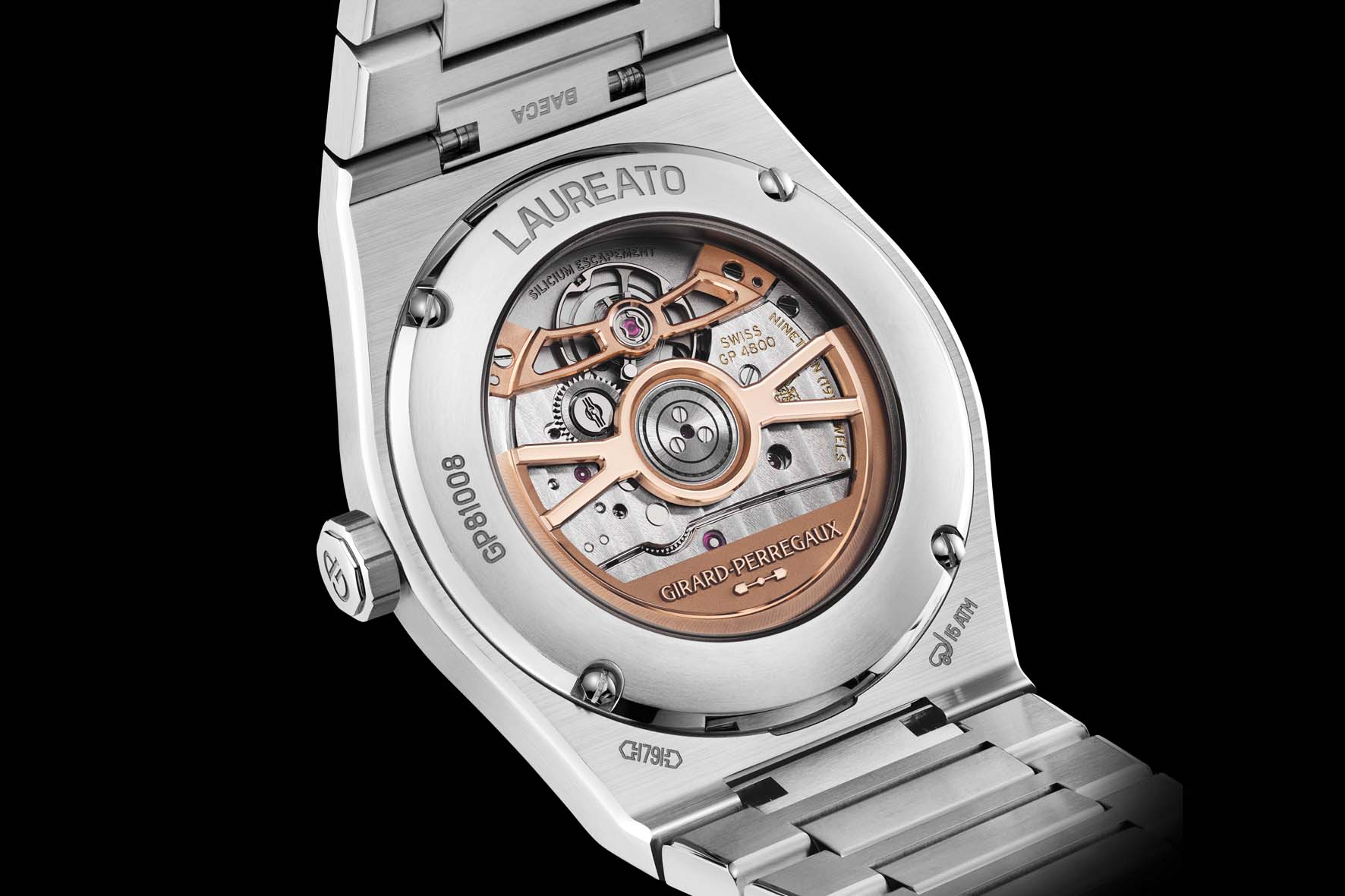
The movement also showcases various decorative finishes, including Côtes de Genève, anglage and satin-brushing, reflecting Girard-Perregaux’s attention to craftsmanship and approach to fine watchmaking.
PRICES, AVAILABILITY AND FINAL THOUGHTS
The 39 mm model with a blue enamel dial is priced at €. 24,400, whilst the 36 mm and 39 mm versions with a rose gold dial are priced at €. 22,900. The 36 mm variant with a diamond-set bezel costs €. 24,100.
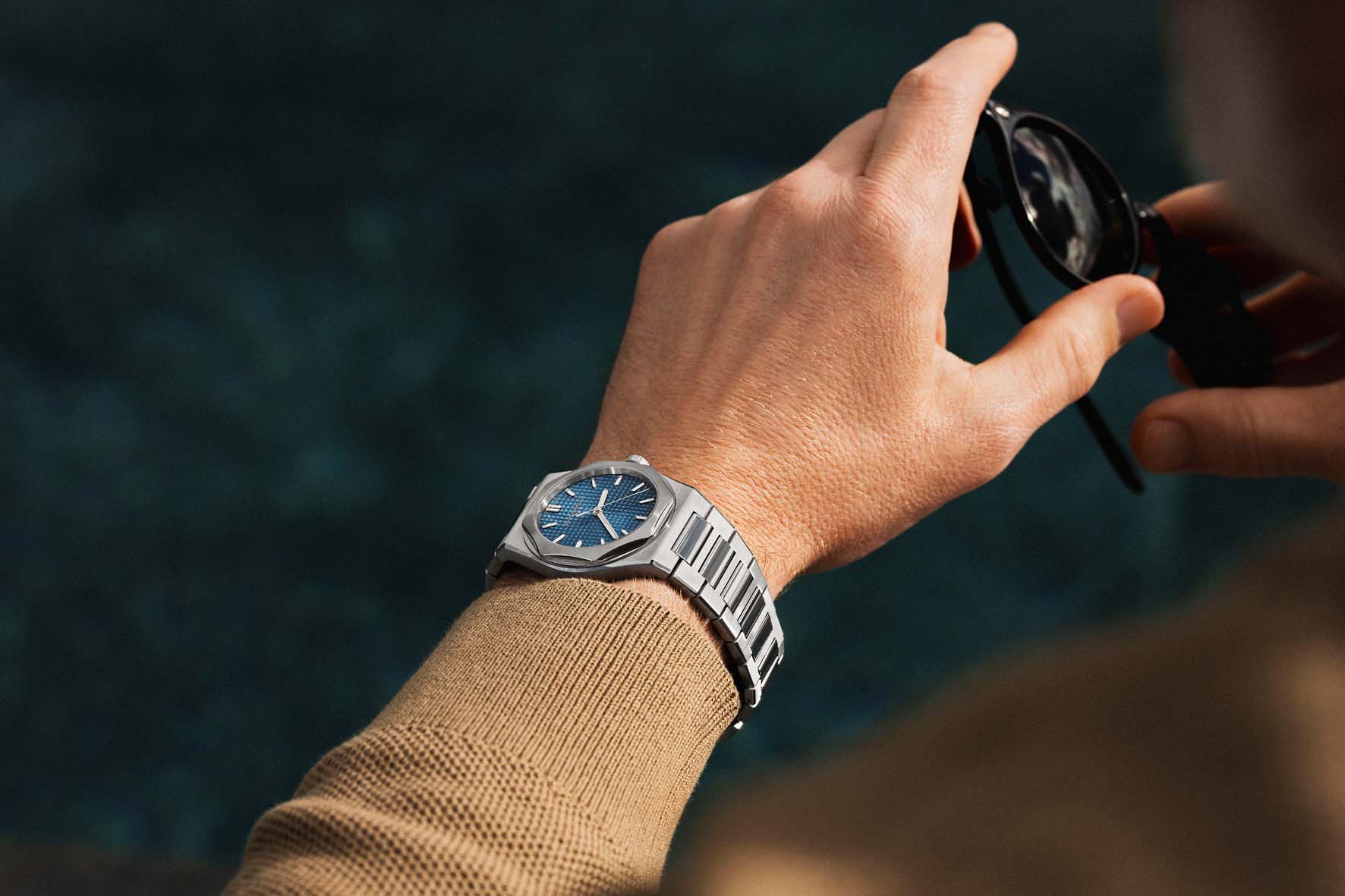
For over fifty years, the Laureato has thrived on balance: clean lines, recognisable proportions and a personality that has never needed to chase trends. With the arrival of the first blue enamel in the collection and new 39 mm and 36 mm interpretations, Girard-Perregaux demonstrates once again how it is often the details that alter the character of a watch.
Rather than seeking to make an immediate impression, these new Laureato Fifty models seem designed to be discovered slowly, detail by detail.
By Davide Passoni