

Chronographs with so-called ‘Panda’ or ‘Reverse Panda’ dials have always been highly sought after by collectors. Whether they feature black sub-dials on a white dial or white sub-dials on a black dial, this type of configuration is popular, as Omega is well aware. Throughout its history, the Bienne-based brand has introduced several Speedmaster Moonwatch models featuring this type of dial, which is loved both for its aesthetic appeal and for making the information on the dial easy to read.
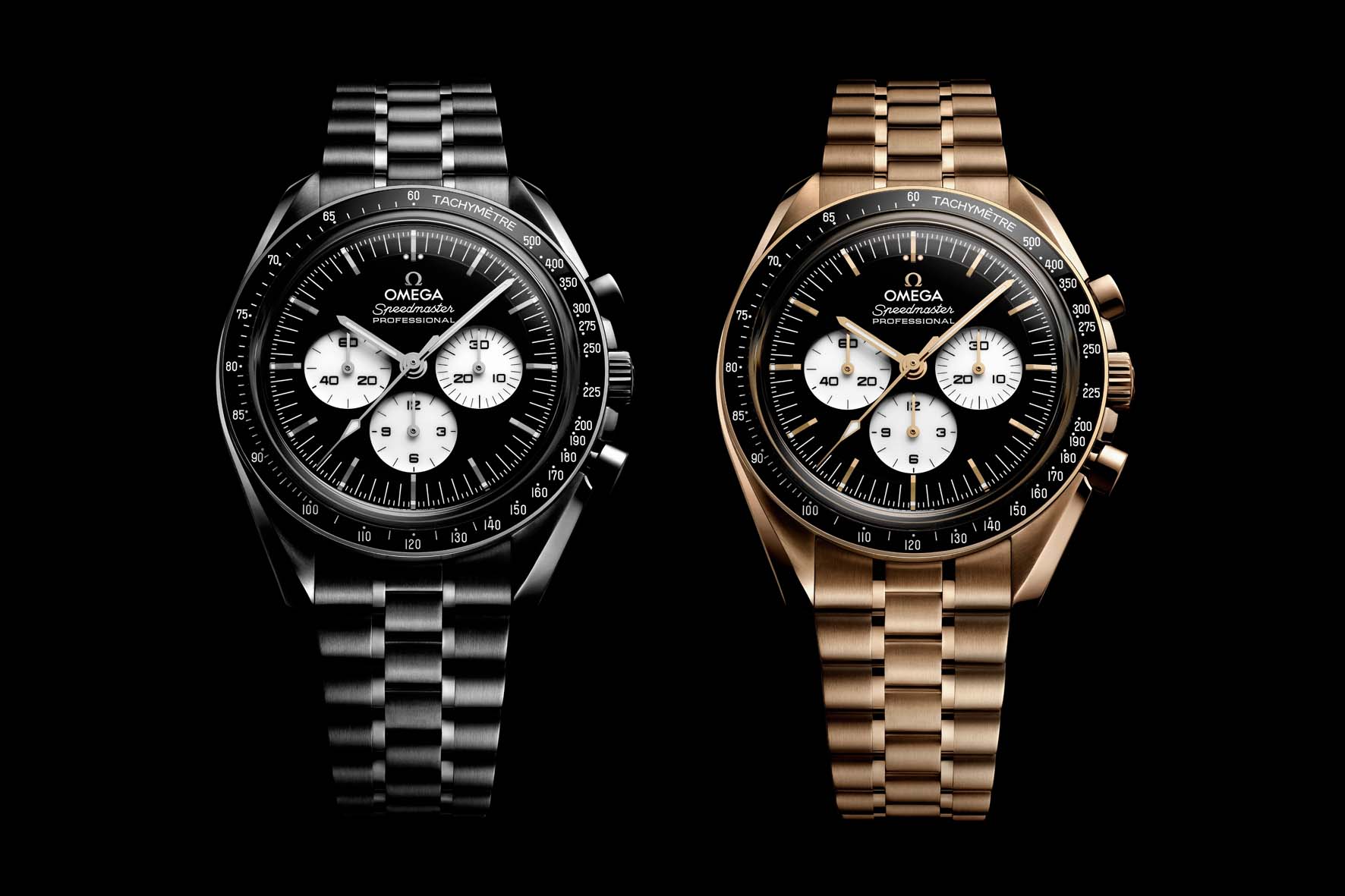
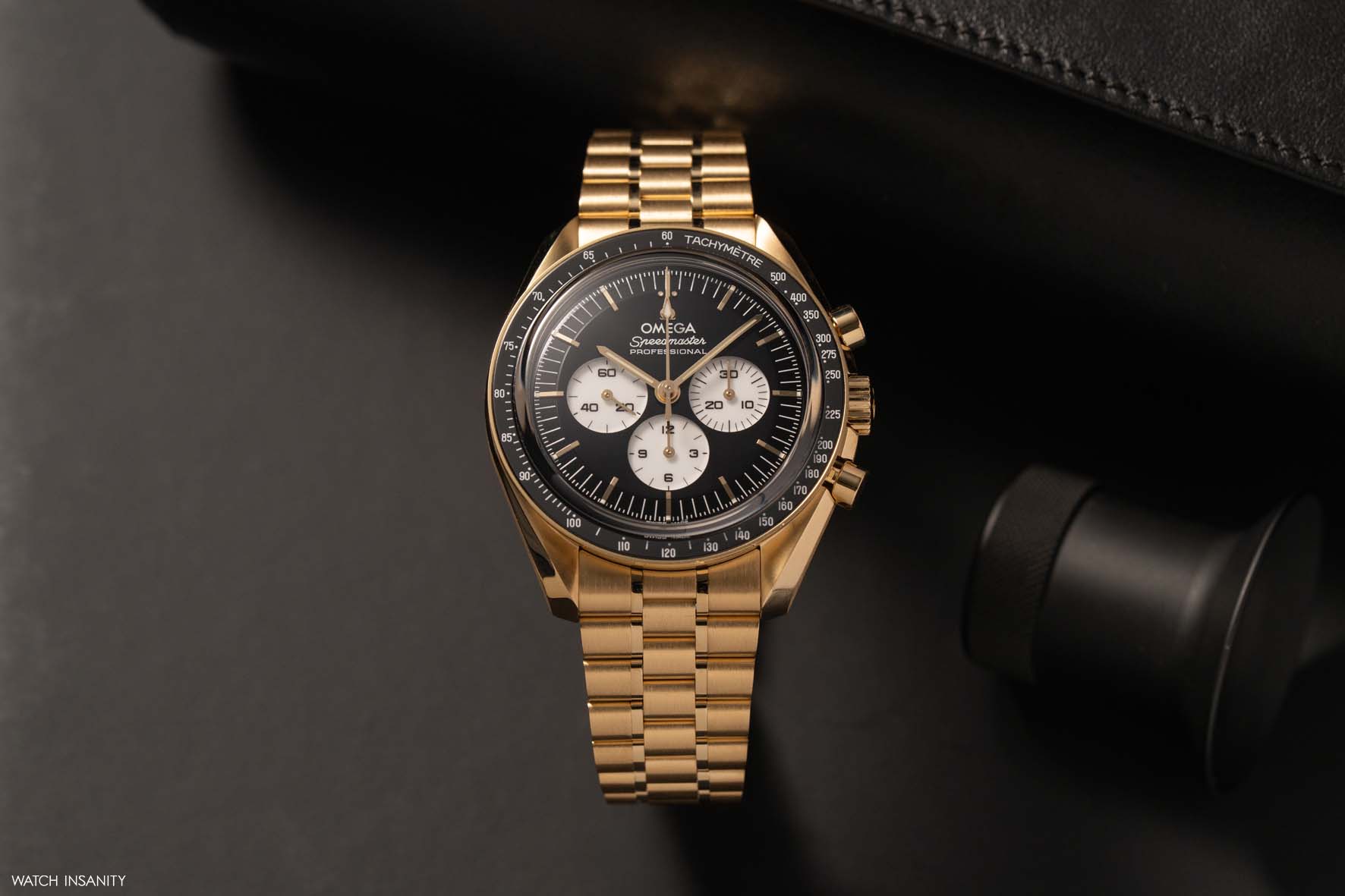
In early 2026, Omega launched two new Speedmaster Moonwatches in the ‘Reverse Panda’ configuration: one with a steel case and bracelet, and one with an 18-carat Moonshine gold case and bracelet. In the following article, we will focus on the latter model, detailing its features in terms of both materials and mechanics. We will also explore the rich ‘space’ heritage of the Speedmaster Moonwatch collection within the history of Omega and watchmaking.
THE SPEEDMASTER MOONWATCH AND THE ‘STEP’ DIAL
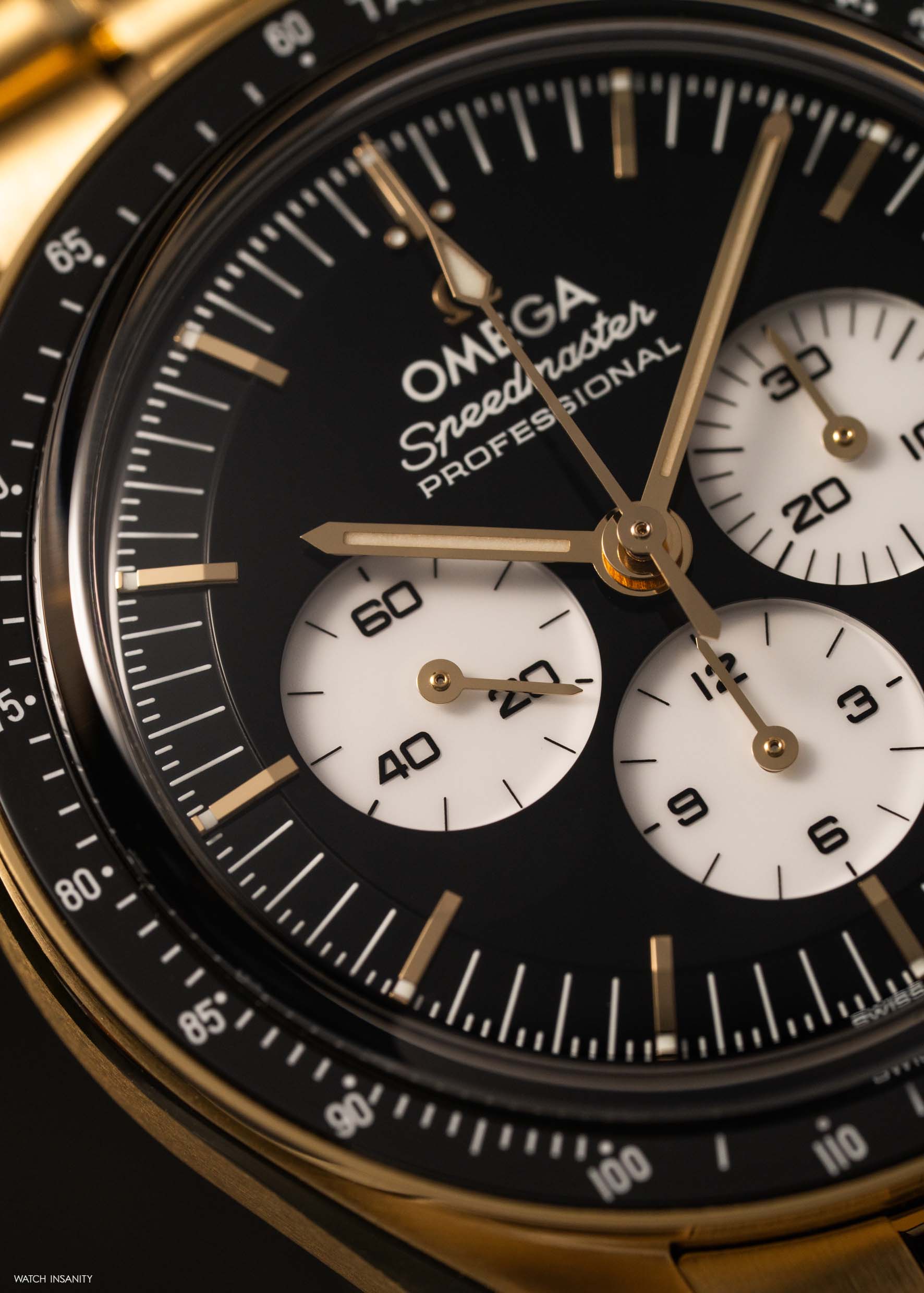
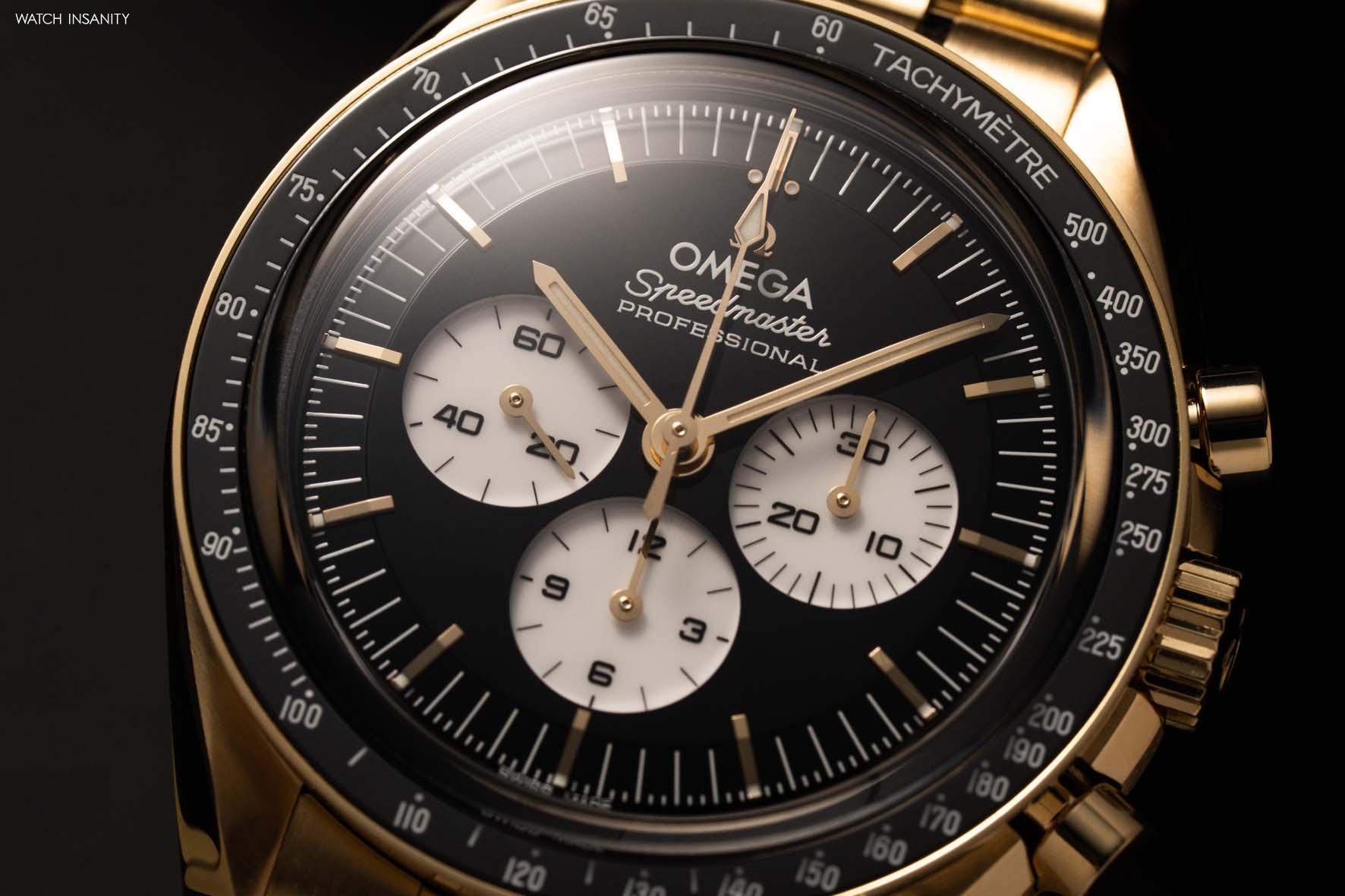
To discuss this recent edition of the Speedmaster Moonwatch, we must, of course, begin with the dial. In addition to its distinctive colour scheme, it stands out for being a so-called ‘step’ dial. This is a design in which the outer rim – specifically the area housing the minute track – is slightly lower than the central section, thus creating a step.
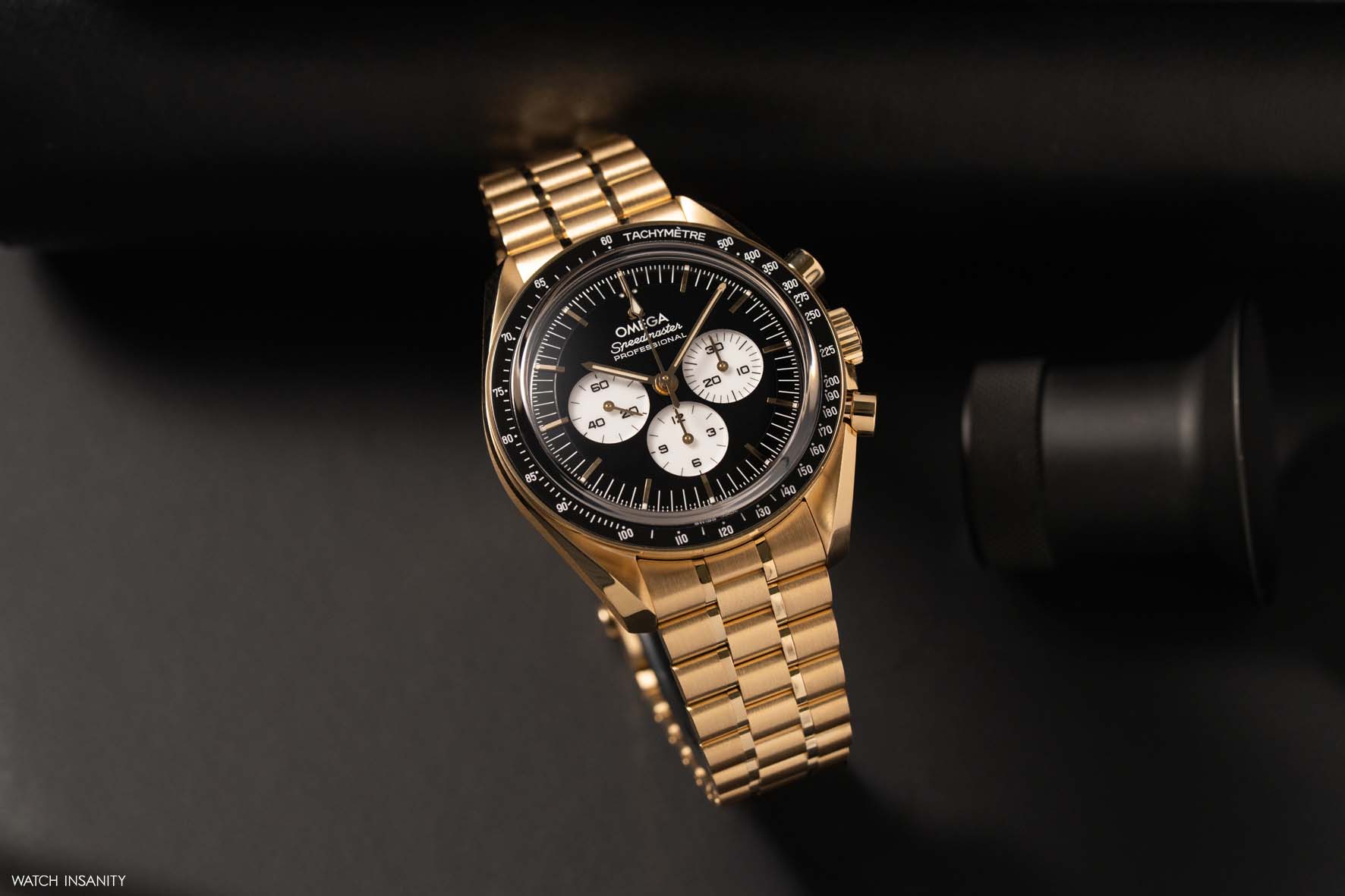
This design choice gives the dial greater visual depth, creating a subtle yet well-defined three-dimensional effect that draws the eye towards the hour markers and the minute track. It is the characteristic design of the early generations of the Speedmaster, including the models worn during NASA’s first missions and the Apollo 11 moon landing.
Used by Omega until the end of 1974, from 1975 to 2021 the ‘step’ dial was replaced by a flat dial, which simplified the manufacturing process. With the introduction of the updated Calibre 3861, the Maison has reintroduced the ‘step’ dial in modern Moonwatches, much to the delight of purists.
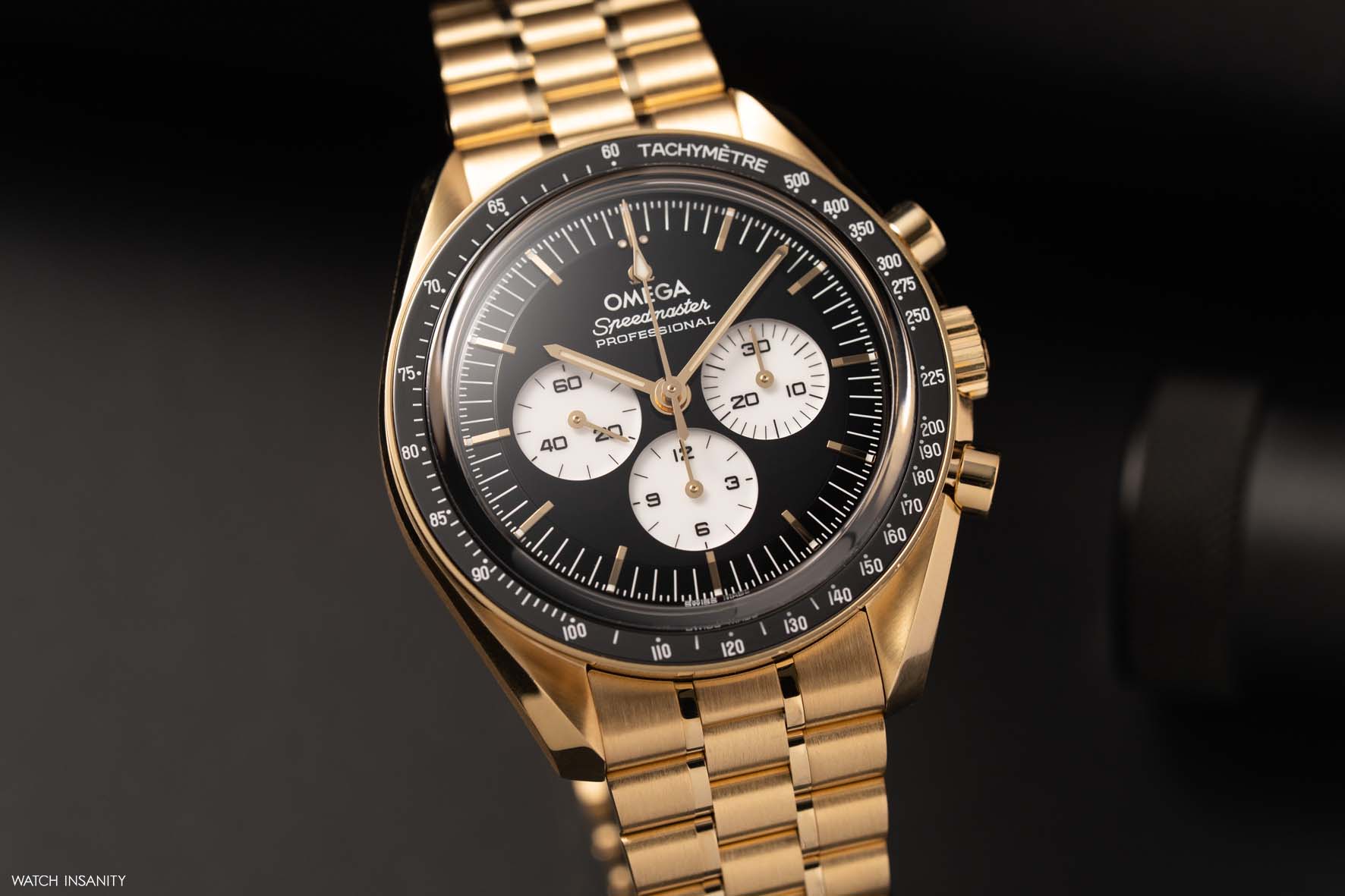
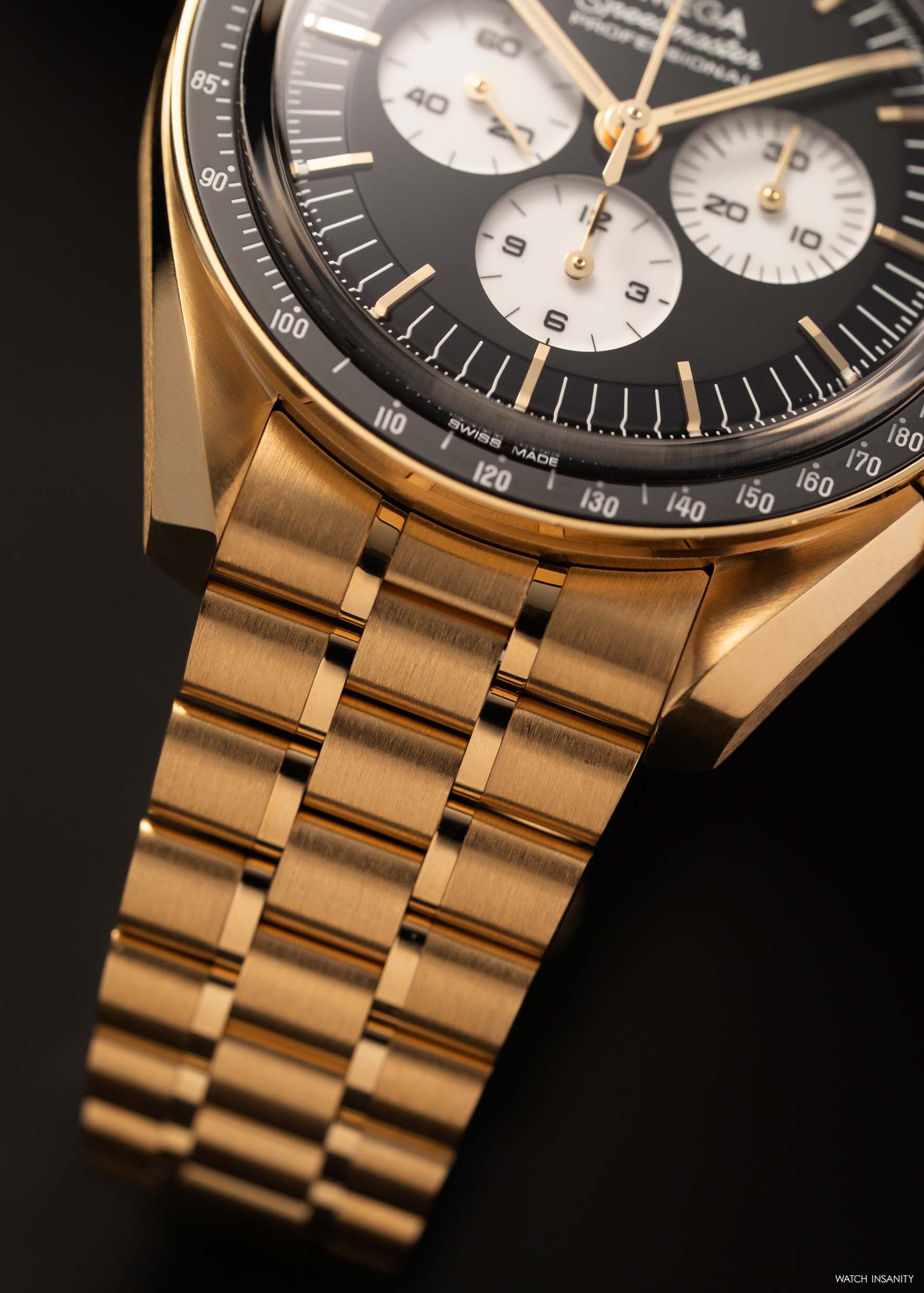
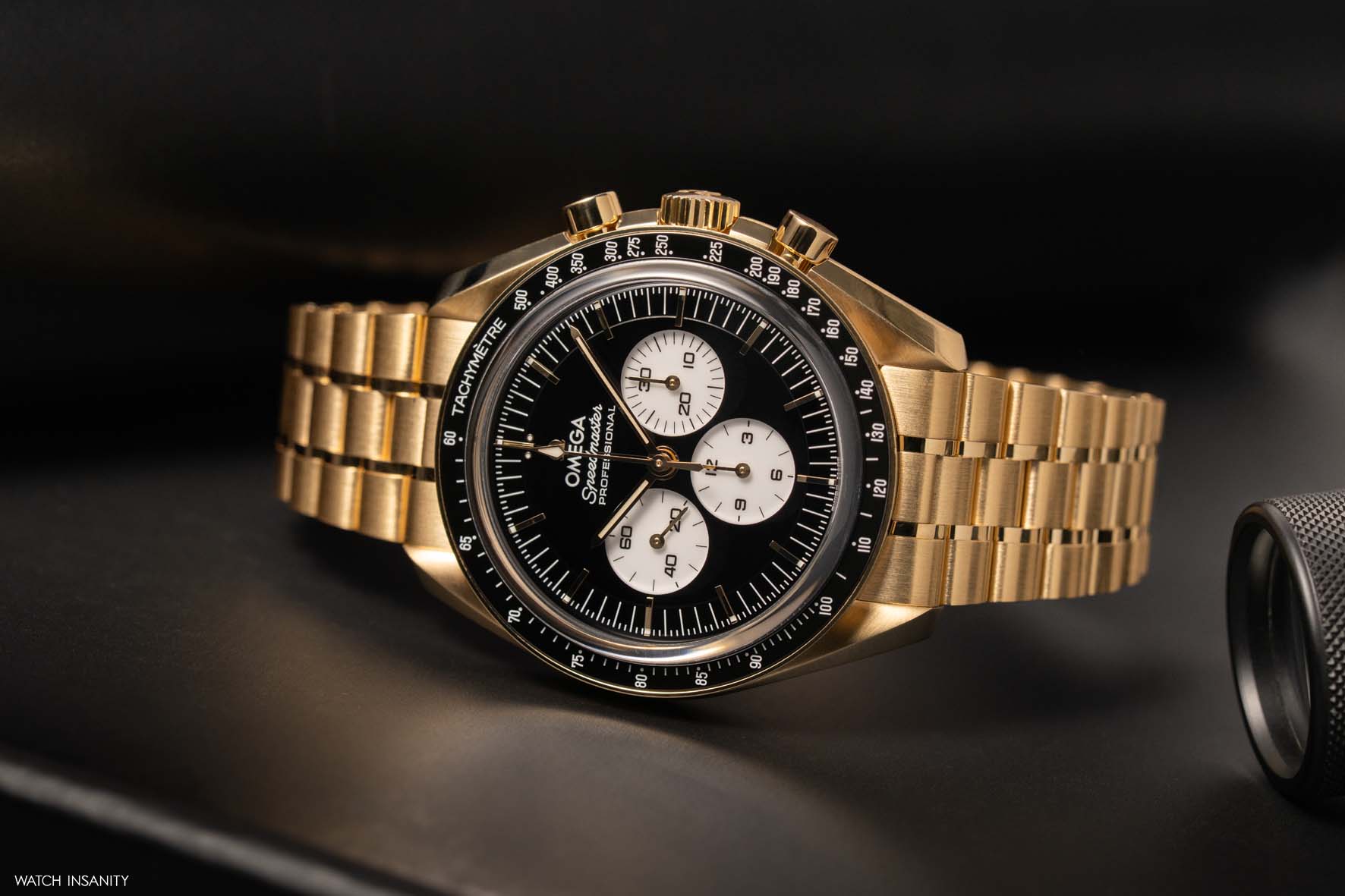
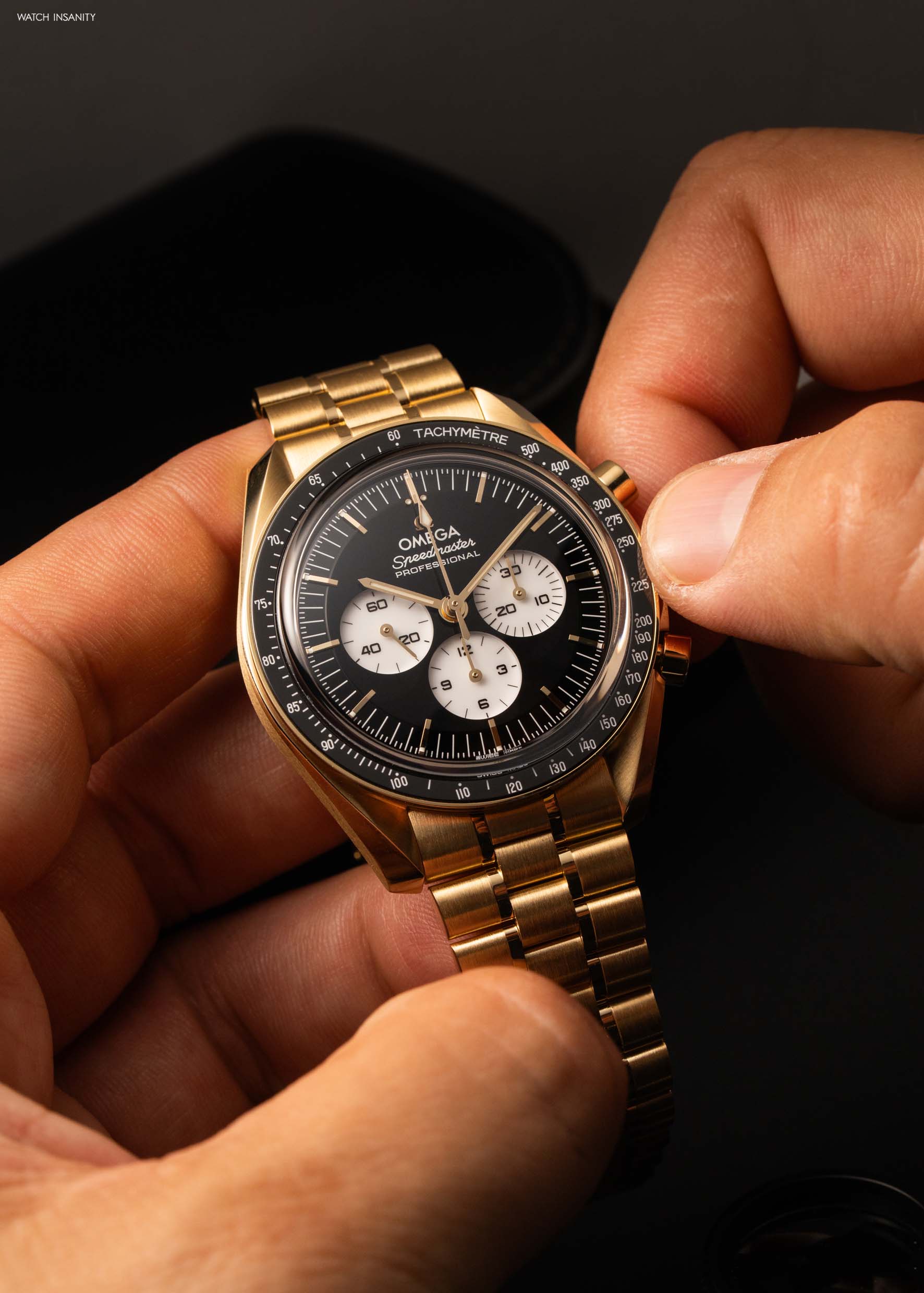
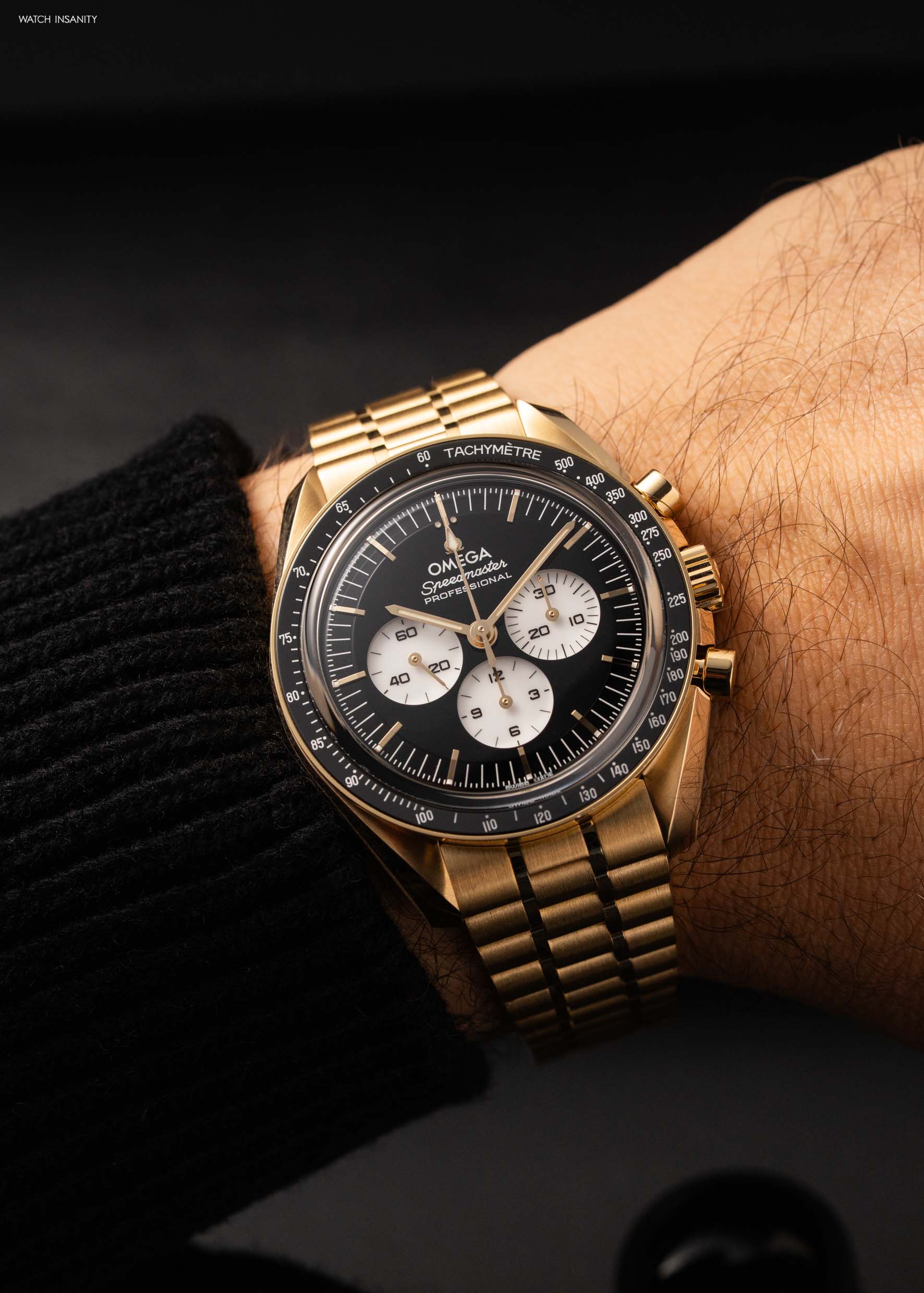
In the Speedmaster unveiled in early 2026, the upper dial plate is black and glossy, with a lacquered and painted finish. The sub-dials are set within rhodium-plated bezels and their backgrounds are white, also with a lacquered and painted finish. To further emphasise the legibility characteristic of the ‘Reverse Panda’ aesthetic, the hour markers on the dial are white, whilst those on the sub-dials are black. The hour markers and hands are filled with white-emitting Super-LumiNova.
THE CASE AND BEZEL
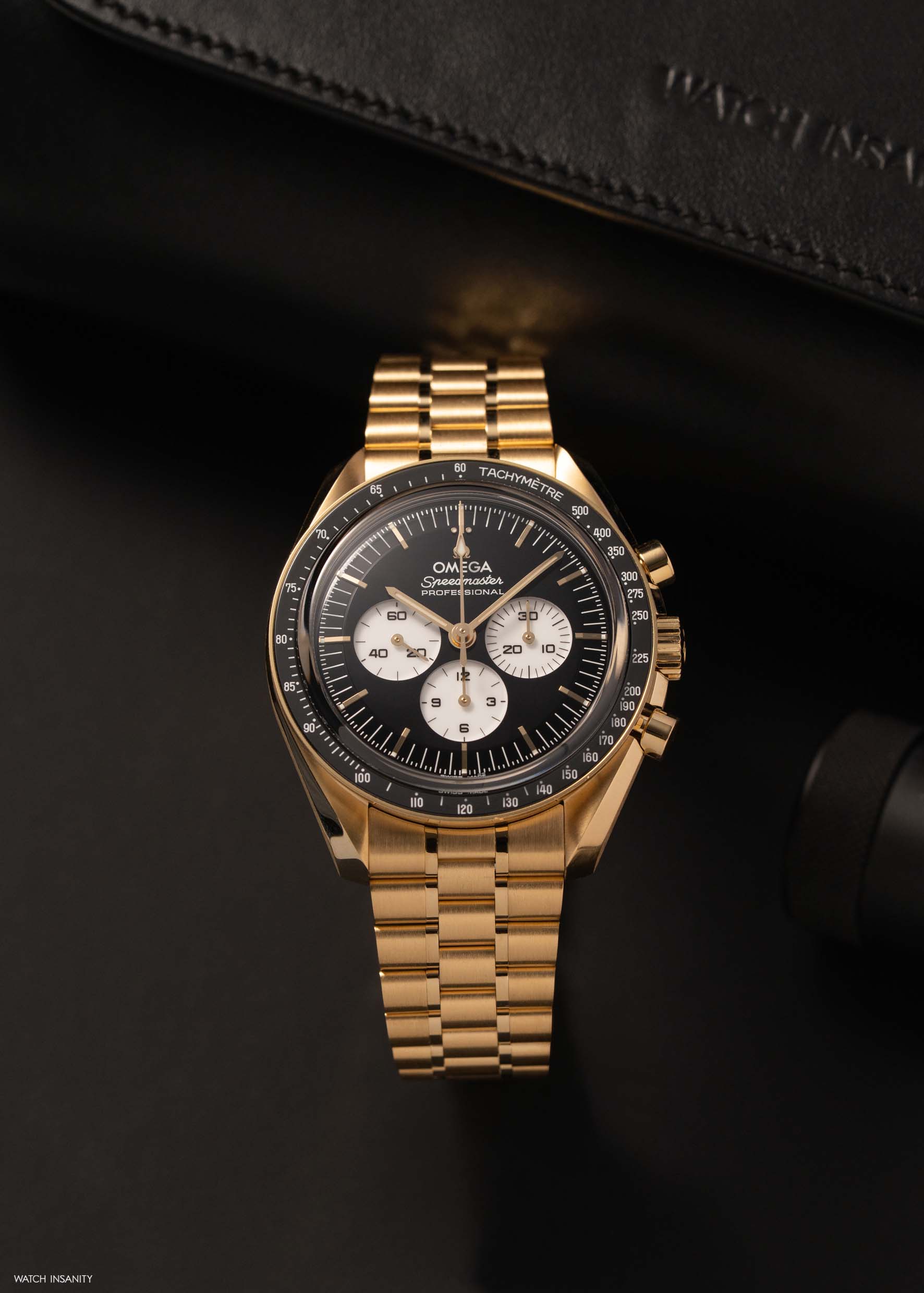
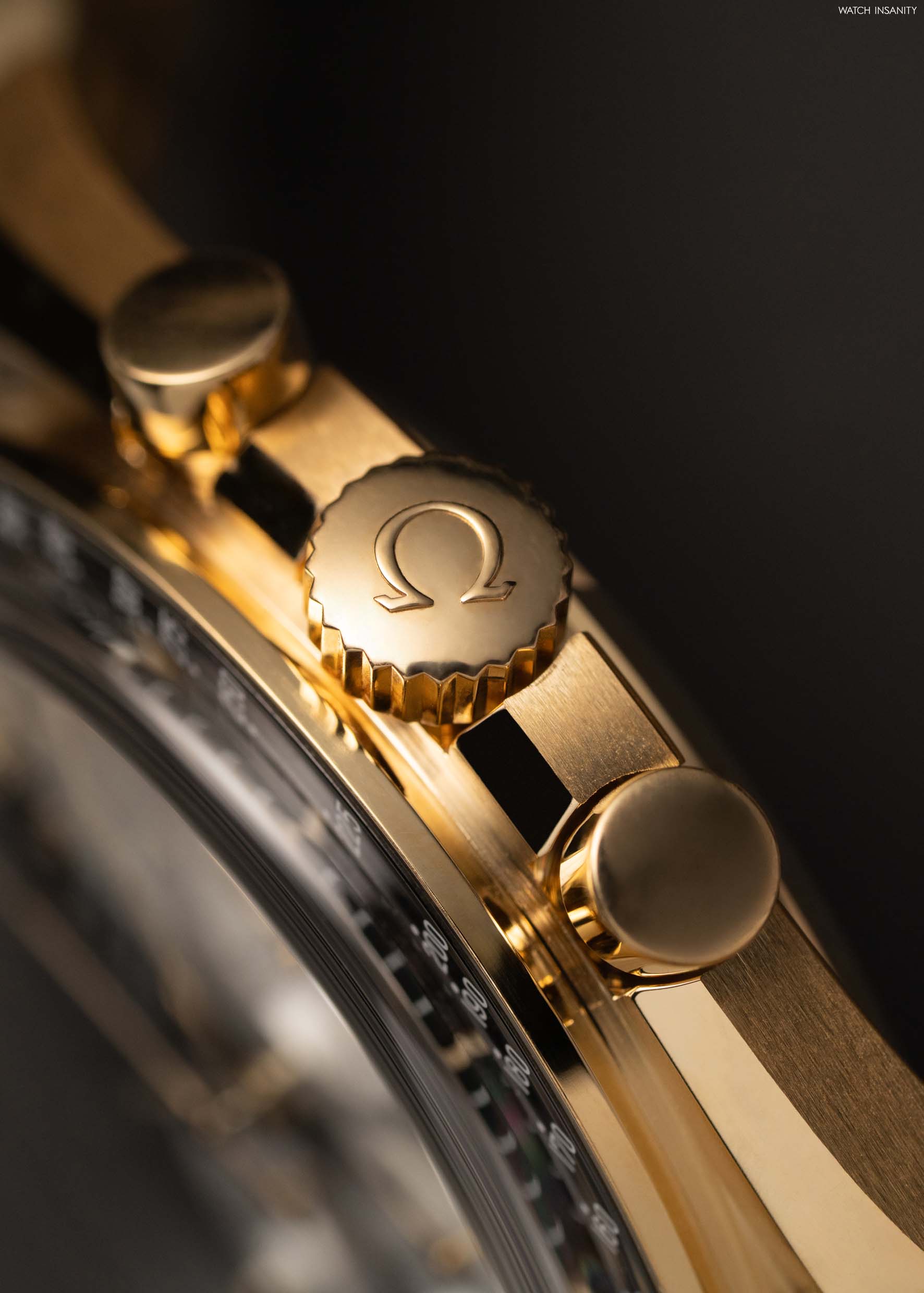
As for the case, this is a classic Speedmaster Moonwatch through and through. Its construction is based on the so-called ‘sapphire sandwich’ version, meaning that sapphire crystals are fitted to both the dial and the case back. The base model is the classic Moonwatch with its asymmetrical 42 mm case: extended protection for the crown and pushers, which are slightly recessed into the lyre-shaped lugs, an external tachymeter scale, and all the benefits of the update applied to the collection by Omega in 2021.
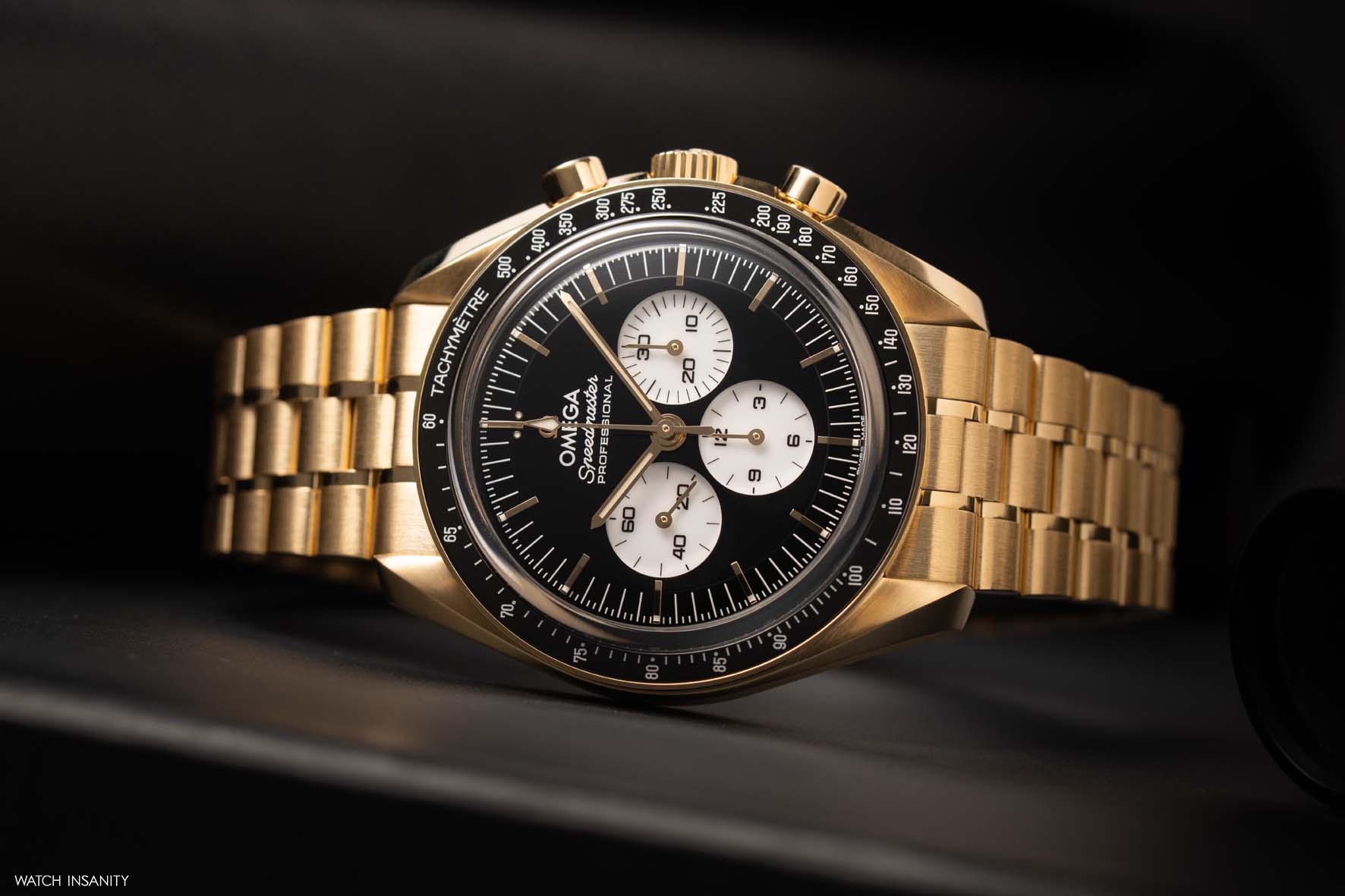
At 13.54 mm, it is slightly thicker than a classic Moonwatch with double sapphire crystal, due to the ‘step’ structure of the dial. The lug-to-lug distance is quite compact at 47.5 mm.
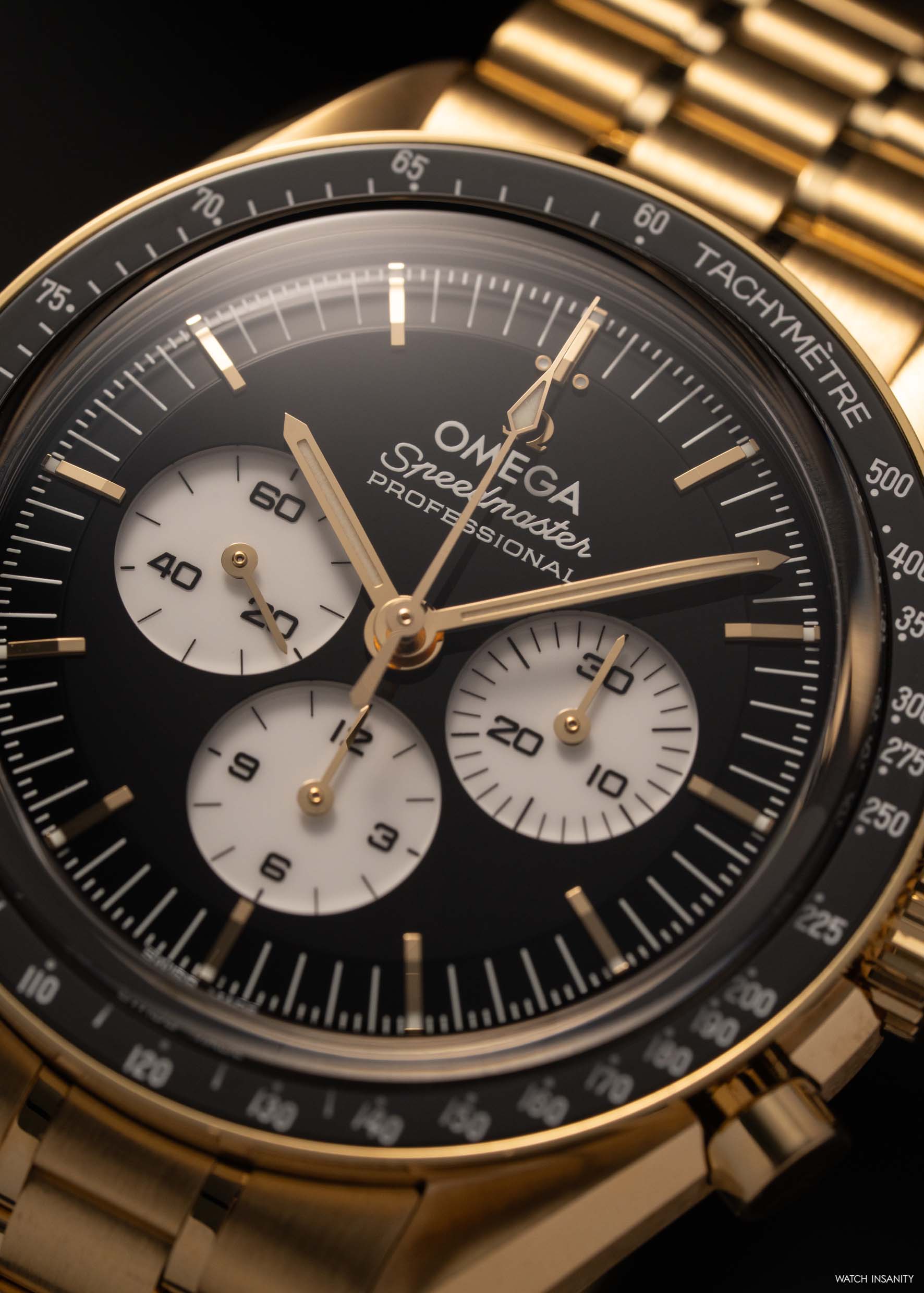
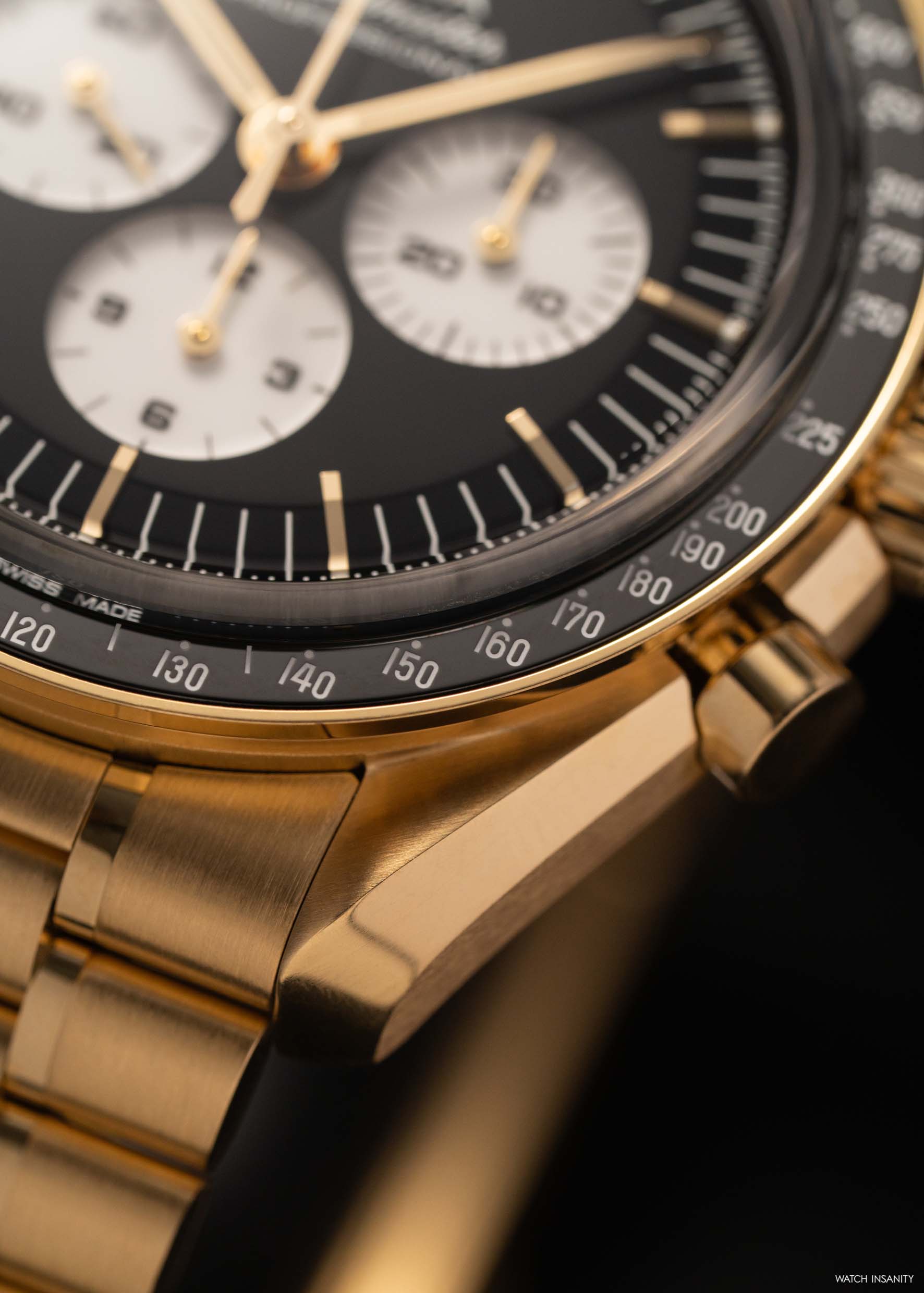
Speaking of the bezel, it naturally features the external tachymeter scale in keeping with Speedmaster tradition. The bezel frame, in Moonshine gold, features a glossy black ceramic insert instead of the usual aluminium insert found on the classic black Moonwatch or its more recent white version. The tachymeter scale is in fade-resistant white enamel and retains the historic layout with the ‘dot over ninety’ and the ‘dot diagonal to 70’.
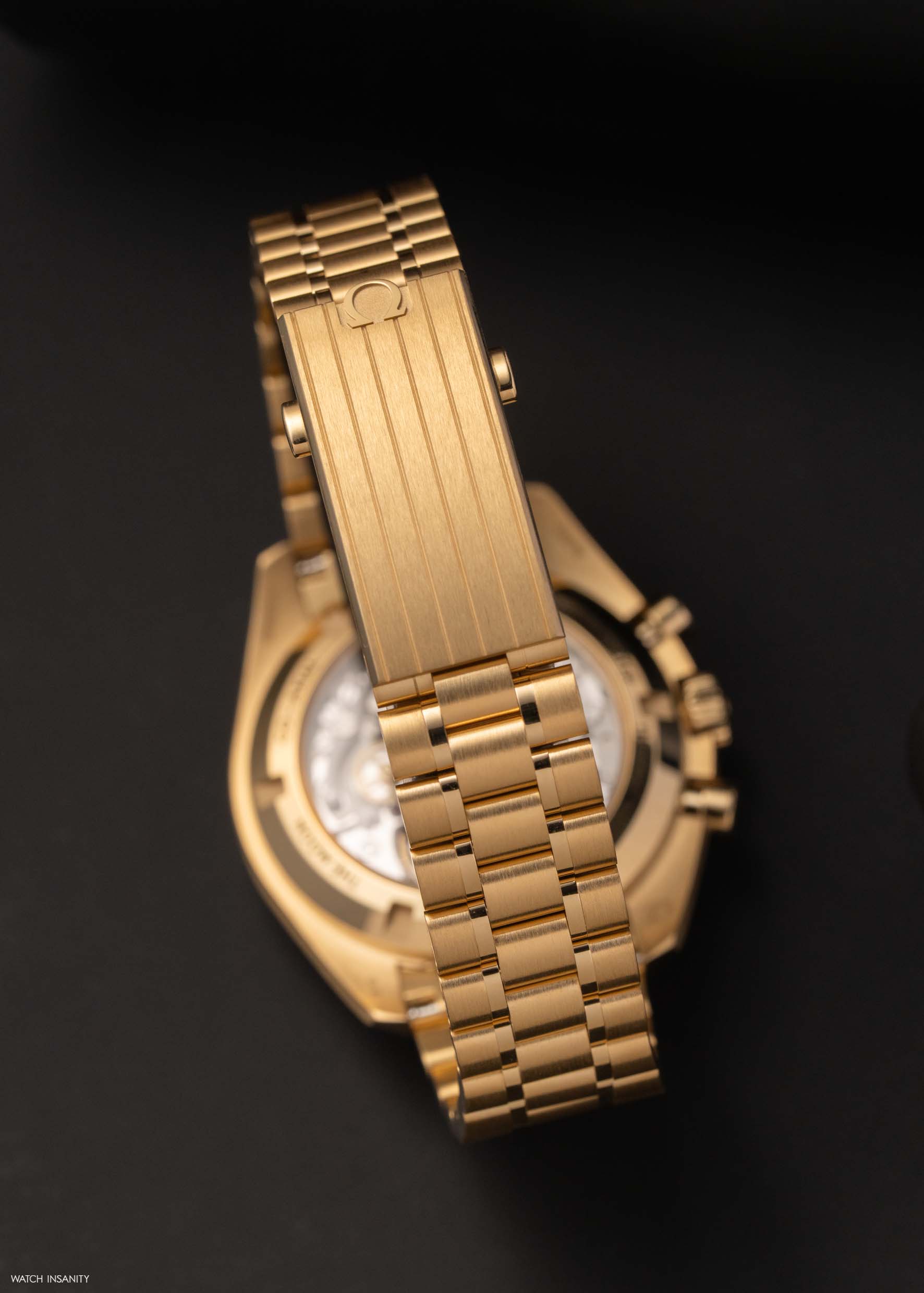
The bracelet alternates between satin-finished and polished surfaces and is 20 mm wide at the lugs, tapering to 15 mm at the clasp thanks to a rather pronounced taper. The clasp features a beautiful polished Omega logo in relief and an integrated comfort extension.
THE OMEGA CALIBRE 3861 IN THE SPEEDMASTER MOONWATCH CASE
This new Speedmaster is powered by the in-house calibre 3861, an evolution of the classic hand-wound 1861 and 861 movements that have driven the Moonwatch for over 50 years. It operates at 21,600 vibrations per hour and has a power reserve of approximately 50 hours.
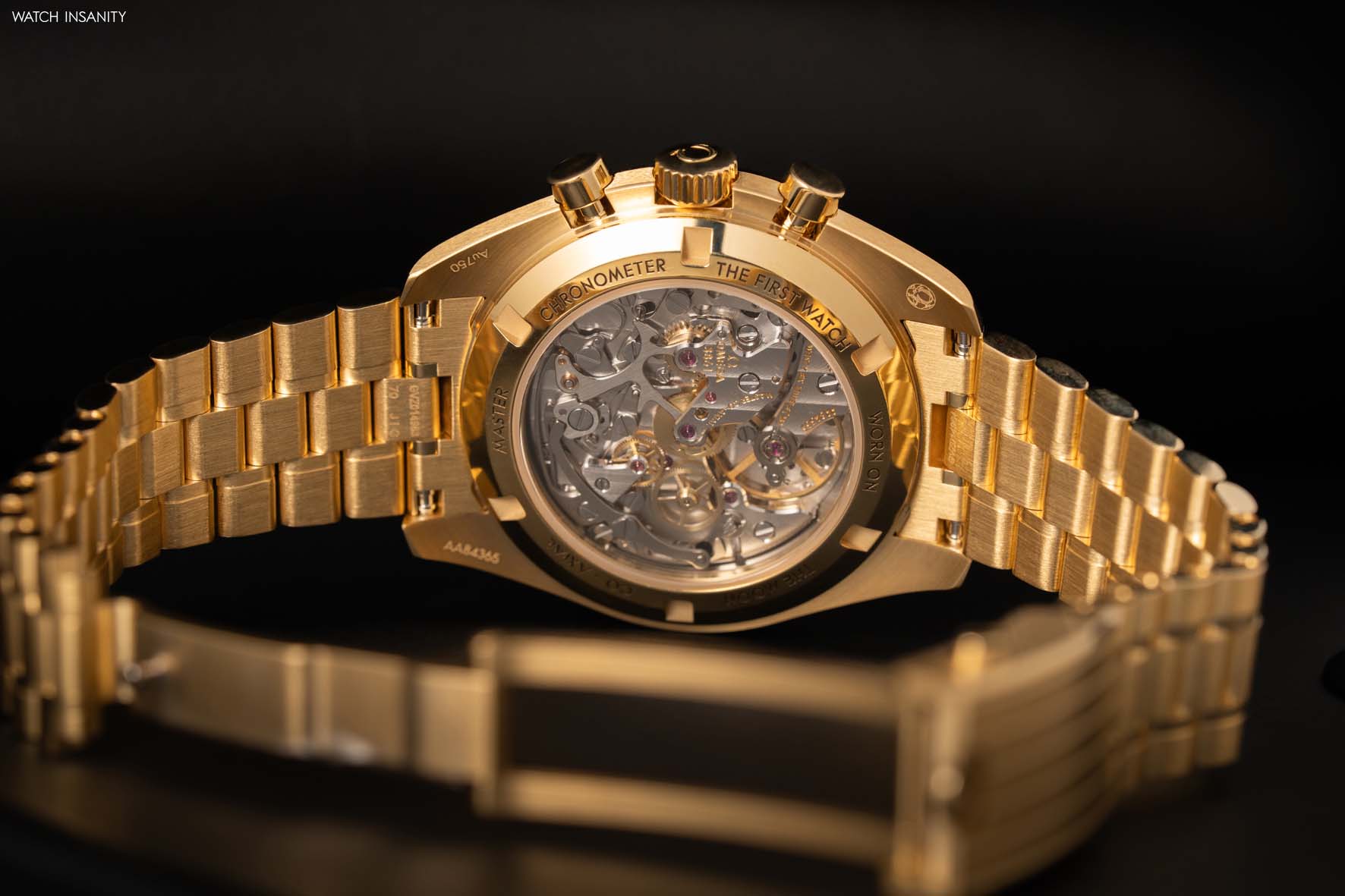
The movement retains the chronograph’s historic architecture with cams and levers but has been modernised by Omega with the addition of its proprietary co-axial escapement and a silicon balance spring. These features enable it to achieve Master Chronometer certification and withstand powerful magnetic fields of up to 15,000 gauss.
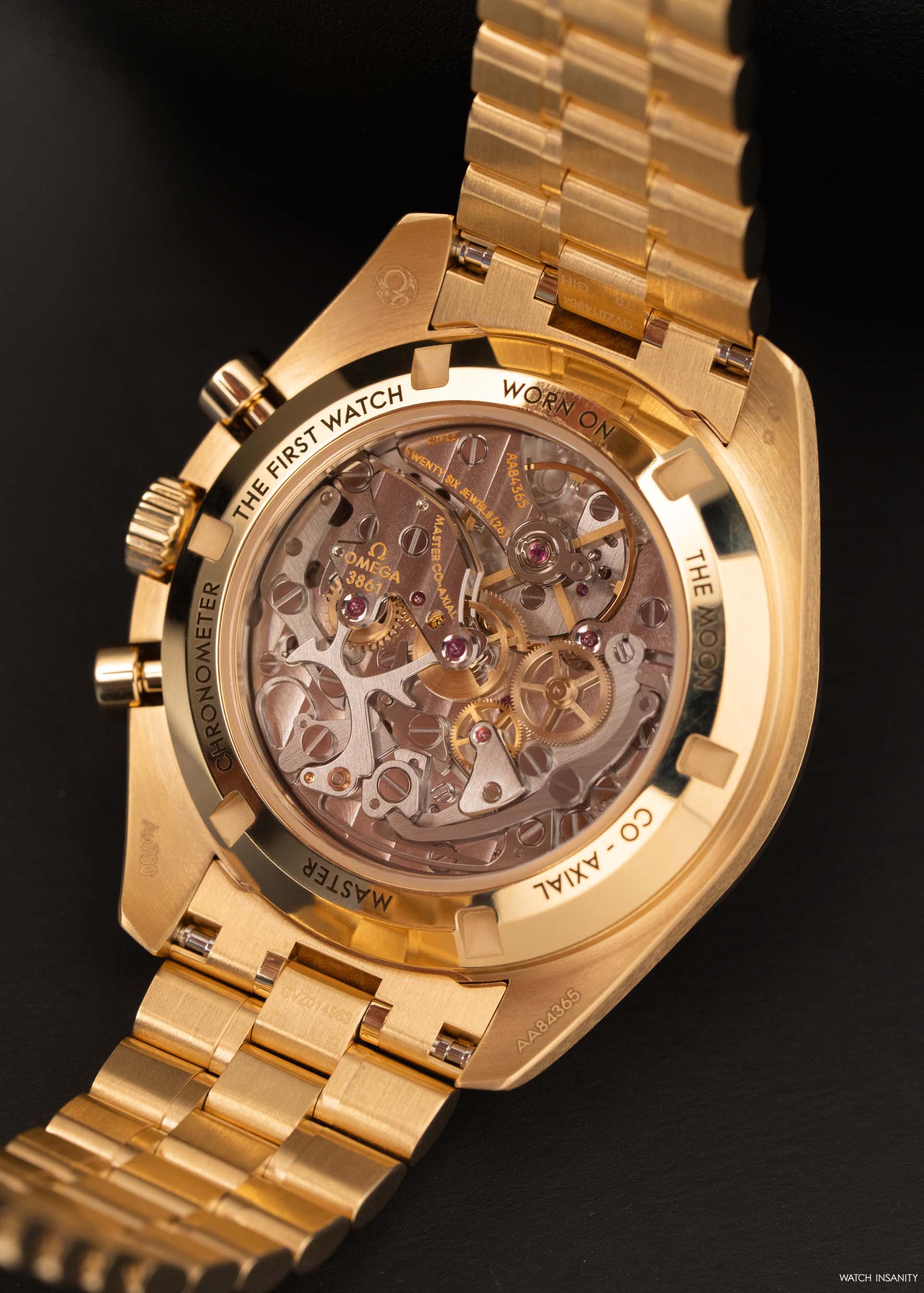
The calibre 3861 has been enhanced in terms of its finishing. Every detail, from the engravings to the bevelling, is executed to a high standard. The most noticeable change is the 45-degree bevel around the larger bridges (which were rounded in previous versions), achieved through the use of CNC machines. At the same time, the steel chronograph levers retain slightly rounded edges, reflecting the hand-finishing that follows the machining process.
Whilst the final result may appear more industrial than the 1863 calibre, every component is nonetheless more uniform and precise, giving the movement a refined and cohesive appearance that complements the Moonwatch’s balance, straddling the line between a tool watch and a luxury timepiece.
THE ‘REVERSE PANDA’ AESTHETIC AND THE HISTORY OF THE SPEEDMASTER MOONWATCH
The new Speedmaster Moonwatch with a ‘Reverse Panda’ dial, available in both Moonshine gold and stainless steel versions, forms part of Omega’s long-standing tradition, first linked to space exploration and later to the moon landing. After all, launched as the Speedmaster in 1957, the chronograph became the Moonwatch precisely thanks to the Apollo 11 mission, which took it to Earth’s natural satellite for the first time.
Prior to that, the Speedmaster had made its first space journey in 1962 on the wrist of the American astronaut Walter ‘Wally’ Schirra, during the Mercury Atlas 8 mission: it thus became the first Omega in space, the ‘First Omega in Space’. Subsequently, on 1 March 1965, NASA declared the chronograph the first watch certified for all manned space missions and for extravehicular activities.

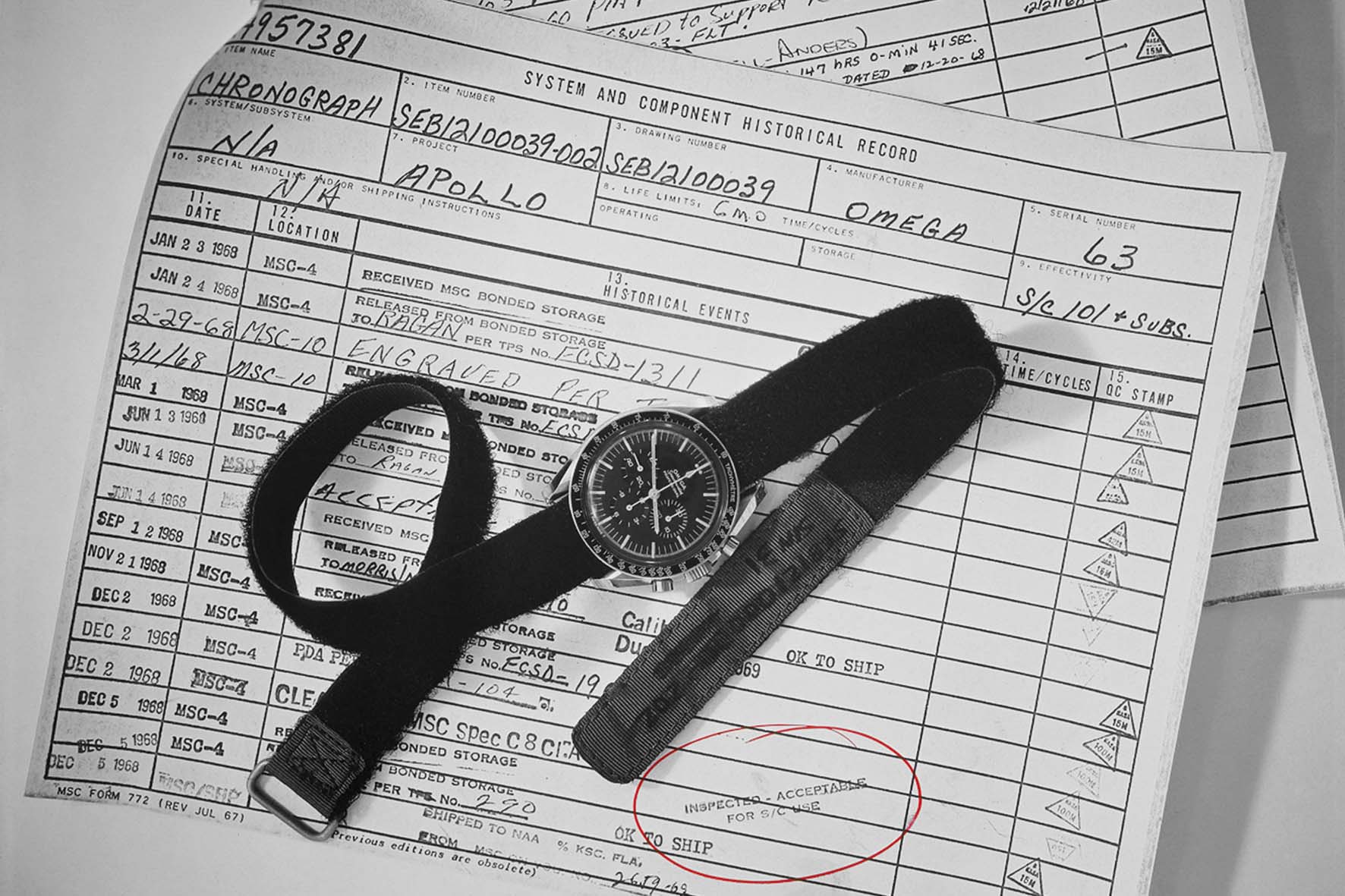
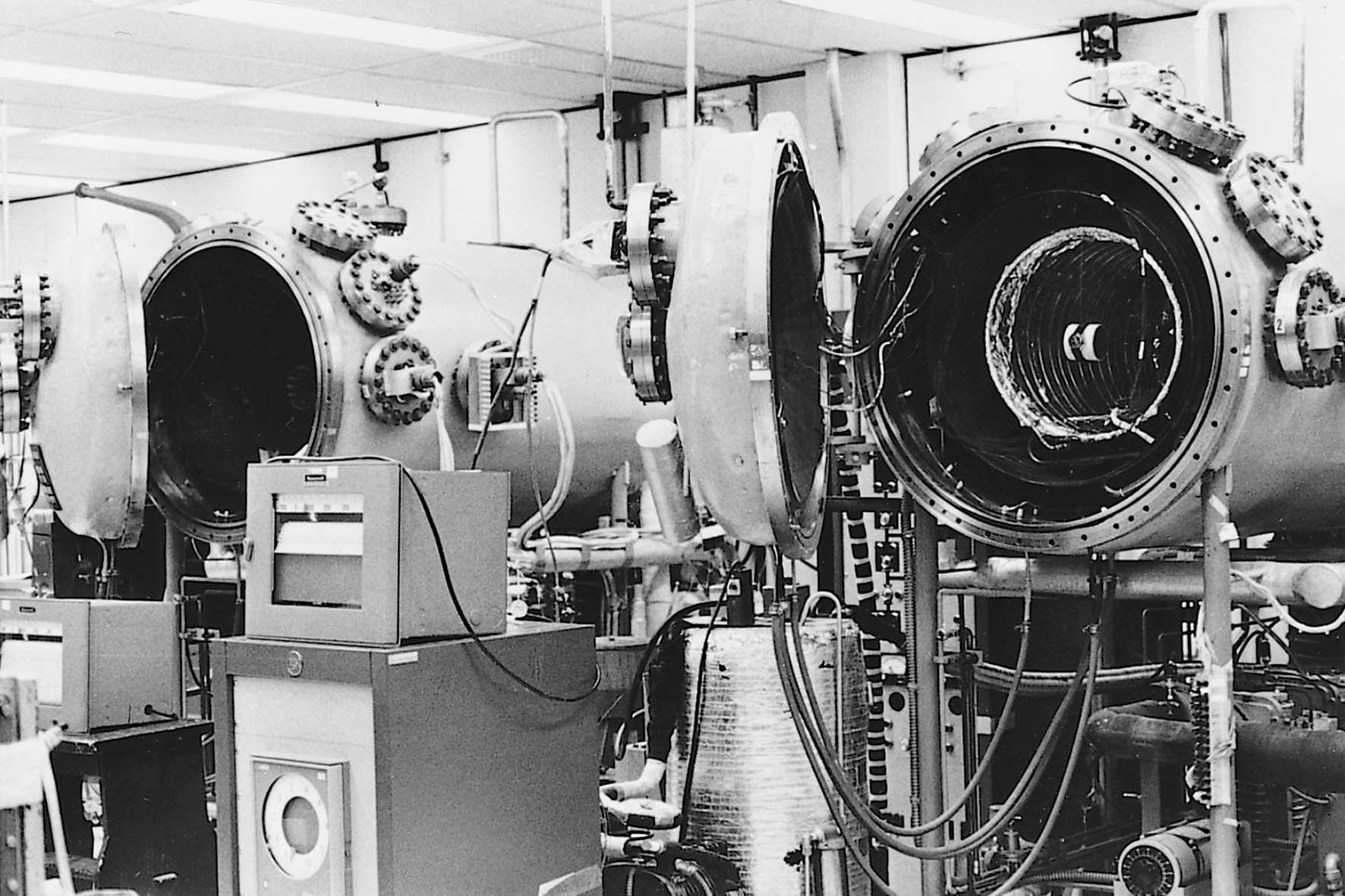
This was no mean feat, as two other chronographs were in the running alongside the Speedmaster. It earned this certification after passing extremely complex and gruelling tests, which simulated the most challenging conditions in which the chronograph would have to operate: extreme temperature fluctuations, corrosive environments with 100 per cent oxygen, 40 G impacts and much more. In the end, the only watch to pass these tests was the Speedmaster, reference ST 105.003.

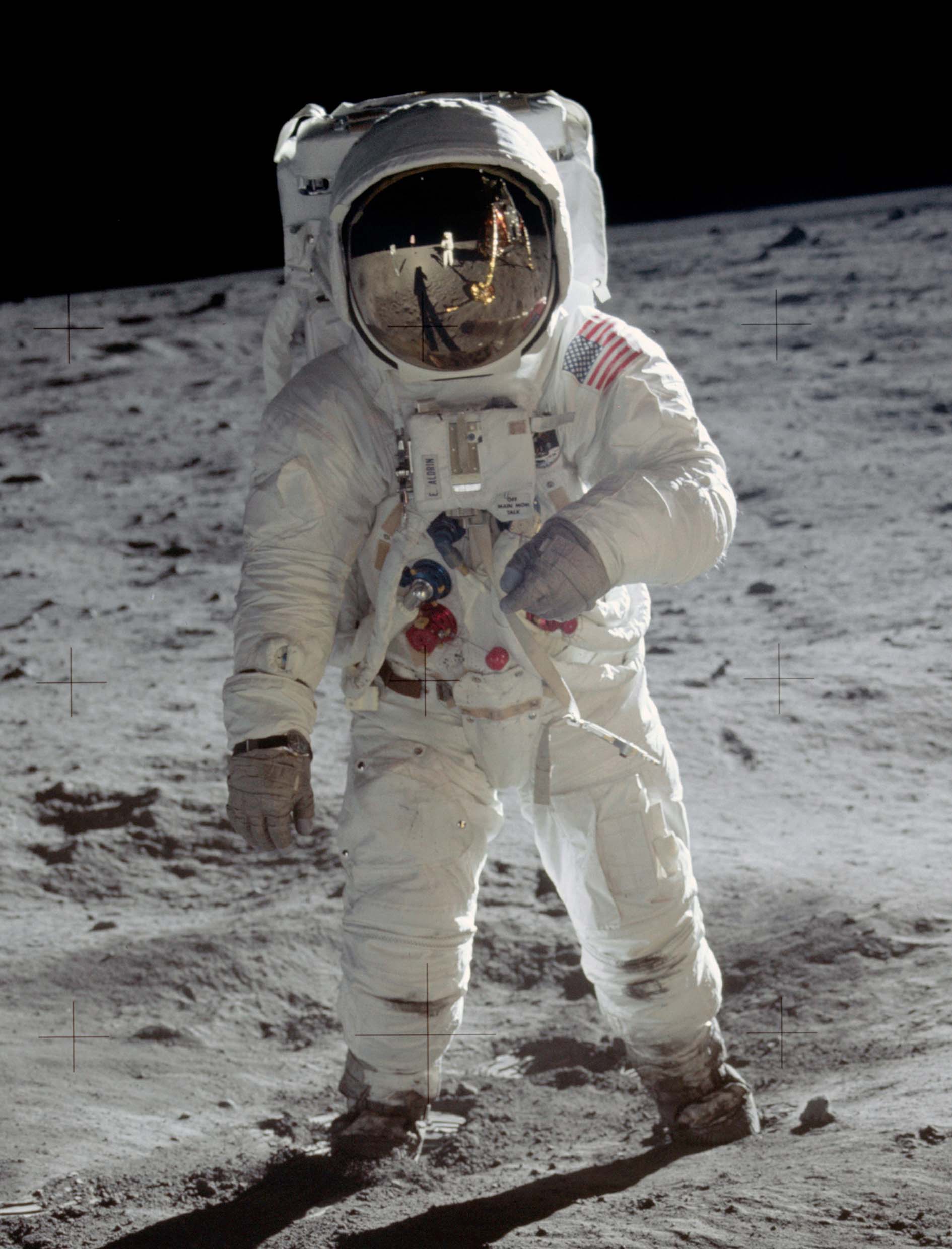
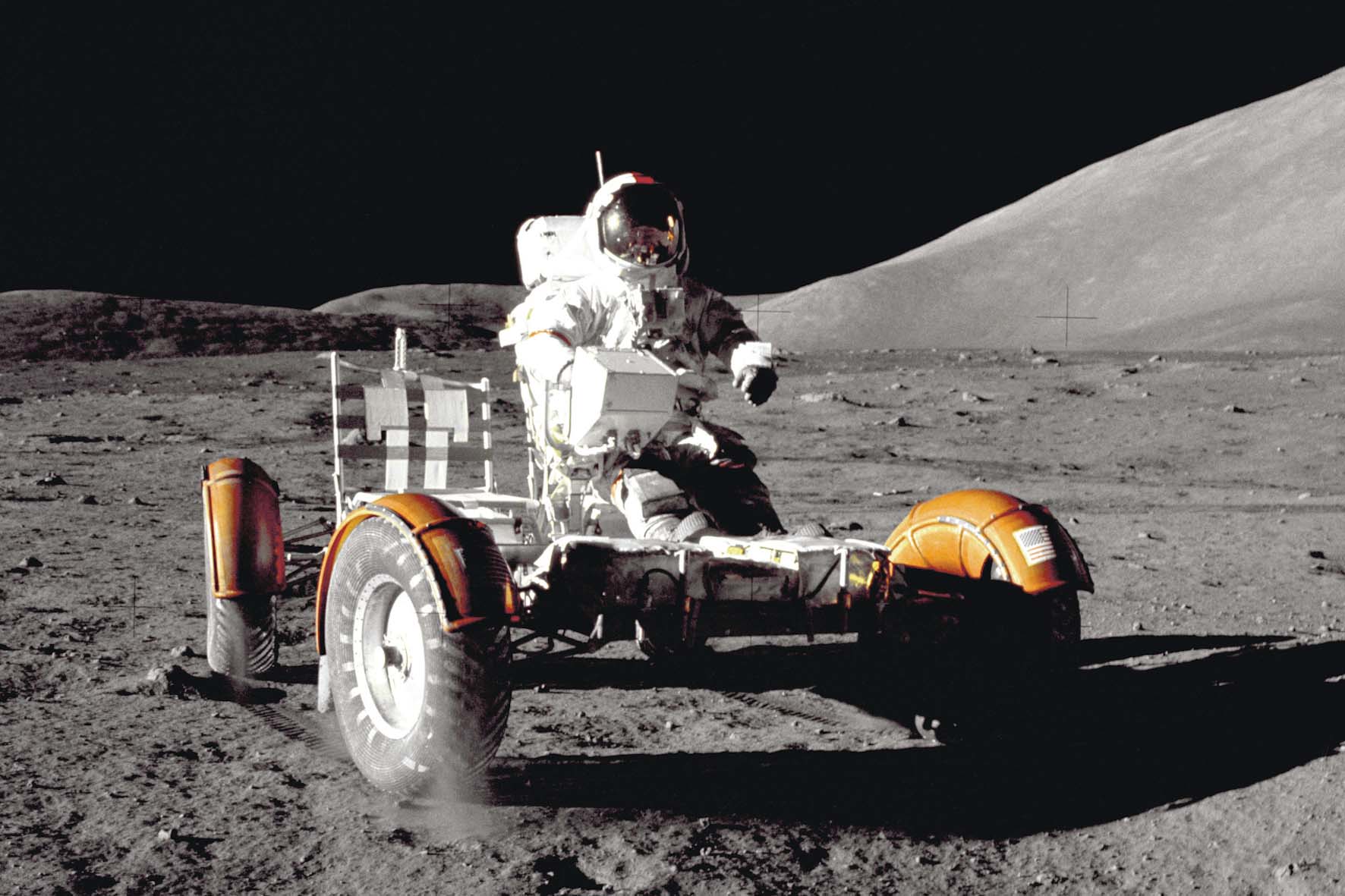
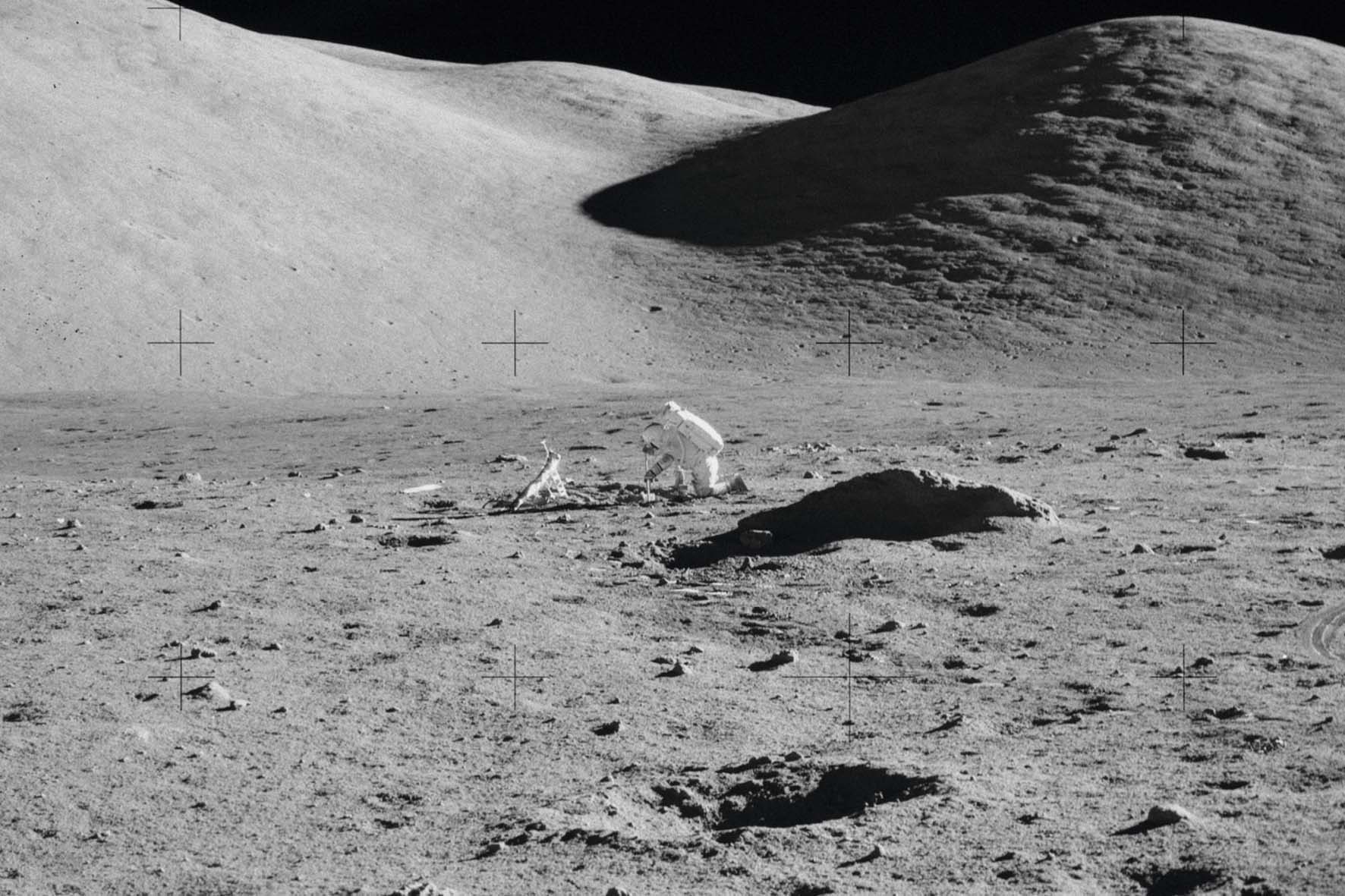
From then on, the rest is history: from the moon landing with the Apollo 11 crew to the Apollo 13 mission, when the chronograph was crucial for calculating the exact moment to fire the spacecraft’s thrusters to prevent the astronauts from being lost in space. Right up to the Apollo 17 mission in 1972, when Eugene Cernan, the last man to set foot on the Moon, did so with an Omega Speedmaster, reference ST 105.003, on his wrist.
CONCLUSIONS
Naturally, the case material has a significant impact on the price of the watch: 49,000 euros, whilst the ‘Reverse Panda’ version with a steel case and bracelet costs 10,300. The Moonshine gold model costs slightly less than the version in the same material with a green dial, thus giving enthusiasts the chance to choose between two equally appealing versions without a significant difference in price.
The Moonwatch is, after all, a tool watch, and its appearance and minimalist design are part of the character that enthusiasts have always appreciated. However, as time goes by and new collectors emerge, it is clear that Omega wants to make it appealing to a wider audience, particularly those seeking something more than just a functional watch. Those seeking something luxurious, exciting and striking – qualities that likely go beyond the traditional appeal of the Moonwatch.
This is one of the reasons why the brand is gradually steering the Speedmaster Moonwatch towards a more exclusive market segment. This is evidenced by this very ‘Reverse Panda’ model, characterised by the most intricate dial design and finishes ever seen on a Moonwatch. The chronograph must retain its identity, but it also needs a fresh lease of life. Striking the right balance will not be easy, but models such as this one suggest that Omega is on the right track.
By Davide Passoni