
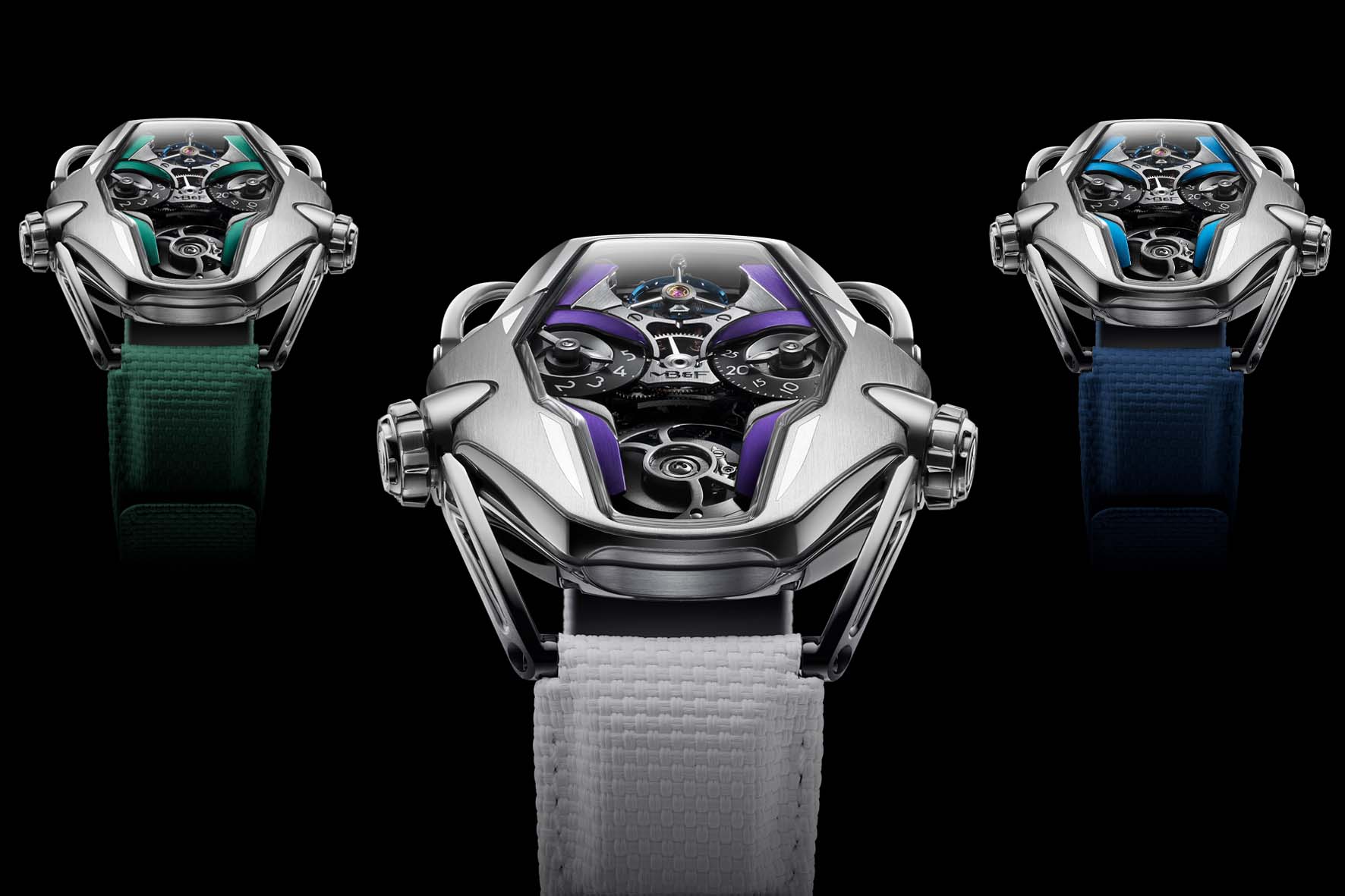

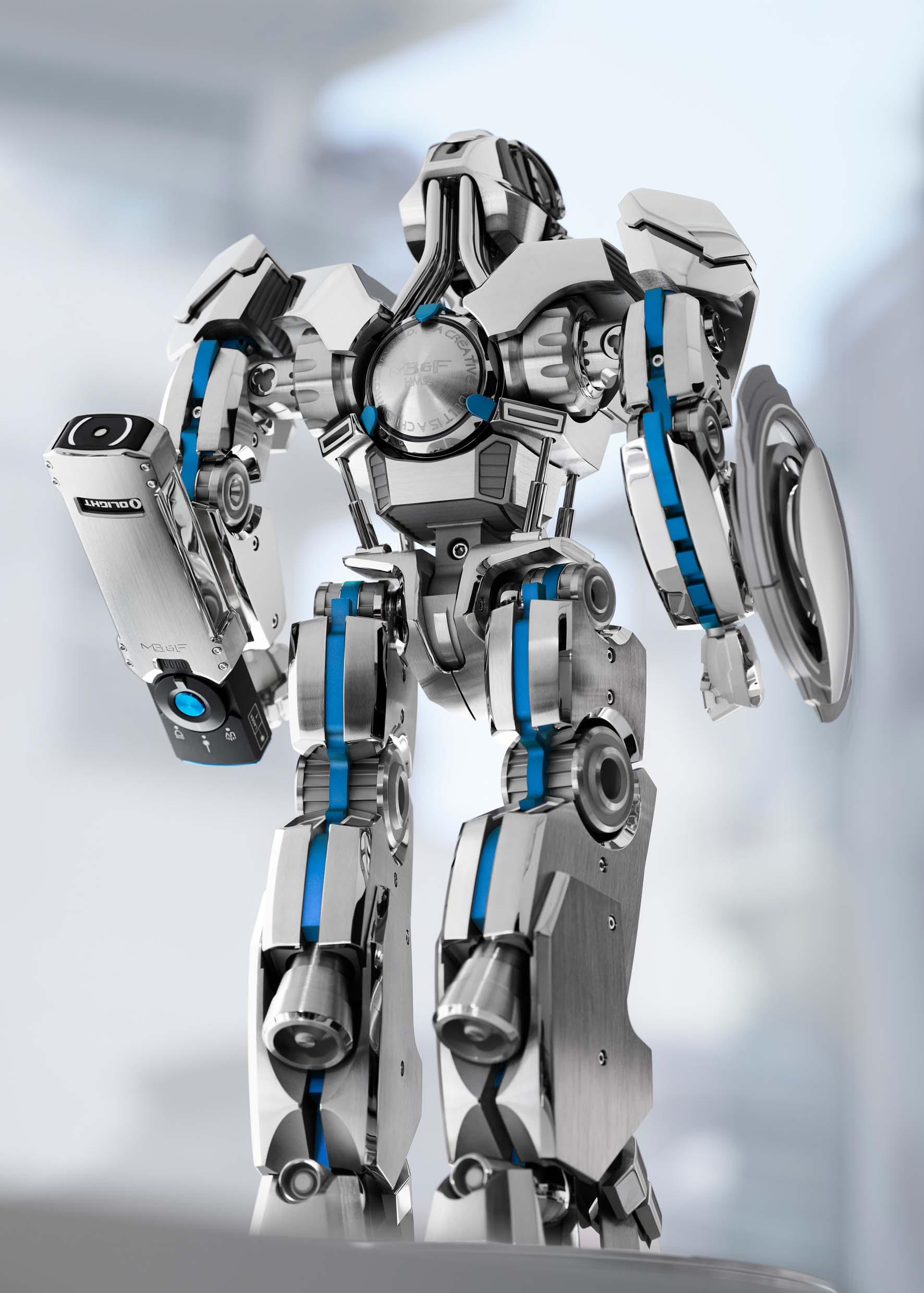
Twenty years after its founding, MB&F looks back to its origins with a creation that, more than almost any other, summarises the journey the brand has undertaken from 2005 to the present day. The new MB&F HM12 The Guardian is not simply a new Horological Machine, nor a traditional commemorative timepiece. It is a project that combines a wristwatch featuring a Flying Tourbillon, Jumping Hours and a complex Face Shield complication with a Mechanical Robot measuring over 38 centimetres in height, developed together with L’Epée 1839.
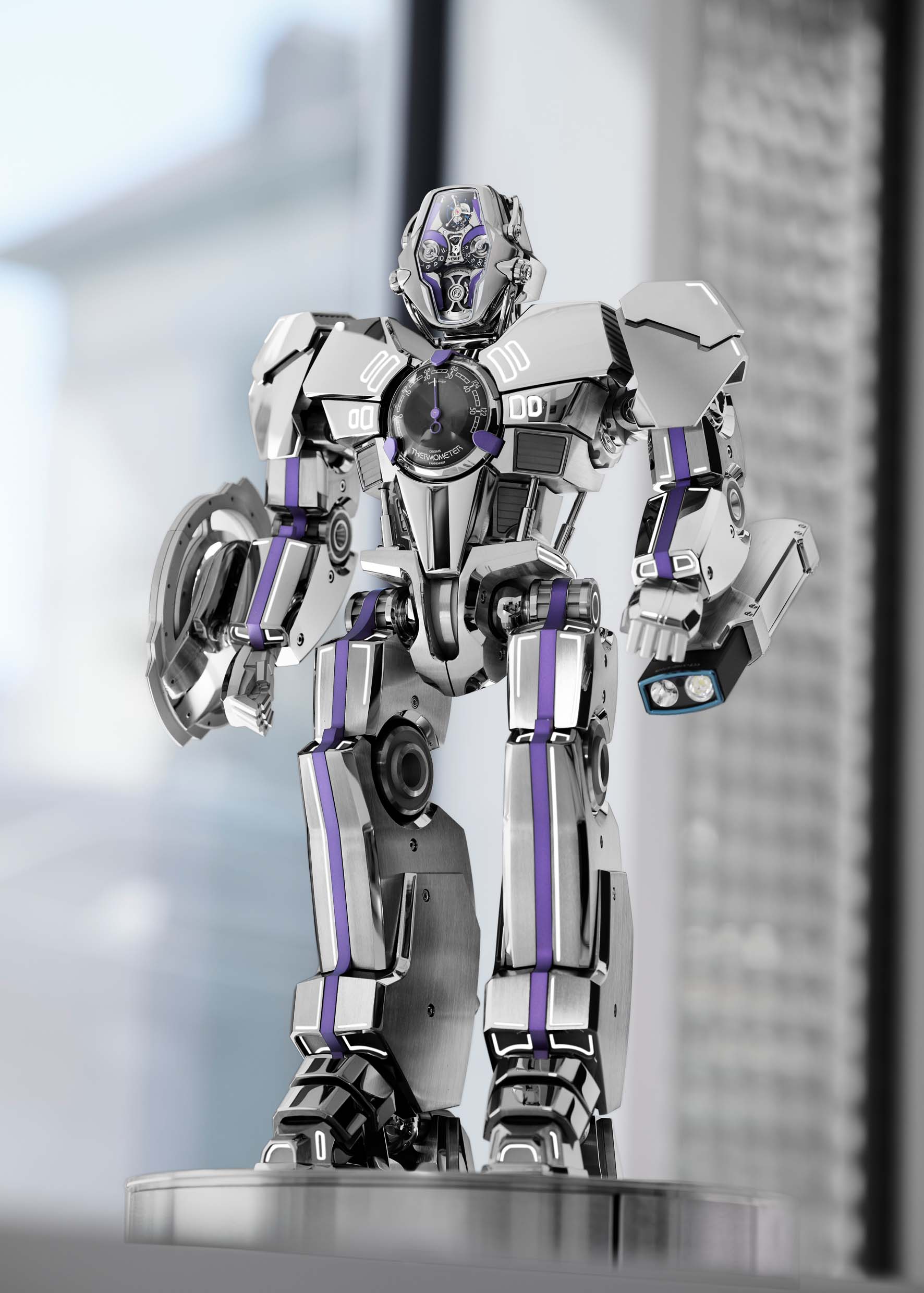
Composed of almost 1,500 components, HM12 The Guardian inaugurates the third decade of the Geneva-based Maison by reaffirming everything that has made the brand unique: imagination, technical experimentation, three-dimensional design and a vision of Haute Horlogerie capable of going beyond the simple measurement of time.
Since its inception, MB&F has built its identity around a simple yet revolutionary concept: creating mechanical objects capable of generating emotion and wonder even before telling the time. It is therefore no surprise that the Maison describes HM12 The Guardian not as a watch, but as a true all-encompassing horological project, composed of two inseparable elements that can exist together or separately without losing their own identity.
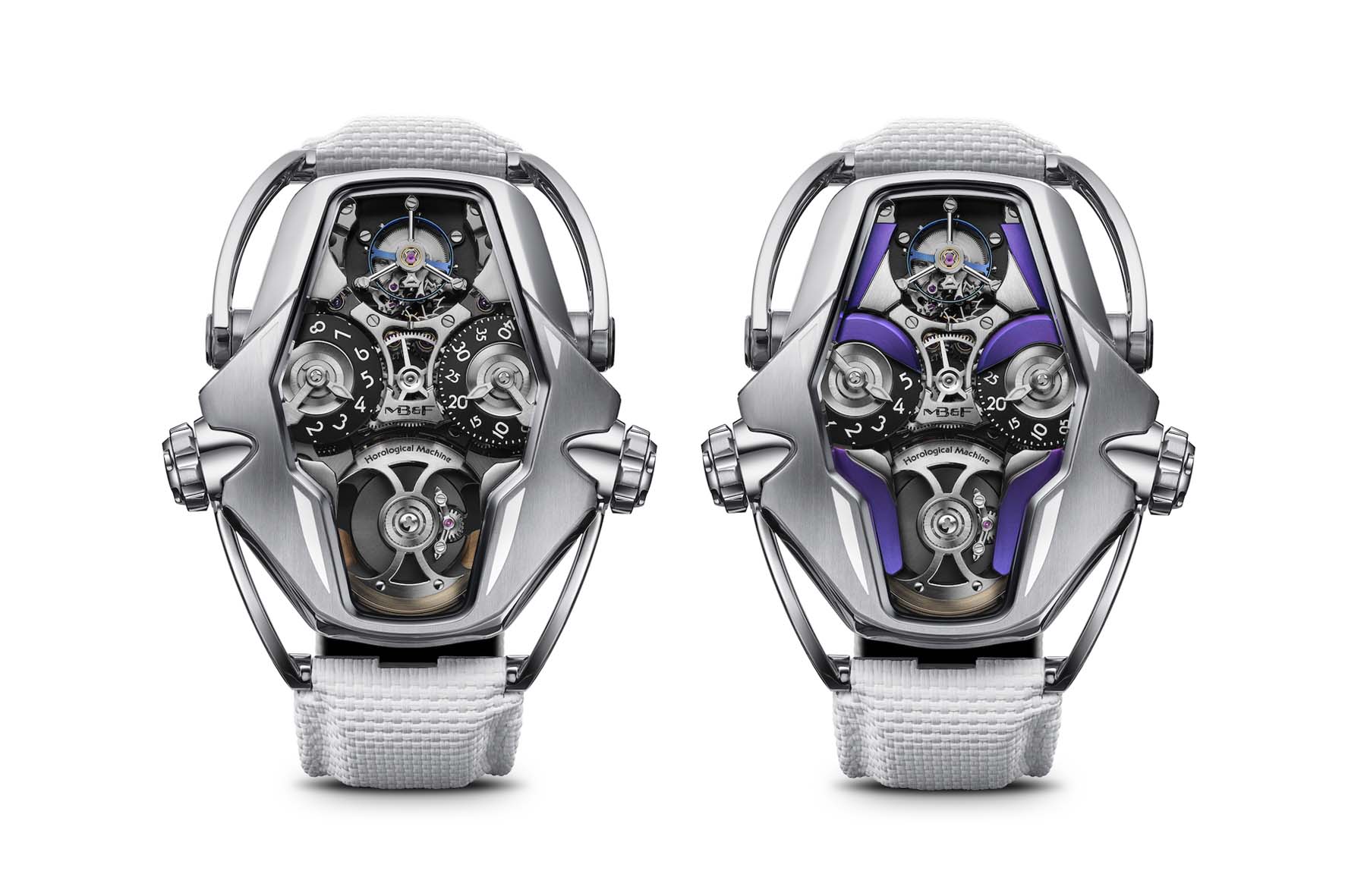
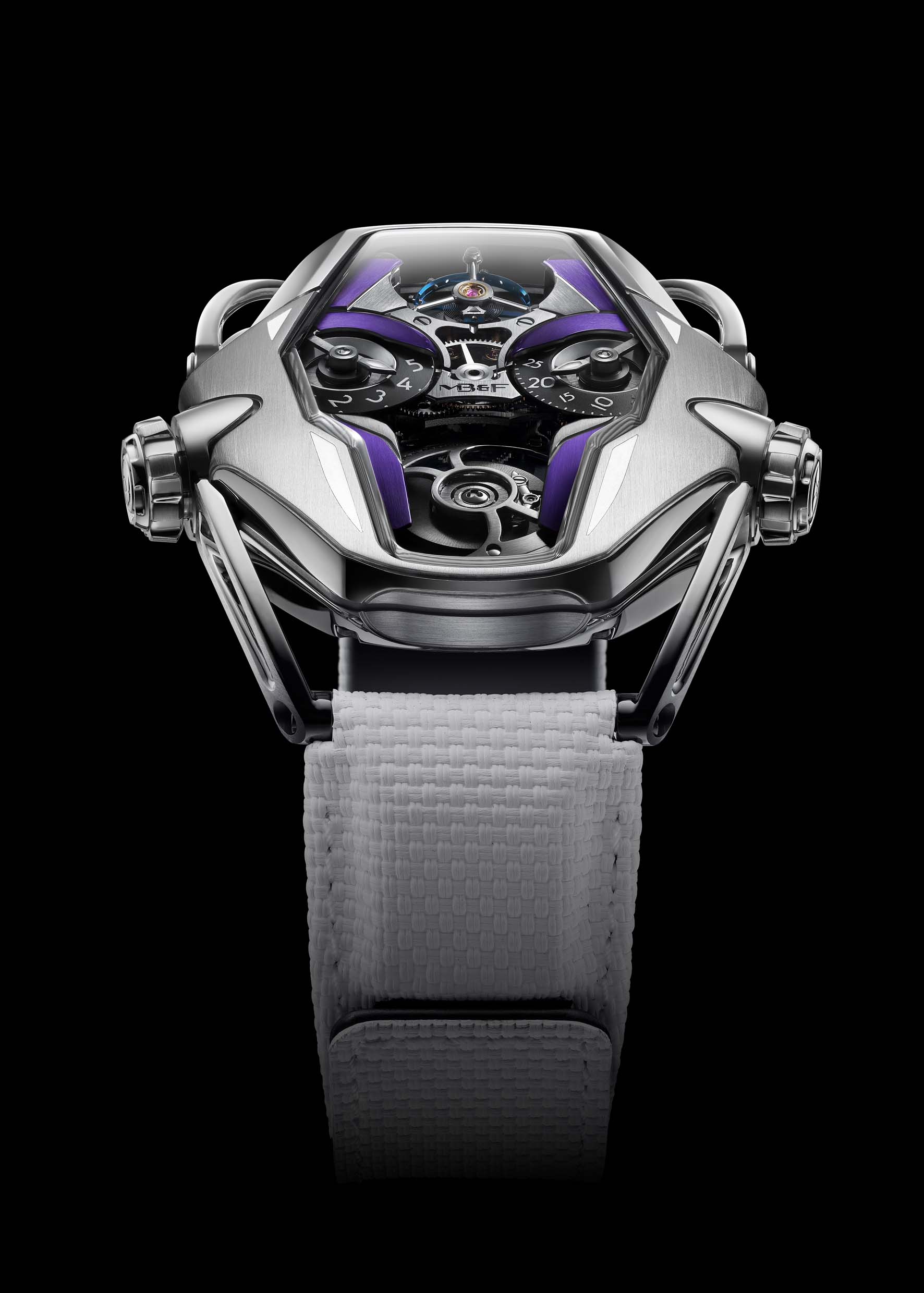
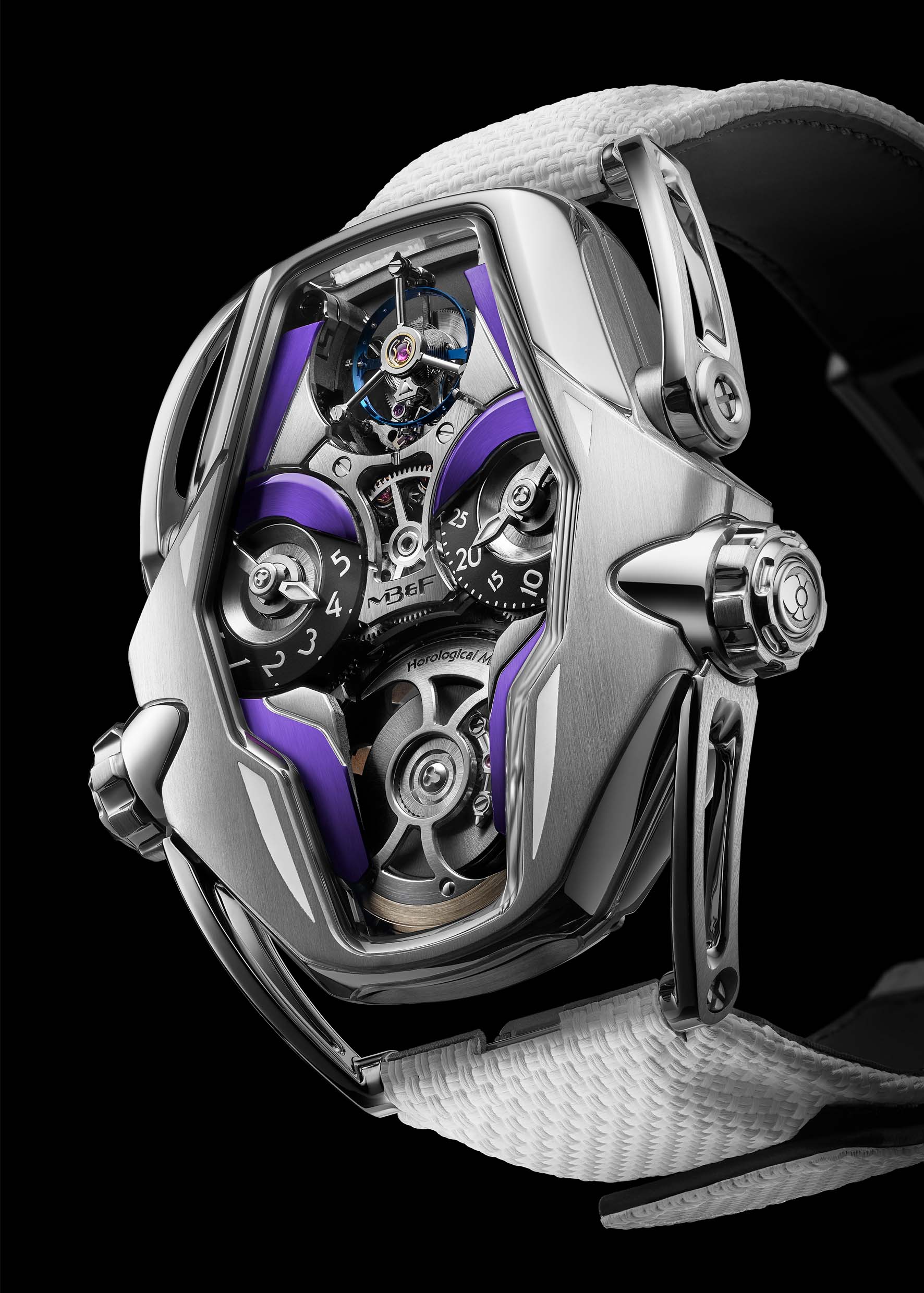
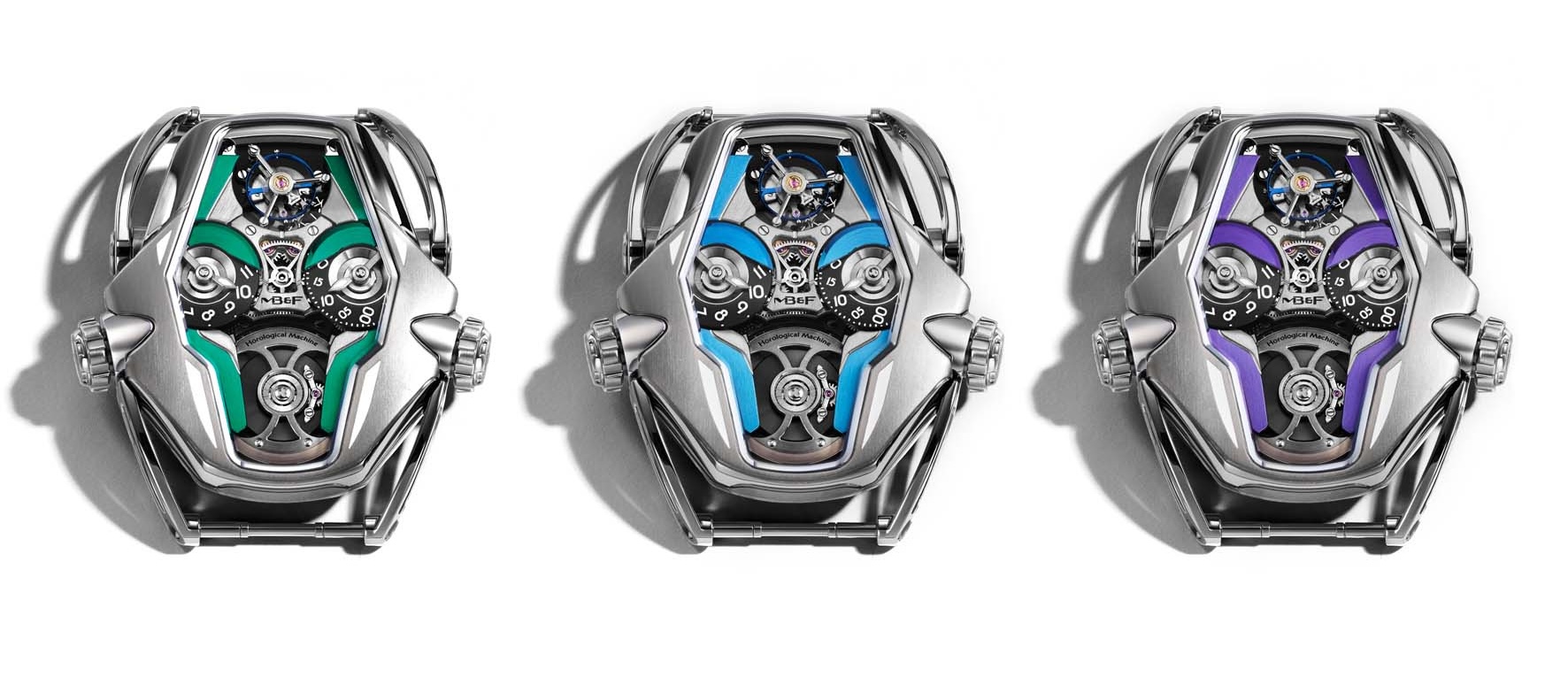
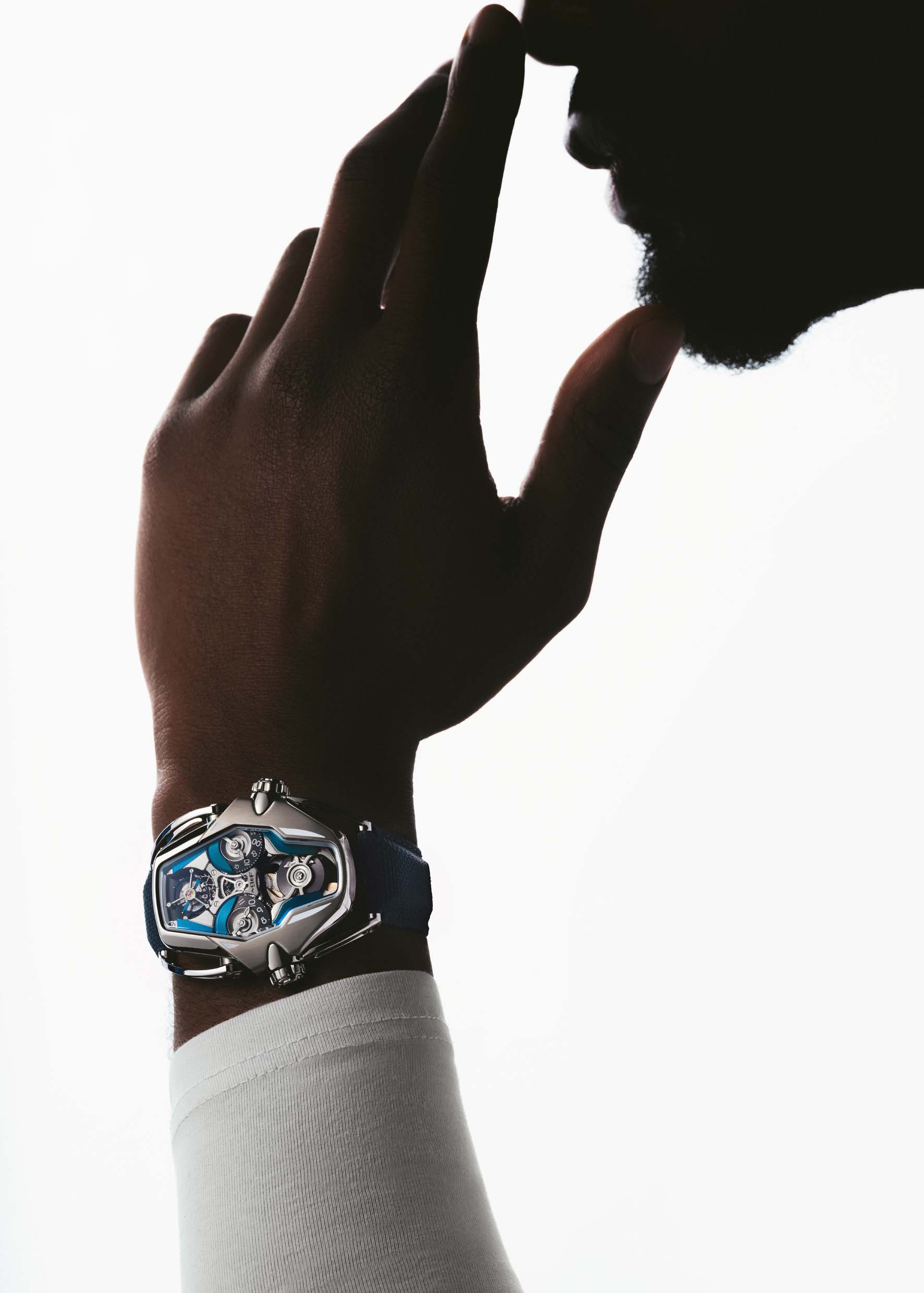
It only takes a few moments of observing HM12 to understand that it is something different. Even before being perceived as a timepiece, it appears as a mechanical face. Two large eyes dominate the scene, while the tourbillon, micro-rotor and movable visors contribute to creating the sensation of standing before a character from a science-fiction universe. It is an approach that has always been part of MB&F’s DNA and which here reaches one of its most complete expressions.
THE PROJECT THAT OPENS MB&F’S THIRD DECADE
The story of MB&F HM12 The Guardian began several years ago. Originally, it was intended to celebrate the brand’s twentieth anniversary, but during development the idea continued to evolve until it surpassed its initial ambitions. New technical solutions, new engineering challenges and an increasingly sophisticated vision required development times far longer than originally expected.
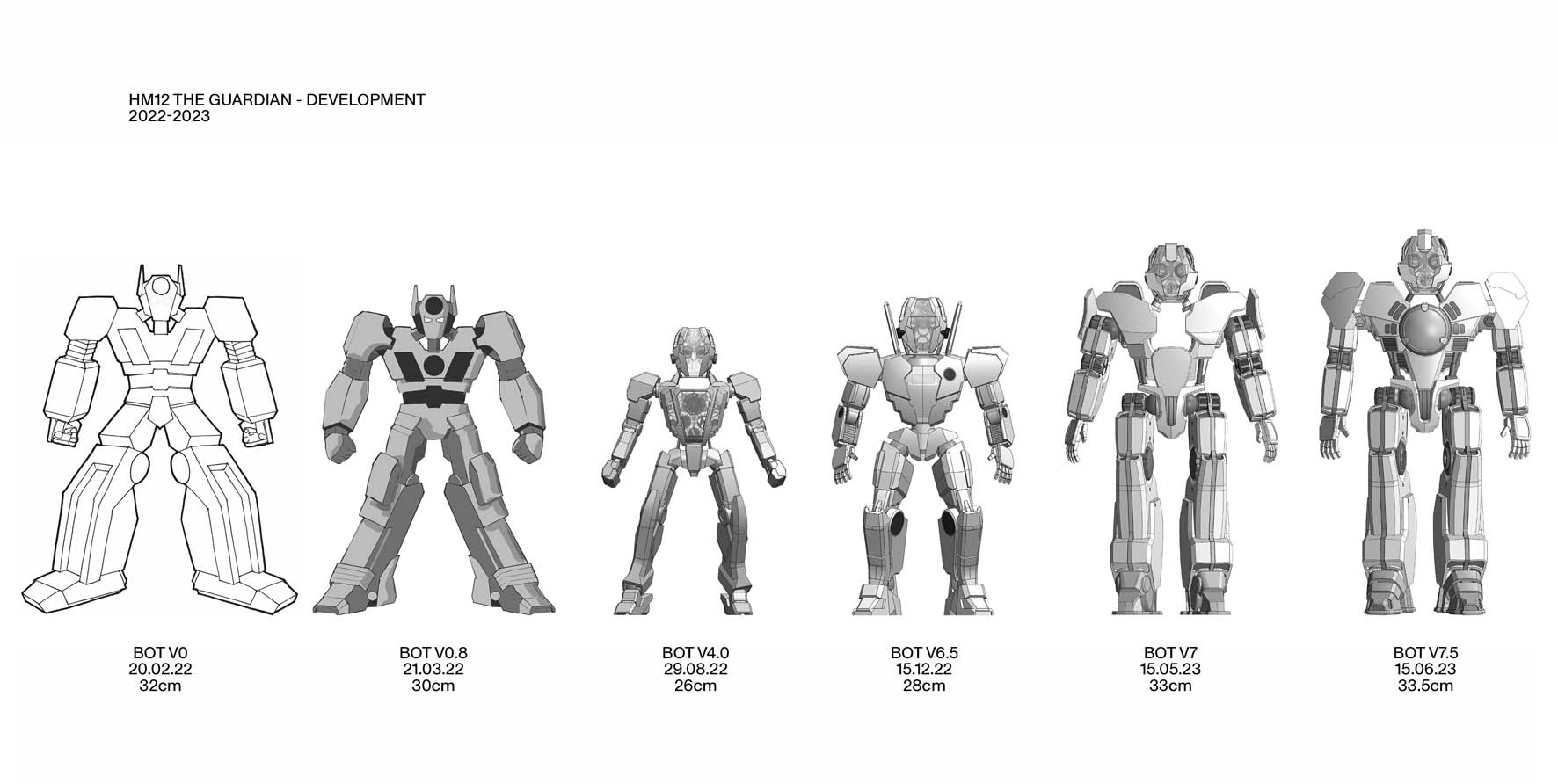
Far from being a problem, this journey allowed MB&F to transform what was meant to be a simple commemorative model into something far more significant. HM12 The Guardian thus became the object chosen to inaugurate the Maison’s third decade, reaffirming the values that have defined its identity from the very beginning.
Returning to its roots does not mean reproducing the past. It means revisiting the ideas that shaped the brand and reinterpreting them through the expertise, technologies and sensibilities developed over the past twenty years. Not by chance, one of the principles guiding the entire MB&F philosophy is that “a creative adult is a child who survived.” It is precisely this vision that permeates every aspect of HM12 The Guardian, a creation that combines imagination, pop culture, narrative design and Haute Horlogerie within a single expressive language.


The project also marks an important milestone in the creative evolution of the Maison. For the first time, a Horological Machine was conceived and developed internally by the tandem formed by Maximilian Büsser and Maximilian Maertens, a figure who has played an increasingly important role within the MB&F universe in recent years. While Büsser defined the initial concept, it was Maertens who transformed it into reality, overseeing every stage of development for more than four years, from three-dimensional modelling and prototyping to the definition of the final proportions.
A ROBOT HEAD TRANSFORMED INTO A WATCH
The idea behind MB&F HM12 The Guardian is surprisingly simple: imagining that the head of a robot could transform into a wristwatch.
From this intuition emerges an object that, when viewed from the front, is immediately perceived as a face. It is an apparently subtle yet fundamental difference. MB&F designed HM12 to be perceived first as a character and only afterwards as a watch. Unlike other Horological Machines, often inspired by vehicles, engines or spacecraft, the narrative here revolves around a mechanical presence endowed with its own personality.
Even before reading the time, the observer is confronted with a presence. The two displays that indicate the time literally become the robot’s eyes, helping to create an emotional connection with the object that goes far beyond its primary function.
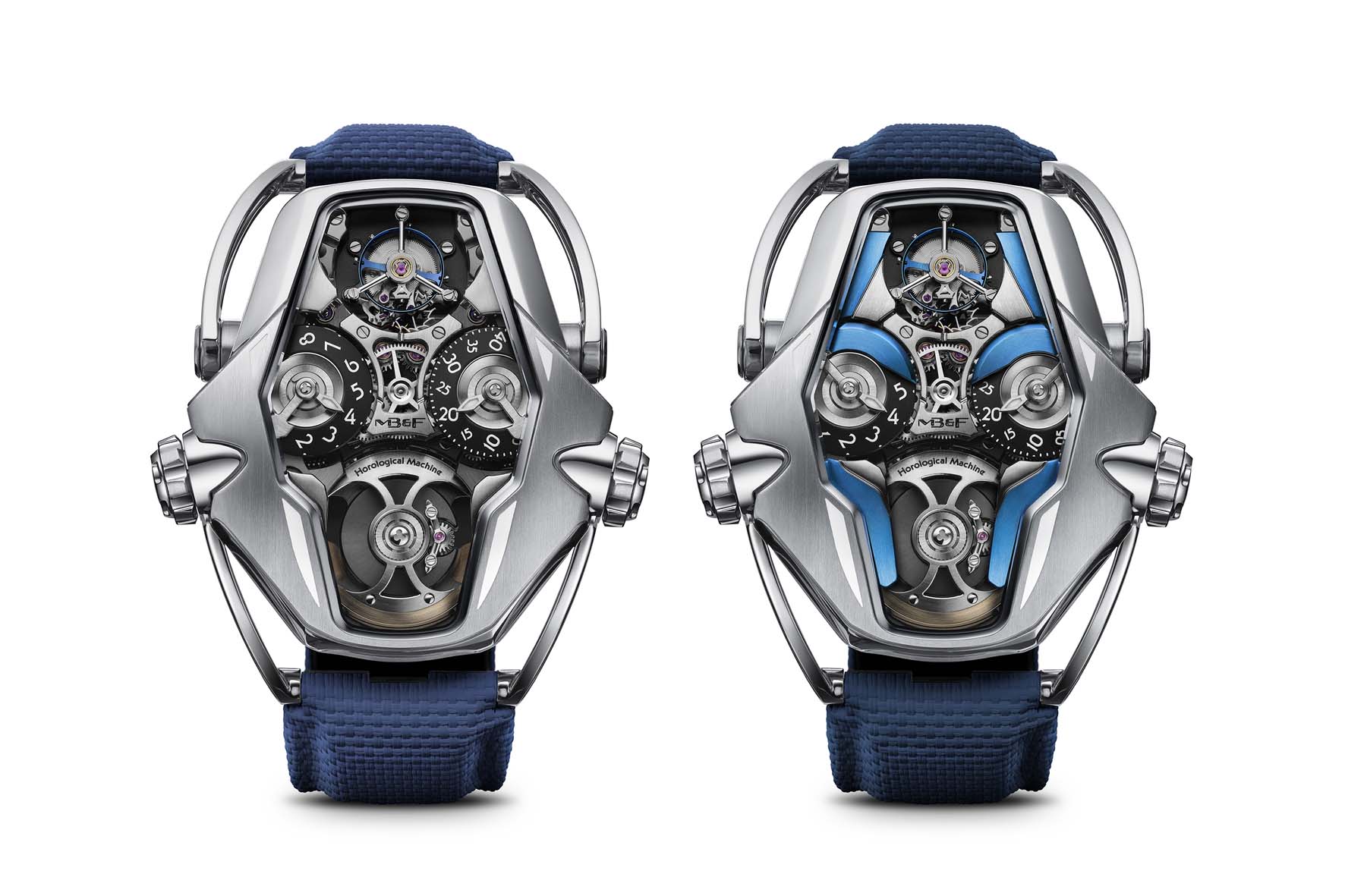
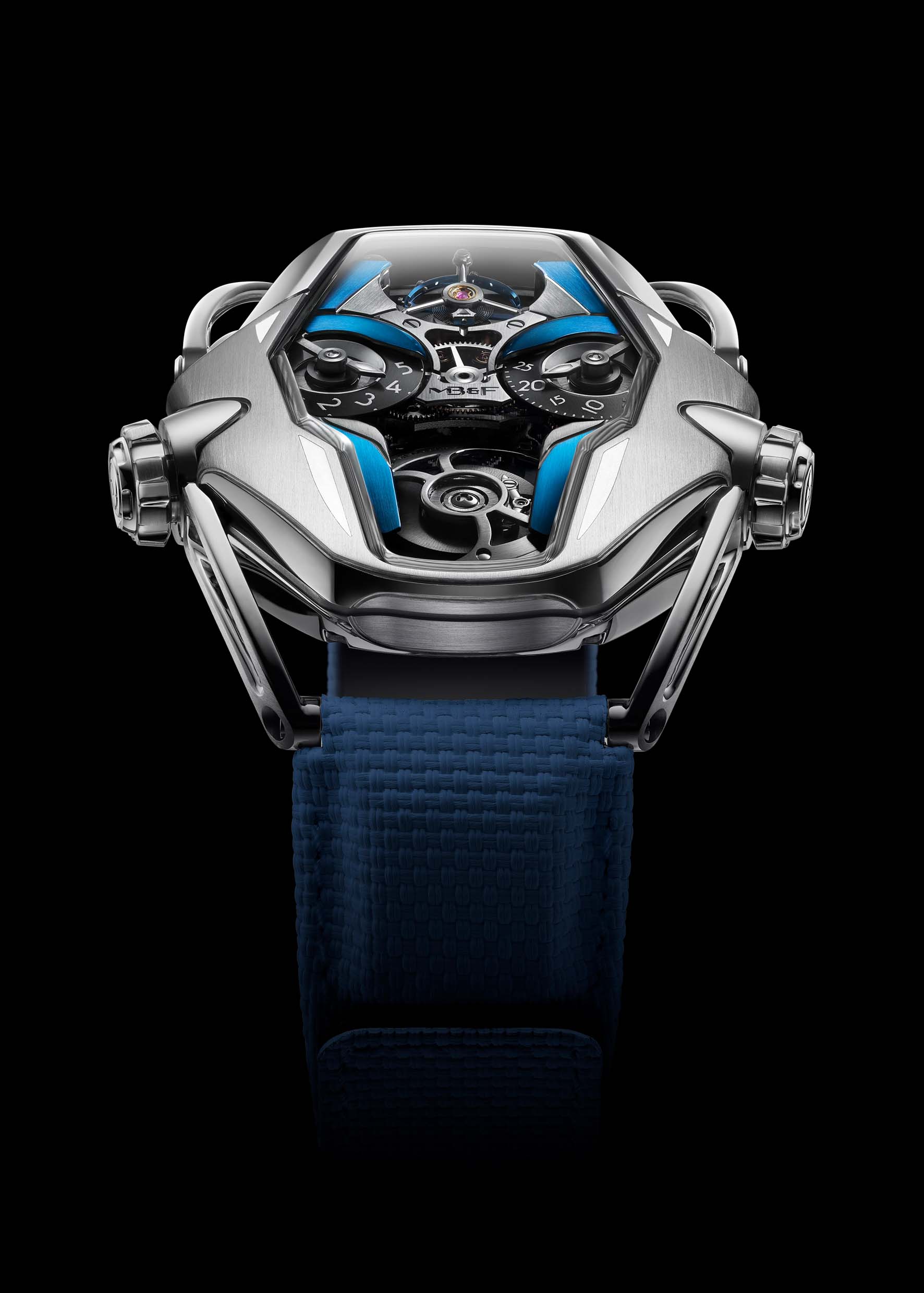
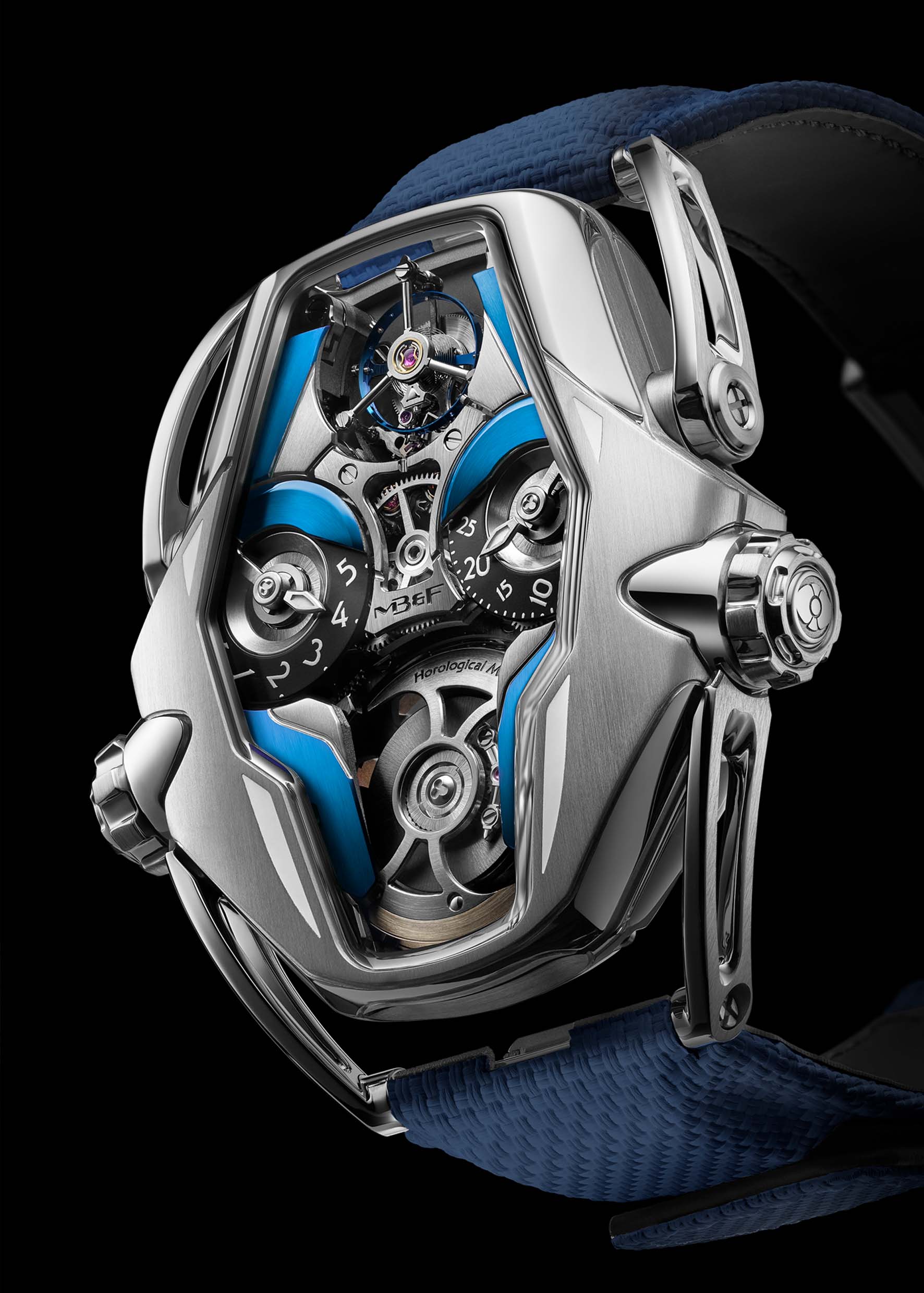
The aesthetic combines references from different eras. On one side lies the science-fiction imagery of the 1970s and 1980s that accompanied Maximilian Büsser’s childhood. On the other, more contemporary influences emerge, from Transformers to modern cinematic science fiction. The result is an aesthetic language capable of simultaneously appealing to different generations of enthusiasts.
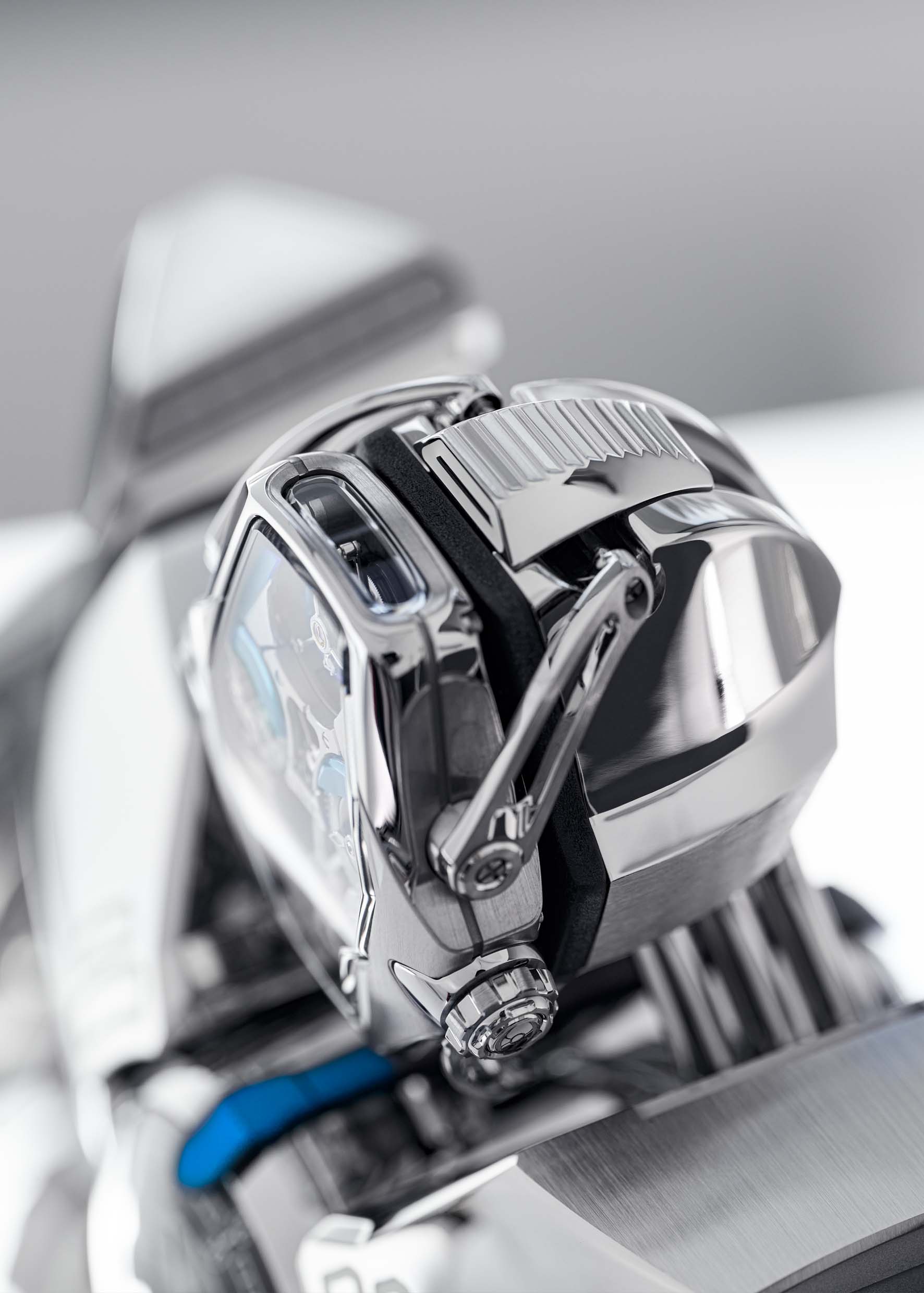
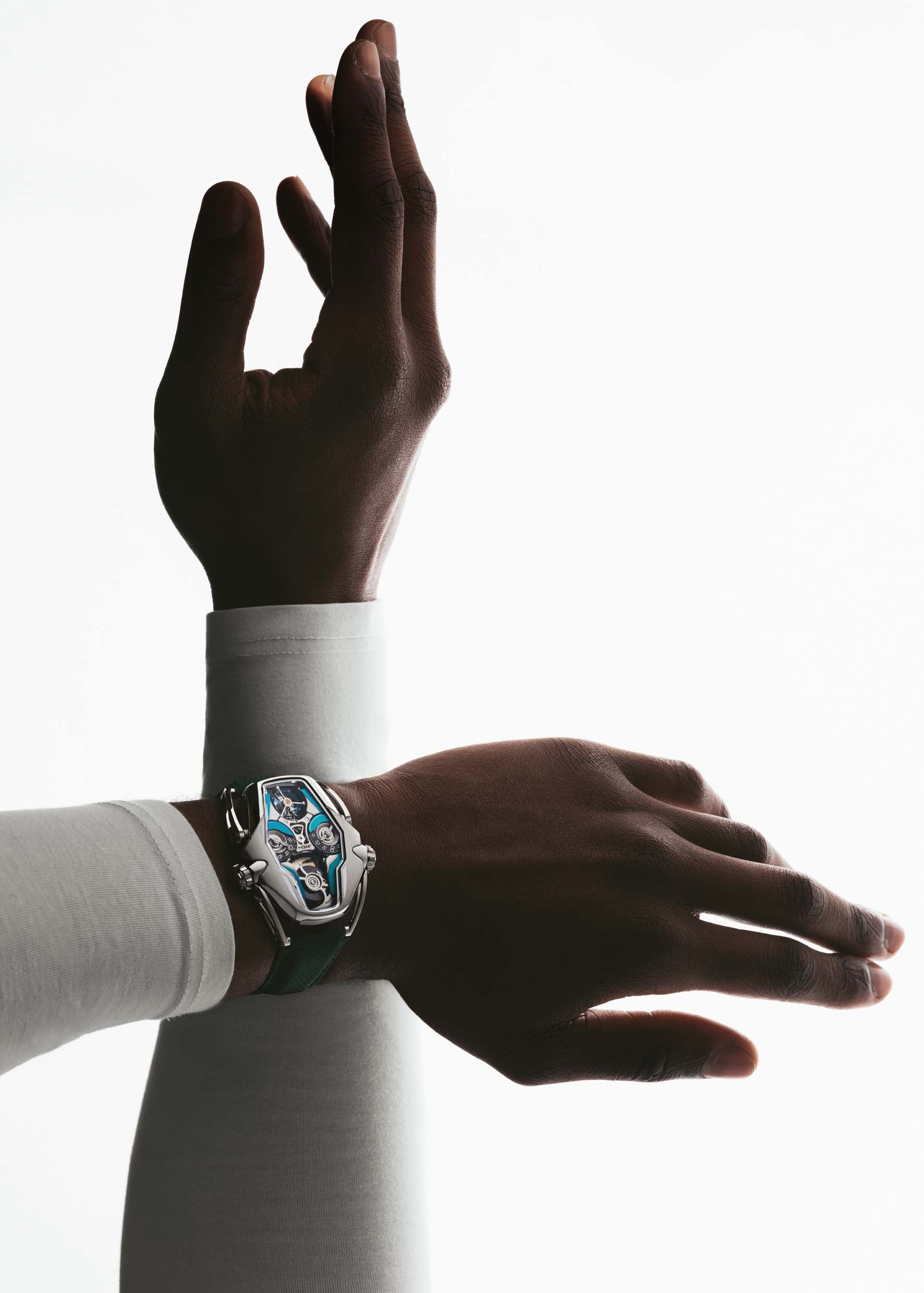
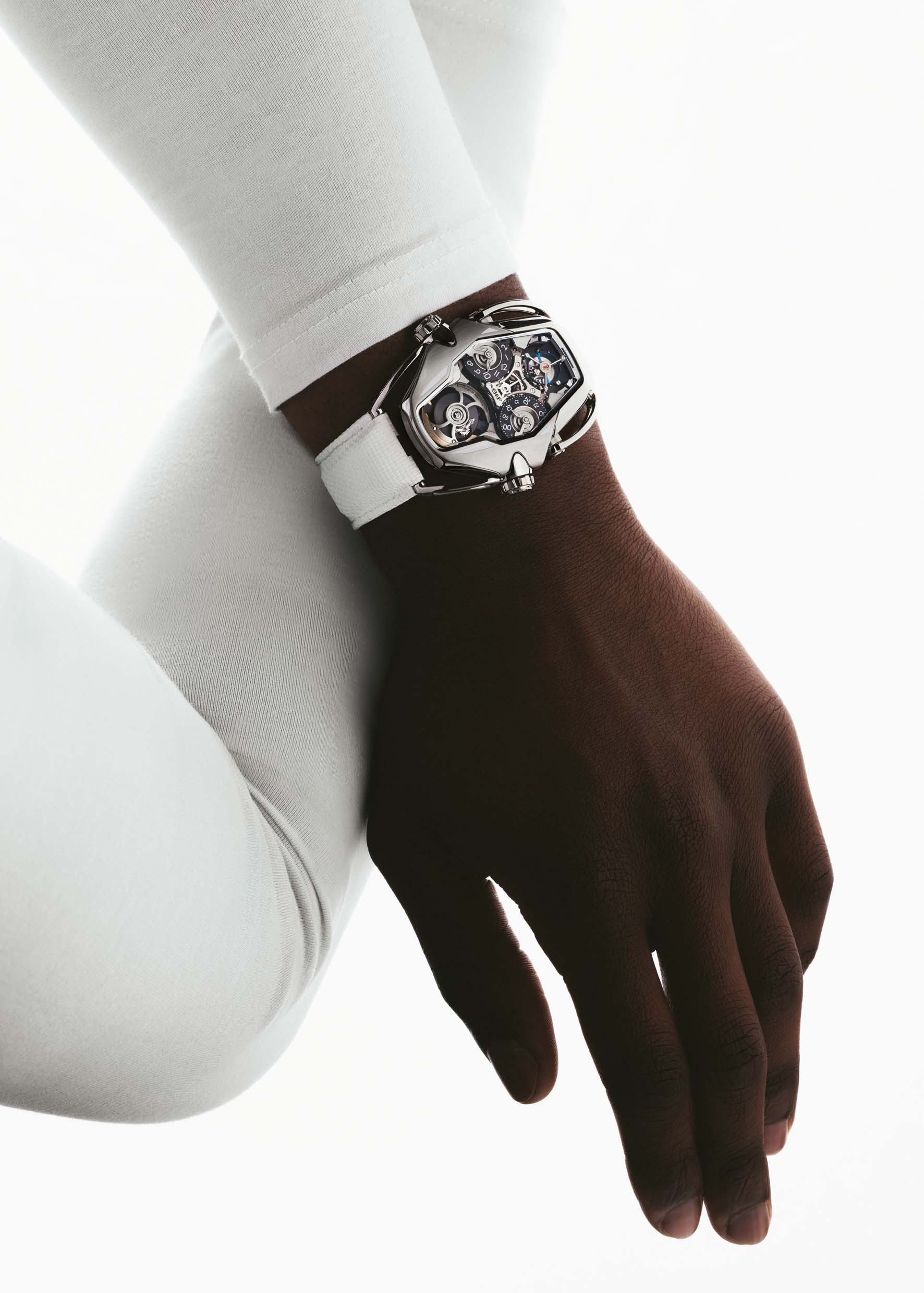
Crafted from Grade 5 Titanium, the case measures 49.3 mm in length, 43.6 mm in width and 13.8 mm in thickness. The proportions have been carefully studied to ensure a strong three-dimensional presence without compromising wearability. A fundamental role is played by the three large sapphire crystals that characterise the watch’s construction. Positioned on the top, bottom and side, they allow light to pass through the structure and enhance the complex internal mechanical architecture.
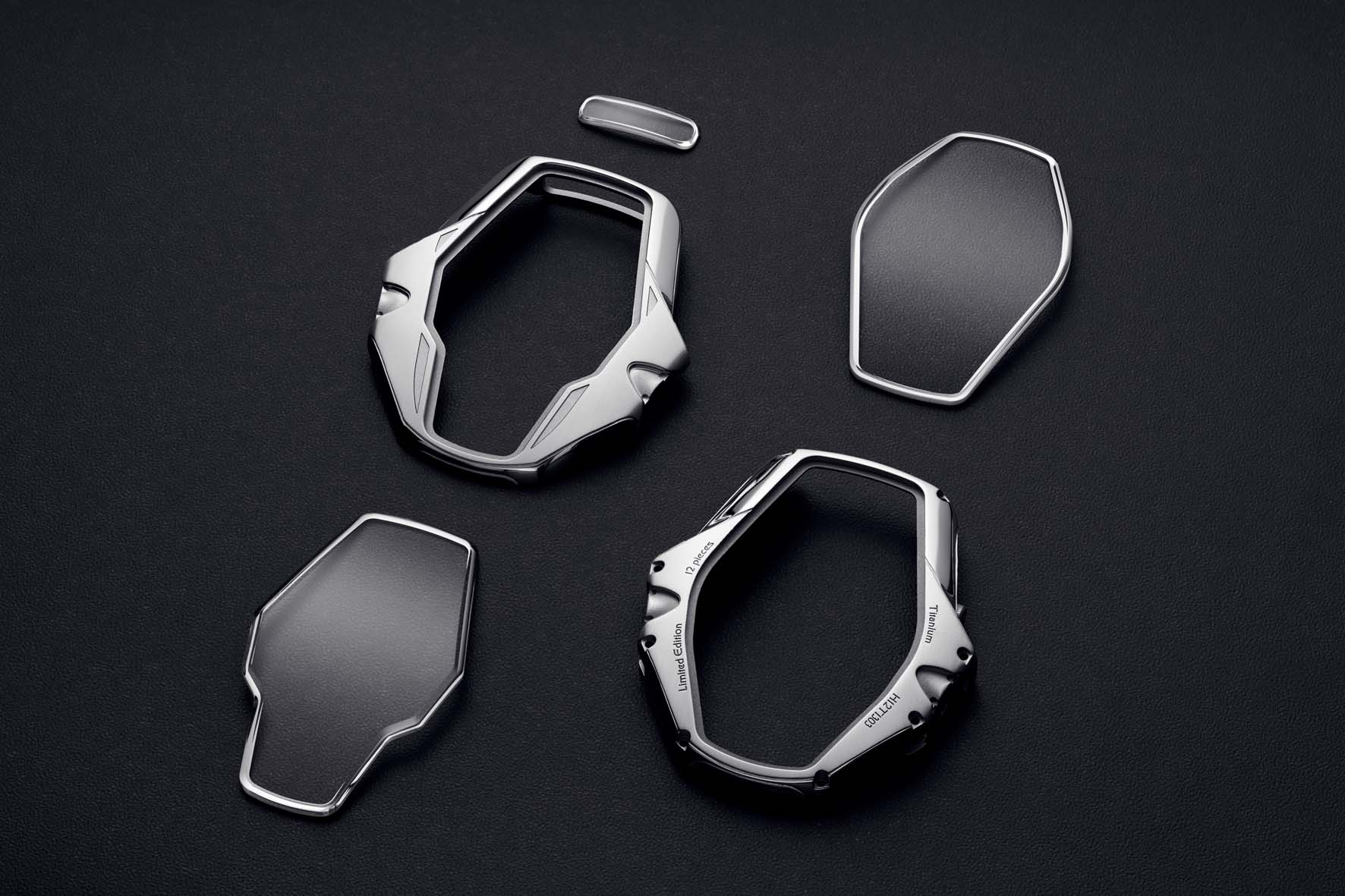
The lug system also contributes to the originality of the project. The mobile lugs positioned at 12 o’clock and the fixed lugs at 6 o’clock allow the watch to adapt to the shape of the wrist while preserving the strong aesthetic personality that characterises the entire construction.
FLYING TOURBILLON, JUMPING HOURS AND A 646-COMPONENT CALIBRE
Behind the playful and almost whimsical appearance of HM12 lies a genuine exercise in independent Haute Horlogerie. The automatic movement has been developed entirely by MB&F and represents one of the most complex calibres ever produced by the Maison.
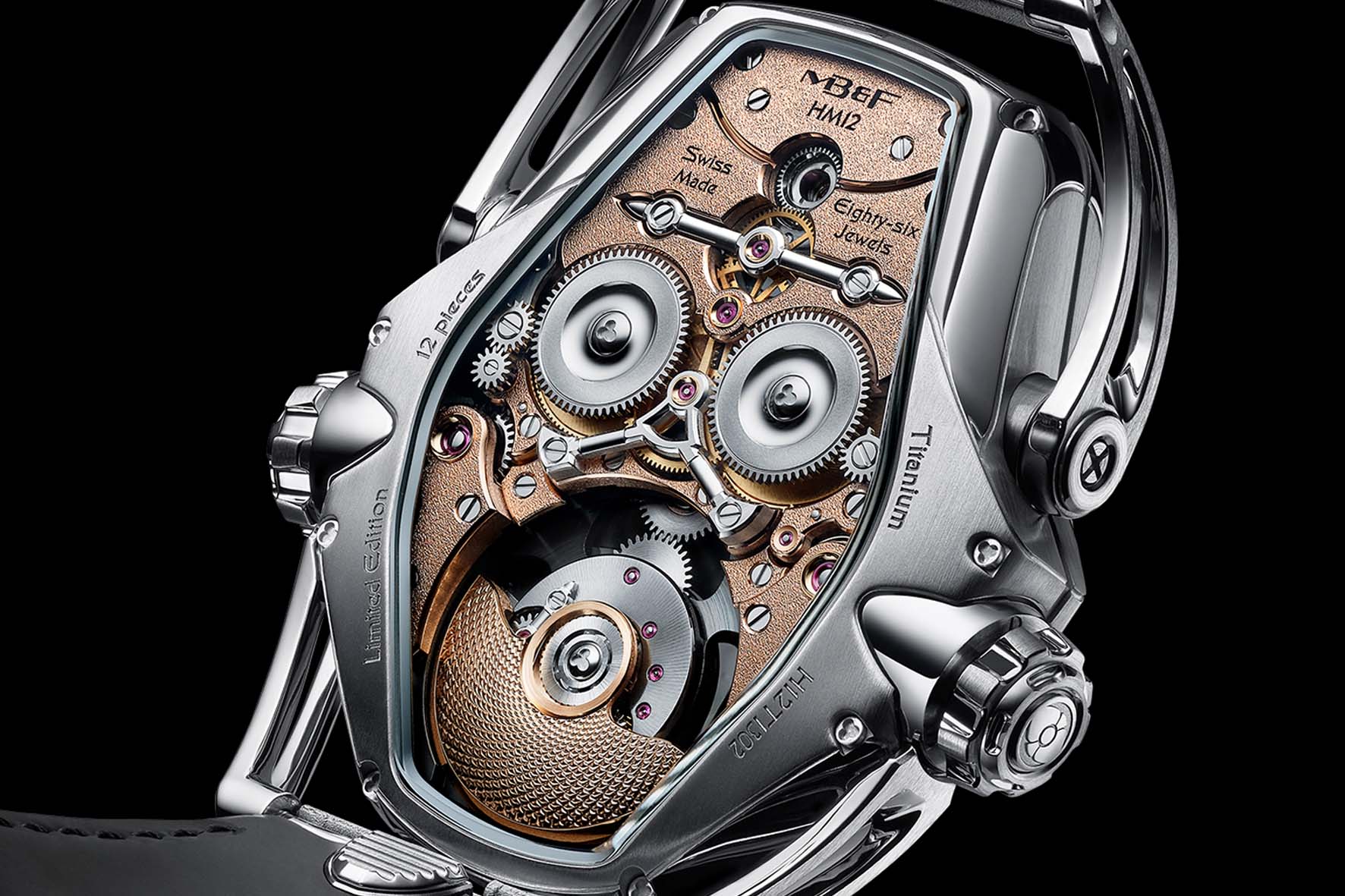
Comprising 646 components and 86 jewels, the movement delivers a power reserve of 84 hours and employs a construction designed from the outset to follow the shape of the case. A choice that distinguishes HM12 from many contemporary watches, in which it is often the case that adapts to the movement.
Figures that confirm how MB&F HM12 The Guardian is not merely an aesthetic provocation, but one of the most technically sophisticated expressions ever created by the Geneva-based Maison.
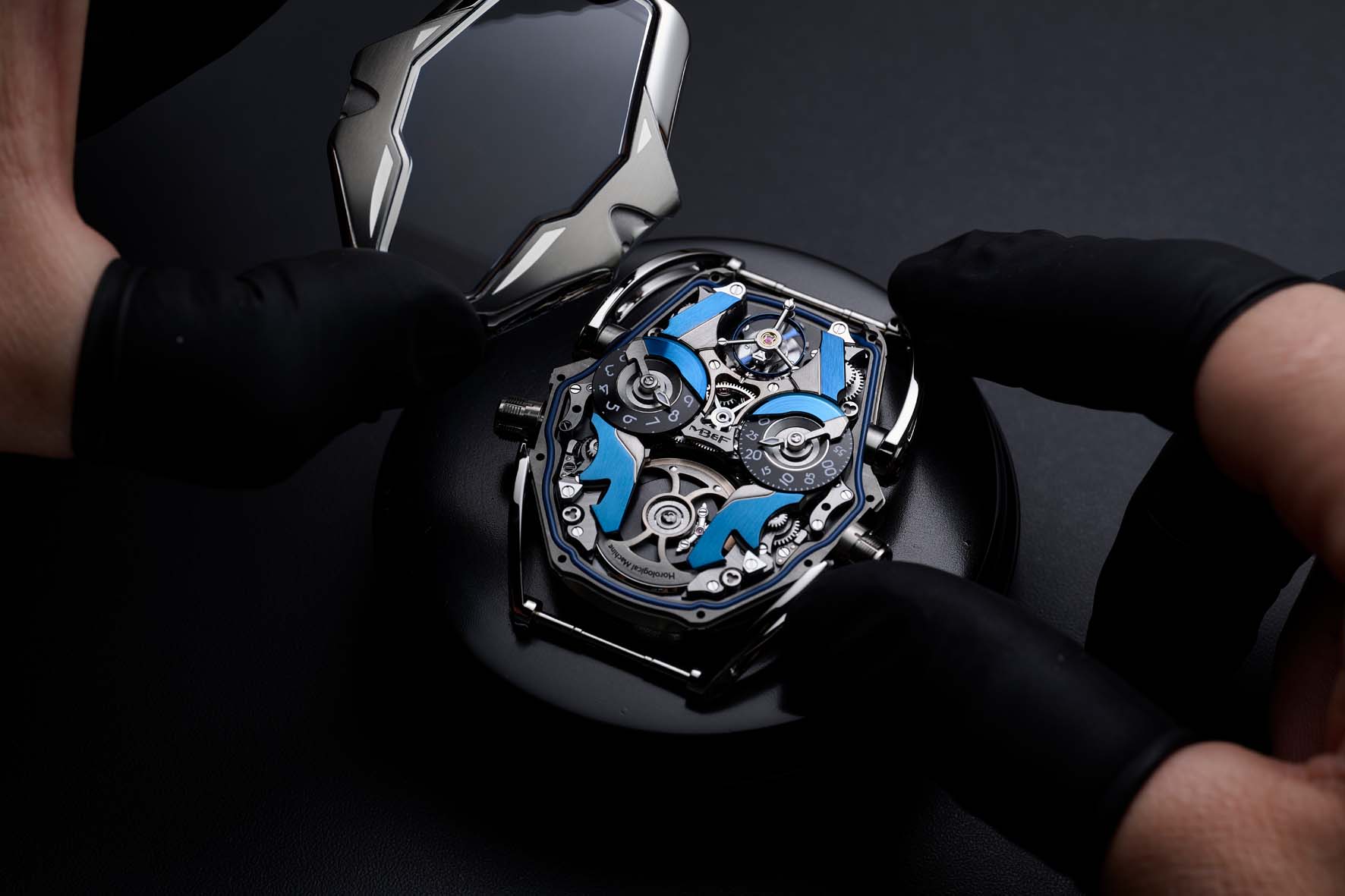
The robot’s eyes serve a very specific function. On the left is the instantaneous jumping hours display, while on the right the continuously scrolling minutes are shown. Both indications utilise rotating discs read through fixed references, transforming the display of time into an integral part of the design.
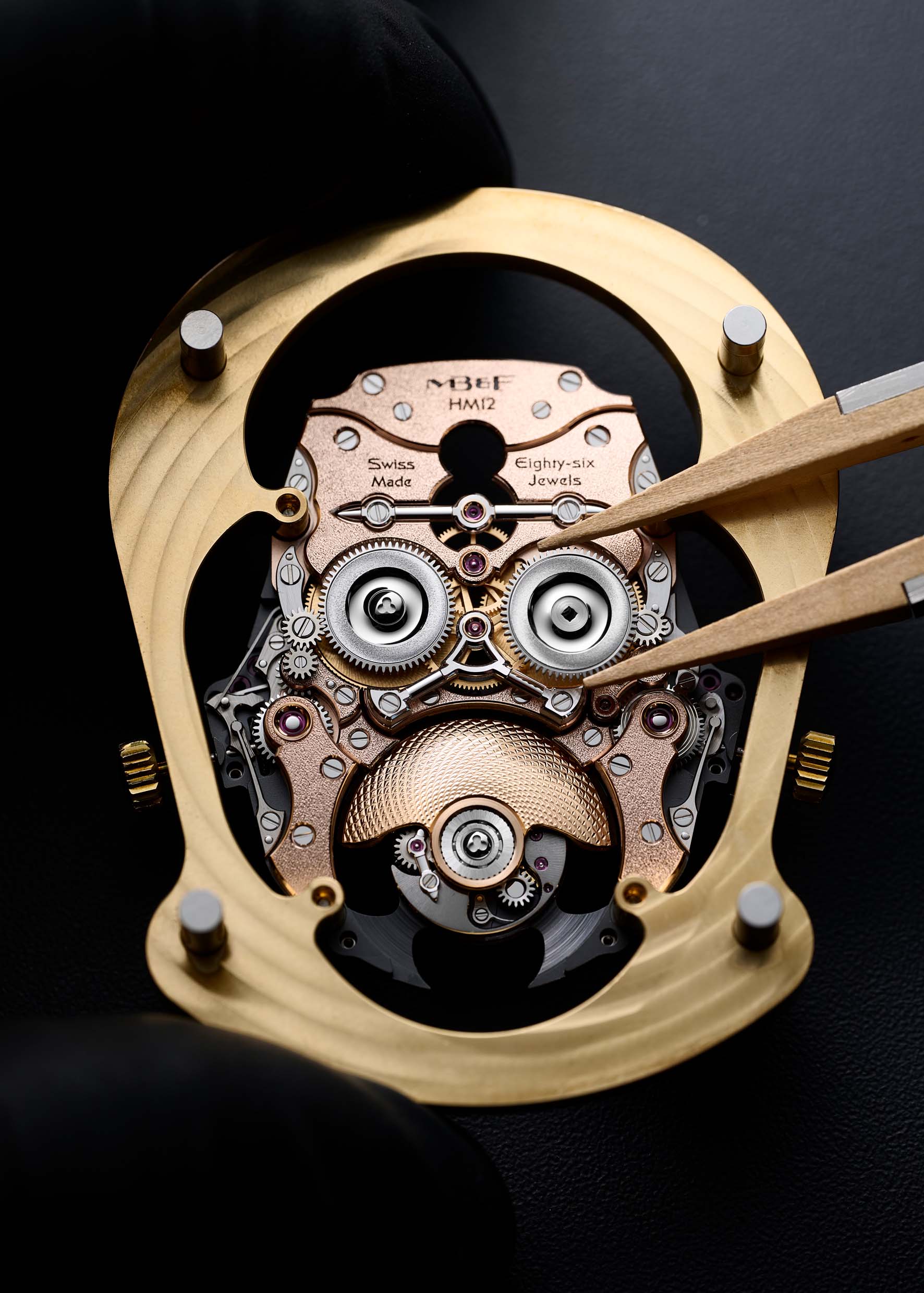
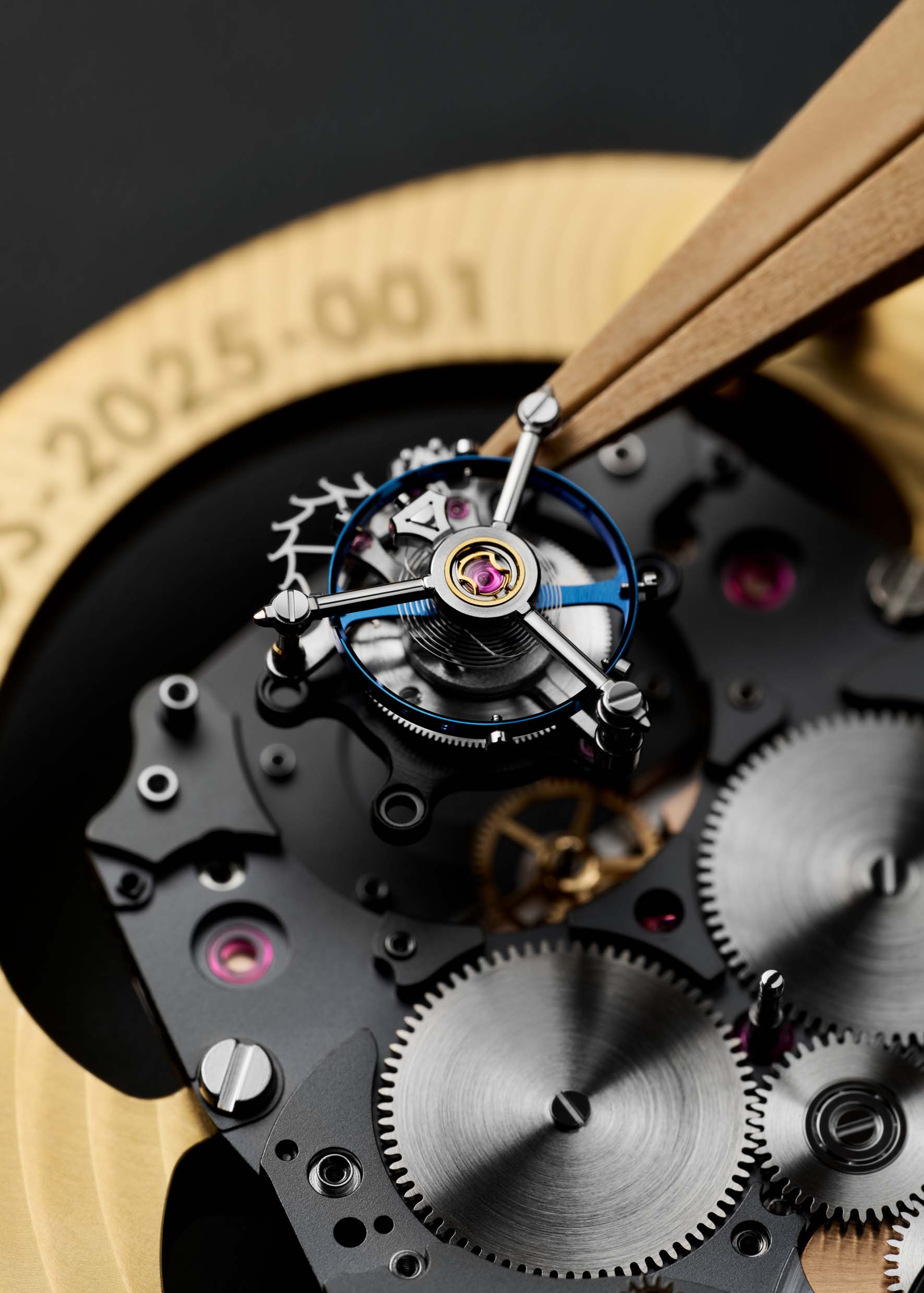
In the lower section, one side of the double-sided Micro-Rotor is visible, shaped in the form of the famous battle axe that represents one of MB&F’s most iconic symbols. In the upper section emerges the large Flying Tourbillon, deliberately exposed and positioned as if it were the robot’s brain. Visible both from the front and laterally through the sapphire crystals, the tourbillon becomes one of the dominant aesthetic elements of the entire construction, immediately drawing the eye towards the machine’s “brain”.
If the front side looks towards the future, the rear of the watch tells a different story. Here, the connection with the tradition of Swiss Haute Horlogerie fully emerges. Hand-finished bridges, decorated surfaces and a grained mainplate create a strong contrast with the futuristic appearance of the front section. Particularly noteworthy is the rear rotor, decorated with guillochage executed thanks to the contribution of independent master watchmaker Kari Voutilainen and his team, an exceptionally complex operation as it is performed on a curved, spherical surface.
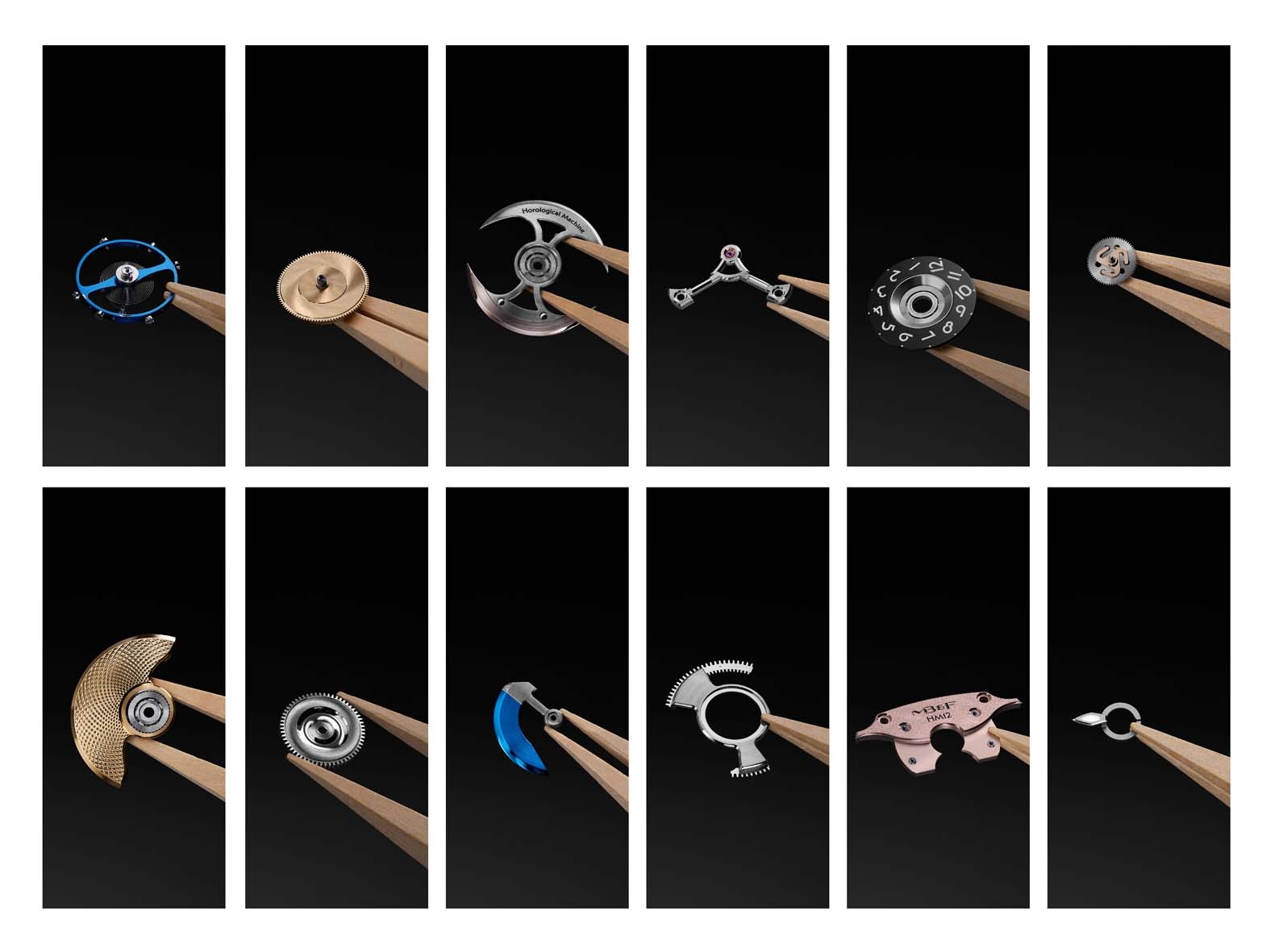
In this respect, HM12 occupies a unique position within MB&F’s production, combining the visionary language of the Horological Machines with the level of refinement that traditionally characterises the Legacy Machines.
FACE SHIELD: THE COMPLICATION THAT TRANSFORMS THE ROBOT’S FACE
The most original element of MB&F HM12 The Guardian is probably the Face Shield system, a complication developed specifically for this project.
Operated via the crown positioned on the left side of the case, the visors progressively slide across the robot’s face, completely altering its appearance. The wearer can decide at any moment the desired degree of opening, ranging from full exposure of the dial to its almost complete concealment.
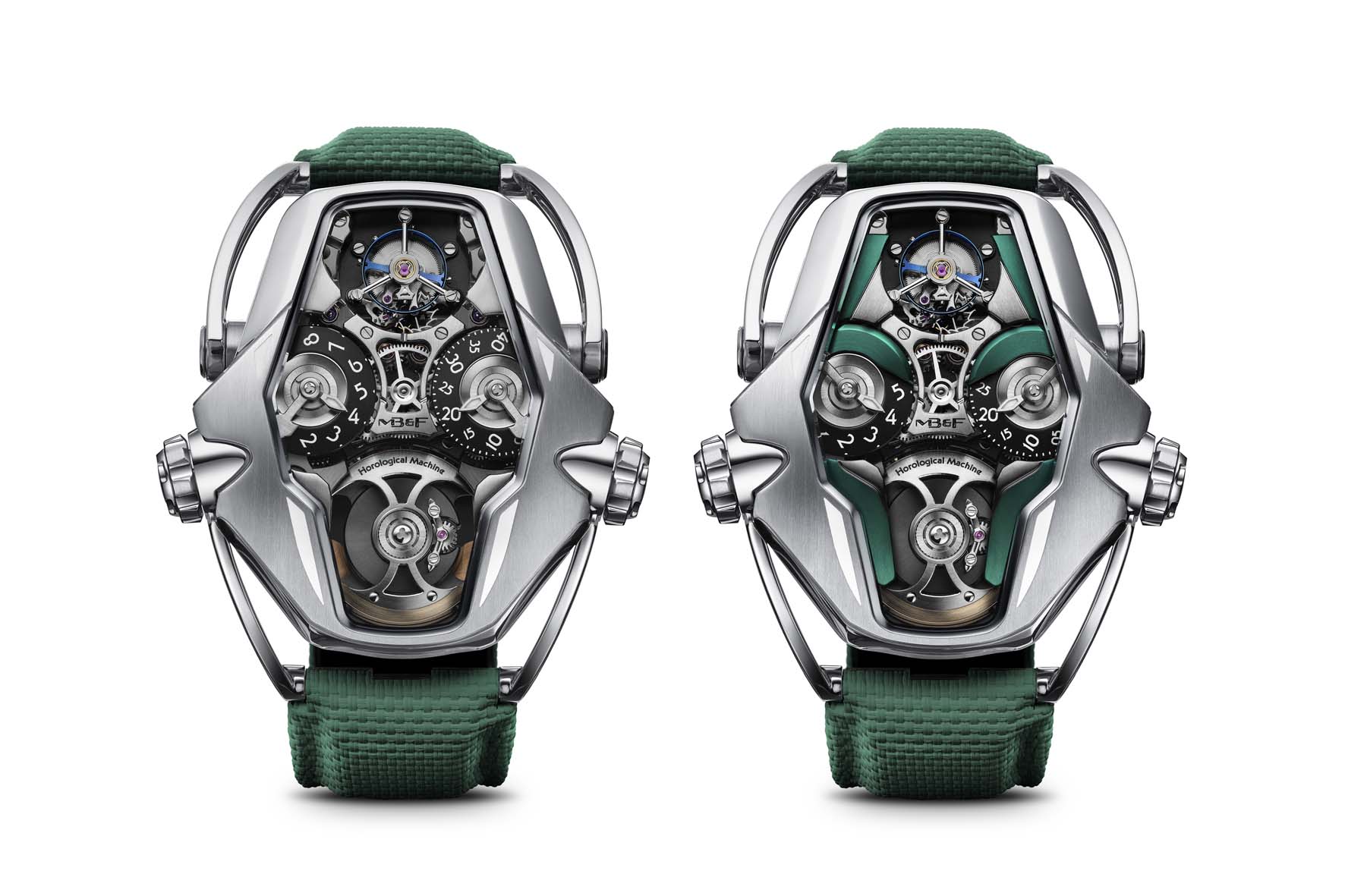
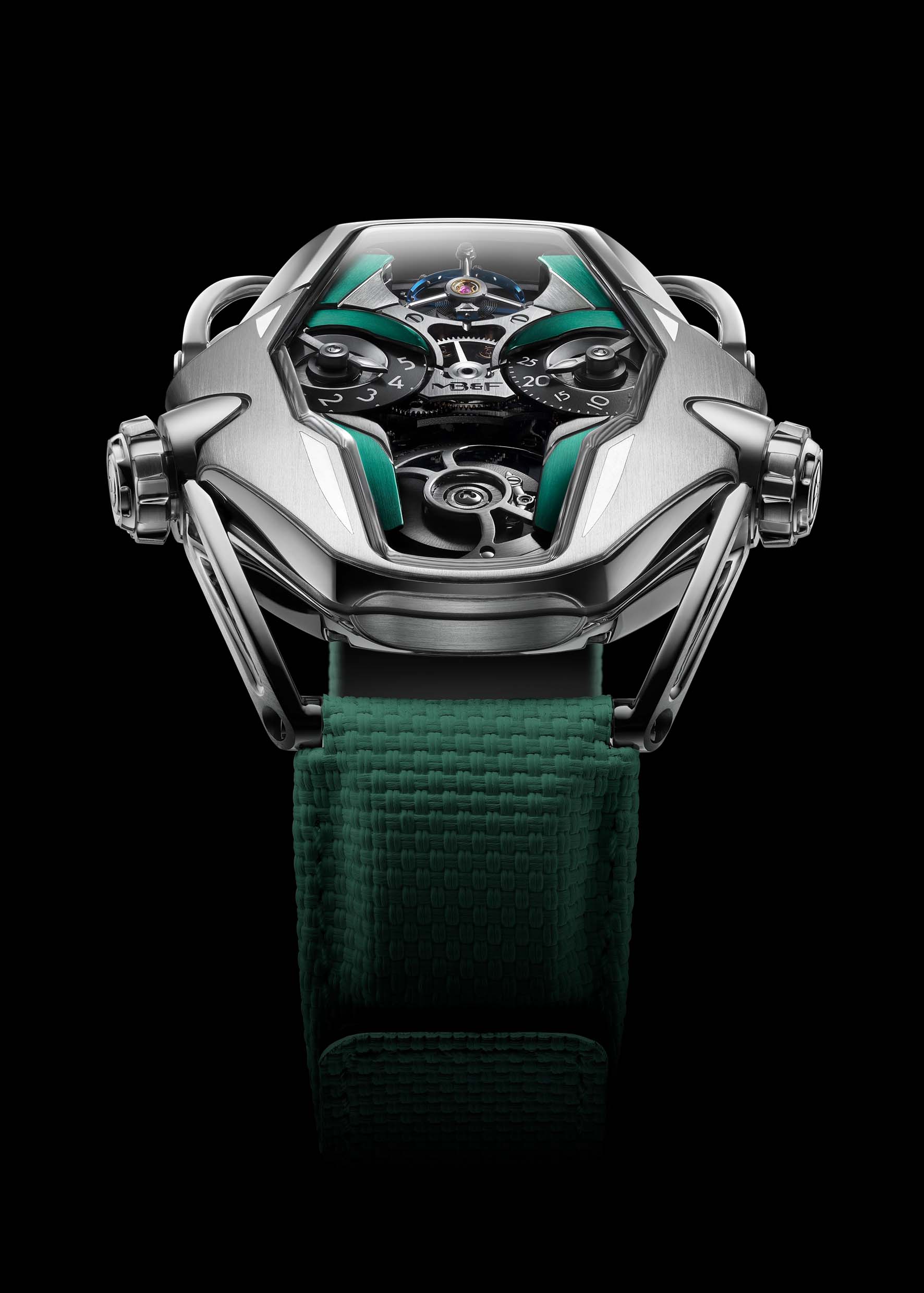
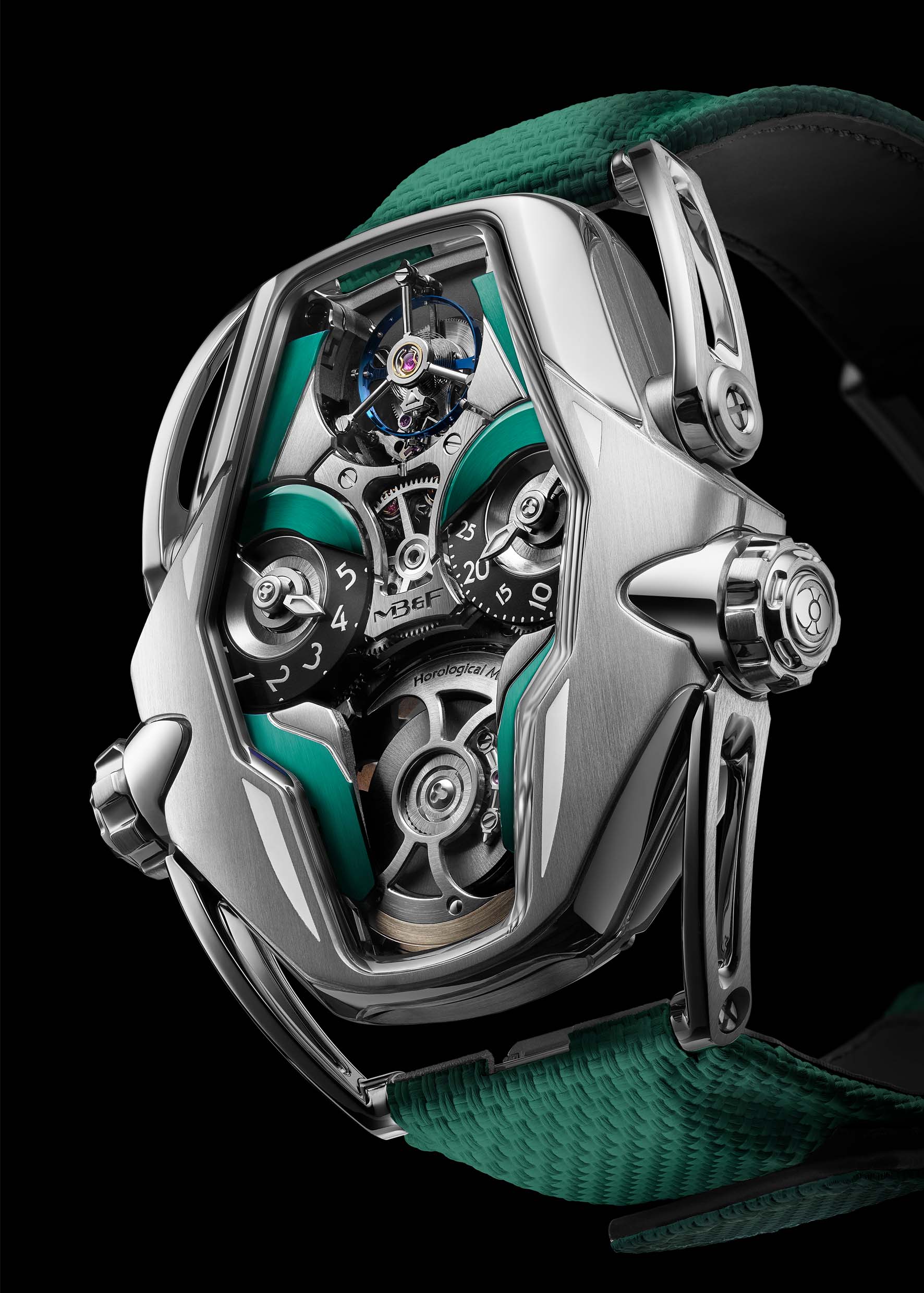
What makes this function truly extraordinary is the level of technical complexity required to realise it. The system requires more than 200 dedicated components, a number greater than that found in many complete mechanical watches. Even more remarkable is the fact that the entire mechanism is completely independent from the main movement.
MB&F has also applied to this function the same level of finishing reserved for the calibre’s components. Polished wheels, finished settings and complex inward angles demonstrate how the Maison intended to treat the Face Shield not as a simple aesthetic accessory, but as a genuine mechanical complication integrated into the architecture of the watch.
It is precisely this fusion of mechanical function and narrative construction that distinguishes MB&F HM12 The Guardian from the majority of contemporary complications. The Face Shield system was not conceived to solve a technical problem, but to reinforce the personality of the object and the relationship between the wearer and the machine.
THE GUARDIAN: MUCH MORE THAN A DISPLAY STAND
One of the most interesting aspects of the entire project is that The Guardian is not a display stand.
This concept is reiterated several times by MB&F because it represents one of the central aspects of the entire creation. The Guardian was not conceived as an accessory or display base, but as an integral part of the experience. Without it, HM12 remains an extraordinary watch; together, the two elements give life to a single mechanical work.
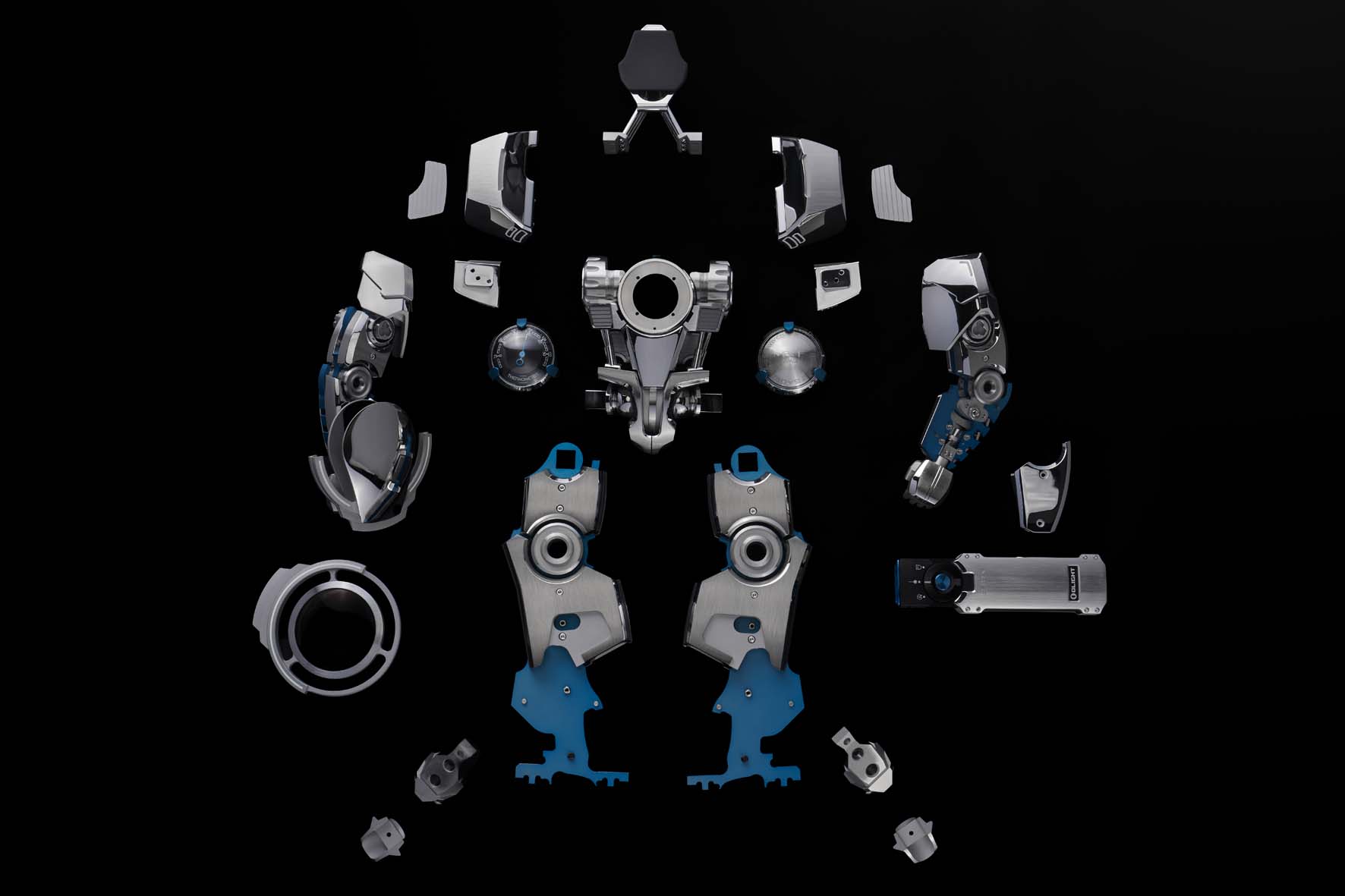
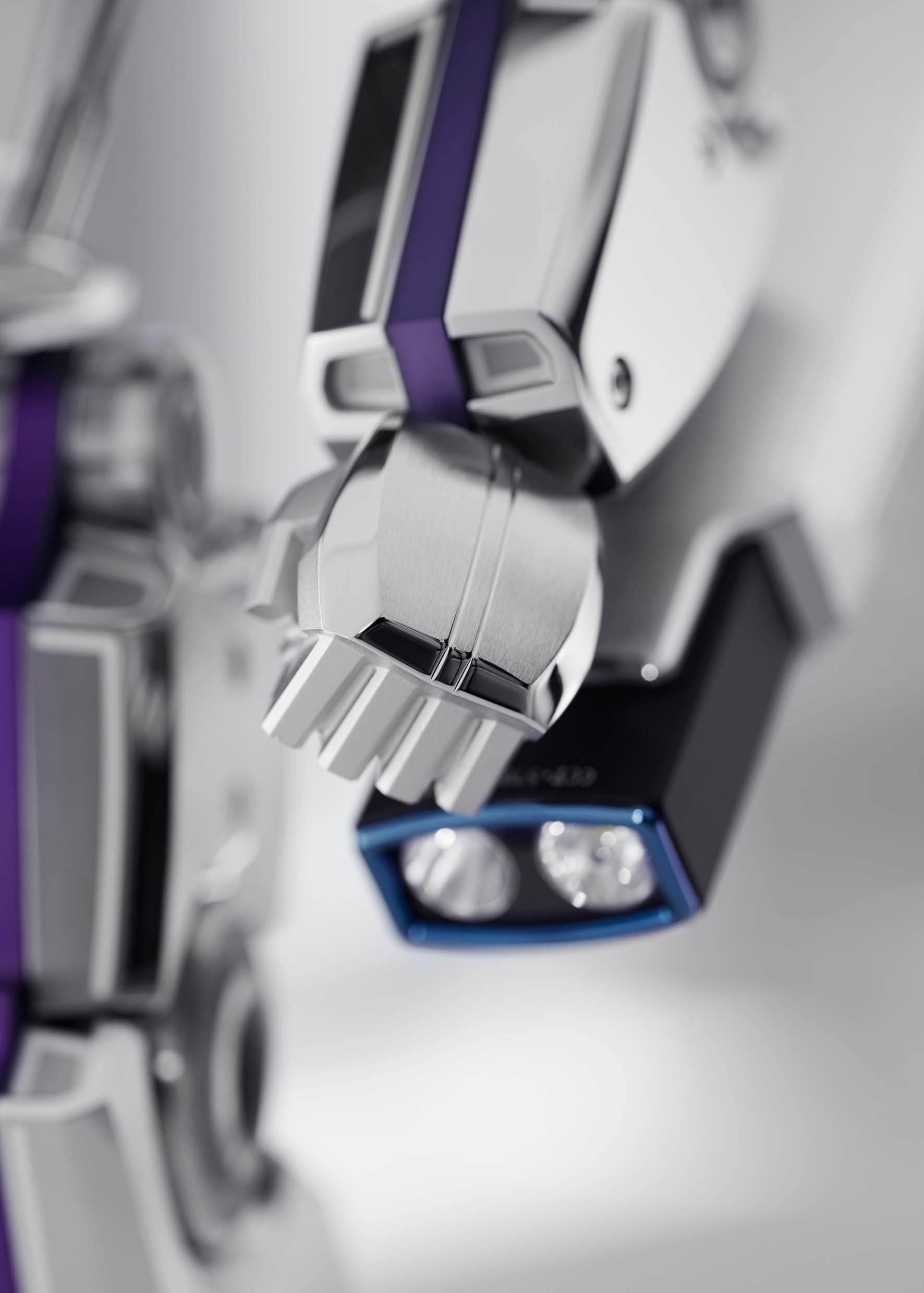
Developed together with L’Epée 1839, the Maison’s long-standing partner for mechanical table creations, the robot is composed of 755 components and integrates several mechanical functions. At the centre of its chest is a mechanical thermometer that symbolically serves as the robot’s heart. Integrated into the right arm is a magnifying glass calibrated to observe the movement in the finest detail, while the left arm houses a removable UV torch designed to activate the Super-LumiNova present on both the watch and the robot.
Thanks to the quick-release system, HM12 can be removed from its strap and mounted directly onto the robot’s head. The strap itself is stored inside a hidden drawer integrated into the base.
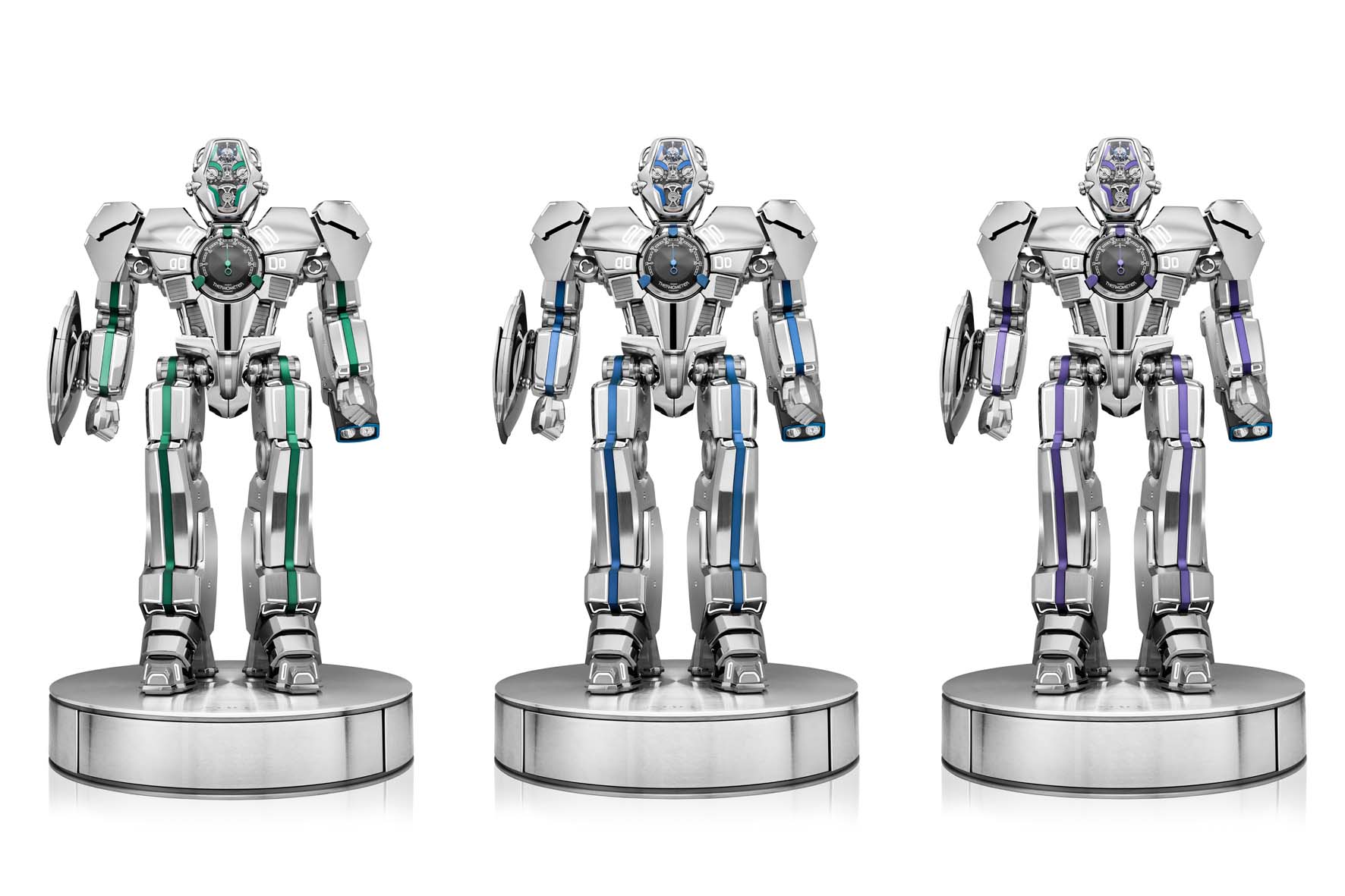
Standing 38.2 centimetres tall, with a base measuring 22 centimetres in diameter and a total weight of approximately 15 kilograms, The Guardian presents itself as a true mechanical sculpture. An object designed to be observed, handled and explored, exactly like the watch it completes.
AVAILABILITY AND FINAL THOUGHTS
The new MB&F HM12 The Guardian will be available in three colour variants: blue, green and purple. Each version will be limited to just 12 pieces, resulting in a total production of only 36 watches.
More than a new product launch, MB&F HM12 The Guardian represents a synthesis of the creative universe that Maximilian Büsser has built over the past two decades. Within it coexist the science-fiction aesthetic of the early Horological Machines, the mechanical refinement of the Legacy Machines, the culture of collaboration that has always defined the brand, and a storytelling ability that continues to set MB&F apart within contemporary Swiss independent watchmaking.
In a market increasingly driven by vintage-inspired designs and references to the past, MB&F continues to follow a different path. HM12 The Guardian does not seek to recreate what has already been done. Instead, it seeks to imagine what could be. And that is probably why, twenty years on, the Horological Machines still feel as though they have arrived from a future imagined long ago, yet one that contemporary watchmaking has still not managed to reach.
By Jacopo Giudici