

Following a year like 2025, packed with watchmaking anniversaries in the world of watchmaking, 2026 also brings several anniversaries worth celebrating. One of these concerns something that literally revolutionised the concept of timekeeping precision and the very idea of a complication. We are talking about the tourbillon, patented by Abraham-Louis Breguet on 26 June 1801 – 225 years ago.
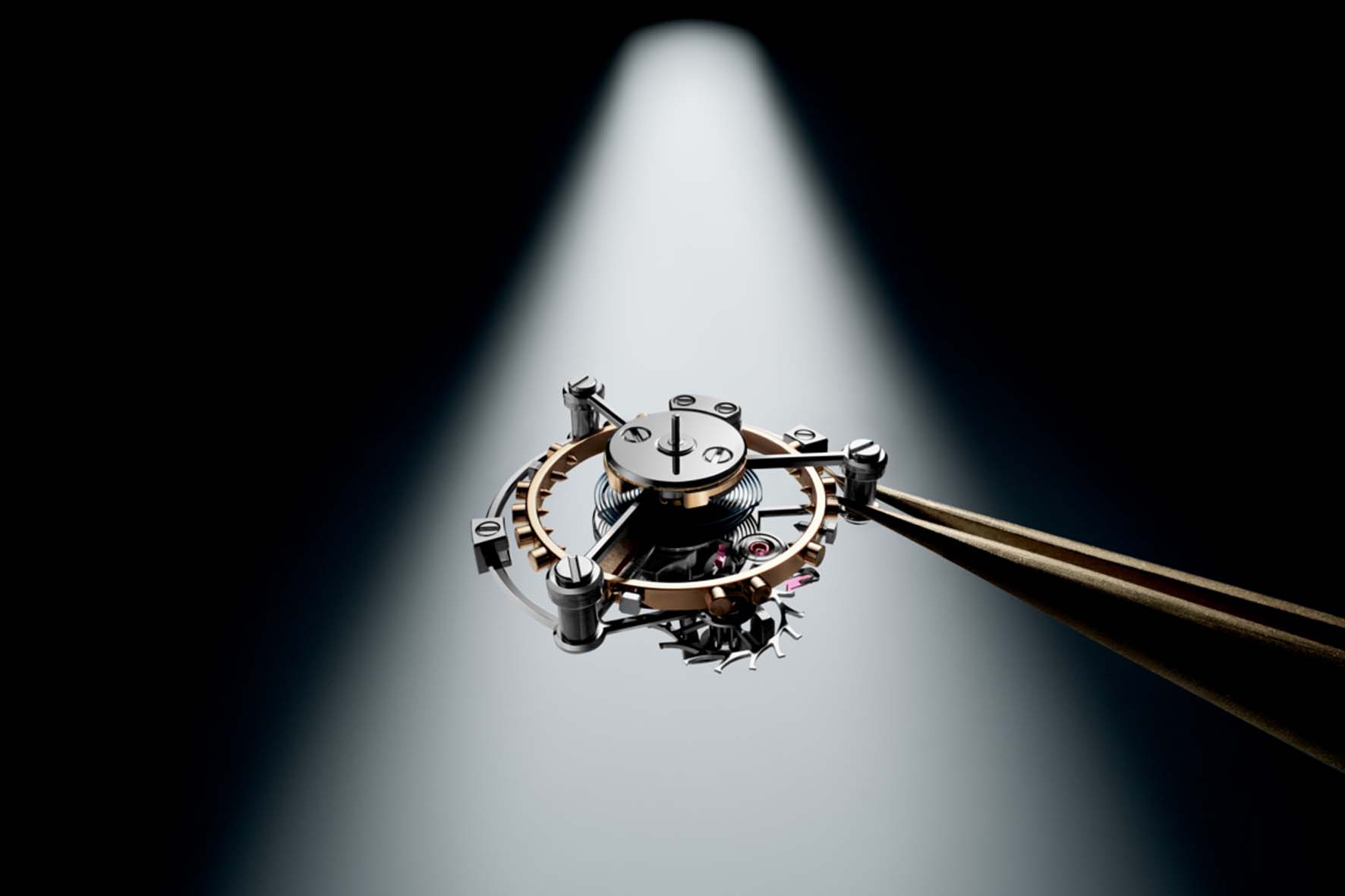
The 1801 patent was the culmination of a process that began between 1793 and 1795, when Breguet moved from Paris to Switzerland – first to Neuchâtel and then to Le Locle – to escape the dangerous climate that had taken hold in France in the wake of the Revolution. You can read about what the tourbillon is and how it works in this article , written to mark the 220th anniversary of the complication. How the complication aligns with Breguet’s aesthetic codes is explained here.
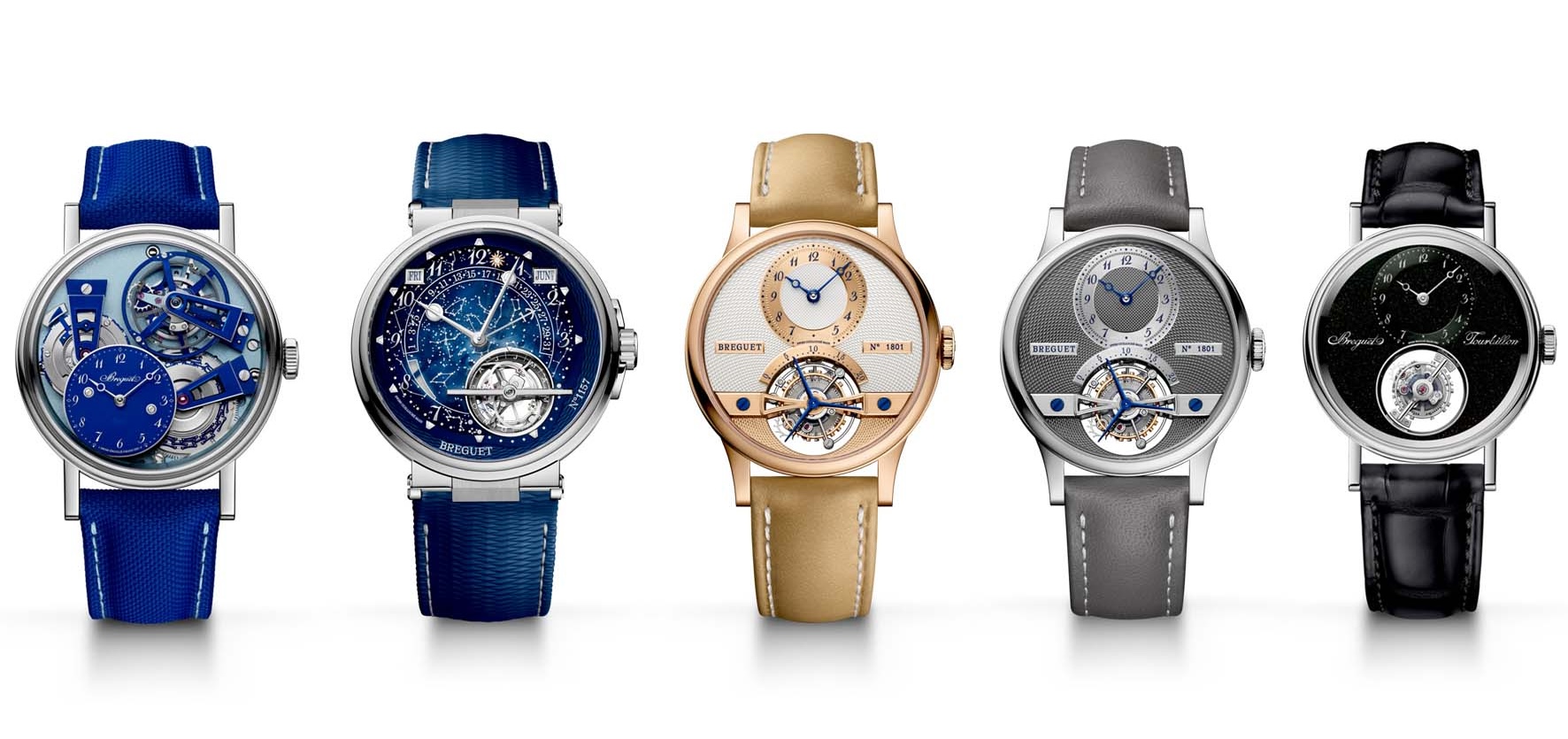
In the following article, however, we will discuss the models the Maison unveiled to mark the tourbillon’s anniversary, focusing primarily on the Classique Tourbillon 7357 (in two versions), whilst not overlooking the updated editions of the Classique Tourbillon Sidéral 7255, the Tradition Tourbillon 7047 and the Marine Tourbillon Équation Marchante 5887.
CLASSIQUE TOURBILLON 7357: THE CALIBRE 187B
Let’s start with the new Classique Tourbillon 7357, a prime example of watchmaking simplicity for which Breguet has designed a new dedicated movement, the calibre 187B. The most illustrious predecessor of this watch in Breguet’s catalogue was the Classique Tourbillon Ref. 3350, powered by the hand-wound calibre 558, whose tradition and functions – hours, minutes, seconds and tourbillon – are carried on by the 187B.
It retains the frequency of 18,000 vibrations per hour, which is a faithful homage to that used by Abraham-Louis Breguet in most of his watches. However, as we are now in the 21st century rather than the 18th or 19th, this movement can benefit from the opportunities offered by contemporary engineering and modern materials science. All this is thanks to the work of Breguet’s Research and Development department.
Meanwhile, compared with its predecessors, the power reserve has been increased to 60 hours, thanks to an optimisation of the balance spring’s length. The calibre’s accuracy (190 components – no small number of for a single-timepiece tourbillon) has been enhanced precisely through the use of a Breguet Nivachron balance spring with a silicon anchor, which ensures immunity to surrounding magnetic fields and thus meets the criteria of the Breguethallmark (which we discuss here).
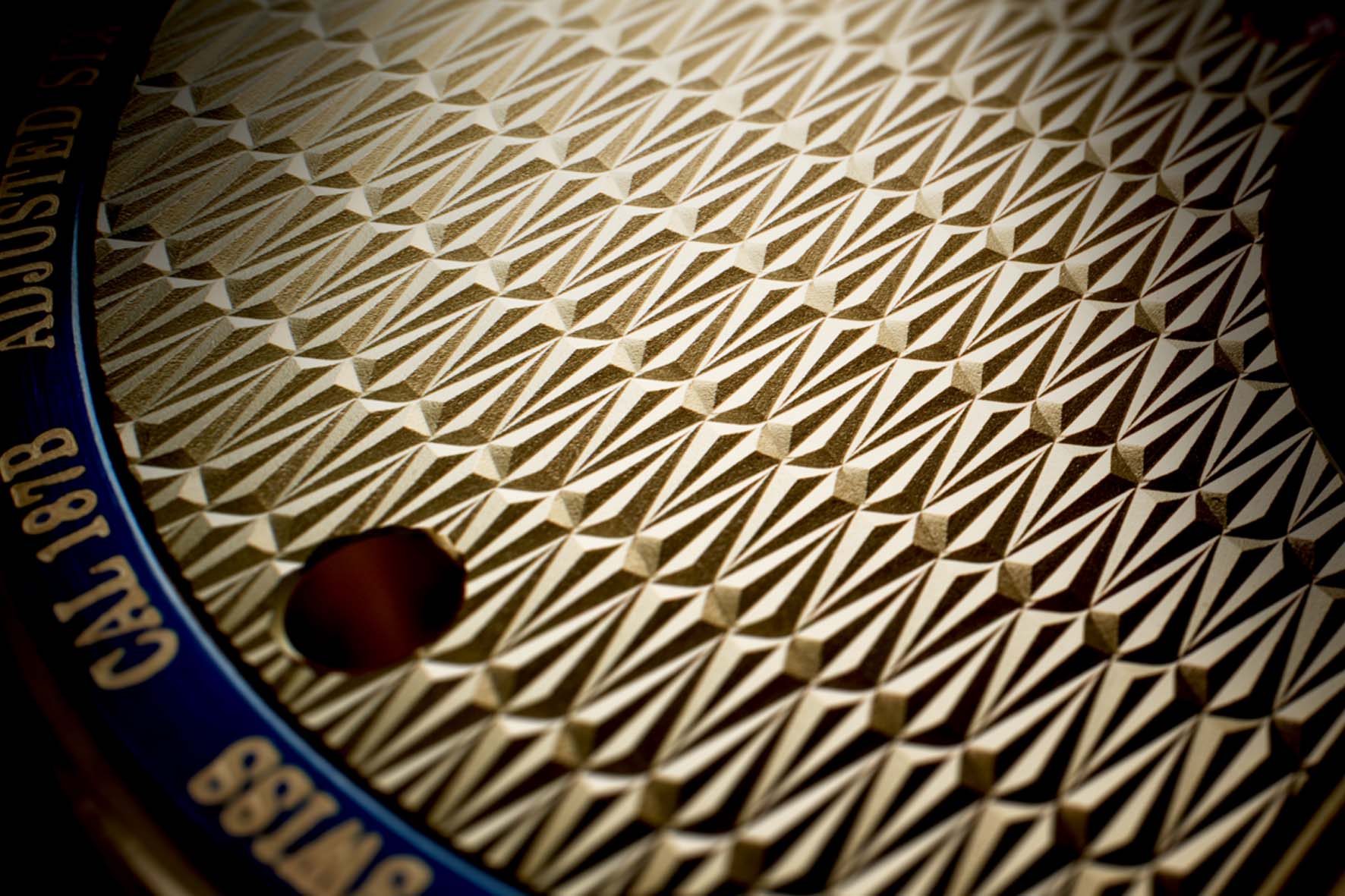
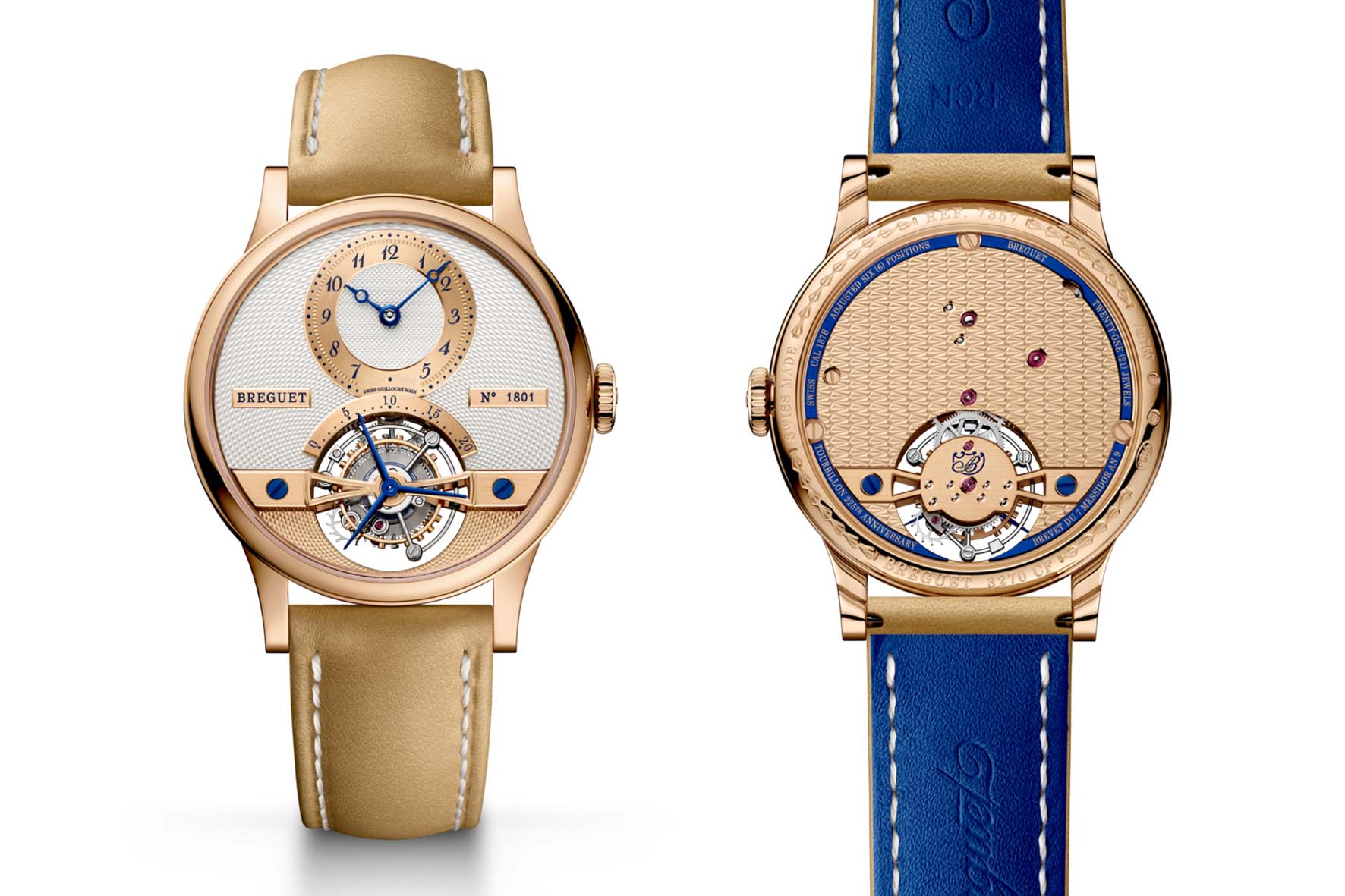
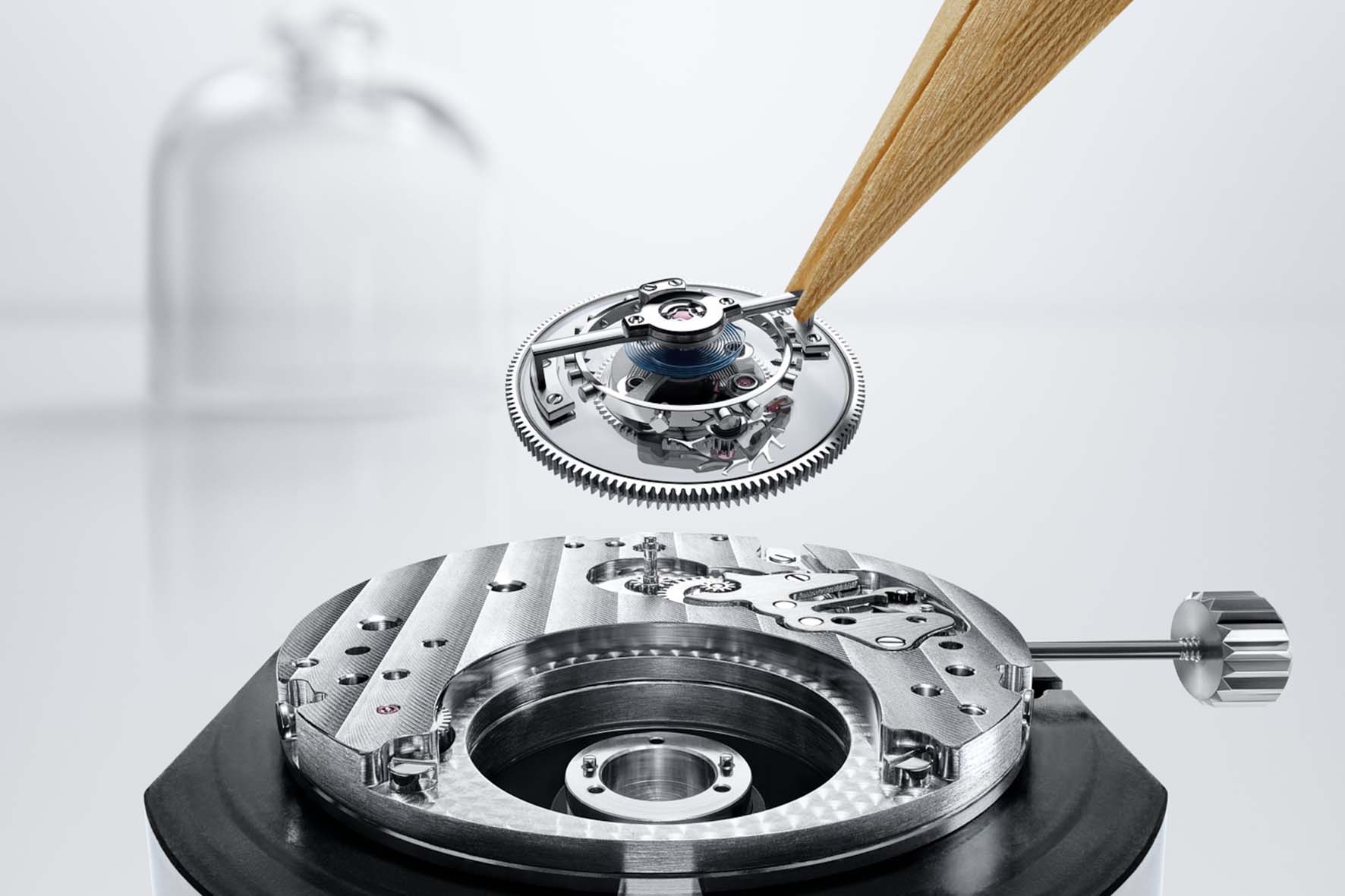
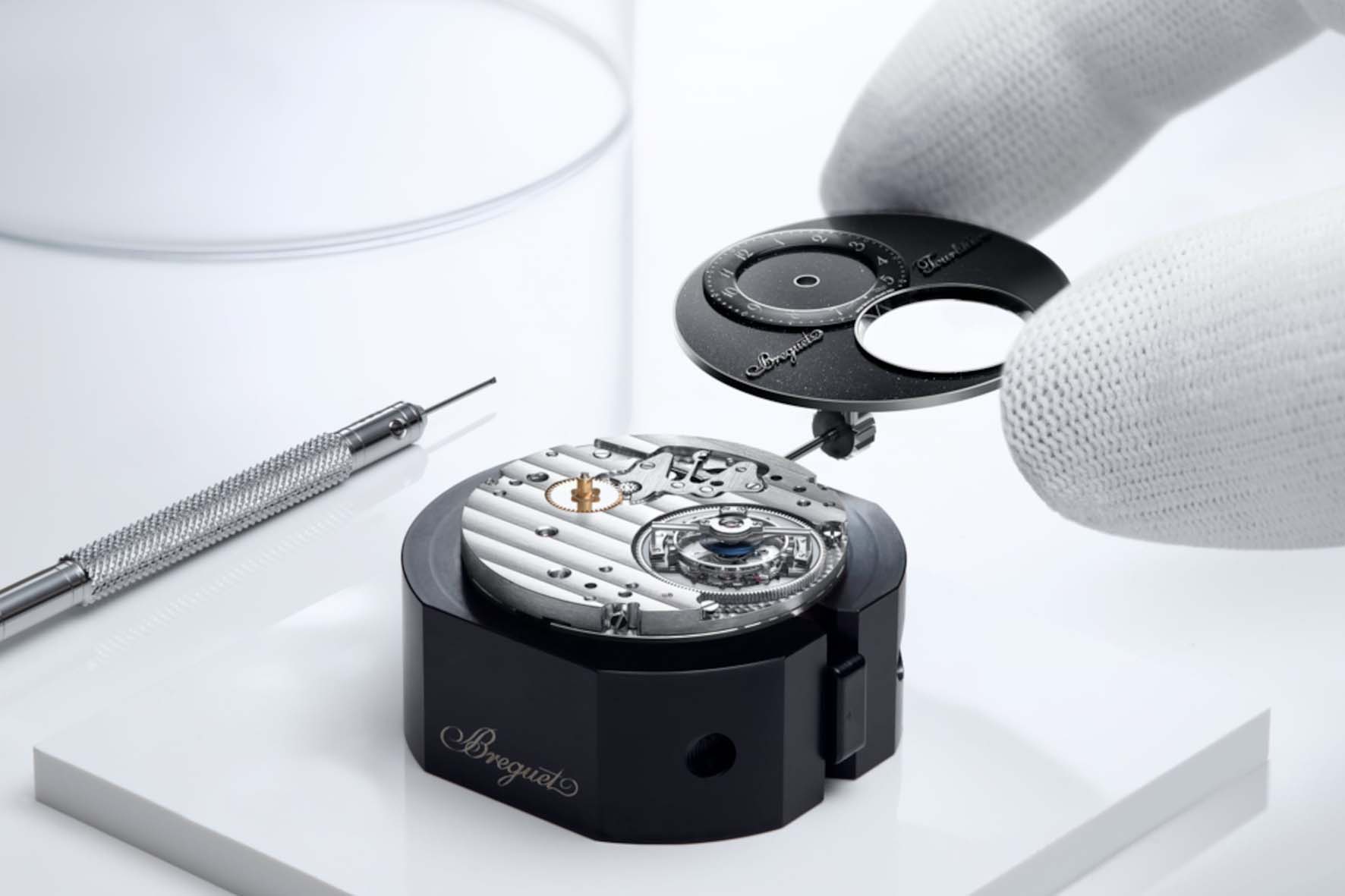
Through the transparent caseback, the craftsmanship of Breguet’s artisans is evident in the mainplate, which is entirely hand-guilloché, interrupted only by the bridge and the tourbillon cage, which occupy the lower half.
CLASSIQUE TOURBILLON 7357: DIAL, CASE, VARIANTS
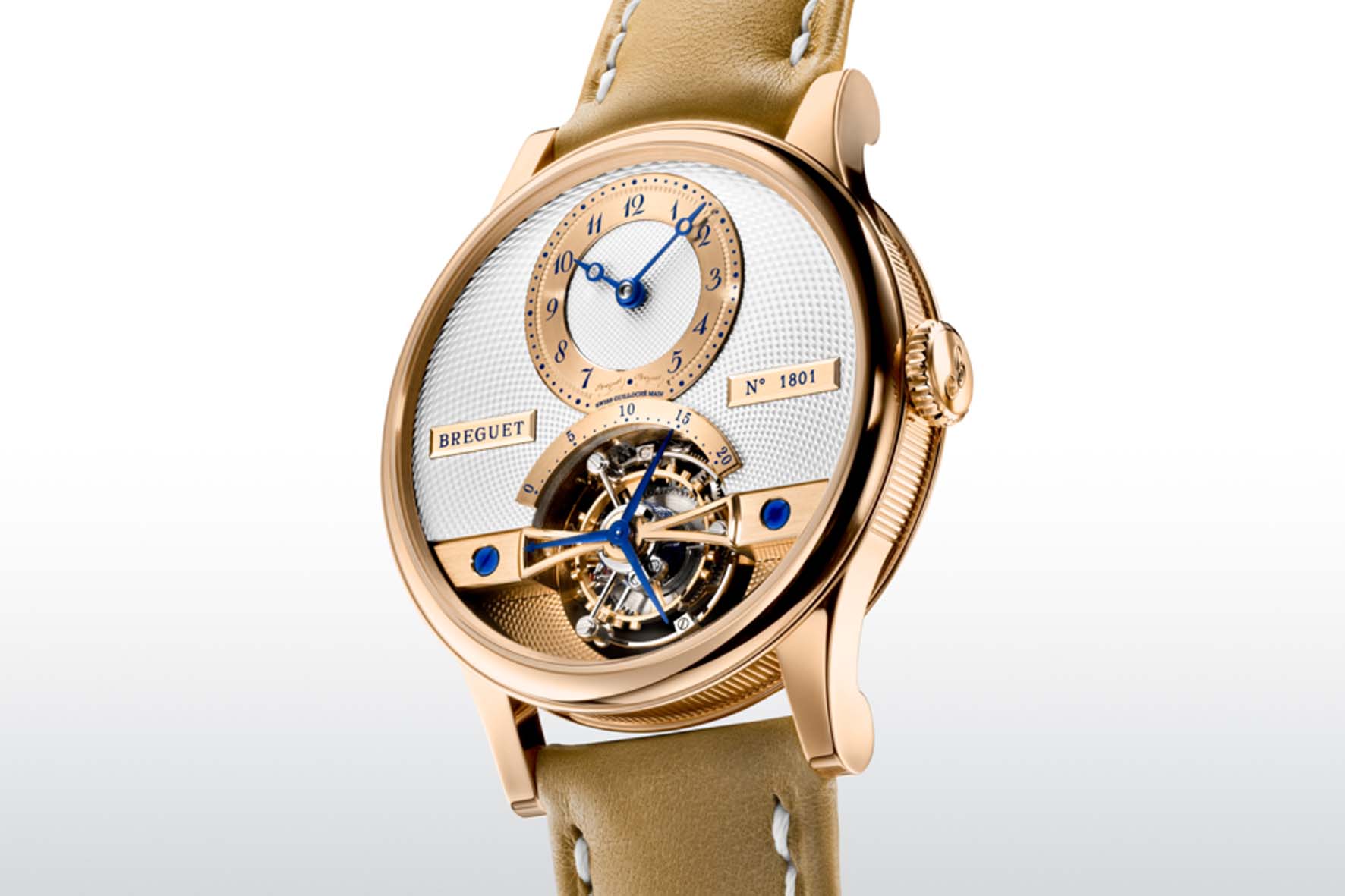
On the dial, too, the Manufacture has embraced minimalism. Symmetry is ensured by the positioning of the hour and minute counters and the tourbillon cage, at 12 o’clock and 6 o’clock respectively. These are balanced by the two plates bearing the Breguet logo and the watch’s reference number, at 9 o’clock and 3 o’clock. In keeping with the Maison’s most illustrious tradition, the dial features a beautiful Clous de Paris guilloché finish in the centre of the hour counter, whilst the remainder is finished with a radial grain d’orge pattern.
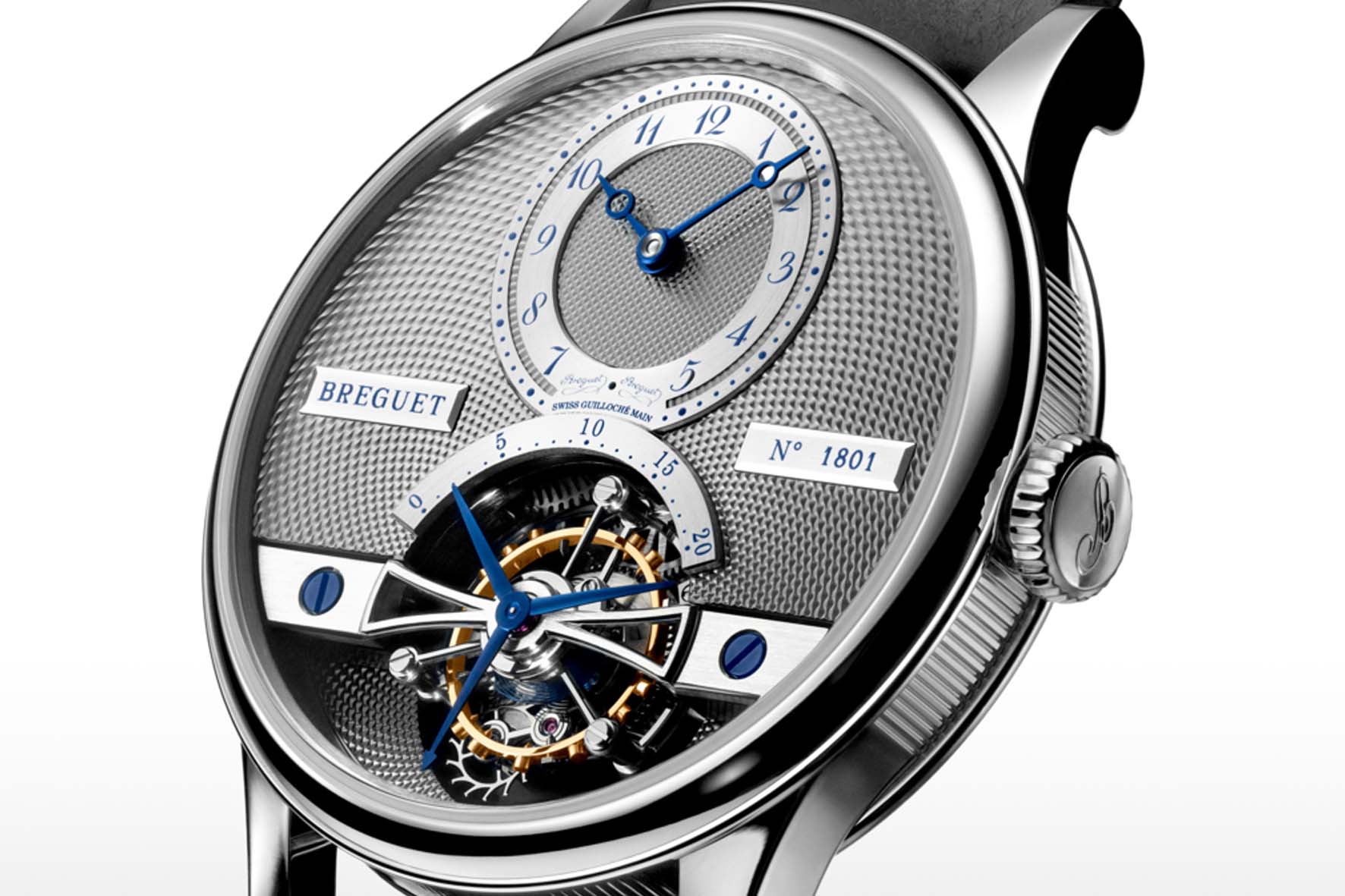
The one-minute tourbillon cage takes centre stage, with its three-pronged small-seconds hand and, above all, its redesigned bridge. Thanks to its horizontal satin finish and the blued screws securing it to the dial, it is the true focal point for the wearer’s gaze, lending the watch an unmistakable personality.
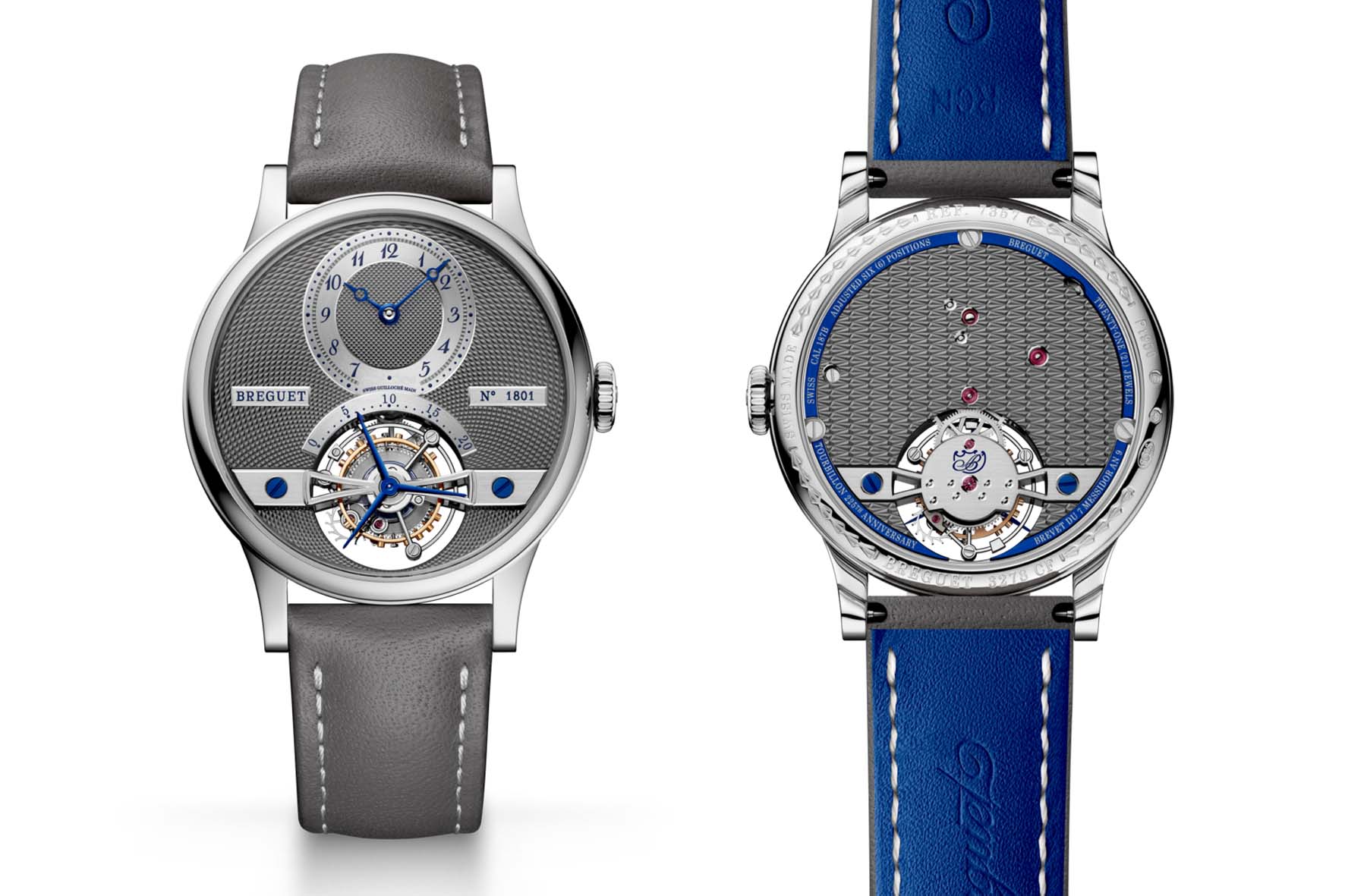
As one would expect from a watch of this calibre, the hour markers are in the Breguet style and the hour and minute hands are ‘à pomme évidée’. A special mention for the hands: they are blued in the classic ‘Bleu de France’ colour, but are crafted from 18-carat gold rather than steel, to prevent magnetic interference with the movement.

The elegant and well proportioned 35 mm case has a lug-to-lug measurement of 43 mm and a slim profile of under 10 mm (9.2 mm). The coin-shaped case, a signature aesthetic of the Maison, is, of course, present. There are two versions. One in platinum, with an 18-carat Breguet gold dial featuring an anthracite electroplated finish and a grey calfskin strap, blue on the inside. A second version is in 18-carat Breguet gold, as is the dial, which is silvered; the strap is in beige calfskin.
CLASSIQUE TOURBILLON SIDÉRAL 7255
Already part of the brand’s 250th-anniversary collection, the Classique Tourbillon Sidéral 7255 was the first Breguetwatch to feature a flying tourbillon and a so-called ‘mysterious’ dial. This means that the tourbillon cage is supported solely by the lower bridge and that the gears connecting it to the rest of the movement are made of sapphire crystal with an anti-reflective coating, and are therefore invisible.
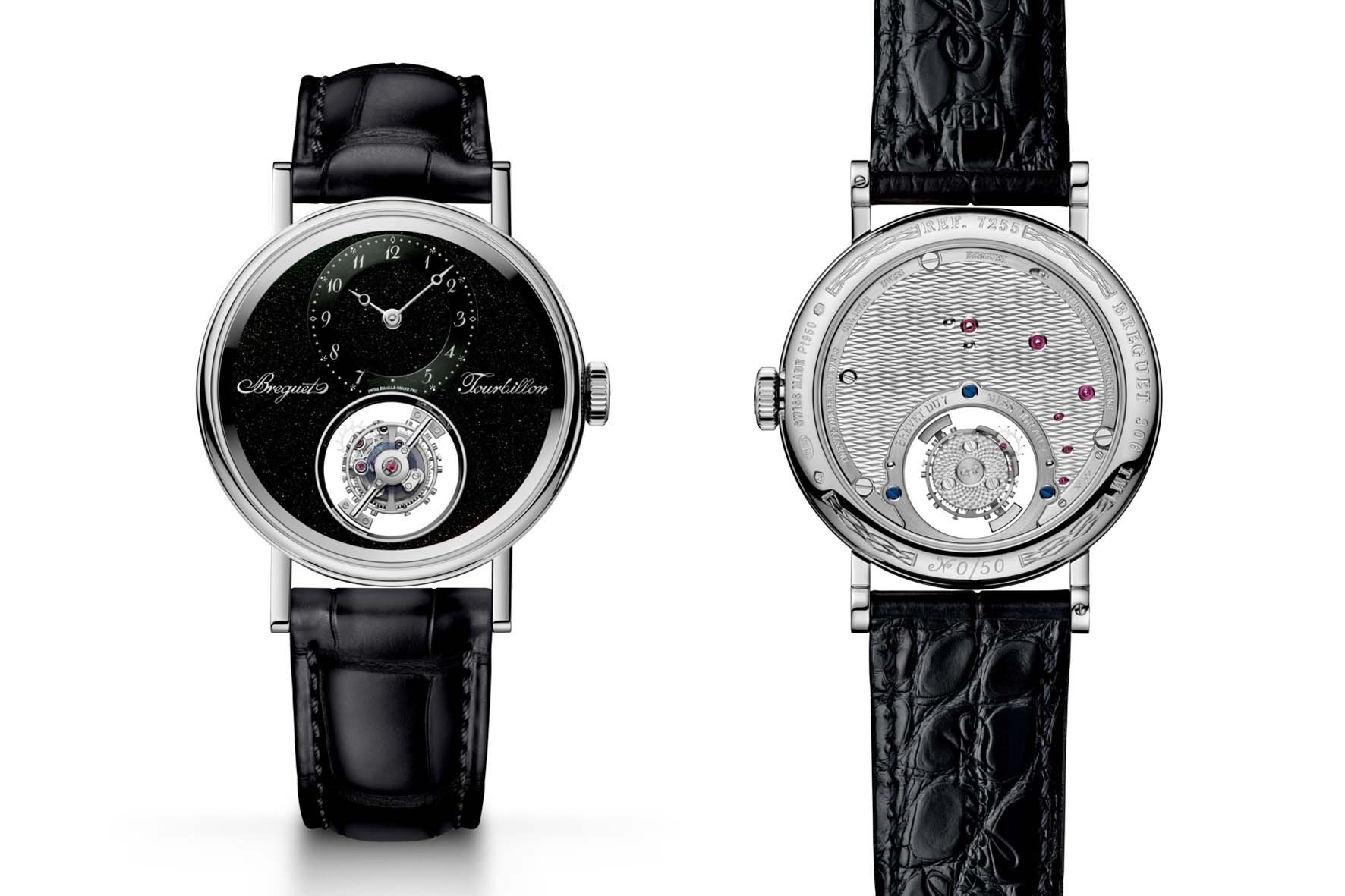
Breguet is presenting the Classique Tourbillon Sidéral 7255 to mark the anniversary of the tourbillon in an exquisite version featuring a platinum case and a black aventurine grand feu enamel dial. This colour scheme reinforces the link between the watch and its astronomical heritage, which dates back to the 17th and 18th centuries. At that time, the French mathematician and philosopher Blaise Pascal extended the concept of the tourbillon to that of a ‘material system driven by a rotary motion’; from there, it was a short step to applying it to planetary systems.
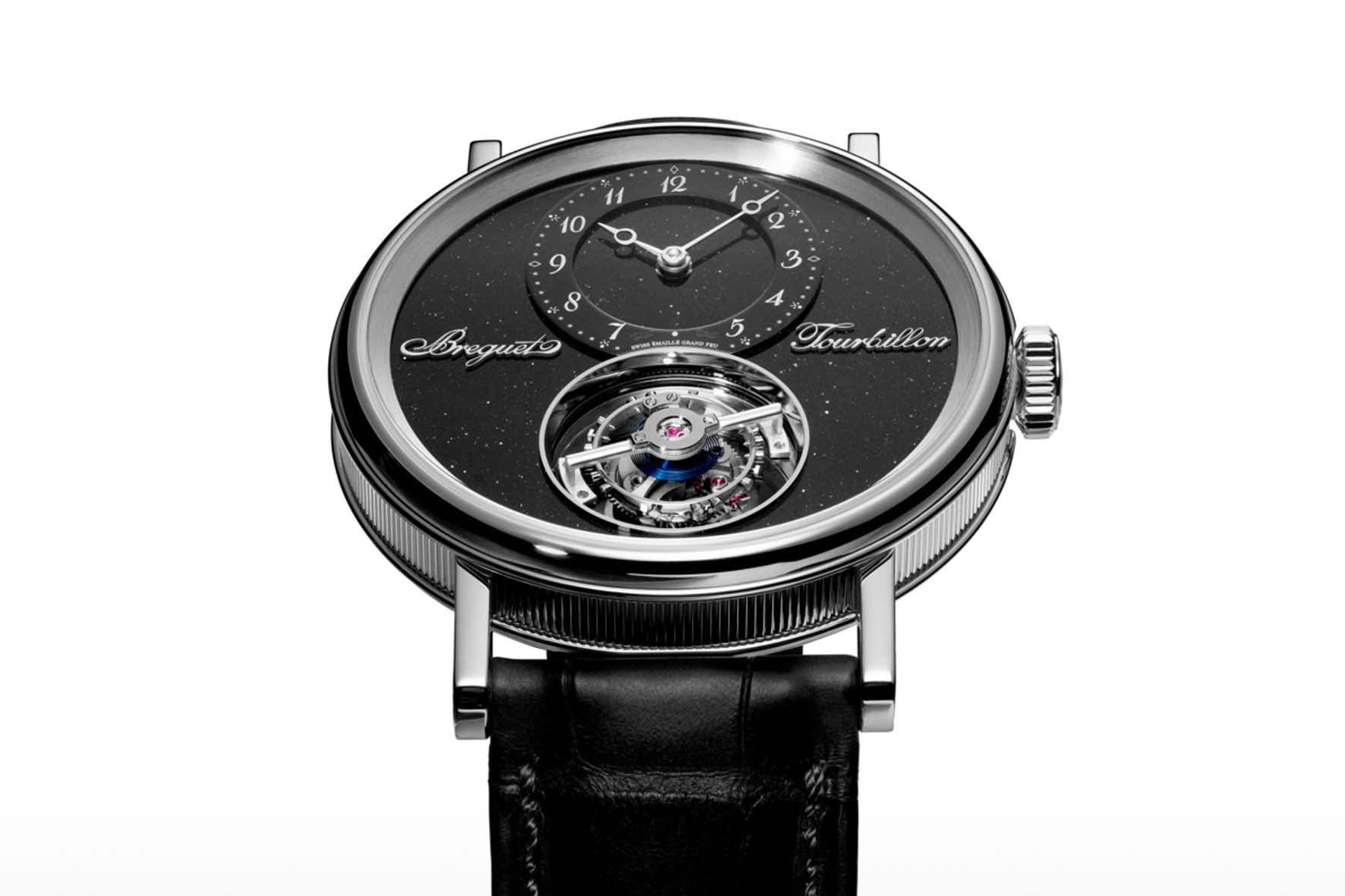
The flange of the Classique Tourbillon Sidéral 7255 is made of gold and finished in black, whilst the 38 mm case is in platinum. The applied ‘Breguet’ and ‘Tourbillon’ inscriptions are in rhodium-plated Breguet gold, as is the upper bridge of the tourbillon. The movement is the hand-wound calibre 187M1, which also operates at 18,000 vibrations per hour and offers a 50-hour power reserve. Equipped with all the necessary features to ensure anti-magnetic properties, it does not neglect attention to finish and detail: the guilloché-worked mainplate, featuring the elegant Quai de l’Horloge motif, is visible through the caseback. As befits a watch of this calibre, it is a limited edition of 50 pieces, each numbered and hand-engraved on the caseback.
TRADITION TOURBILLON 7047
The Tradition Tourbillon 7047 is also already part of Breguet’s collection, but the new version places great emphasis on a revamped aesthetic and colour scheme, specifically the colour blue. The watch features a 41 mm platinum caseand a dial on which the ‘Bleu de France’ stands out, adorning both the dial and the bridges. We are referring to the tourbillon bridge and the large mainspring barrel bridge, with the mainspring barrel itself finished in this shade: it is an original creation from 2025, unveiled to mark Breguet’s 250th anniversary on the Classique Minute Repeater 7365.
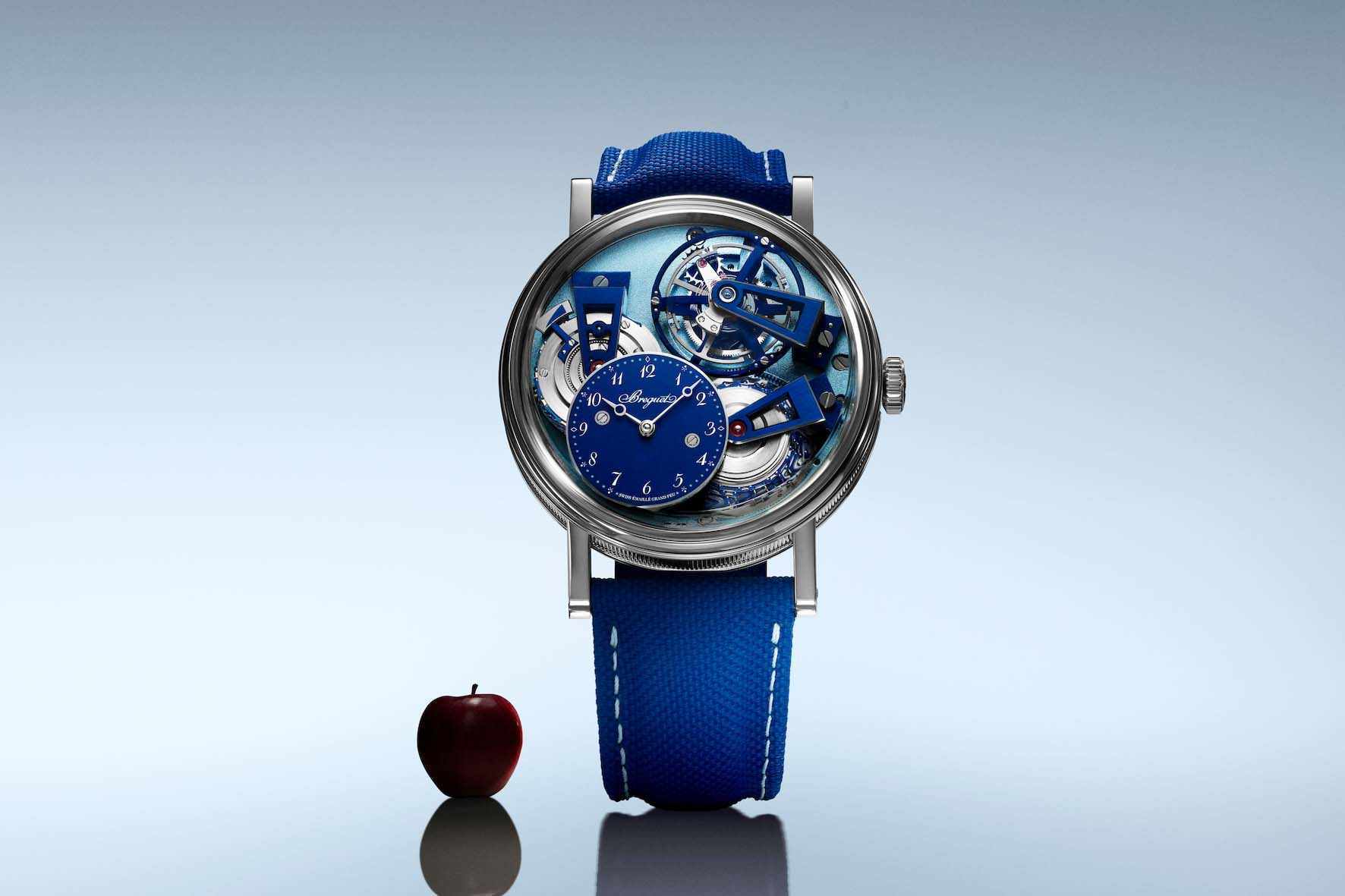
All these elements are finished in the same Bleu de France, with meticulous attention to detail: the traditional ruby on the tourbillon bar has been replaced for the occasion by a blue spinel, to maintain the watch’s colour consistency. The other traditional rubies have been retained to ensure the perfect functioning of the associated components, as there is a difference in mechanical resistance to stress between ruby and spinel.
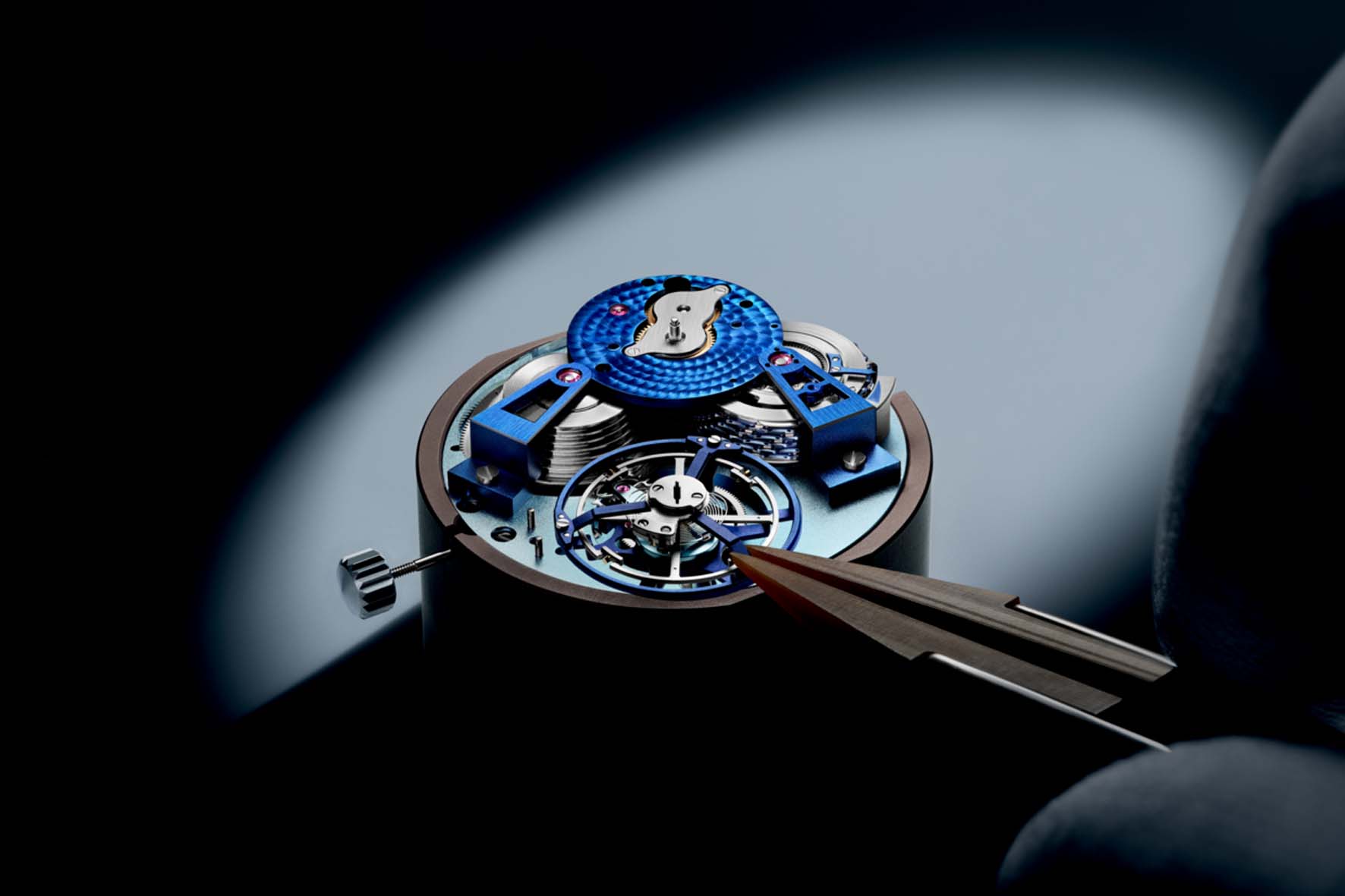
For the first time, the Bleu de France grand feu enamelled dial features Arabic numerals for the hour markers. It bears Breguet’s secret signature, hand-engraved using a pantograph, as in the pieces created for the Manufacture’s 250th anniversary. For the first time in the brand’s history, an ice-blue colour appears on the dial, characterising the main plate with its grenaillé finish. This is also visible through the sapphire crystal caseback, against which all the bridges stand out, finished in Bleu de France, as is the strap, which is made of rubber with ice-blue stitching.
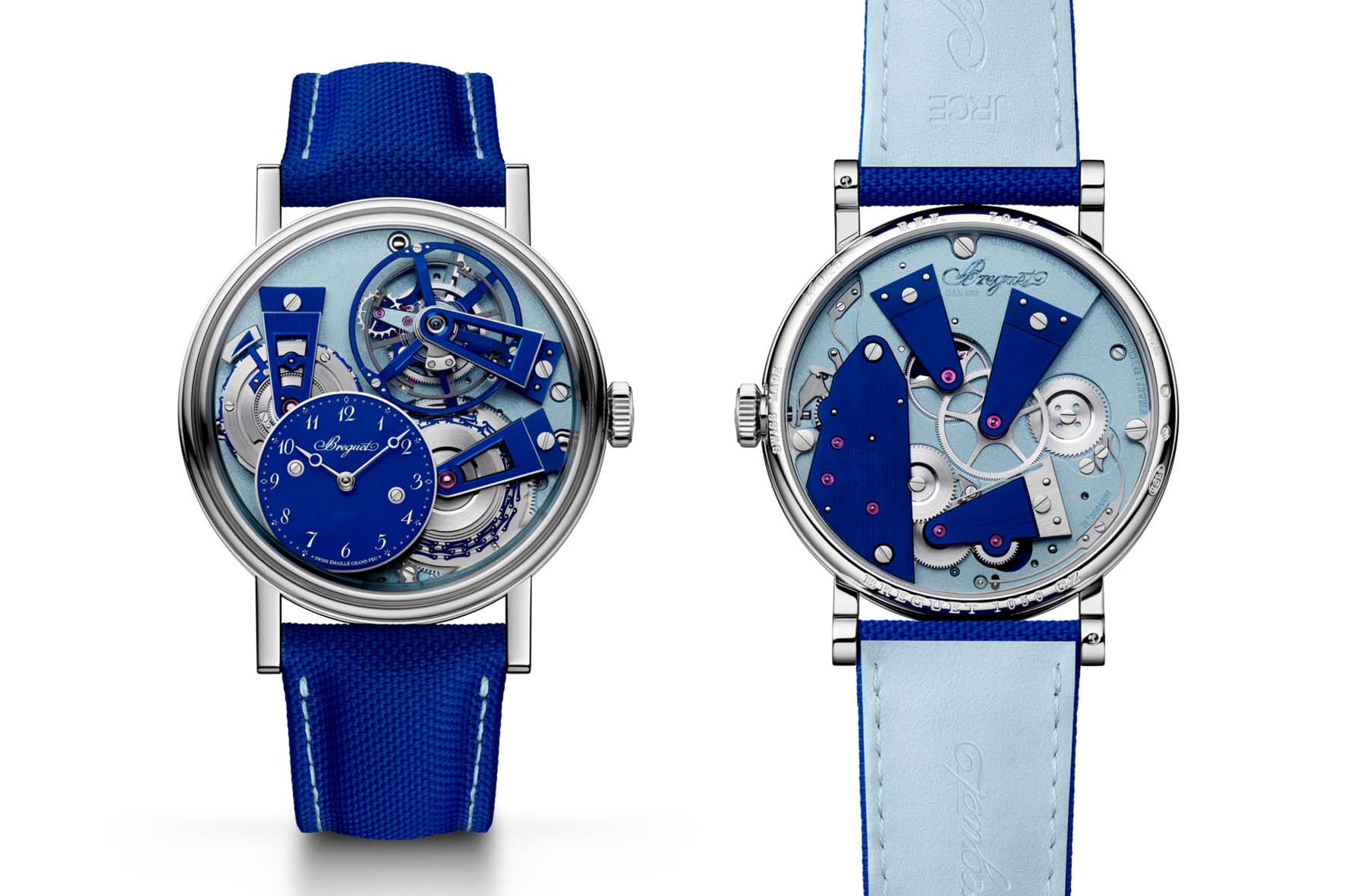
The movement is once again the hand-wound Calibre 569 with a 55-hour power reserve, which powers the Tradition Tourbillon 7047 already in the collection. It features an ingenious fusée-and-chain mechanism to regulate torque transmission, the operation of which we have previously discussed on. Given the exclusivity of the finishes and the calibre, the watch is limited to 25 pieces.
MARINE TOURBILLON ÉQUATION MARCHANTE 5887
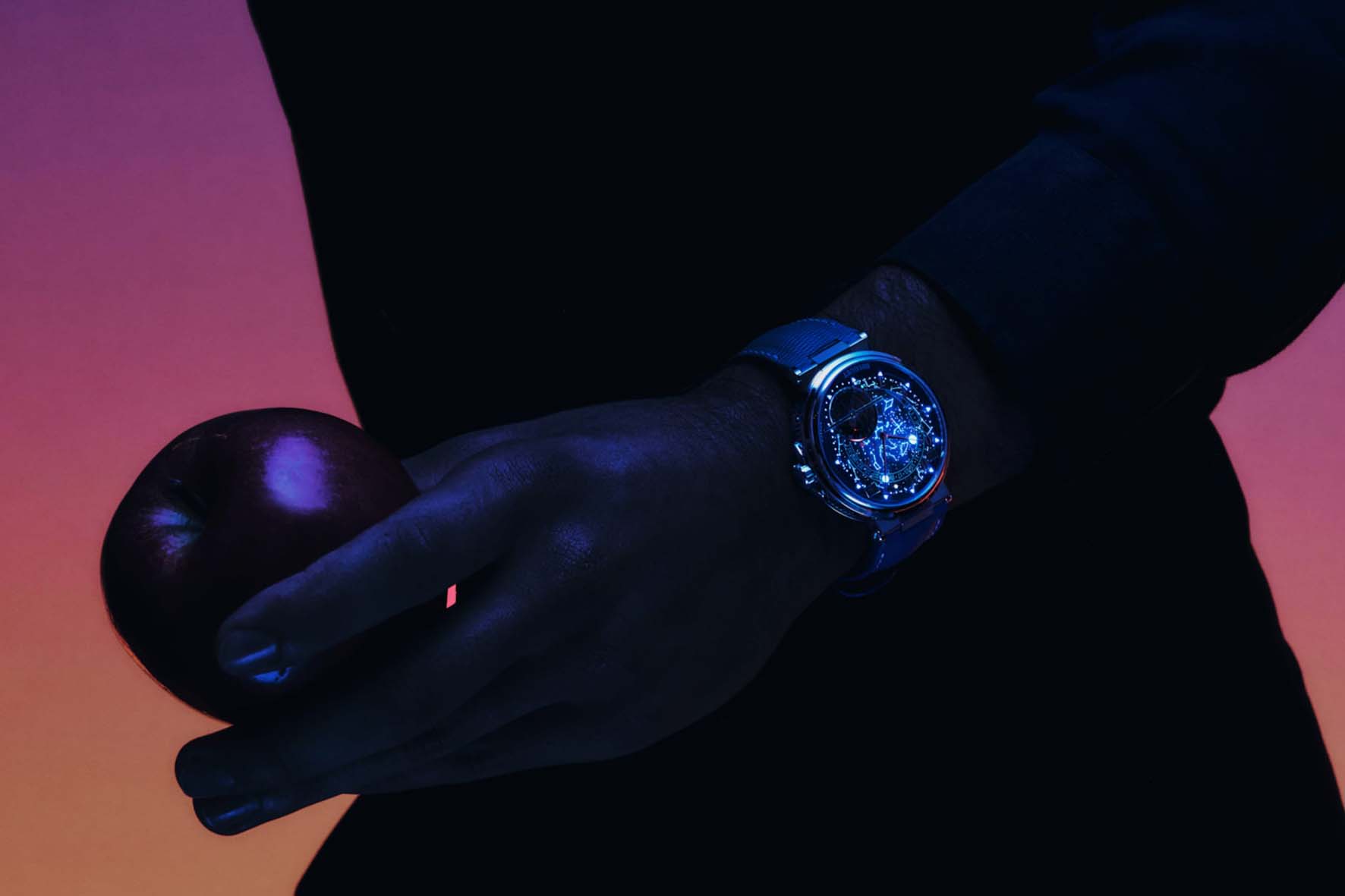
Finally, the Marine Tourbillon Équation Marchante 5887. It is the most complex wristwatch in Breguet’s collections and, to mark the 225th anniversary of the tourbillon, the Maison is presenting it in an even more exclusive version. Its dial features an exact and luminous representation of the Parisian sky at midnight on 26 June 1801, the day on which, as we have seen, Abraham-Louis Breguet was granted the patent for the tourbillon.
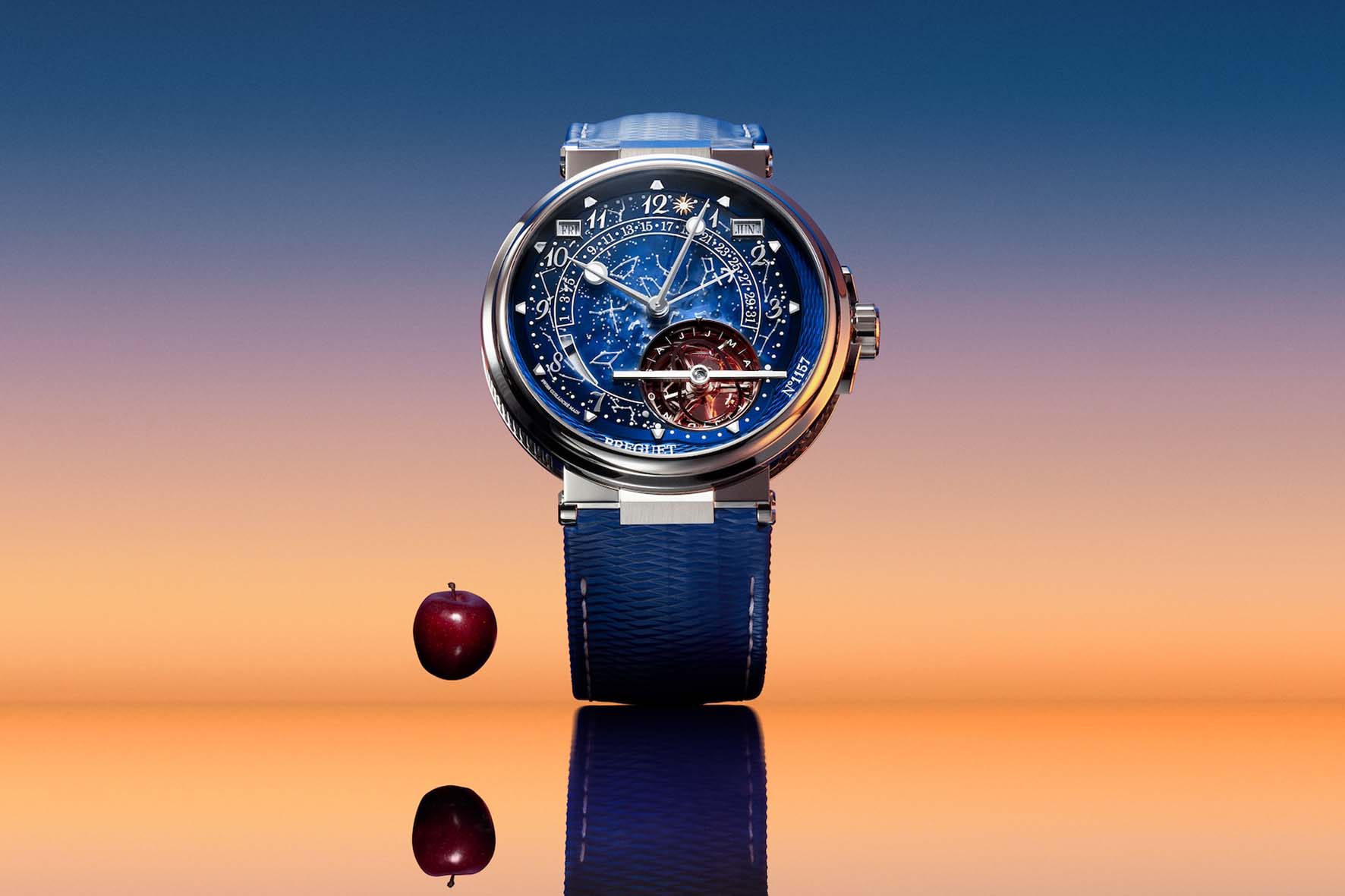
You can read about what the “équation du temps” is and how it works. A complication that is a technical and mechanical masterpiece, just like the new Marine Tourbillon Équation Marchante 5887, whose platinum case has a substantial diameter of 43.9 mm. What stands out is the dial, divided into two sections. At the centre is a sapphire section featuring a hand-painted miniature in gradient blue grand feu enamel, translucent on the underside. On the upper surface, as mentioned, there is a hand-painted miniature, using glow-in-the-dark enamel, depicting the night sky with the constellations and the Moon in the exact positions they occupied above Paris on 26 June 1801.
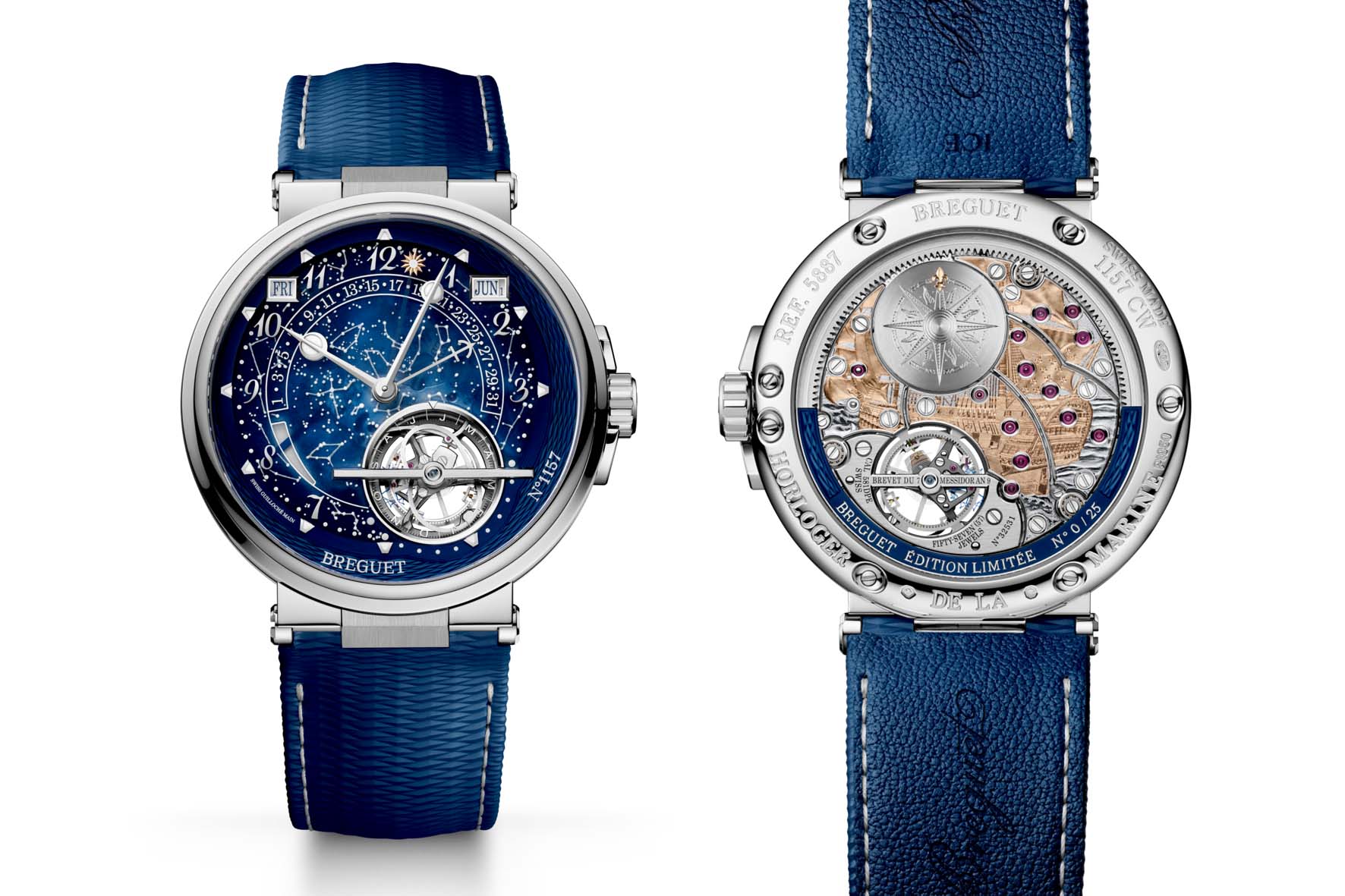
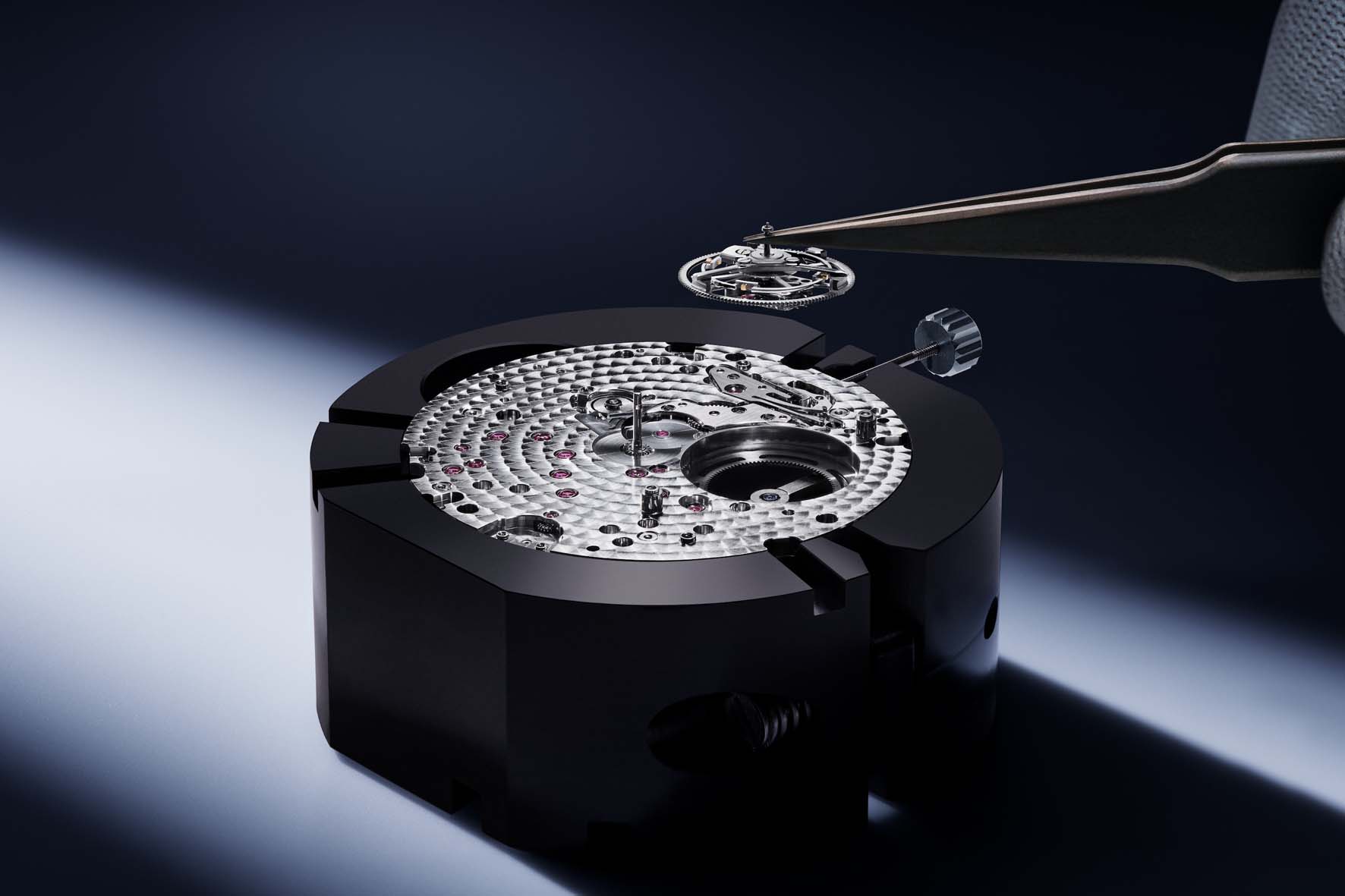
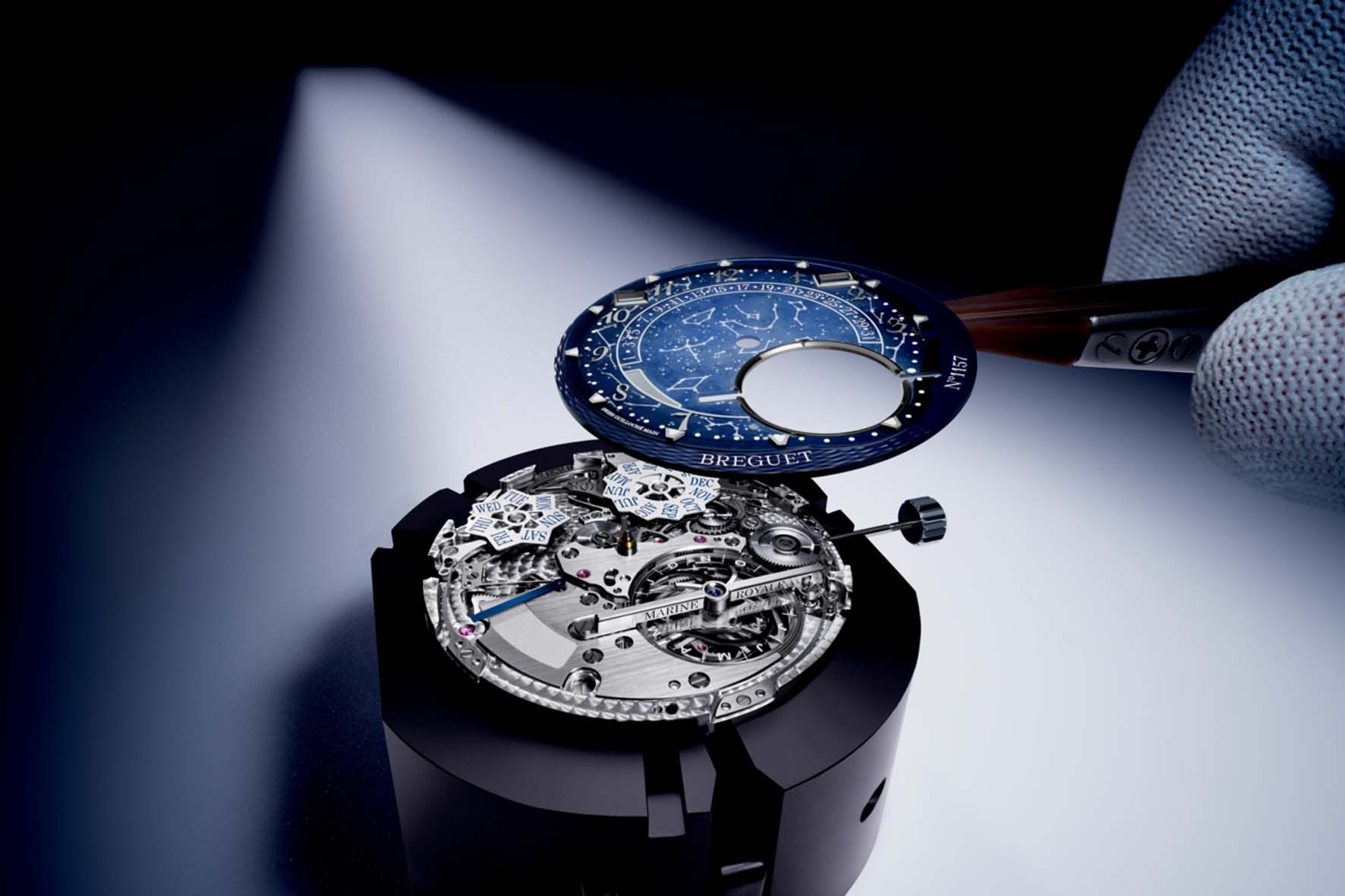
On the back of the watch is a hand-engraved depiction of the 18th-century ship Royal Louis sailing across the oceans. The engraving is in Breguet gold and creates an elegant contrast with the rhodium-plated sky and sea. A compass rose motif – a first for the Marine collection – is set against the barrel drum, which is hand-engraved and finished in Breguetgold. On this, north is indicated by the Fleur-de-Lys of France in Breguet gold. The Fleur-de-Lys pays homage to King Louis XVIII, who had placed his trust in Abraham-Louis Breguet for the marine chronometers with which he equipped his fleet. The Master had, in fact, been awarded the prestigious title of Horloger de la Marine Royale by the sovereign in 1815.
The movement is the automatic calibre 581DPE, numbered and signed ‘Breguet’, beating at 28,800 vibrations per hour and offering a considerable power reserve of 80 hours. Standing out around its perimeter is the peripheral oscillating weight in guilloché-finished platinum, featuring the ‘Quai de l’Horloge’ motif rendered in blue. The Marine Tourbillon Équation Marchante 5887 is limited to 25 pieces, each of which can be personalised with a sky scene corresponding to a date and location chosen by the customer.
PRICES AND CONCLUSIONS
For the sake of completeness, we note that the two Classique Tourbillon 7357 models are priced at 183,100 euros (platinum) and 166,500 euros (Breguet gold); the Classique Tourbillon Sidéral 7255 is priced at 265,200 euros and the Tradition Tourbillon 7047 at 292,900 euros. Even more exclusive is the Marine Tourbillon Équation Marchante 5887, which costs 440,800 euros with a bracelet and 347,600 euros with a strap.
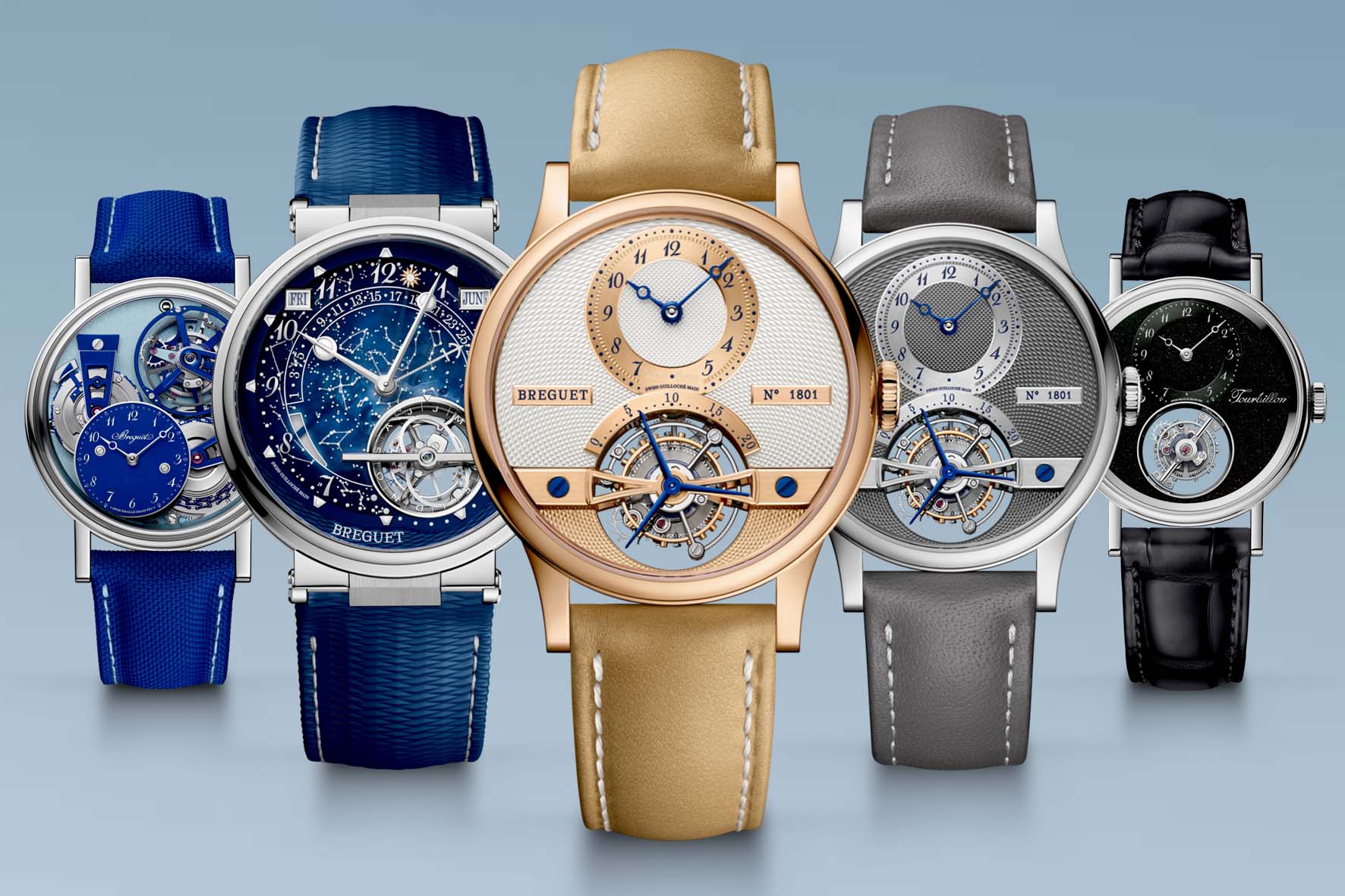
It is clear that, with these creations, Breguet is not merely seeking to celebrate the 225th anniversary of the tourbillon. Presenting such exclusive models – rooted in the Maison’s illustrious past yet fully immersed in the present in terms of materials and technical choices – serves to reaffirm the leading position that the manufacture has always held in this world.
Technical and aesthetic excellence are achievements that Abraham-Louis Breguet had already attained over two centuries ago. Being able to maintain and reaffirm them today demonstrates Breguet’s determination and ability to pursue an ideal that goes beyond the product itself, reaching the very essence of watchmaking. Today, just as on 26 June 1801.
By Davide Passoni