

We had been waiting for a proper new release from Grönefeld for quite some time. Not simply a new dial or a variation on something we already knew, but a watch capable of putting the sophisticated and decidedly unconventional mechanics that have made Bart and Tim Grönefeld two leading figures in contemporary independent watchmaking back in the spotlight.
It has finally arrived. And rather than starting again with a single complication, Grönefeld has decided to bring four of them together.
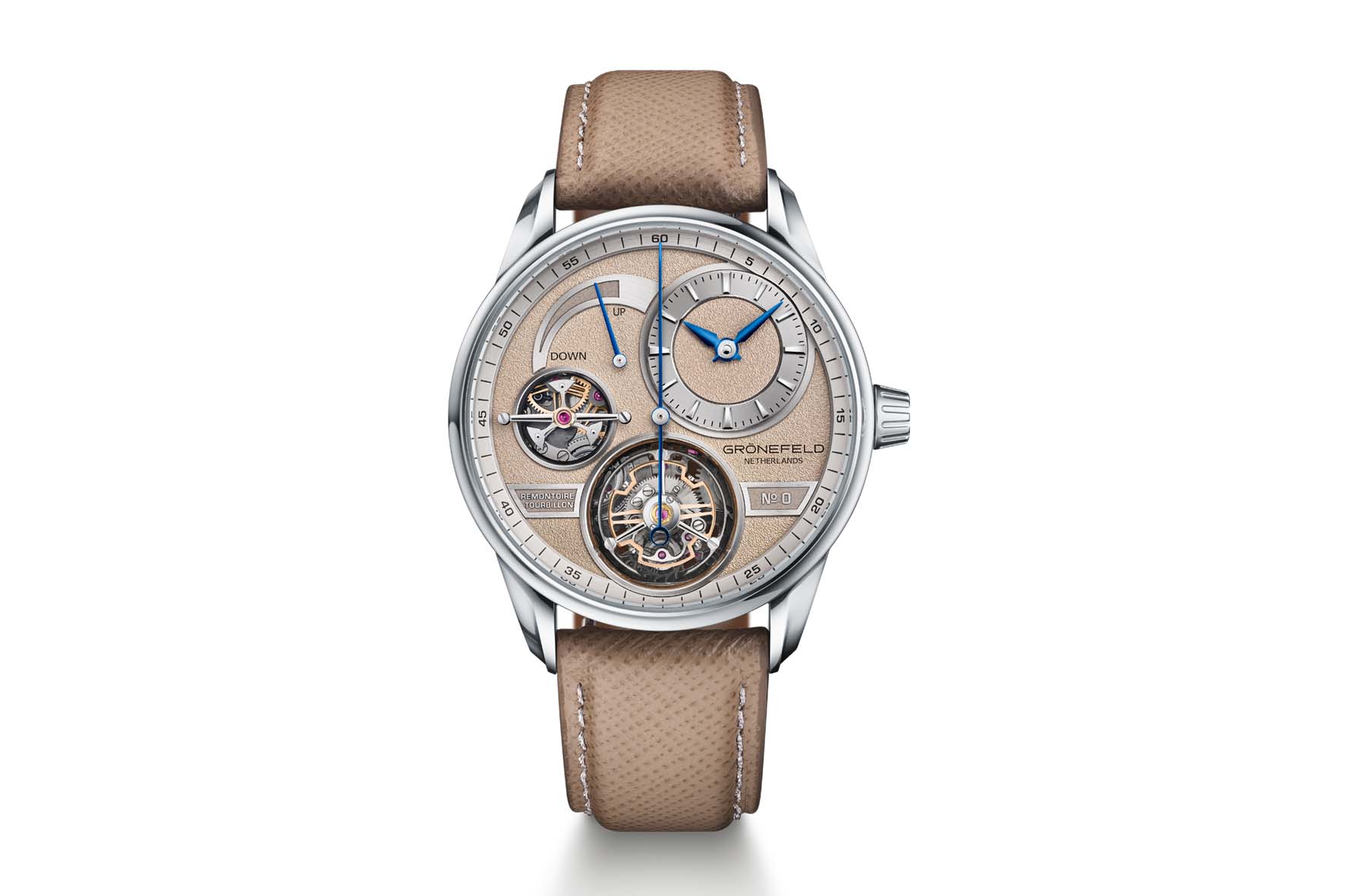
The new Grönefeld 1941 Quadrivium combines a 7.5-second remontoire, a one-minute flying tourbillon, central jumping seconds and a power-reserve indicator, all within a movement developed entirely from the ground up for this project. Four complications that recall some of the most important creations made by the brothers from Oldenzaal, from the One Hertz and Parallax Tourbillon to the 1941 Remontoire. Unsurprisingly, the new arrival has already earned the affectionate nickname “Grönefeld’s Greatest Hits.”
GRÖNEFELD: FROM OLDENZAAL TO INDEPENDENT HAUTE HORLOGERIE
The story of Grönefeld begins in Oldenzaal, the Netherlands, and traces its roots back to 1912, when Johan Grönefeld began working as a watchmaker. Bart and Tim today represent the third generation of the family and, after training in the Netherlands and Switzerland and gaining significant experience in haute horlogerie, including at Renaud et Papi, returned to their hometown to develop their own distinctive interpretation of complicated watchmaking.
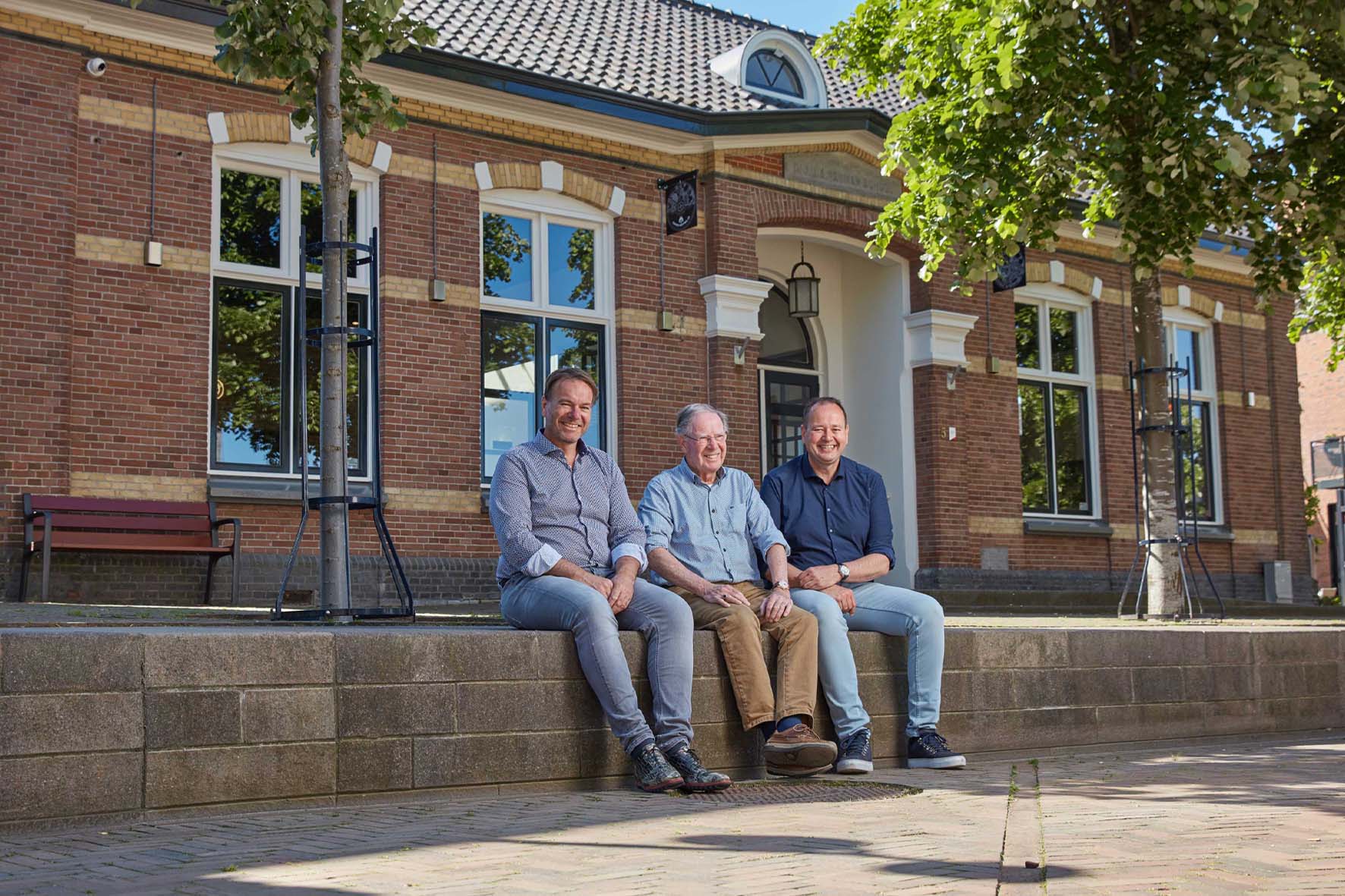
Over the years came watches such as the One Hertz, with its distinctive jumping seconds, the Parallax Tourbillon, the 1941 Remontoire, Principia, Decennium Tourbillon and, more recently, the Grönograaf. Different watches, yet all united by an immediately recognisable technical and aesthetic identity.
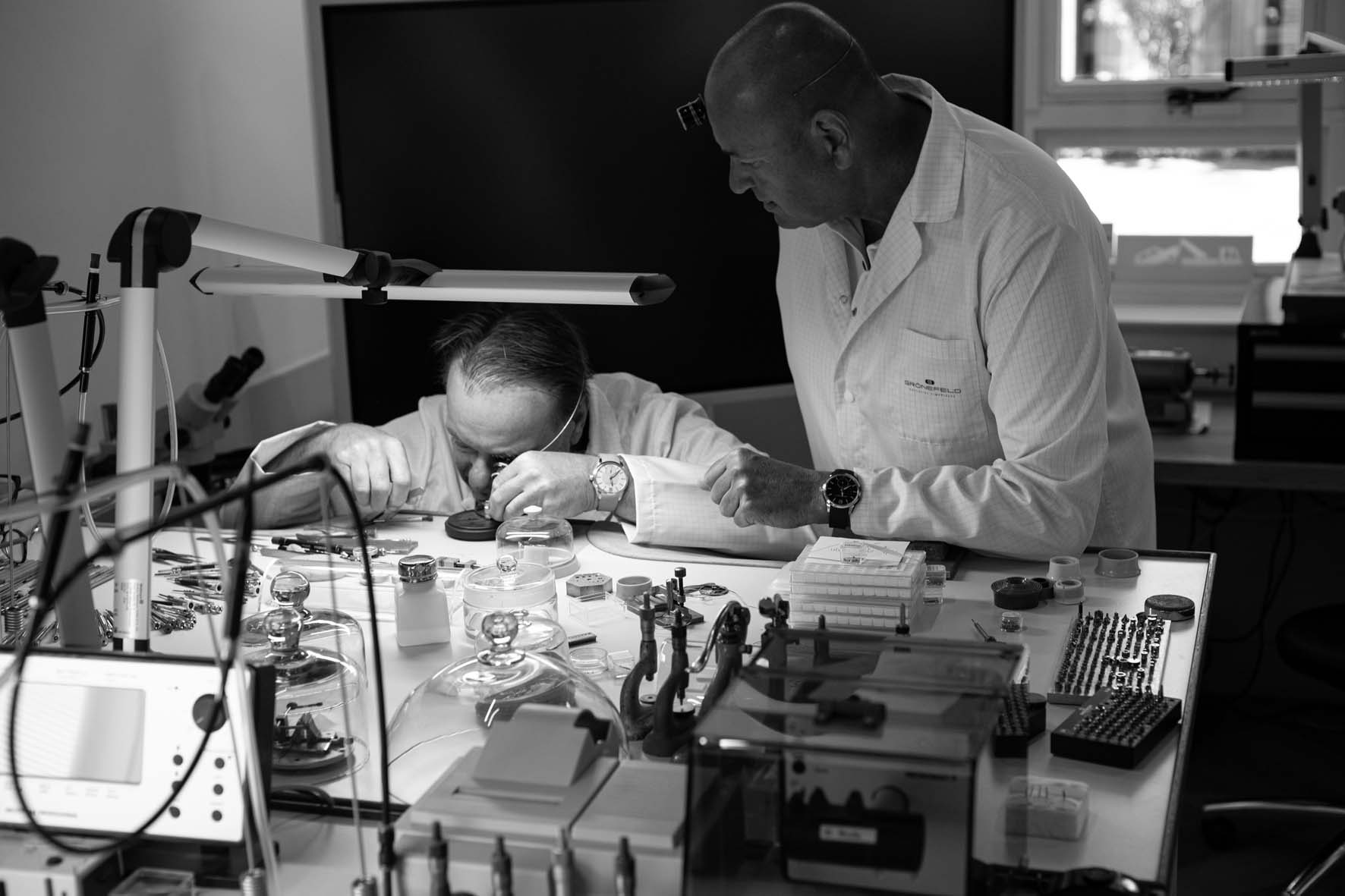
The 1941 Quadrivium builds on precisely this history, but rather than simply revisiting it, brings some of its most representative ideas together within an entirely new project.
WHY IT IS CALLED THE 1941 QUADRIVIUM
The name Quadrivium comes from classical scholarship and refers to four disciplines — arithmetic, geometry, music and astronomy — regarded as different parts of an integrated system of knowledge. In the new Grönefeld, those four disciplines become four mechanical expressions: a 7.5-second remontoire, one-minute flying tourbillon, central jumping seconds and power-reserve indicator.
What makes the watch particularly interesting is that this is not simply a collection of complications taken from existing movements. The calibre was developed entirely from the ground up to allow these four elements to coexist within a single architecture.
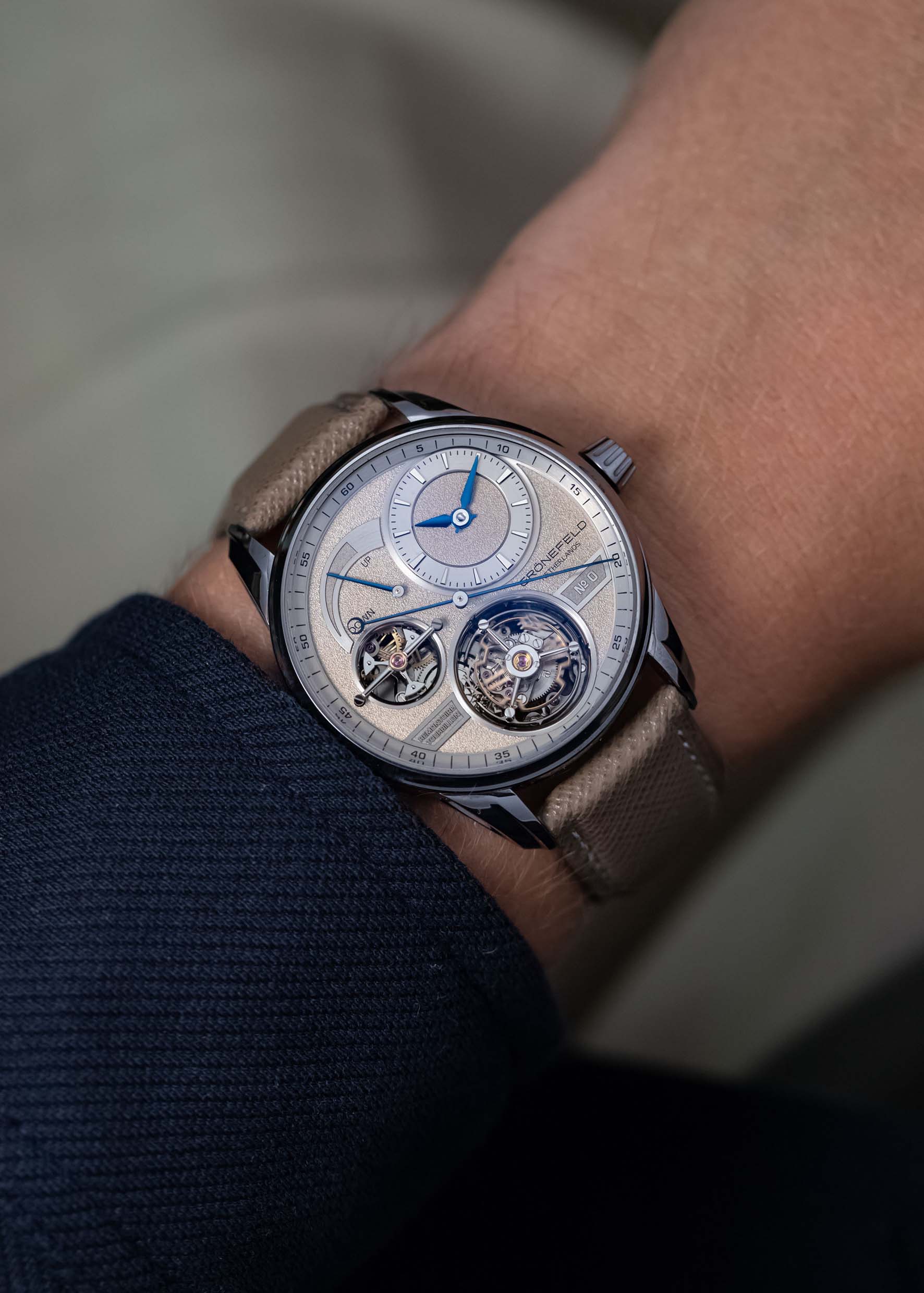
At 6 o’clock sits the one-minute flying tourbillon, raised slightly above the dial and equipped with a hand-finished three-arm stainless-steel cage. The mechanism also incorporates a stopping system that brings the tourbillon smoothly to a halt at the 60-second position, allowing the time to be set precisely.
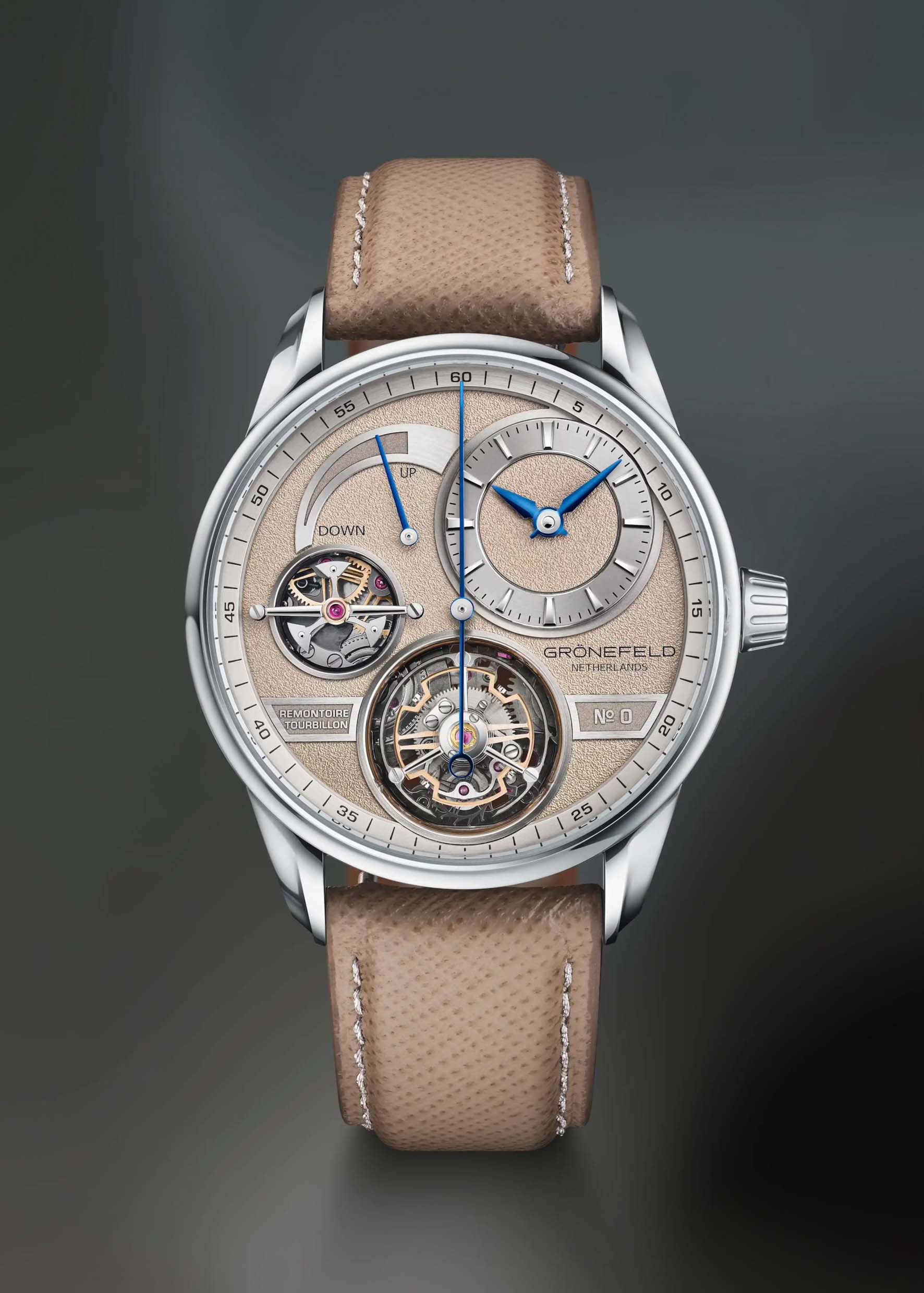
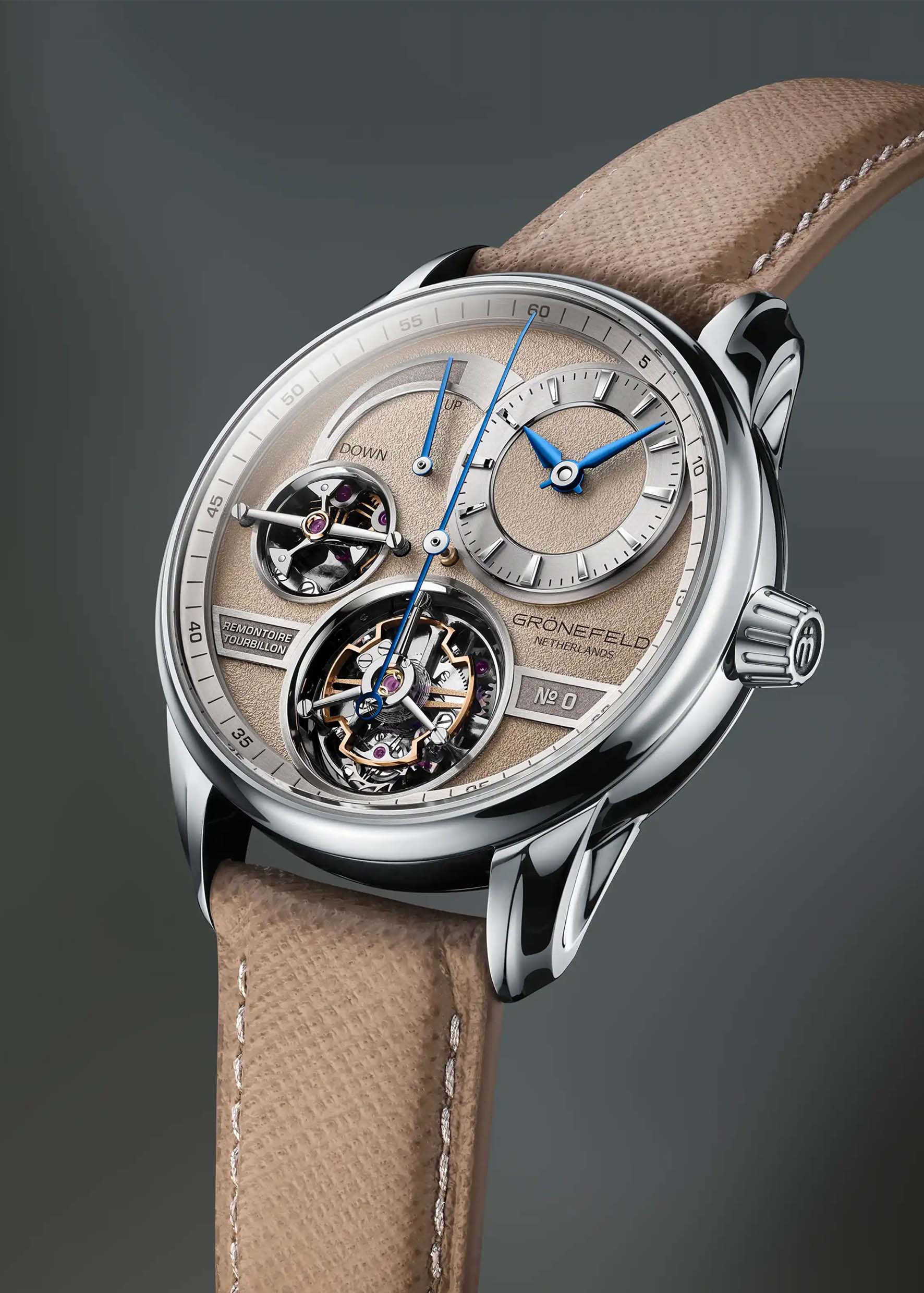
At 9 o’clock we find one of Grönefeld’s most recognisable technical signatures: the exposed remontoire governor, which completes one rotation every 7.5 seconds.
The remontoire is a constant-force mechanism positioned between the energy source and the regulating organ. A small spring periodically stores energy before releasing it at regular intervals, reducing the influence of the gradually changing torque delivered by the mainspring. In the Quadrivium, this cycle takes place every 7.5 seconds, while the governor visible on the dial helps control the release of energy and reduces shocks transmitted through the gear train.
Completing the system are the central jumping seconds, with the large seconds hand advancing once every second, and the 50-hour power-reserve indicator positioned at 10 o’clock.
THE DIAL OF THE GRÖNEFELD 1941 QUADRIVIUM
With four complications to organise, the obvious risk was creating an excessively busy dial. Instead, Grönefeld has worked with different levels, materials and finishes, turning the mechanical complexity into the element around which the entire composition is built.
The main surface is finely frosted and intersected by hand-bevelled stainless-steel elements that define and separate the different indications. The off-centre hours-and-minutes display at 2 o’clock features polished, multi-faceted white-gold hour markers, paired with Grönefeld’s traditional blued-steel hands. The power-reserve display also uses a blued-steel hand.
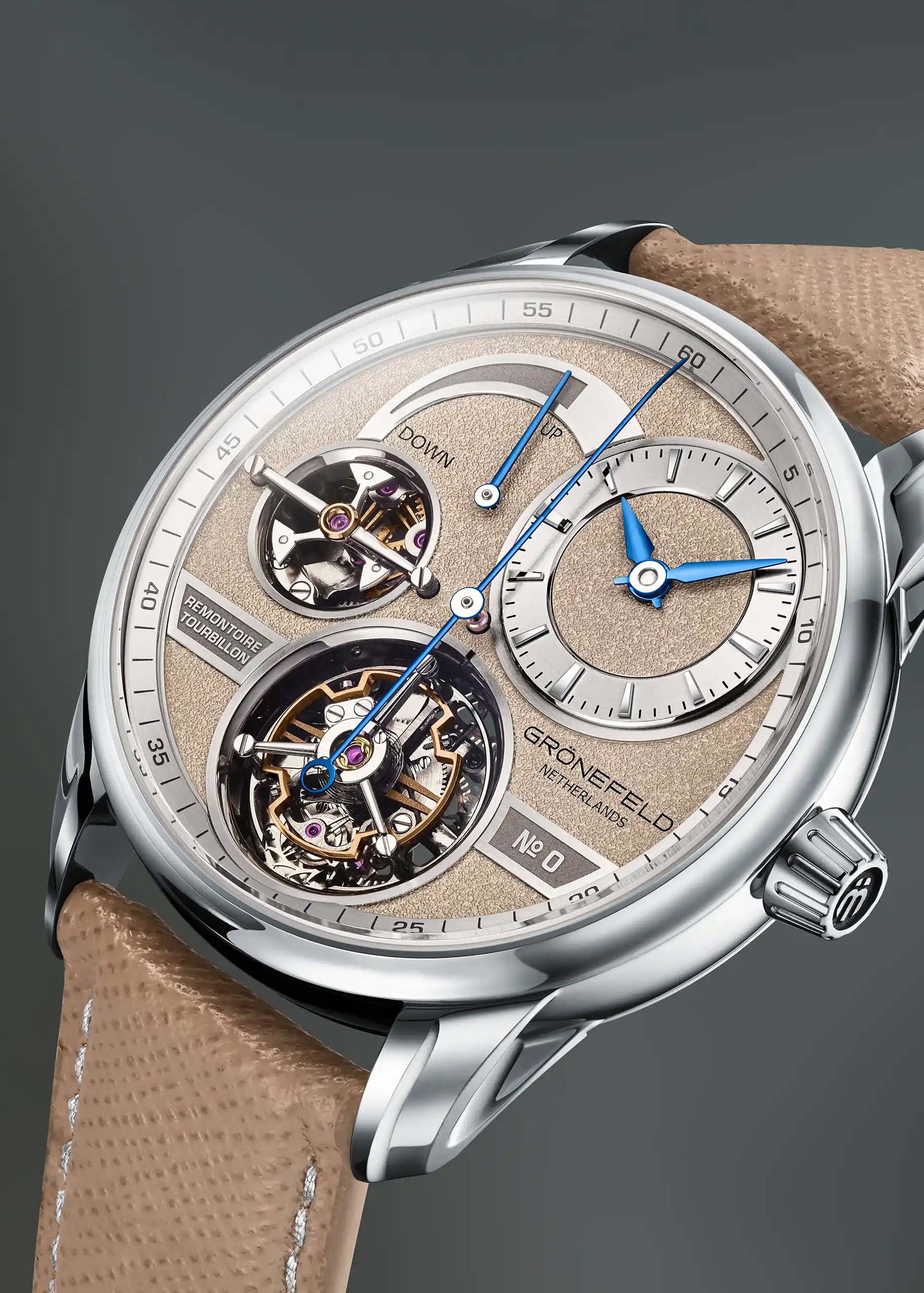
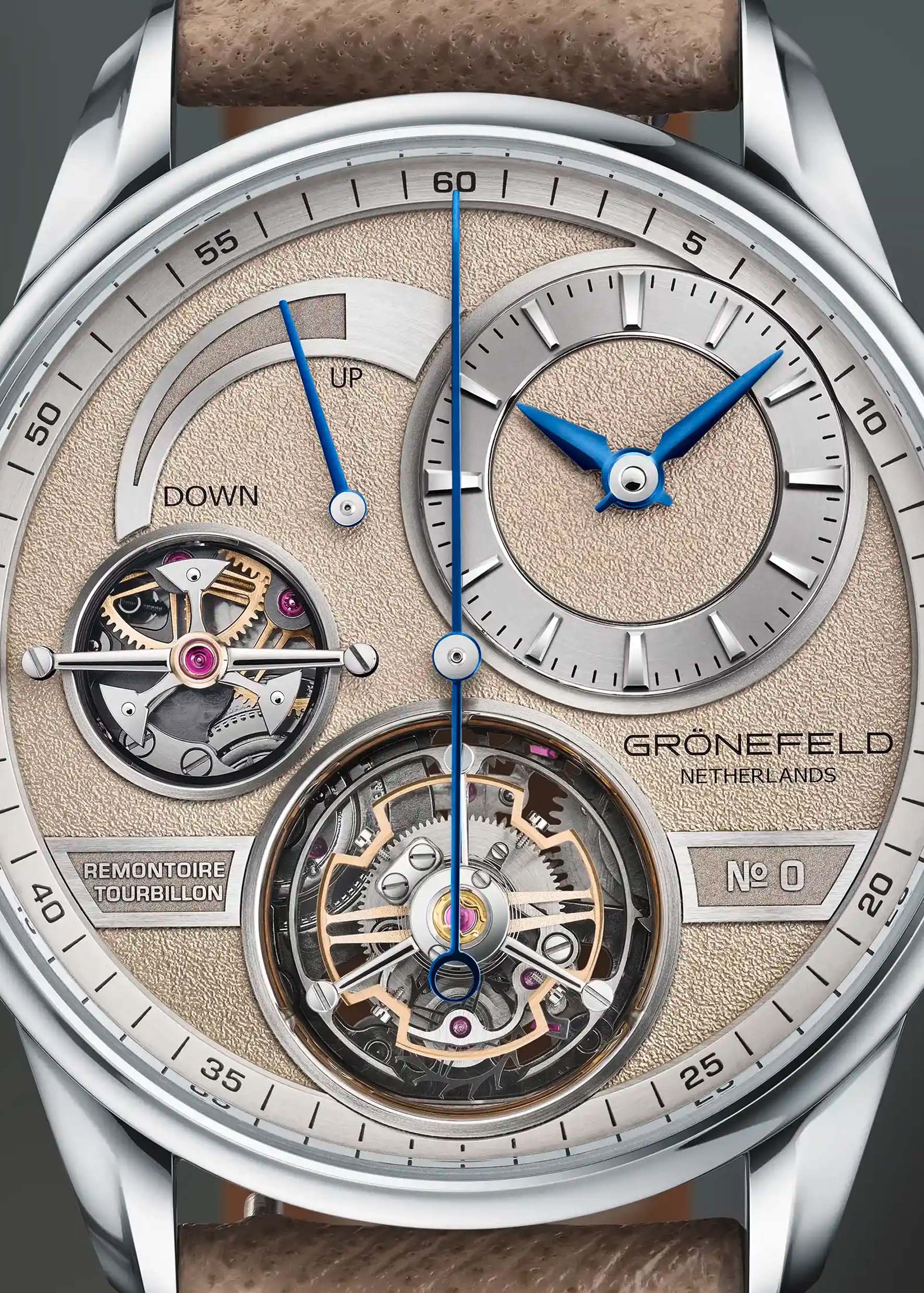
At the centre, the long jumping-seconds hand dominates the composition, its once-per-second progression creating an interesting contrast with the continuous motion of the tourbillon. It is precisely this layering of different rhythms that makes the Quadrivium so alive: the seconds marked out by the central hand, the governor releasing every 7.5 seconds and the tourbillon completing one rotation every minute. Three different movements that quite literally allow you to watch time passing.
Two small cartouches occupy the lower half of the dial: one carries the individual number of the watch, while the other bears the inscription “Remontoire Tourbillon.” Further below, the flying tourbillon emerges from the dial, while to the left the remontoire governor introduces another mechanical element in motion.
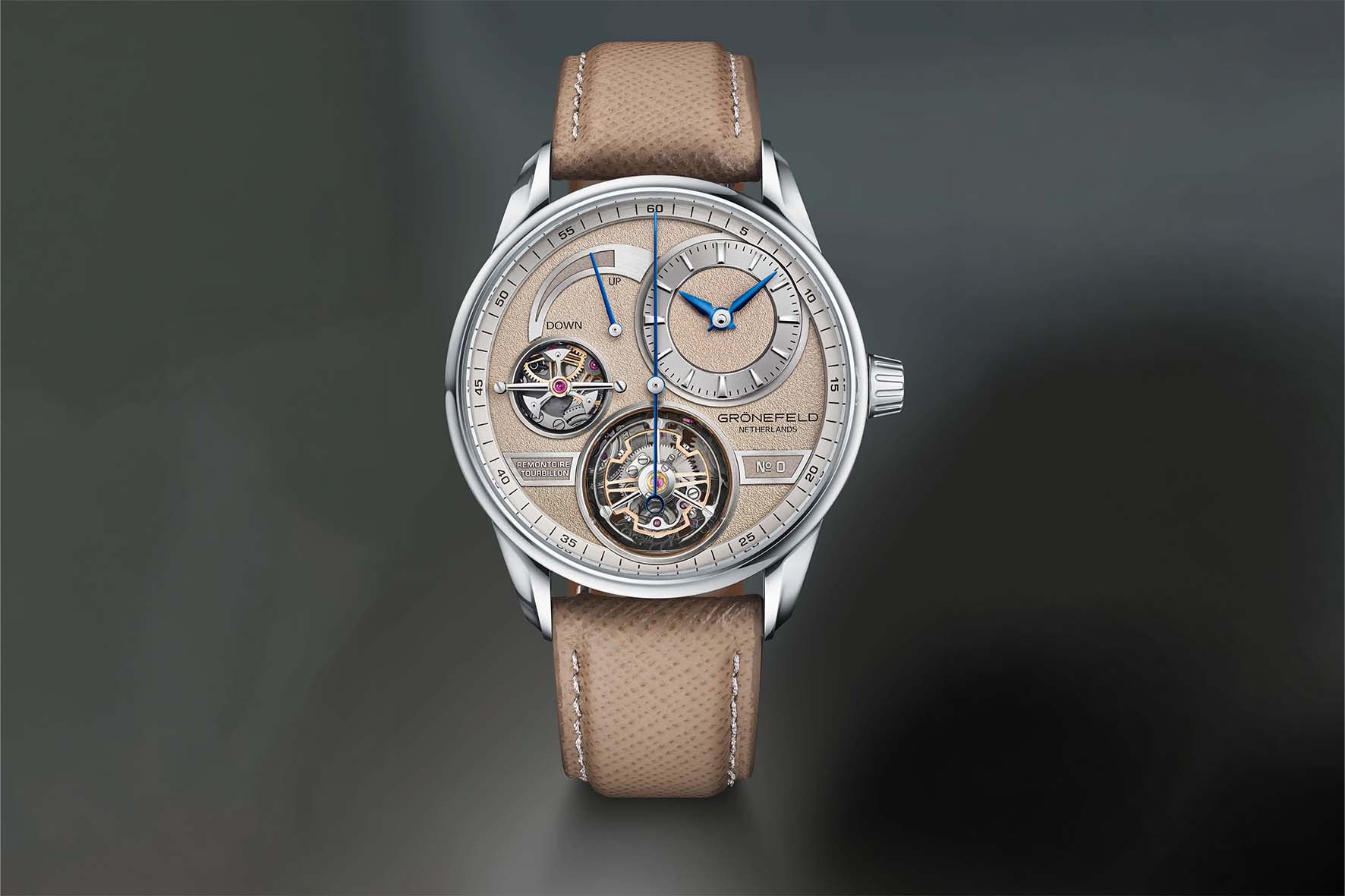
The rehaut follows the perimeter of the dial and, together with its multi-level construction, further accentuates its sense of depth. Overall, the Quadrivium maintains the balance between exposed mechanics and elegance that has long characterised the brand’s design language: there is a great deal to look at, yet almost nothing appears to have been added simply to attract attention.
The configuration shown in the launch images features a delicate champagne tone, although it will not be the only option available. Grönefeld has announced a choice of five different base colours for the dial, which will be revealed on its website in the coming weeks.
THE NEW MOVEMENT OF THE GRÖNEFELD 1941 QUADRIVIUM
If the dial tells the story of how the Quadrivium works, turning the watch over reveals what is probably the most fascinating side of the entire project. Visible through the large sapphire-crystal exhibition caseback is a manually wound movement comprising no fewer than 473 components, powered by concentric twin barrels connected in series and providing a 50-hour power reserve. This configuration is designed to efficiently manage the energy demands of an architecture that has to power the remontoire, tourbillon and the other indications simultaneously.
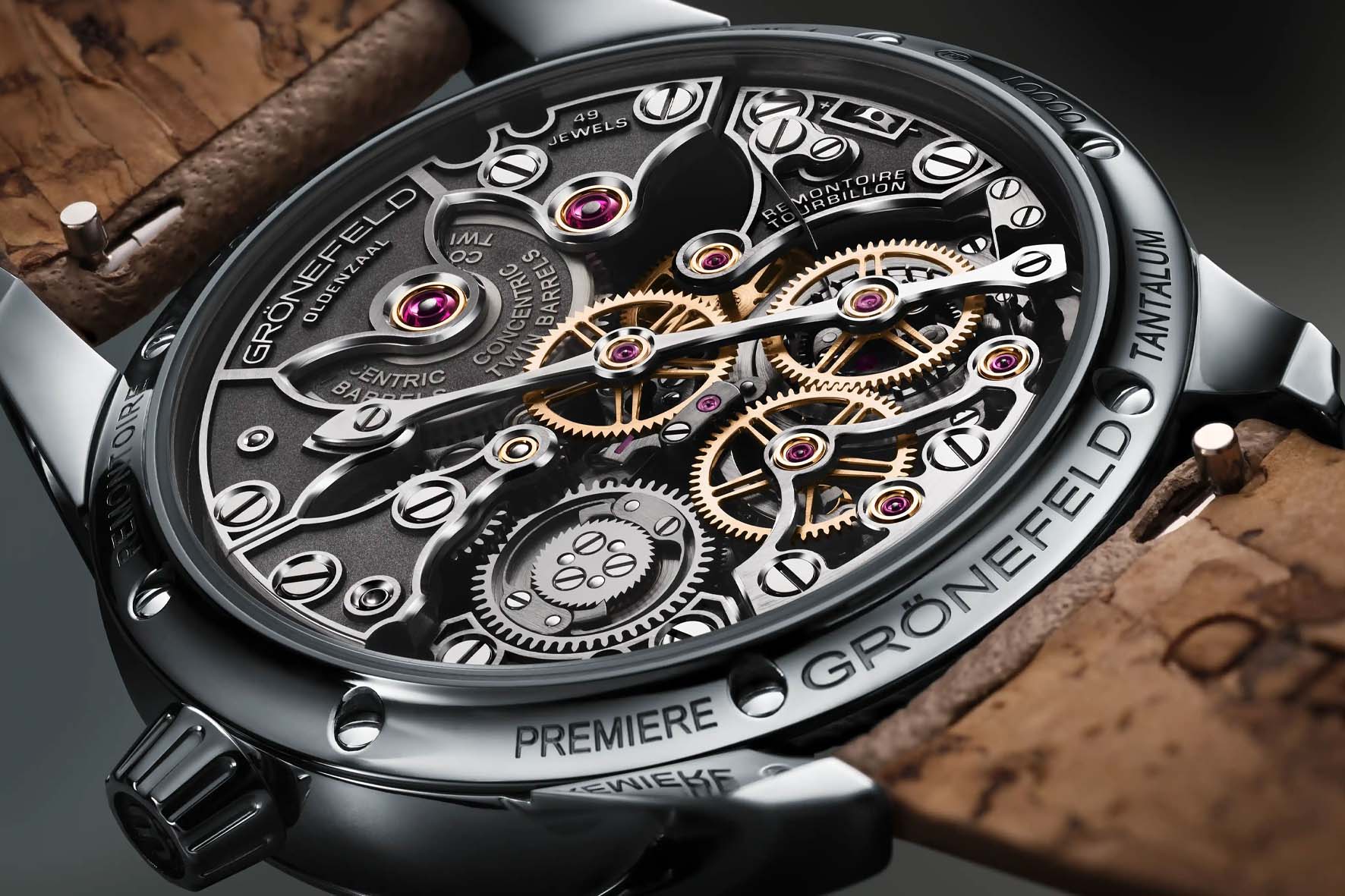
But focusing on the numbers alone would tell only half the story. We have always considered Grönefeld movements to be among the most beautiful in contemporary independent watchmaking, and looking at the Quadrivium through its caseback, it is difficult not to feel that the brothers from Oldenzaal have truly surpassed themselves this time.
The architecture revisits one of the brand’s most distinctive aesthetic signatures. The peripheral stainless-steel bridges feature the characteristic shapes inspired by the gabled façades of traditional Dutch houses, while a long transverse bridge spans the movement, helping create an exceptionally three-dimensional structure. Among the gears are wheels with distinctive double spokes and large jewels set in gold chatons.
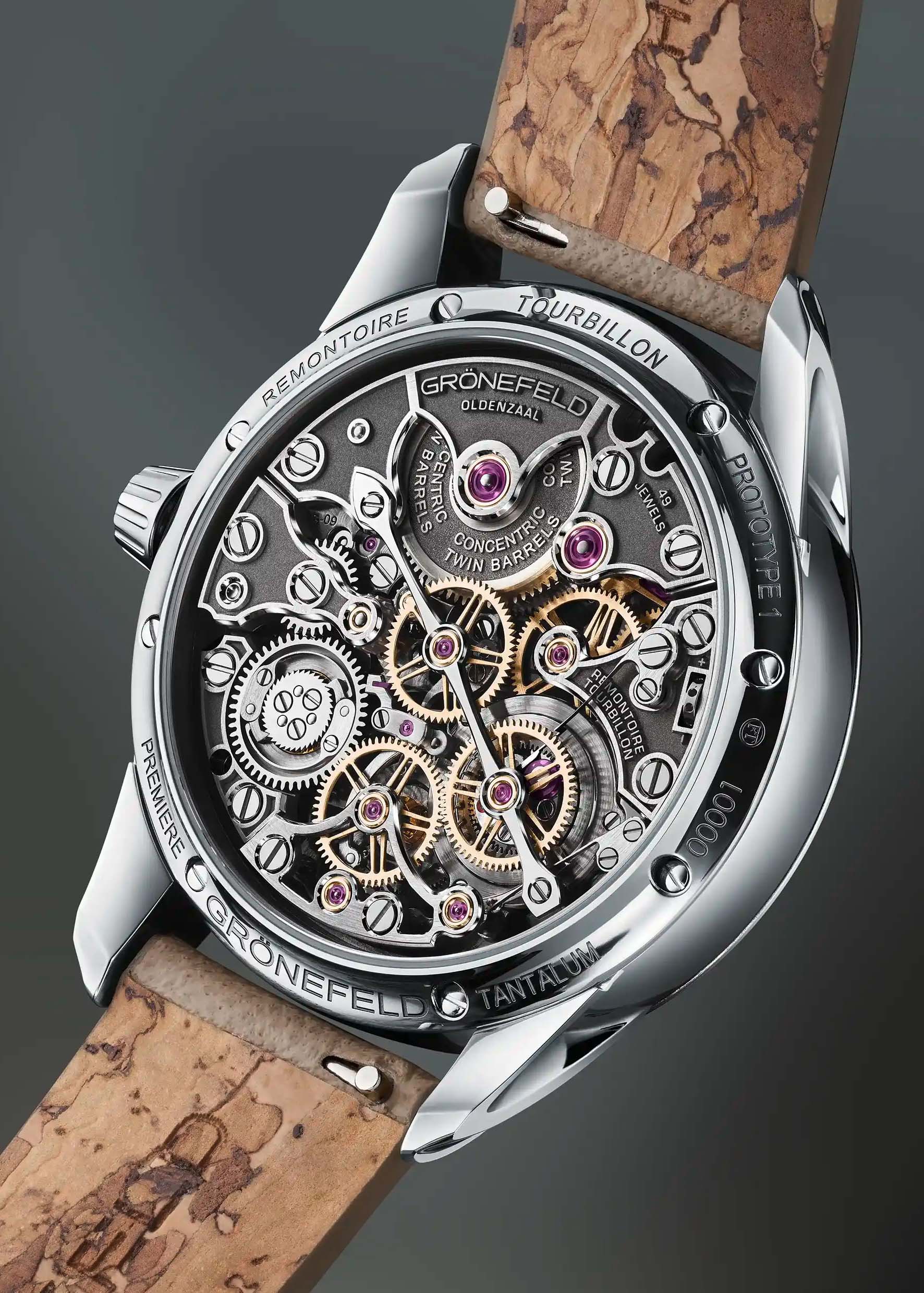
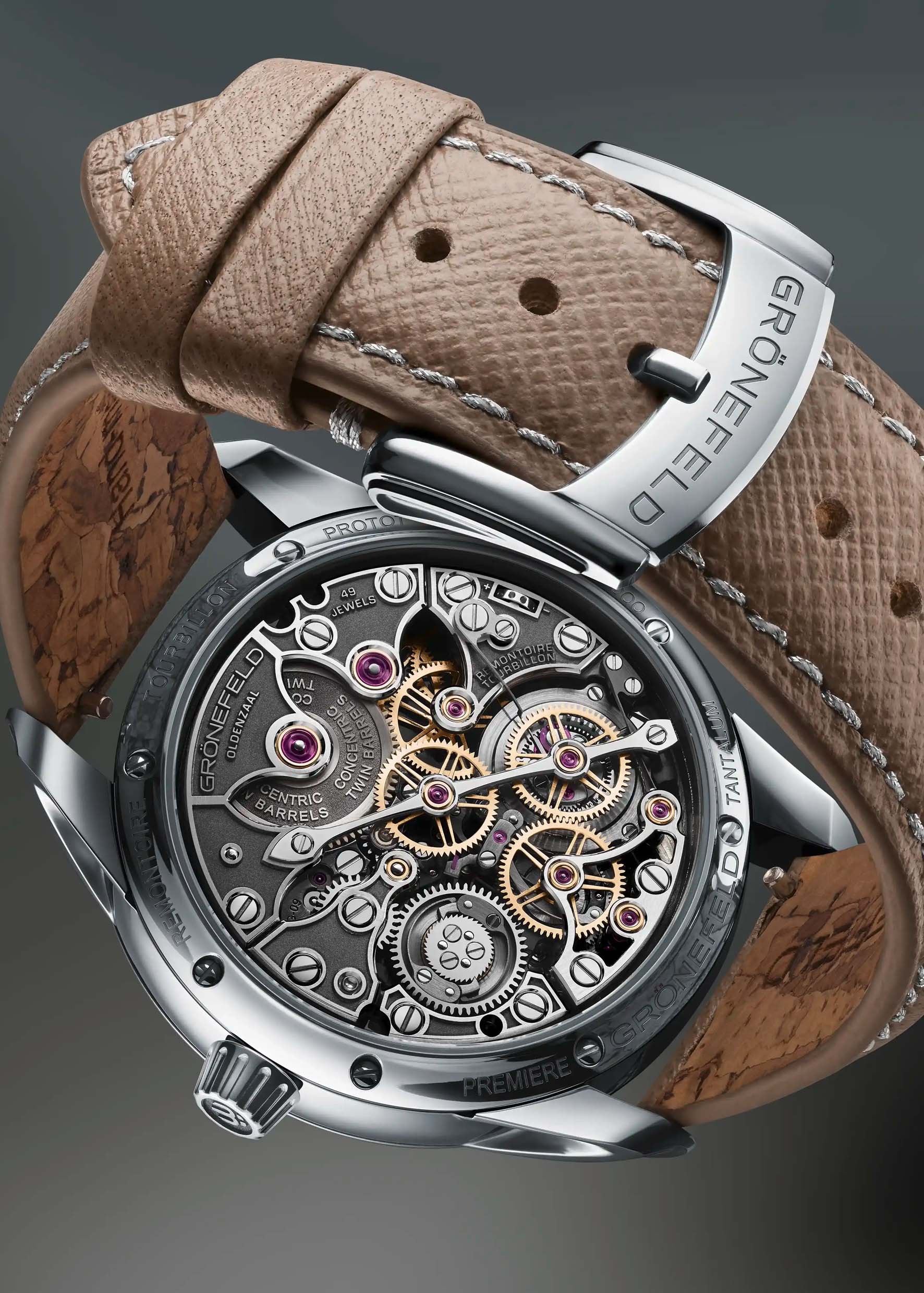
It is in the finishing, however, that this architecture really comes to life. The stainless-steel bridges combine dark-coated, micro-blasted recessed surfaces with polished bevels and hand-executed finishing; these are complemented by bas-relief engravings and steel components finished with black polishing. The contrast between matte surfaces, darkened elements and perfectly polished edges further emphasises the depth of the movement.
The result is more than an exceptionally complicated movement. It is a calibre capable of making its complexity aesthetically legible and one that, in our view, represents one of the finest expressions of Grönefeld’s mechanical language to date.
THE 1941 CASE IN TANTALUM
Housing all of this is the familiar 1941 case, first introduced with the Remontoire in 2016 and since established as one of Grönefeld’s most recognisable design signatures. Despite the complexity of the movement, the proportions remain remarkably restrained: 40 mm in diameter and just 11.3 mm in height.
The construction retains the flowing forms typical of the 1941 family, with a domed and polished bezel, recessed case flanks and sculpted, downward-curving lugs featuring the familiar stepped profile. The combination of curved, concave and polished surfaces makes the case immediately recognisable.
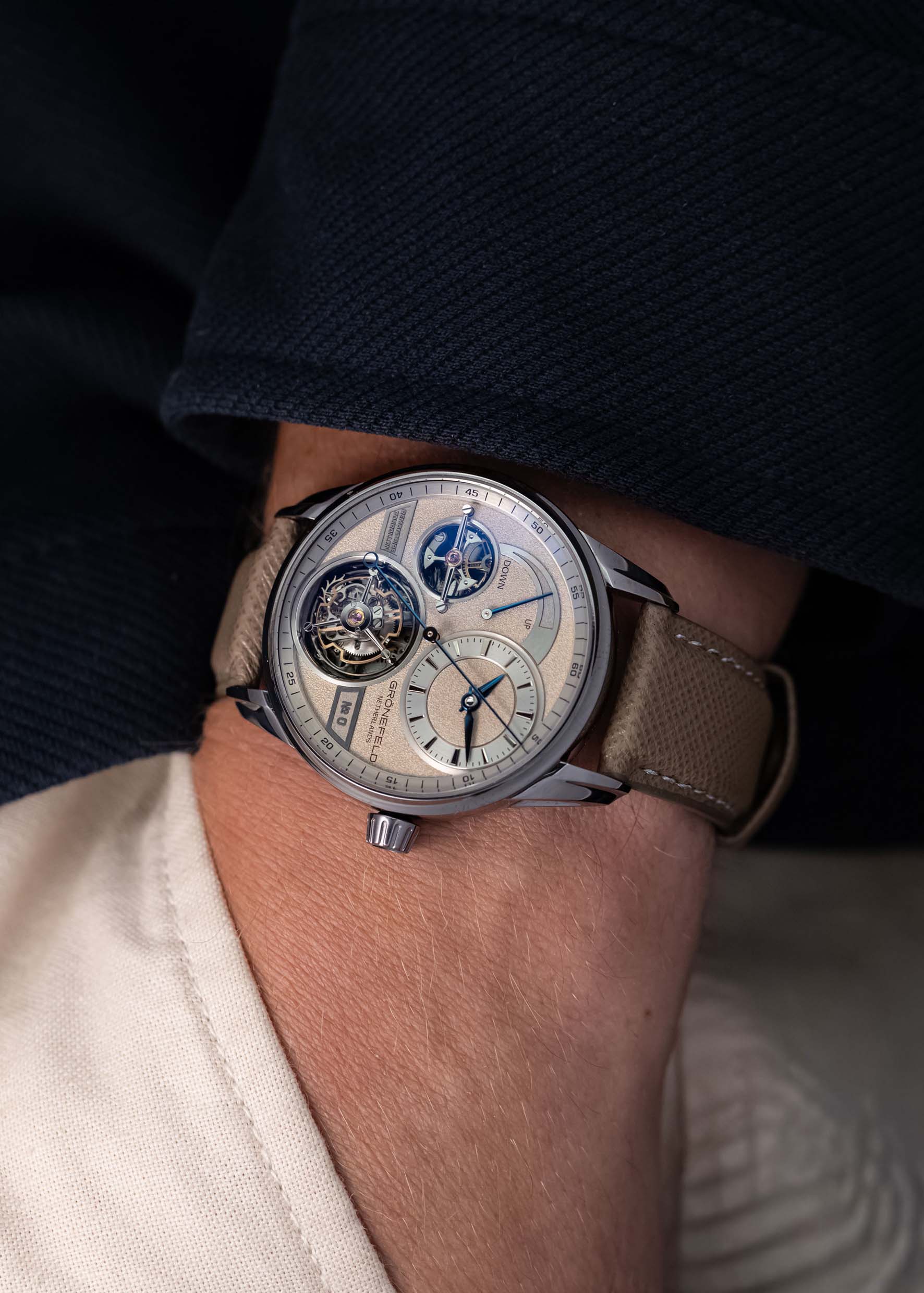
For the Première Edition, however, Grönefeld has chosen a particularly interesting material: tantalum. It is a metal highly appreciated by collectors and still relatively rare in watchmaking, partly because its hardness and physical properties make it considerably more demanding to machine and, above all, finish than materials traditionally used for watch cases.
Grönefeld, however, is already familiar with it, having previously used tantalum for the Première Edition of the 1941 Grönograaf. The manufacture itself has described the material as hard, corrosion-resistant and bioinert, with a density more than twice that of stainless steel.
Above all, however, it is its colour that makes tantalum immediately recognisable: a distinctive blue-grey hue, understated yet clearly different from steel and capable of changing noticeably depending on the light.
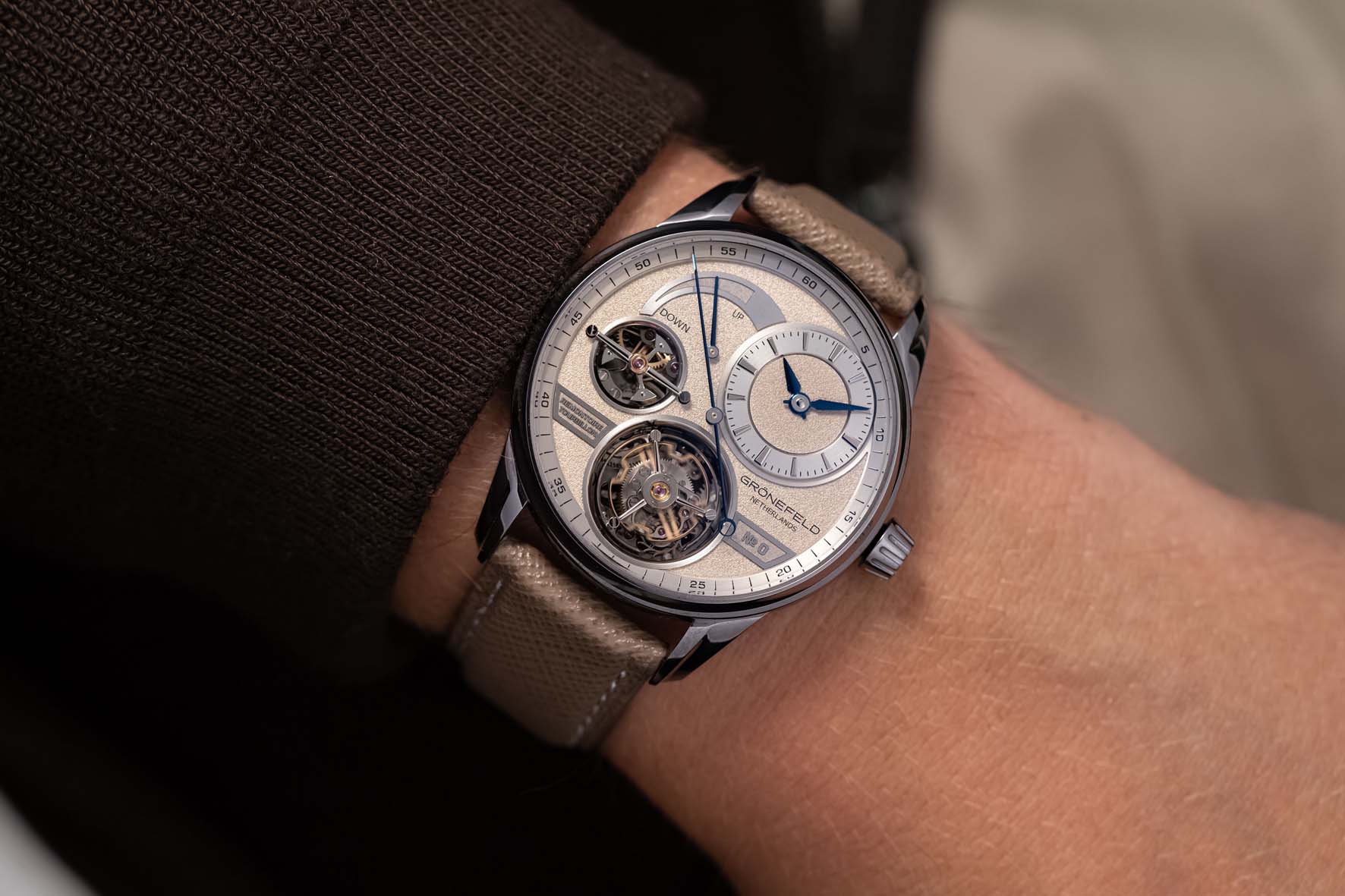
Working such a material across the curved surfaces, recesses, edges and broad polished areas characteristic of the 1941 case is certainly not the easiest route. It is precisely this difficulty, combined with tantalum’s relative rarity in haute horlogerie, that has contributed to its appeal among collectors over the years.
The case is completed by the characteristic conical crown and sapphire crystals on both the dial and caseback sides, with the latter providing an unobstructed view of the movement. The Quadrivium is paired with a leather strap and pin buckle made from the same material as the case: tantalum for the Première Edition and platinum for the subsequent version.
GRÖNEFELD 1941 QUADRIVIUM: PRICE AND AVAILABILITY
Production of the Grönefeld 1941 Quadrivium will be extremely limited. The Première Edition in tantalum will be produced in just 28 pieces, with both case and buckle crafted from the same material, and will be priced at €280,000 excluding taxes. The first deliveries are scheduled to begin in 2027.
It will be followed by a second series, also limited to 28 pieces, this time with a platinum case and buckle, priced at €310,000 excluding taxes.
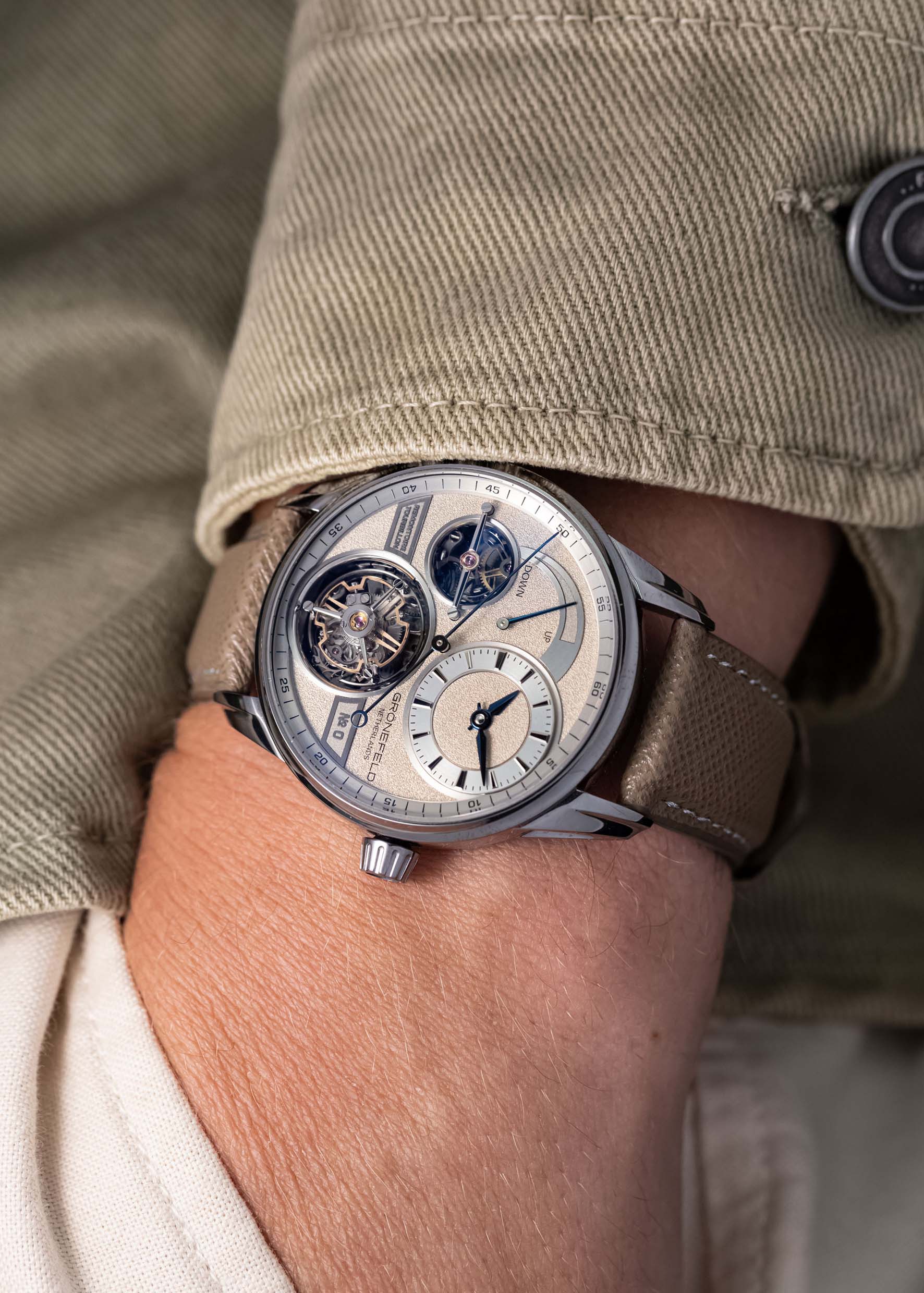
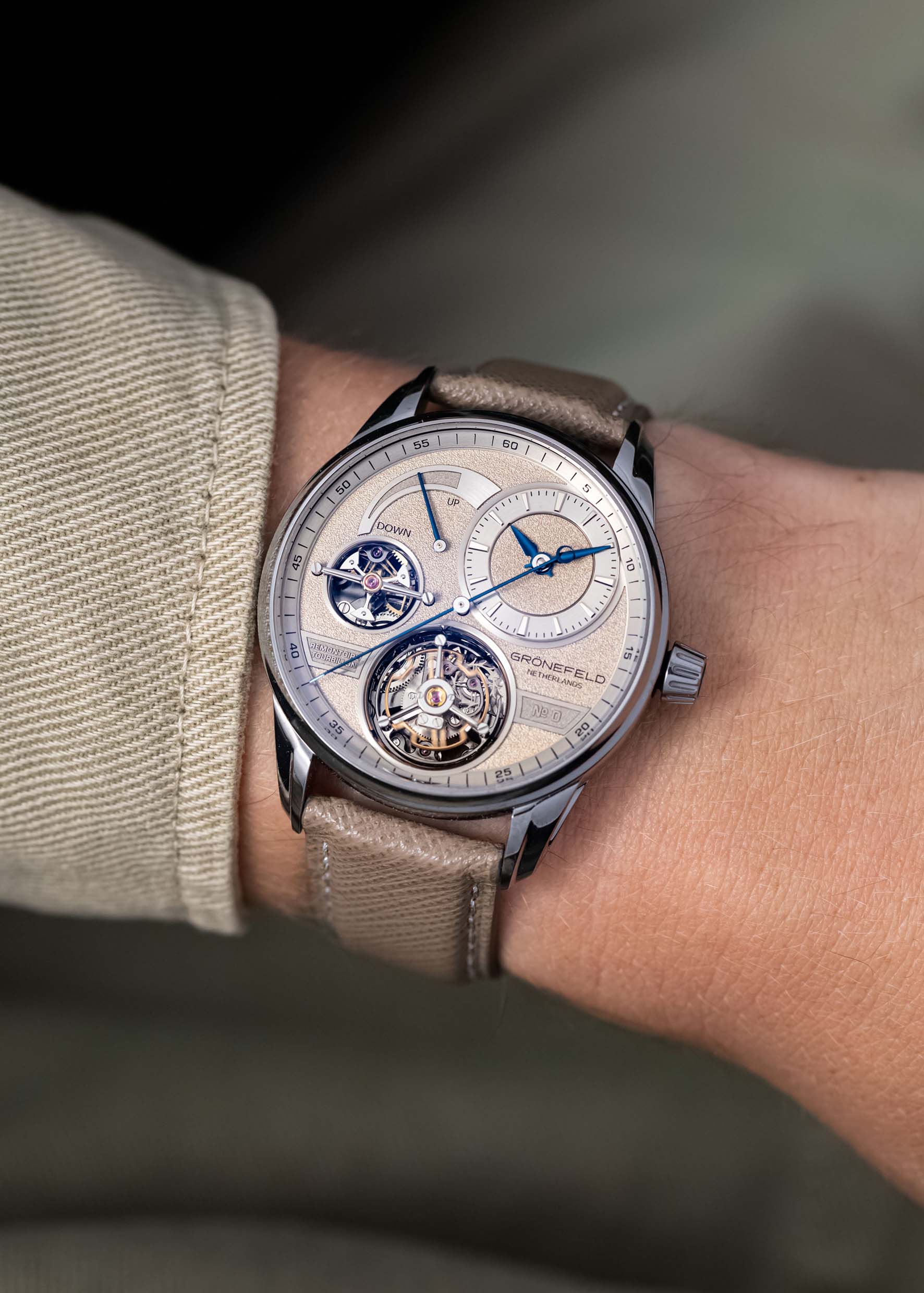
These are significant figures even within the world of independent haute horlogerie, but the Quadrivium does not appear to have been conceived with the aim of broadening Grönefeld’s audience. Rather, it feels like a statement of what Bart and Tim are now capable of concentrating within a watch measuring just 40 mm in diameter.
And perhaps that is precisely what we like most about it. After years in which the One Hertz, Parallax Tourbillon and 1941 Remontoire have become reference points in contemporary independent watchmaking, Grönefeld has not simply chosen to bring their complications back. The brothers have rethought them, made them work together and brought them into an entirely new movement.
We had been waiting for a major new Grönefeld complication for quite some time. In the end, four arrived at once.
By Jacopo Giudici