


Since 1997, URWERK has pursued a vision of watchmaking that has little to do with convention. For Felix Baumgartner and Martin Frei, the founders of the independent Swiss brand, telling the time does not necessarily mean relying on traditional hands. Instead, it means finding new ways to express its passage. This philosophy has led to original movements and architectures, turning wandering hours into one of the most distinctive signatures of contemporary watchmaking.
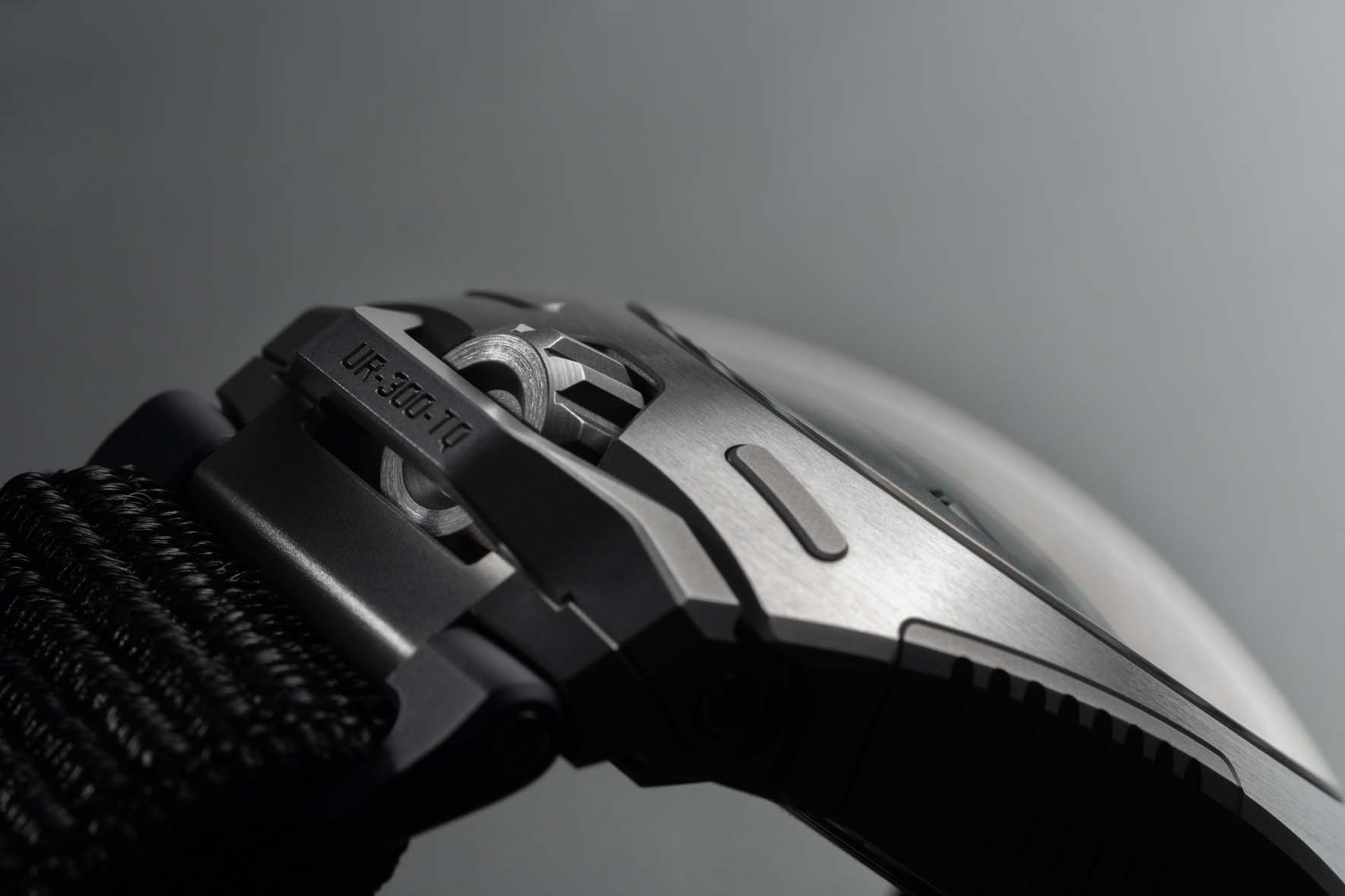
With the new URWERK UR-300 Time Quantum, that exploration takes an unexpected turn. Having drawn inspiration for years from planetary orbits and the movement of celestial bodies, the brand now looks in the opposite direction: towards atoms and particles, where a single change can alter the balance of an entire system. The idea takes shape in a new mechanical complication in which the transition from one hour to the next does not simply advance an indicator, but completely reconfigures the elements responsible for displaying the time.
A NEW ARCHITECTURE FOR WANDERING HOURS
To understand what makes the UR-300 Time Quantum different, it helps to begin with a principle that has defined URWERK’s history. In many of its watches, the hours are displayed by rotating satellites that follow predetermined paths, creating a way of reading time that is as unconventional as it is recognisable. The brand has explored this language in numerous forms, including the 2024 UR-150 Scorpion, with its retrograde hand and intricate satellite-rotation system.

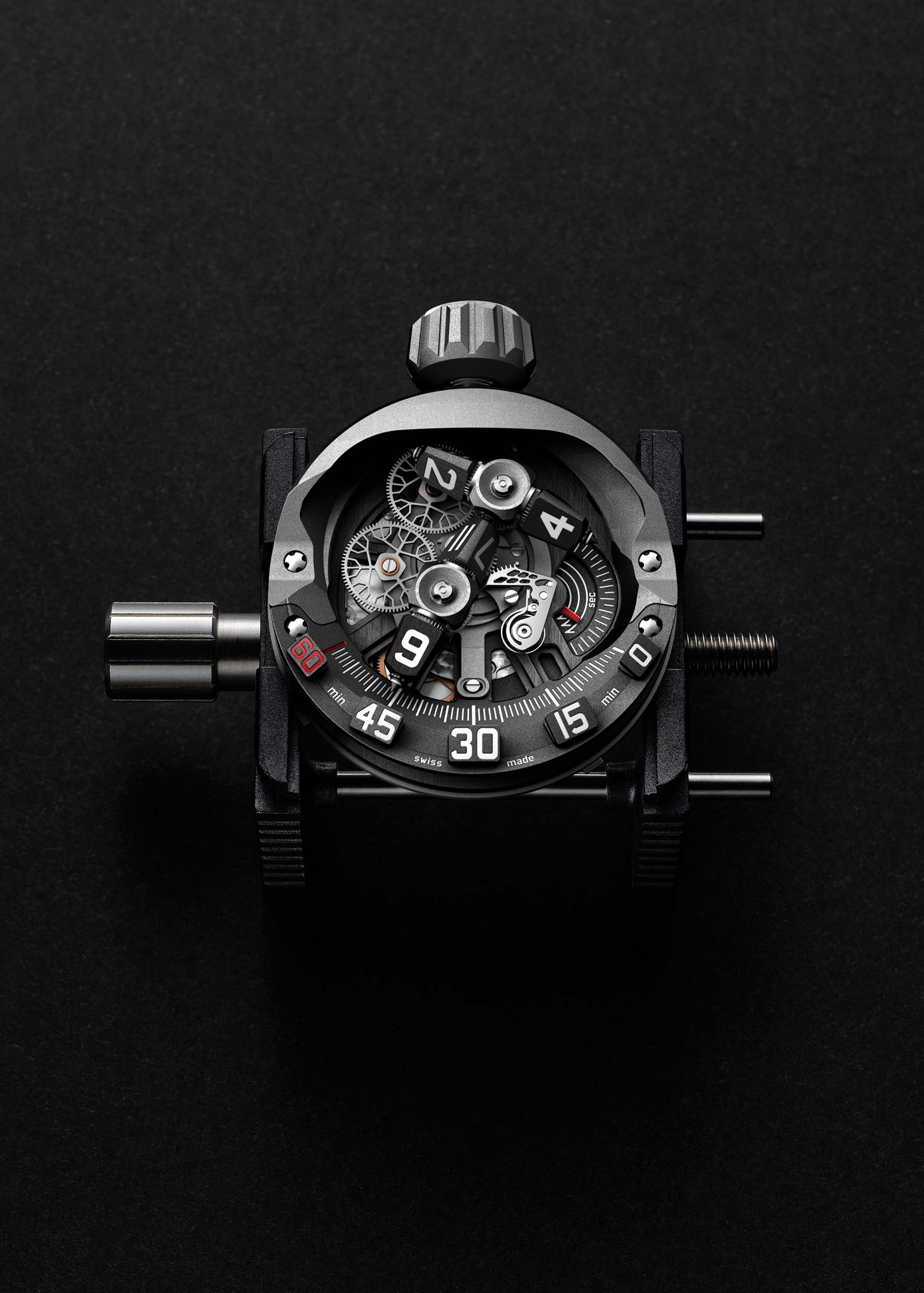
In the new UR-300, however, the architecture changes radically. The traditional carousel gives way to two modules positioned at right angles to form a T-shaped structure. Each module carries a three-sided hour prism at either end. Between them, the four prisms carry the twelve hour numerals, while their arrangement determines which numeral appears in the reading position.
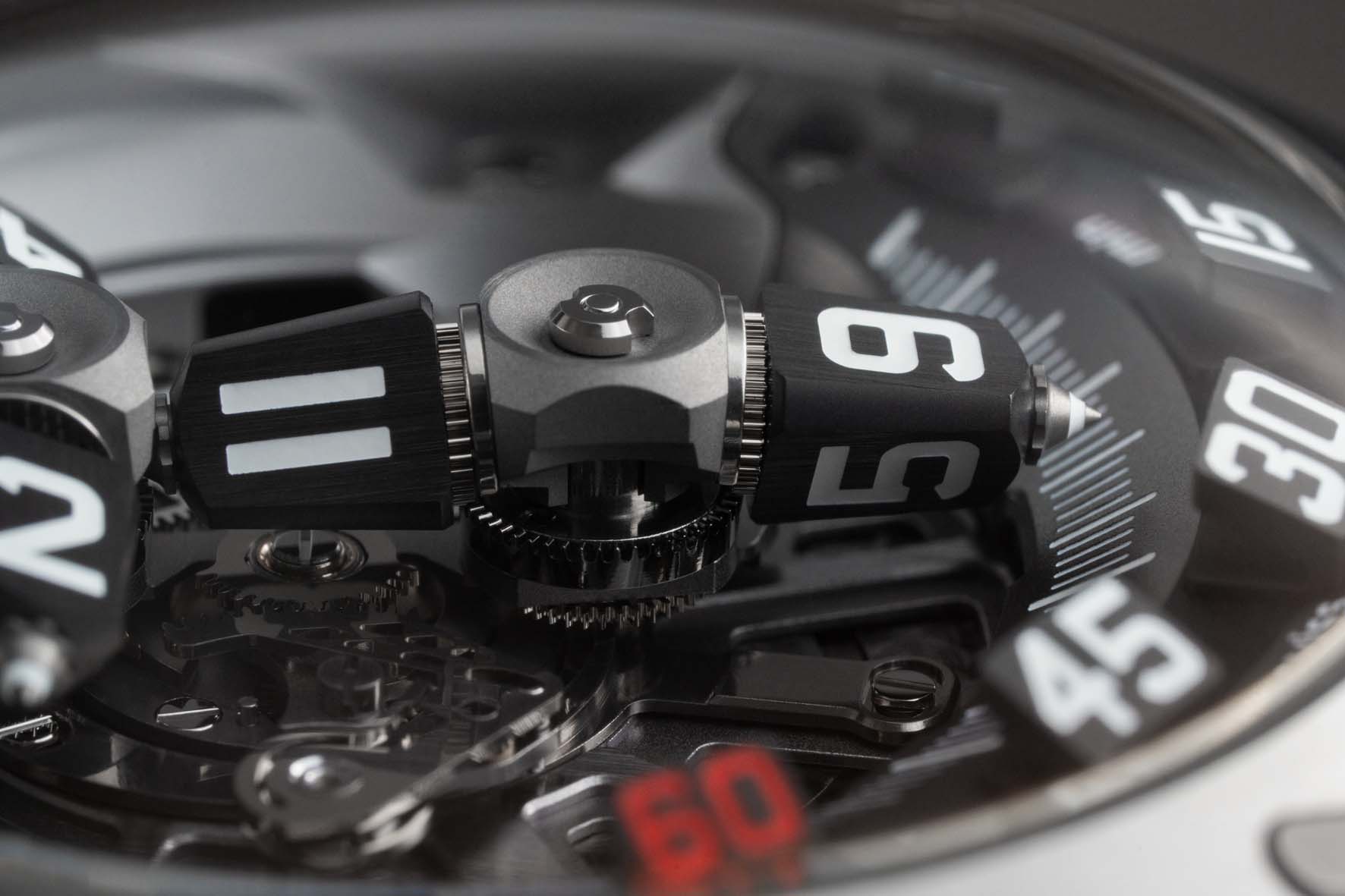
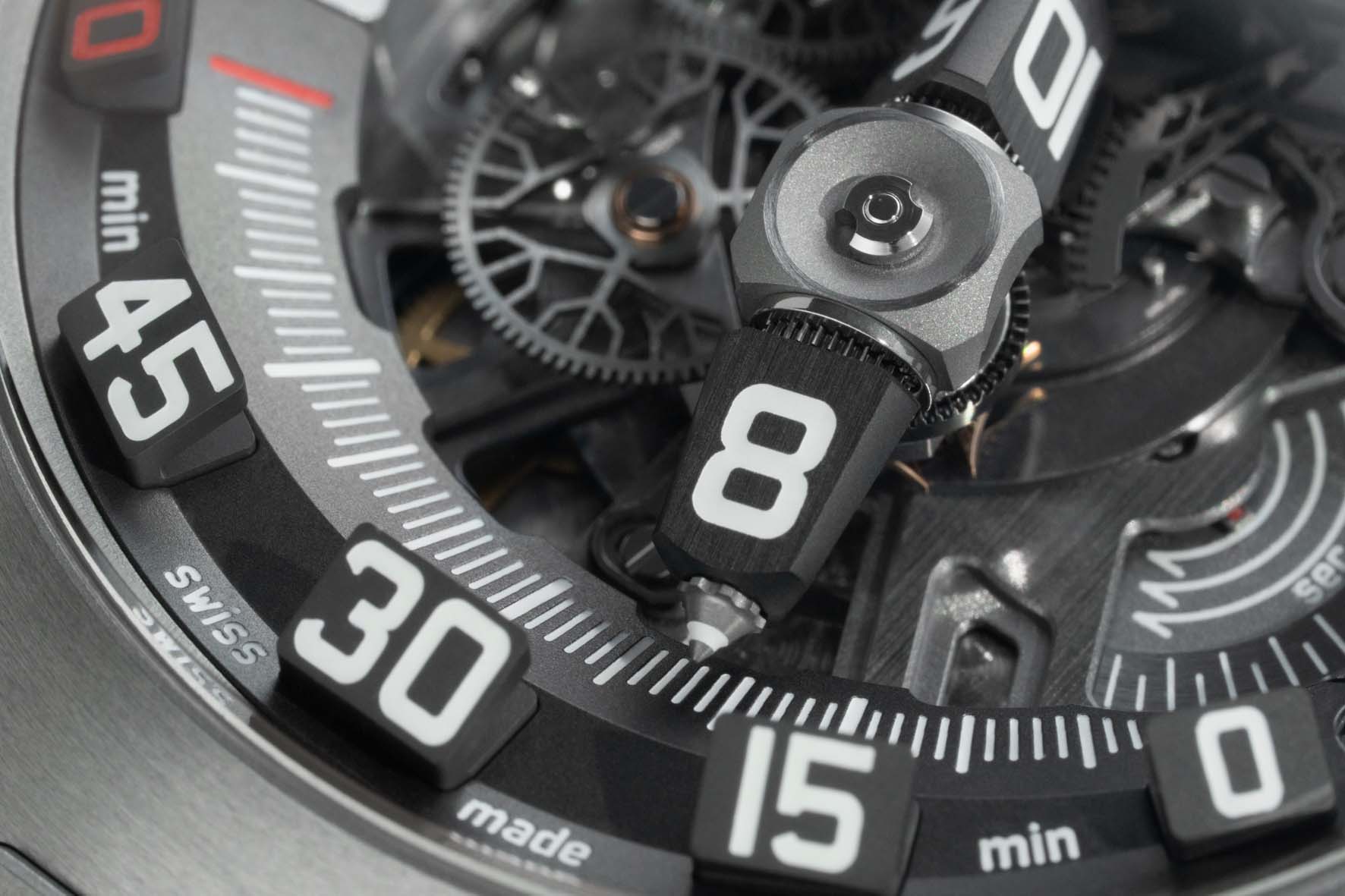
As the mechanism runs, the prism at the base of the T indicates the current hour as the assembly travels along a 108-degree arc marked with a scale from 0 to 60 minutes. Up to this point, the principle retains something of the familiarity of earlier URWERK creations. The real difference emerges at the end of each hour, when the entire assembly changes configuration through a precisely coordinated sequence of movements.
THE MECHANISM THAT TRANSFORMS EVERY HOUR
When the indicator reaches the 60-minute mark, the URWERK UR-300 Time Quantum undergoes its transformation. The entire T-shaped assembly jumps forward by 72 degrees as its two modules pivot in opposite directions and exchange roles. The module that formed the horizontal crossbar becomes the new vertical stem, aligning with zero on the minute scale. At the same time, the former stem becomes the crossbar.

In that same instant, all four prisms rotate, bringing the numeral for the next hour into view. The result is a simultaneous transformation of the entire display system, without the retrograde return found in other URWERK creations. Once the jump is complete, the new configuration is ready to begin its next 60-minute cycle.
This behaviour is the inspiration behind the name Time Quantum. The concept draws on quantum physics, particularly entanglement, which describes correlations between the properties of particles. In the UR-300, this is an analogy rather than a literal quantum phenomenon: the components are mechanically linked and respond together, moving from one stable configuration to the next. It is an original way to interpret time, making visible a change that we normally perceive only through the progression of a display.
A QUESTION OF ENERGY AND PRECISION
Developing such a mechanism has been a particularly demanding undertaking. Moving several components simultaneously, some with considerable inertia, calls for exceptionally precise control of the energy needed to complete each jump. Too little force could interrupt the sequence; too much could cause recoil and place unnecessary stress on the movement.
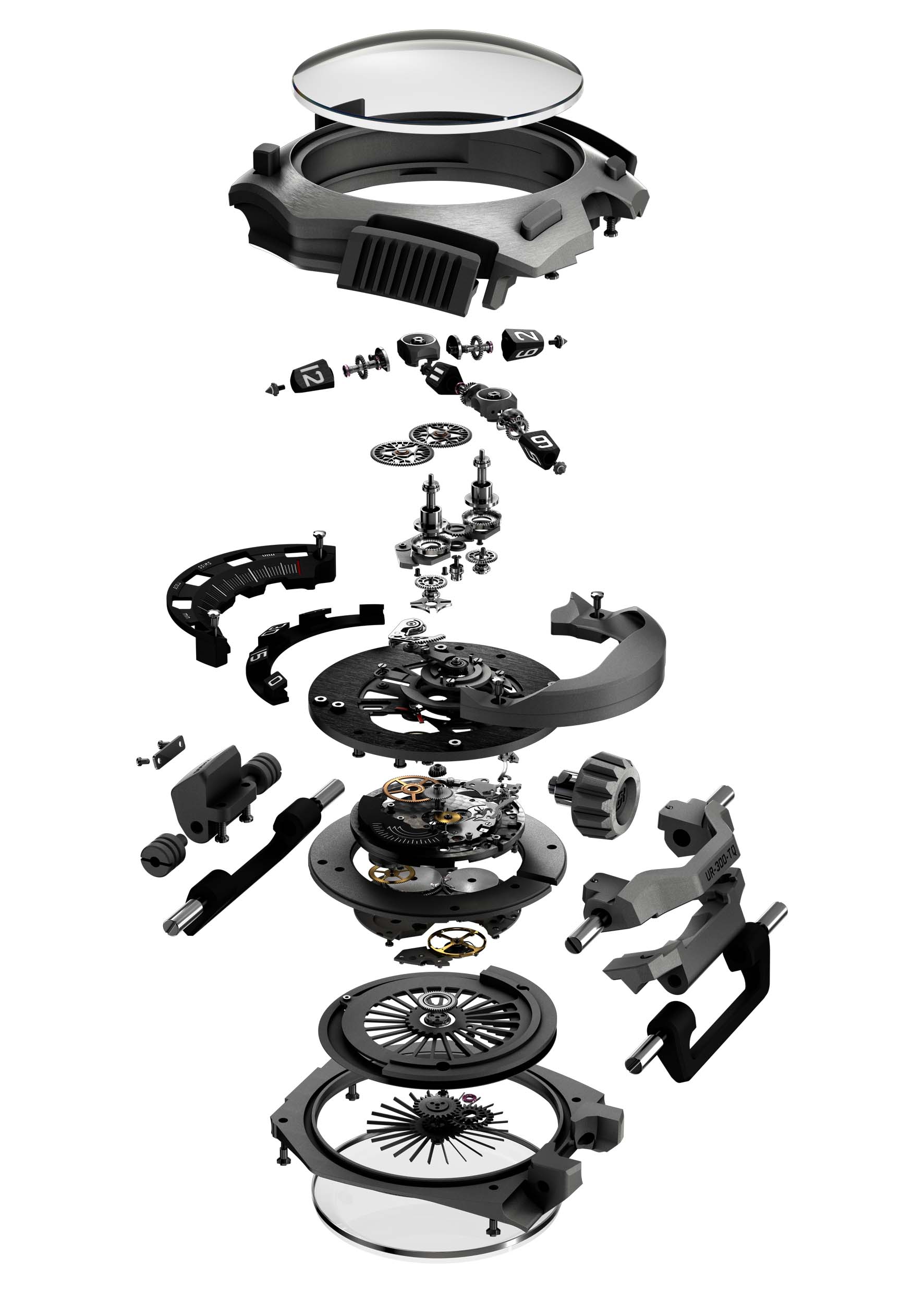
URWERK’s engineers therefore had to strike a delicate balance between power, moving mass and mechanical tolerances. The gears need to engage precisely while also withstanding the sudden acceleration that occurs every sixty minutes. Another challenge was to retain an essential everyday function: the ability to set the time both forwards and backwards while preserving the operation of the complication.
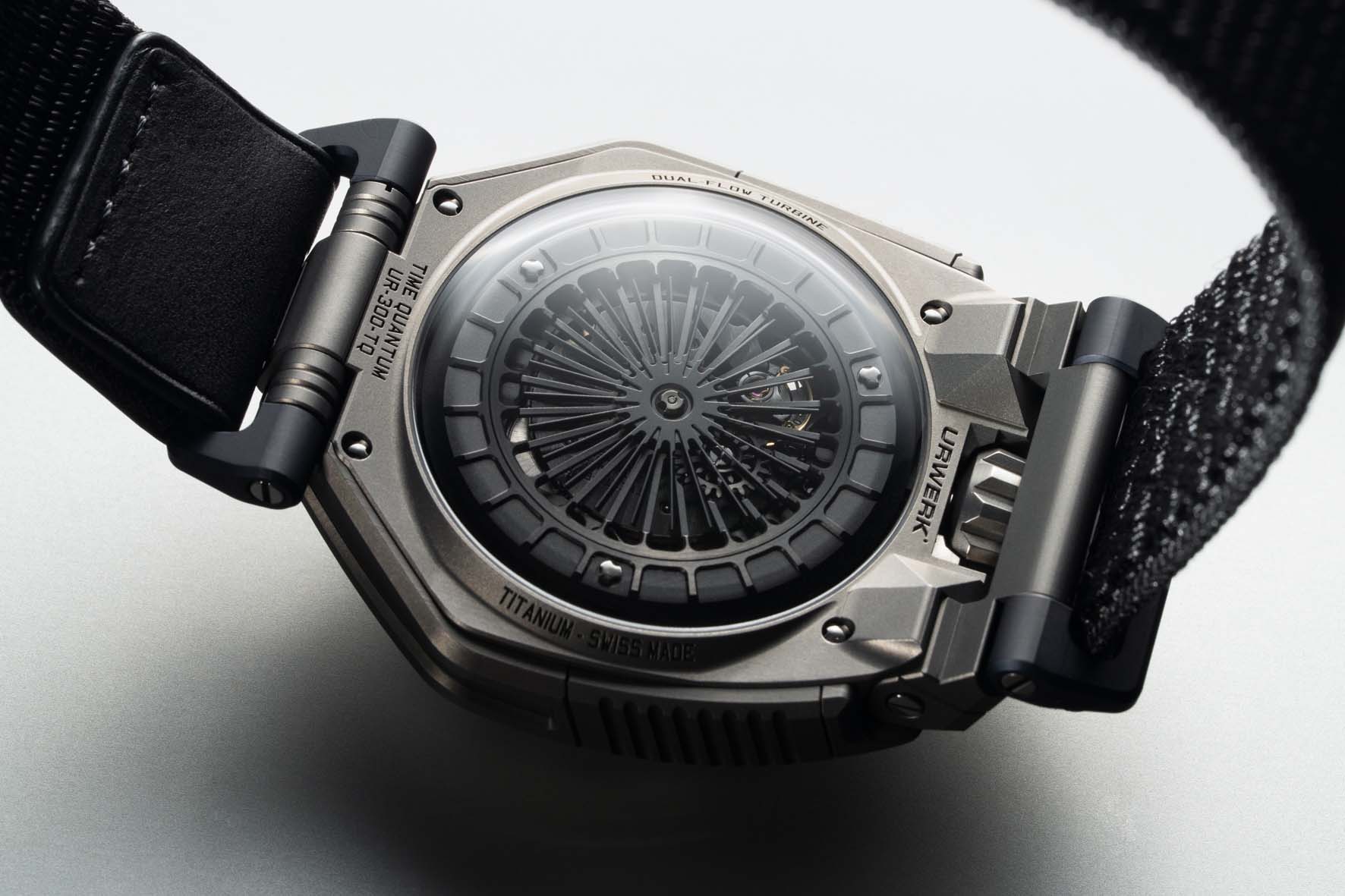
Powering the watch is the automatic calibre UR-30.01V, equipped with 40 jewels, a double mainspring barrel and a 44-hour power reserve. Operating at 28,800 vibrations per hour (4 Hz), the movement features URWERK’s patented Dual Flow Turbines system, which regulates the automatic winding. Material selection has received equally close attention, with components made from beryllium copper, brass, anodised aluminium, ARCAP, titanium and LIGA-processed nickel. The selection reflects the particular mechanical demands of this architecture.
TITAN AND ALTIN: TWO VERSIONS, 50 WATCHES
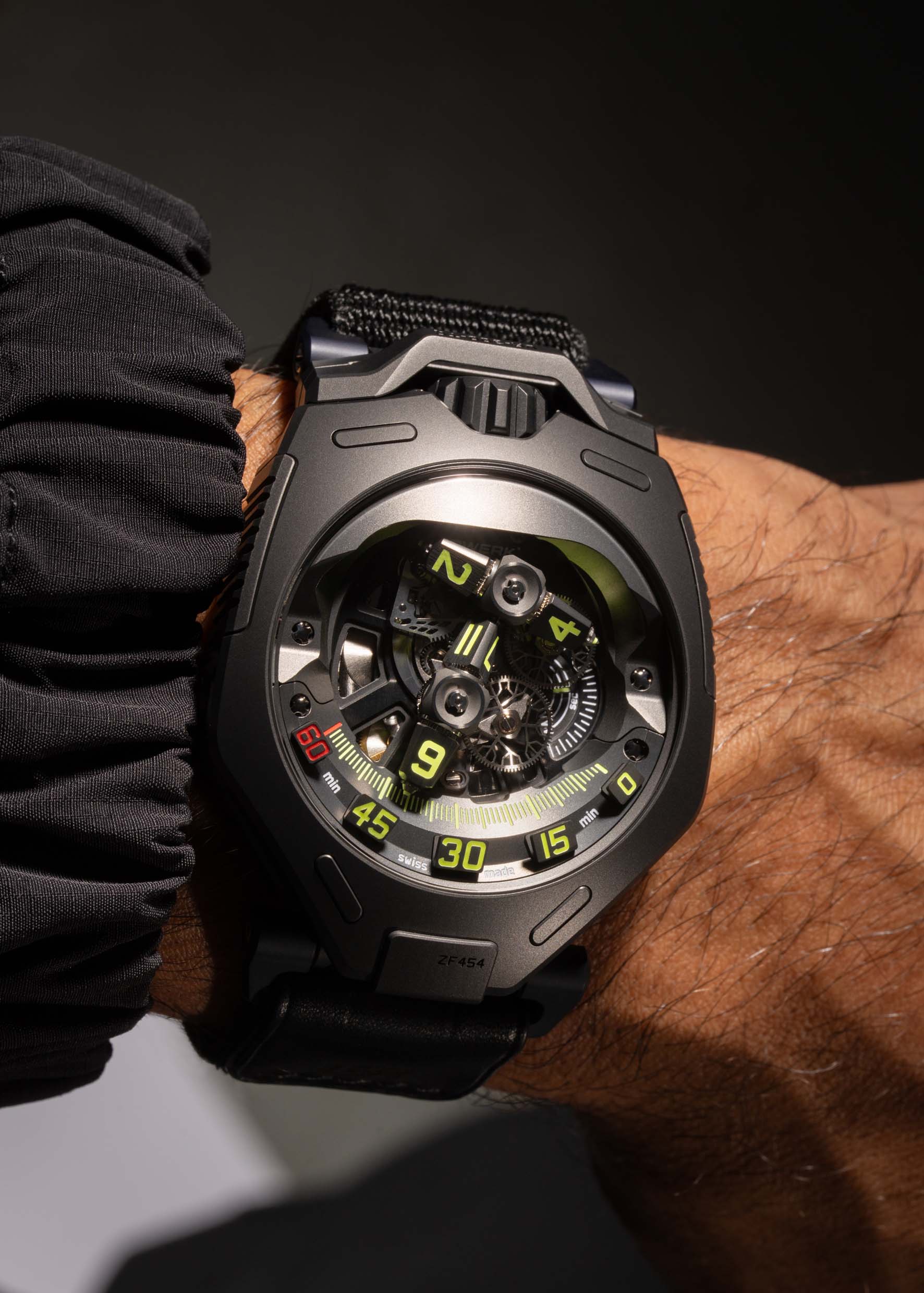
Visually, the UR-300 Time Quantum retains an instantly recognisable identity. Its case combines faceted forms and carefully worked surfaces around a broad sapphire-crystal opening, offering a view of the movement and, above all, the unusual arrangement of its modules. The mechanics become an integral part of the design, without the need for purely decorative elements.
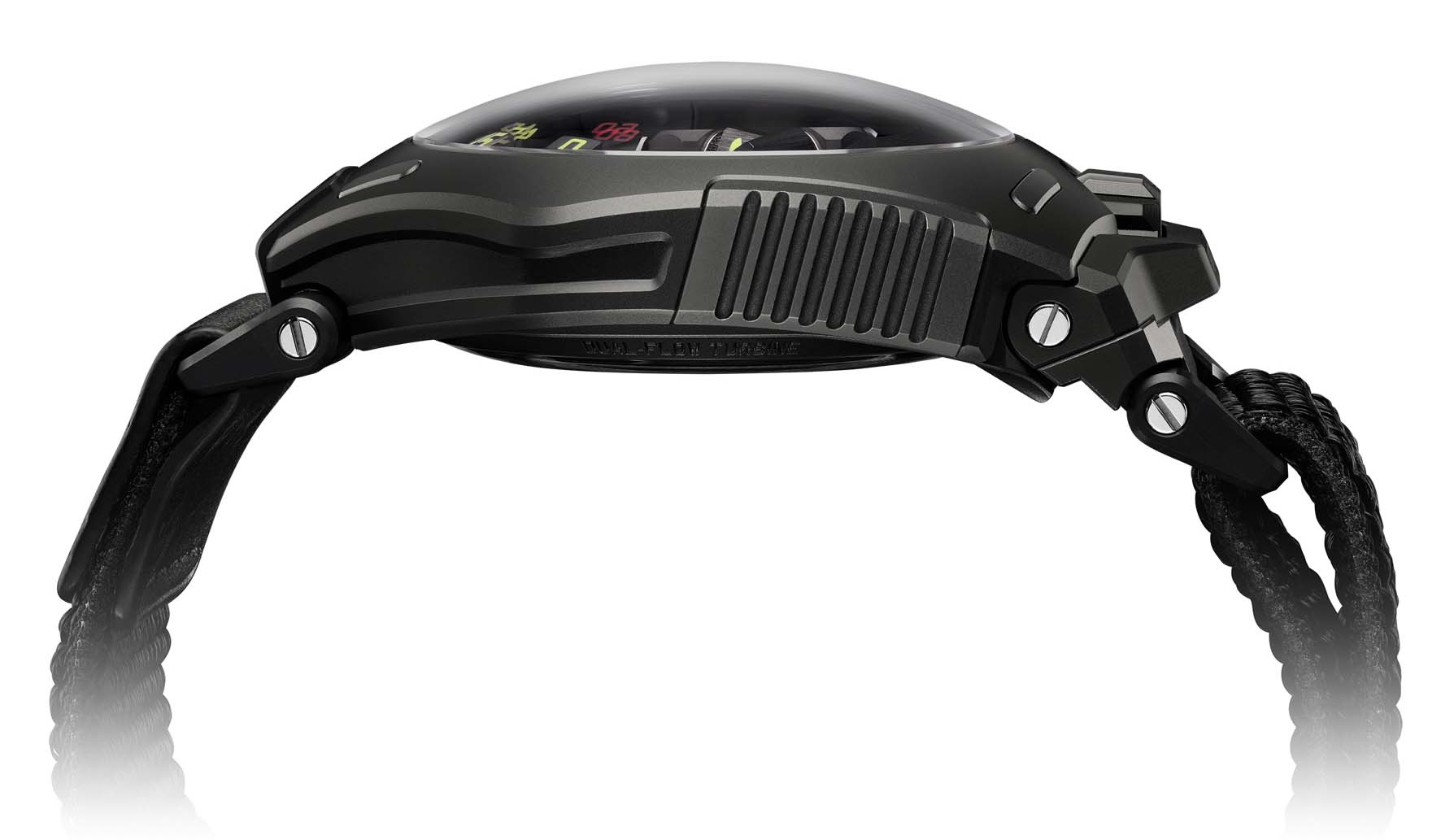
The case is substantial, measuring 45.2 × 58.8 mm and 18.25 mm thick. Two versions are offered, both in grade 5 titanium. The UR-300 Titan retains the natural appearance of the metal, while the UR-300 AlTiN receives a PE-CVD surface treatment that gives it a darker finish. The caseback offers a view of the turbine-equipped automatic winding system, and a NATO strap completes the watch.
Production is limited to 50 pieces in total, with 25 pieces in each version. Both are priced at CHF 168,000, excluding taxes.

With the Time Quantum, URWERK once again shows how a complication can emerge from a seemingly simple question: is there another way to represent the passing hours? This time, the answer is neither a more elaborate satellite nor a hand with an unusual motion, but a system that completely rearranges itself at every change of hour. Perhaps that is what makes this project so compelling: after nearly three decades spent exploring the same fundamental principle, the brand has found another mechanical solution capable of surprising us.
By Jacopo Giudici