

Aviator’s watches, or pilot’s watches as they are known in English, are among the models most prized by collectors and enthusiasts. Most watchmakers, large and small, have a collection inspired by aviation, often drawing on watches created by their maisons in the past. This is the case with Alpina, whose tradition of pilot’s watches dates back to the early 20th century and is now expressed in the Startimer Pilot Automatic, unveiled by the brand this spring at Watches and Wonders Geneva.
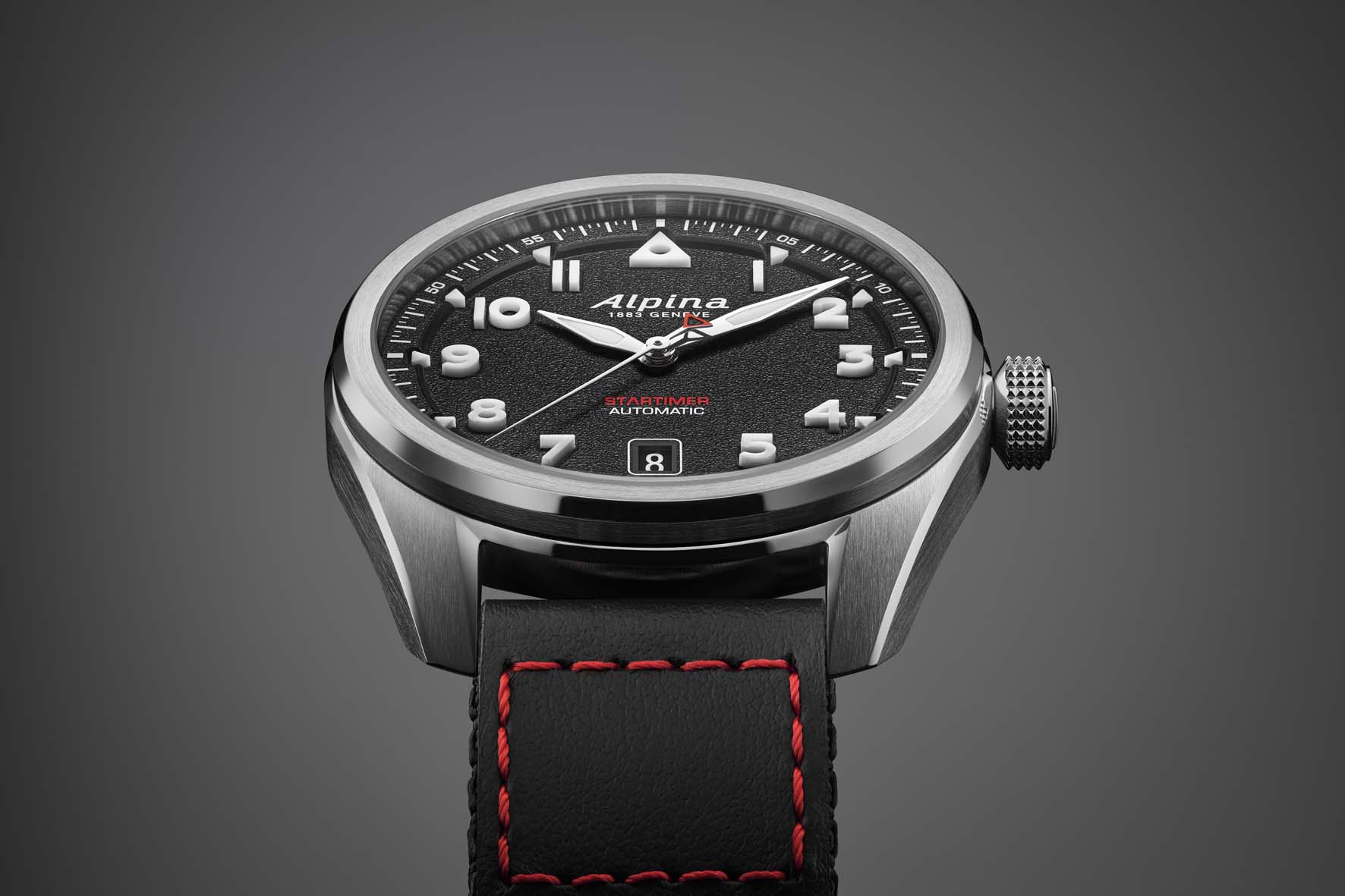
It is an interesting watch, thanks to its finishing, mechanics and competitive price. True to Alpina’s philosophy, it remains accessible and easy to wear, while offering a choice of dial colours and straps that make the Startimer Pilot Automatic a compelling option for anyone seeking a high-quality pilot’s watch without breaking the bank.
THE NEW DESIGN OF THE STARTIMER PILOT AUTOMATIC
The recent history of the Startimer began in 2011, when Alpina reintroduced its pilot’s watches from the early 20th century. Since then, the collection has become an integral part of the brand’s catalogue, standing out for its understated charm: a well-defined design, solid technical features and a reasonable price. At the heart of the collection sits the new Startimer Pilot Automatic, a clean and understated three-hand model that, over the years, has been offered in sizes ranging from 40 to 44 mm.
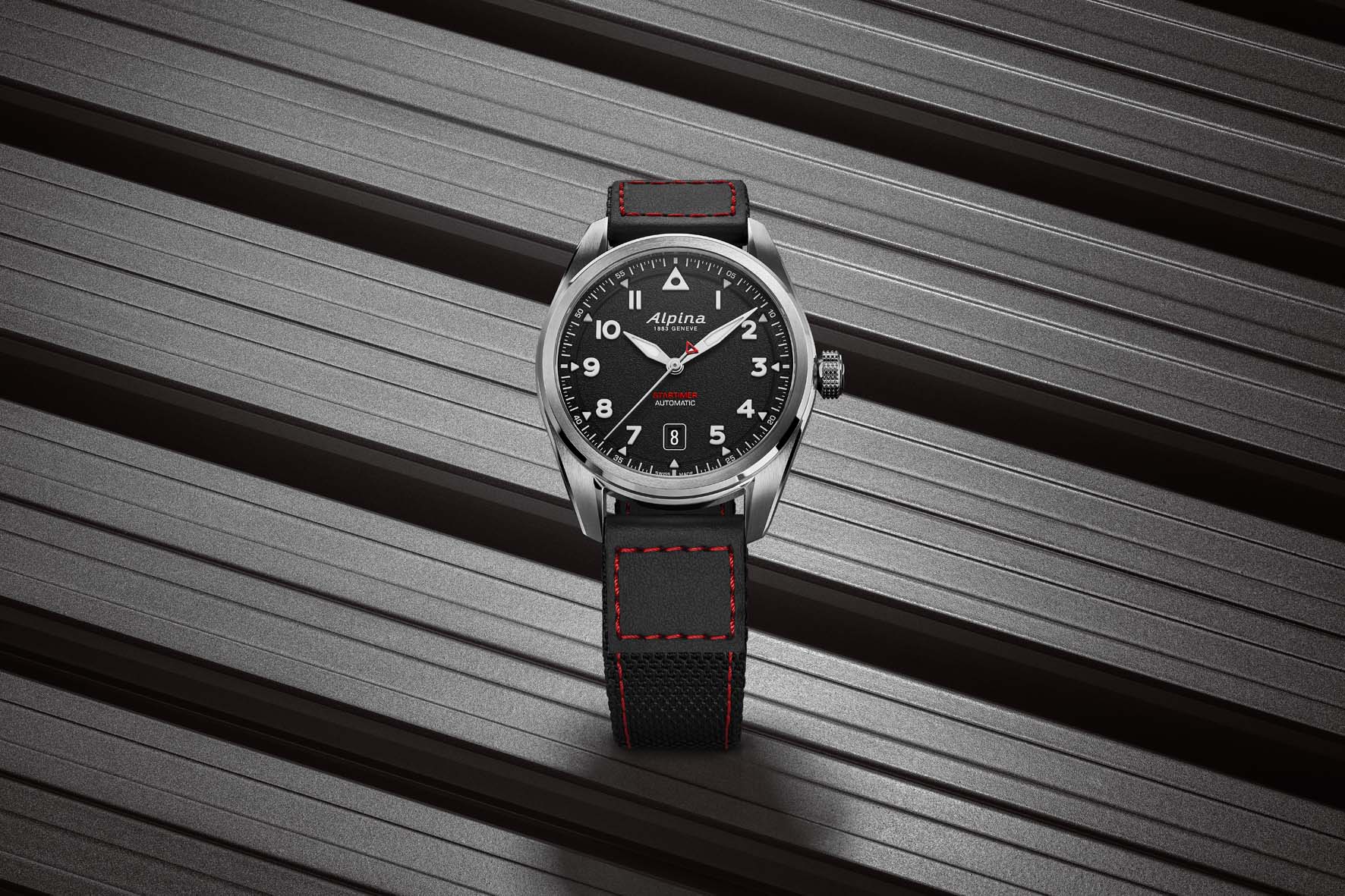
For 2026, Alpina has retained the practical 40 mm diameter but has completely redesigned the case. At just 10.14 mm thick, it is approximately 10 per cent slimmer than the previous 41 mm versions. Crafted from stainless steel, it features bevelled edges, a circular satin-finished bezel, a vertically brushed case middle with polished chamfers, and offers water resistance to 10 bar. The new lines give the watch a remarkably compact profile, helped by the short, gently curved lugs.
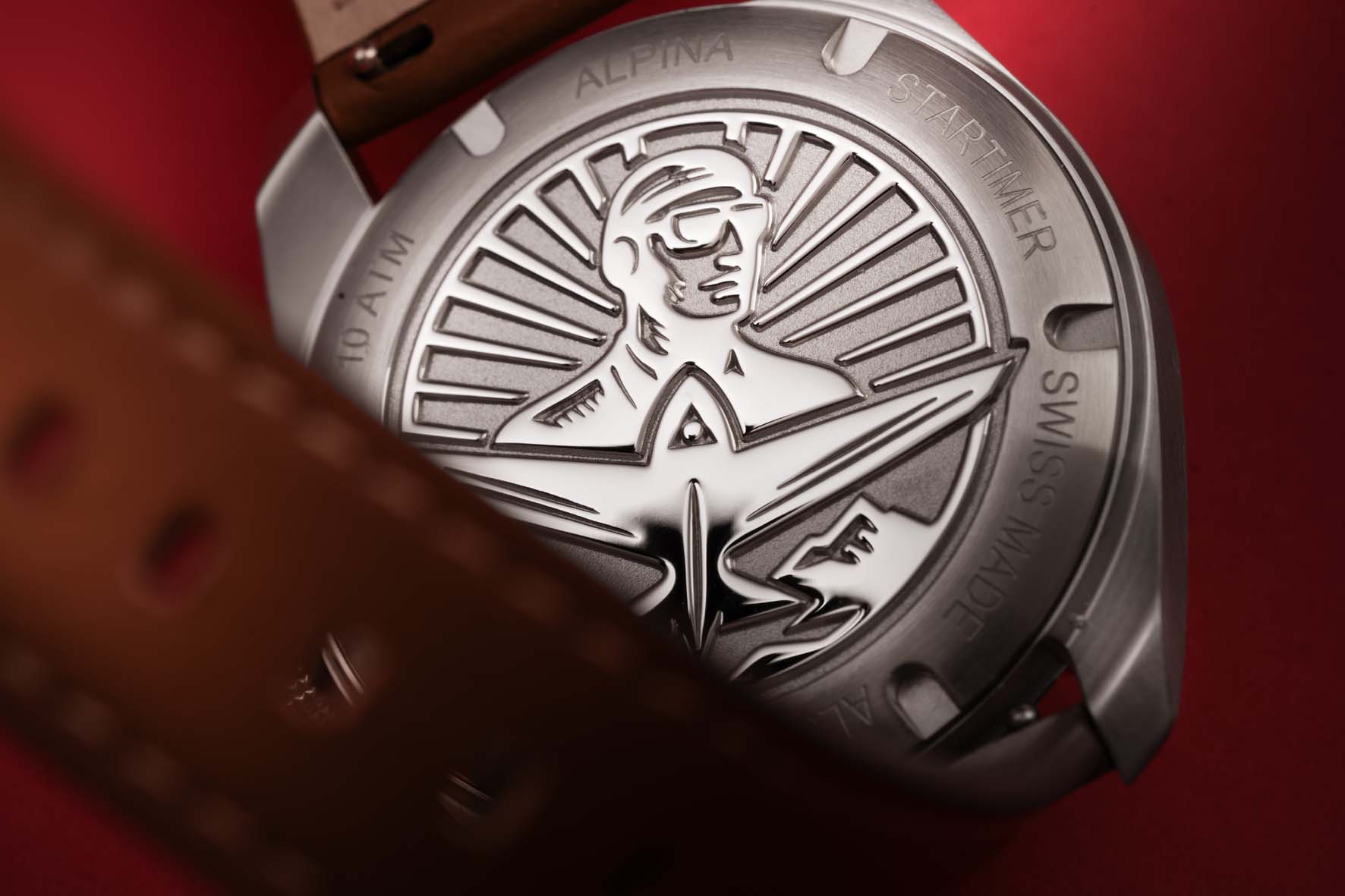
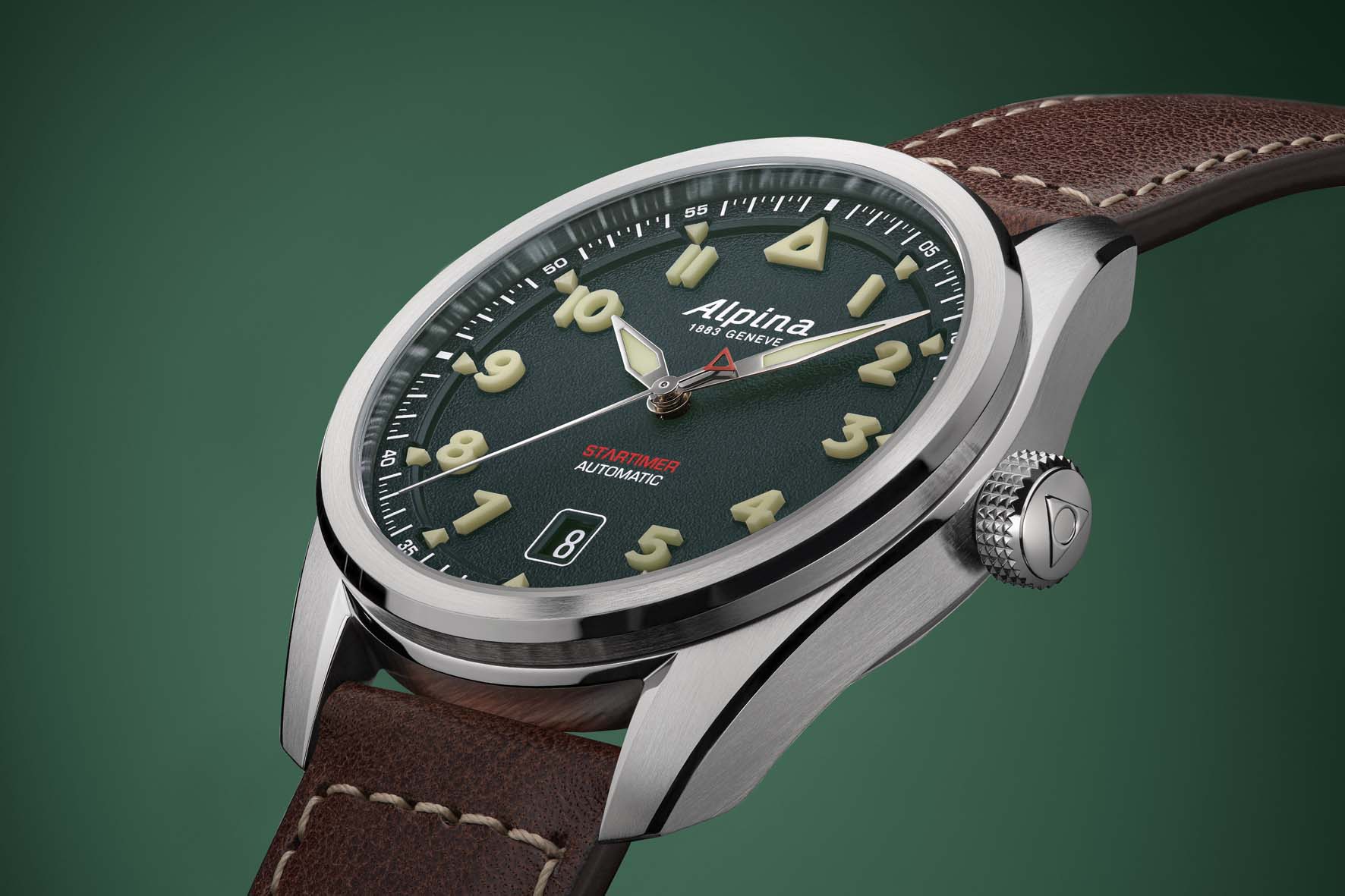
The work carried out on the crown is particularly interesting, as it has been redesigned to provide a more secure grip. All this, however, is achieved whilst maintaining harmonious proportions, avoiding the classic oversized onion-style crown that typically characterises pilot’s watches and, in particular, previous versions of the Startimer Pilot Automatic. The embossed motif on the solid steel case back is a particularly nice detail: an aviator standing beside his aircraft, inspired by Art Deco design.
ALPINA AND THE WORK ON THE DIALS
Alpina has also done an excellent job on the new dials. Whilst legibility remains a central and essential element, what deserves particular attention on the Startimer Pilot Automatic are the hour markers. Alpina has made them large, in Arabic numerals, machined from solid blocks of luminous material and applied to the dial, with the brand’s logo at 12 o’clock standing out above all else. This choice not only enhances legibility but also creates a striking three-dimensional effect. Depending on the version, the luminous material is available in the brand’s Old Radium tone, as well as in blue-green and green.
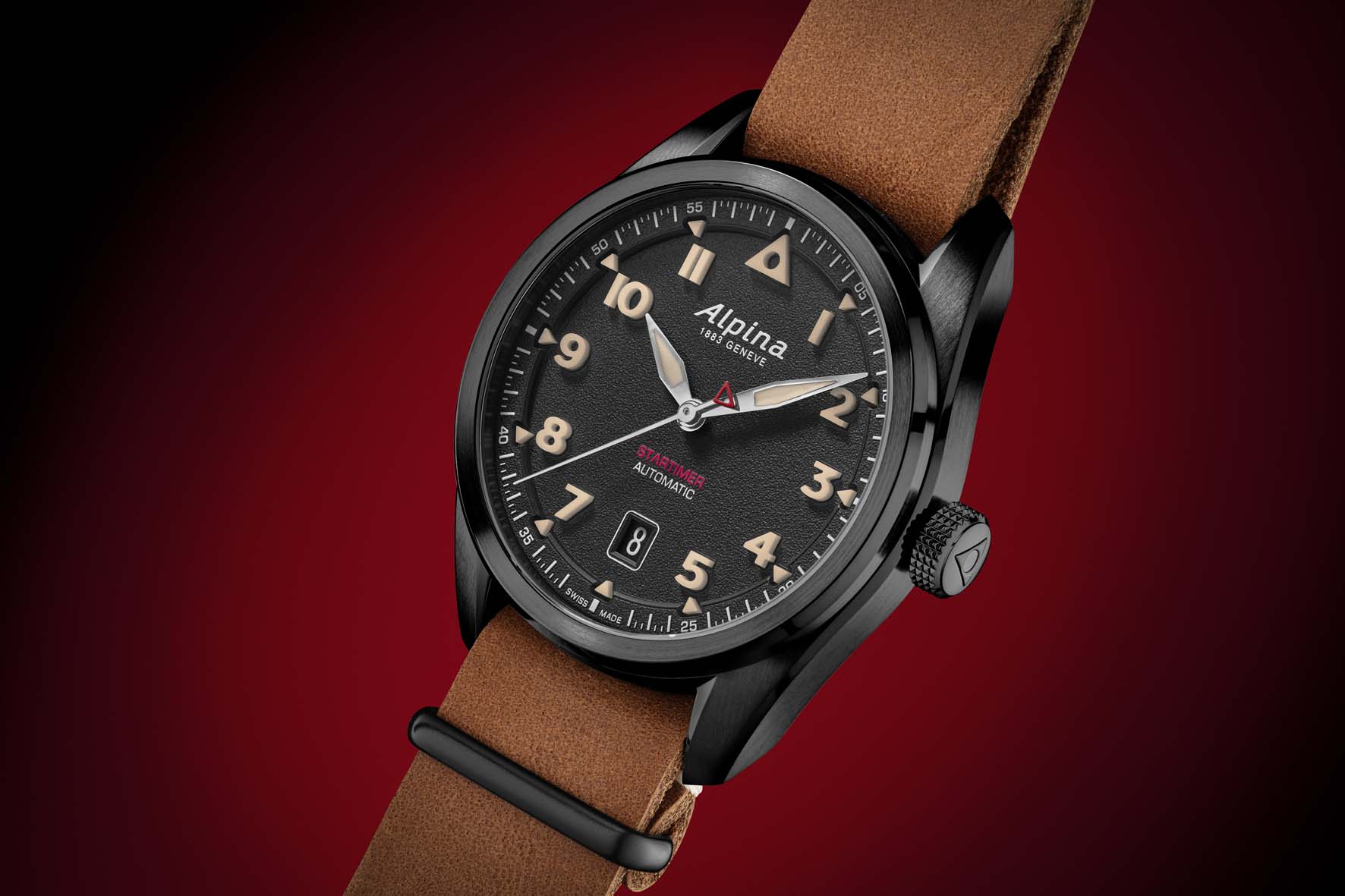
The dials feature a refined grené finish, whilst a stepped chapter ring with a white minute track ensures excellent readability alongside the large hour markers. At 6 o’clock sits the date window, featuring a black date disc with white numerals. The Alpina name and the inscription “1863 Genève” are positioned at 12 o’clock, whilst the Startimer name, in red, and the word “Automatic”, in white, appear above the date window.
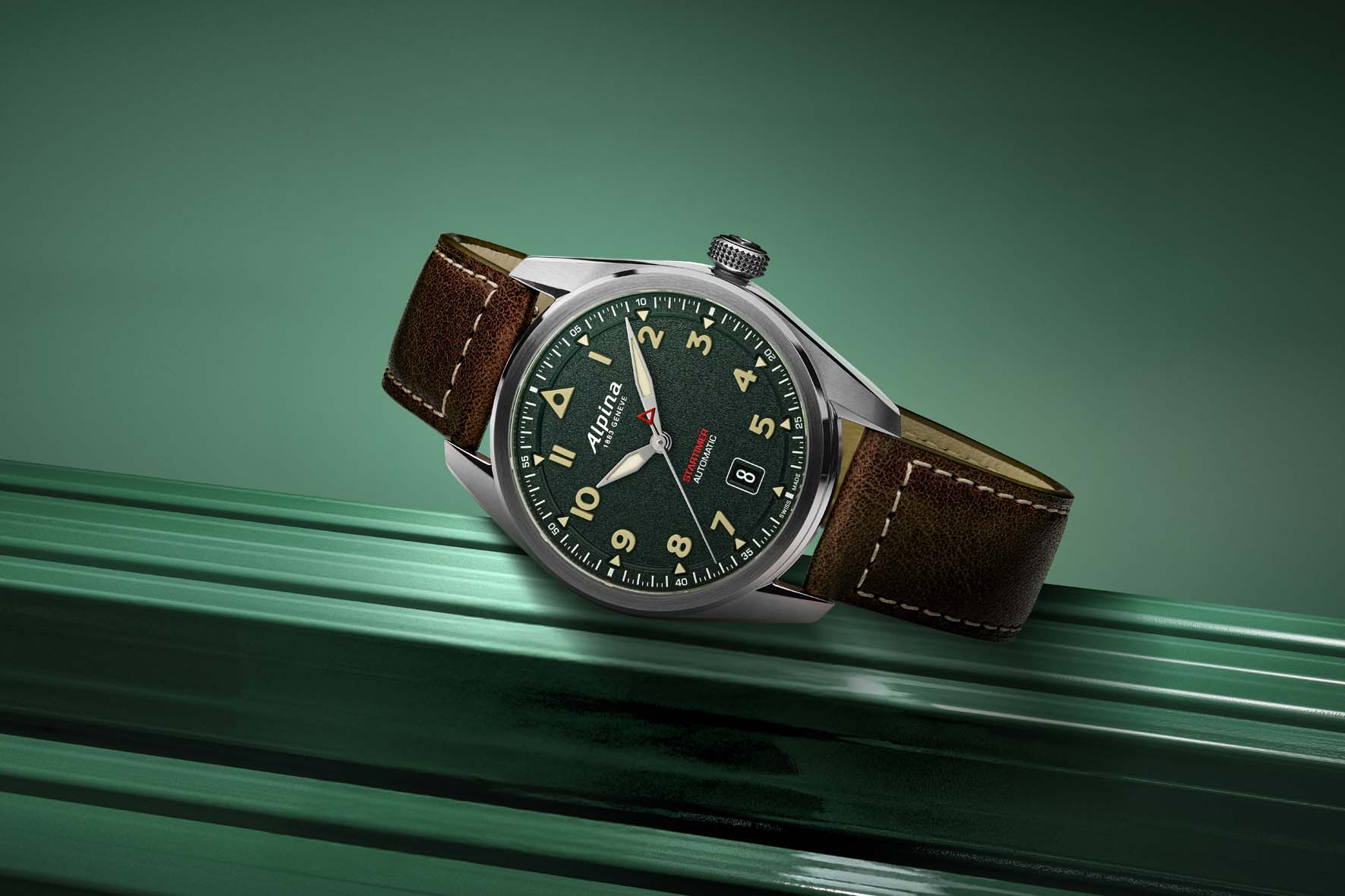
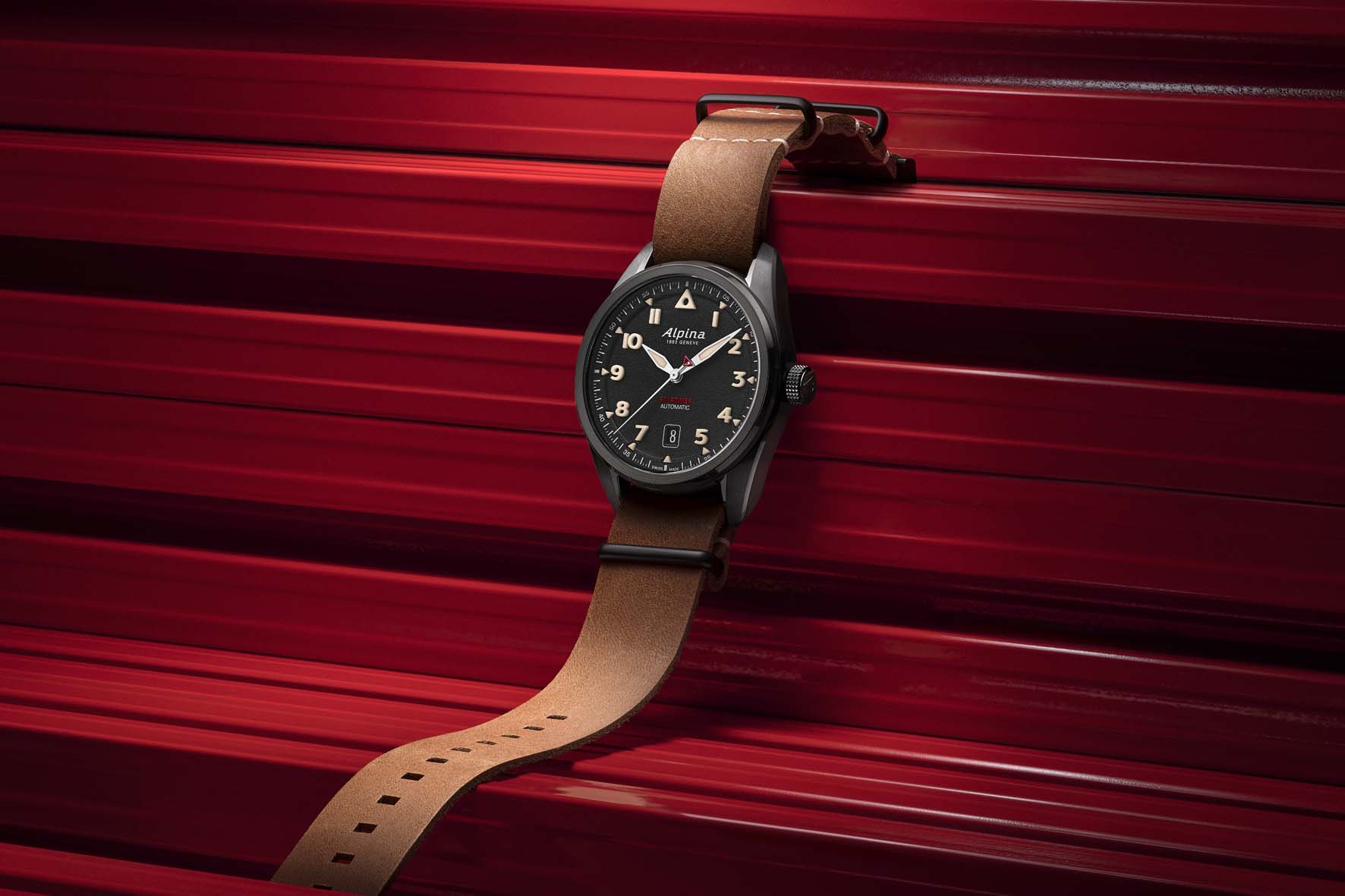
Four new dial variants accompany the updated Startimer Pilot Automatic. Black, khaki and petrol blue make up the main colour palette, with two models available in black. One features a black PVD-coated case with beige luminous details and a beige leather NATO strap paired with a black steel pin buckle. The other black version adopts a sportier character, with white hour markers, a Cordura strap and contrasting red stitching. The khaki and petrol blue models are paired with brown leather straps featuring beige stitching: the khaki version has dark brown stitching, whilst the blue model features light brown stitching. The lug width is 20 mm, making it much easier to replace the quick-release strap with other compatible options than on the previous 41 mm version, which used the less common 21 mm spacing.
STARTIMER PILOT AUTOMATIC: MOVEMENT AND PRICES
Inside the case beats the Alpina AL-525 calibre, an automatic movement based on a La Joux-Perret mechanism. This choice comes as no surprise, considering that this Swiss manufacture, like Alpina itself, belongs to the Japanese Citizen Group. It is one of the advantages of belonging to the same industrial group and translates into proven reliability, with the AL-525 offering a power reserve of approximately 68 hours and a frequency of 28,800 vibrations per hour.
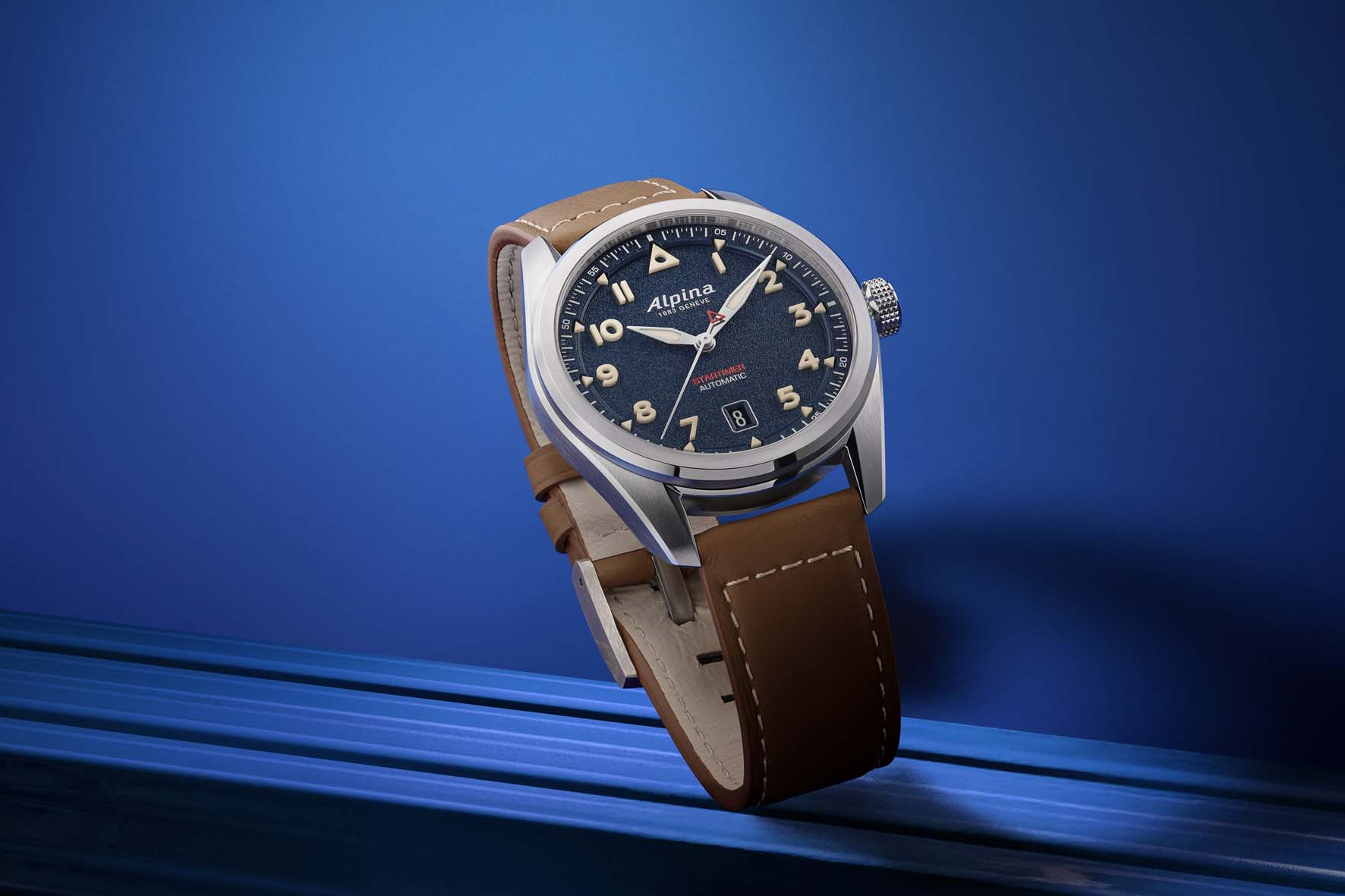
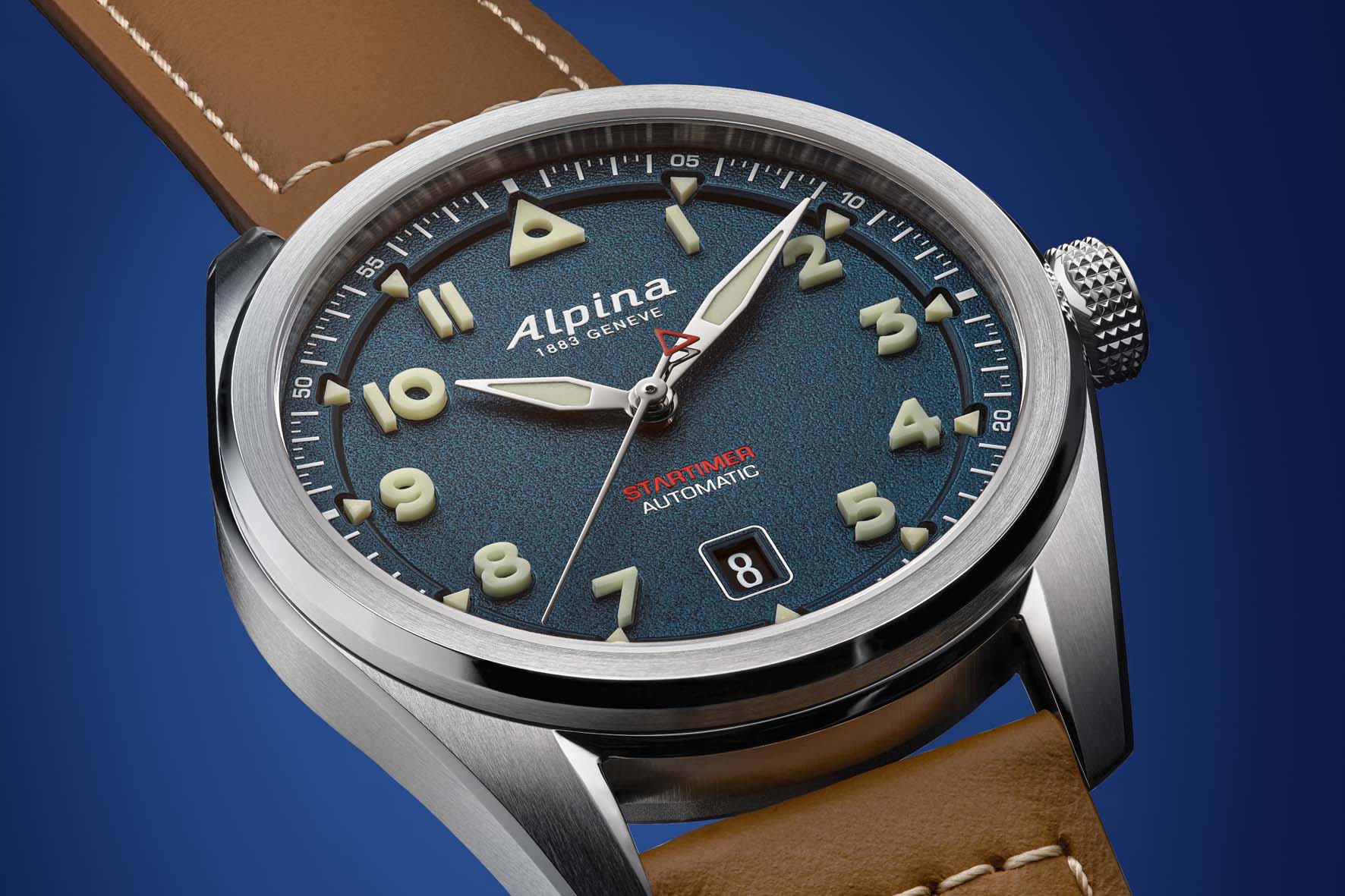
In essence, the new Startimer Pilot Automatic is a completely new watch compared to the previous version, which remains in the collection. Beyond the unchanged diameter, the slimmer bezel that blends more organically with the case, the transition from syringe-style to dagger-style hands, the softer overall lines and the more sophisticated dial texture give this pilot’s watch a distinctly contemporary and highly wearable character.
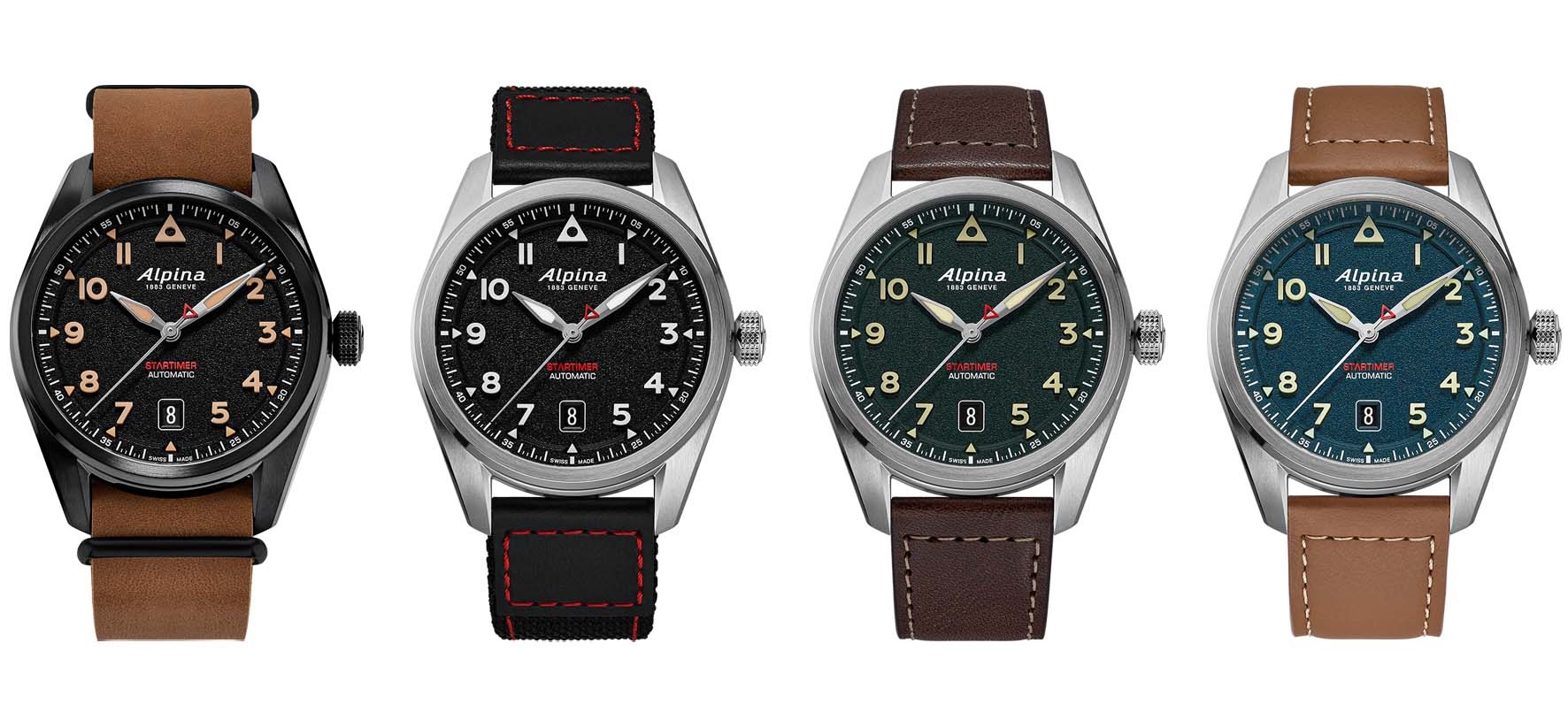
All this whilst maintaining a price point only slightly higher than that of the previous Startimer Pilot Automatic: €. 1,295 for the versions with a classic stainless steel case and €. 1,395 for the black PVD-coated model. Excellent value for money.
By Davide Passoni