


We reported on this on 6 January in this article: four limited-edition models were launched by Seiko at the start of 2026 to celebrate its 145-year history. Four watches united by gold accents on their dials, straps and bracelets, symbolising the importance of both the anniversary and the watches on offer.

As one might expect, the anniversary celebrations did not stop there. In fact, the Japanese brand has followed up the celebrations with further new releases, this time six models, all limited editions. They are no longer linked by gold accents, but by touches of blue. In the following article, we will discuss this sort of ‘blue period’ for Seiko – we are inclined to interpret it as such, almost like the one Picasso experienced between 1901 and 1904 – which has resulted in two watches from the Prospex collection, two from the Presage collection, one from the Astron line, and a brand-new King Seiko Vanac.
THE BIRTH OF “SEIKO BLUE”
The story of Kintaro Hattori, who in 1881 opened a small shop in Ginza, in the heart of Tokyo, which would mark the beginning of Seiko’s history, has already been extensively covered in the piece we linked to at the start of this article. Suffice it to say that he produced the first wristwatch made in Japan: it was 1913, and the Seiko Laurel was the first tangible proof of the philosophy guiding the new manufacturer: “Always one step ahead of the rest”.

The period in which Seiko’s avant-garde spirit was most strongly expressed was the 1960s, during which the manufacturer introduced some of the most significant innovations in the history of Japanese watchmaking, including the first Japanese wrist chronograph in 1964, the brand’s first diving watch in 1965 and, in 1969, Astron, the world’s first quartz watch.
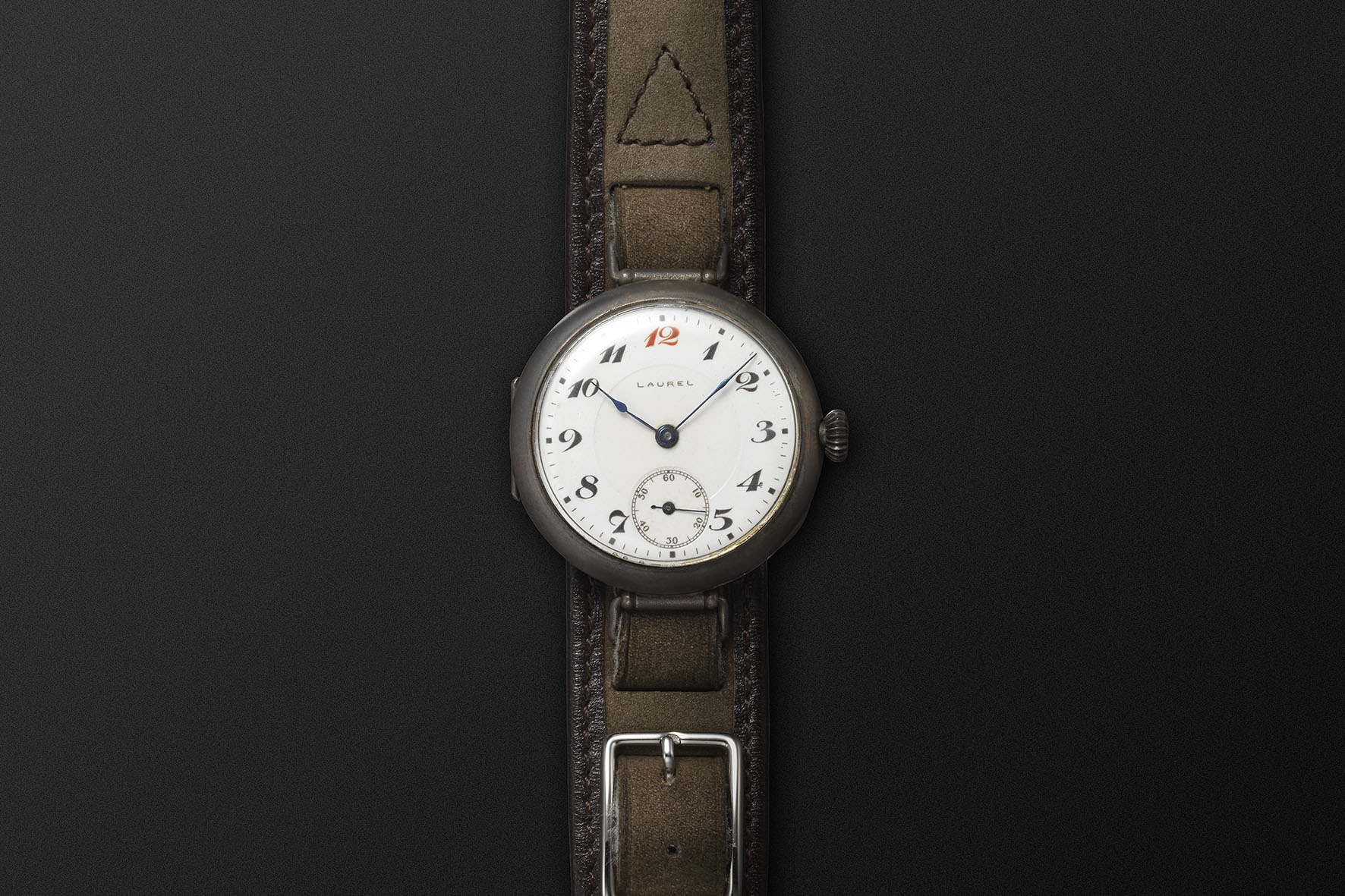
It was during this very period that the distinctive shade known as “Seiko Blue” first emerged, a colour refined over time into its contemporary form, which has become a symbol of the brand’s innovative spirit. It was from this shade that the inspiration arose to make this colour the leitmotif of the second selection of watches dedicated to the brand’s 145th anniversary.
THE TWO SEIKO PROSPEX 145TH ANNIVERSARY
Turning to the new commemorative models, let’s start with the two Prospex watches. These are two divers’ watches: the 1965 Heritage Diver’s Watch Limited Edition, reference HBC005J1, and the Diver’s Watch Limited Edition HBB001K1.

The first of the two features a design we know well: that of the Japanese brand’s diver’s watches, inspired by the first Japanese diving watch, the Seiko 62MAS from 1965. It features the classic, robust steel case, 40 mm in diameter and 13 mm thick, water-resistant to 300 metres, with polished and satin-finished surfaces on the lugs and case middle. The dial is white, almost dazzling, with blue accents on the seconds hand. The most striking blue element, however, is the unidirectional rotating bezel, which stands out in contrast to the vivid dial and enhances overall legibility.
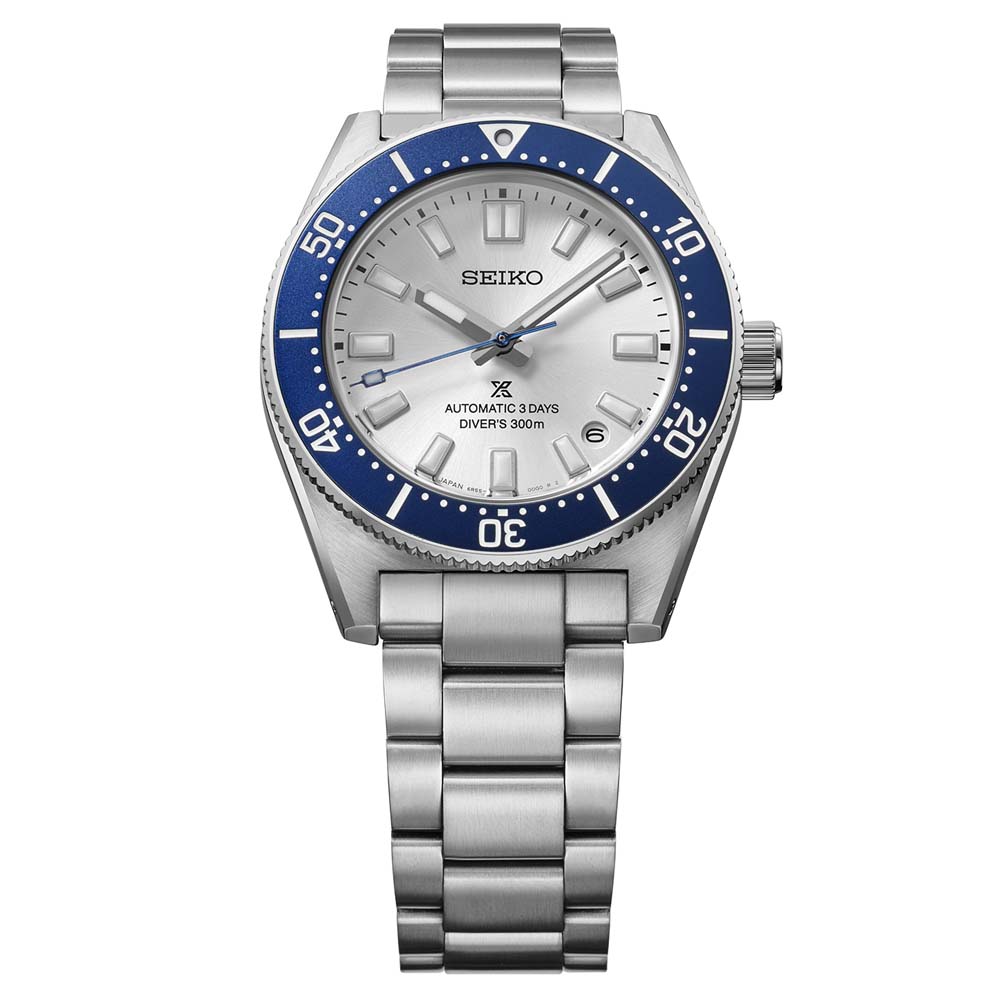
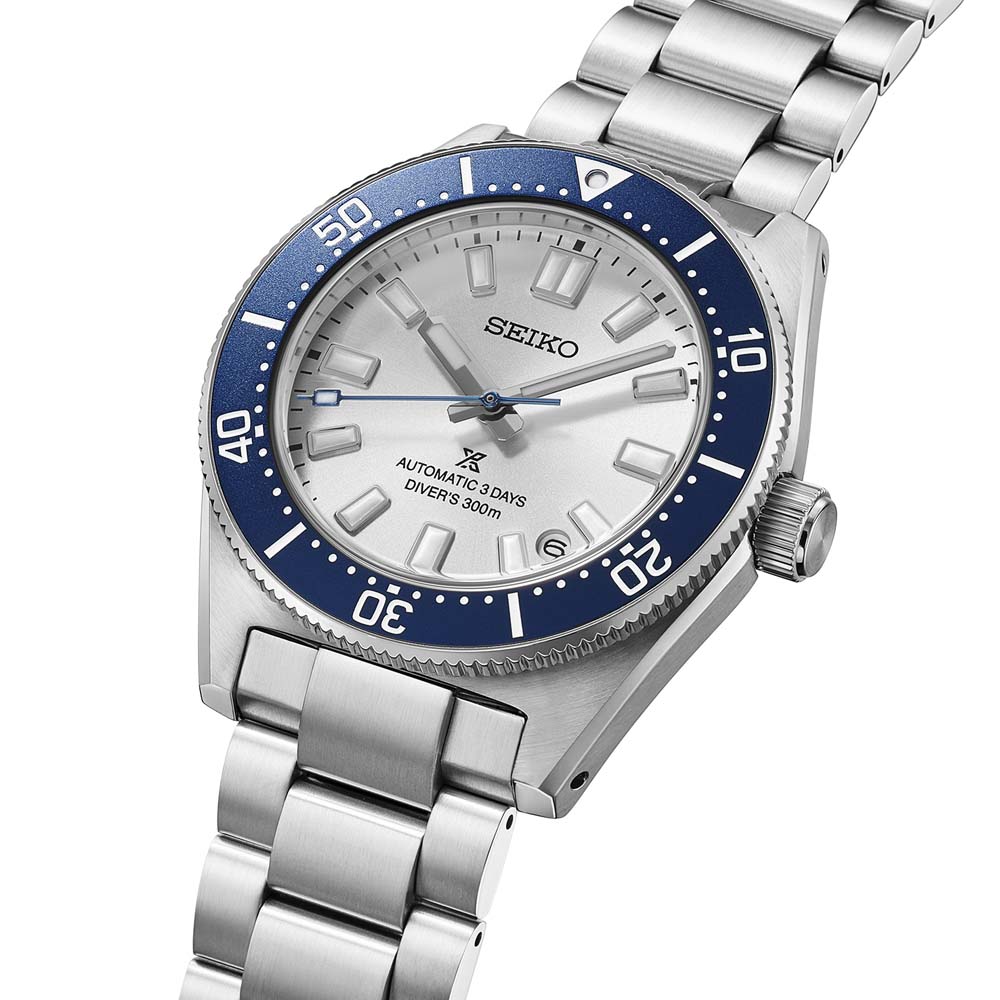
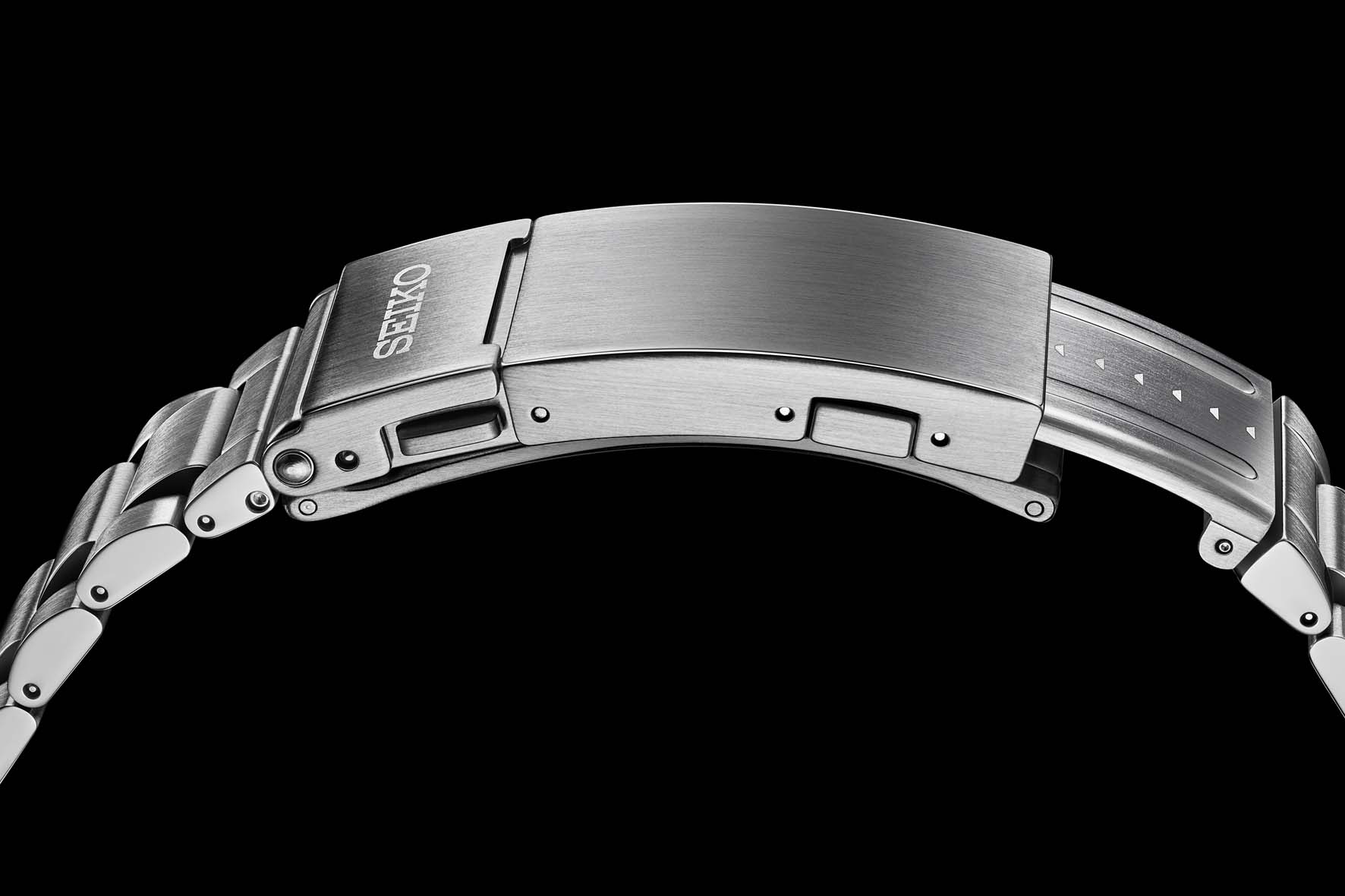
The three-row steel bracelet is both attractive and robust, with a folding clasp that allows for quick adjustment between the wrist and a diving wetsuit. Inside the case is the 6R55 automatic calibre, developed by Seiko to offer a three-day power reserve at 21,600 vibrations per hour. The Seiko 1965 Heritage Diver’s Watch Limited Edition is limited to 4,000 unnumbered pieces and is priced at € 1,500.
Moving on to the second model, this is also a professional diver’s watch whose aesthetic is embodied in the case nicknamed ‘Samurai’ by enthusiasts, due to its clean, decisive lines that appear as if cut by a katana. It features a 41.7 mm stainless-steel case with a thickness of 12.3 mm, water-resistant to 20 bar, thanks also to the screw-down case back and crown, protected by sturdy crown guards.
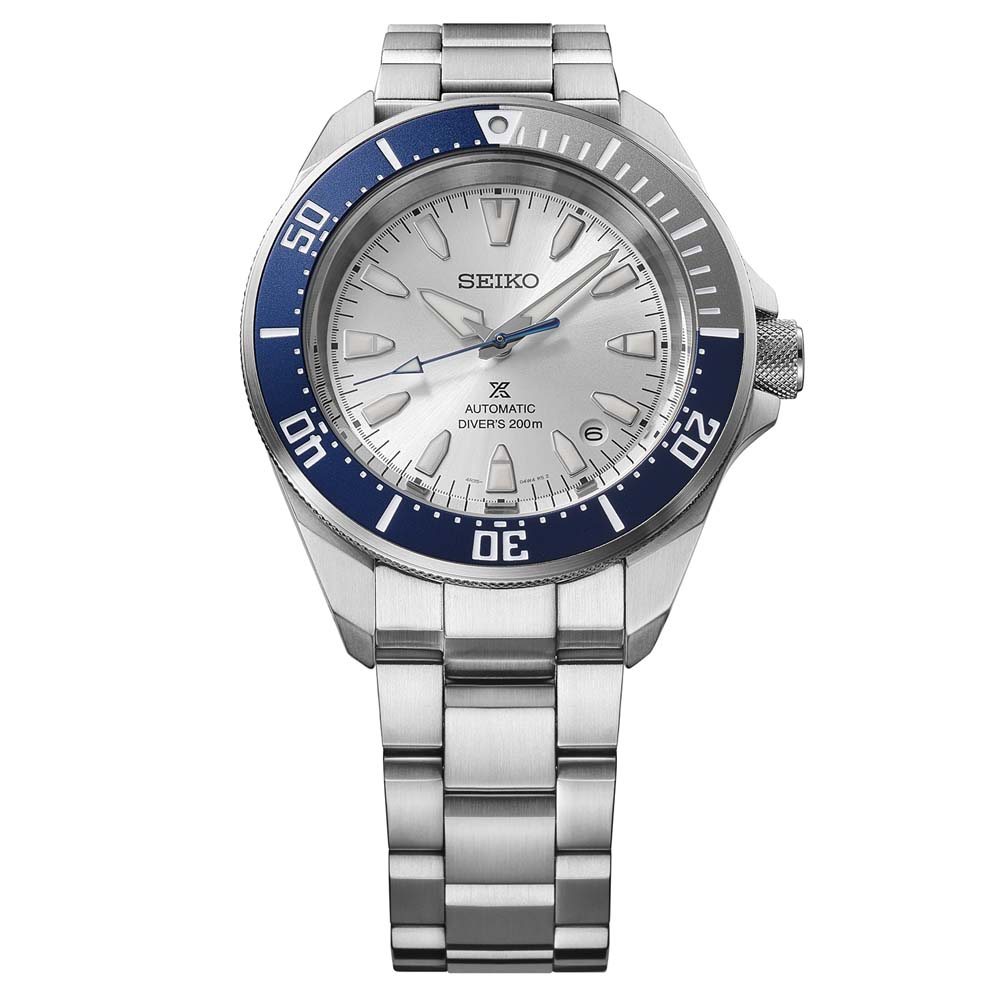
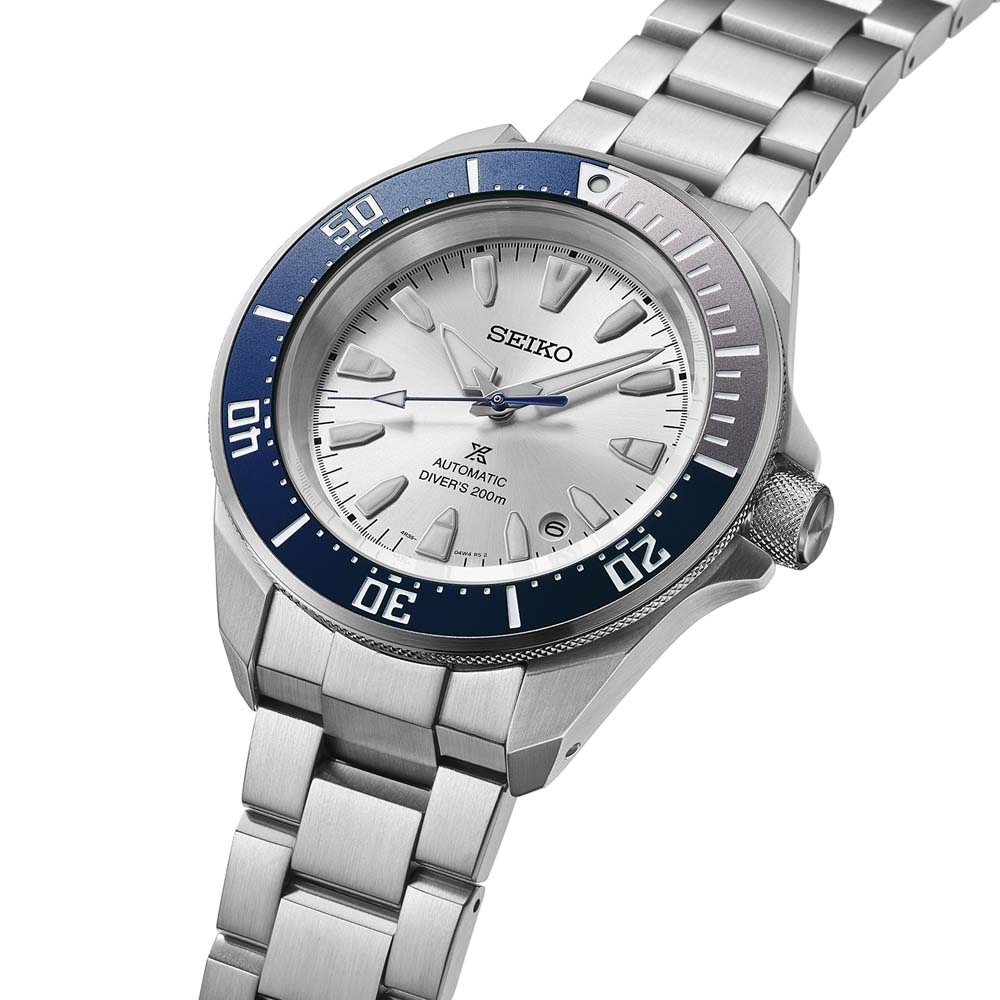
Here too we find a high-visibility white dial, where blue is again reserved for the seconds hand, as well as the outline of the large shark-tooth hour markers. On the unidirectional rotating bezel, blue runs from 15 to 60, whilst the first 15-minute segment is grey. As with the previous model, the bracelet features an extension system designed to fit comfortably over a wetsuit. From a mechanical point of view, we have the 4R35 automatic movement with a 41-hour power reserve; less efficient in terms of power reserve than the 6R55 but equally reliable. Seiko has produced 9,999 unnumbered examples of the Diver’s Watch Limited Edition HBB001K1, on sale for € 650 each.
THE TWO SEIKO PRESAGE 145TH ANNIVERSARY
Moving from the sporty character of Prospex to the more classic style of the Presage collection, we have the Classic Series Limited Edition with a 36 mm case, HCC004J1, and the Classic Series Craftsmanship HCC007J1 with an exceptional blue Arita porcelain dial. Starting with the first, Seiko has chosen the elegance of its 36 mm case, making it even more harmonious to celebrate 145 years in style.

As with the two Prospex models, it is the combination of the white dial and the blue accents that catches the eye in this watch too. The dial is domed, with a refined texture that evokes the softness of silk fabric, and its light shade recalls the pure white obtained through the refinement of raw silk fibres; hence the Japanese name ‘shironeri’, derived from an ancient Japanese technique for bleaching silk. There is a striking contrast between this colour and the blue of the central hour, minute and second hands and the applied hour markers, which are curved (like the hands) to follow the curvature of the dial itself.
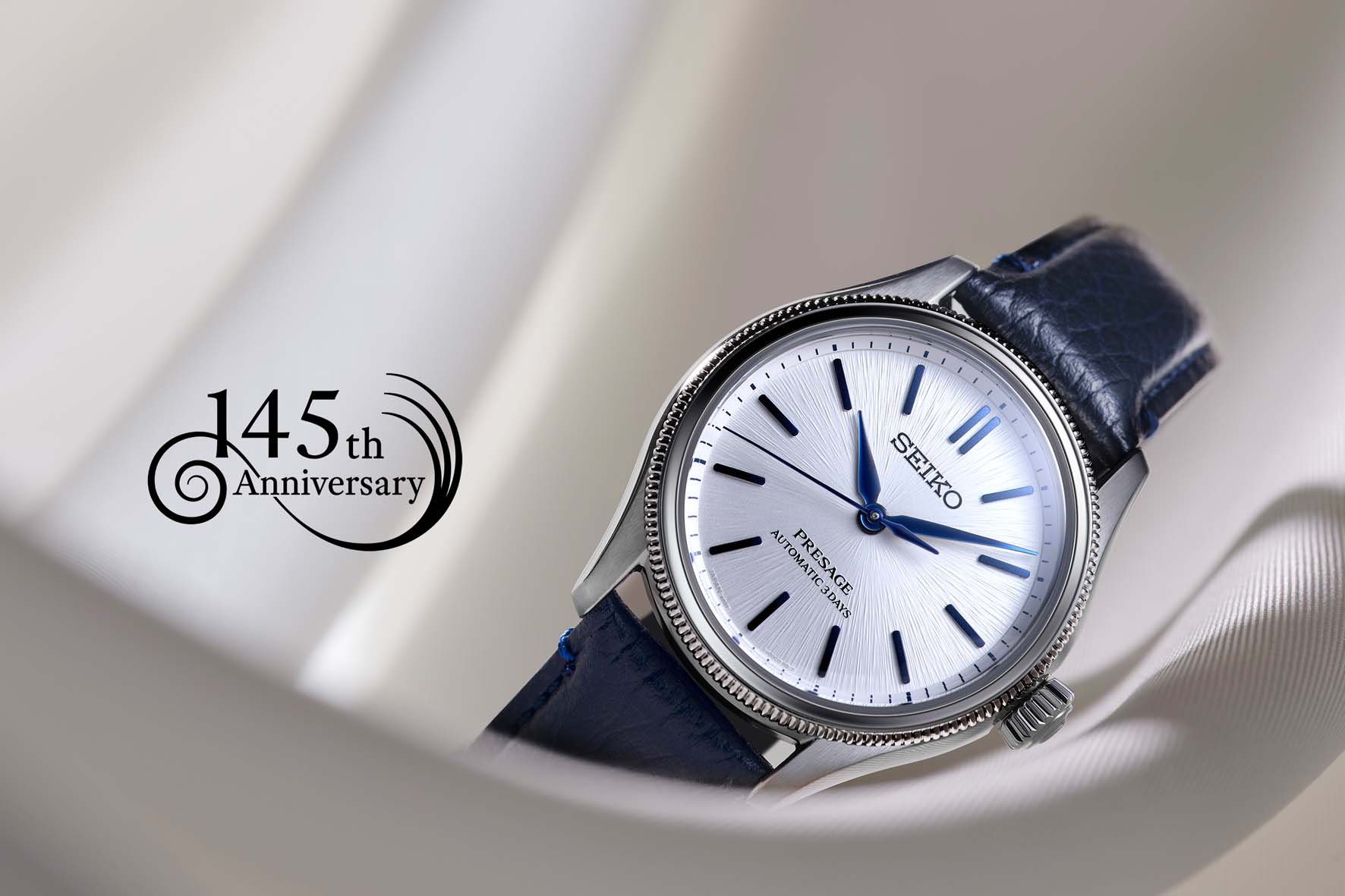
The fluted bezel enhances the aesthetic appeal of the Presage Classic HCC004J1, making the proportions of the 36 mm case even more pleasing. Inside, the automatic calibre 6R51 operates, which, like the 6R55, offers a 72-hour power reserve at 21,600 vibrations per hour. The limited run of 2,500 unnumbered pieces and the price of € 1,050 make this timepiece an attractive proposition. Completing the colour harmony of this piece is a blue leather strap with LWG certification – the Leather Working Group – the world’s first environmental certification for the leather manufacturing industry.
With an eye on sustainability as well as elegance, this timepiece shares these qualities with the Presage Classic Series Craftsmanship, which also features an LWG-certified strap. The blue of the dial is a triumph of craftsmanship, crafted from Arita porcelain, a traditional Japanese material that Seiko has previously used in other models from the Presagecollection, but never in this shade, known as “RuriBlue”. It features an enamelled finish that lends a deeper hue than the manufacturer has ever used in versions featuring this type of porcelain. The central section features a delicate sunburst finish, whilst the outer ring, with its white hour markers, is smooth. The contrast between the two finishes and the delicate craftsmanship give the entire dial a soft and deep appearance.
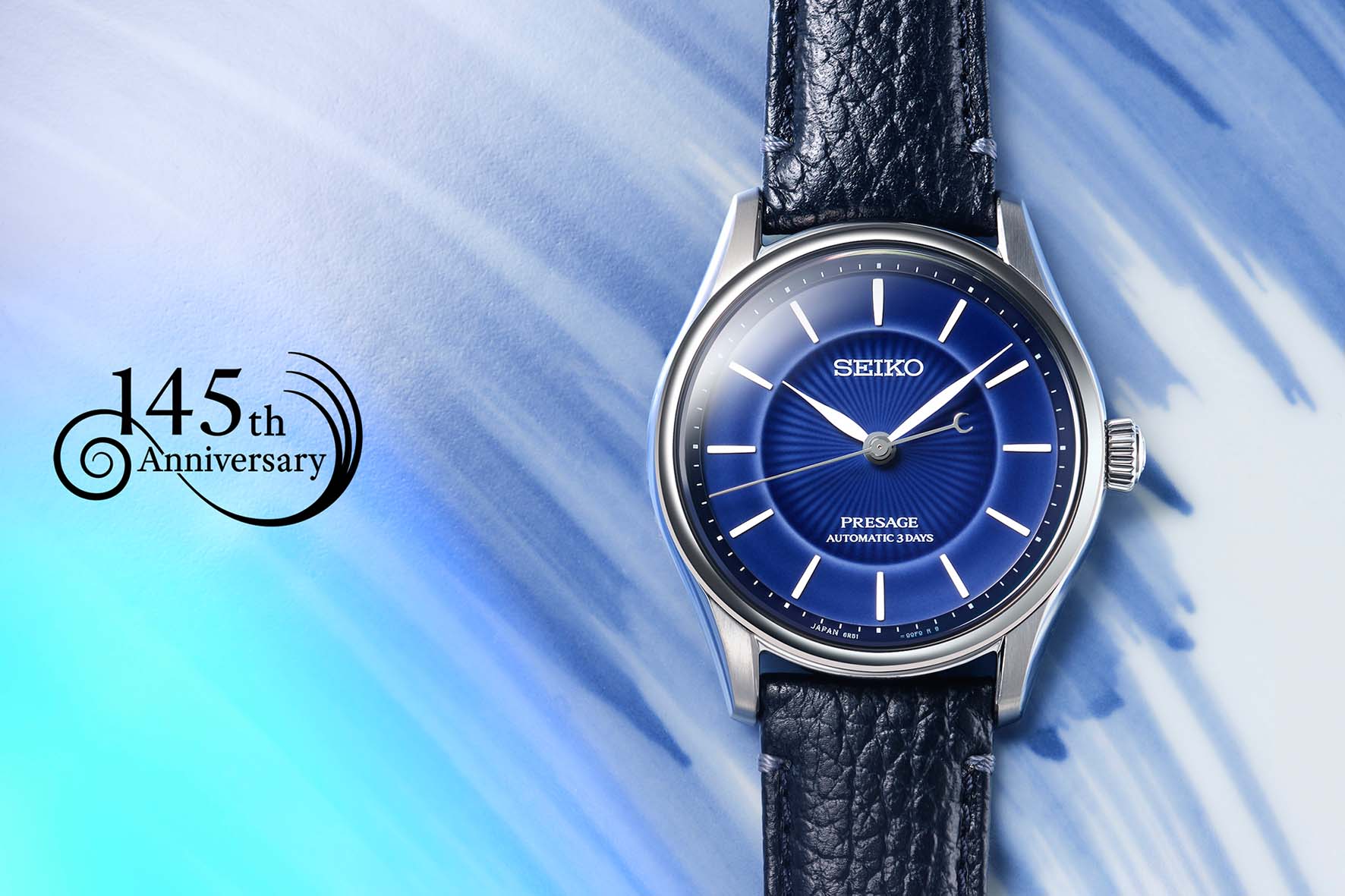
The steel case, contrasting with the polished bezel, measures 39.6 mm in diameter and 12.8 mm in thickness and houses the same 6R51 calibre as the 36 mm model. Owing to the complexity of producing the dial, this Presage Craftsmanshipis limited to 1,500 pieces. Seiko has chosen not to number them and has positioned this model at a very attractive price point relative to the watch’s overall quality: € 1,800.
KING SEIKO VANAC 145TH ANNIVERSARY
The King Seiko Vanac is, among the six commemorative models, the boldest offering from Seiko. After being launched for the first time in 1972, the King Seiko Vanac line was reintroduced in 2025 with three models and expanded, between late 2025 and 2026, with further references. To mark the brand’s 145th anniversary, the manufacturer has also focused on this line, striking a harmonious balance between blue, white and the grey tones of steel.

The sophisticated yet robust lines of the Vanac case are expressed in a diameter of 41 mm and a thickness of 14.3 mm, with an alternation of polished and satin-finished surfaces.
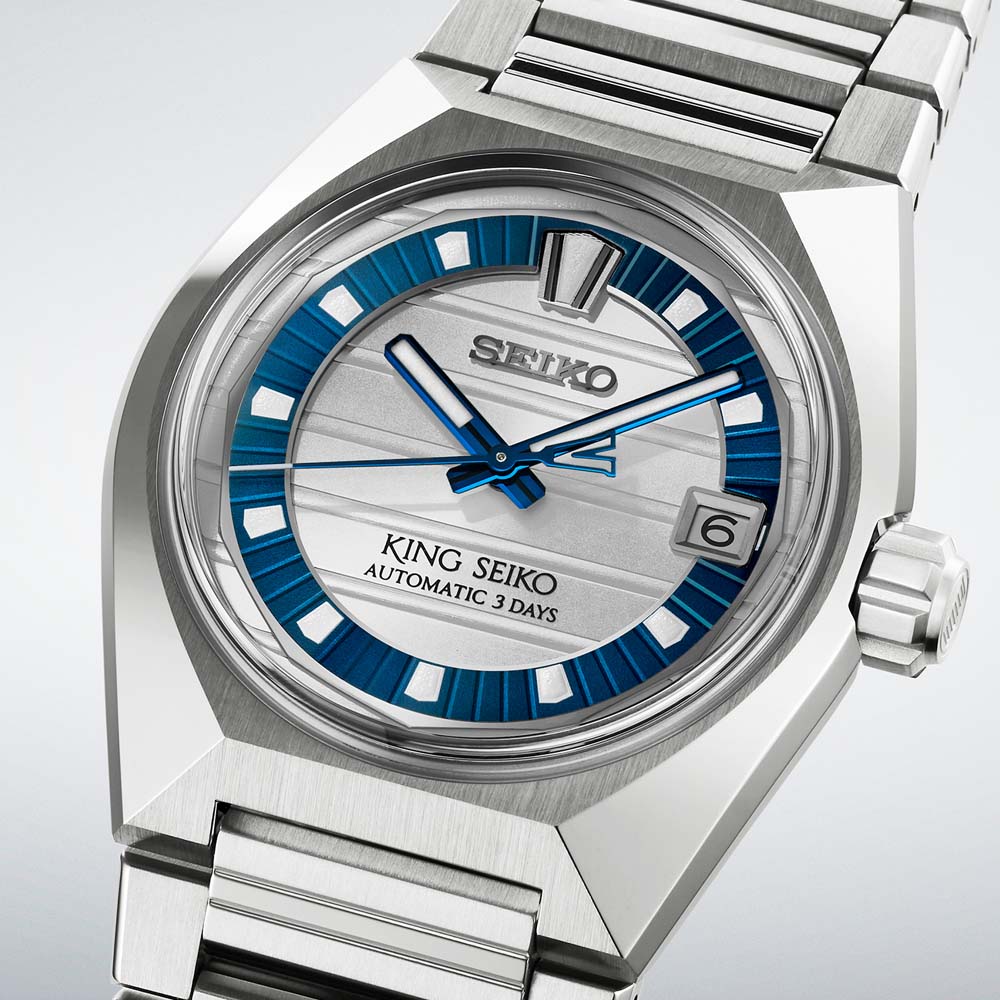
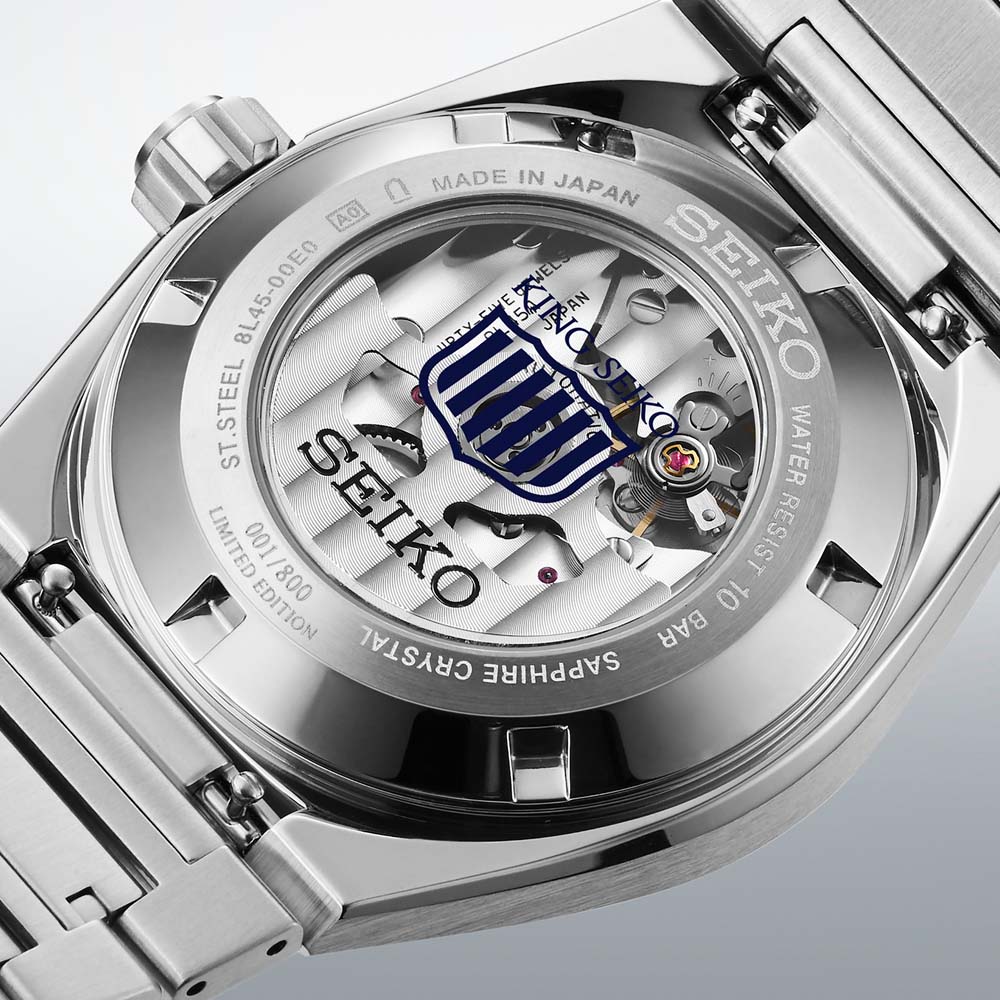
Another element that gives the King Seiko Vanac HKF004J1 its character is the dial. It is white, embellished with a horizontal striped pattern, into which the contrasting blue minute track is integrated. The hour markers are white, generously coated with Lumibrite to ensure visibility even in the dark. As with other models in the Vanac line, the 12 o’clock hour marker and the counterweight of the seconds hand feature the silhouette of the letter “V”, the line’s emblem. The hands are also blue, with the hour and minute hands enhanced with Lumibrite. The King Seiko logo on the transparent screw-down case back is also blue; through it, one can admire the 8L45 automatic calibre, also used in the Prospex Marinemaster Professional Titanium, ref. SLA081J1. It is based on the architecture of Grand Seiko’s 9S65 calibre, operates at a frequency of 28,800 vibrations per hour with a 72-hour power reserve, and features meticulous finishing, with broad côtes on the mainplate, bridges and rotor.
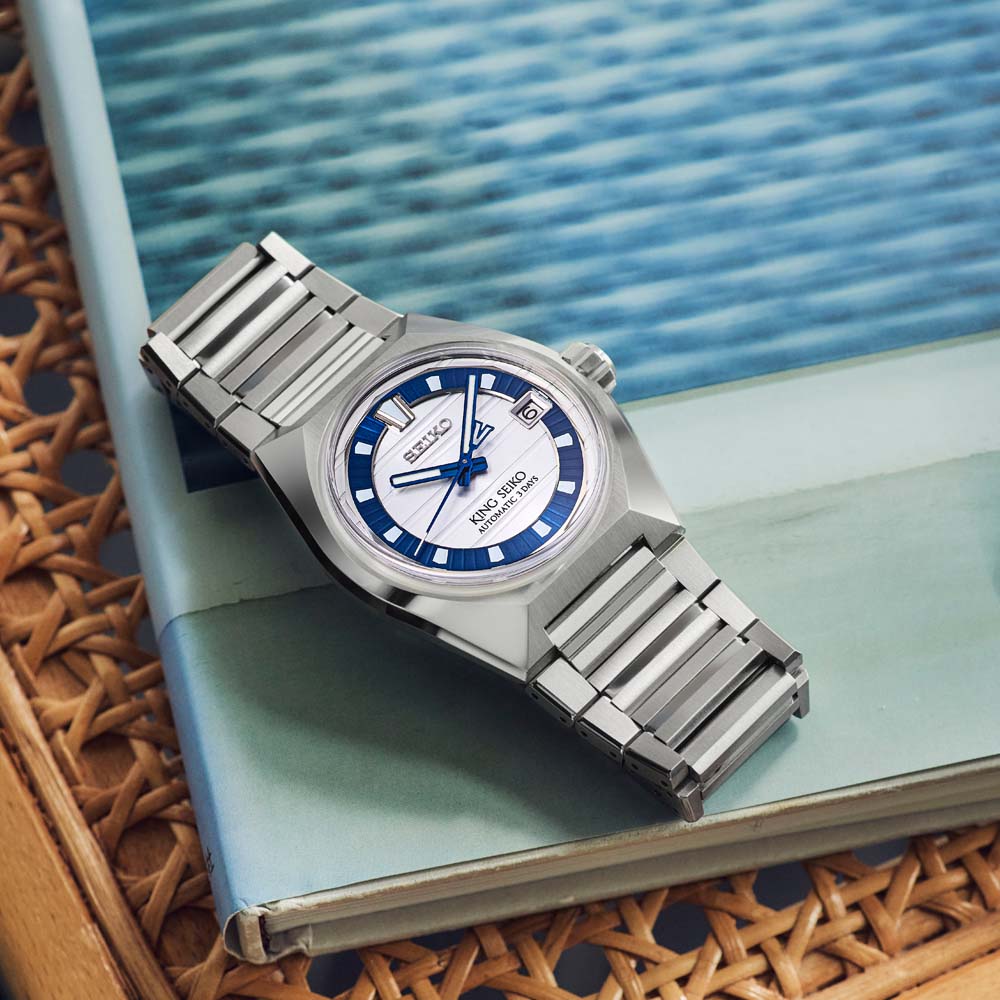

The stainless steel bracelet is particularly attractive, with links that are polished on the inside and satin-finished on the surface. This satin finish continues along the centre of the lugs and the upper part of the case, lending the watch a strong sense of aesthetic continuity. The King Seiko Vanac Limited Edition is crafted in Seiko Watch Corporation’s high-end atelier, which produces some of Japan’s finest timepieces, and is produced in a limited run of just 800 numbered pieces (the number is engraved on the case back), priced at € 3,400.
SEIKO ASTRON 145TH ANNIVERSARY
Finally, the Astron, because a highly technical model was essential to celebrate the Japanese manufacturer’s 145th anniversary in style. The Astron GPS Solar Dual-Time Chronograph Limited Edition HAB004J1 incorporates the blue detail designed to mark the occasion into Seiko’s most avant-garde collection. The Astron’s visual presence – 43.4 mm in diameter and 12.4 mm thick – is softened on the wrist by the choice of titanium for the case, the integrated three-row bracelet and the octagonal bezel. Particularly striking is the alternation between vertically satin-finished and polished surfaces on the bracelet, case middle, bezel and pushers.

The case and bracelet feature a special scratch-resistant coating which, in the case of the bracelet, remains effective even when it is detached to be replaced with the white and blue silicone strap supplied with the watch.
The blue is not only found on the strap but also on the dial: on the minute track, on the inner flange with the UTC indication, on the three sub-dials and on the central seconds hand. The dial incorporates all the functions for which this collection is renowned: dual time with a 24-hour hand; world time with 38 time zones; an indicator at 3 o’clock for controlling the functions; airplane mode; chronograph; power reserve; and day-of-the-week display. The watch allows manual adjustment of the time and time zone, receives the leap-second signal, and automatically switches between daylight saving time and standard time.


The result of Seiko’s technological development, the solar-powered GPS movement, calibre 5X63, has a power reserve of up to six months, which extends to approximately two years when the watch is in power-saving mode. This cutting-edge chronograph is also a limited, unnumbered edition of 2,000 pieces. It is priced just below the King Seiko Vanac: € 3,000.
CONCLUSIONS
This overview has not merely served to highlight six models that will likely go down in Seiko’s history for being dedicated to its 145th anniversary. Indeed, we believe that involving some of its most iconic collections in the celebrations, while giving each watch a clear and coherent personality and identity, was a wise choice, as it perfectly reflects the message the brand wishes to convey.
It is a message of continuity in the pursuit of quality and precision across generations, linked to a constant desire to offer the market and enthusiasts timepieces that faithfully embody the production philosophy of a company that is, first and foremost, a watchmaking powerhouse. A brand that combines technical solutions, advanced materials and refined craftsmanship, with the aim of creating timepieces destined to be as reliable as they are beautiful, and as precise in performance as they are impeccable in form. Today, just as it was 145 years ago, Seiko has not lost sight of this objective.
By Davide Passoni