

We didn’t see it coming. Not now and, above all, not like this. Rolex traditionally concentrates its most important launches around Watches and Wonders, which makes a release of this magnitude in September noteworthy in itself. But the real surprise lies elsewhere: the Geneva-based brand has revisited one of the most unusual and fascinating watches in its history, turning a nickname born within Italian collecting circles into the official name of a new creation. The Rolex Perpetual Padellone thus brings Ref. 8171 from 1949 back into the spotlight, without simply reproducing it.
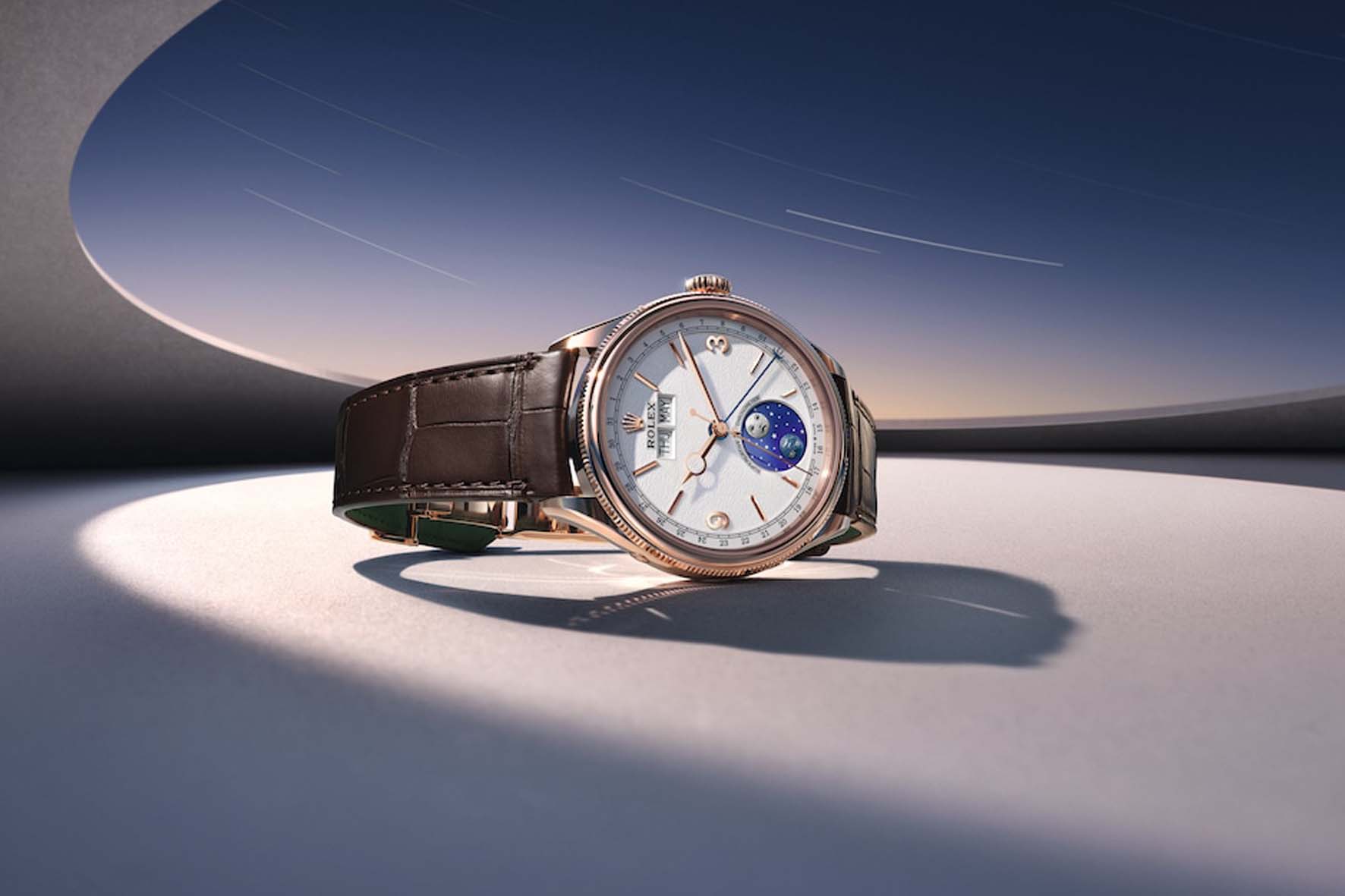
The new model joins the Perpetual collection with a 39 mm case in 18 ct Everose gold or 950 platinum, an instantaneous annual calendar, a moon-phase display and the new self-winding calibre 7190. Its proportions and dial architecture openly look to the past, while its mechanics place the project firmly within contemporary Rolex watchmaking. It is precisely this tension between memory and innovation that makes the release far more compelling than a simple exercise in nostalgia.
ROLEX PERPETUAL PADELLONE: AN UNEXPECTED RELEASE
Rolex presentations outside the major international watch events remain rare, particularly when they involve an entirely new model. The Perpetual Padellone therefore arrives at a moment when few expected a release of this significance, and it does so by entering equally unexpected territory: not a Professional model, nor a new variation of an existing reference, but an elegant annual calendar with moon phases rooted in one of the most sophisticated and lesser-known corners of the brand’s archives. This is also why the launch carries a significance that goes beyond the watch itself: it shows a Rolex increasingly willing to engage with its past without turning it into a simple replica.
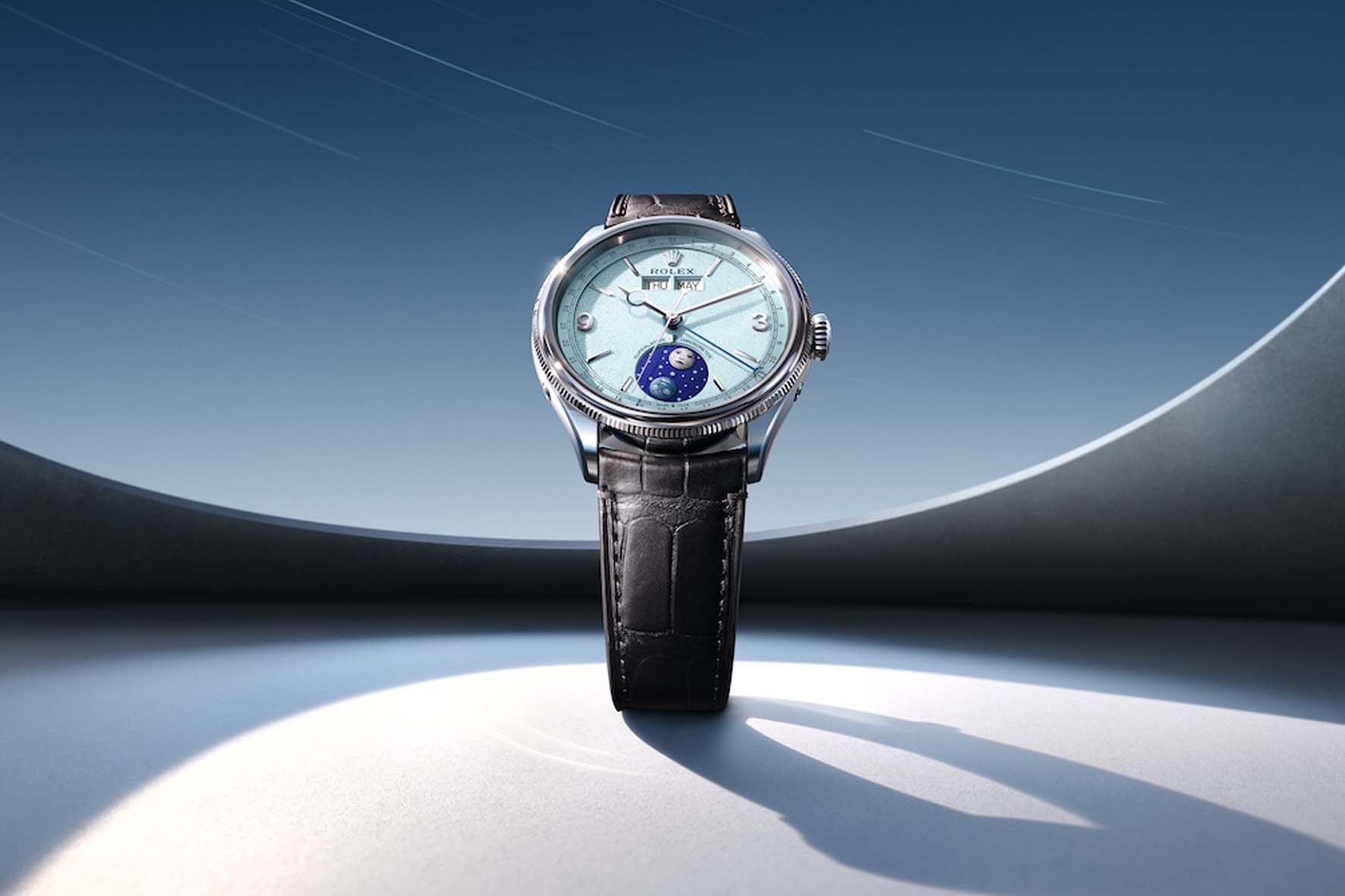
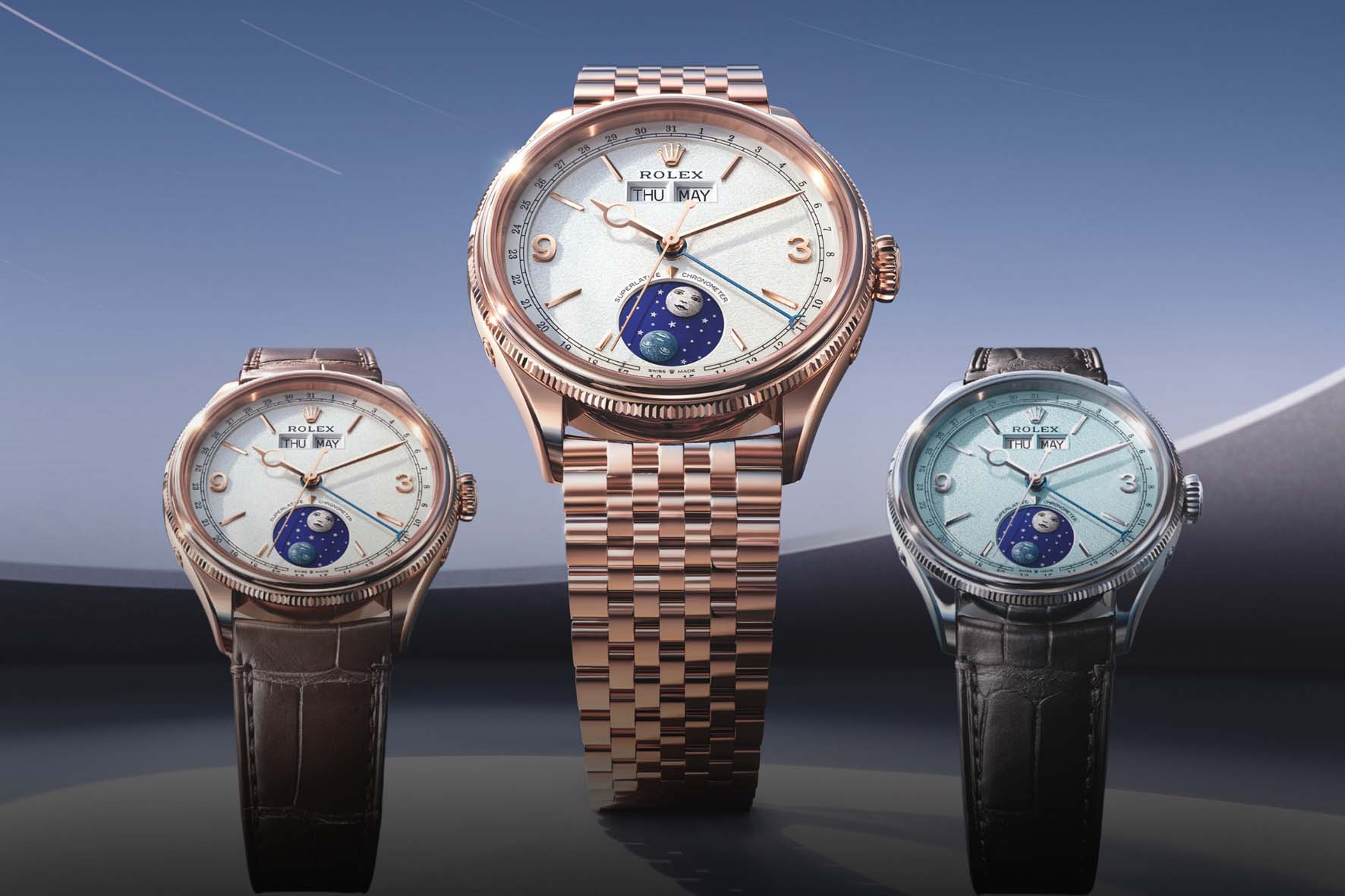
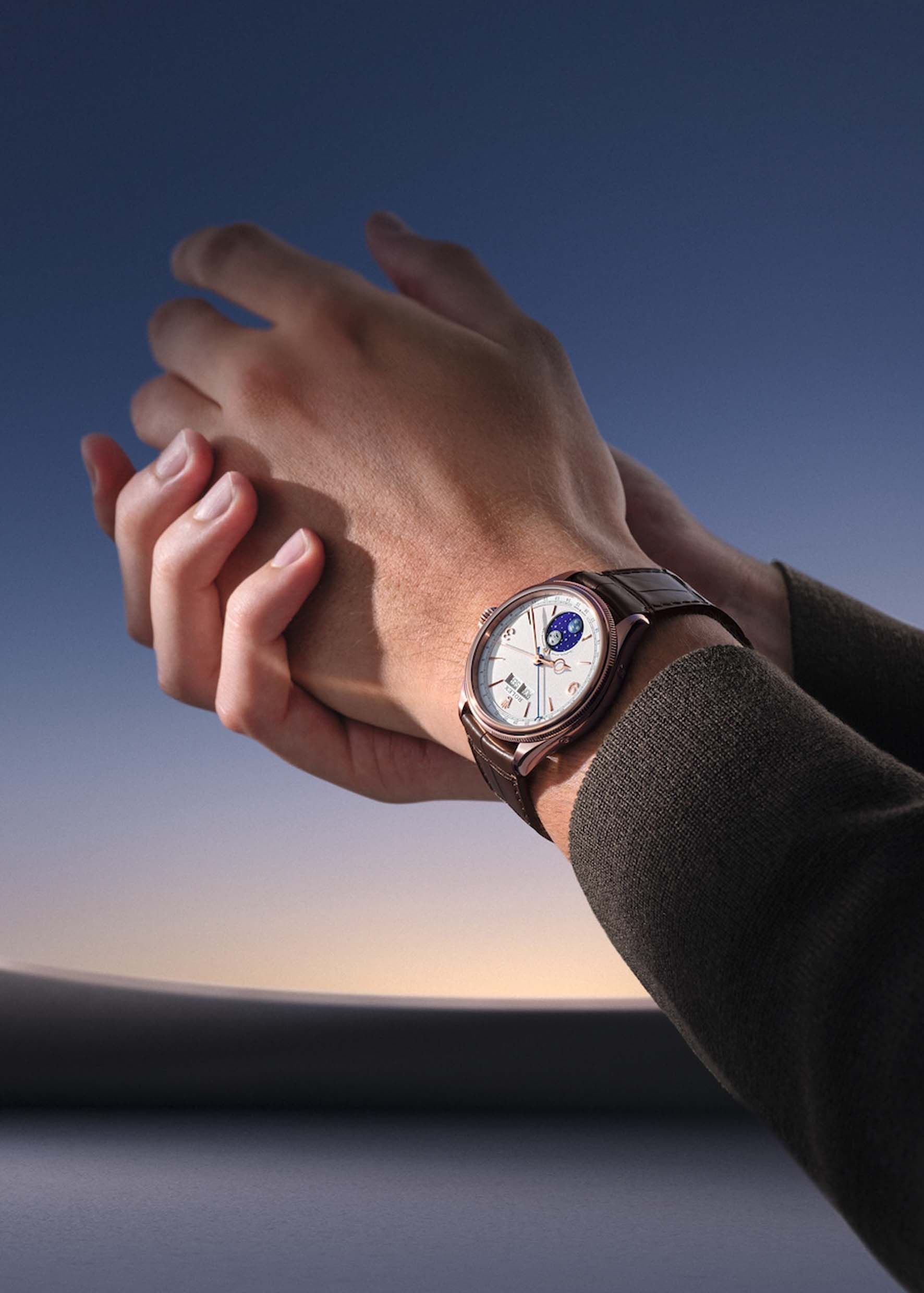
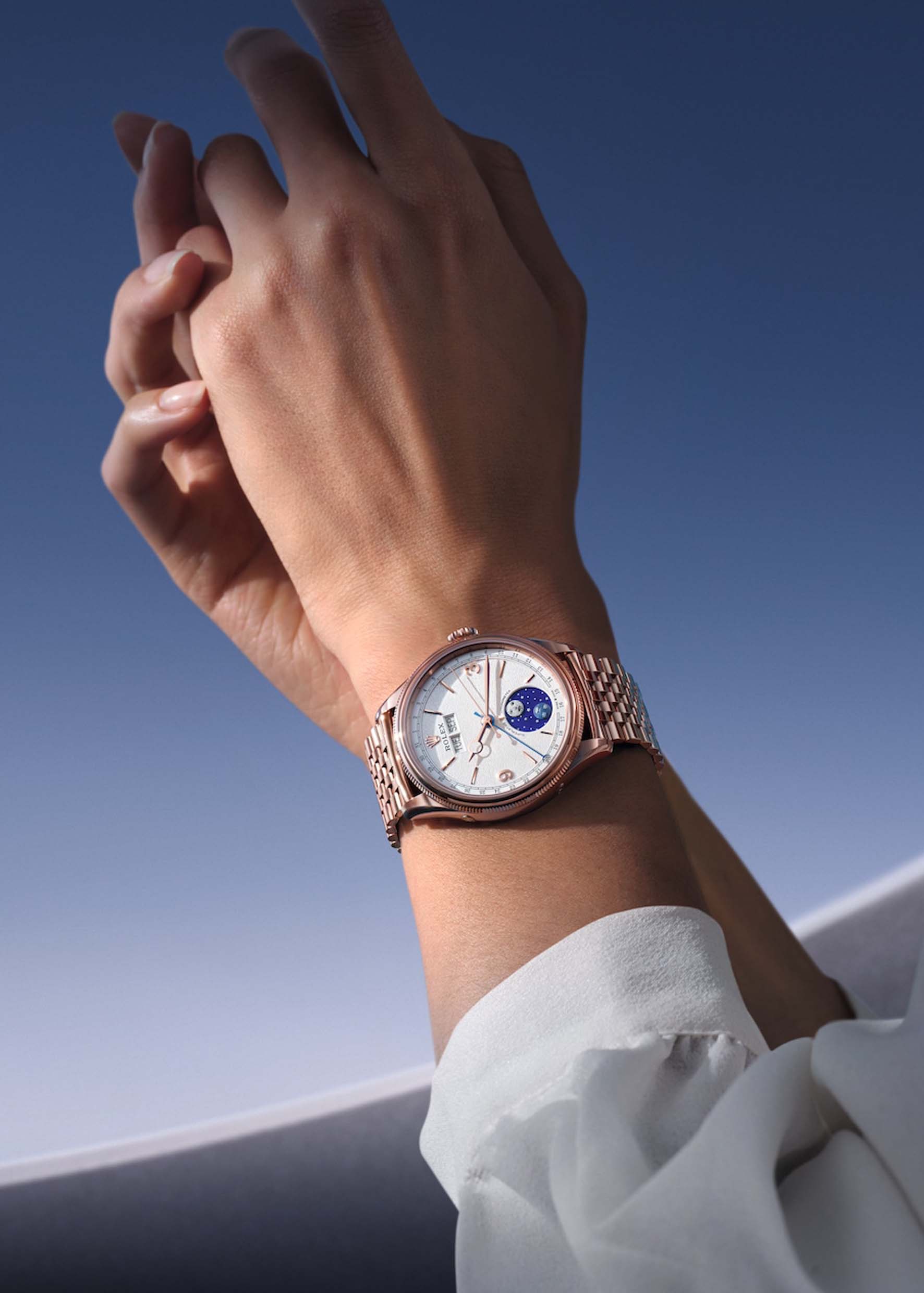
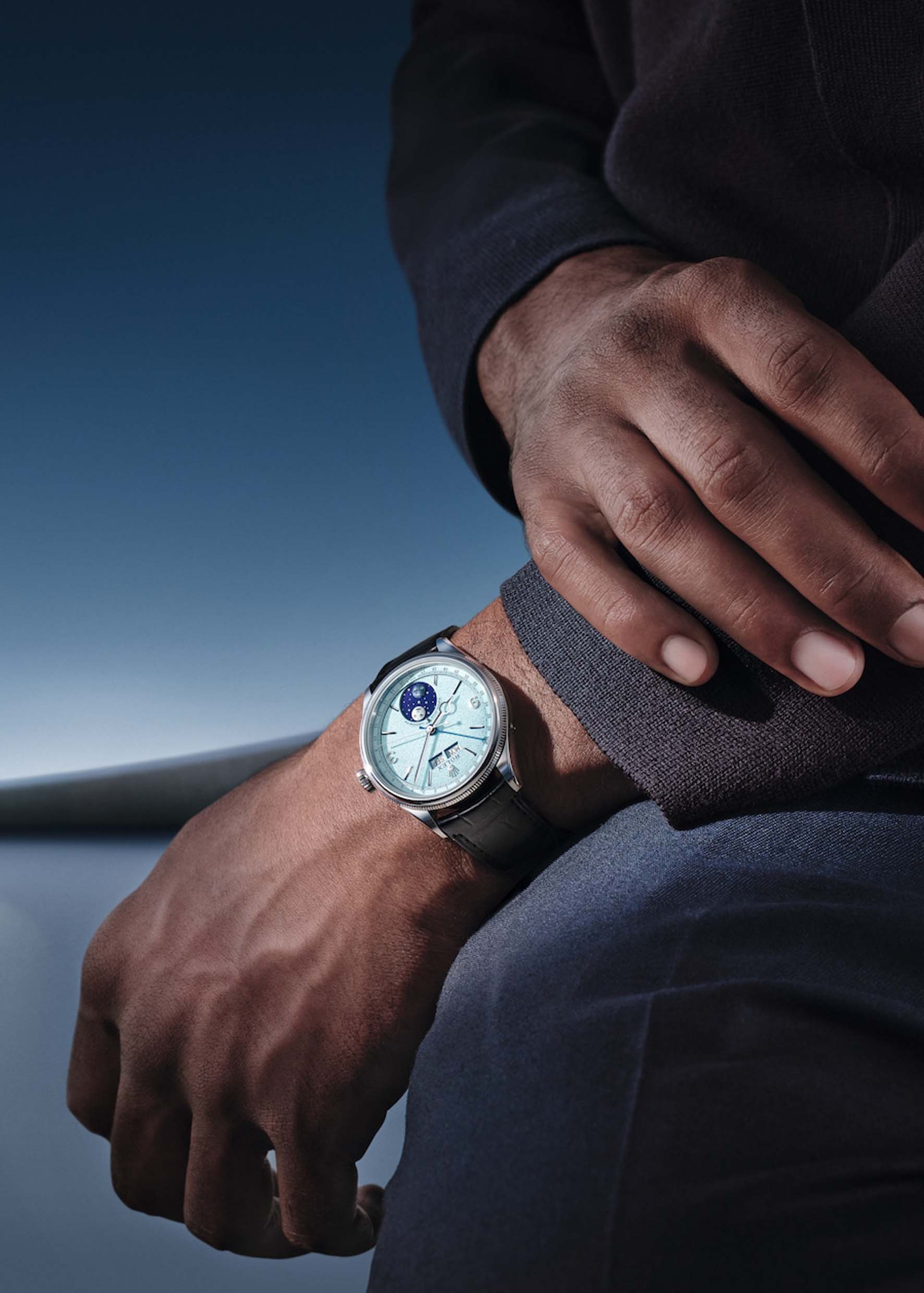
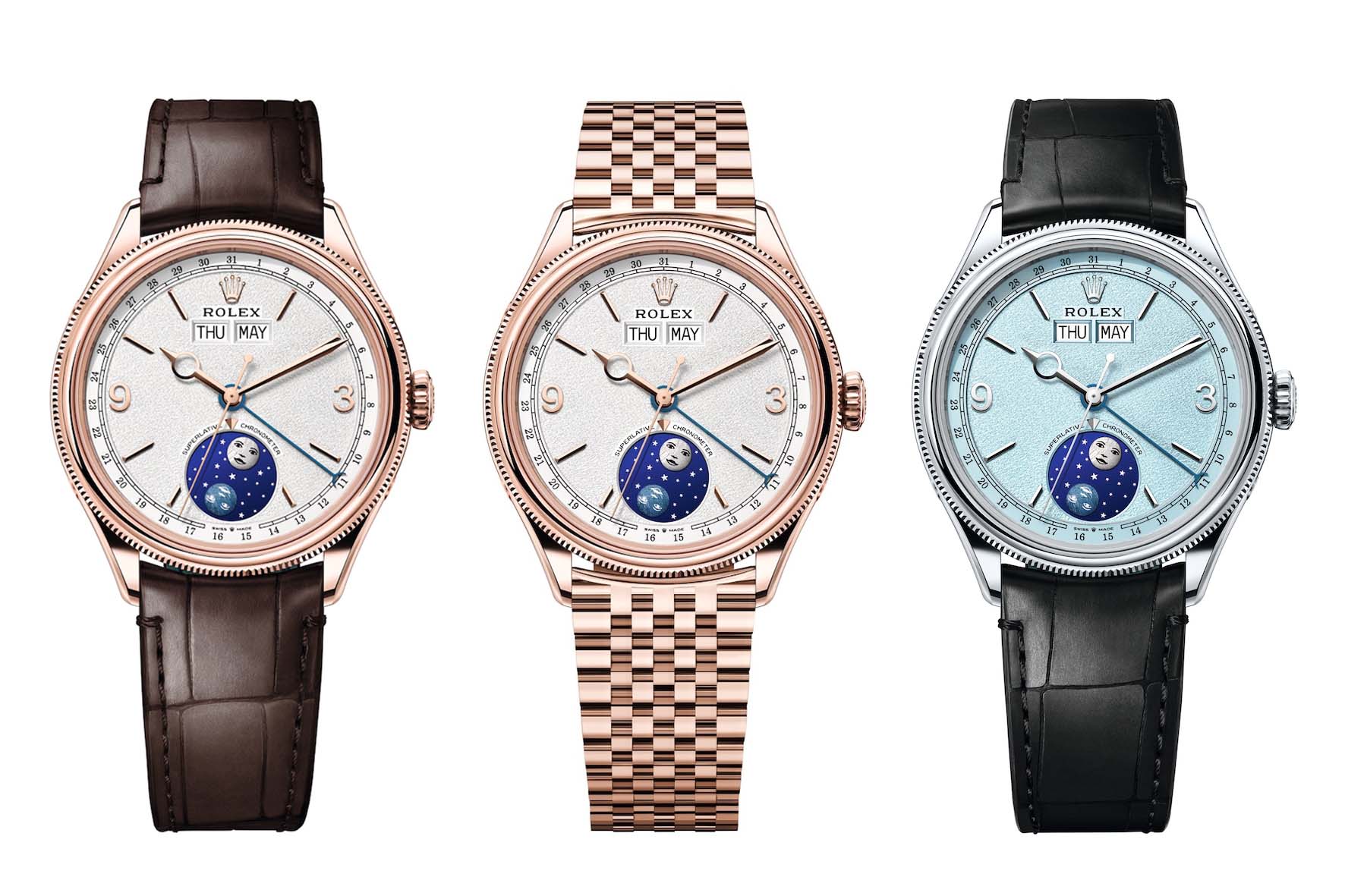
The new collection is built around a 39 mm case, just one millimetre larger than the 38 mm Ref. 8171, and comes in three configurations: two in Everose gold with an intense white dial, paired respectively with an alligator strap or Settimo bracelet, and one in 950 platinum with an ice-blue dial and black alligator strap.
BEFORE THE NEW PADELLONE, THERE WAS ROLEX REF. 8171
To understand why the name Padellone carries such particular weight, we need to go back to 1949. That year, Rolex introduced Ref. 8171, a watch surprisingly far removed from the image we most readily associate with the Crown today. With a 38 mm case, very generous for its era, it combined a complete calendar with moon phases: the day of the week and month appeared through two apertures at 12 o’clock, the date was indicated by a central hand on a peripheral scale, while small seconds and the moon-phase display shared the space at 6 o’clock. The construction also did without an Oyster case: Ref. 8171 used a snap-on caseback, contributing to the broad, relatively flat profile that would later inspire the nickname “Padellone” among Italian collectors.
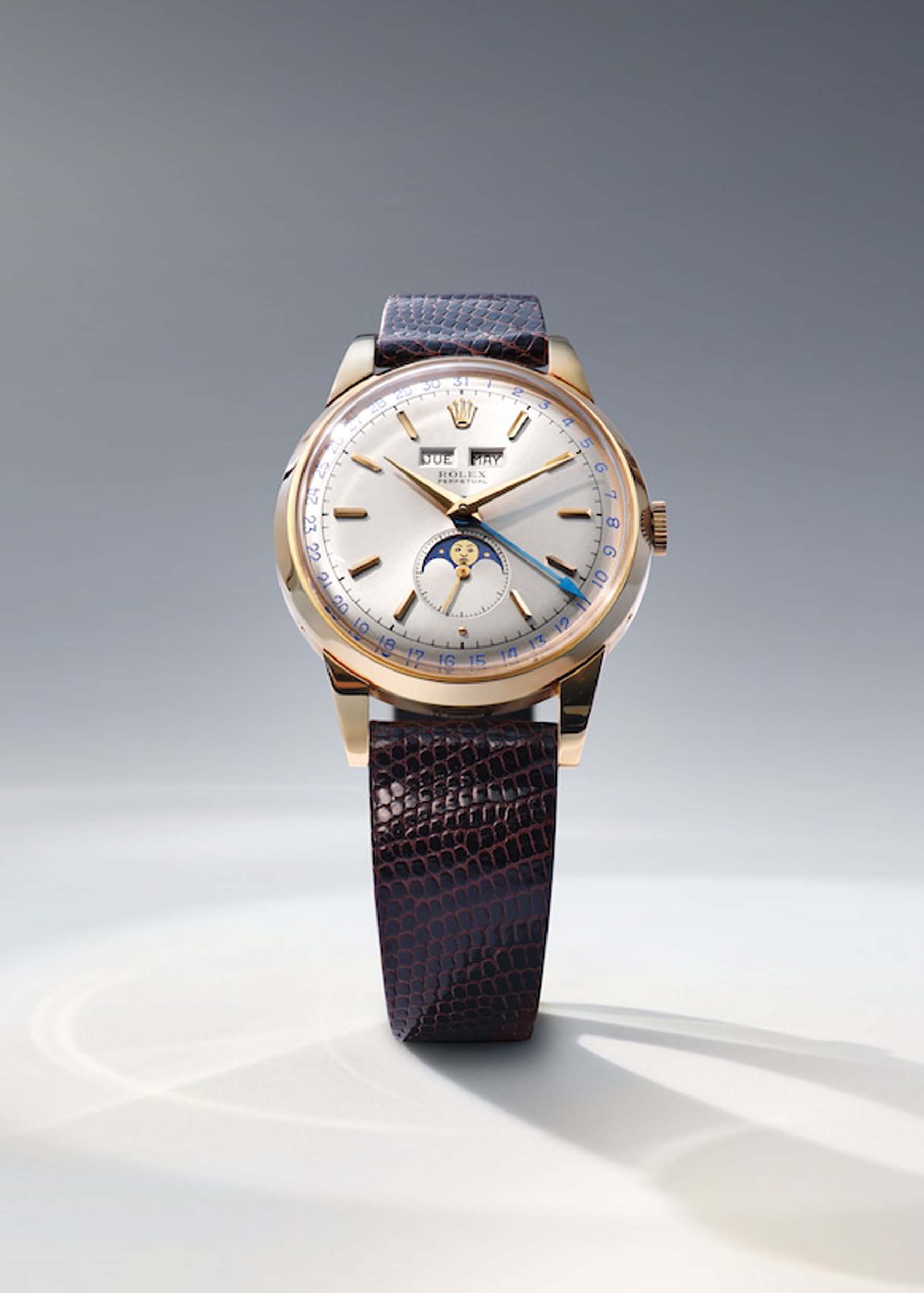
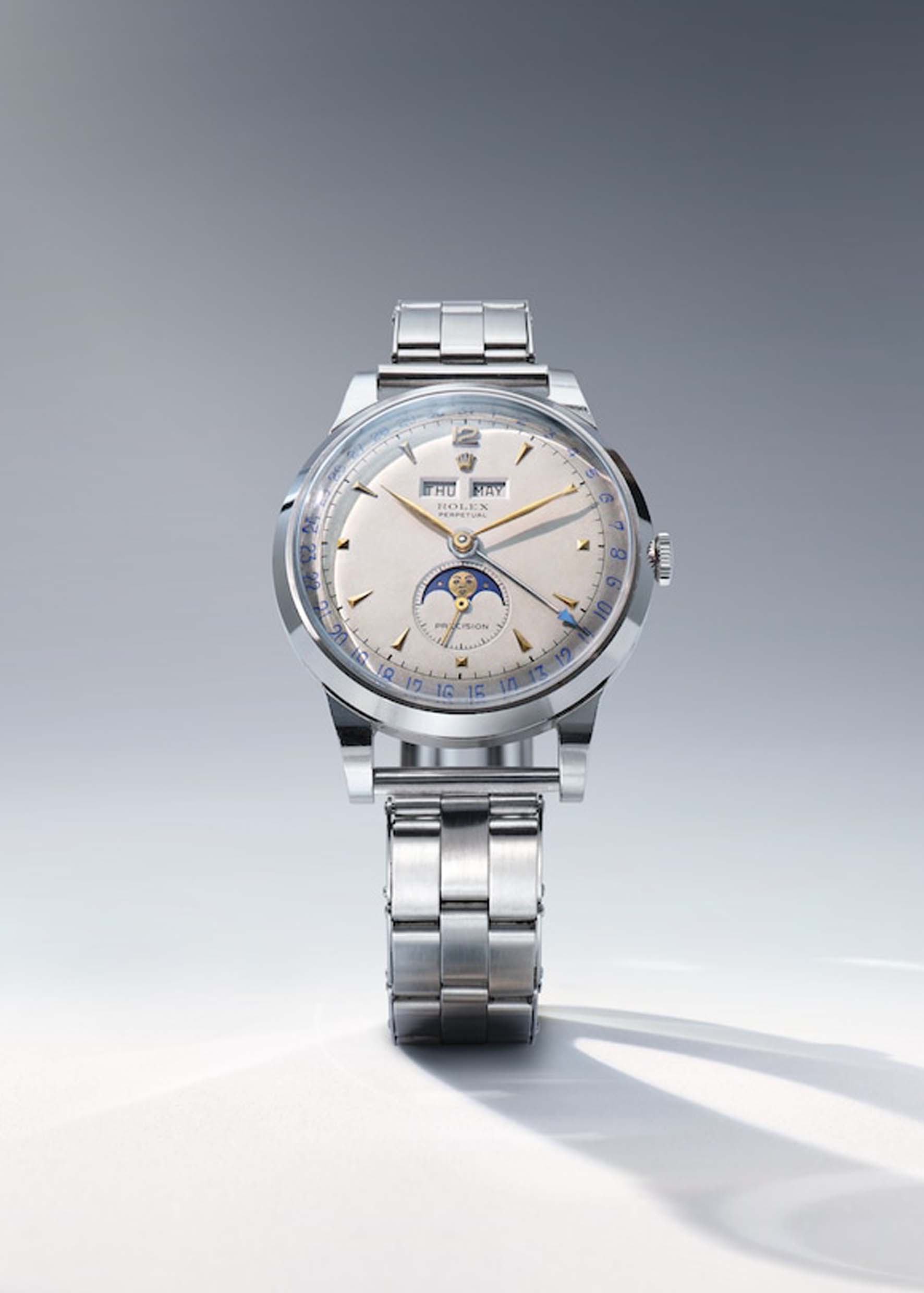
Production was brief and exact numbers have never been officially documented by Rolex. Specialist literature generally estimates around 1,000–1,200 examples, produced mainly in steel and yellow gold. Together with Ref. 6062, which unlike the 8171 featured an Oyster case, it belongs to an exceptionally rare chapter in Rolex history when calendars and moon phases occupied a central role. The snap-on caseback construction has also made examples preserved in excellent condition particularly difficult to find today, adding to their collectability. In December 2013, a steel Ref. 8171 with a diamond-set dial sold for $1.145 million at Christie’s New York: a result that illustrates just how desirable the original Padellone has become over time.
THE NEW ROLEX PERPETUAL PADELLONE IS NOT A RE-EDITION
The connection with Ref. 8171 is immediate, but Rolex has avoided the easiest route. The new Perpetual Padellone does not recreate the 1949 watch: it revisits its overall proportions and, above all, the organisation of information on the dial, incorporating them into a thoroughly contemporary design. The case measures 39 mm in diameter and 12.20 mm thick, is water-resistant to 50 metres, and combines a domed, finely fluted bezel with a domed sapphire crystal and transparent caseback. Four correctors on the caseband are dedicated to the calendar and moon-phase indications, while the dial layout retains day and month in the upper section, a peripheral date indicated by a central hand, and the moon-phase display at 6 o’clock.
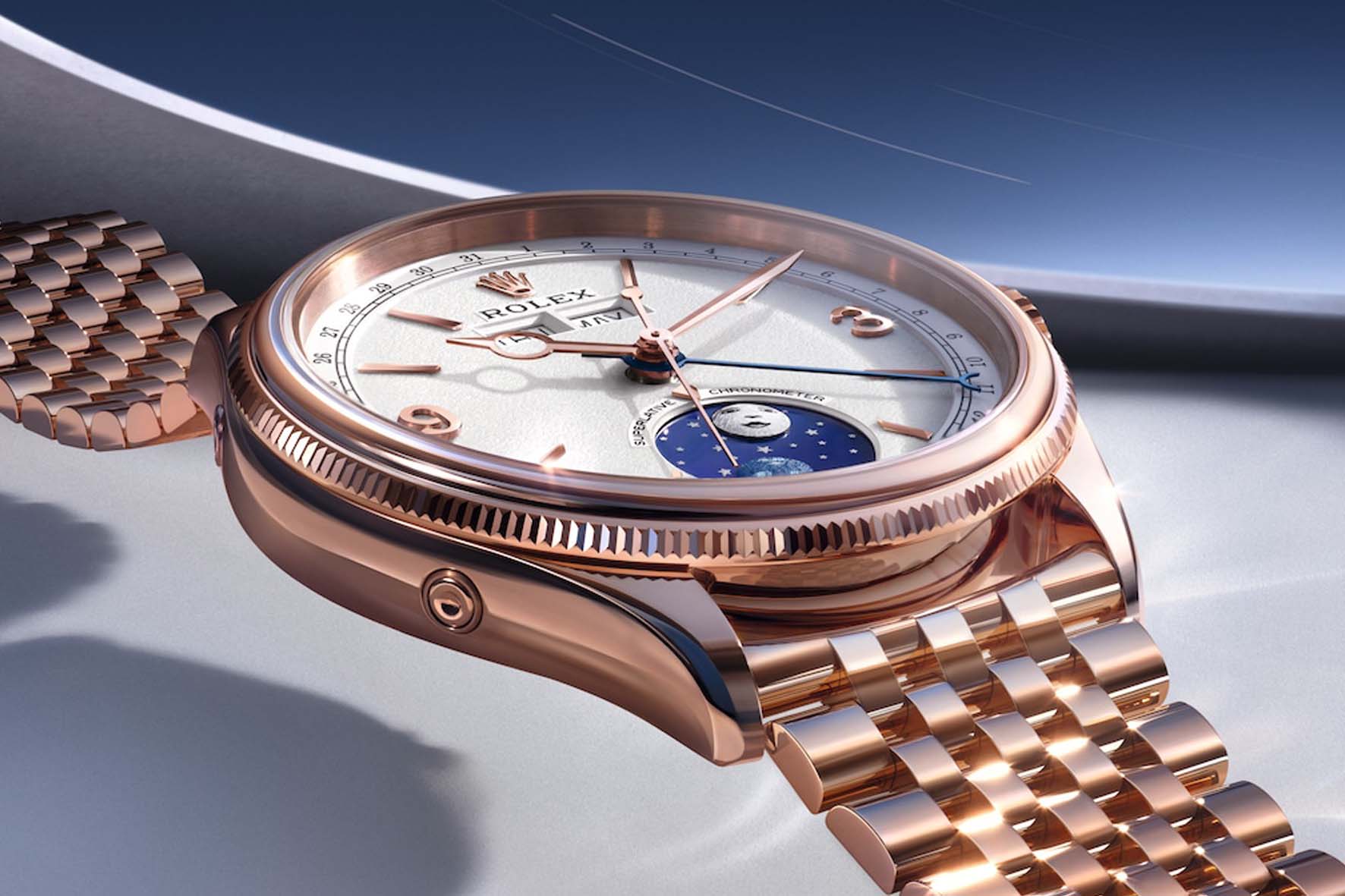
The dials also operate on the boundary between reference and reinterpretation. The Everose gold versions feature an intense white dial with a grained finish, while the platinum model uses the ice blue traditionally associated by Rolex with this metal. The blued date hand, tipped with a crescent moon, extends across the dial to the peripheral scale; the applied elements and overall composition retain a deliberately classical elegance without attempting to simulate the appearance of a vintage watch. It is an approach consistent with the entire project: openly acknowledging the 8171 without turning it into a museum piece.
METEORITE MOON PHASES: THE MOST POETIC DETAIL
The moon-phase display is probably where the new Padellone allows itself the greatest expressive freedom. The disc is made of blue enamel and incorporates two representations of the Moon made from meteorite: the full moon retains the material’s natural colour and is completed by a pad-printed face, while the new moon receives a dark blue PVD coating. The stars are also pad printed. It is an unusual solution for Rolex, not so much because of the use of meteorite itself, but because of the overtly decorative, almost narrative way in which it is employed.
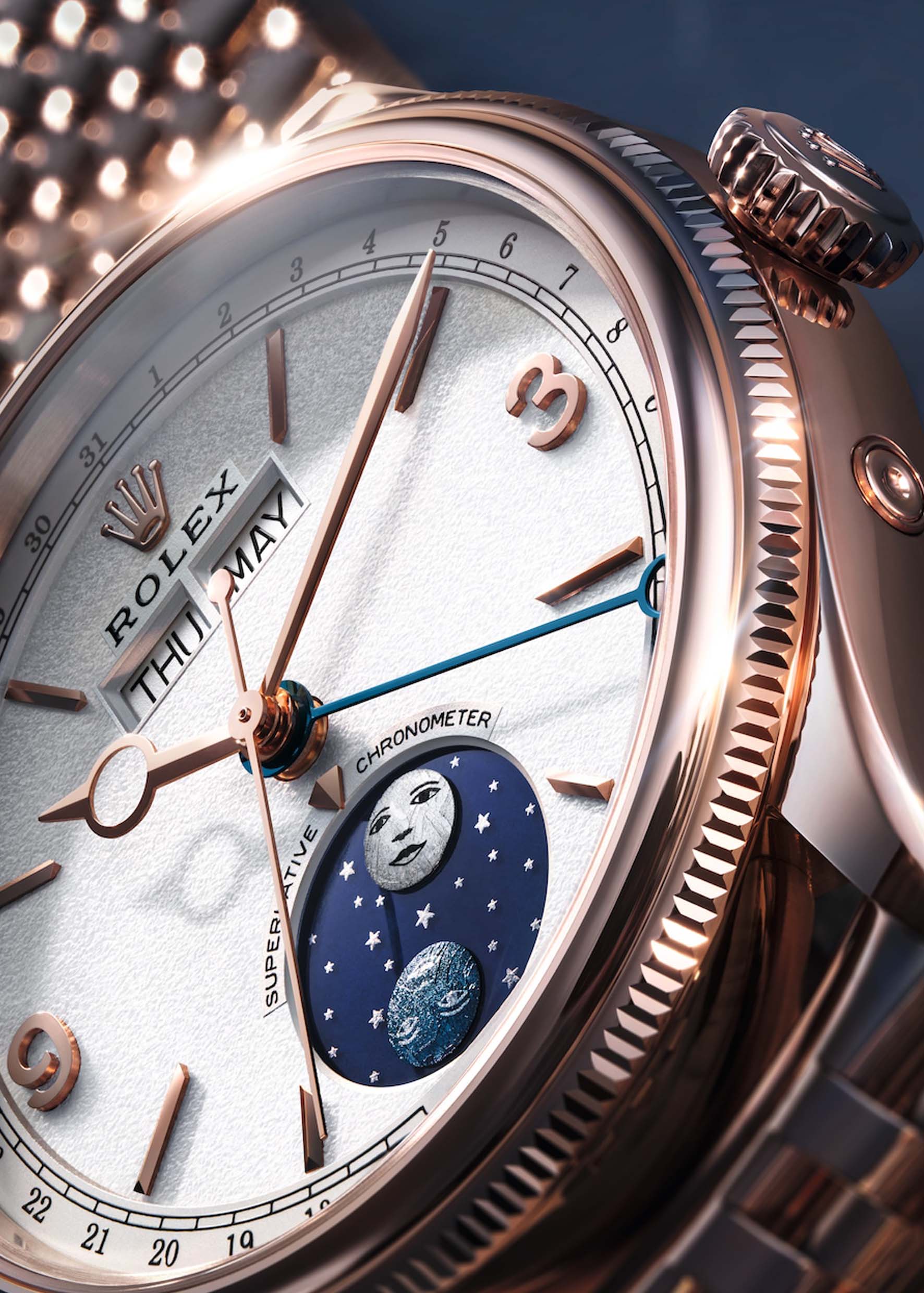
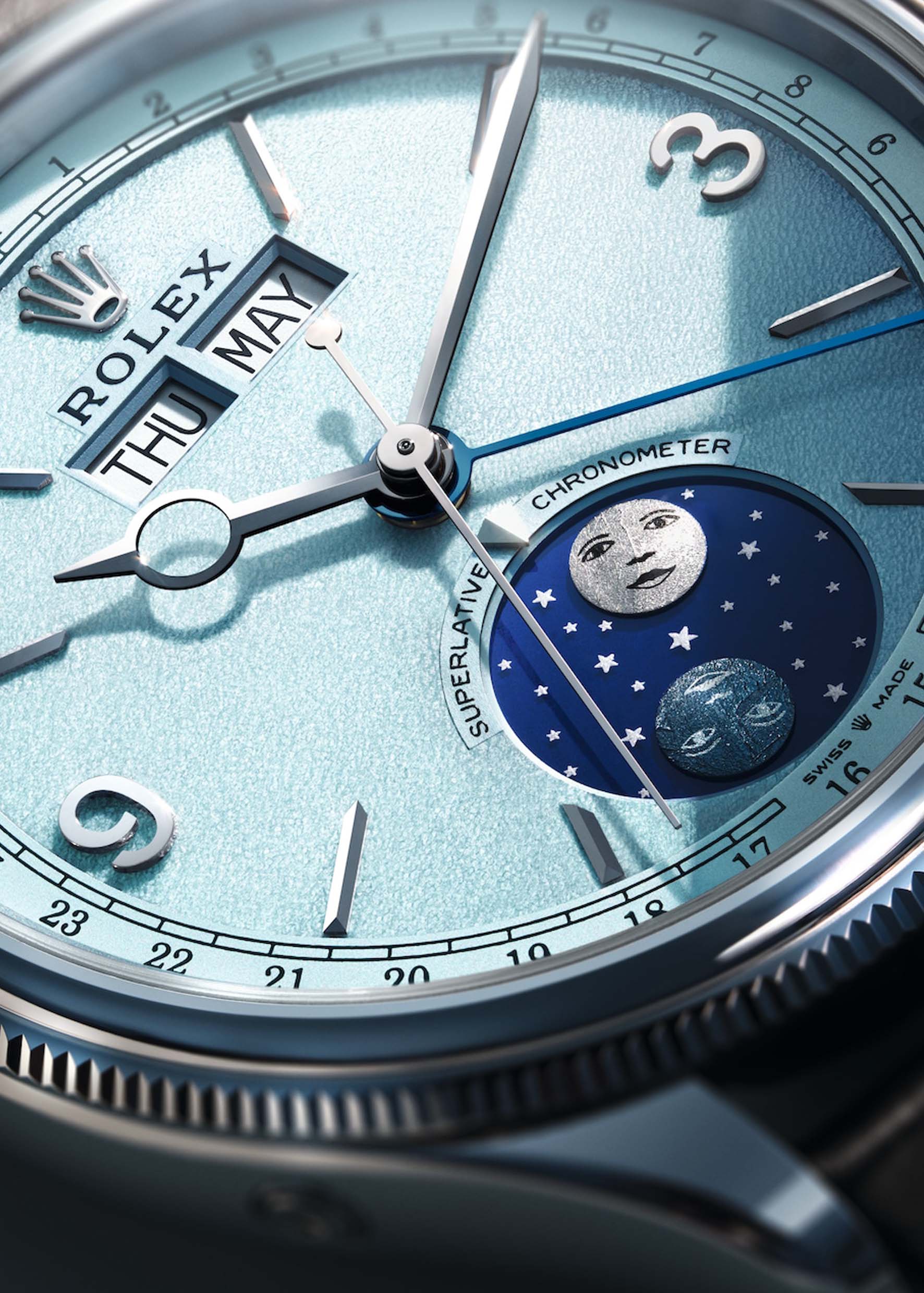
The connection to the 8171 remains clear in its position at 6 o’clock, but the execution belongs entirely to the new watch. It is perhaps one of the details that best explains why the Perpetual Padellone works: Rolex has not tried to reproduce the aesthetics of the past in every detail, but has identified a number of immediately recognisable codes and used them as a starting point. The result preserves the balance of the historical model while developing a personality of its own, richer and more contemporary.
HAPLOS: THE NEW INSTANTANEOUS ANNUAL CALENDAR
The most important difference from Ref. 8171, however, emerges in the mechanics. The historical model used a complete calendar that required intervention from the wearer in months with fewer than 31 days; the new Perpetual Padellone instead introduces an instantaneous annual calendar. The system automatically distinguishes between 30- and 31-day months and requires just one manual correction per year, at the end of February. The date, day and month change instantaneously at midnight, transforming a visually classical layout into a far more advanced complication from a functional standpoint.
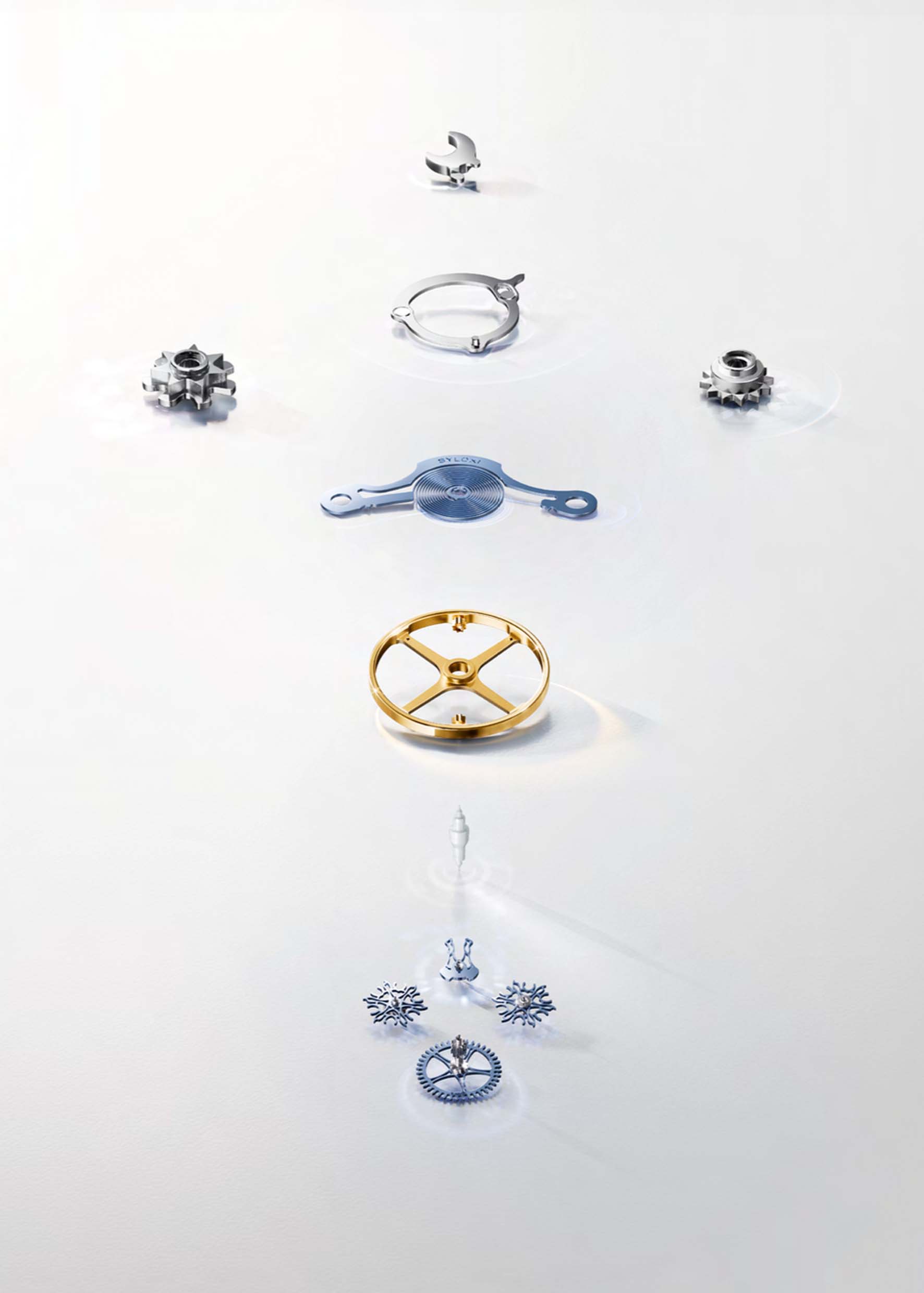
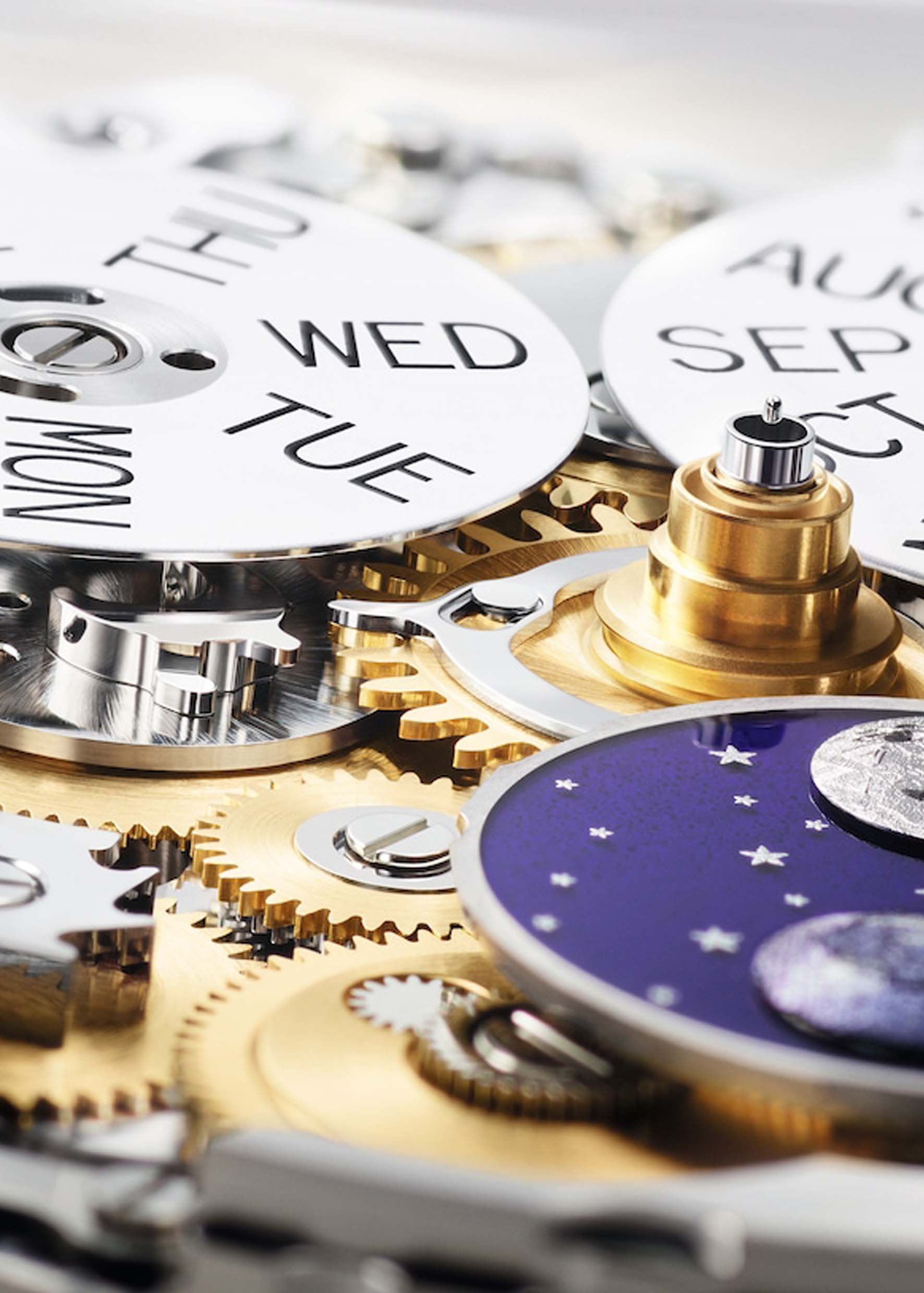
Rolex has named this solution Haplos and filed a patent application for the system. Its distinctive character also lies in its constructional economy: the annual-calendar mechanism uses just two additional components coupled to the date system, while the month programming is integrated on the reverse of the dedicated disc. It is an approach entirely consistent with Rolex’s technical philosophy, which seeks performance and reliability while reducing complexity wherever possible. In a watch that looks so openly back to the 1940s, Haplos is one of the clearest signs of just how forward-looking the project really is.
CALIBRE 7190: 5 HZ, DYNAPULSE AND 66 HOURS OF POWER RESERVE
Powering the Perpetual Padellone is the new Rolex manufacture calibre 7190, a self-winding mechanical movement with bidirectional winding via a Perpetual rotor. It operates at 5 Hz, or 36,000 vibrations per hour, offers approximately 66 hours of power reserve and incorporates some of the brand’s most recent technical solutions: a Syloxi silicon hairspring, a ceramic balance staff, optimised Paraflex shock absorbers and the Dynapulse escapement. Calibre 7190 was developed on the basis of calibre 7135, introduced in 2025 in the Land-Dweller, and incorporates the regulating system comprising the Dynapulse escapement and an advanced oscillator.
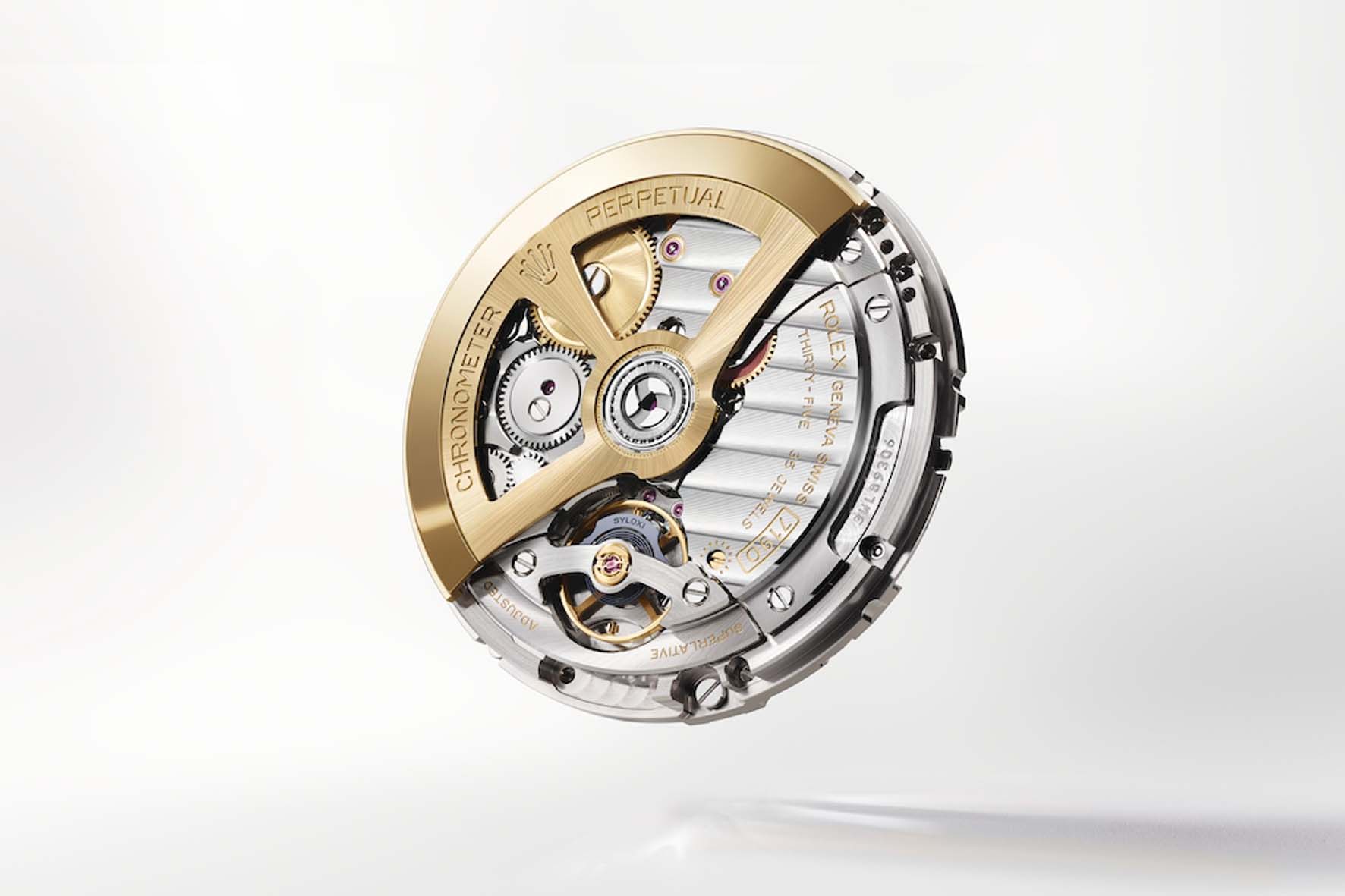
The Dynapulse escapement, a sequential distribution escapement largely made from silicon, is designed to improve energy efficiency and represents one of the central elements of Rolex’s new generation of movements. Calibre 7190 is visible through the sapphire caseback and features Rolex Côtes de Genève and a yellow gold oscillating weight. The contrast is significant: one of the most classically styled watches presented by the brand in recent years houses one of its most modern mechanical architectures.
EVEROSE GOLD, PLATINUM AND THE SETTIMO BRACELET
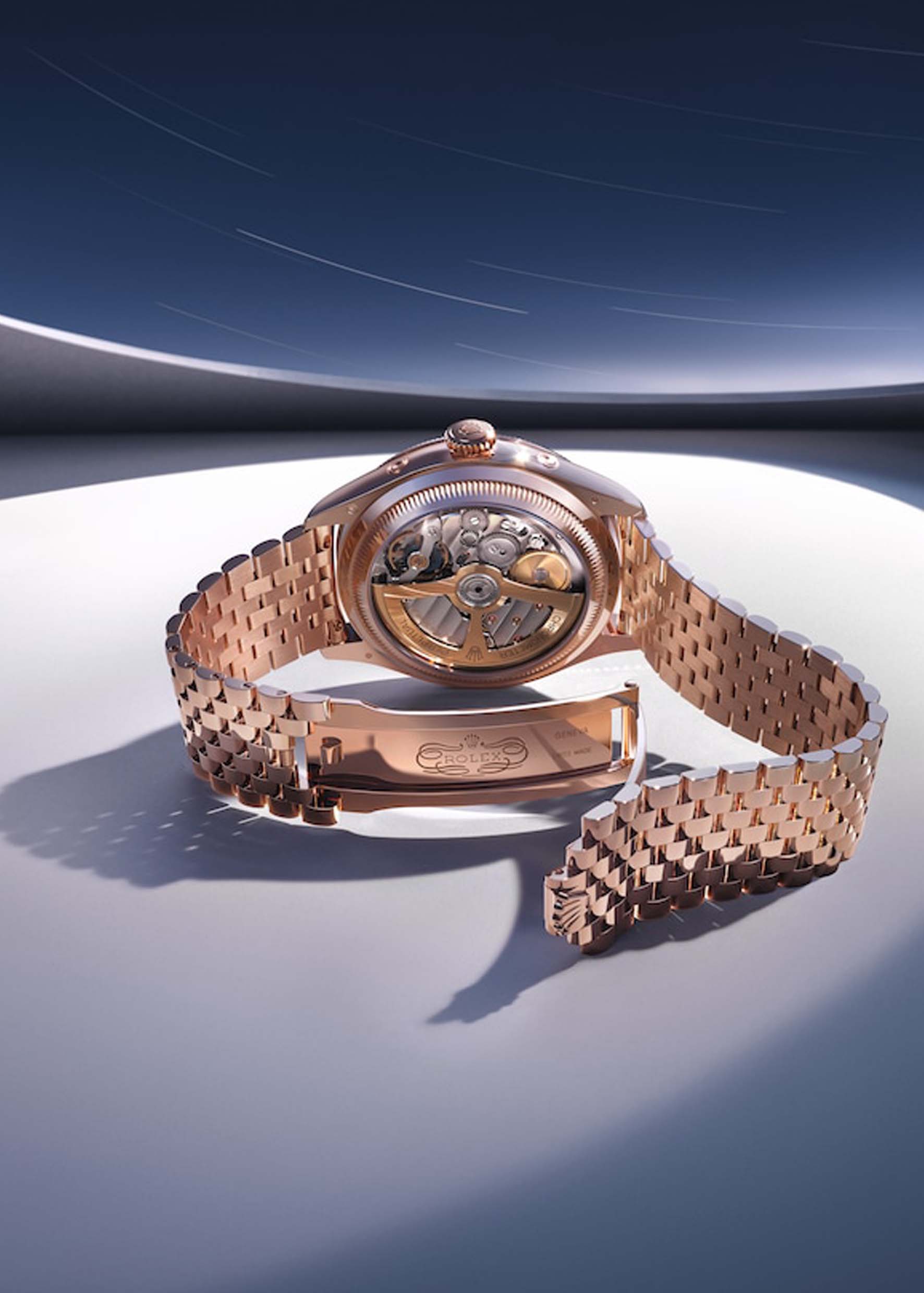
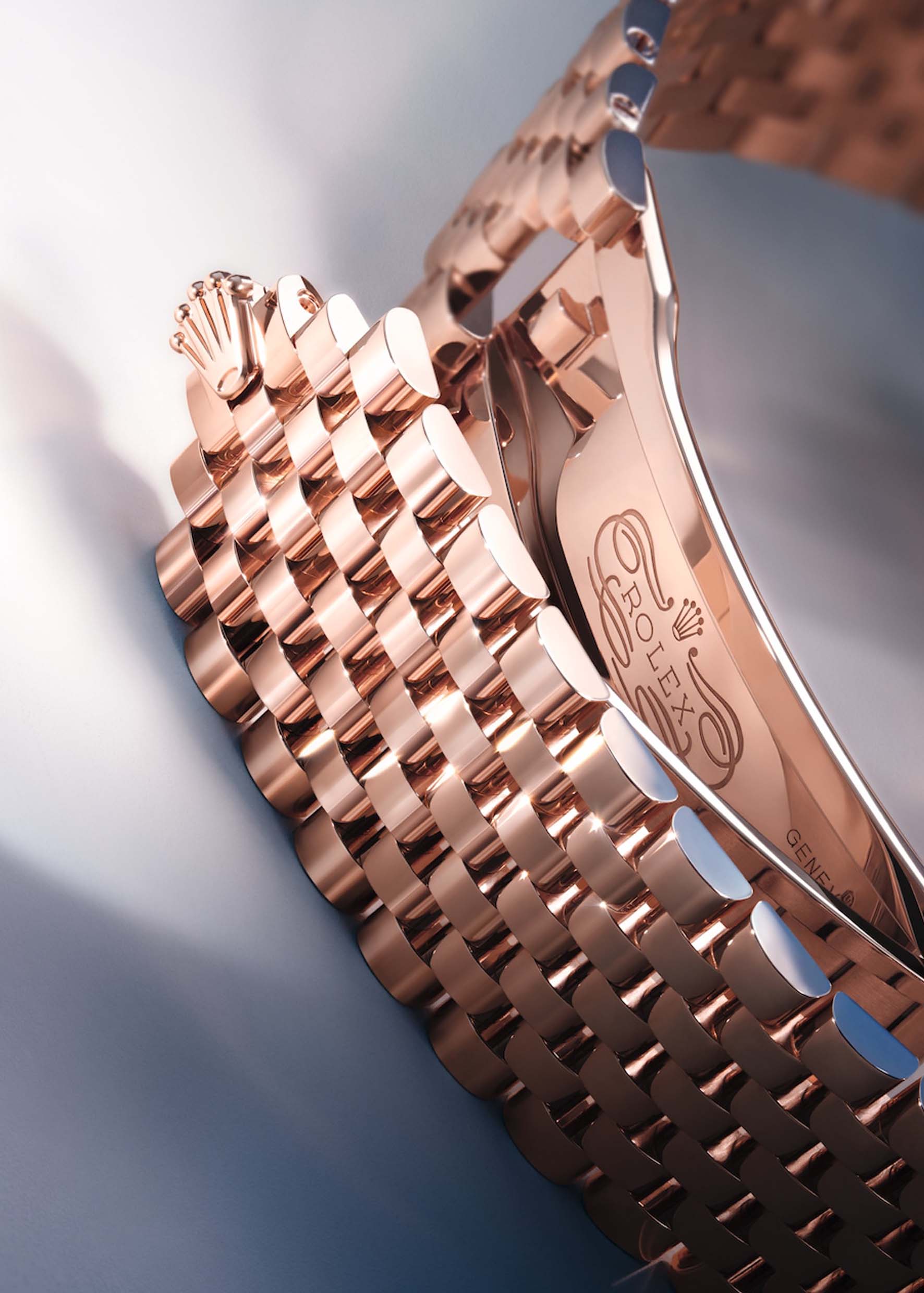
The Rolex Perpetual Padellone debuts in three configurations. Ref. 53505 in 18 ct Everose gold with an intense white dial is available either on a matt brown alligator strap or on the Settimo bracelet, composed of seven rows of small links and secured by a concealed Crownclasp. Ref. 53506 in 950 platinum pairs an ice-blue dial with a matt black alligator strap. The straps are lined with green calfskin and use a folding Dualclasp. Through its construction and presence on the wrist, the Settimo also gives the Everose version a distinctly different character from the two configurations on leather.
At launch, Swiss-market prices are CHF 52,500 for the Everose version on leather, CHF 64,800 for the Everose version on the Settimo bracelet, and CHF 59,000 for the platinum model, including taxes. More than the price list itself, however, what matters is the Padellone’s positioning within the Perpetual collection: Rolex thus brings calendars and moon phases back into an area of its watchmaking universe they had not occupied for decades.
ROLEX PERPETUAL PADELLONE: WHAT IT SAYS ABOUT ROLEX TODAY
The new Padellone is interesting for what it is, but perhaps even more for what it says about contemporary Rolex. In recent years, the brand has progressively broadened its language: the 1908 brought a more classical form of elegance and the transparent caseback back to the forefront, while the Land-Dweller introduced a new technical platform with Dynapulse. The Perpetual Padellone brings these two directions together in some respects and adds another element: a freer, more self-aware relationship with the archives, capable even of transforming a nickname born among Italian collectors into an official name.
It would have been easy to celebrate Ref. 8171 with a faithful re-edition. Rolex instead chose to preserve the idea rather than the formula: the proportions, dial layout and moon phases create the link with 1949, while Haplos, calibre 7190 and Dynapulse clearly belong to the present. Perhaps the most important news, then, is not simply that Rolex has brought the Padellone back to life. It is that the brand chose one of the most atypical watches in its history to show us a glimpse of the Rolex to come.
By Jacopo Giudici