

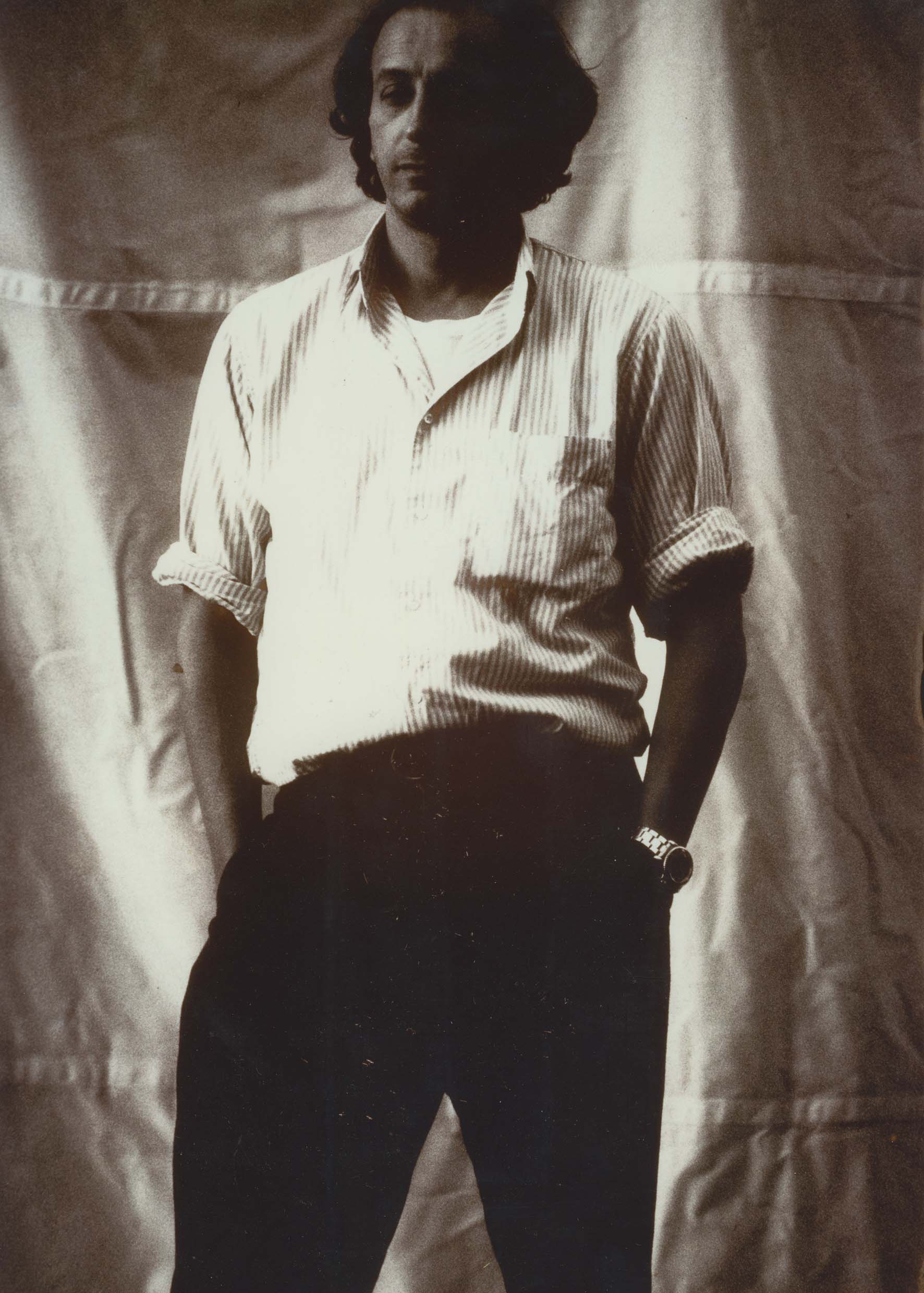
This is, first and foremost, an Italian story. A story that begins in Bologna, moves through fashion, design and culture and reaches, almost unexpectedly, the world of watchmaking. It is the story of Massimo Osti, the man who, starting out in graphic design, changed the way contemporary clothing was conceived and became one of the pioneers of sportswear.
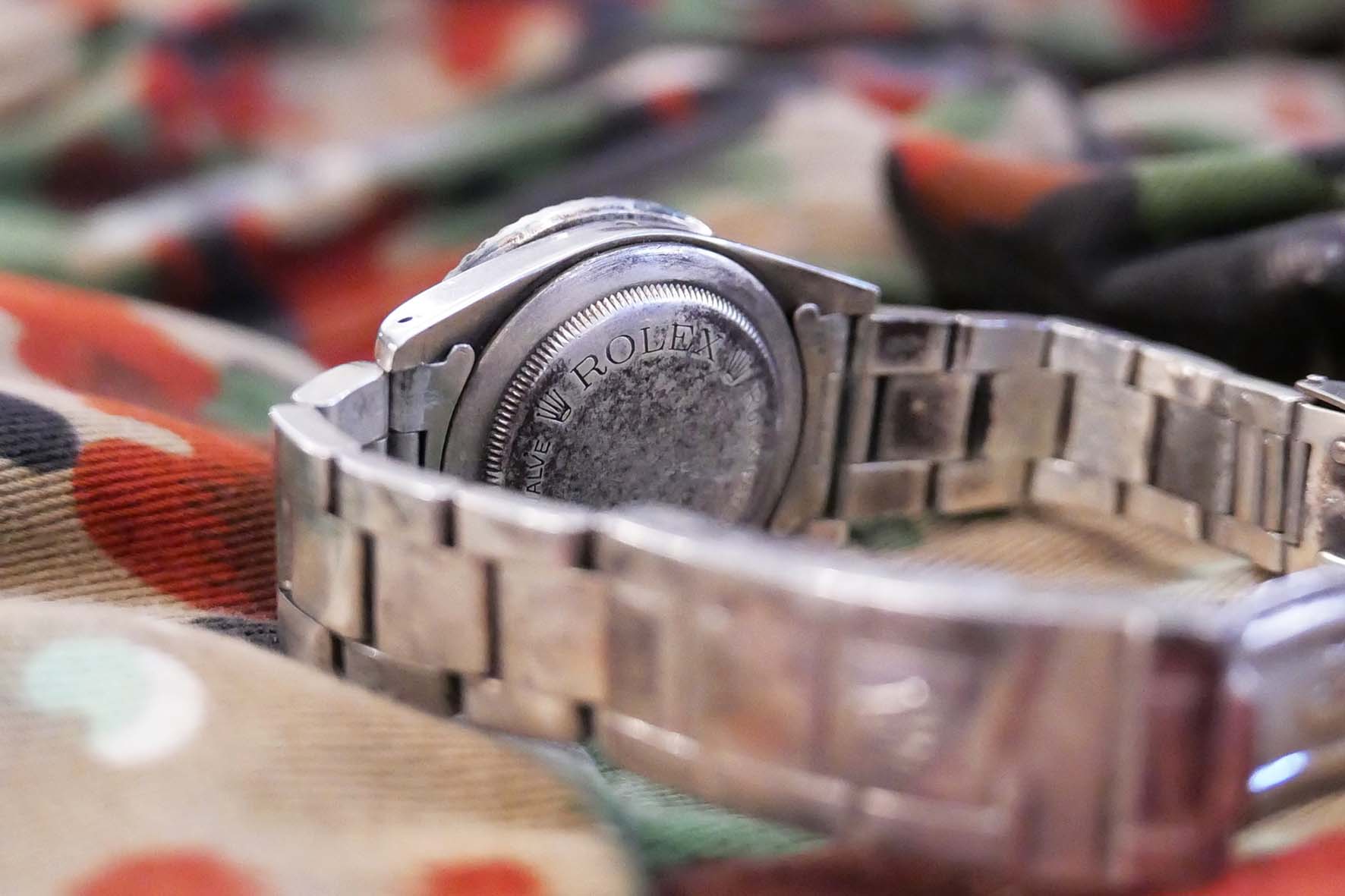
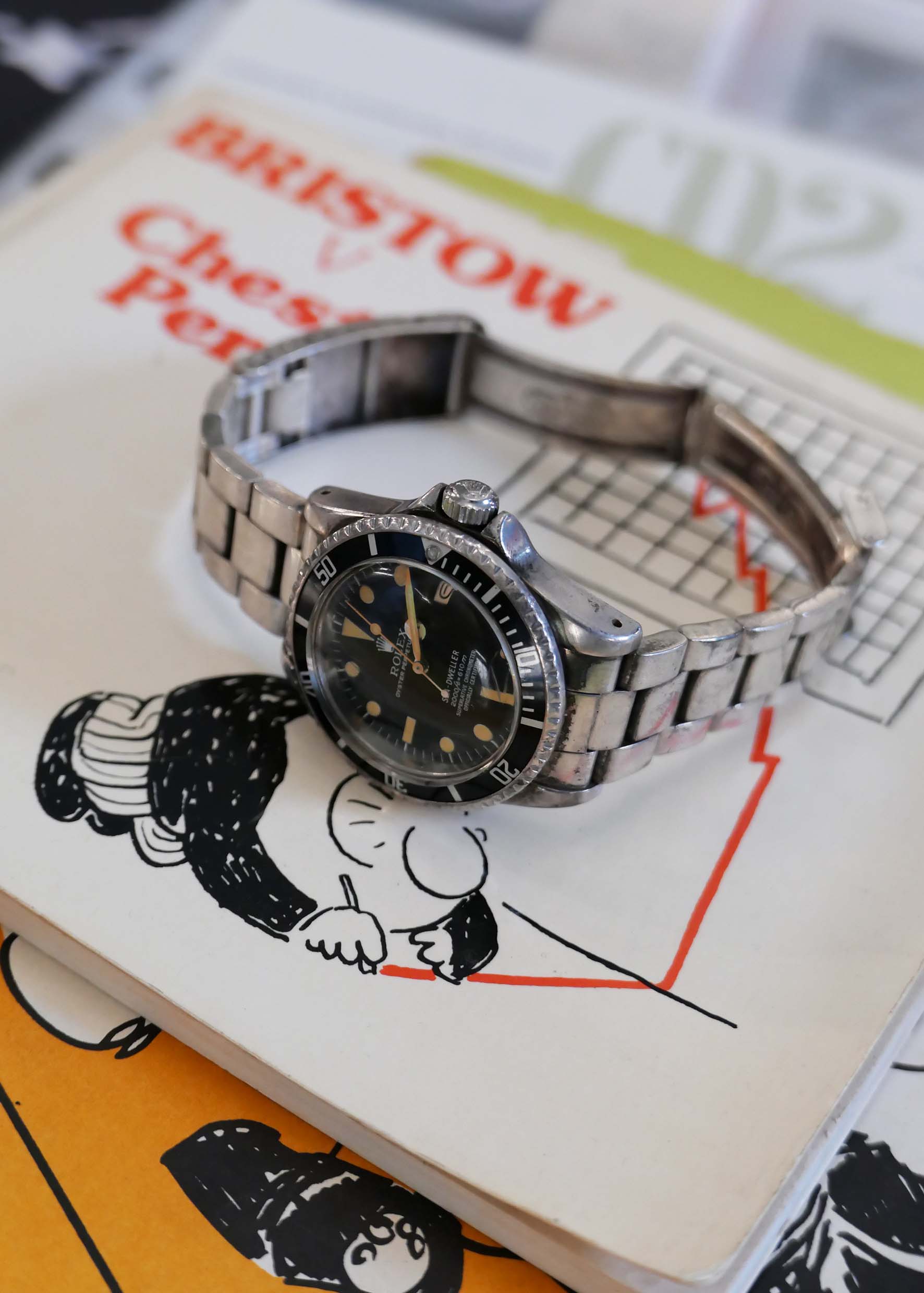
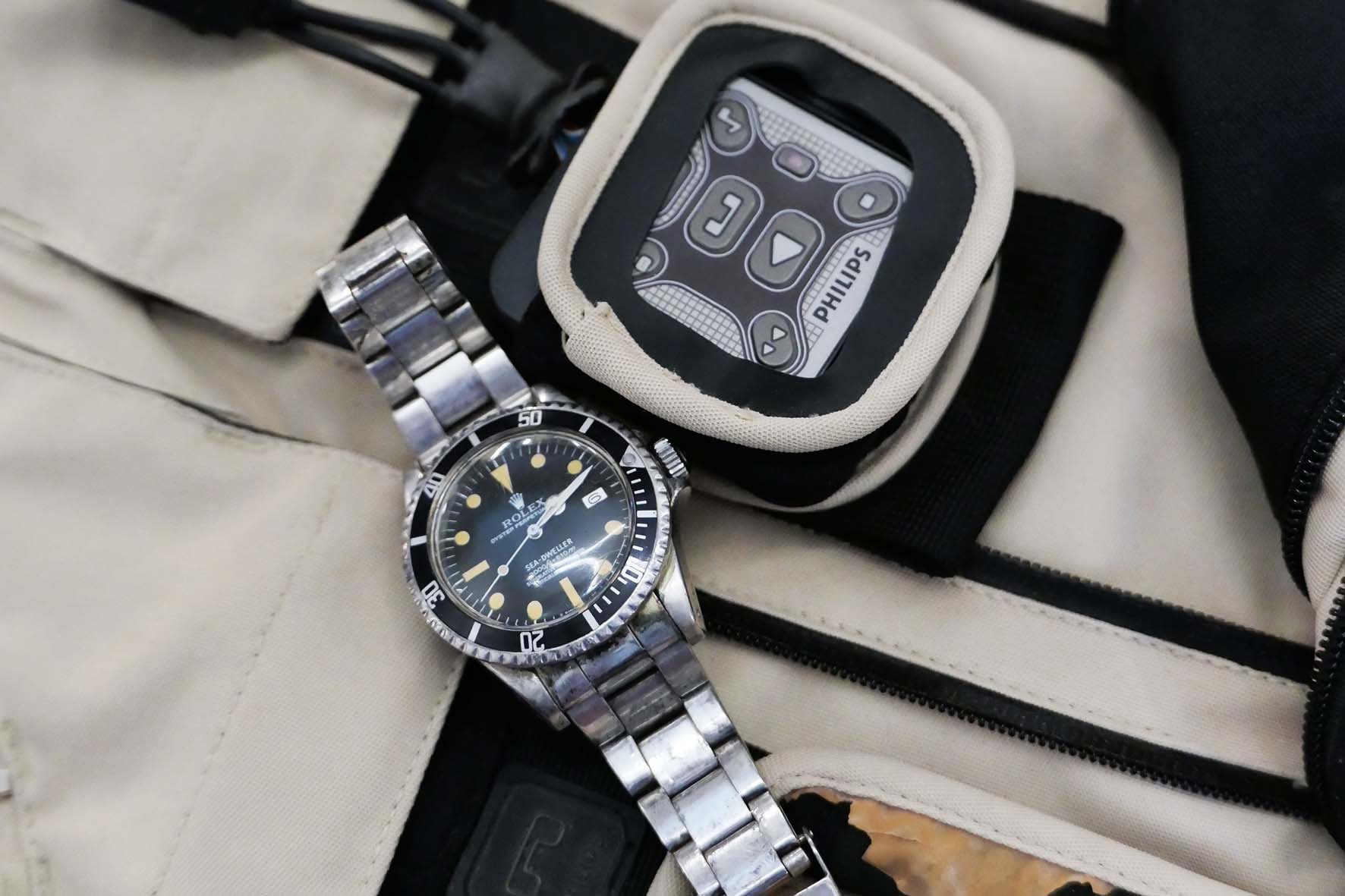
But it is also the story of a decidedly unusual watch: a Rolex Sea-Dweller ref. 1665 that Osti chose to have silver-plated, transforming one of the most recognisable professional instruments in Swiss watchmaking into something deeply personal.
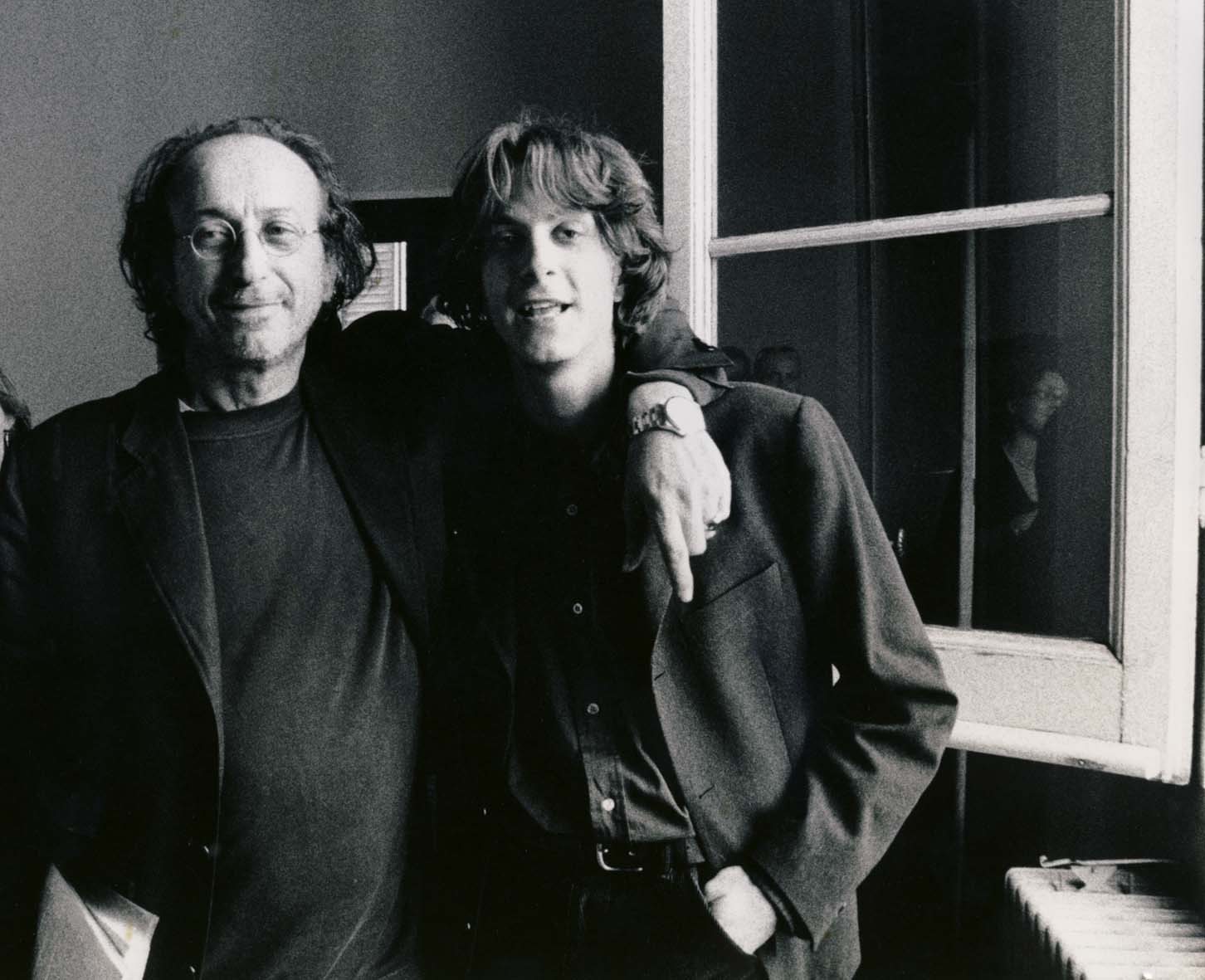
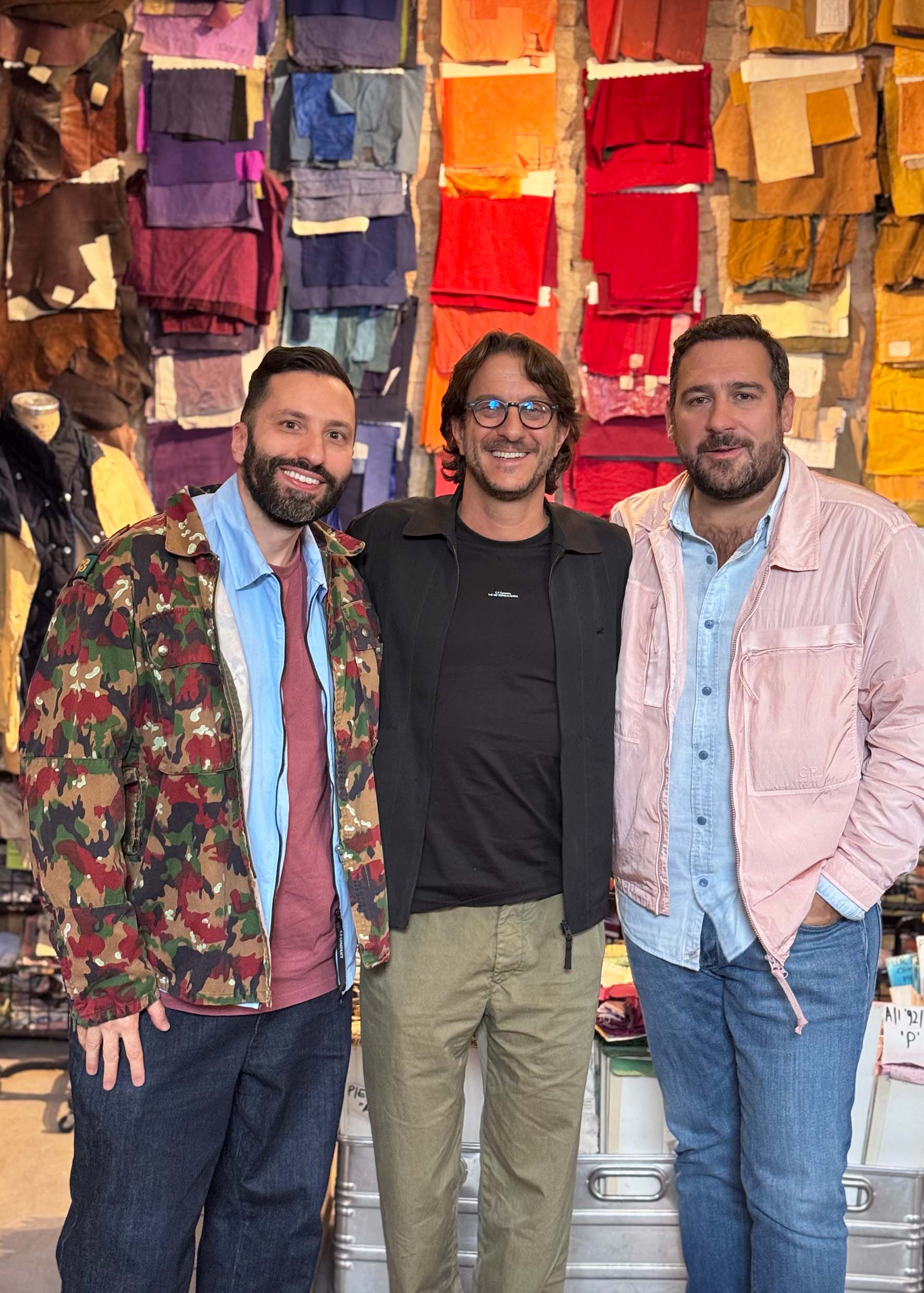
To learn more about it, we travelled to Bologna, where Lorenzo Osti, Massimo’s son, welcomed us to the Archive dedicated to his father. We spent around three hours together, sharing memories and anecdotes and visiting an extraordinary space that houses thousands of garments, materials and objects documenting a life devoted to experimentation.
Lorenzo also gave us an opportunity we are unlikely to forget: the chance to examine up close, hold in our hands and, above all, try on the silver-plated Sea-Dweller that belonged to his father. It was a moment we had been looking forward to with great curiosity, and one that made the experience even more special.
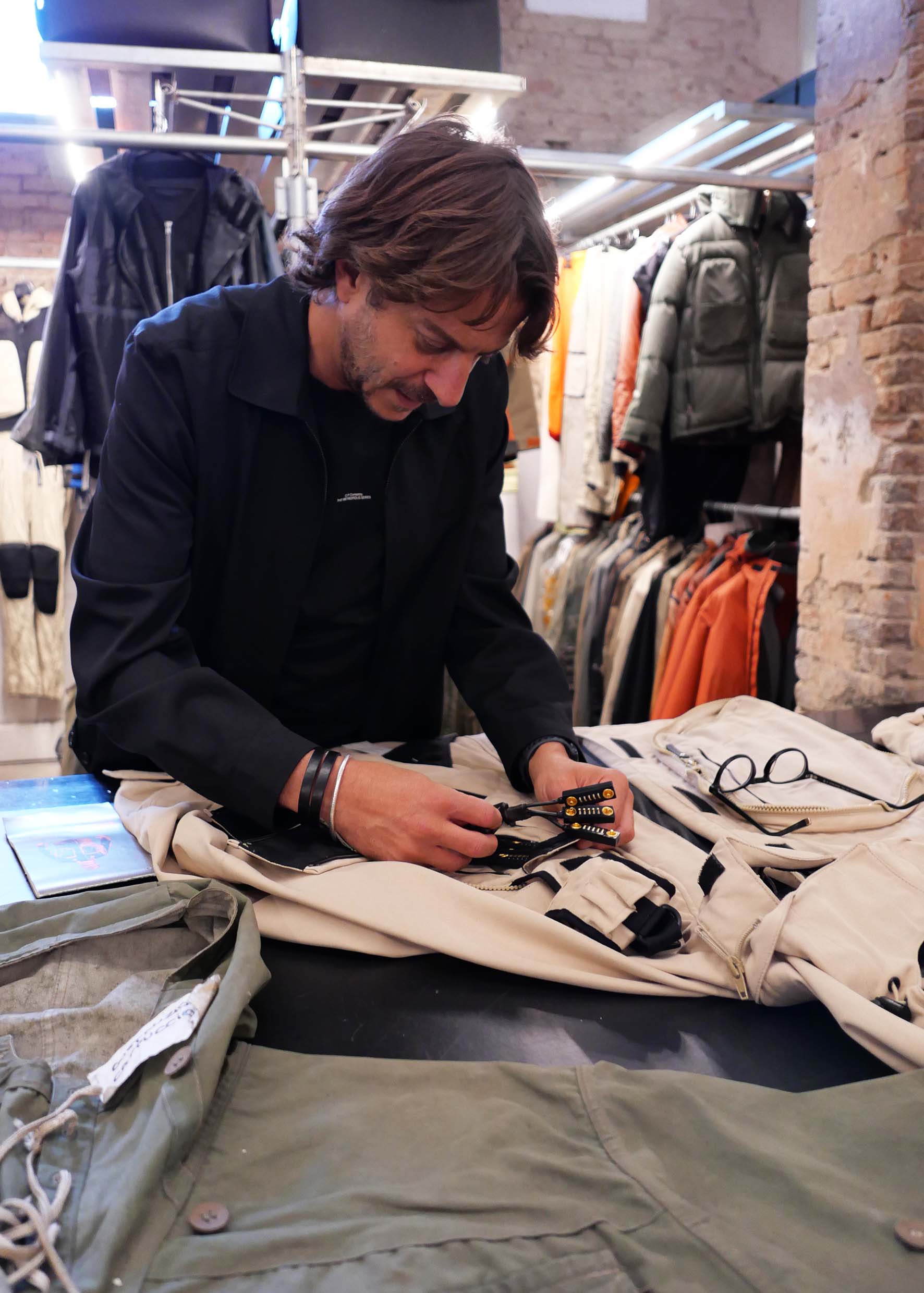
During our visit, we also had the opportunity to speak by telephone with Daniela Facchinato, Massimo’s wife and Lorenzo’s mother, who was equally generous in sharing valuable memories and details.
There would be an almost endless amount to tell. Between the stories we heard, the objects we examined and the details that emerged during our visit, we would probably have enough material to write a book ourselves. We will therefore try to bring together the best of this experience, retracing Massimo Osti’s story through his work, the memories of those who knew him and, of course, one of the most unusual watches we have ever had the good fortune to wear.
MASSIMO OSTI: FROM GRAPHIC DESIGN TO C.P. COMPANY
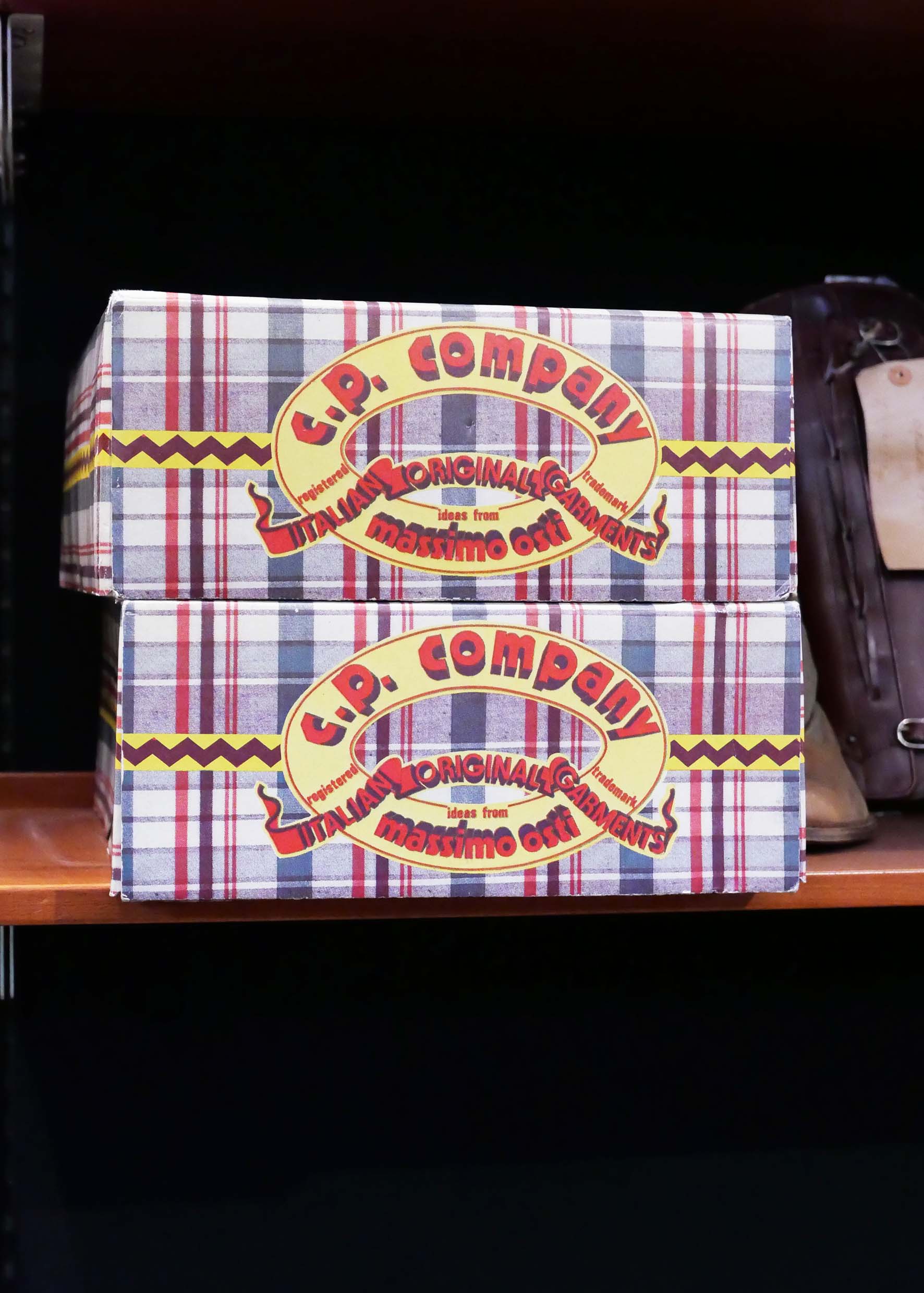
Born in 1944 in Baricella, just outside Bologna, Massimo Osti did not enter fashion by following the traditional path of a designer. His background was in advertising graphics, and in 1968 he opened the CD2 agency in Bologna with his friends Lucio Festi and Giorgio Sgorbati. The following year, he created his first line of printed T-shirts under the Chomp Chomp brand, while in 1970 he founded O.M. Diffusion with Raimondo Cattabriga, the company that would produce the first Chester Perry collection. The name was inspired by the factory where Bristow, the protagonist of Frank Dickens’s comic strip of the same name, worked.
From the outset, however, his interests extended far beyond graphic experimentation. Osti observed society, habits and cultural changes, seeking to understand how people lived and dressed. At a time when clothing followed rather rigid conventions, with separate outfits for work, Sundays and special occasions, he recognised the possibility of proposing something different: a less formal, more versatile way of dressing, capable of overcoming distinctions between occasions and social groups.
In 1978, following a dispute over the Chester Perry name, the brand became C.P. Company, but Osti’s method remained unchanged: observe, collect, study and reinterpret. Military uniforms, workwear and technical garments became sources of inspiration, while every element was analysed first and foremost in terms of its function.

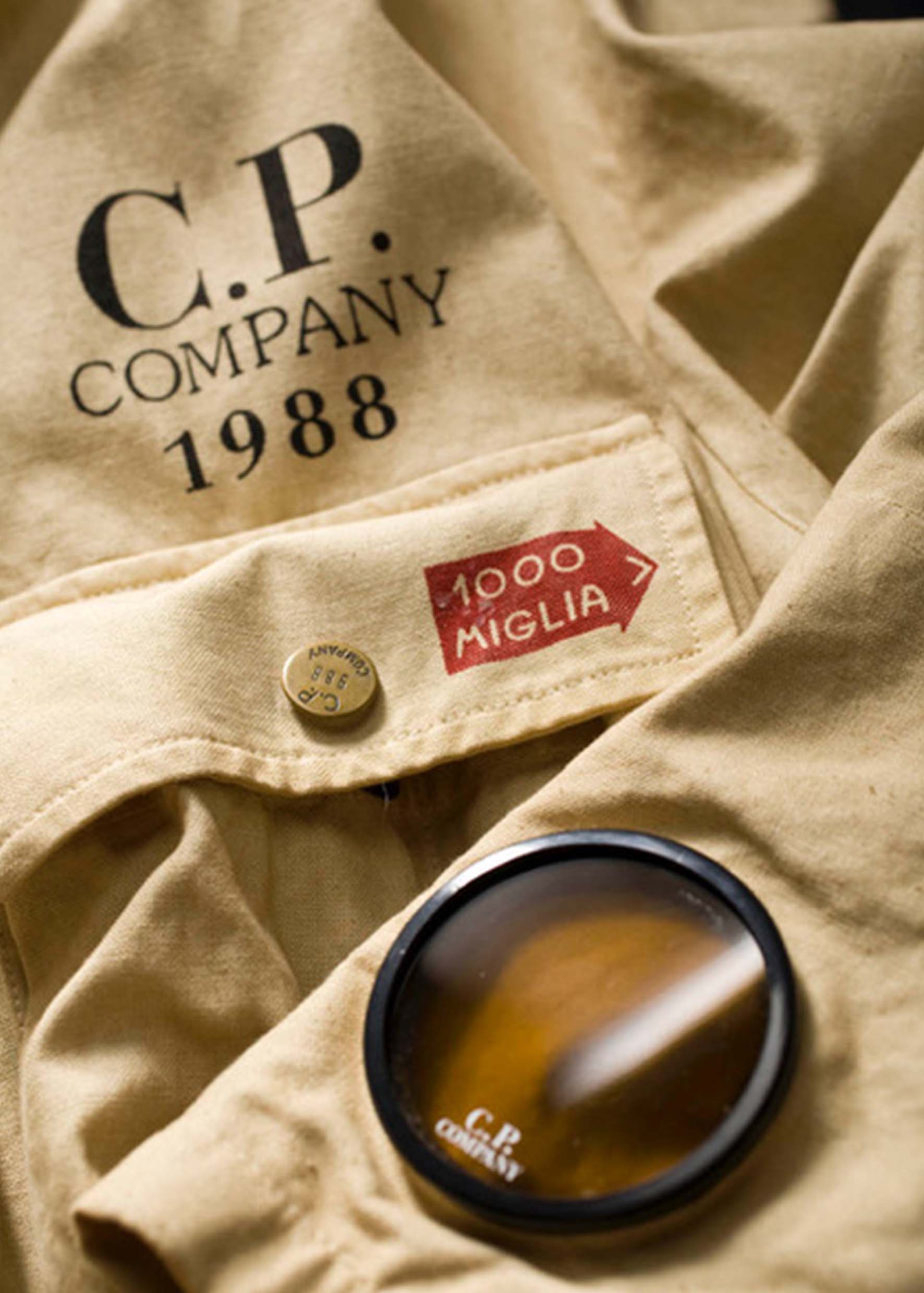
One of the most recognisable expressions of this approach was the Goggle Jacket, developed for the 1988 Mille Miglia motor race, with its distinctive lenses integrated into the hood and an additional round, transparent lens on the cuff, designed to allow drivers to read their watches without having to pull back their sleeves. A particularly interesting detail, especially from our perspective.
Materials were also a fundamental part of his research. During the 1970s, Osti and his collaborators developed new applications of garment dyeing, working on already assembled garments made from different fibres that reacted differently to colour. The result was shades and contrasts that were difficult to achieve using conventional methods. The material itself thus became an integral part of the design.
STONE ISLAND: WHEN THE PRODUCT CREATES THE BRAND
In 1982, this ongoing experimentation led to the creation of Stone Island, by a decidedly unusual route. It all began with Tela Stella, a robust, military-inspired fabric treated with resins and subjected to specific washing processes. The result was so different from anything offered up to that point that it was difficult to incorporate into the C.P. Company collections.


It was therefore the product itself that suggested the creation of a new identity. Stone Island was not founded to develop a product; rather, a product gave rise to the brand. A detail that says much about Osti’s approach, in which experimentation often came before any commercial considerations.
In the years that followed came some of the most important innovations in contemporary sportswear: in 1987, the first Ice Jacket, made from a thermosensitive material capable of changing colour according to temperature; in 1990, the Ice Jacket Camouflage; and in 1991, the Reflective Jacket, featuring a surface covered with glass microspheres capable of reflecting light.
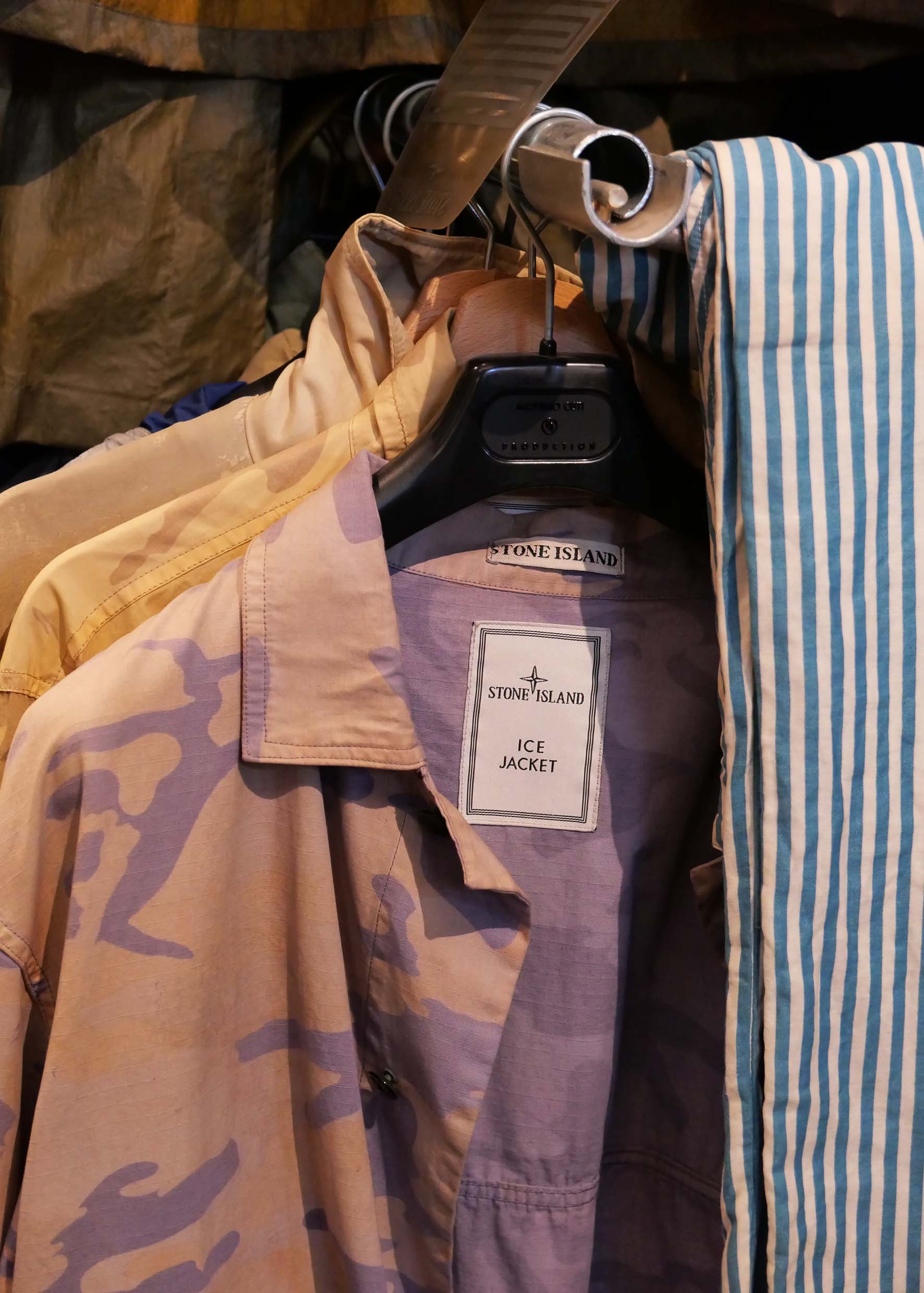
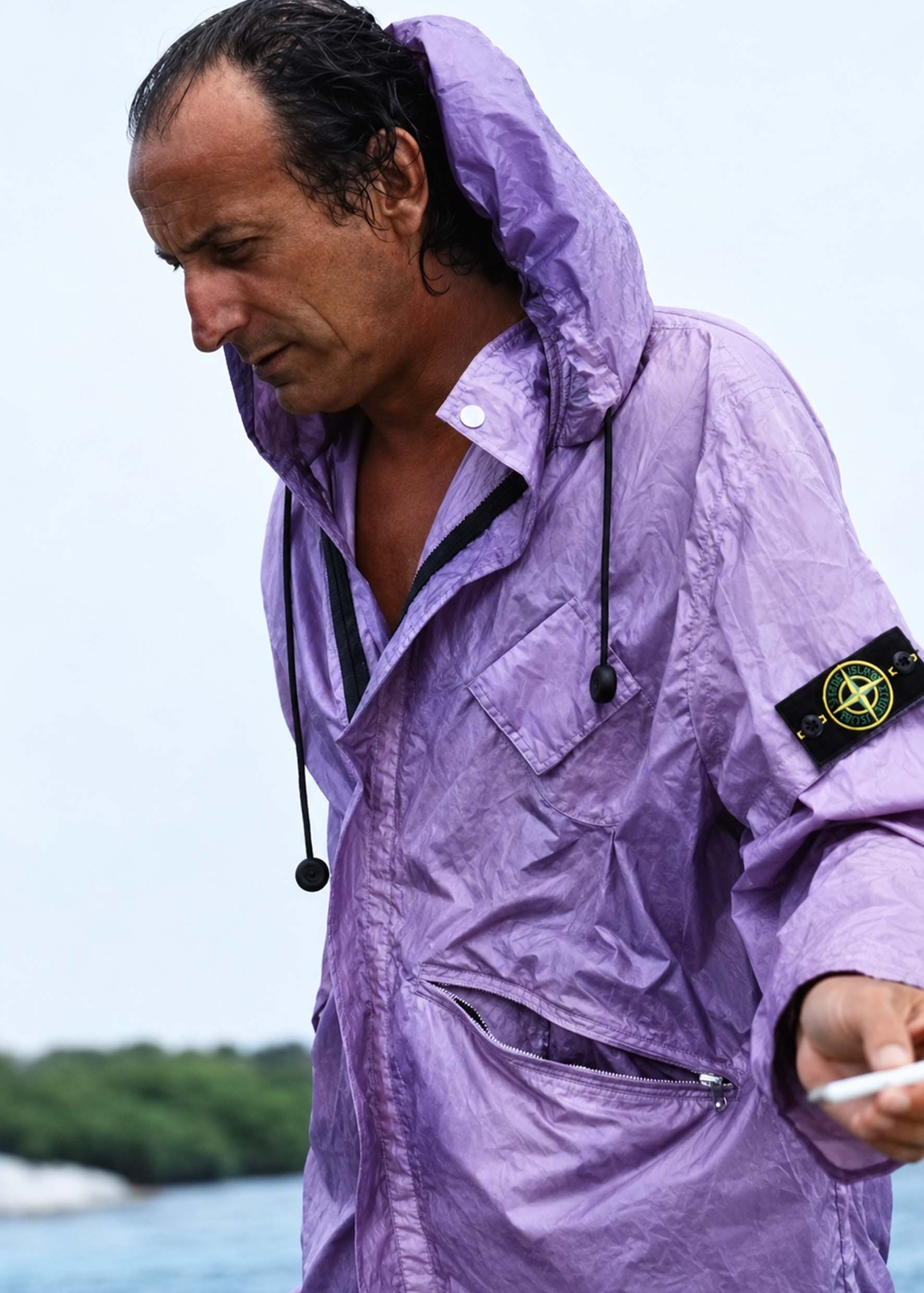
Different fabrics, treatments and technologies, united by the same curiosity about materials and their properties. A sensibility we also find, quite unexpectedly, in one of the watches that belonged to Massimo Osti.
MASSIMO OSTI’S WATCHES: A COLLECTION OF MEMORIES
Some collections are built through auctions, catalogues and carefully targeted purchases. Others come together spontaneously, through encounters, friendships and moments in life. Massimo Osti’s collection belongs above all to this second category.

During our conversation, Lorenzo told us something surprising: his father had virtually never bought a watch. ‘Ninety-nine per cent of them were gifts,’ he explained. Massimo did not enjoy shopping, so much so that, as Daniela recalls with amusement, he even preferred to have his clothes and underwear made directly at the factory rather than visit shops.
Many of the most important pieces came from Carlo Grazia, Osti’s long-standing collaborator and commercial right-hand man during the 1980s. Their relationship had given rise to a tradition: every Christmas, Carlo gave Massimo a new watch as a gesture of friendship and gratitude. Personal purchases, by contrast, were quite rare and mostly involved the occasional vintage piece offered by friends or trusted dealers who could pique his curiosity with something unusual.

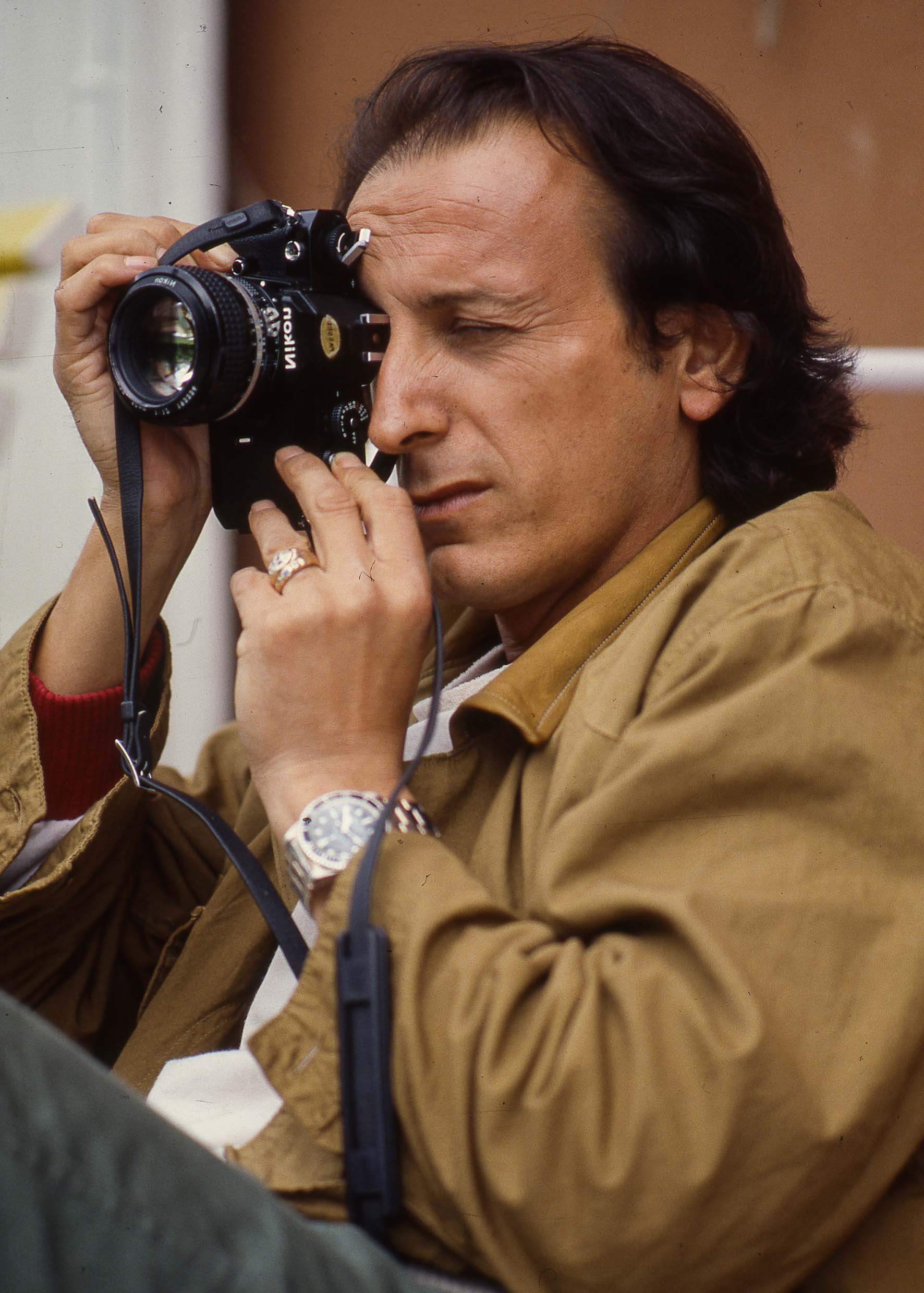
The result was an extremely varied collection, comprising different brands, styles and types, without any particular logic tied to the market. Above all, each watch told the story of a person, an occasion or a relationship. Among them all, however, there is one that seems to represent Massimo better than any other.
THE ROLEX SEA-DWELLER 1665: MASSIMO OSTI’S MOST PERSONAL WATCH
When Lorenzo showed us his father’s silver-plated Rolex Sea-Dweller ref. 1665, we found ourselves face to face with an object we already knew through photographs and stories, but which evokes entirely different feelings in person.
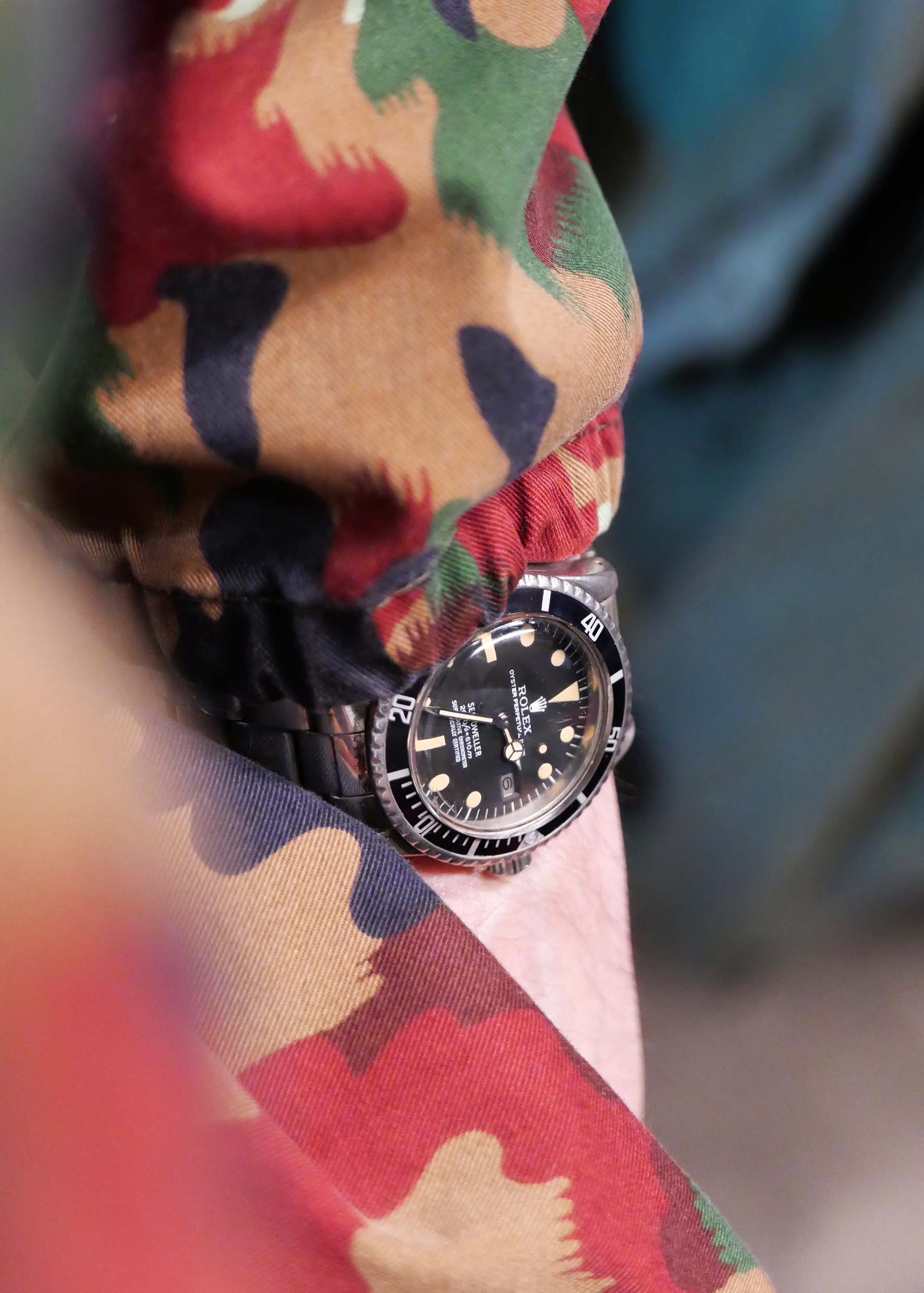
We were able to examine it at our leisure, study its details, hold it in our hands and, above all, wear it. It was one of the finest moments of our visit. It is not every day that you get to try on such an unusual watch, one that belonged to a figure who left such a profound mark on the world of clothing.
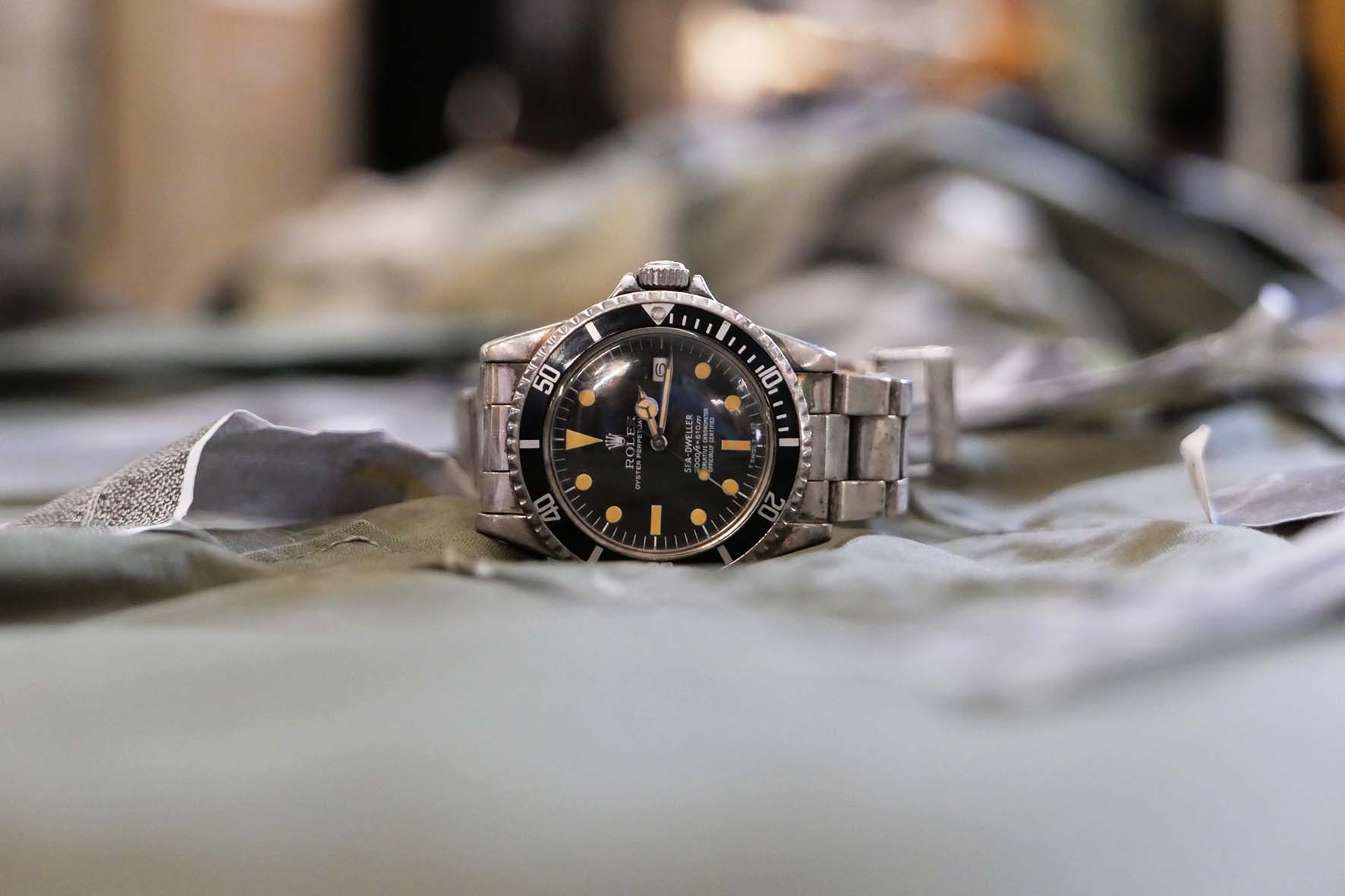
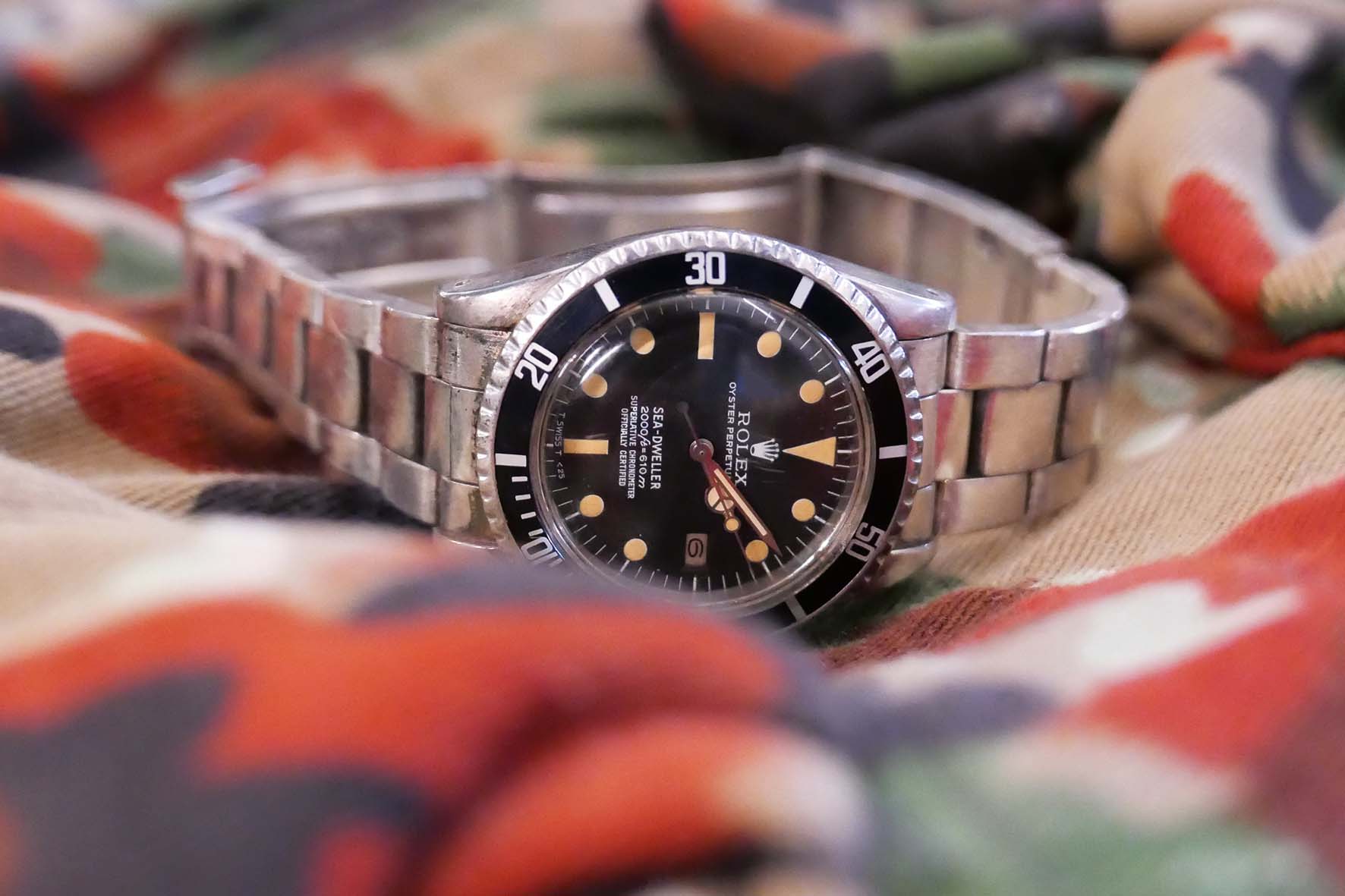
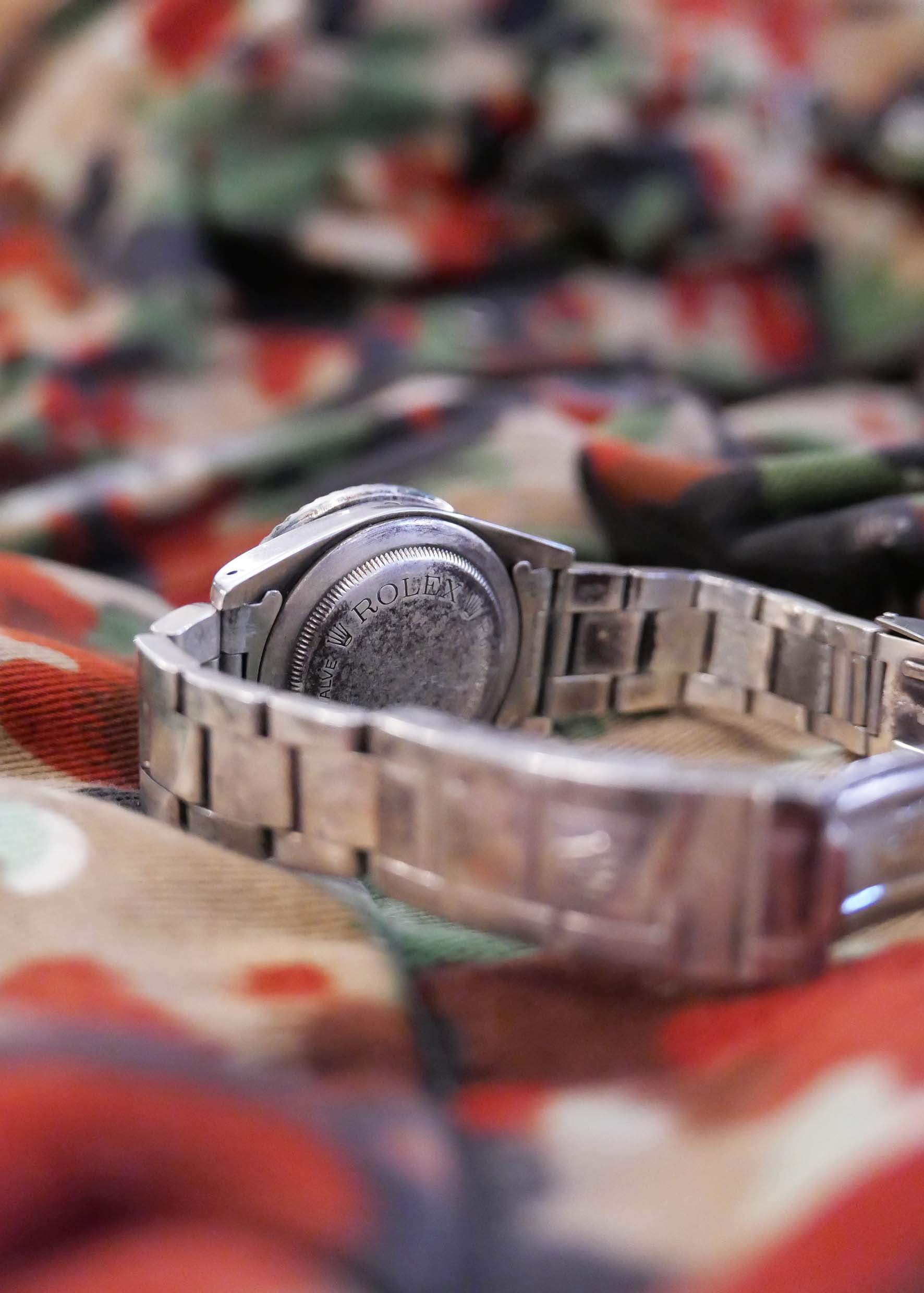
The first thing that naturally catches the eye is its surface. Over the years, the silver has taken on an irregular appearance, marked by oxidation and wear. The case and bracelet have lost the uniformity typical of steel, developing a patina that makes this example immediately recognisable.
Beneath that transformation, however, lies one of the most important professional watches in Rolex history. Osti’s example can be identified as a Sea-Dweller ref. 1665 ‘Great White’, Mark II Rail Dial, dating approximately to 1979. The nickname Great White identifies the generation that followed the famous Double Red, characterised by entirely white lettering on the dial. The Mark II Rail Dial configuration, produced for a relatively short period in the late 1970s, is distinguished by the particular vertical alignment of certain letters in the final two lines of the chronometer certification text, creating an effect resembling two parallel rails.
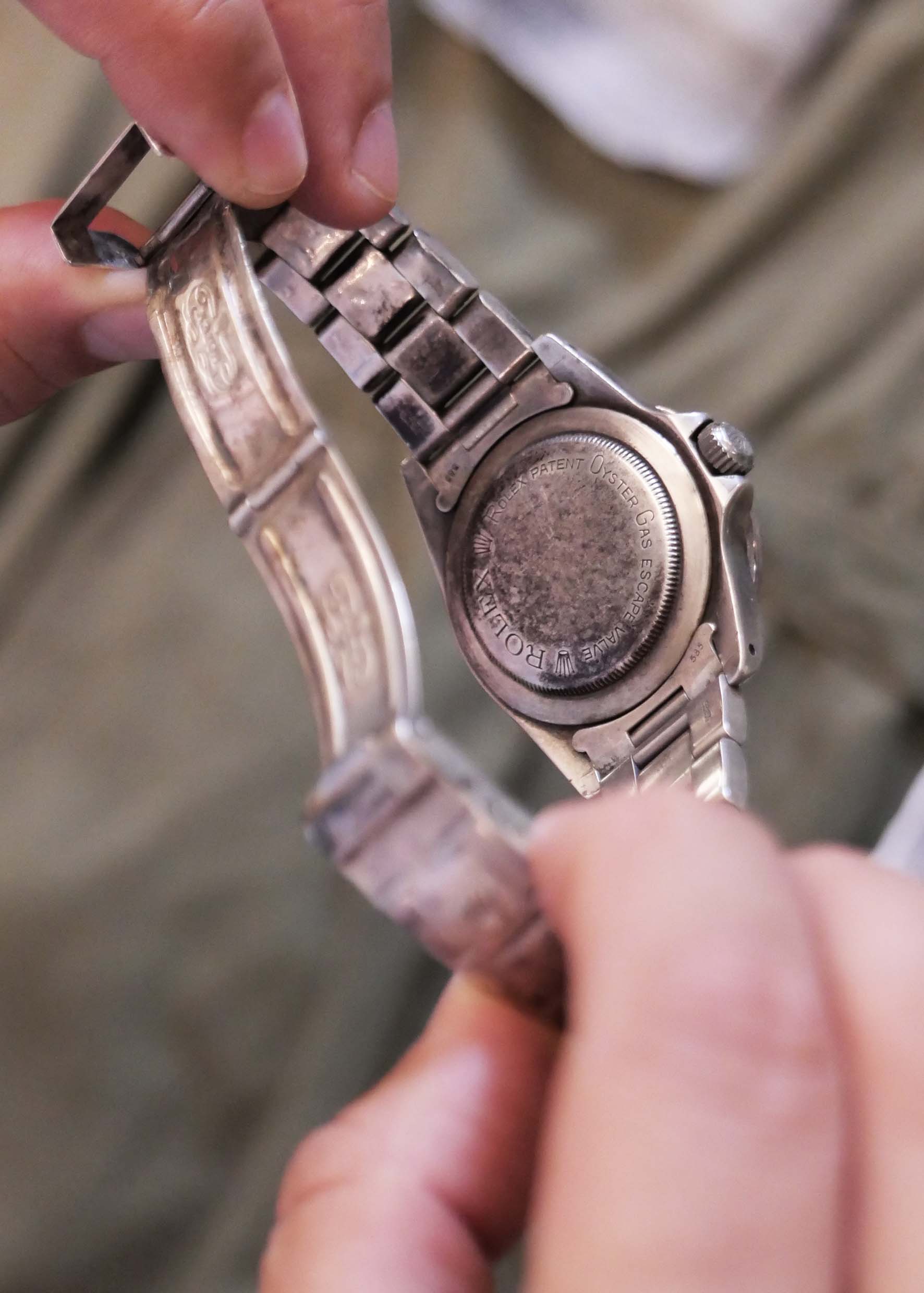
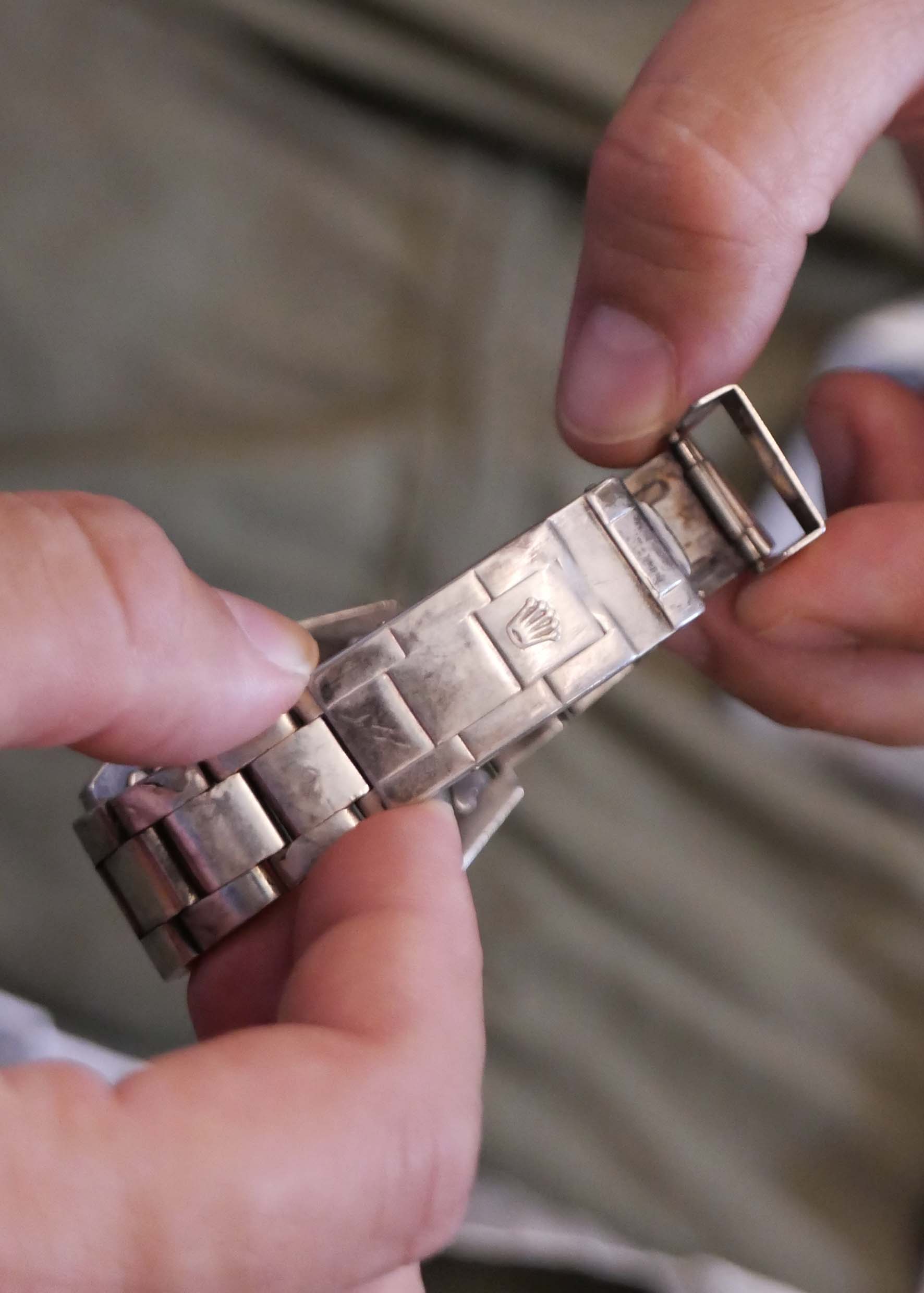
With a case measuring approximately 40 mm, a Plexiglas crystal and a stated water resistance of 610 metres, the Sea-Dweller 1665 was a tool developed for professional saturation diving. Introduced in 1967, the model featured a helium escape valve, designed to release the pressure accumulated inside the case during decompression.
An instrument conceived to meet a practical need, just like the objects and technical garments Osti studied and reinterpreted in his work. Perhaps that is also why the Sea-Dweller seemed so closely aligned with his sensibility. Massimo, however, did not simply appreciate its technical characteristics: he decided to alter its appearance through a choice as unusual as it was consistent with his way of thinking.
THE STORY BEHIND THE SILVER-PLATING OF MASSIMO OSTI’S ROLEX
Like many other watches in his collection, the Sea-Dweller had also found its way onto Massimo’s wrist as a gift, received on a particular occasion. Daniela Facchinato told us about it when we contacted her by telephone together with Lorenzo during our visit. Daniela, who shared many years of Massimo’s life and has also collected memories of him in her recent book Ostinazioni, helped us reconstruct one of the most curious episodes in this story.
At a certain point, Massimo decided to have the watch silver-plated. He was not looking for a perfect surface destined to remain unchanged over time, but something that could live, transform and age alongside him, just like the fabrics and garments with which he had experimented for years. The idea, then, was not to make the Rolex more precious, but to alter its character through a material entirely different from steel.
According to Daniela’s account, Massimo initially approached Veronesi, the historic Rolex retailer in Bologna, but the request went no further. The solution came from a decidedly unexpected person: Toso, the family gardener.
An unconventional character originally from the Veneto region, Toso had an adventurous past that, according to Daniela’s recollections, had taken him as far as Russia and Chechnya. Besides looking after the garden, Toso was particularly skilled at working with wood and metals. Massimo appreciated his craftsmanship and decided to entrust him with the Sea-Dweller. Through a silversmith he knew, Toso managed to arrange the treatment that would permanently transform the watch’s appearance.
Lorenzo also told us what happened when the Rolex was subsequently taken to Veronesi for a routine service. Faced with that modification, the watchmakers could hardly believe their eyes: a veritable crowd of technicians gathered behind the counter, astonished to see a Sea-Dweller transformed so radically.
From the standpoint of originality and traditional collecting criteria, an intervention of this kind was a decidedly unusual choice. But Massimo cared very little about any of that. He had not modified his Rolex with an eye to what it might one day be worth. He had done it because that was how he wanted it.
SILVER, TIME AND THE VALUE OF MEMORIES
During our meeting, Lorenzo explained why he now fully understands and shares his father’s decision. The objects we use and that accompany us over the years acquire a particular charm precisely through the marks they retain. Unlike steel, silver reacts to its surroundings, oxidises, changes colour and develops its own individual patina.
A concept that, after examining and wearing the watch, seemed to us even more closely connected to Massimo Osti’s philosophy. For years he had studied materials and treatments capable of changing the appearance of fabrics, allowing their use to help determine how they evolved. With his Sea-Dweller, he had applied that same sensibility to an object created to withstand the most extreme conditions.
Like a worn denim garment or a well-worn leather jacket, that watch, too, would ultimately tell us something about its owner. And perhaps this is precisely the most interesting detail about Massimo Osti’s Sea-Dweller: not the modification itself, but the reason he chose to make it.
Today, for Lorenzo, that watch has taken on a different meaning once again. As he told us during our conversation: ‘I now see that silver watch almost as a museum piece, a piece of my father’s history. I must have worn it only two or three times before realising that it really was too much to be worn every day.’
A reflection that adds another layer of meaning to the story of this Sea-Dweller. For Massimo, it was an object to wear and reinterpret freely; today, for Lorenzo, it is above all a testament to his father’s personality and work, something to safeguard and preserve.
Massimo’s curiosity, moreover, was not limited to Rolex. In the 1980s he also followed the Swatch phenomenon with interest, recognising in it a connection to the Pop Art that had influenced his formative years. He was fascinated by its visual language, artistic collaborations and, above all, the Swiss brand’s ability to make watchmaking more accessible, moving beyond many traditional conventions.
MASSIMO OSTI ARCHIVE: INSIDE HIS WORLD
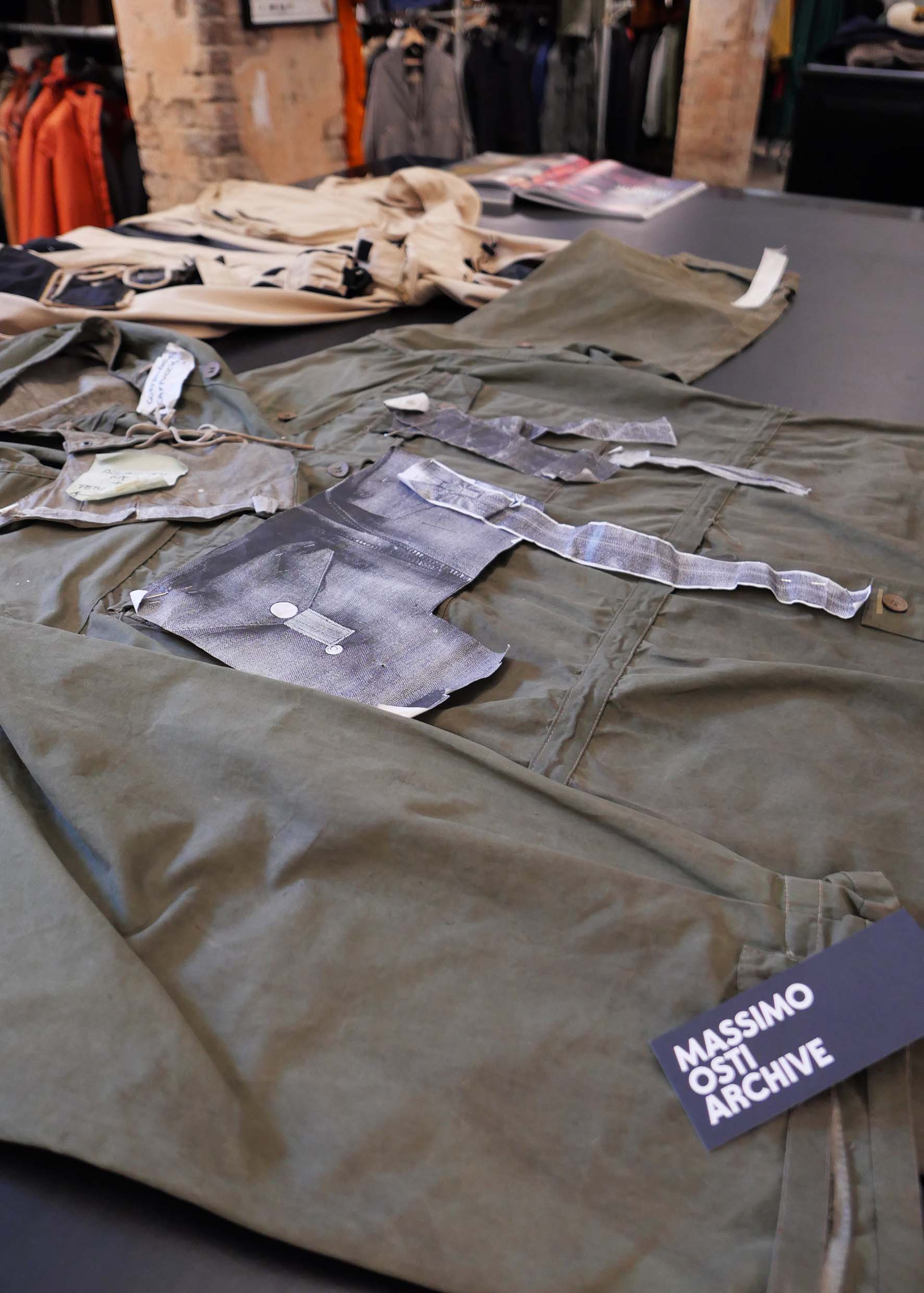
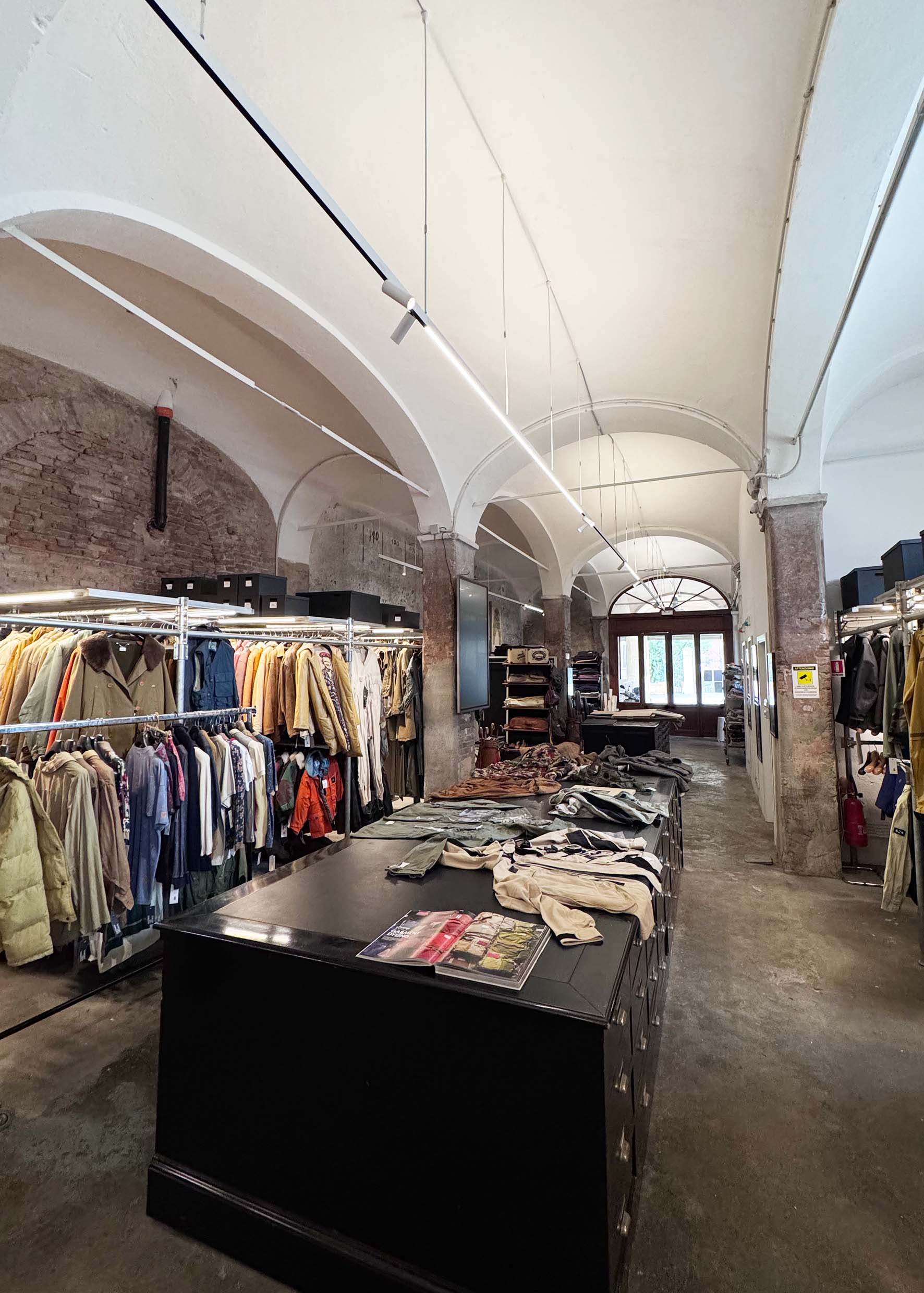
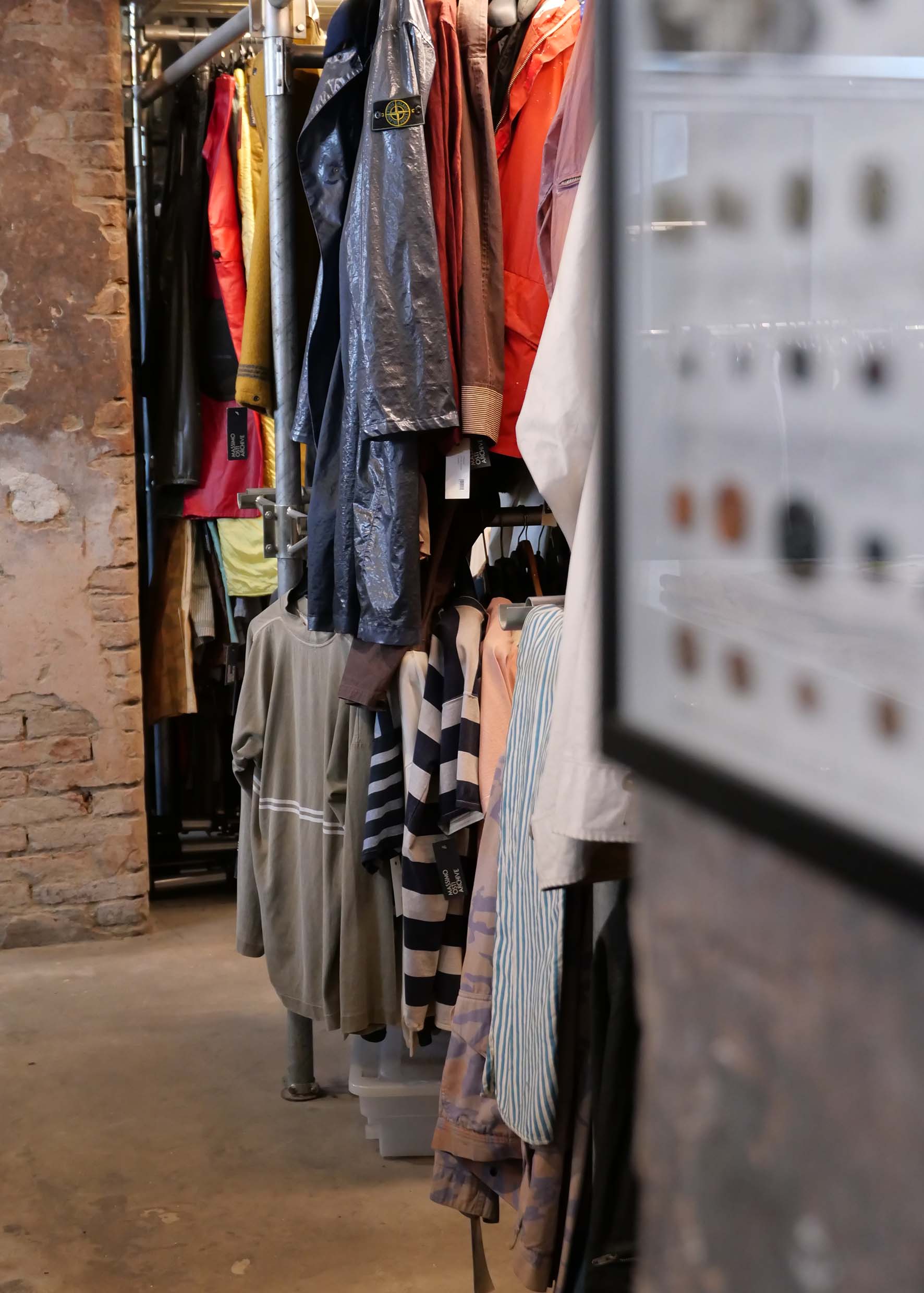
Our visit to Bologna was, of course, not limited to watches. Lorenzo guided us through the Massimo Osti Archive, a space of around 300 square metres housing more than 5,000 items, including garments, prototypes, fabrics, dye samples and objects collected throughout his father’s career.
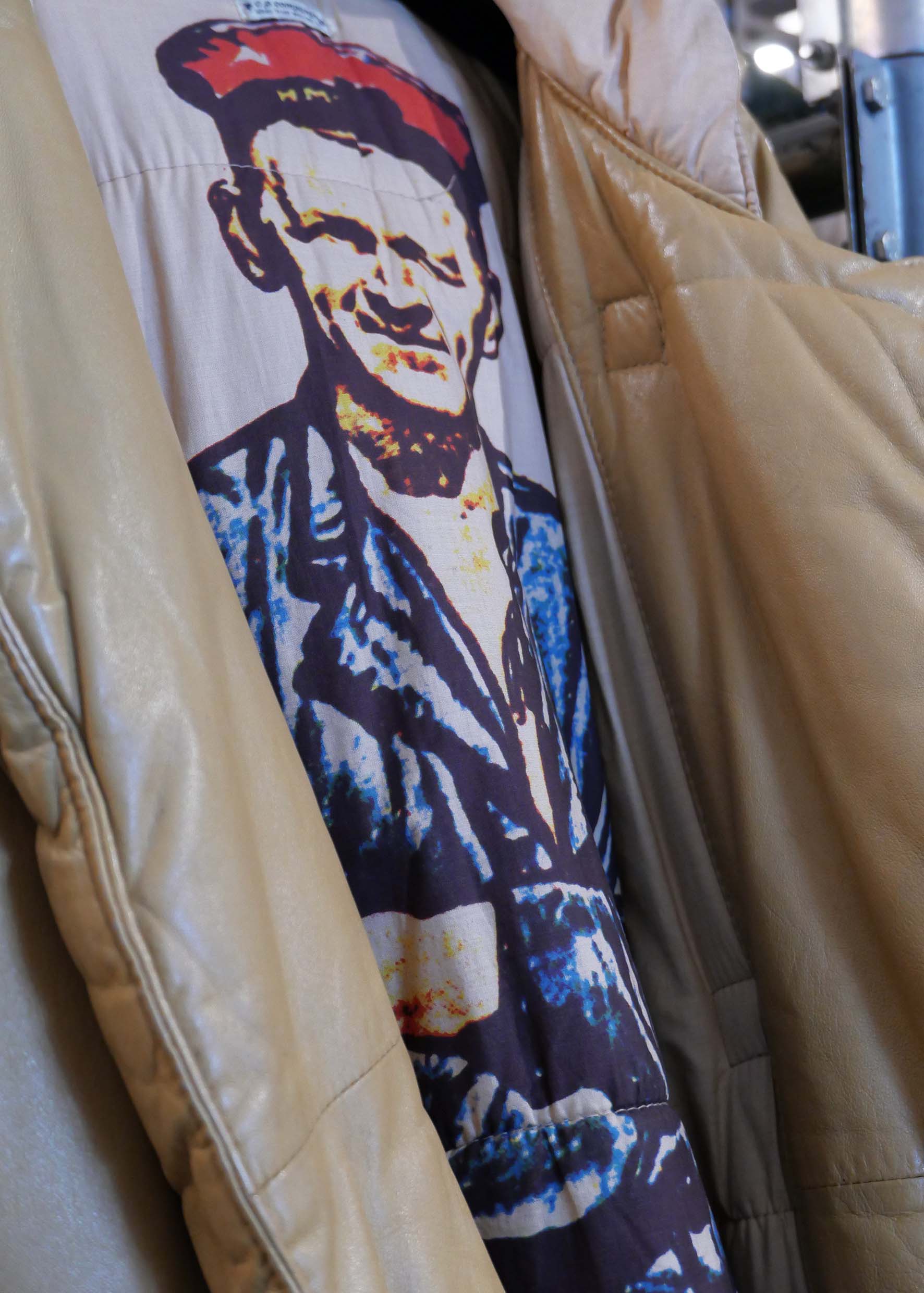
Among military uniforms, workwear, Russian spacesuits from the 1960s and textile experiments, we had the opportunity to examine some of the most important creations by C.P. Company and Stone Island up close, listening to Lorenzo’s firsthand accounts of their origins and the work that made them possible.

It is difficult to convey in words what it feels like to be in a space like this. Every object seems to have a story, every material suggests an experiment and every garment tells of a different way of tackling a problem. The Archive is not simply a collection of historic clothing, but tangible evidence of Massimo Osti’s curiosity and design methodology.
Lorenzo, now president of C.P. Company, continues to keep alive the link between the brand and its Bolognese roots. A connection that took on further significance in 2026 with the opening of C.P. Company’s first directly operated flagship store in Bologna, the city where it all began more than half a century earlier.
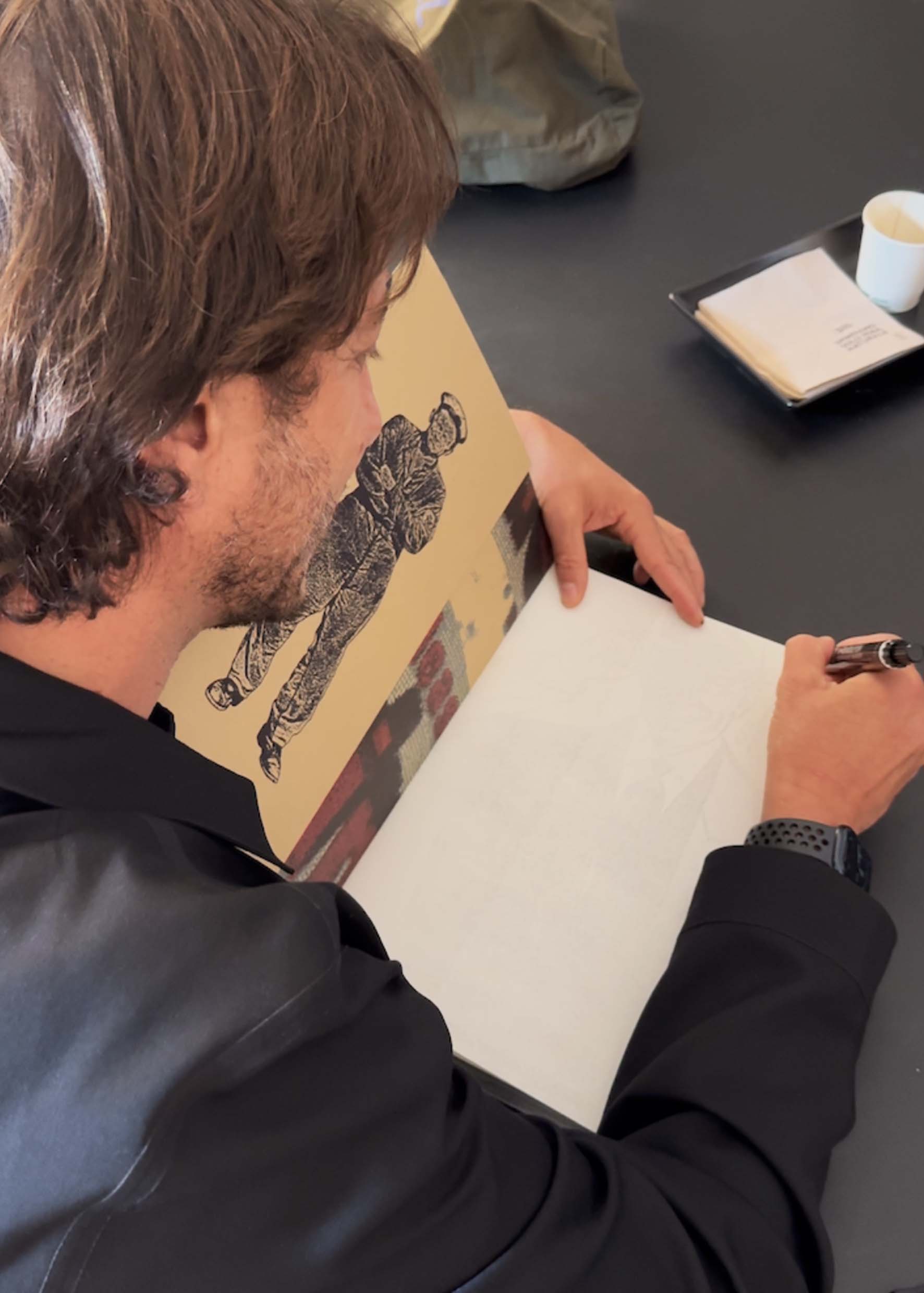
Before we said goodbye, Lorenzo also gave us a wonderful gift: a copy of Ideas from Massimo Osti, accompanied by a personal dedication. A gesture we greatly appreciated and will treasure as a reminder of a special day, made even more memorable by the kindness and generosity with which we were welcomed.
MUCH MORE THAN A ROLEX SEA-DWELLER
Massimo Osti passed away in 2005, leaving a legacy that continues to influence the worlds of fashion and design. Among the many objects that offer insight into his thinking, his silver-plated Rolex Sea-Dweller 1665 occupies a special place.
It is an important watch for its technical history, the rarity of its Rail Dial and the place this reference holds in Rolex collecting. But after seeing it in person, wearing it and, above all, hearing Lorenzo’s and Daniela’s stories, we realised that its most compelling value lies elsewhere.
Massimo took one of the most recognisable professional instruments in watchmaking and decided to modify it without worrying about conventions, originality or the possible consequences for its financial value. He did so with the same curiosity that had guided his work with fabrics, materials and clothing throughout his life.
Perhaps that is precisely why, of all the watches Massimo Osti might have owned, it is difficult to imagine one more truly his than this Rolex Sea-Dweller.
By Luca Carolei