

In watchmaking, there is a ‘before’ and an ‘after’ Hublot. A ‘before’ defined by traditional models, sophisticated yet familiar complications, and precious, well-established materials. Then came Hublot. Not the brand, but the model. It was 1980, and Italian watchmaker Carlo Crocco revolutionised the industry by bringing gold and rubber together.
Crocco grew up surrounded by watches. His mother belonged to the Binda family, renowned first as watchmakers and later as importers and distributors. In that environment, he developed a passion that would lead him to revolutionise an industry steeped in convention and tradition. Under the MDM Genève name, he unveiled a model called Hublot at the Basel fair 46 years ago – now known as the Hublot Original – marking a radical departure from convention. It was luxury stripped back to its essentials, beginning with an unprecedented contrast of materials. Twelve screws secured the bezel to the case, evoking a ship’s porthole. The dial was simple, almost entirely devoid of detail. Minimalist, graphic, striking and unmistakably different, the watch challenged rather than followed the conventions of Swiss watchmaking. Today, with the Classic Fusion Tributo, the brand pays tribute to Crocco’s bold vision, bringing back a direct descendant of the first Hublot – the watch that changed history.
THE ORIGINS OF HUBLOT AS TOLD BY CARLO CROCCO
“Swiss watchmaking back then was traditional,” says Crocco, now 82. “It lacked that design flair we brought to it, that minimalism. The Italian touch was what was missing. Of course, it was a risk: it was make-or-break, because we carried out no market research at the time. The idea was to create something different, something innovative. Today, when the market demands something, you try to understand it and create a product that meets that demand. Instead, we created an entirely new niche. Everything came together perfectly, and at a difficult moment in history – the early 1980s – when the Swiss watch industry was on its knees because of the rise of quartz. We created not just a market, but a trend.”

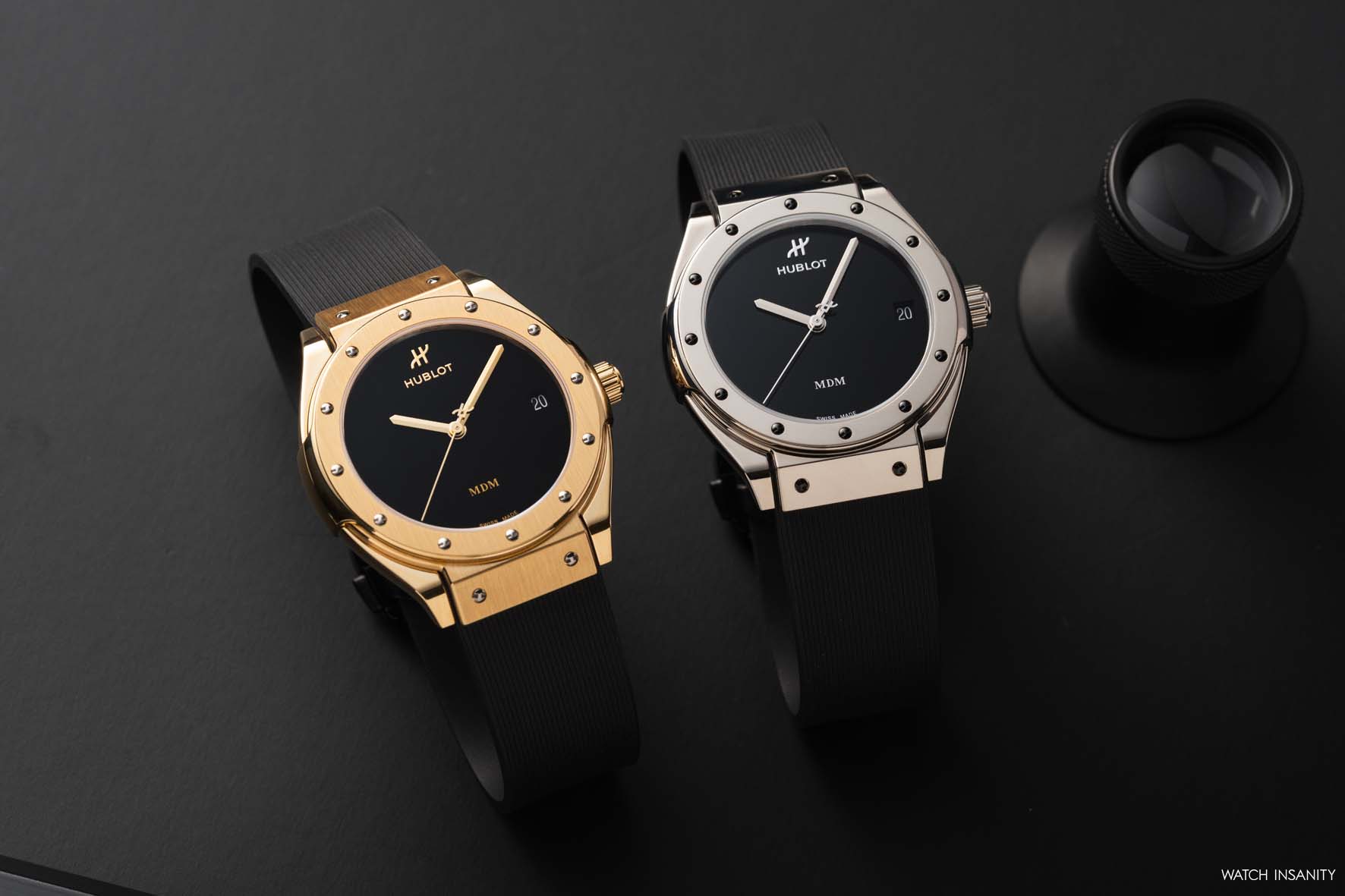
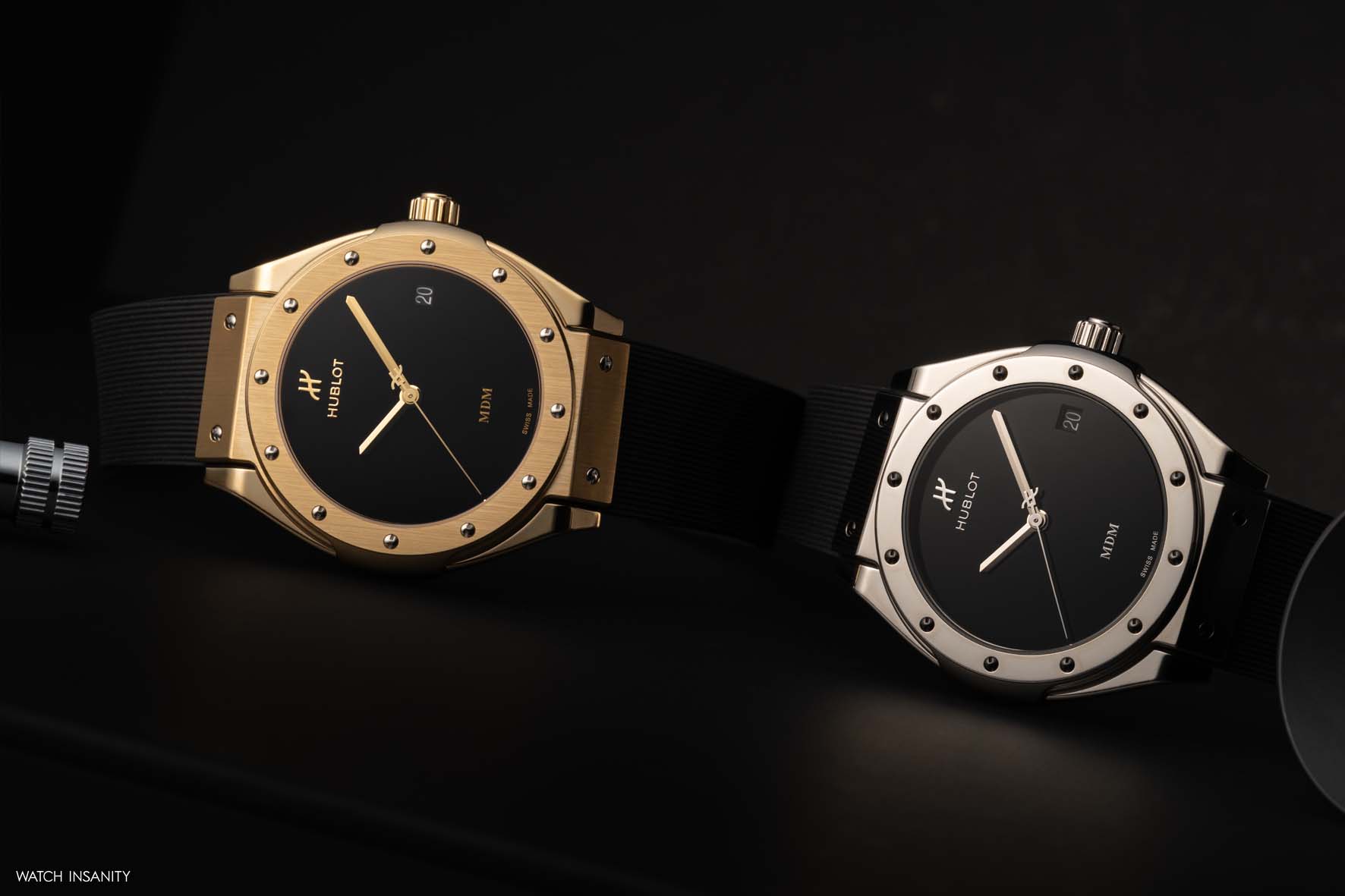
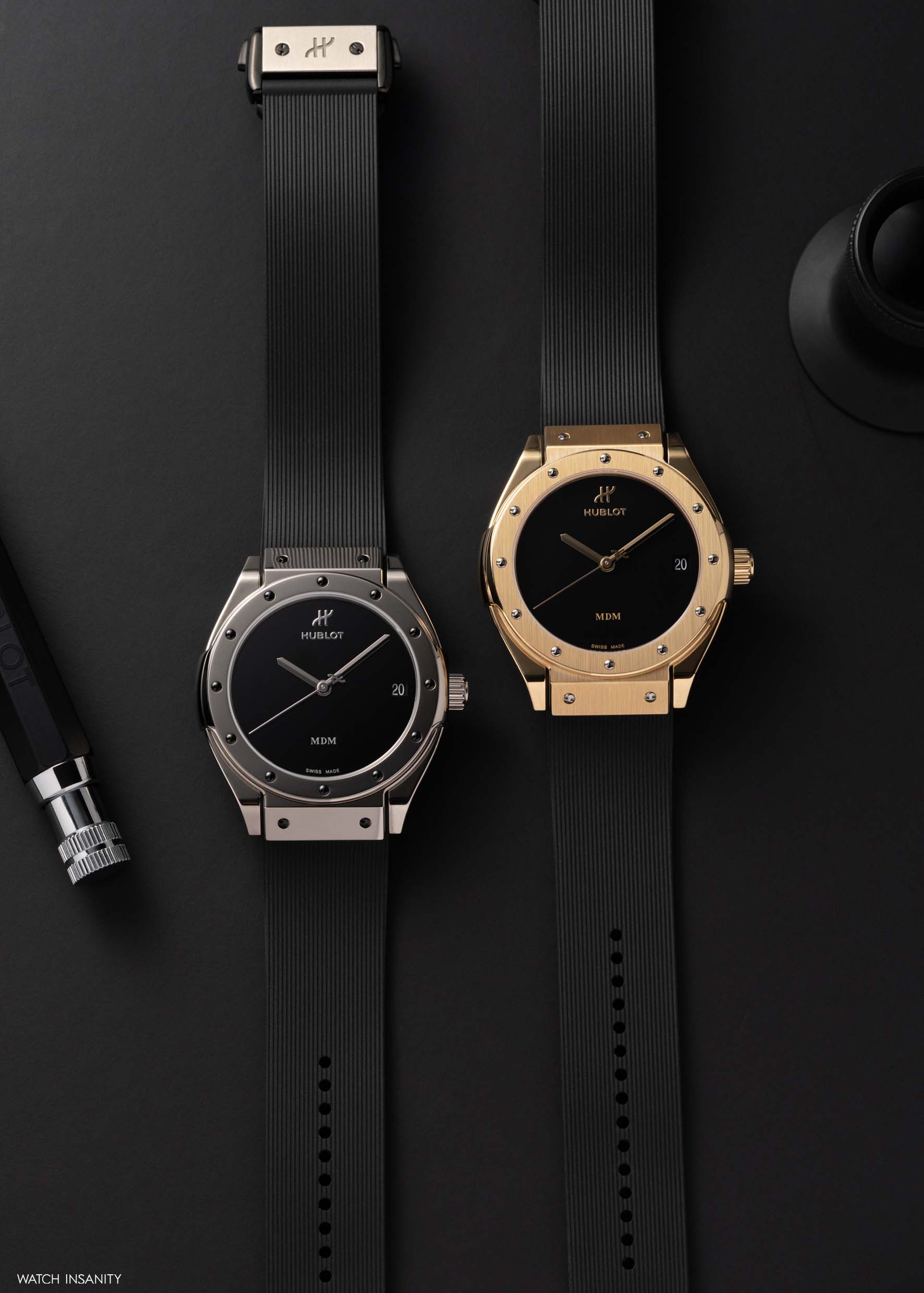
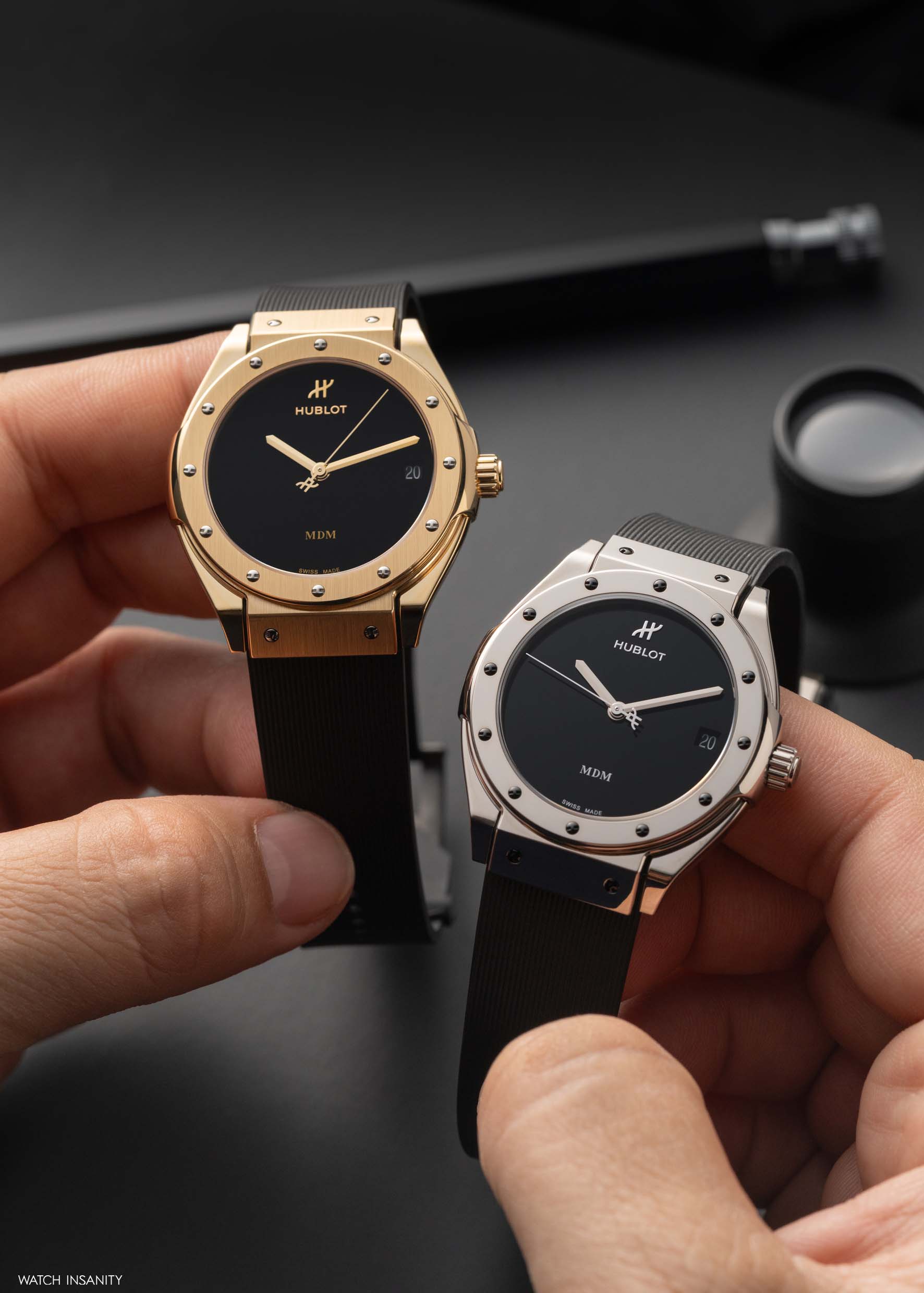
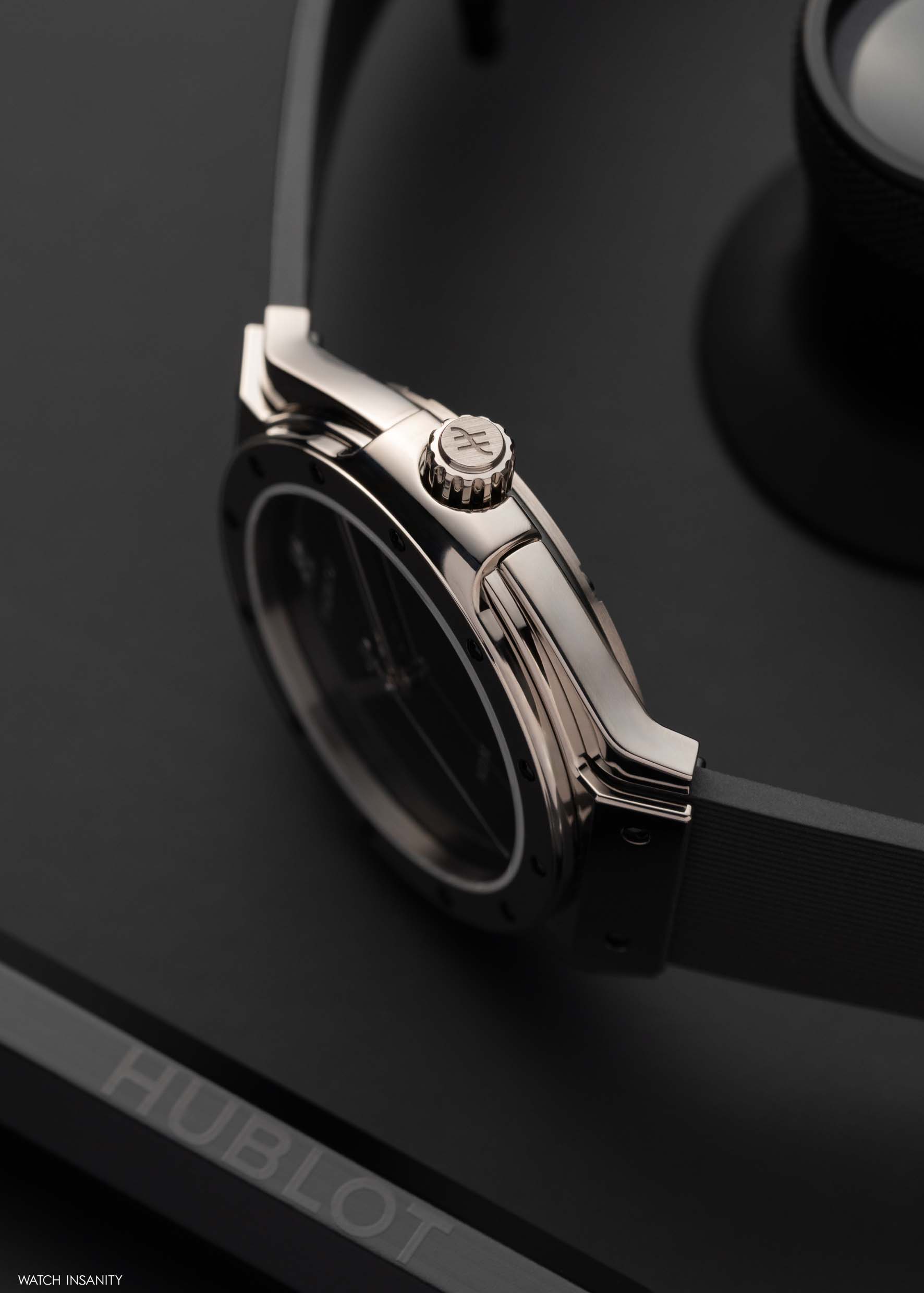
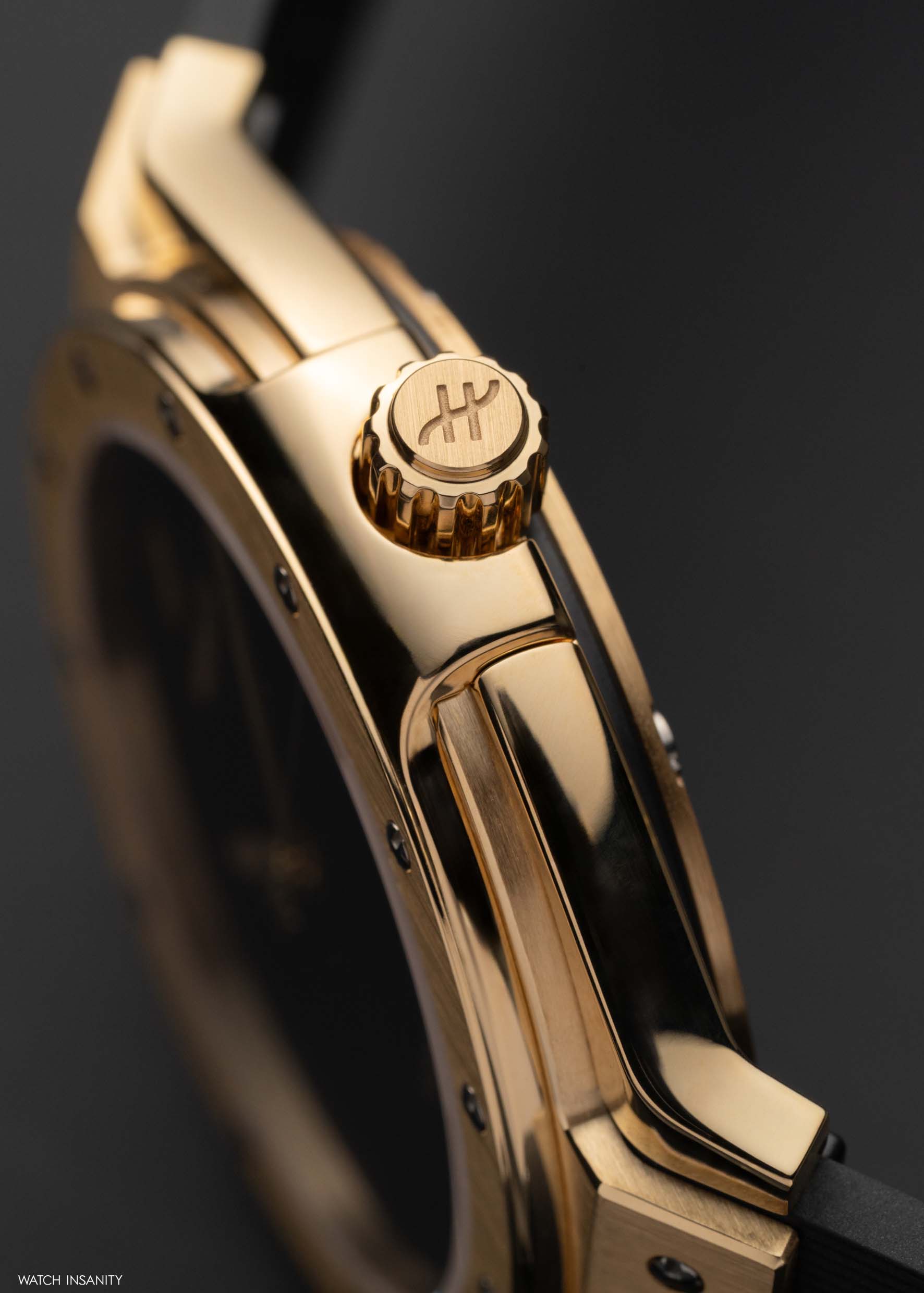
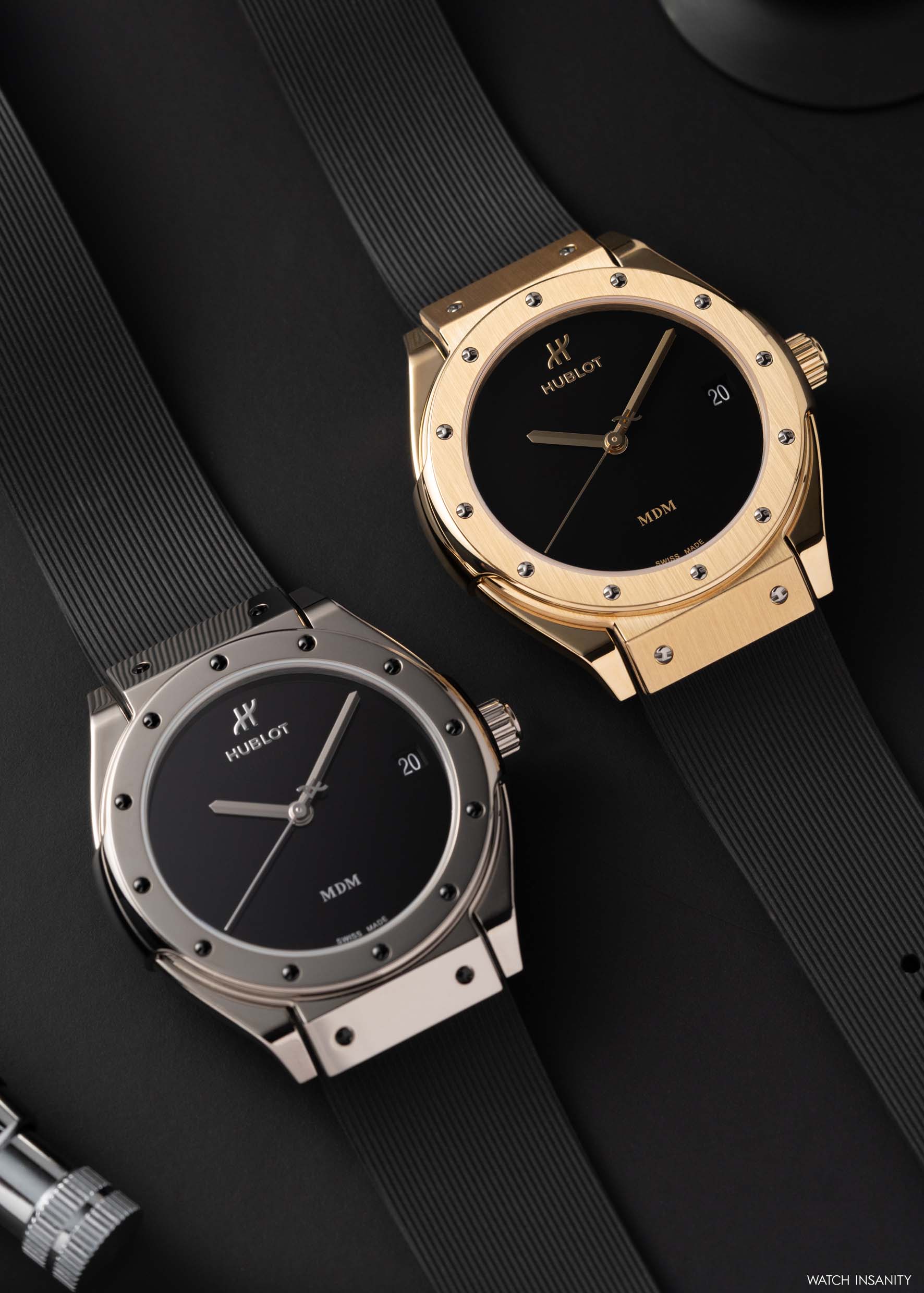
Meeting Crocco in person gave us the opportunity to compare the 1980 Hublot and the Classic Fusion Tributo side by side. The Nyon-based manufacture’s commitment to staying as faithful as possible to the original is clear. Visually, the Classic Fusion Tributo is a modern interpretation of the 1980 model: a yellow or white gold case combining polished and satin-brushed finishes, a black rubber strap, and the immediate contrast between black and gold that has been central to Hublot’s success from the outset.
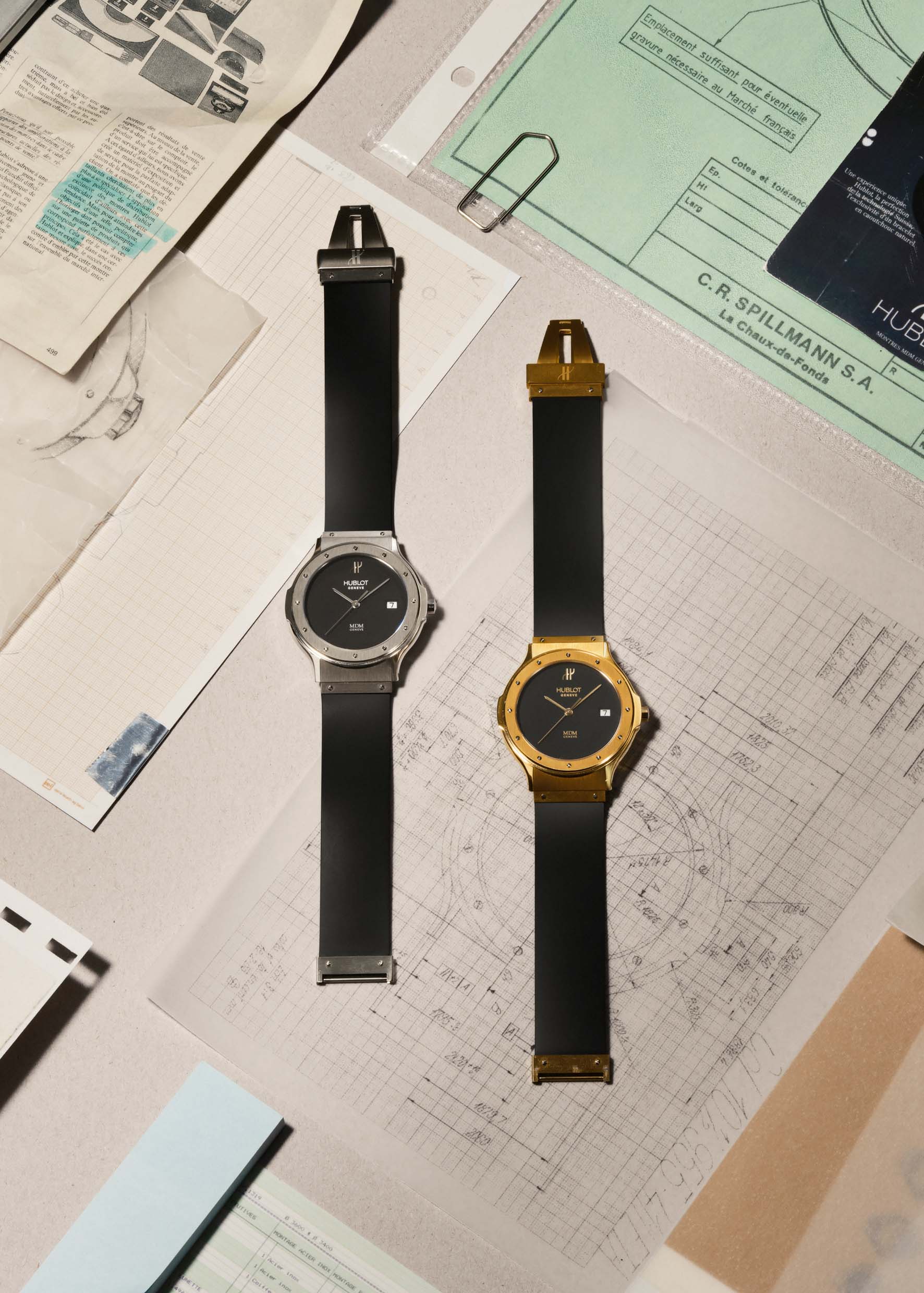
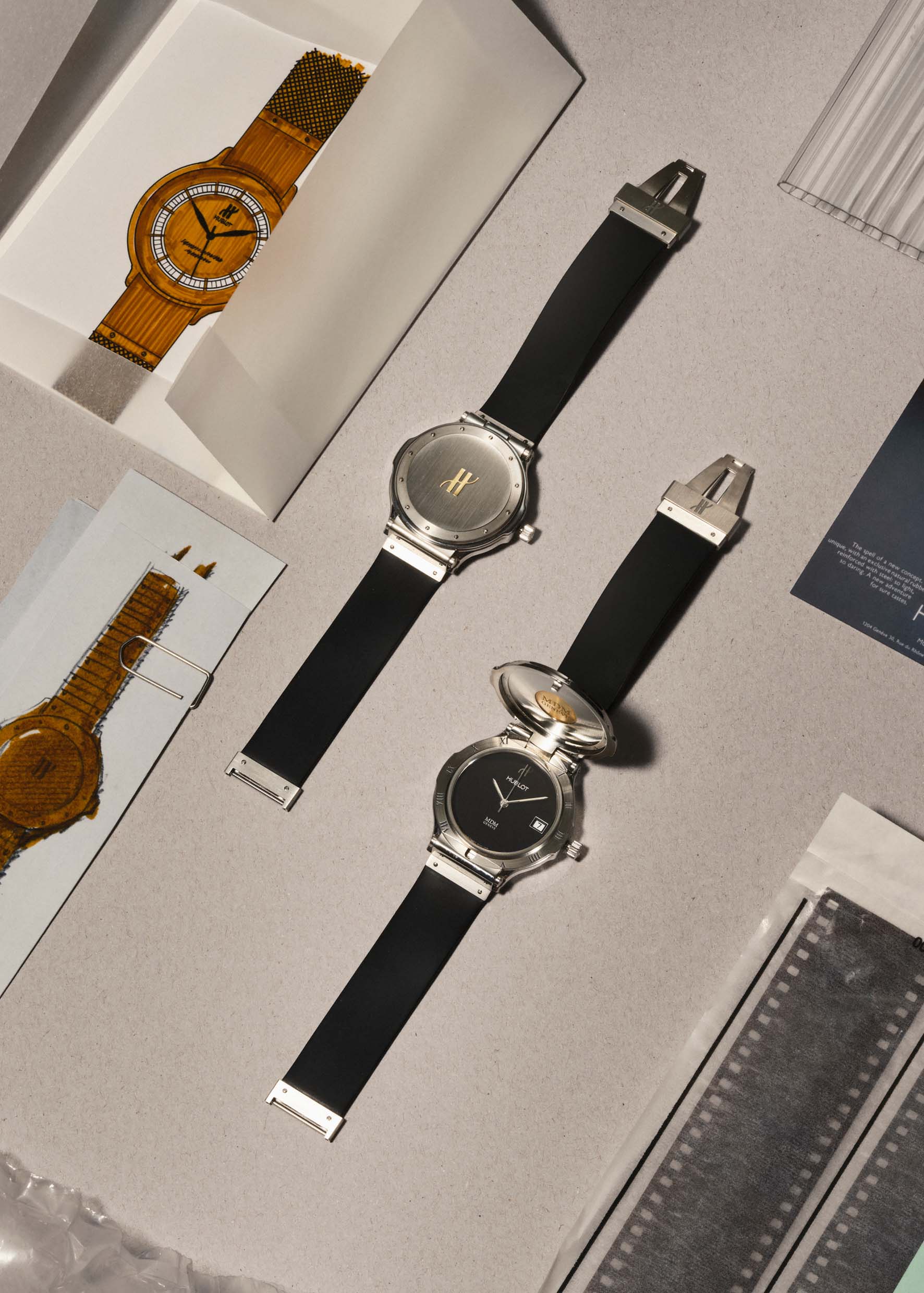
“The watch took off,” recalls Crocco, “although when we presented it at the Basel fair in 1980, nobody came to our stand for the first two days. We were worried. Then, on the third day, we realised everyone was talking about Hublot because it was the sensation of the year. Our first customer was there in Basel, a very enthusiastic Mexican gentleman. Italy, Spain and the Latin markets were the first to believe in us, followed by the others. Our first stockists were traditional jewellers and retailers. I remember we ran advertisements in Time magazine, and private customers began to approach us too. The former King of Greece went into a jewellery shop in Gstaad to ask for our watch. We then opened branches in numerous countries and grew rapidly. We had offices in Paris, on Place Vendôme, as well as in Spain, Germany, Fort Lauderdale and Tokyo.”
FROM THE ORIGINAL HUBLOT TO THE CLASSIC FUSION TRIBUTO: THE DESIGN
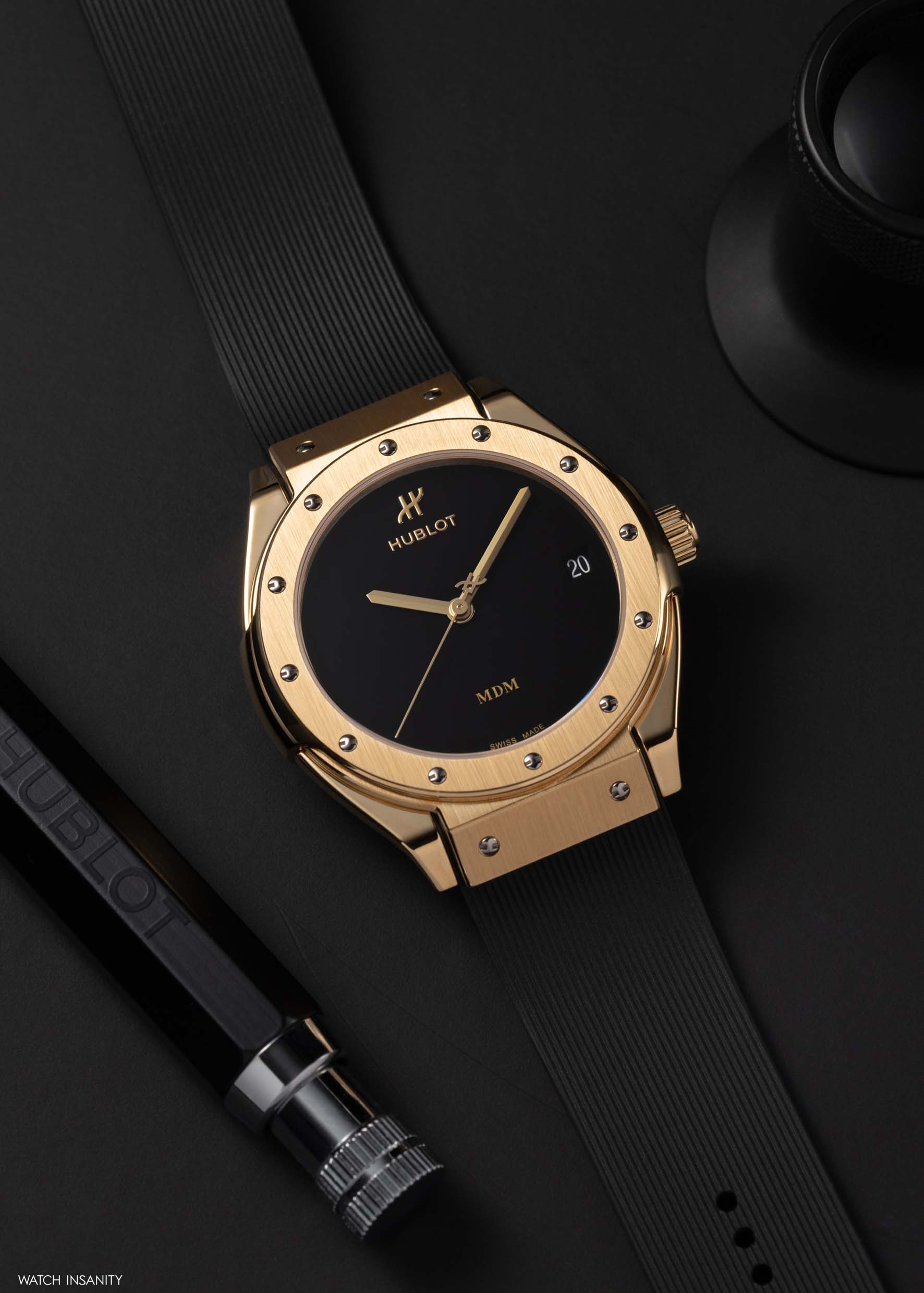
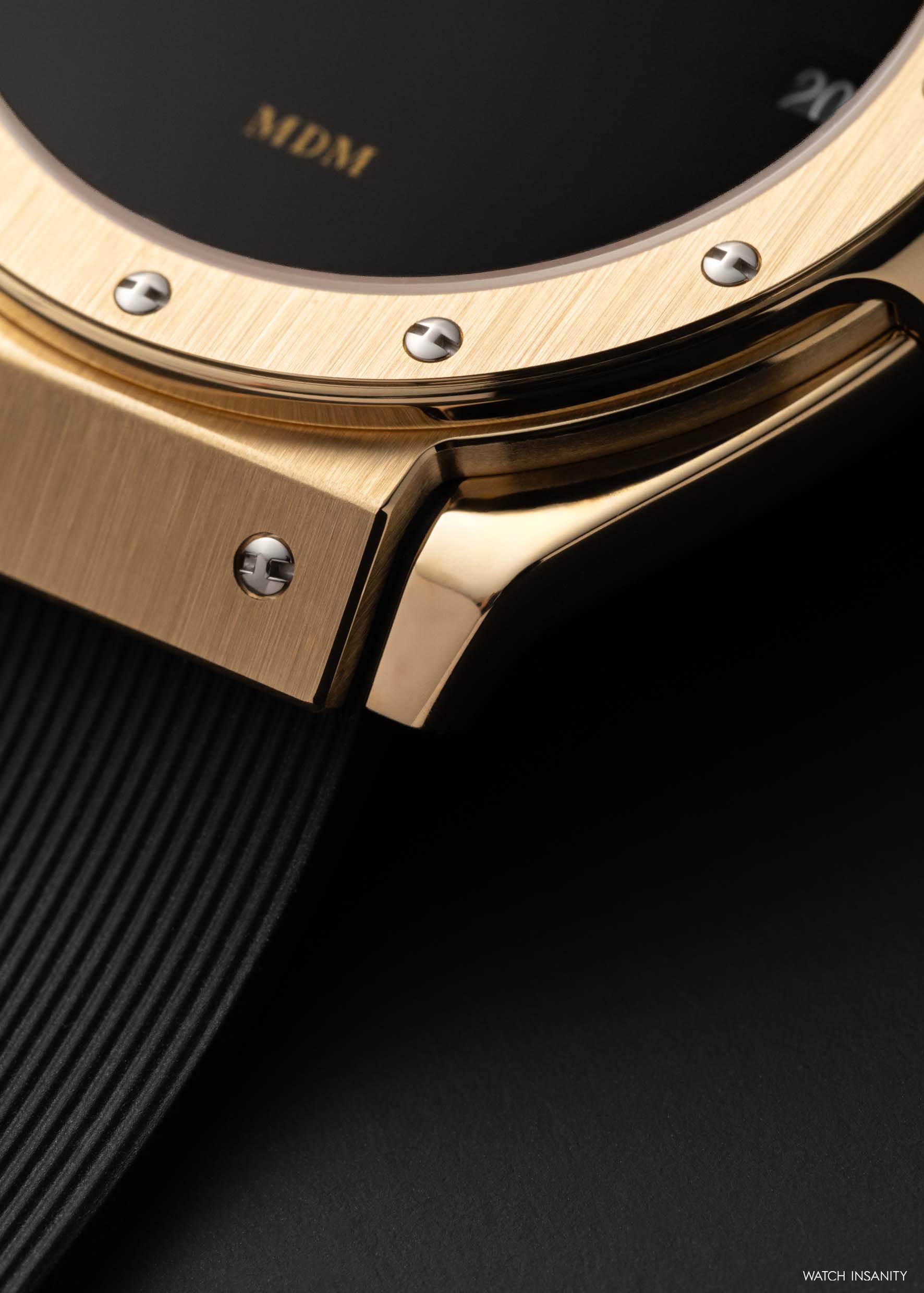
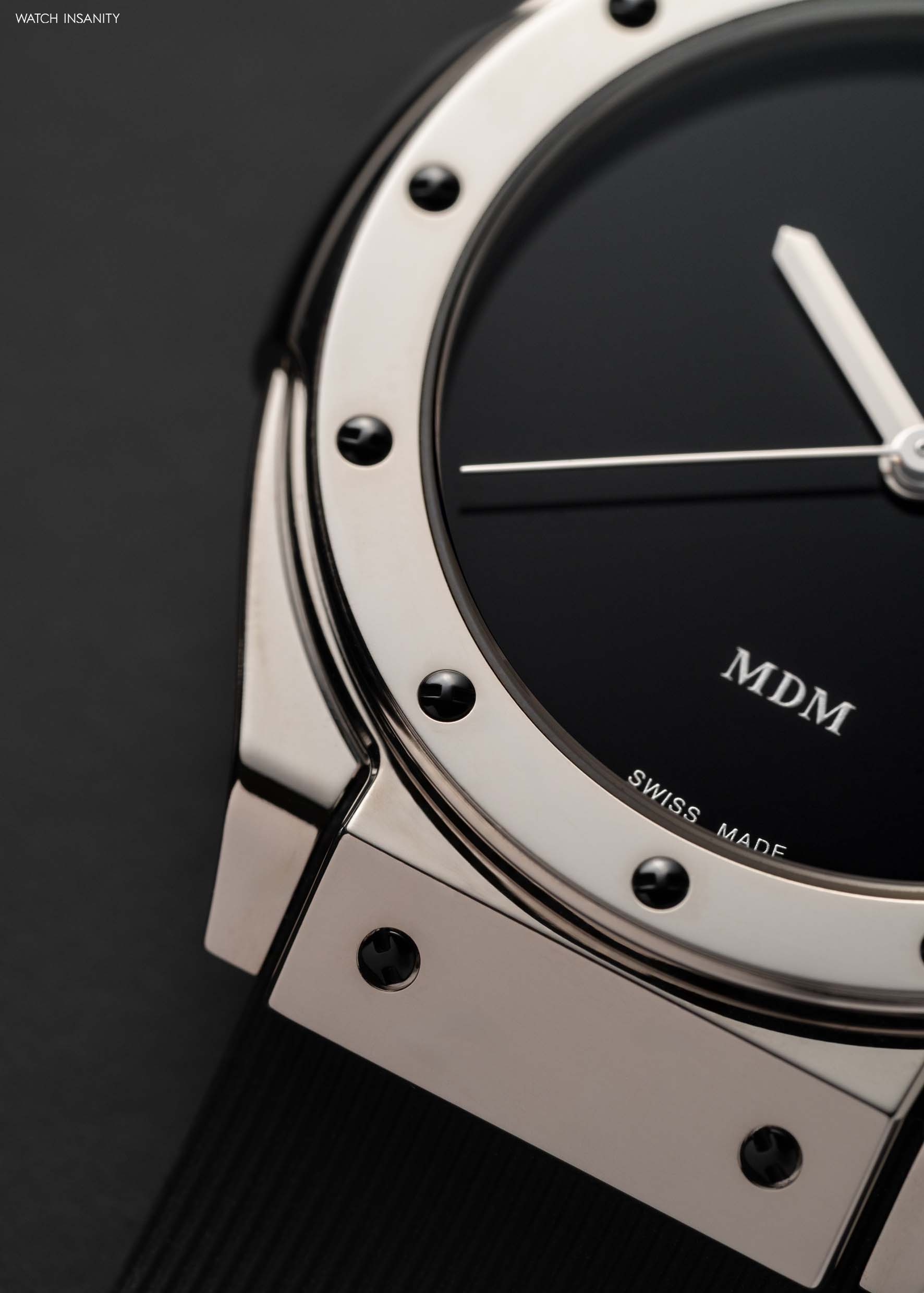
Compared with the 1980 model, the Classic Fusion Tributo’s case has grown from 36 to 38 mm in diameter and measures 9.5 mm thick, while retaining the original proportions. The twelve bezel screws are clearly visible and are functional rather than merely decorative. Hublot has paid particular attention to their design: slightly domed and perceptible to the touch, they add a pleasing tactile detail. On the white gold version, they are black, matching the dial.
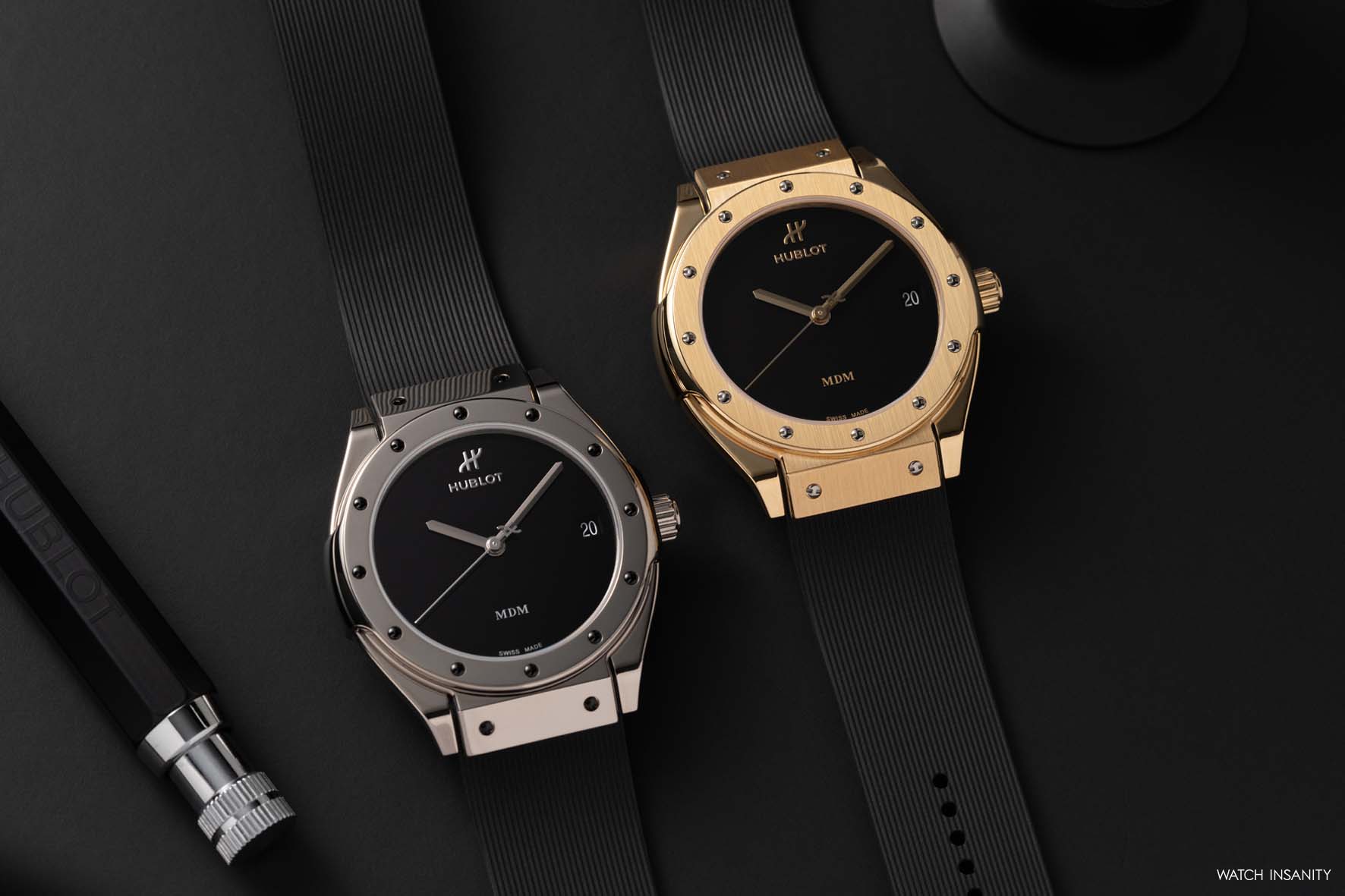
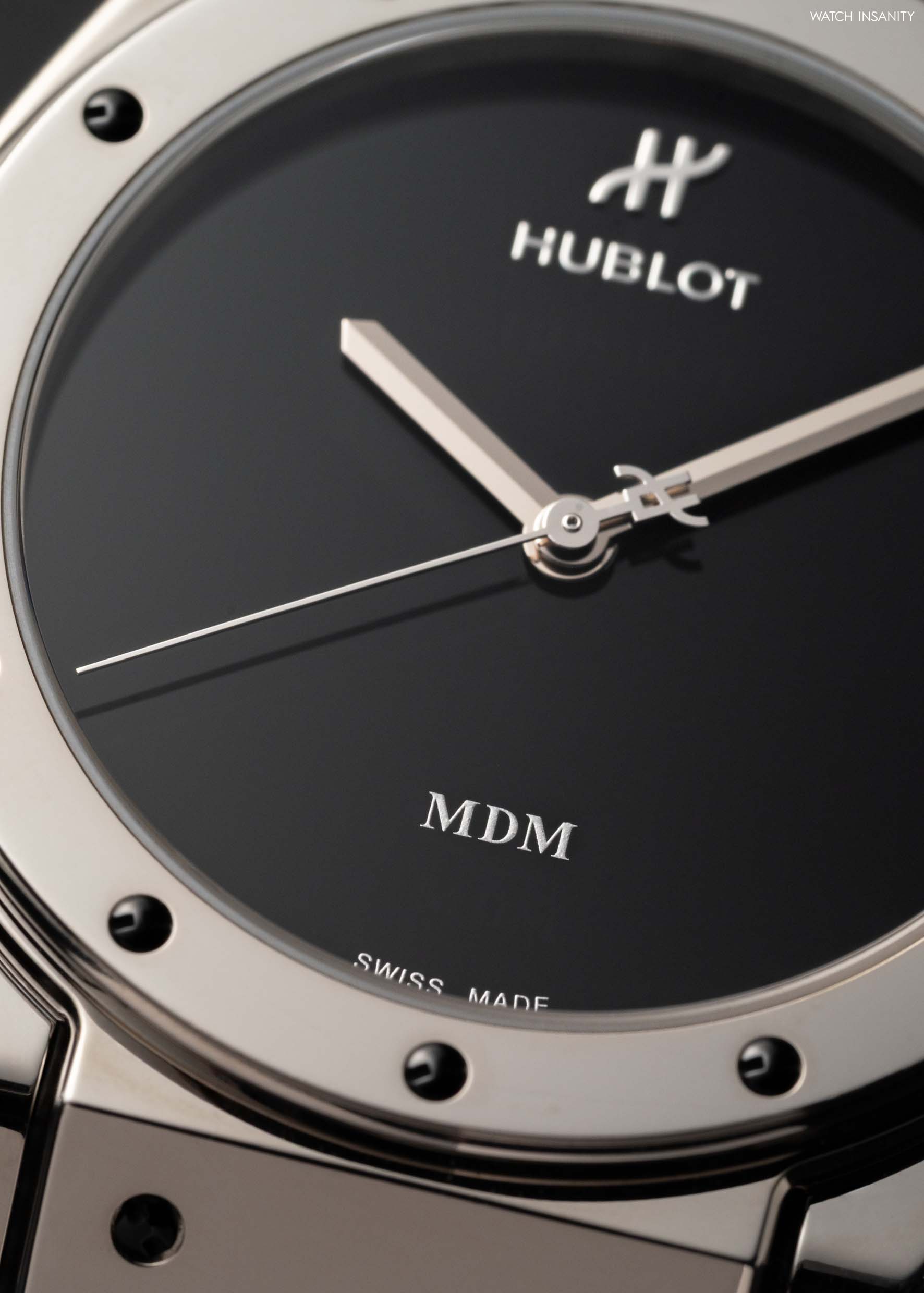
And then there is the dial. Little needs to be said. Deep black, made of onyx on the white gold version and lacquered with an anthracite effect on the yellow gold model. Clean and free of hour markers, it bears the inscription ‘MDM’ at 6 o’clock, a reminder of the watch’s origins. MDM stood for Marie-Danielle Montres, the Swiss company founded by Crocco and named in honour of his wife; the words ‘MDM Genève’ appeared on the dial of the very first Hublot. The date window sits at 3 o’clock and, thanks to the black date disc, the numerals appear to float in space. Yellow or white gold hands indicate the time, while the central seconds hand carries a counterweight shaped like the Hublot logo – the only decorative flourish in the Classic Fusion Tributo’s otherwise restrained design.
A design that appealed to a remarkably broad audience from the moment it was launched: “I would describe it as a watch that crossed social boundaries, because parents and their children both owned one. And then there were the celebrities: I remember Amanda Sandrelli and Ornella Muti. There were artists, designers such as Vico Magistretti and Giugiaro, and fashion figures like Giorgio Armani. Silvio Berlusconi used to give Hublot watches to heads of state, and Carlo De Benedetti owned one too. Even two rivals like Berlusconi and De Benedetti were brought together by Hublot.”
THE MOVEMENT AND STRAP OF THE CLASSIC FUSION TRIBUTO
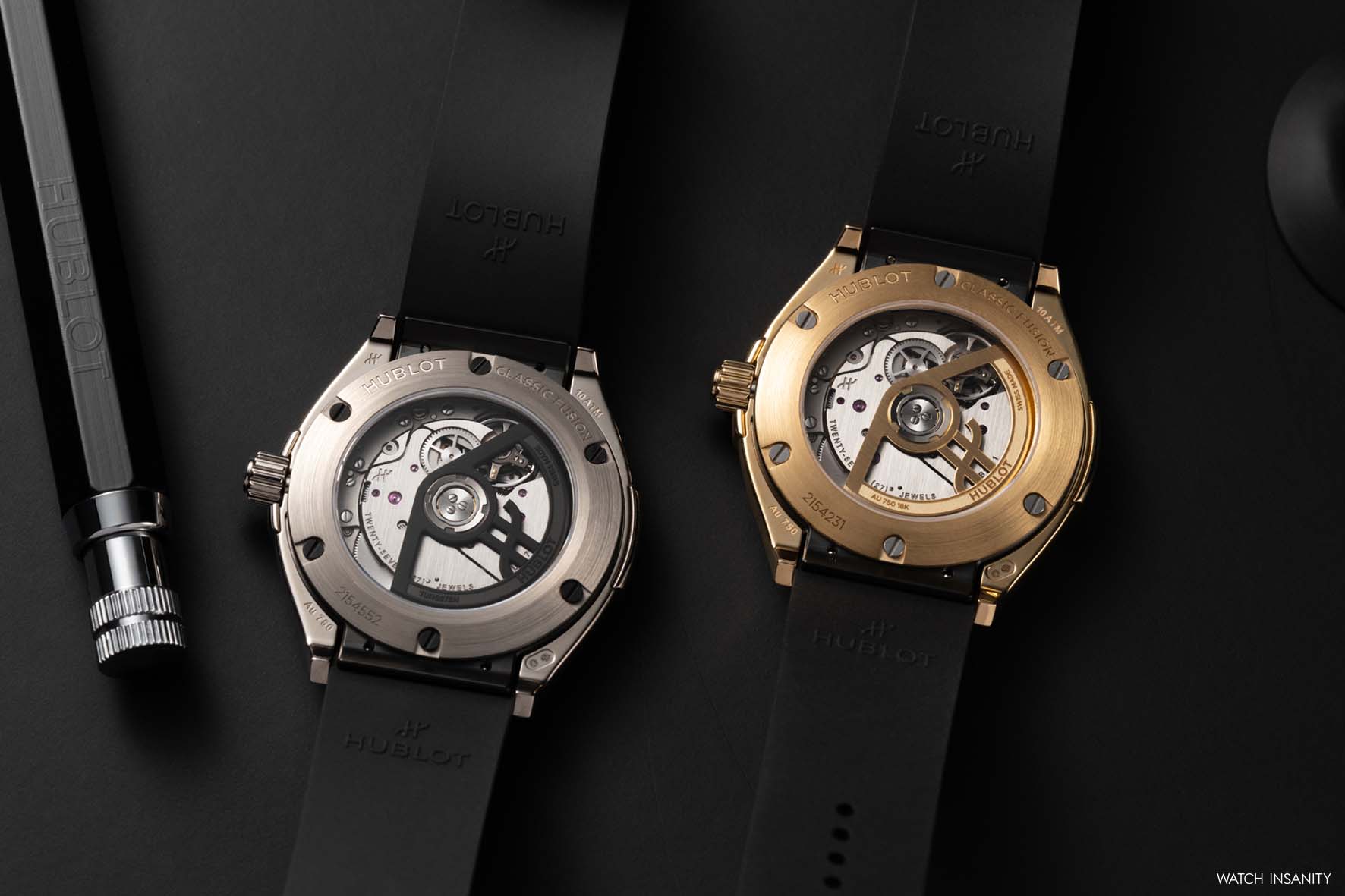
While the quartz revolution dictated the choice of movement at the time, today the Classic Fusion Tributo could hardly have anything other than a mechanical heart. It houses the new in-house automatic calibre HUB1711, beating at 28,800 vibrations per hour and offering a 50-hour power reserve. Beyond Hublot’s usual attention to movement finishing, there is another distinctive touch. In the yellow gold model, the skeletonised rotor, dominated by the letter ‘H’, is also made of yellow gold. In the white gold version, it is crafted from black tungsten, complementing the dial and strap.
The rubber strap is the other defining feature of both the original Hublot and the Classic Fusion Tributo. “Back then,” recalls Crocco, “rubber was considered almost a waste material. We worked with tyre manufacturers, people accustomed to making large things. Finding someone willing to develop a process precise to a thousandth of a millimetre, to incorporate steel into the rubber, was difficult. What’s more, the first straps had an unpleasant smell, so we added a vanilla fragrance to the compound. I remember that during the first presentations, people found the scent of vanilla rather strange. Even today, that Hublot is often remembered for its vanilla scent.”
The strap was conceived by Francesco Maria Vimercati, a designer who worked with Hublot at the time and who, incidentally, also created the logo the brand still uses today. He had produced numerous designs for a bracelet, but none had met with approval. Then one day, while crossing out the sketches with a black marker, the dark strokes obscured the bracelets beneath them and suggested an alternative: a black strap.
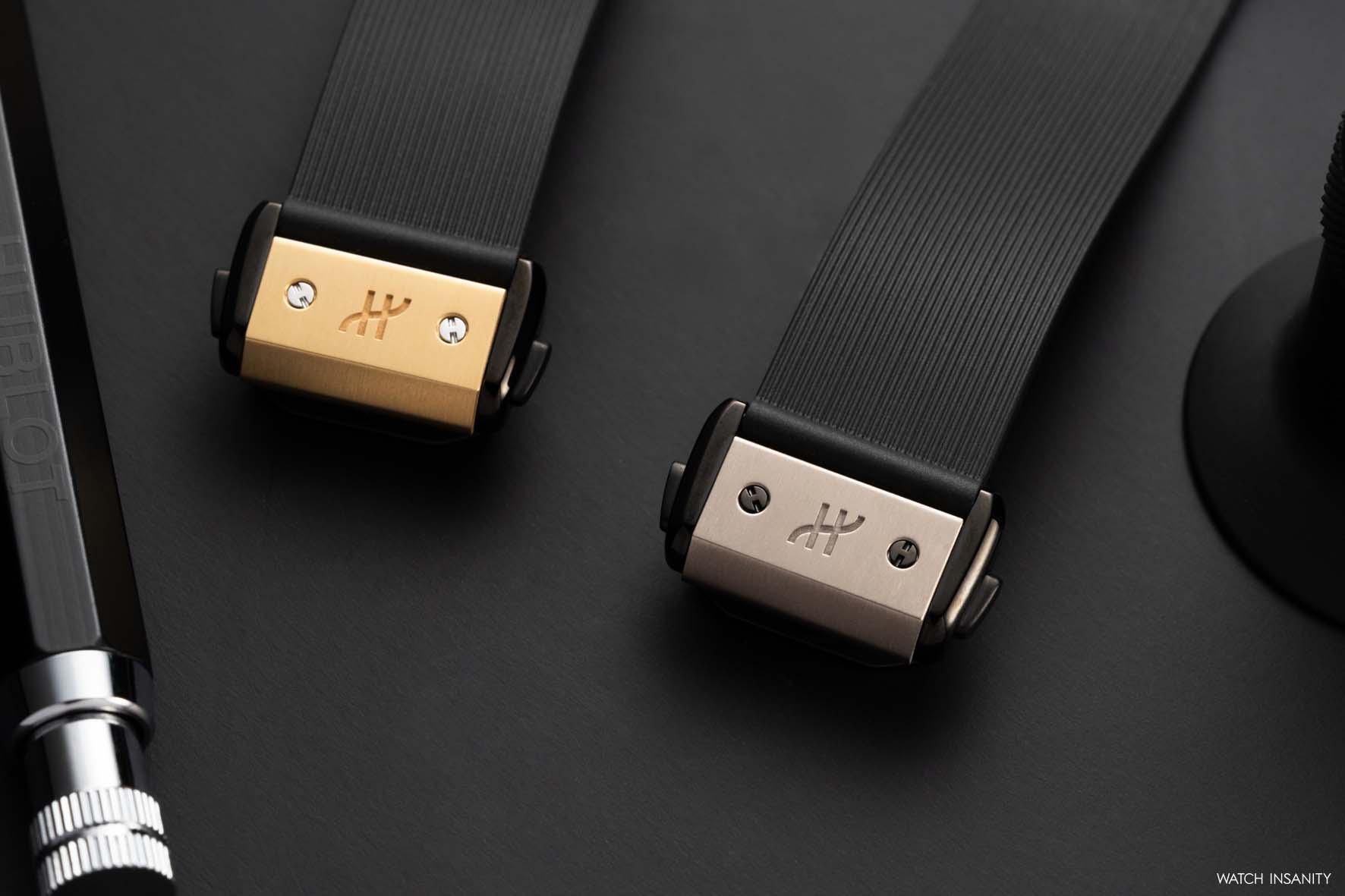
Times have changed and, fortunately, technology has moved on. The Classic Fusion Tributo’s black strap is modern and lined, with a subtle ribbed texture rather than a smooth finish. It complements the watch’s exposed lugs and emphasises its construction. Unlike the straps on other Hublot models, however, it is not interchangeable: omitting the One Click quick-release system was a deliberate decision to preserve the timepiece’s DNA.
PRICE AND CONCLUSIONS
Carlo Crocco sums up that DNA as follows: “In my view, the key to Hublot’s beginnings was that it was the opposite of everything else available at the time. It retained all the expertise of Swiss watchmaking and the value of precious materials, but introduced something completely new: a design that was both classic and revolutionary in its simplicity. I wouldn’t say functionality took a back seat when Hublot was born, but the focus was entirely on aesthetics. The movement took care of the functionality, and that was enough.”
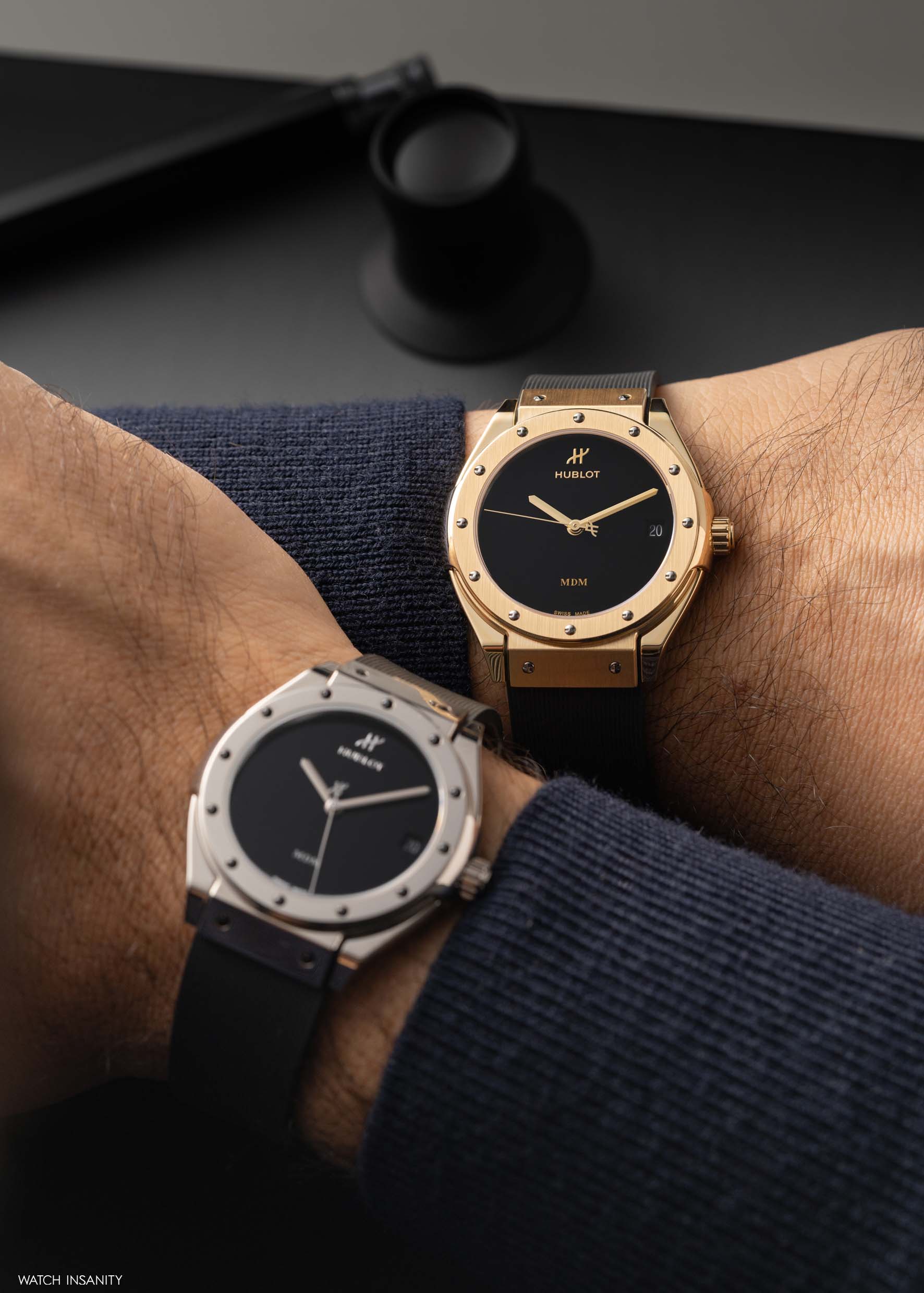
Both the yellow gold and white gold versions of the Classic Fusion Tributo are priced at € 30,200. Neither is a limited edition, and both are available from selected retailers and through the brand’s website. With this watch, Hublot hopes to recapture not only the success of its first model from 1980, but also the momentum that has carried the brand through 46 years of history. “Let’s say Hublot’s success was probably also a matter of luck,” Crocco concludes. “But it was certainly the right product at the right moment in history. A fortunate combination of circumstances. What mattered, though, was persistence, persistence, persistence – never giving up. It worked out well, we can say that. Otherwise, we wouldn’t be here.”
By Davide Passoni