

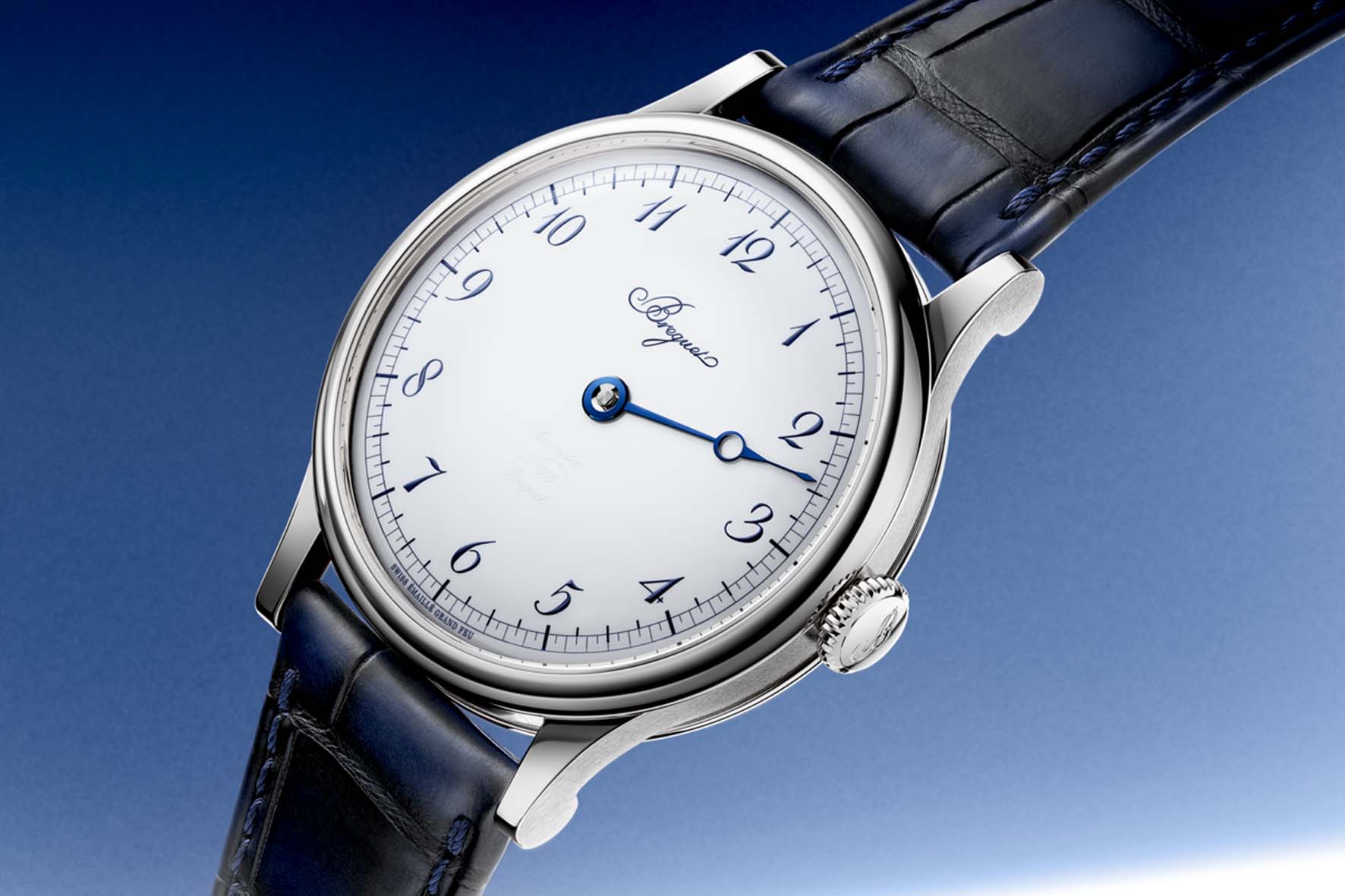
The year 2025 marked a particularly significant chapter in Breguet’s history, as the Maison celebrated its 250th anniversary with a series of remarkable creations, culminating in the unveiling of the Experimentale 1, with its high-frequency 10 Hz tourbillon and magnetic constant-force escapement. The celebrations began with the Classique Souscription, featuring a Breguet gold case, a single hand and an enamel dial. Today, the Maison revisits that model in platinum.
SOUSCRIPTION WATCHES: BREGUET’S HERITAGE, THEN AND NOW
As you may recall, the 2025 Classique Souscription (which we covered here) drew inspiration from what was arguably Abraham-Louis Breguet’s simplest watch – if such an adjective can ever be applied to his creations – and his greatest commercial success, even surpassing the complicated timepieces that secured his lasting reputation.
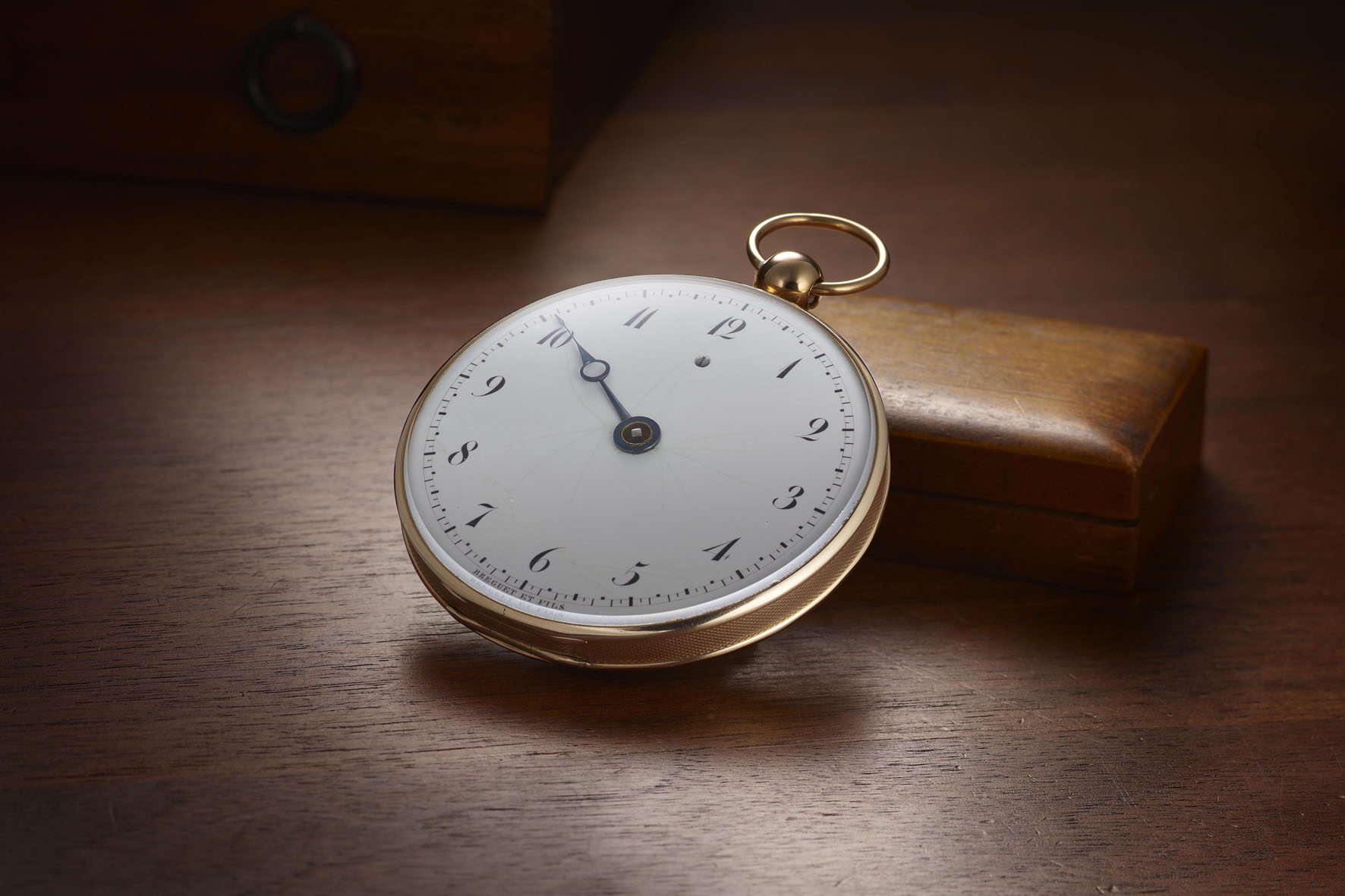
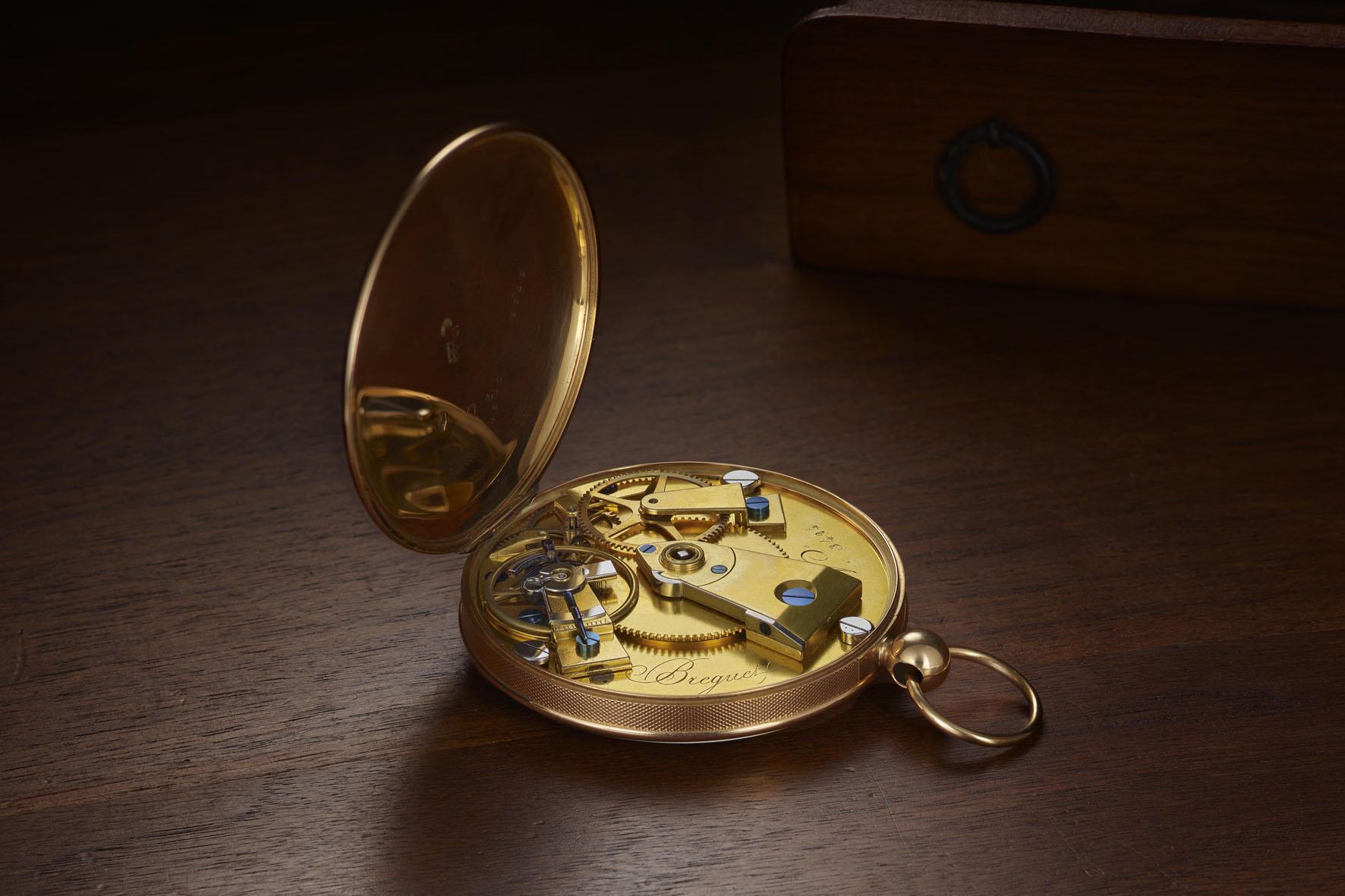
The so-called Souscription pocket watch appeared in 1796, following Breguet’s return to Paris after seeking refuge in Switzerland during the French Revolution. At the time, the watchmaker needed to expand his business and place it on a more stable footing. He therefore conceived a model that lent itself to more standardised production and had broader commercial appeal, introducing an innovative subscription-based sales system, which we explored in greater detail in our previous article.
The social changes brought about by the French Revolution also played a role in shaping this new business model, encouraging Breguet to reach a wider audience. Rather than catering exclusively to an aristocracy in search of precious timepieces, he sought to attract a broader clientele with a more accessible offering. The resulting watch was ideally suited to this ambition: a 61 mm pocket watch with a white enamel dial, a relatively simple movement architecture and a single hand to indicate the time.
FROM BREGUET GOLD TO PLATINUM
Introduced in 2025, the Breguet Classique Souscription was conceived as a contemporary interpretation of the original pocket watch, adapting its distinctive features to the wrist. Beyond echoing the aesthetics of its historical predecessors, it recreated their movement architecture, characterised by a large central barrel and triangular bridges, while drawing on traditional materials such as gold and enamel. The single-hand time display remained a defining feature, and to reproduce the celebrated secret signature on the dial, the manufacture even recreated a pantograph similar to those used in the eighteenth century.
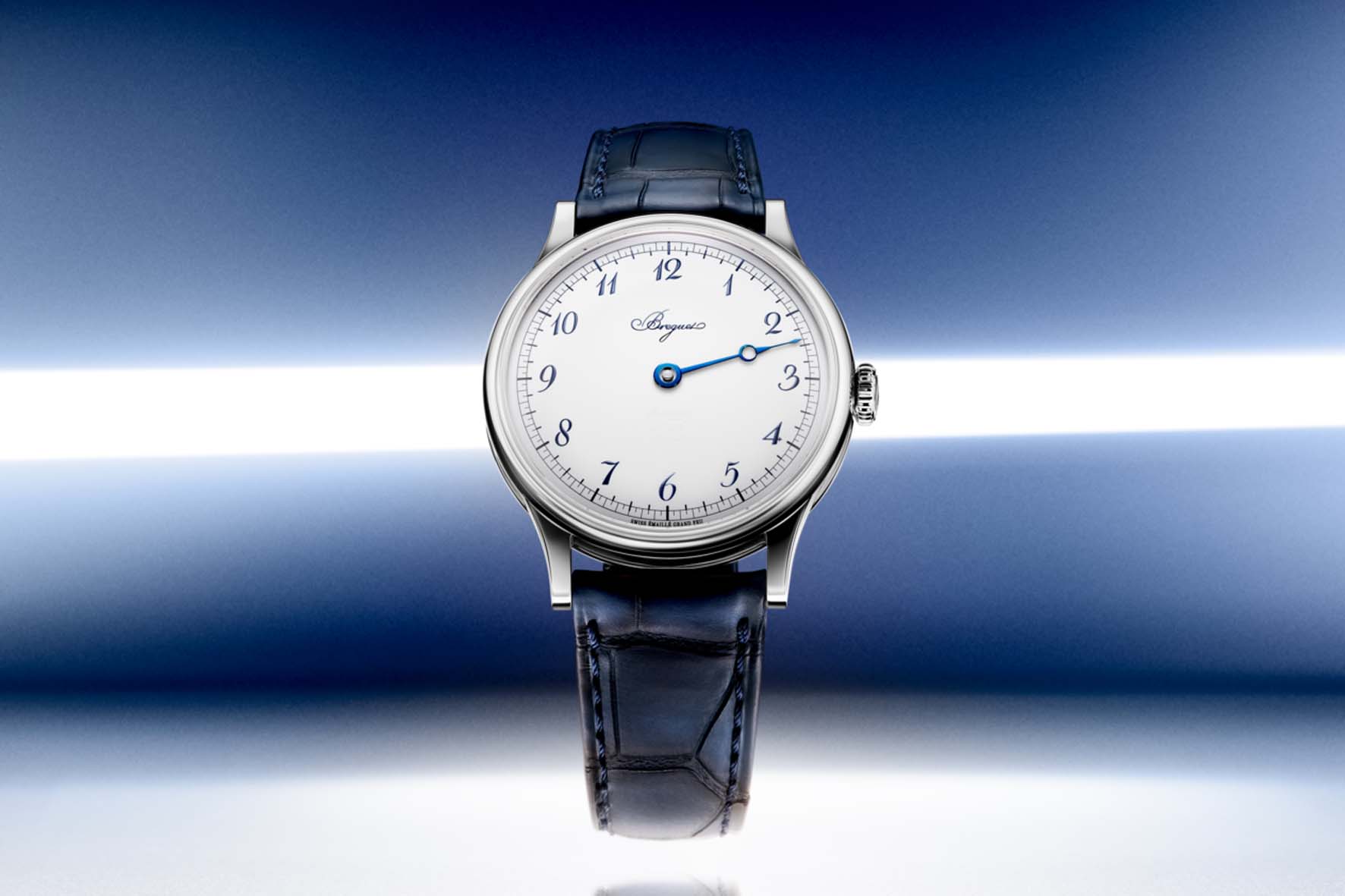
The 2026 edition of the Classique Souscription features a 950 platinum case, whose cool tones contrast with the warm hues of Breguet gold, the alloy developed specifically for the 250th anniversary collection. The choice also has historical significance: Abraham-Louis Breguet used platinum for some of his Souscription pocket watches and is believed to have been the first to introduce the metal into watchmaking.
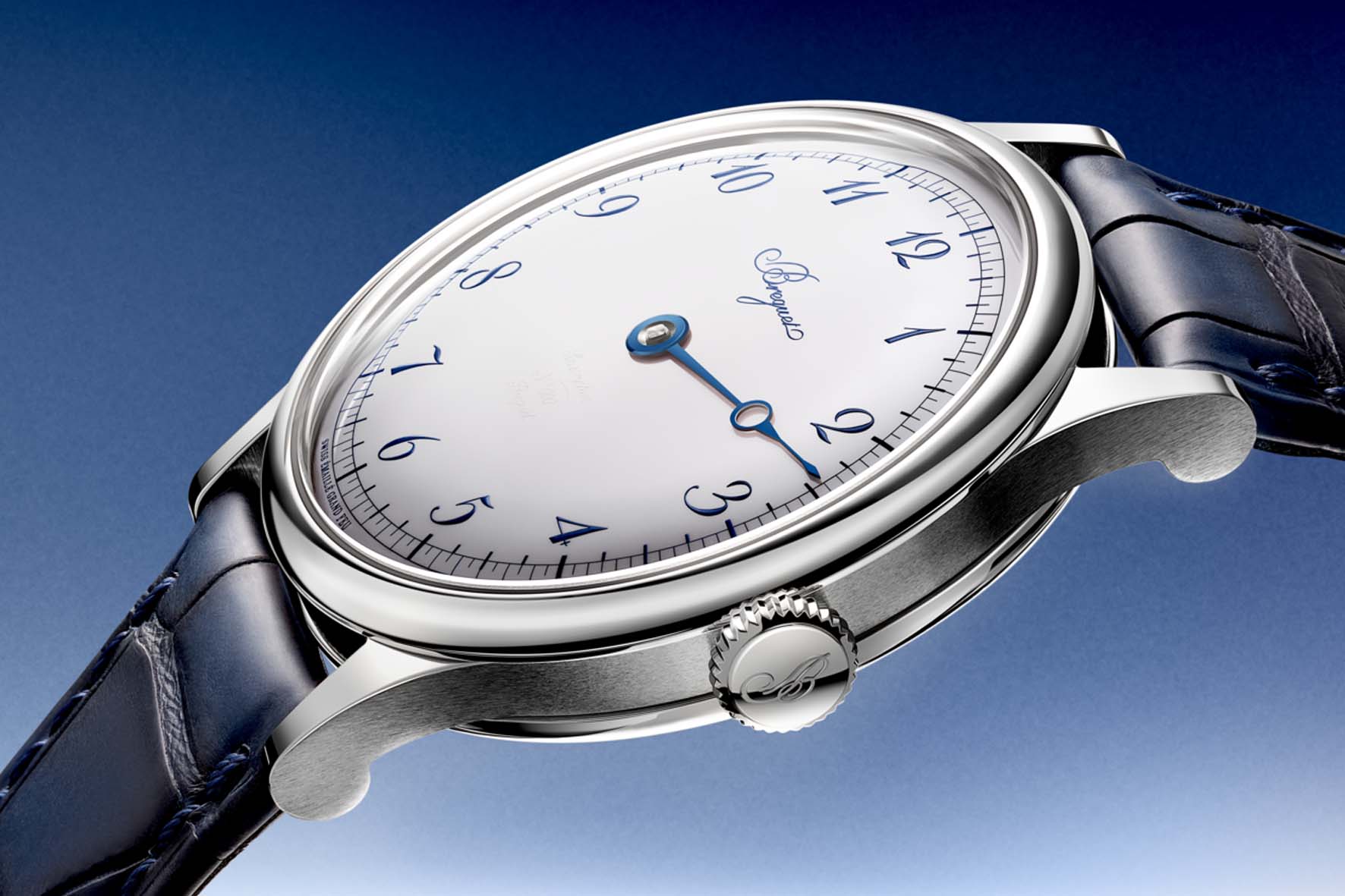
Measuring 40 mm in diameter and 10.8 mm thick, the case features a traditional three-part construction. Among its distinctive features are the lugs integrated into the finely satin-finished case middle, which dispenses with Breguet’s signature fluting. This design choice gives the watch a more streamlined profile and improves its ergonomics. The polished bezel frames a sapphire crystal with a so-called “chevé” profile, thinner and less domed than other types of crystal, with a relatively flat surface and a bevelled edge – a nod to one of the great watchmaker’s innovations. The platinum caseback also incorporates a sapphire crystal, framed by the “Quai de l’Horloge” guilloché motif.
DESIGN AND MECHANICS OF THE PLATINUM CLASSIQUE SOUSCRIPTION
The platinum Classique Souscription retains the dial layout and materials of the 2025 model. Crafted on a gold base, its luminous white grand feu enamel dial features the characteristic Breguet Arabic numerals and minute track. Unlike those of the gold reference, these indications, still rendered in petit feu enamel, are blue rather than black.
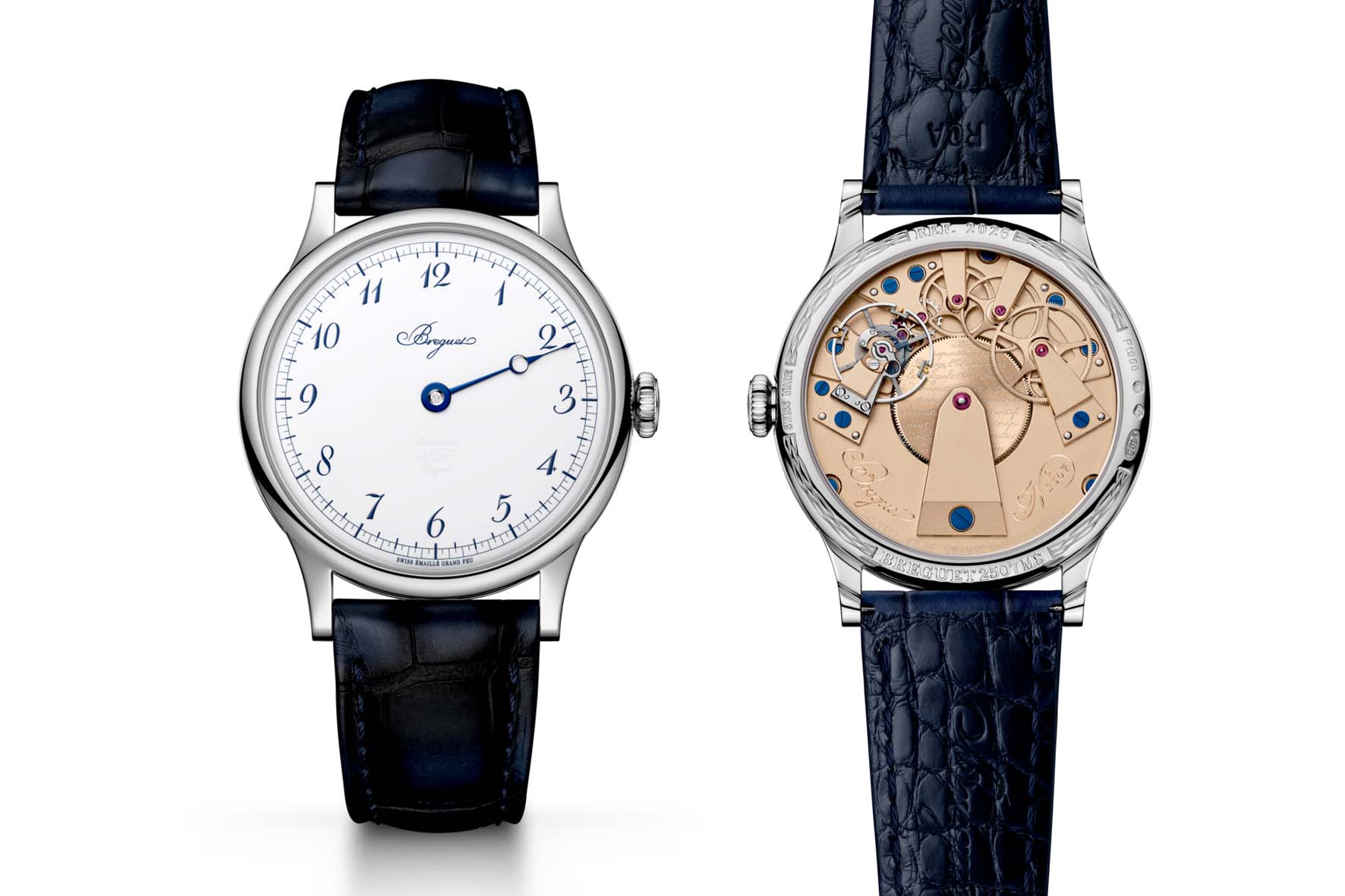
Time is indicated by a single steel “à pomme évidée” hand, flame-blued and curved by hand. At six o’clock, visible only from certain angles, is Breguet’s celebrated secret signature, faithfully reproduced using the diamond-tipped pantograph described earlier, a precision instrument equipped with articulated arms.
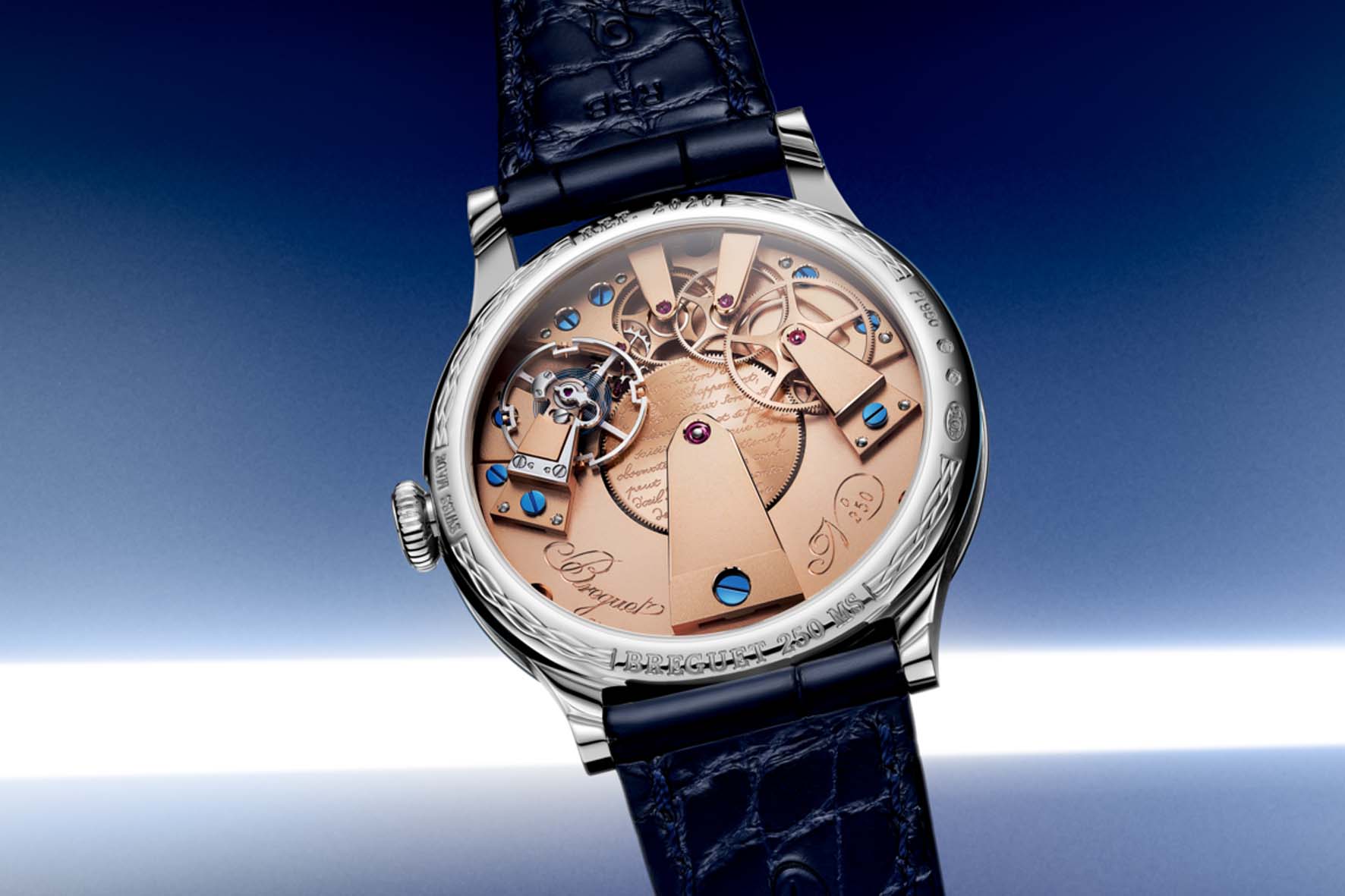
Also carried over from the 2025 edition is the in-house hand-wound VS00 calibre. The movement is built around a large central ratchet wheel secured by an oversized triangular bridge, complemented by two stepped bridges for the first wheel and balance, alongside two smaller triangular bridges for the going train. In spirit, this architecture closely echoes that of the movements found in Breguet’s Tradition collection.
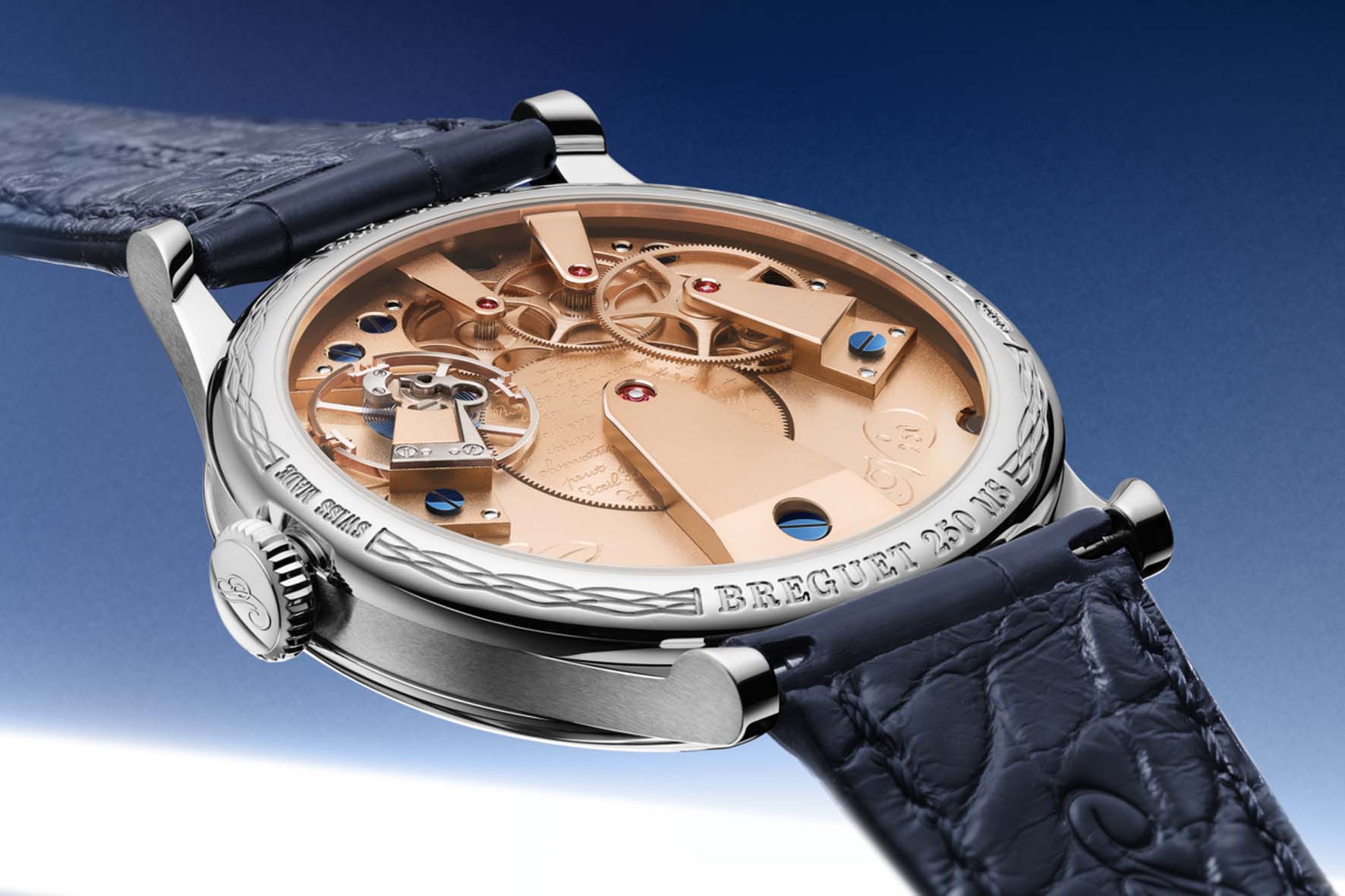
The balance beats at 21,600 vibrations per hour (3 Hz), while the movement delivers an impressive 96-hour power reserve. Historical elements, such as Breguet’s signature five-spoke wheels, sit alongside contemporary solutions, including a non-magnetic Nivachron balance spring with a Breguet overcoil and a modern shock-protection system whose shape recalls the original “pare-chute”, invented by the great watchmaker himself. Complementing the blue details on the dial is a navy-blue alligator leather strap with large scales and a gradient finish, secured by a platinum pin buckle.
PRICE AND FINAL THOUGHTS
With the platinum Classique Souscription, Breguet adds another compelling timepiece to an already remarkably rich catalogue. Beyond moving away from the exclusive use of the alloy developed for the 250th anniversary celebrations, the decision to introduce platinum alongside Breguet gold is likely intended to appeal to collectors who appreciate the elegance of a classical watch but seek greater versatility for everyday wear.
By preserving the aesthetic and mechanical identity of the 2025 Classique Souscription, Breguet also reaffirms its commitment to the balance between quality and value that defines its creations. In terms of pricing, the new platinum reference retails for € 69,000, compared with €57,400 for the Breguet gold model. From a mechanical and aesthetic perspective, however, its value lies in its ability to uphold the principles of fine watchmaking, shaped and refined over centuries. Remaining true to one’s identity is a quality not every manufacture can claim today.
By Davide Passoni