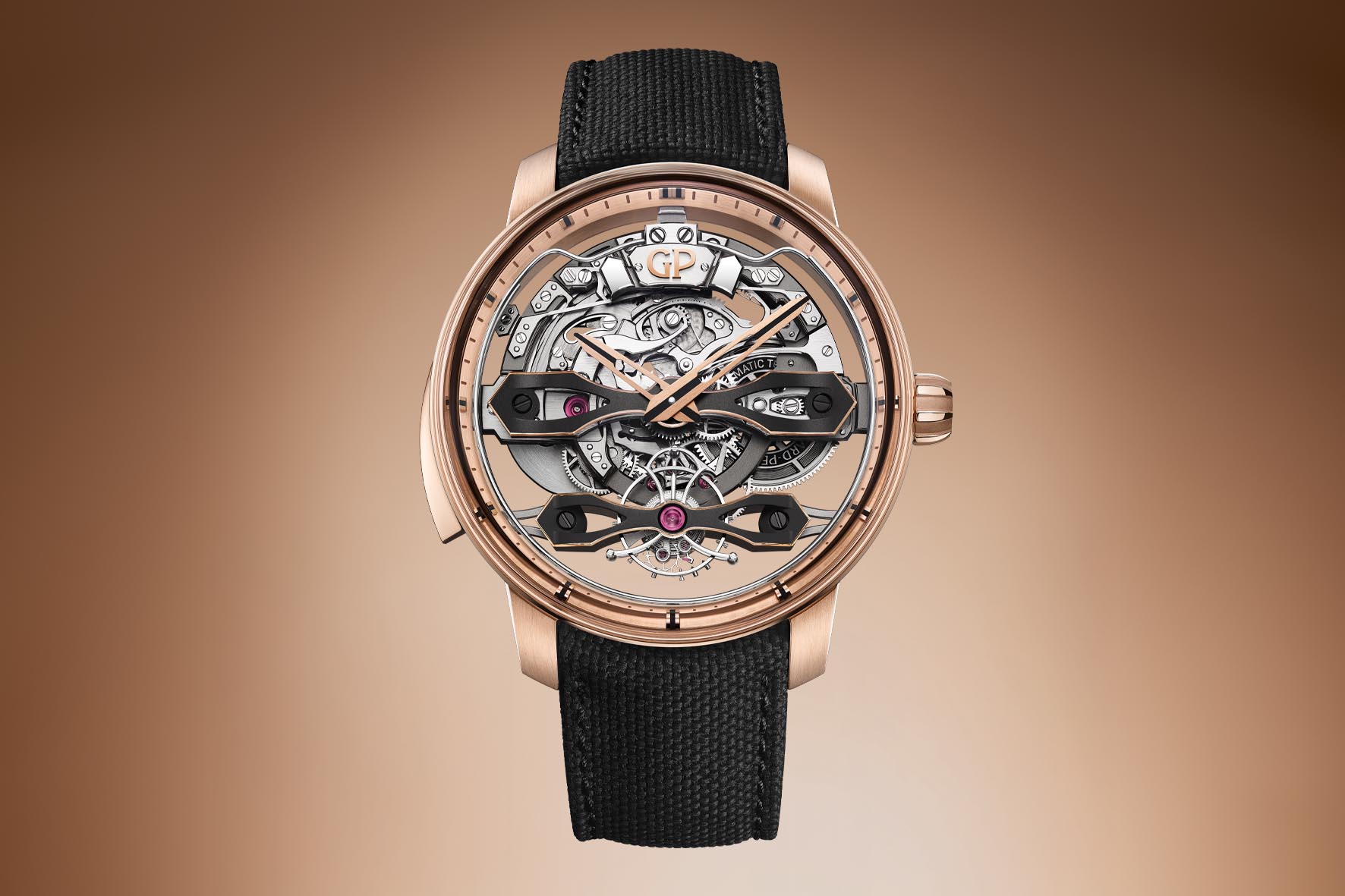
What is independence? According to the Oxford Languages dictionary, it is the “ability to exist and operate according to principles of absolute autonomy”. A correct definition, but not sufficient to frame Girard-Perregaux, whose history is one of independence and whose independence has been a source of the highest quality and innovation since 1791. The most recent proof of this is the Minute Repeater Flying Bridges, which fits into this tradition of technical and aesthetic supremacy thanks to its calibre, the third in-house movement presented in six months by the La Chaux-de-Fonds-based company.
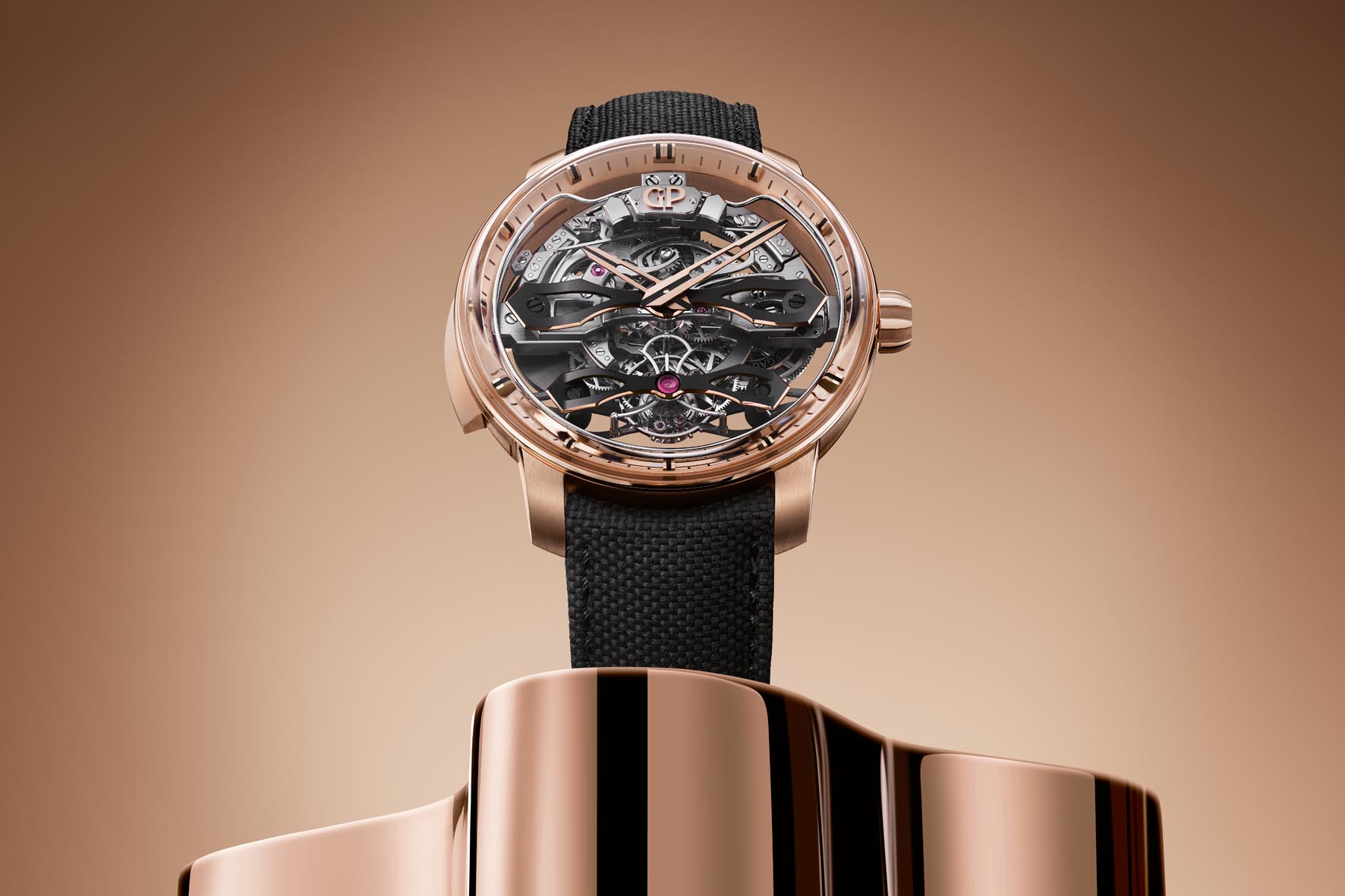
In the following article, we will write about Girard-Perregaux‘s new Minute Repeater Flying Bridges. We will discuss the innovation of the materials and the historicity of the design, the technical characteristics behind the GP9530 calibre and the search for the perfect sound that a minute repeater watch must ensure. All this without neglecting a focus on the value that excellence has in the Maison’s tradition.
ARCHITECTURE, DESIGN AND CALIBRE
To talk about the Minute Repeater Flying Bridges, we prefer to start directly with the watch, which takes six weeks to assemble and required three years of development. We will then leave space to retrace the importance of the minute repeater complication in the history of Girard-Perregaux. Because history, together with innovation, excellence and the mix of architecture and design, is one of the pillars on which the Maison’s strong identity is based. Starting with the watch means, in this case, starting with the movement, the essence of which cuts across all four pillars mentioned above.
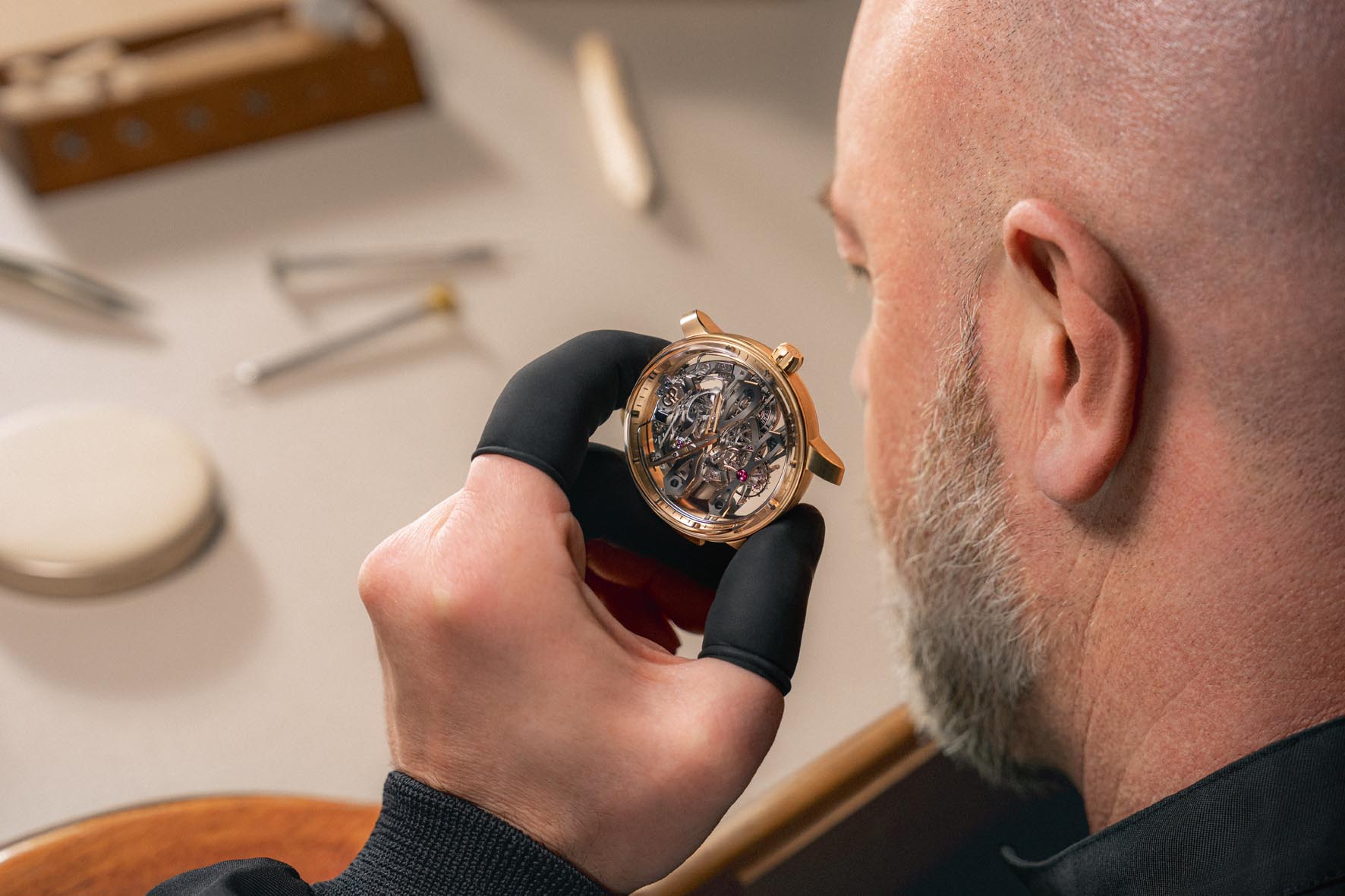
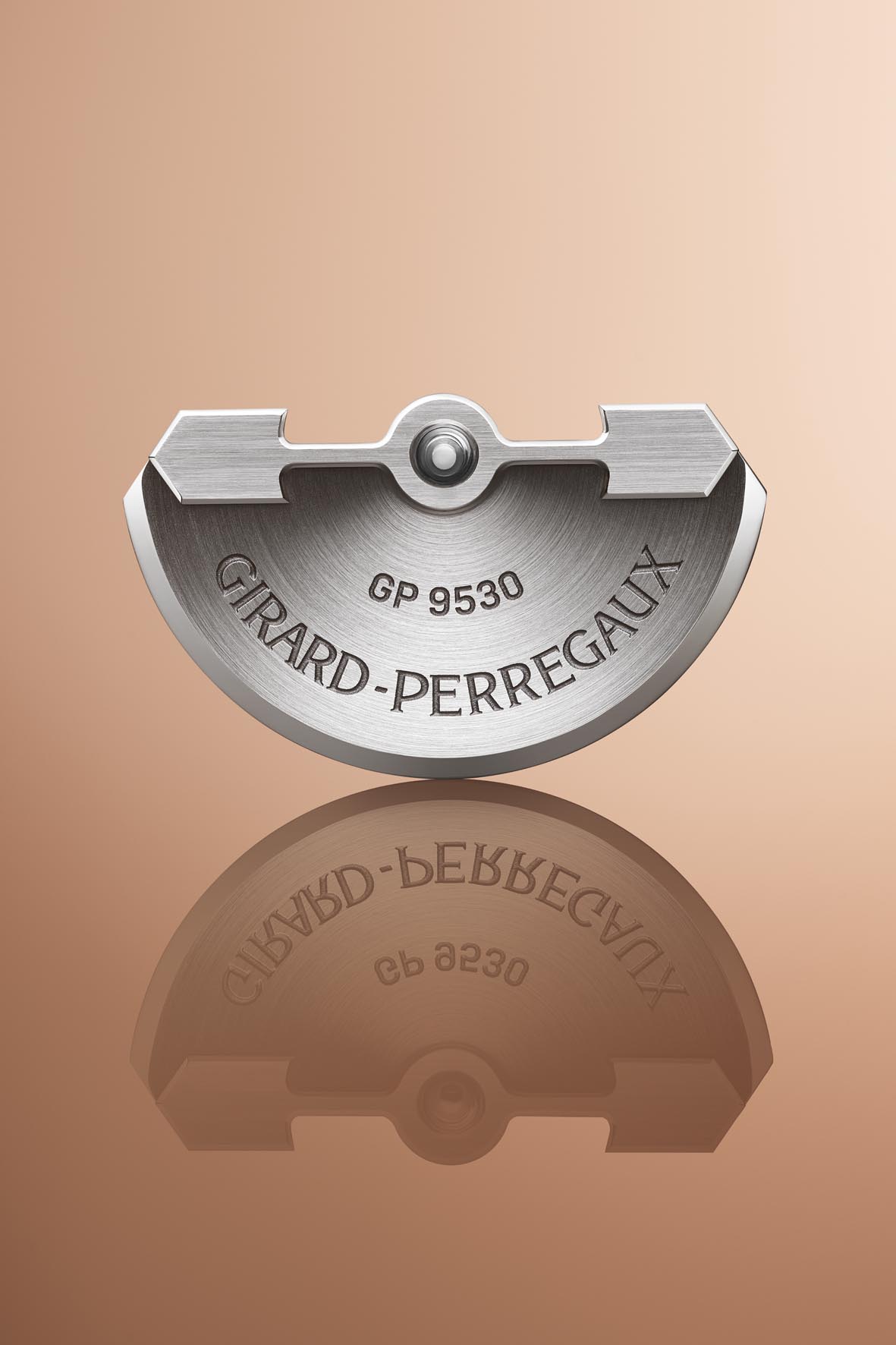
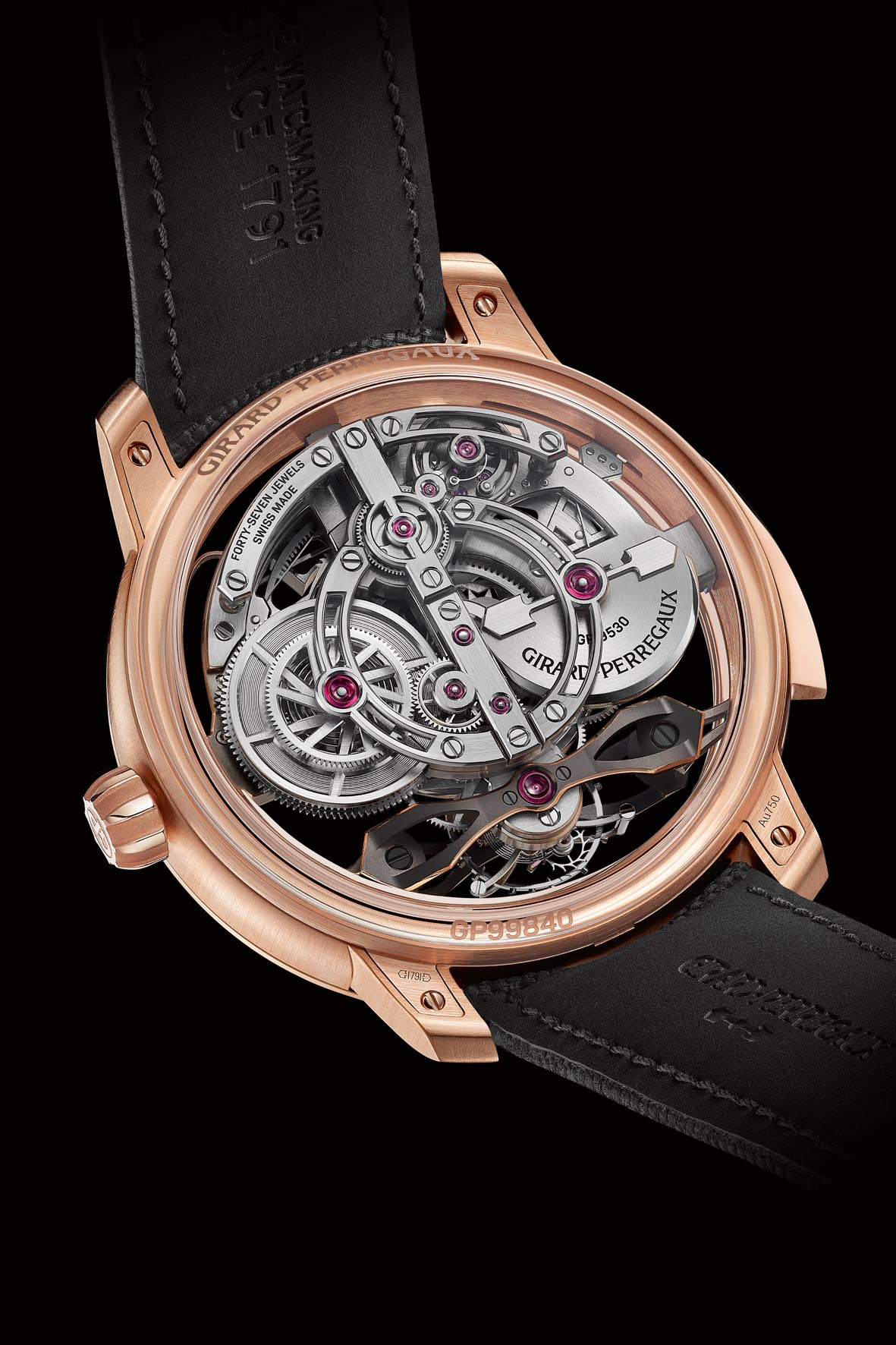
The cold numbers tell us that the GP9530 automatic calibre, with a gold micro-rotor, has a diameter of 43.55 mm, a thickness of 10.75 mm, oscillates at 21,600 vibrations per hour, has a minimum power reserve of 60 hours, 475 components and 47 jewels, and requires 200 hours to assemble. This is, in fact, the third manufacture movement presented in six months by Girard-Perregaux. What the numbers do not express, however, is the result that the manufacture has achieved by combining two distinctive features of its history and watchmaking excellence: the minute repeater and the “Flying Bridges”.
GIRARD-PERREGAUX AND THE ‘FLYING BRIDGES’
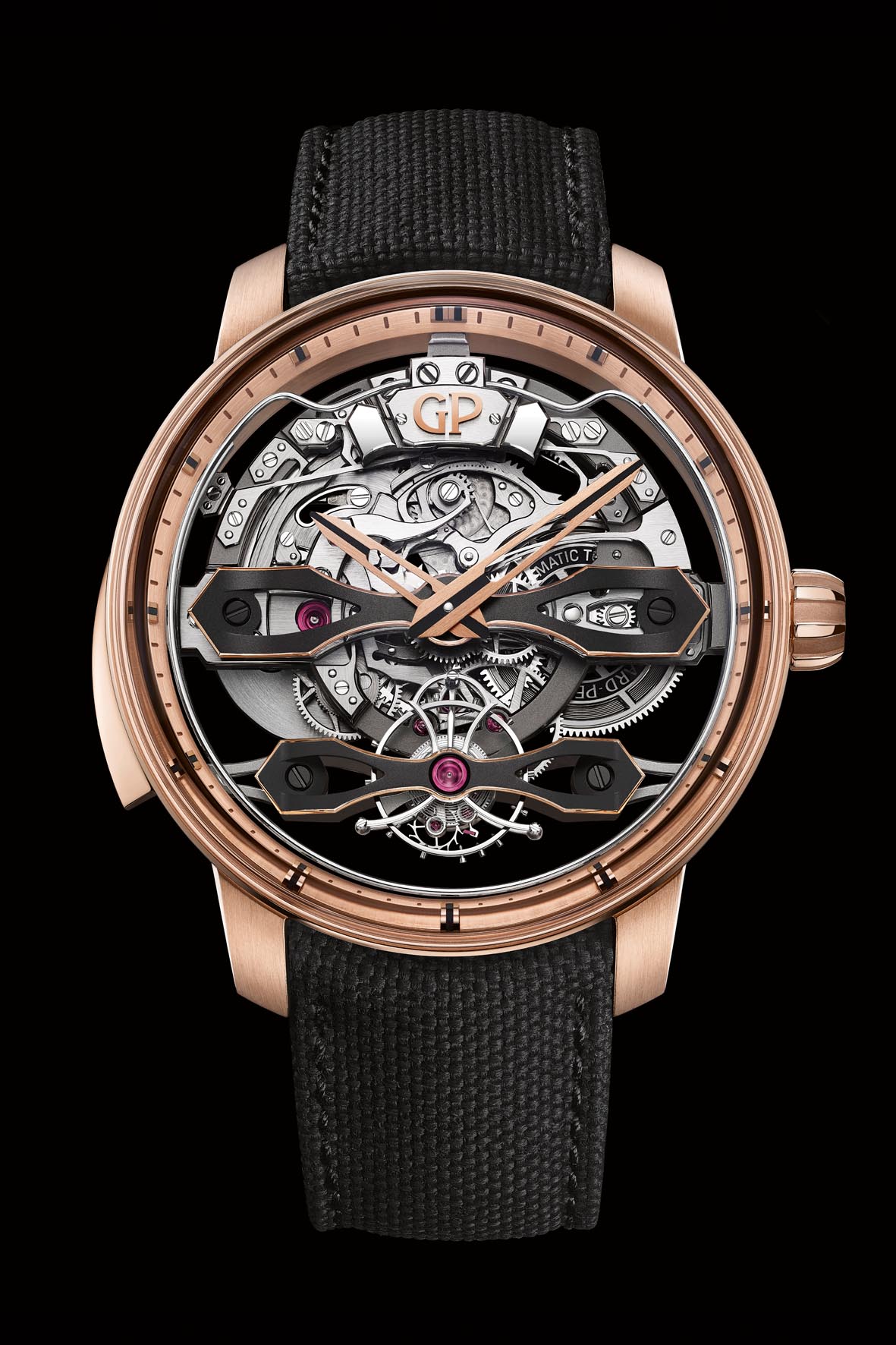
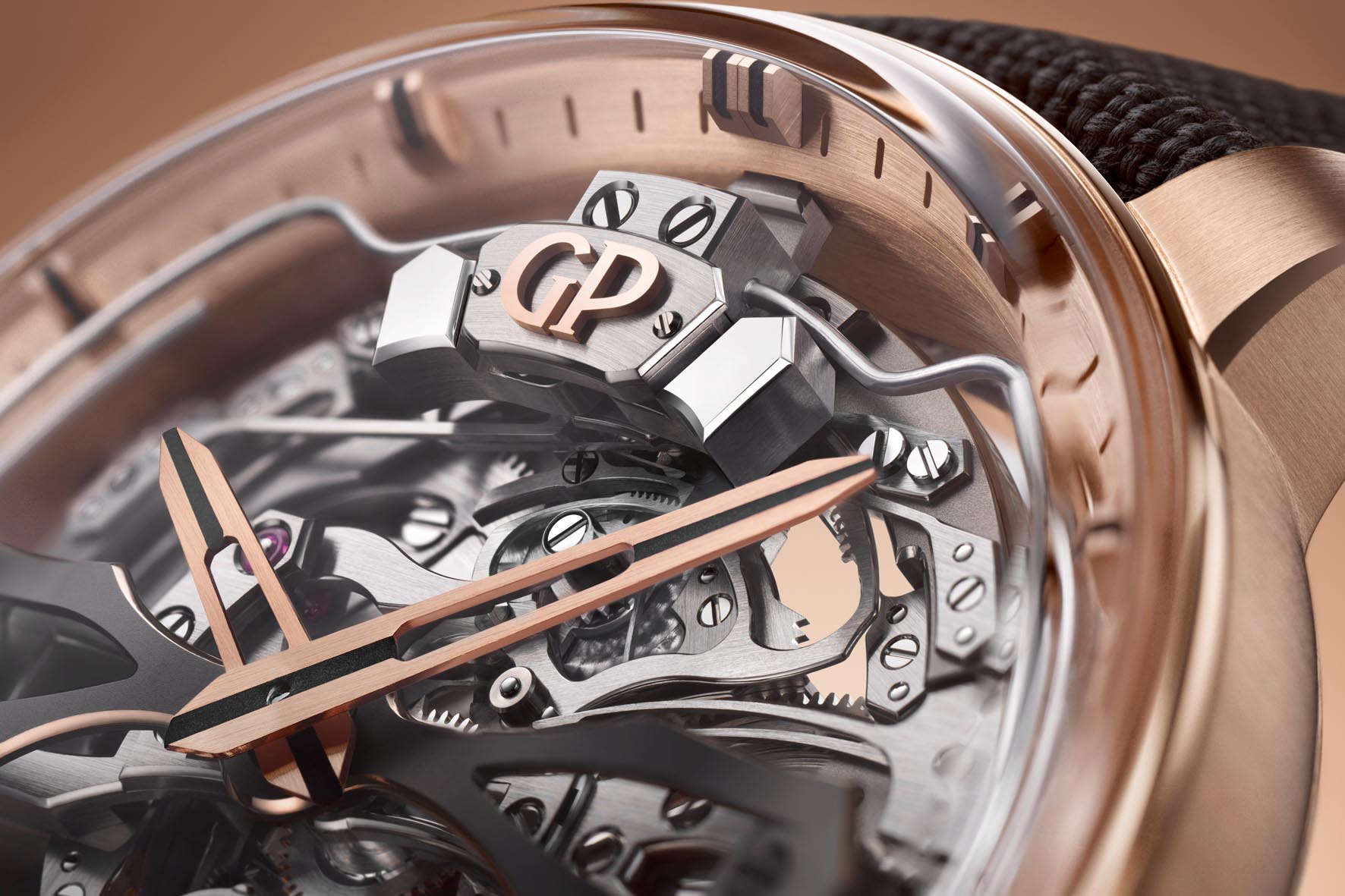
The concept of “Flying Bridges” was first introduced in 2021 with the Tourbillon with Three Flying Bridges, reference 99296. It introduced a technical and aesthetic solution in which the movement is heavily skeletonised and appears to float weightlessly inside the case. The Minute Repeater Flying Bridges continues this idea with a surprising degree of skeletonisation, reducing the components to a minimum. In particular, the plate has been designed to leave space between the movement and the inside of the case and reveal a minimum number of fixing points. This contributes to the impression of a floating movement. In addition to the arrow-shaped ones, all the bridges have been resized and skeletonised, leaving in some cases only the material necessary to position the screws and jewels.
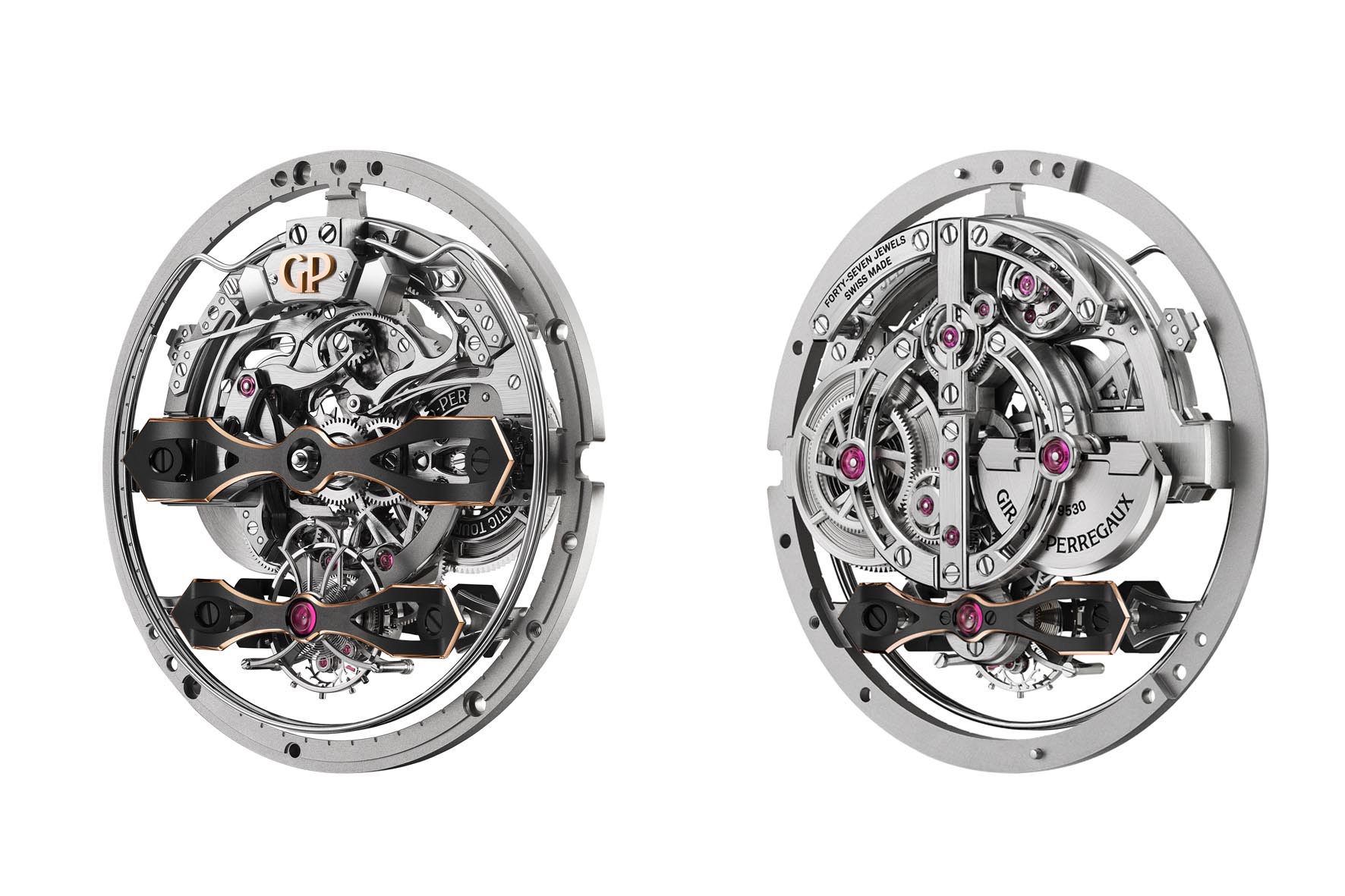
Skeletonisation not only affects the aesthetics of the movement, but can also affect its structural strength. Thanks to its combination of lightness and strength, titanium is the right material for the plate and all the bridges, with the exception of the arrow-shaped ones. These are made of rose gold, sandblasted and treated with black PVD before a final bevelling that subtly reveals the precious metal underneath.
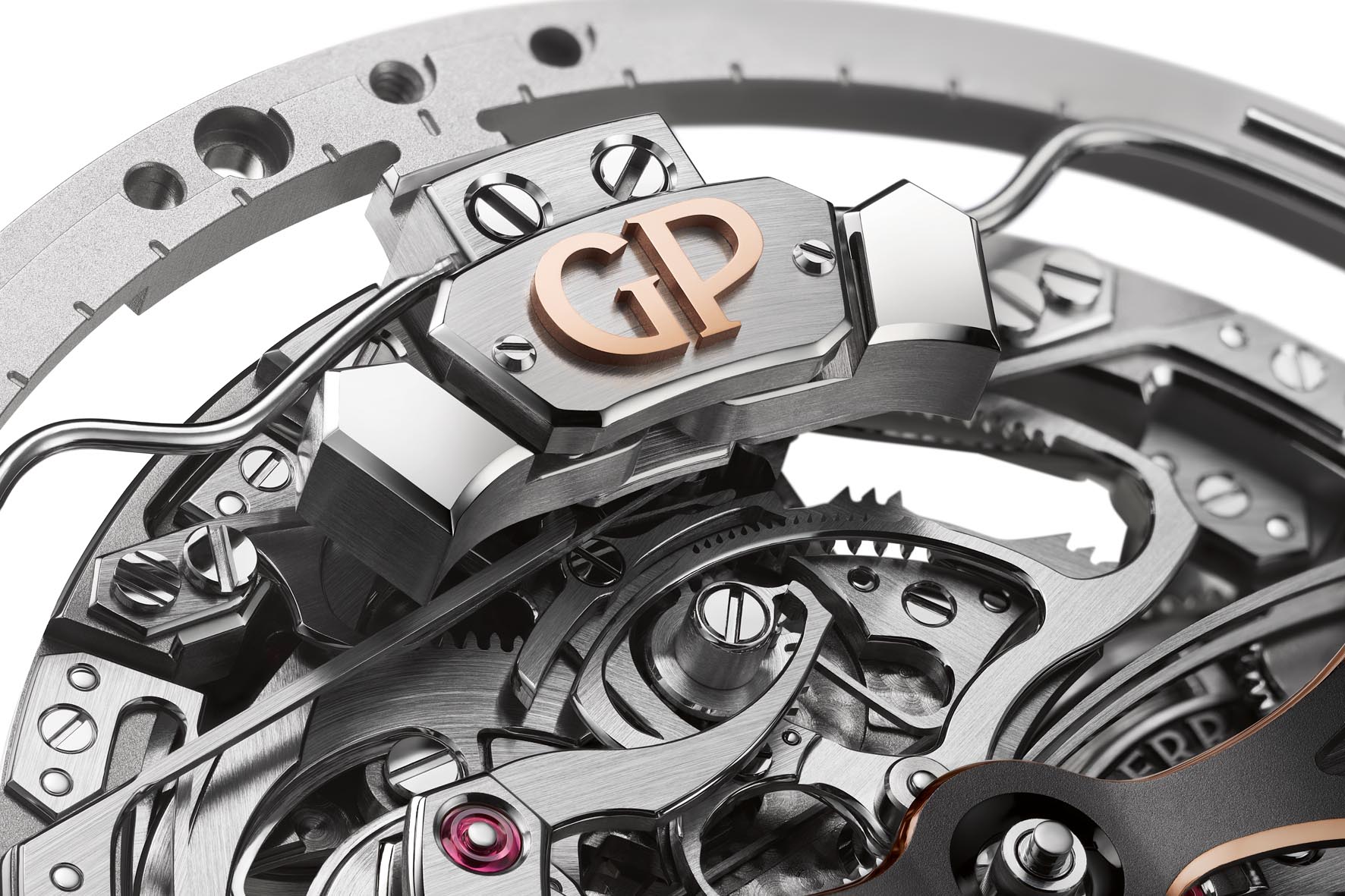
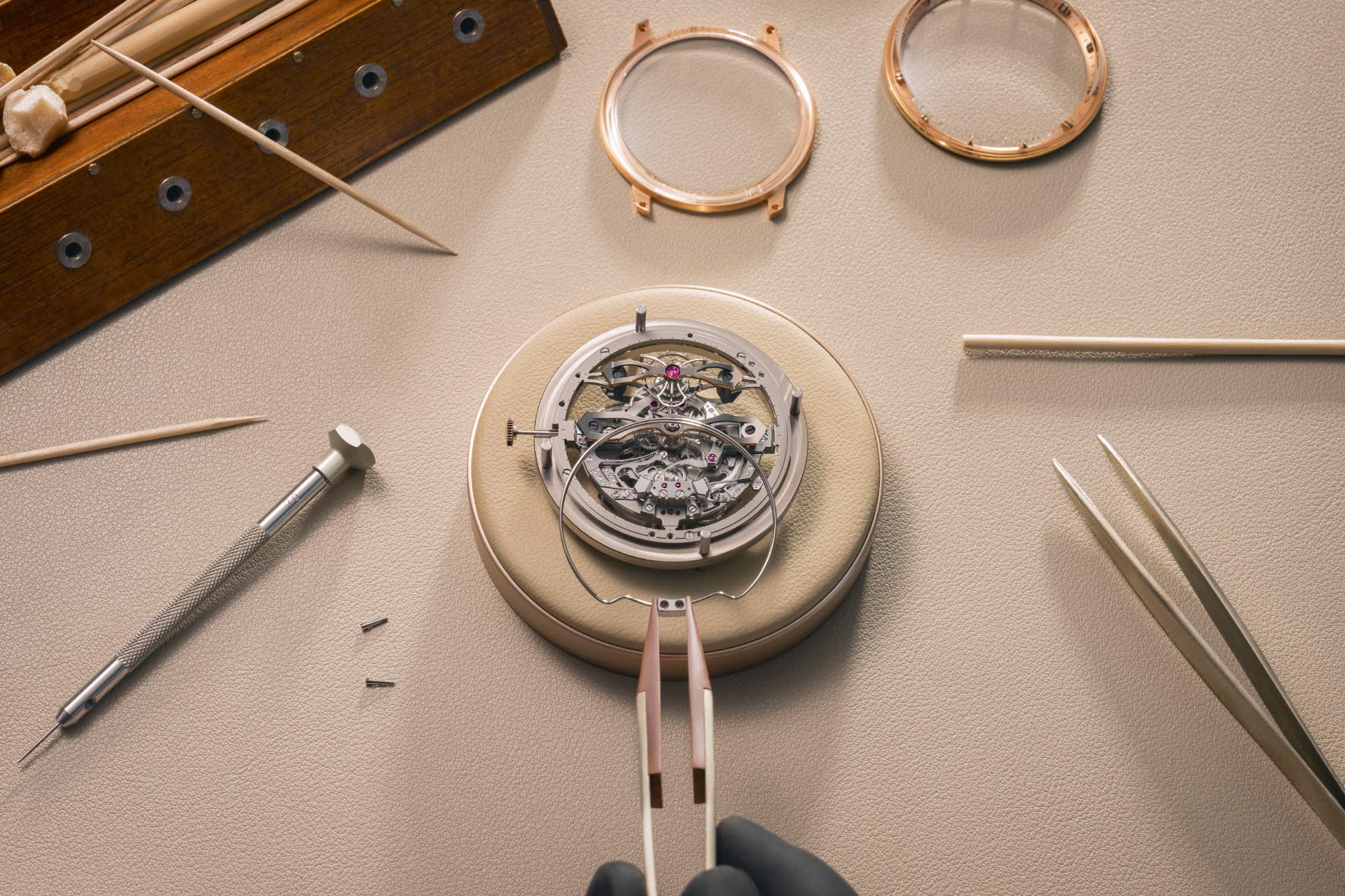
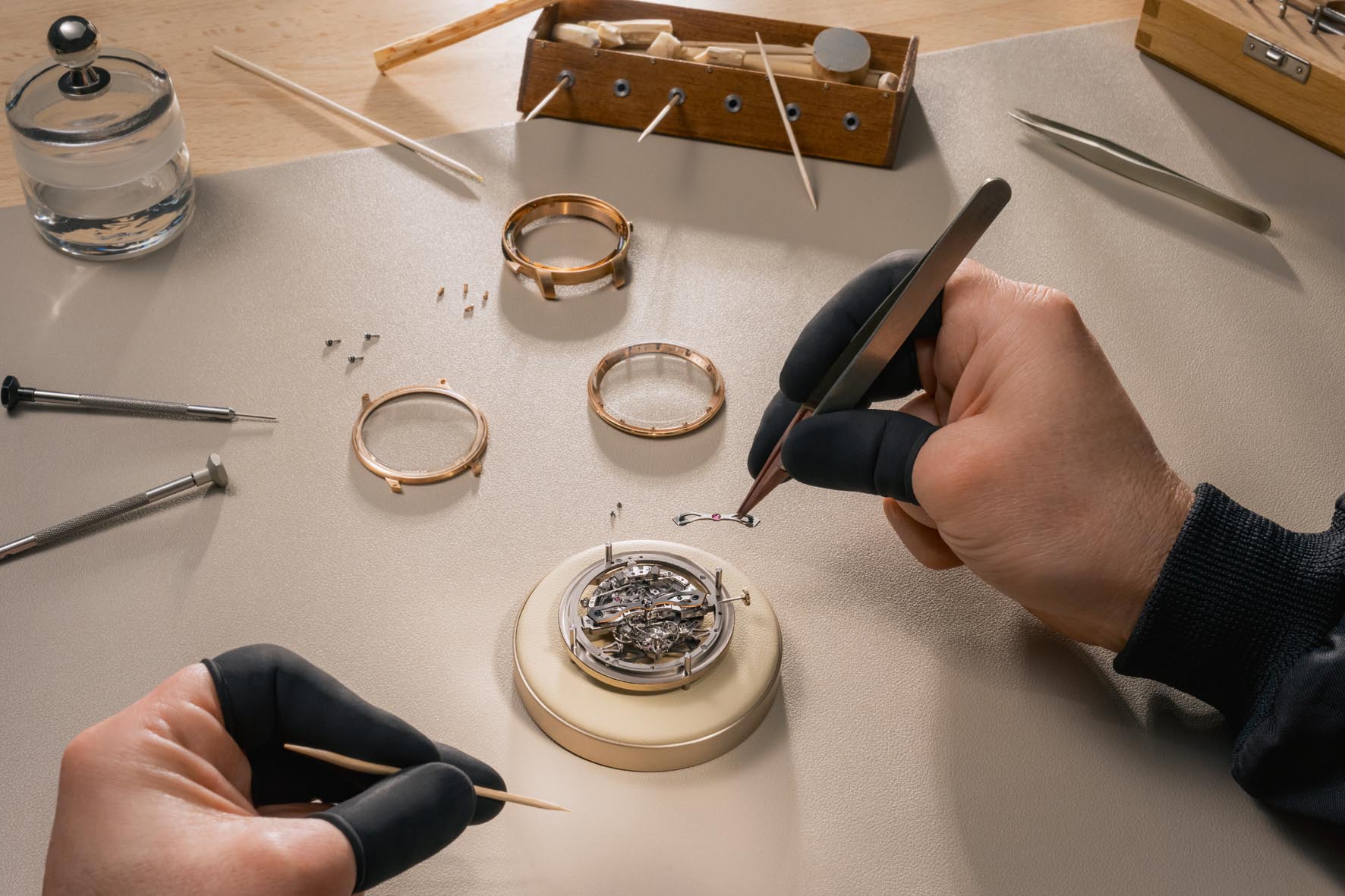
The open view of the movement requires a perfect level of finishing, necessitated by the extensive skeletonisation that creates additional surfaces to work on. All components are finished by hand, which means that even the hidden surfaces of the movement components are decorated. For example, the barrel bridge alone has four different finishes between visible and hidden parts. In total, it takes 240 hours to assemble and finish the entire calibre. Thus, 295 hand-polished internal angles constitute the culmination of the decoration work carried out on this Minute Repeater Flying Bridges.
MINUTE REPEATER: HOW IT WORKS
This is, in fact, a watch with a minute repeater – one of the queen complications of fine watchmaking – which, in Girard-Perregaux’s Minute Repeater Flying Bridges as in other examples, operates according to four functions: energy, memory, sound and adjustment. The first powers the minute repeater mechanism; the second reads the time and encodes it for the striking mechanism; the third indicates the time through an acoustic signal; the fourth harmonises the rhythm of the striking sequence.
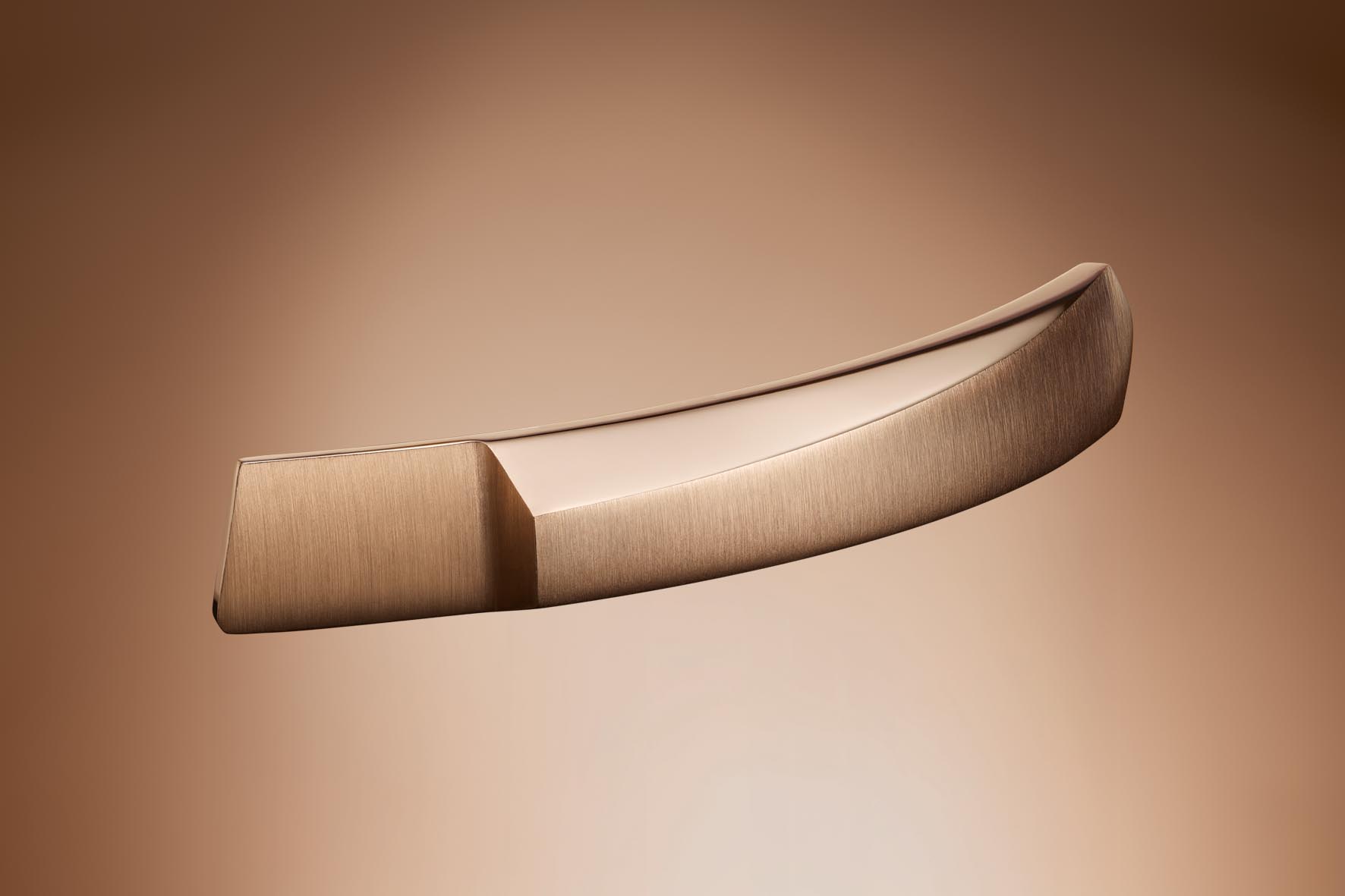
Sliding the slide on the side of the watch has two effects: it winds the minute repeater barrel spring that powers the mechanism and raises the rack to unlock the minute repeater, but only if the slide has been moved completely. The so-called “tout ou rien” (all or nothing) is in fact a safety device that prevents the minute repeater mechanism from starting if the slide has only been moved partially.
Once unlocked, the repeater mechanism “reads” the time via a separate gear: the position of each cam (for the hours, quarters and minutes) determines the number of teeth that the respective rack reads. The information is then transmitted from the racks to the hammers and translated into the correct number of strikes on the gongs. There are three distinct sounds: a low tone for the hours, a double high-low strike for the quarter hours, and a high tone for the minutes.
The duration of the striking sequence is governed by a centrifugal regulator, which consists of a rotating component that generates friction with the inner wall of its bridge, thus creating resistance. The watchmaker can adjust its arms to generate more or less resistance in order to slow down or speed up the striking mechanism. Harmony is achieved when the sequence is neither too fast nor too slow.
THE MINUTE REPEATER IN THE GP9530 CALIBRE
How does all this translate into Girard-Perregaux’s Minute Repeater Flying Bridges? In the GP9530 calibre and in an aesthetic architecture that draws heavily on the Maison’s tradition. The watch highlights the entire creative process that guided its creation: from the architecture of the movement to the choice of case and materials, elements that play a decisive role in the quality and purity of the sound.
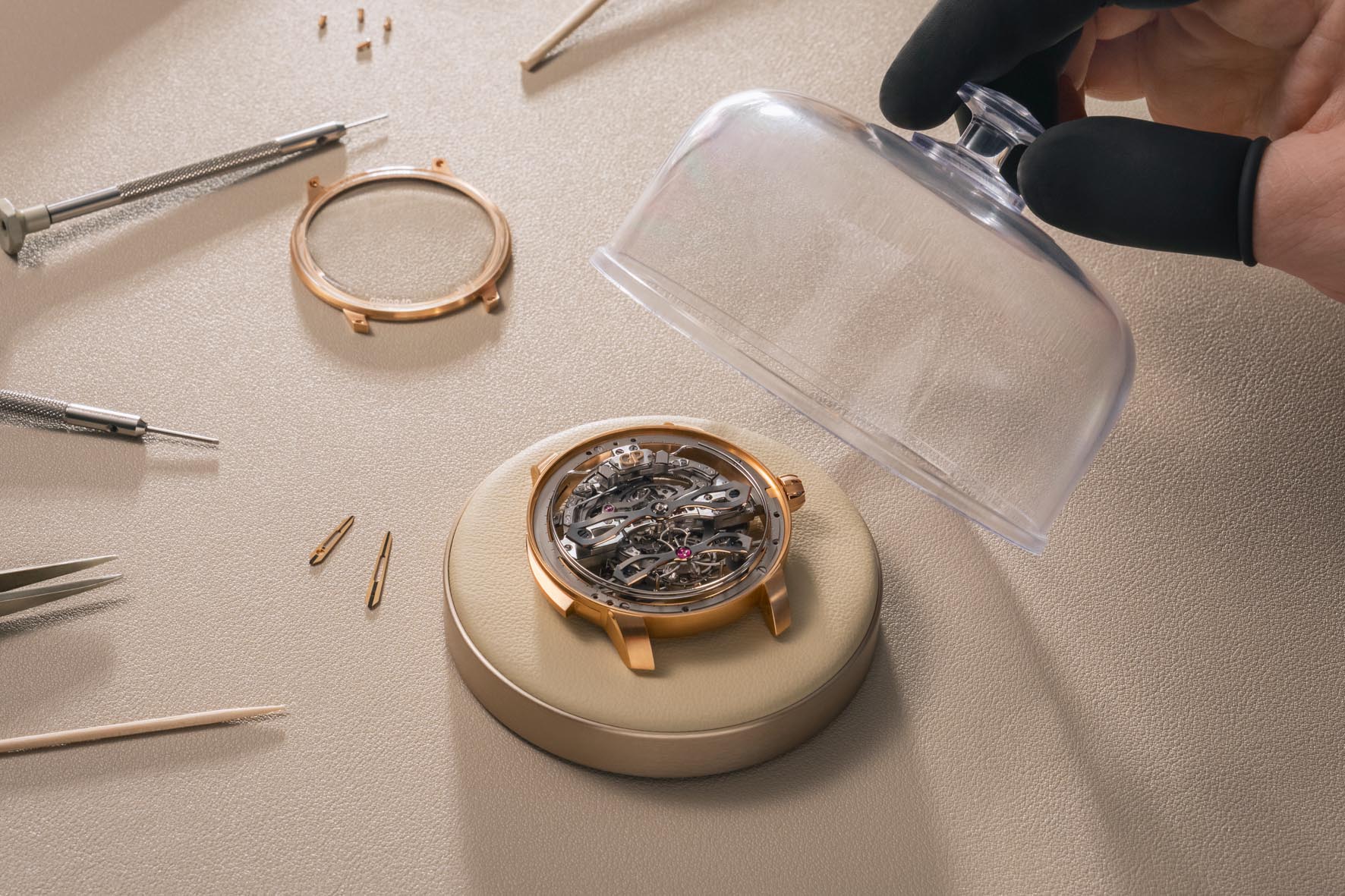
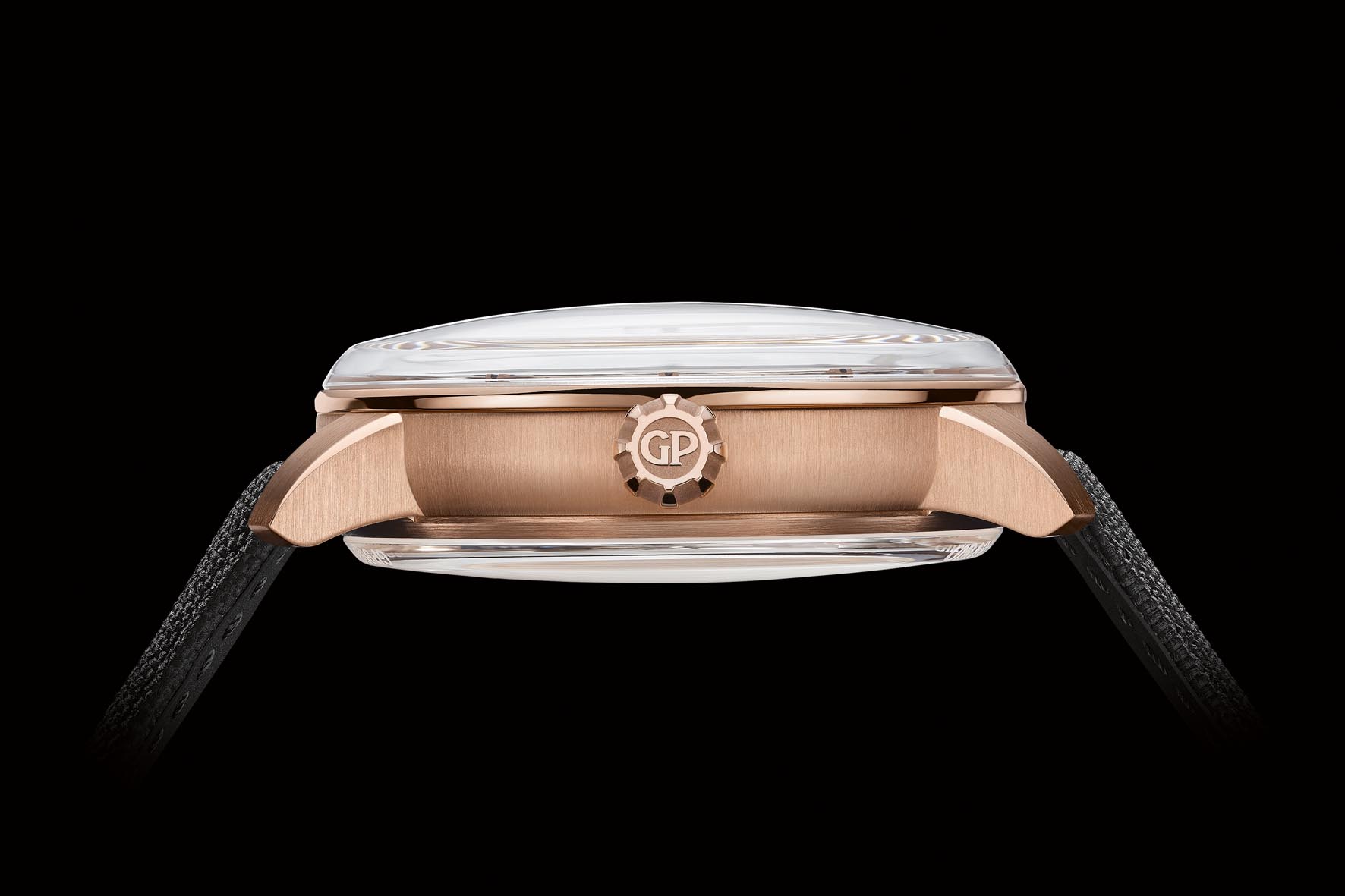
The Manufacture has thoroughly studied how to optimise the two key elements that determine the success of a minute repeater watch: amplification and sound quality. This study has led to the adoption and integration of solutions that help achieve perfect sound. The 46 mm case has a rose gold middle but the front and back are made of sapphire crystal to maximise the volume of air inside and act as a sound box.
The hammers and gongs are positioned at the front rather than the rear, preventing the sound from being absorbed by the wrist in contact with the case. The centrifugal regulator is located at the rear of the movement to limit any potential annoying noises it may produce during rotation. The micro-rotor is mounted on a ruby, which is quieter than a ball bearing, another solution that limits potential annoying noises during sound reproduction.
Furthermore, instead of being derived from separate elements and then welded together, the two gongs are made from a single piece of hardened steel to ensure flawless sound transmission through the movement and case. The plate and bridges are made of titanium (with the exception of the Neo bridges in gold) to exploit its hardness properties: the harder the material, the better the sound transmission. Finally, the main plate is screwed to the case, thus offering direct sound transmission through it.
THE DISTINCTIVE FEATURES OF GIRARD-PERREGAUX
When we wrote about the “aesthetic architecture” of the calibre in the previous paragraph, we did not do so at random. The Minute Repeater Flying Bridges, like the Grand Complications in the Bridges collection, feature a series of conceptual, technical and aesthetic characteristics that have built Girard-Perregaux’s reputation since 1791.
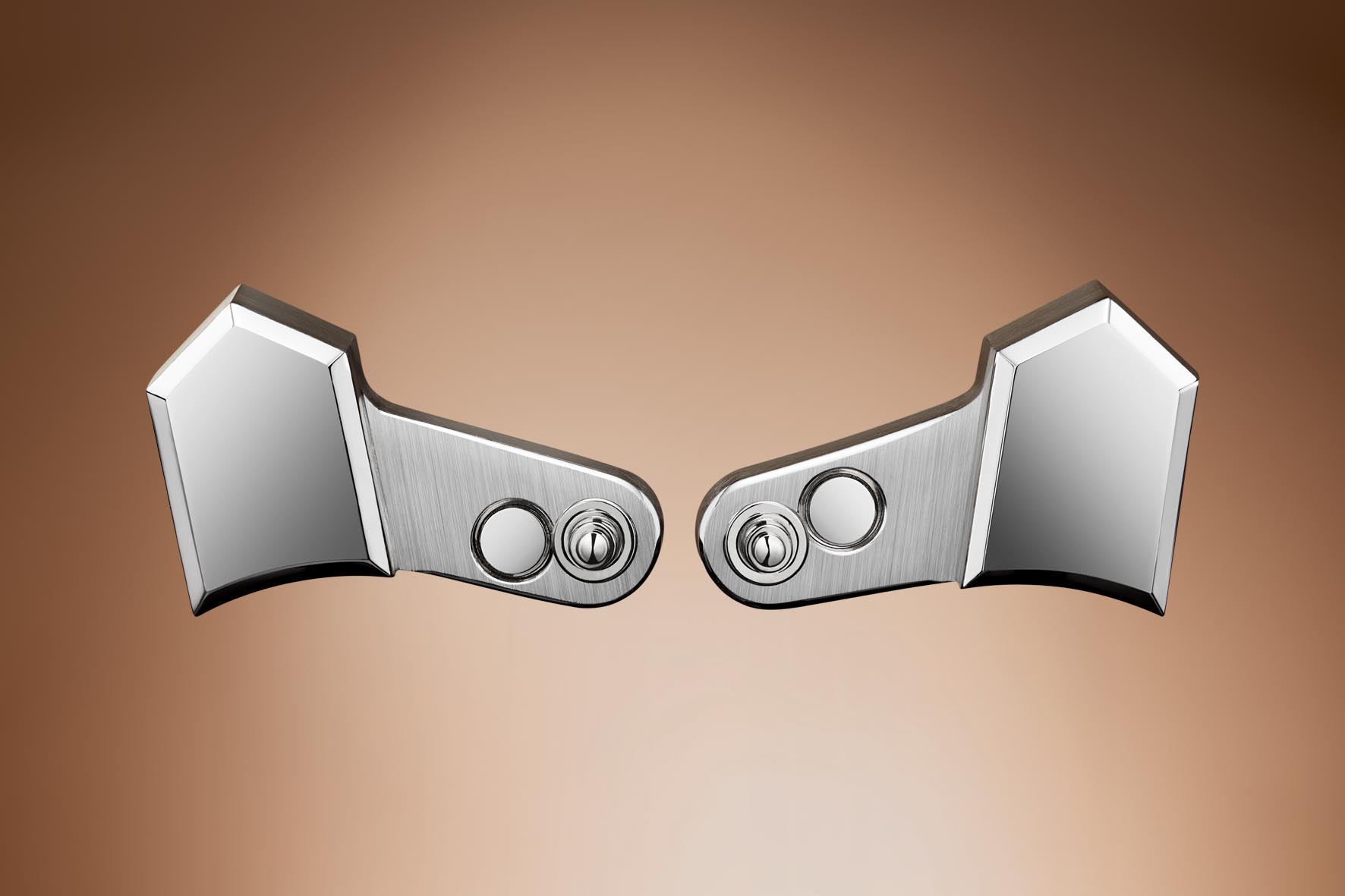
The arrow-shaped bridge has been an emblem of the Maison since Constant Girard’s first three-bridge tourbillon in 1867. Immediately recognisable, here it takes the form of a Neo Bridge, corresponding to an architectural and skeletonised expression of the Maison’s traditional bridge. The use of this design has been extended to the shape of the minute repeater hammers, the micro-rotor, most of the bridges, the minute repeater springs and the slide that activates the minute repeater.
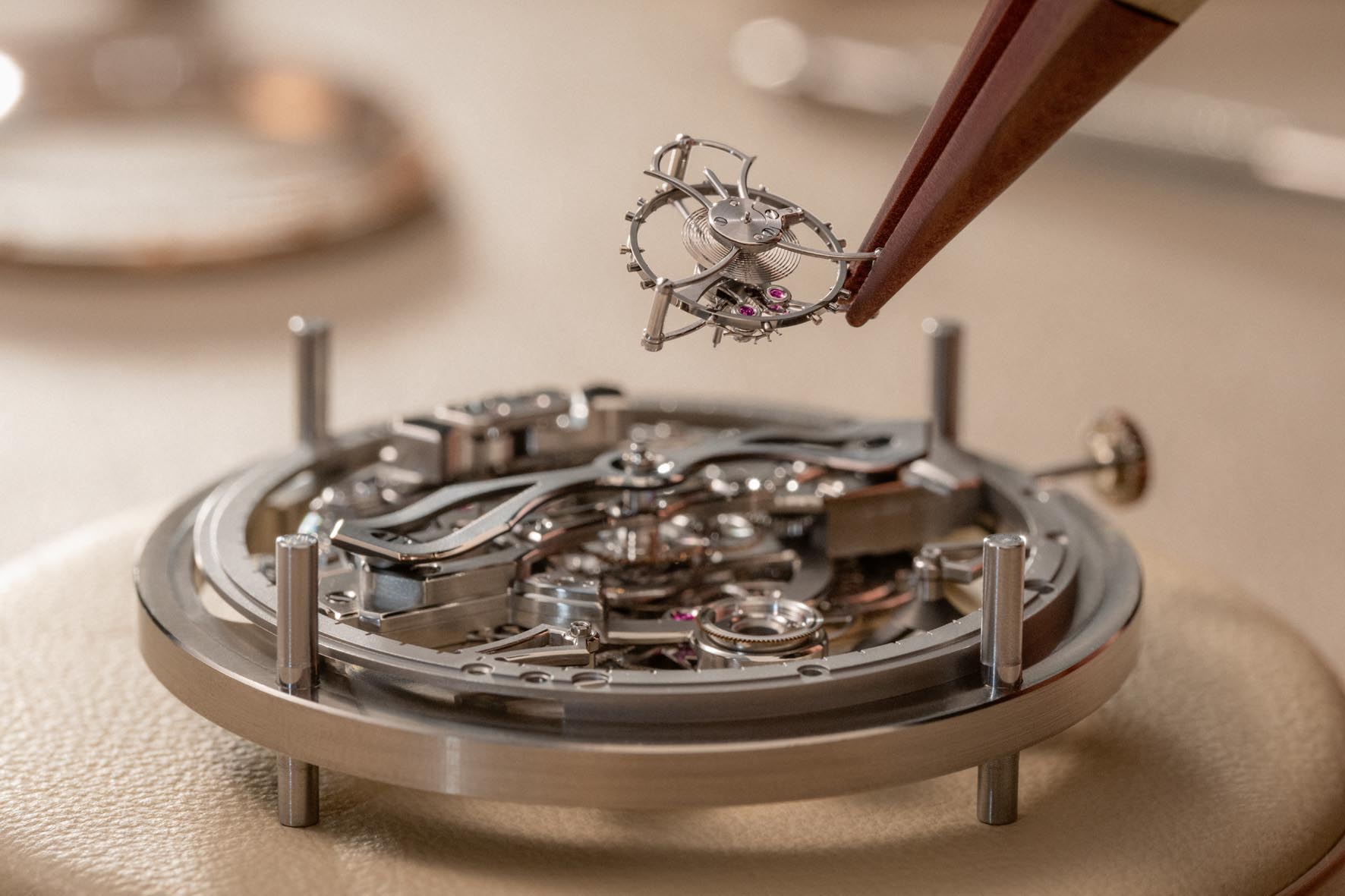
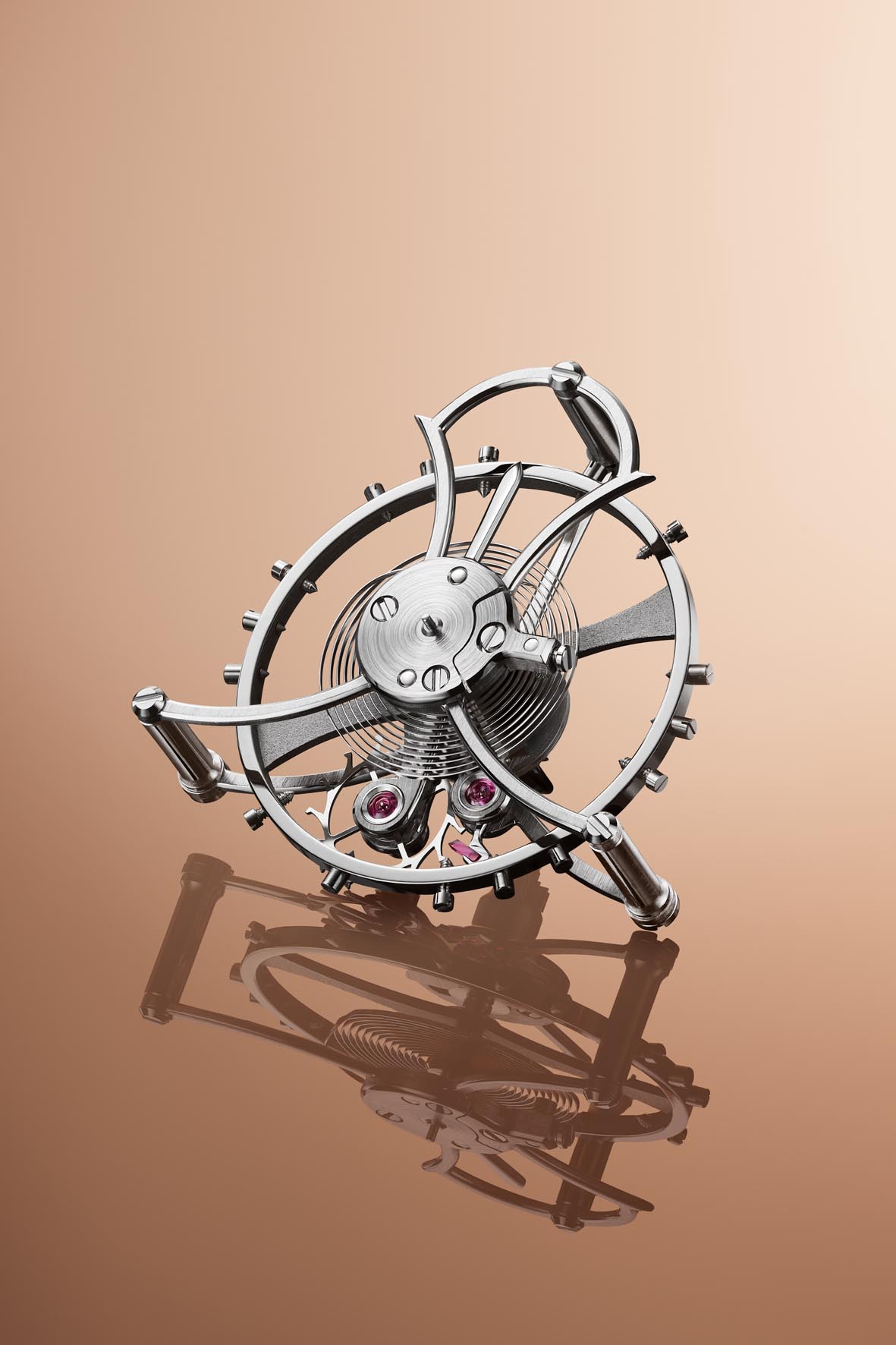
Then there is the lyre-shaped tourbillon cage. Designed by Constant Girard, it is a distinctive feature found in all Girard-Perregaux tourbillon watches. The eagle symbol, patented in 1897, is the hallmark of the Maison’s manufacture movements. In the Minute Repeater Tourbillon, it is engraved on the white gold micro-rotor. Finally, symmetry is another key element of the Bridges collection. It confers legibility, aesthetic purity and a feeling of precision and quality. In this case, Girard-Perregaux has brought symmetry to both the front and back of the watch, in a case that is water-resistant to 3 bar, a remarkable achievement considering the complexity of its architecture.
THE FINISHES
The largely skeletonised and architectural GP9530 calibre gives the Minute Repeater Flying Bridges an interesting character and aesthetic. This look is balanced by subtle details and finishes that bring a touch of softness and harmony to the watch as a whole. The case design has a rounded, soft appearance with the upper and lower sapphire crystals also domed. Predominantly satin-finished, the case contrasts sharply with the polished bevels on the lugs and the polished outer surface on the middle case.
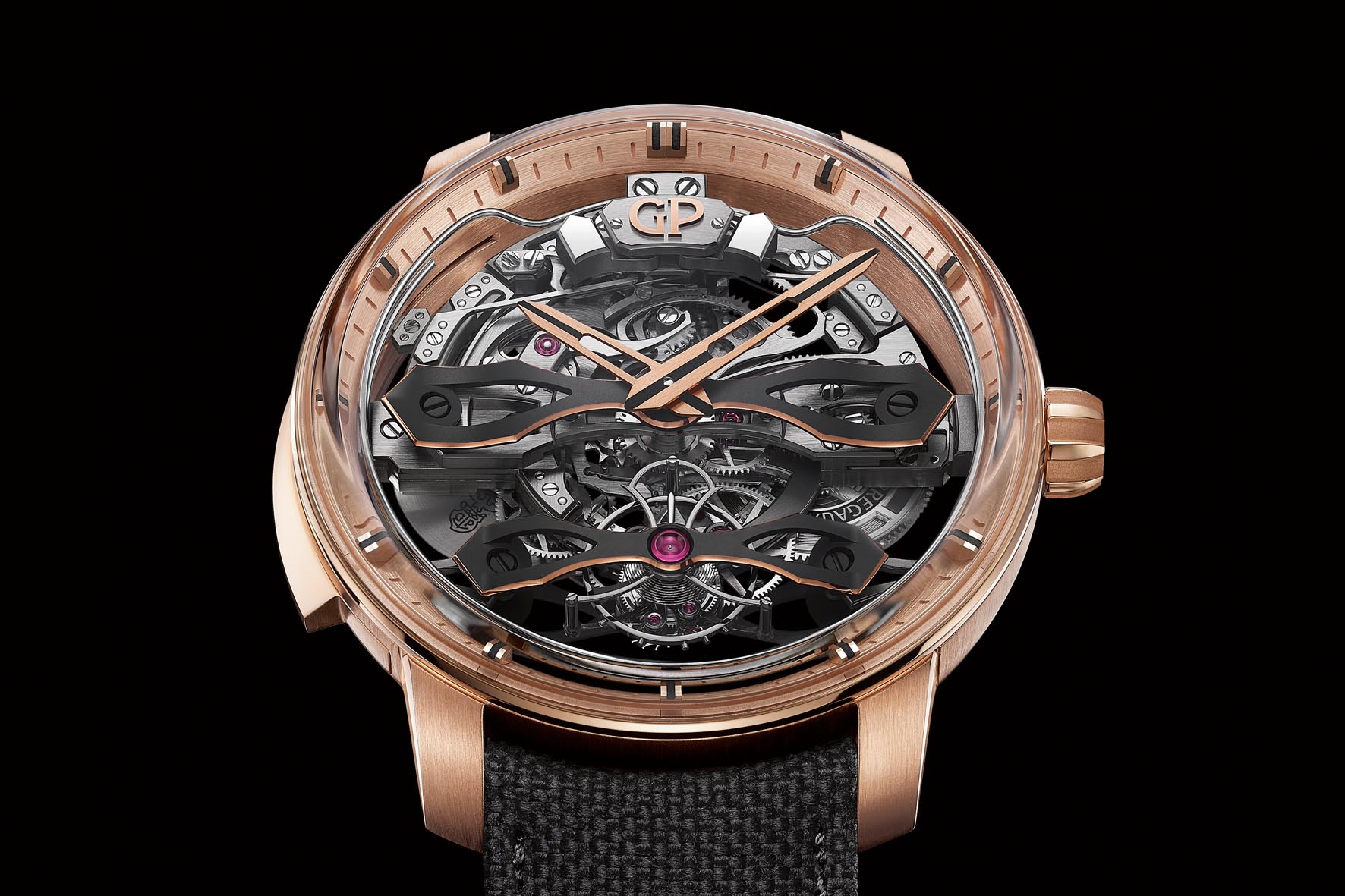
The lugs are relatively short, helping to visually contain the dimensions and ensuring that the watch rests on the sapphire crystal back rather than on the lugs themselves. In particular, they feature a delicate hand-polished bevel to ensure a perfect junction between each lug and the central part of the case.
The rose gold flange has machine-finished minute markings and is complemented by three-dimensional rose gold hour markers with luminescent material. Also coated with luminescent material, the openworked hands have a tapered design and a satin finish. The watch is completed by a black rubber strap with a woven effect and a triple folding clasp in rose gold.
MINUTE REPEATERS IN THE TRADITION OF GIRARD-PERREGAUX
All this is part of Girard-Perregaux’s great tradition of minute repeaters. The Maison has continuously refined and perfected its creations through the development of minute repeaters and cathedral or carillon striking mechanisms, combining gongs of different tones. The technical skills of Constant Girard-Perregaux first, and then his son Constant Girard-Gallet in the 19th century, gave rise to watches with grande sonneries and numerous timepieces combining minute repeaters with complications such as chronographs or complete calendars with moon phases.
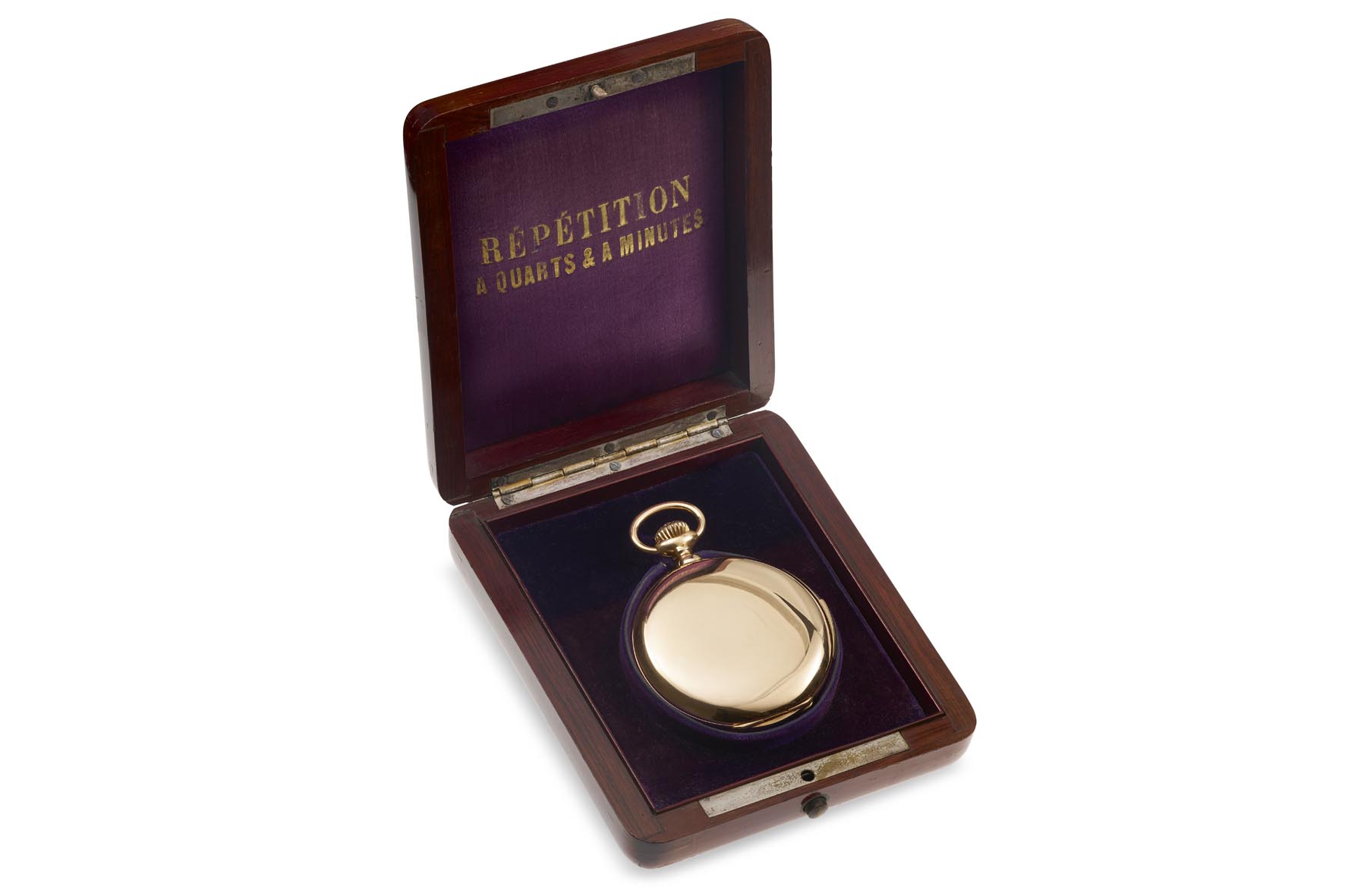
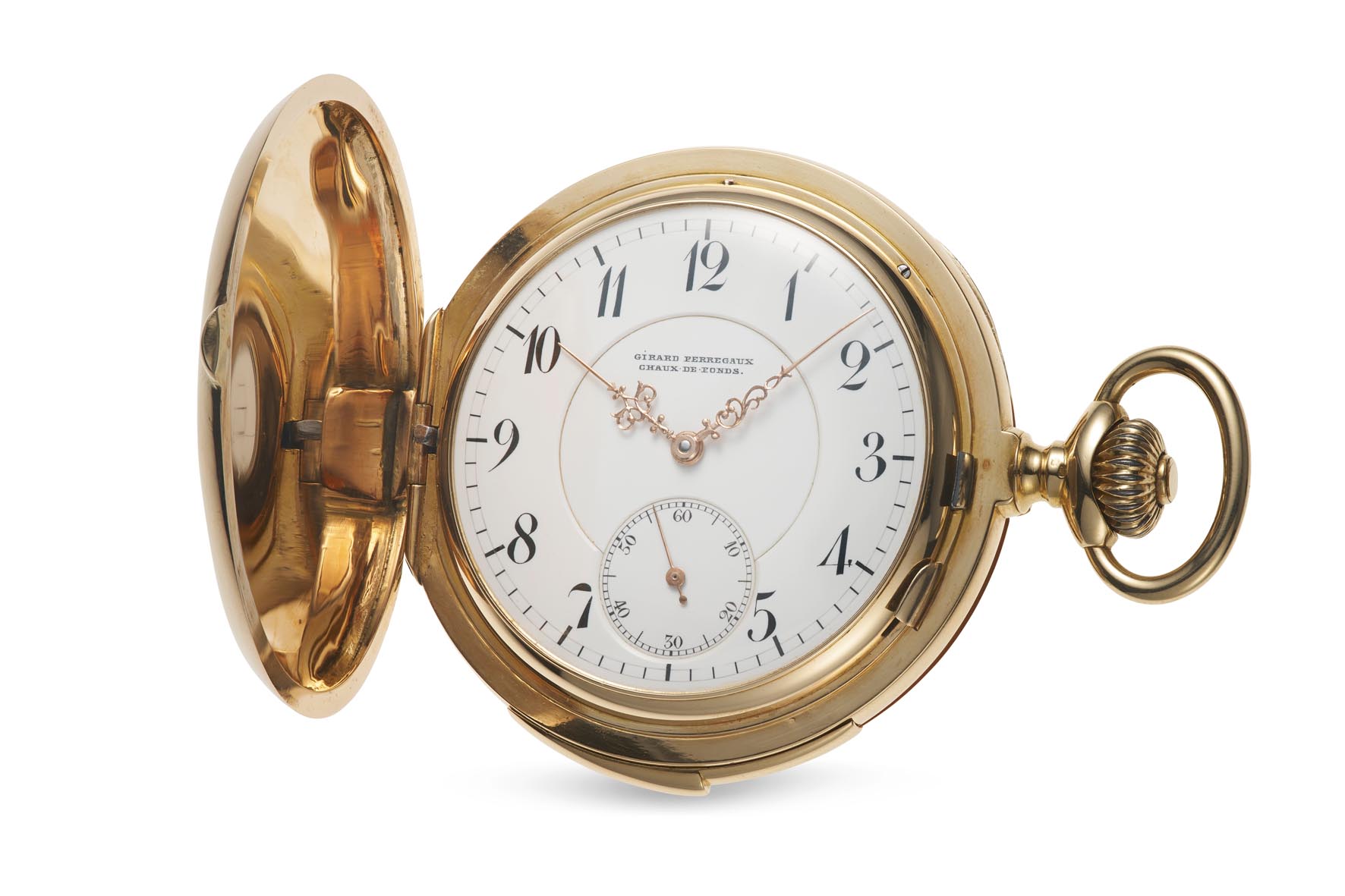
In the mid-1990s, Girard-Perregaux combined the minute repeater with the tourbillon, another major complication deeply rooted in its history of excellence. Miniaturised, the 20th-century minute repeater became wearable on the wrist in a waterproof case, whose limited space required new acoustic developments.
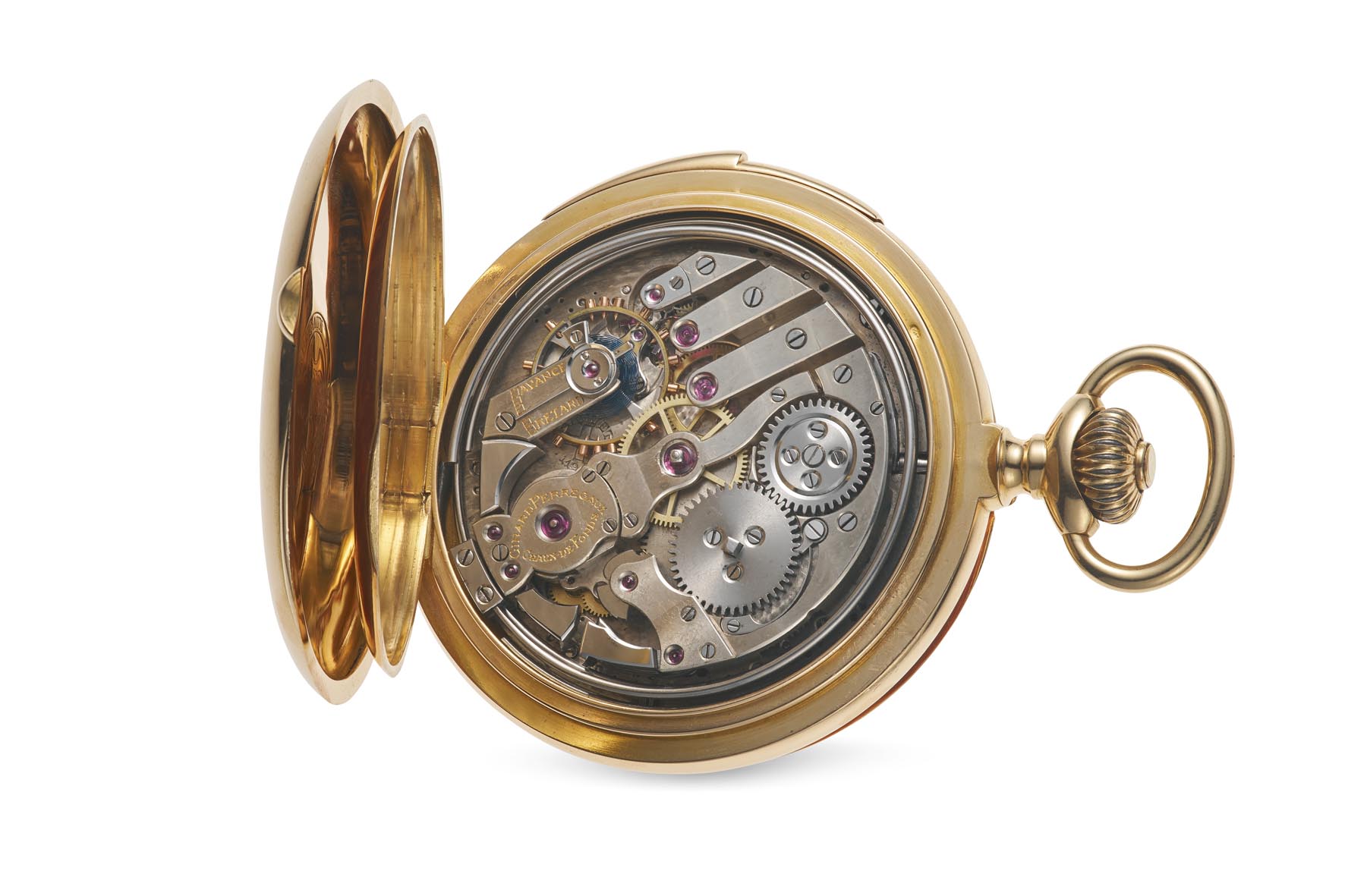
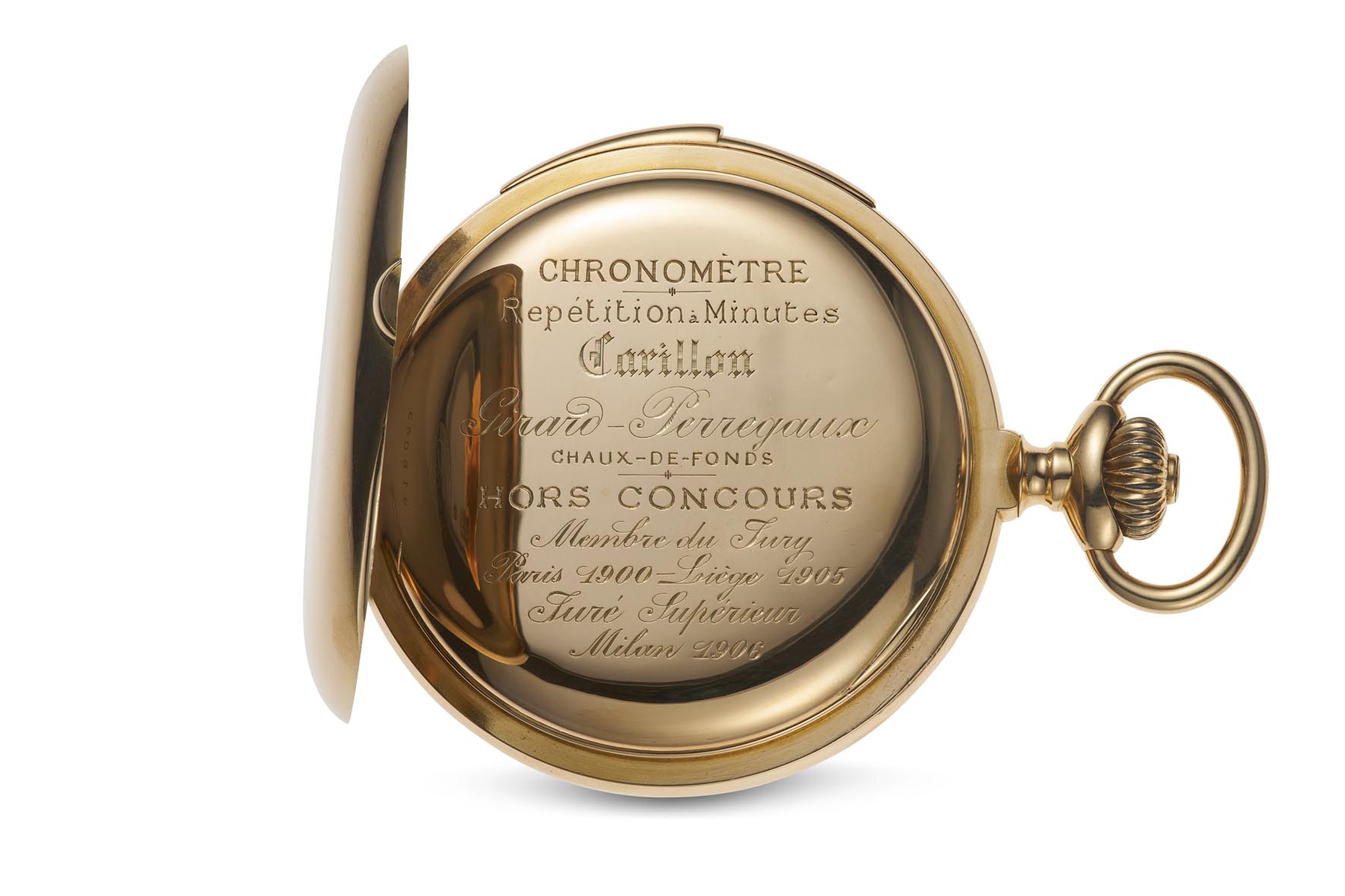
This is the case, for example, in the Opera I and II collections, equipped with a Westminster chime that plays a four-note melody: G, D, E and C. These are watches that require skills and know-how that only the great Manufactures have mastered. The extremely complex movement must be assembled, tested, adjusted and disassembled several times without damaging its components.
PRICE AND CONCLUSIONS
The price of this watch is certainly significant, at €. 593,000. However, the mechanical research, the preciousness of the materials and the years dedicated to its development certainly contribute to its exclusivity. For over two centuries, Girard-Perregaux has perfected this complication to bring it into line with each era, both from a technical point of view, combining it with a flying tourbillon, and from an aesthetic point of view, through its Flying Bridges concept and the skeletonised Three Bridges calibre. Each piece is a synthesis of centuries-old heritage and contemporary engineering: the Minute Repeater Flying Bridges is no exception.
By Davide Passoni