

The Frederique Constant Classic Worldtimer Manufacture is one of those watches that you recognise instantly. It is a model that has achieved such a striking balance that it seems almost impossible to improve upon. Almost, because at the latest Watches and Wonders, Frederique Constant unveiled an updated version of the Classic Worldtimer Manufacture that won over practically everyone, despite the fact that moving even a single hour marker on the dial seemed a risky move.
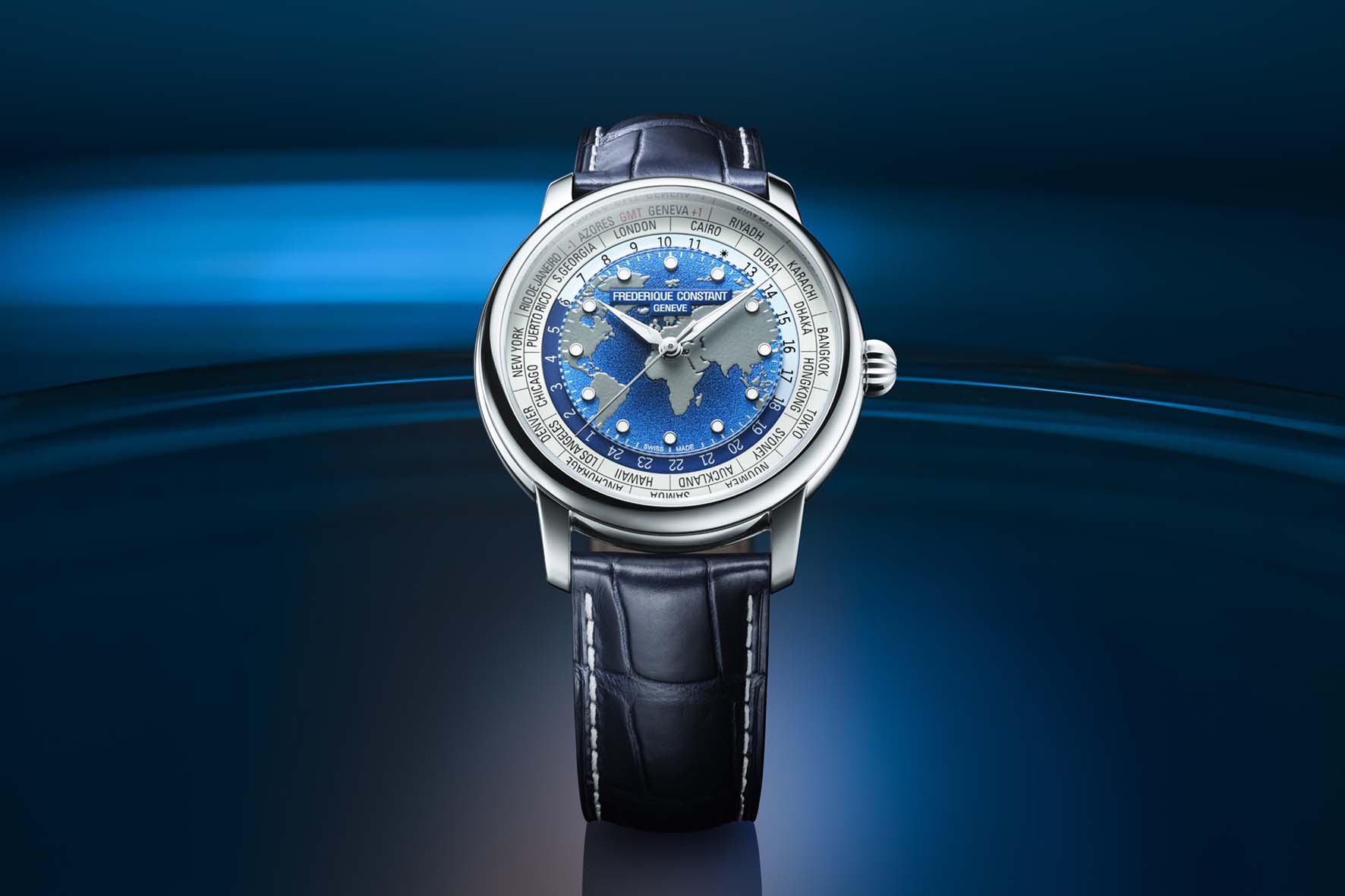
In the following article, we’ll briefly recount the origins of the Classic Worldtimer Manufacture, go into detail about the features of the new models, explain why Frederique Constant is now so closely associated with this model, and include some details on the new in-house calibre.
UPDATES TO THE CLASSIC WORLDTIMER MANUFACTURE
Ever since its launch in 2012, the Classic Worldtimer Manufacture has been one of Frederique Constant’s most popular models. Offered over the years in various dial colours and different case and dial materials, its proportions, dimensions and layout have remained essentially unchanged for almost 15 years. That is why this year’s update is so significant.
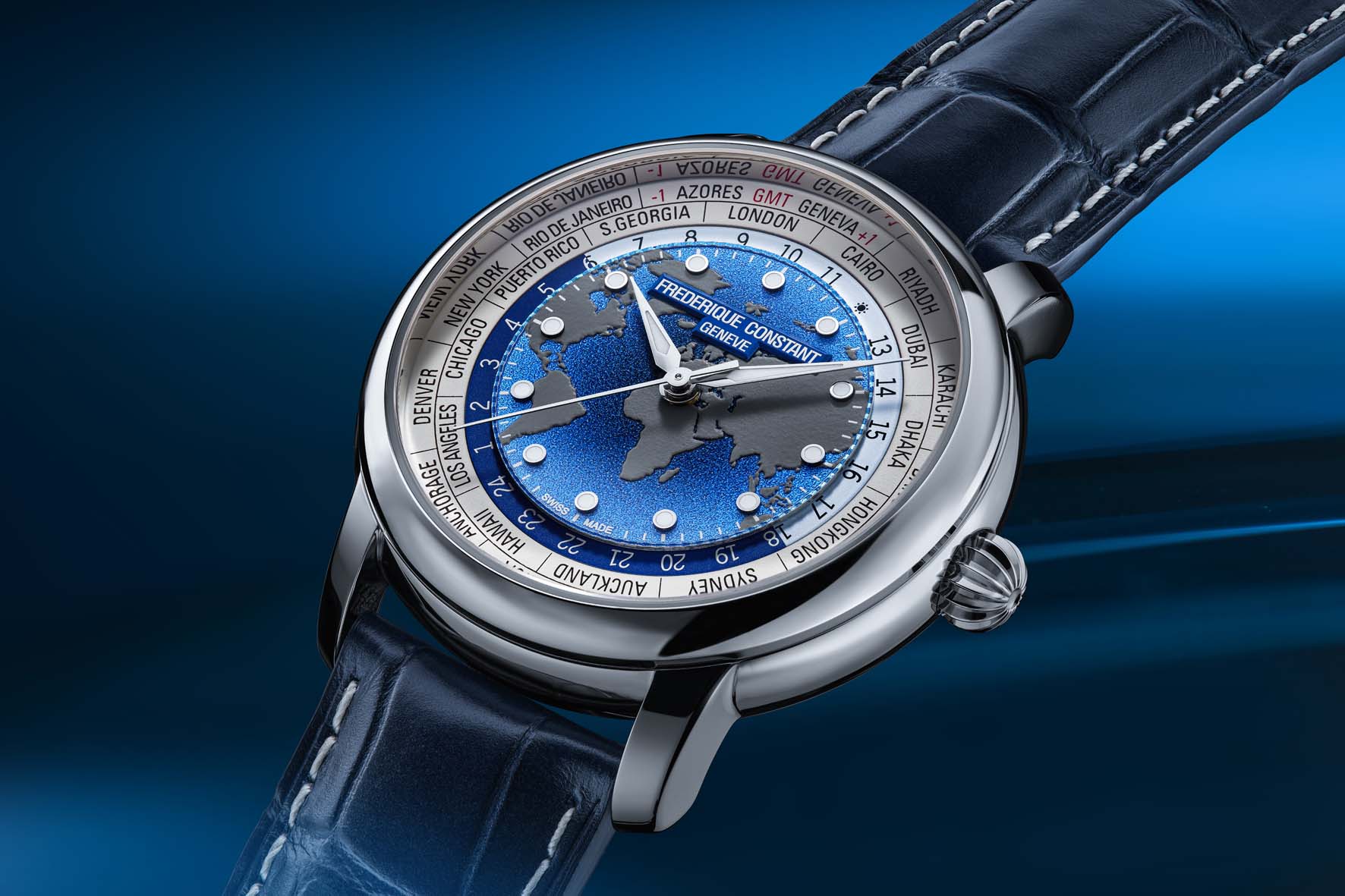
The new model, from the manufacture founded by Peter and Aletta Stas, features a new calibre, new case dimensions, improved legibility, a power reserve that has almost doubled, and three new dial variants. This is a complex overhaul, which goes beyond a mere restyling to encompass all the aspects that continue to make this watch a best-seller. This is a project of considerable significance.
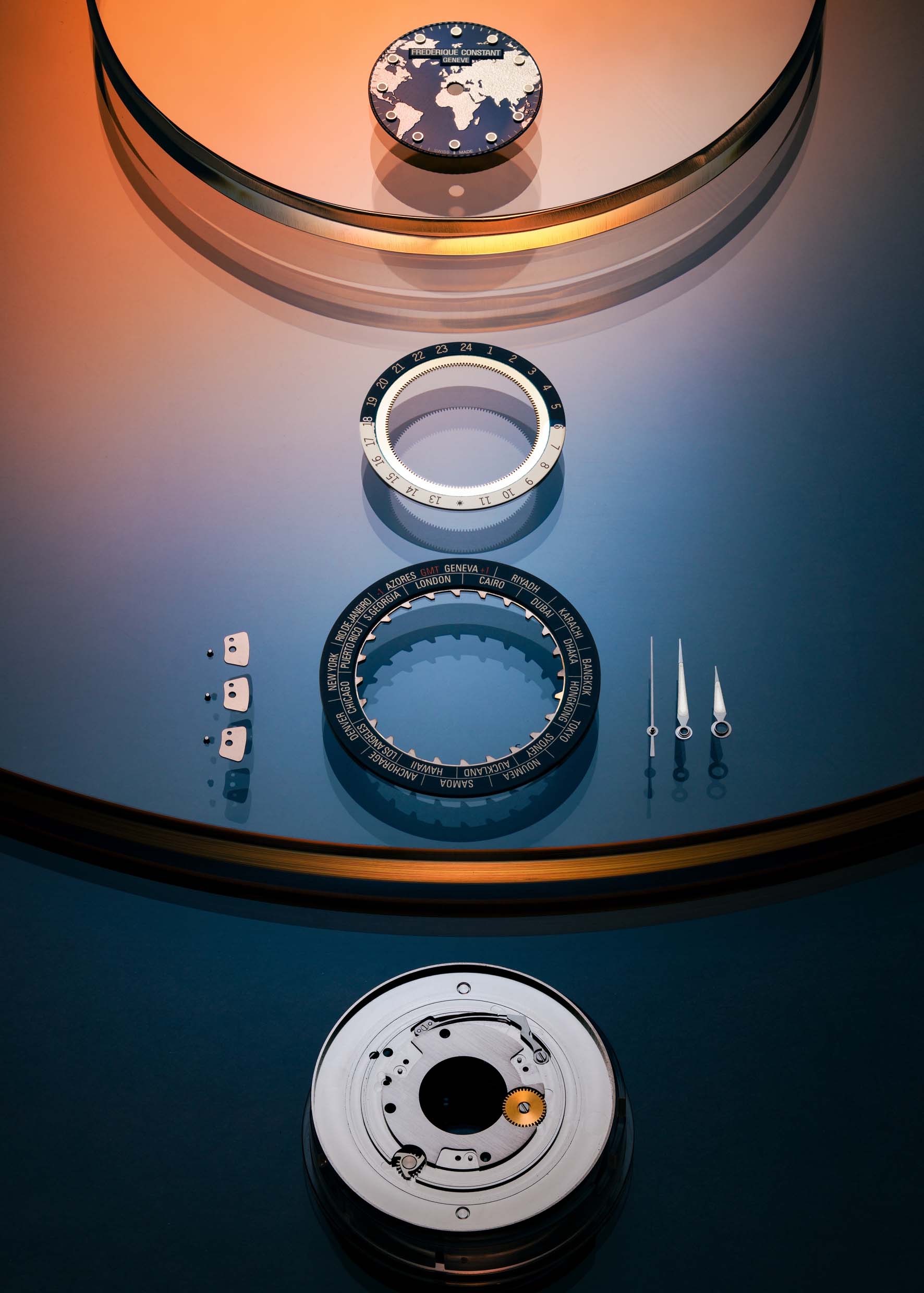
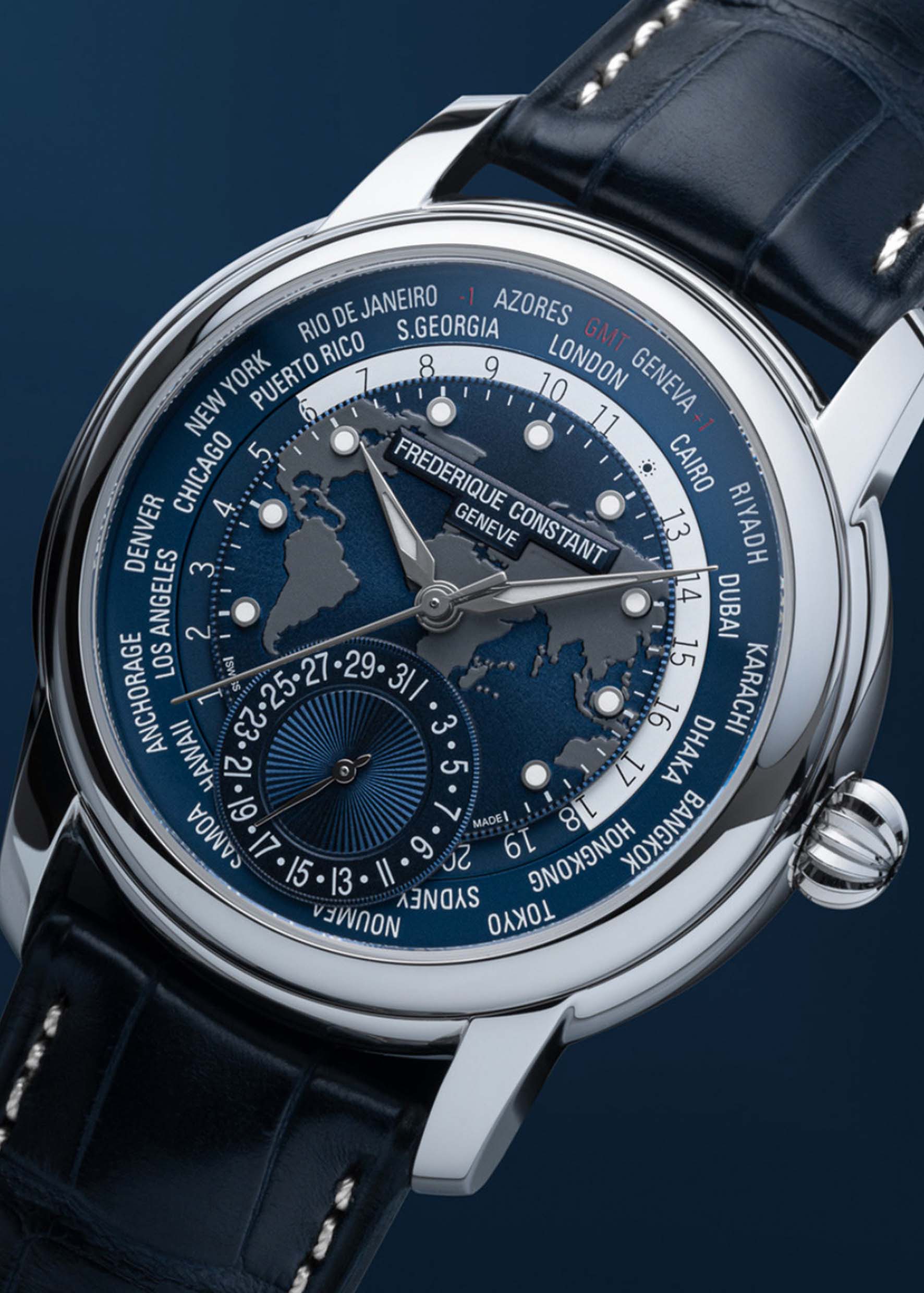
Although it has always been highly regarded, the Classic Worldtimer Manufacture had, over time, revealed a couple of areas where enthusiasts were calling for some updates. Specifically, the legibility of a dial renowned for its originality and a diameter no longer entirely in line with market demands were the areas requiring attention. It was precisely in these two areas that the manufacture focused its efforts, updating the watch without compromising its aesthetic essence whilst enhancing its mechanical performance.
THE CASE AND THE DIAL
From an aesthetic perspective, Frederique Constant has worked on the case diameter and the dial layout. Starting with the diameter, the new Classic Worldtimer Manufacture models feature a reduction of 2 mm, from 42 to 40. For fans of the original version, the brand will continue to offer the 42 mm models in its range, but the updated versions undoubtedly stand out for their more contemporary look and improved wearability.
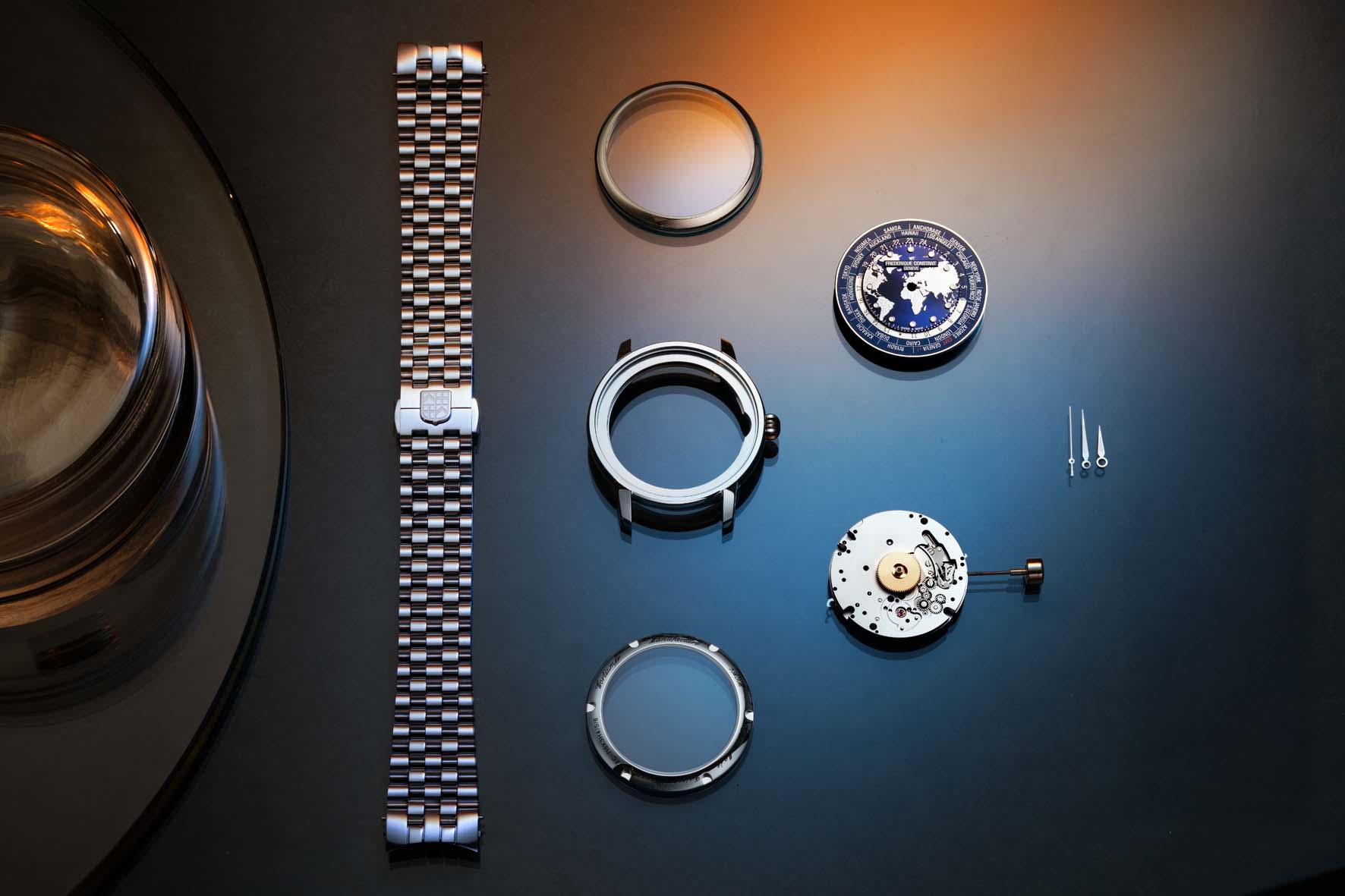
We note a slight increase in the thickness of the steel case, from 12.25 mm to 12.53 mm – mainly due to the new calibre – though this does not compromise comfort on the wrist. This is also thanks to the fact that the manufacturer has retained the classic three-part structure of the case, which remains elegant thanks to its characteristic polished finish.
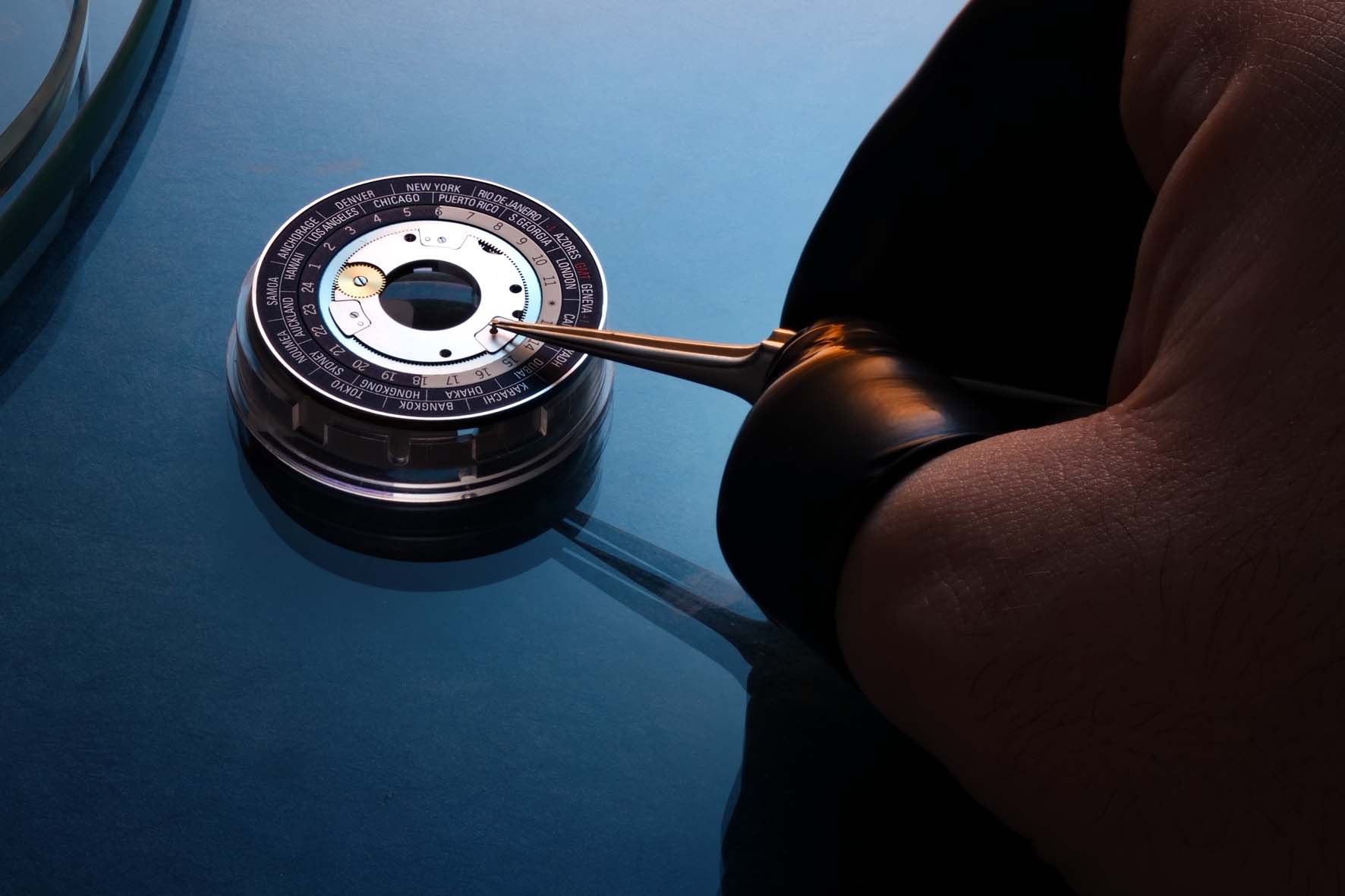
The updates to the dial, on the other hand, are far more noticeable, as they serve to streamline and simplify its design. This was no easy task, given the very nature of a worldtimer watch, where the wealth of information – and the resulting clutter – is one of its key features. The previous version of the Classic Worldtimer Manufacture, which was very well known, featured the 24-hour ring, the city ring, the embossed world map and, very prominent, a large hand-operated date display at 6 o’clock. It was precisely this date display that slightly detracted from the overall legibility, which remained excellent despite the large amount of information to be read: the date display partially obscured the city and 24-hour rings running beneath it.

The solution, then, was to remove the date display altogether. A bold move, as it was one of the watch’s most distinctive features. Yet it was a move that was well received and, as we noted at the outset, won the approval of virtually everyone. The new Classic Worldtimer Manufacture is, in fact, more balanced, with every piece of information clearly visible.
THE NEW CLASSIC WORLDTIMER MANUFACTURE MODELS
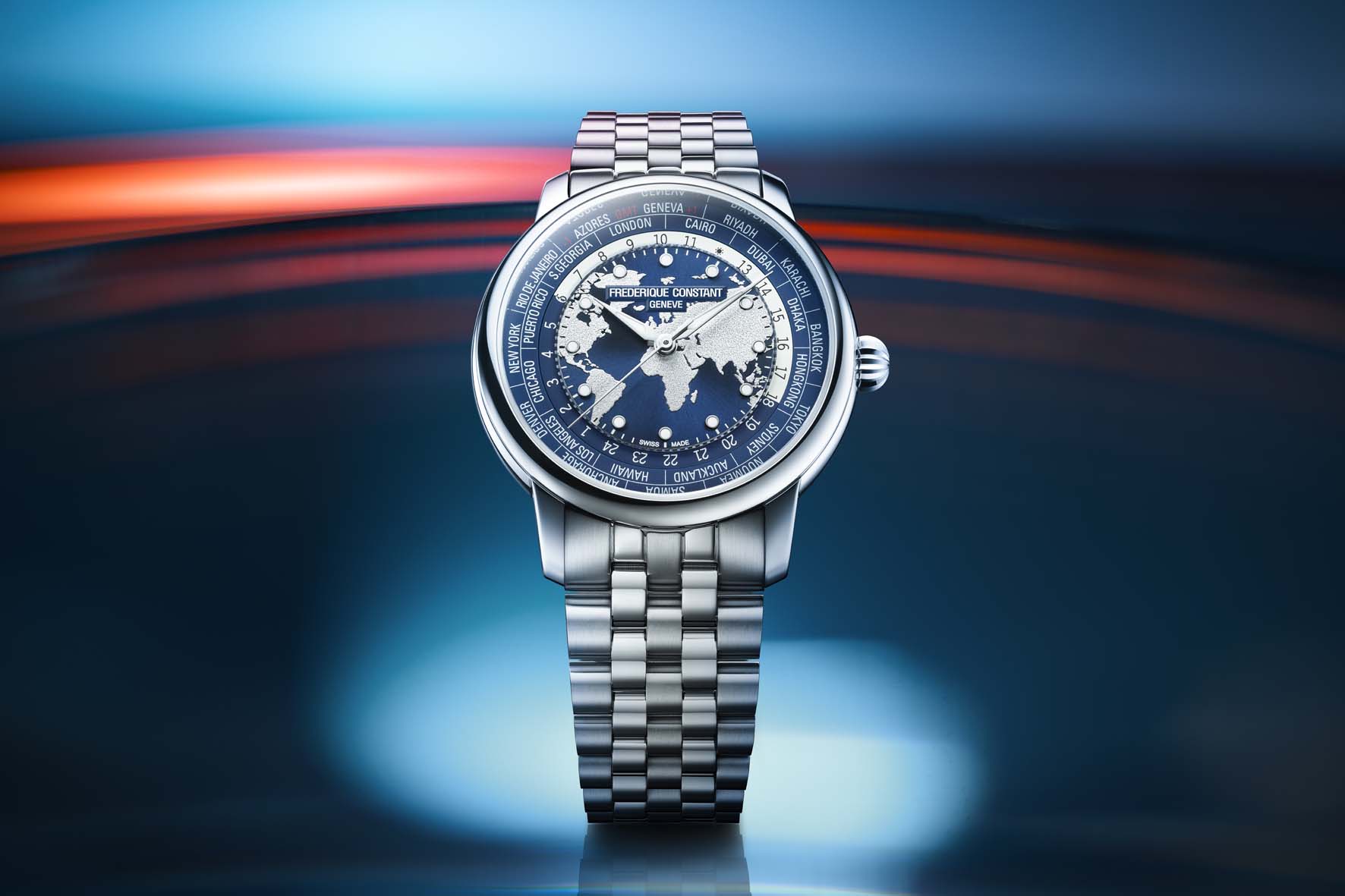
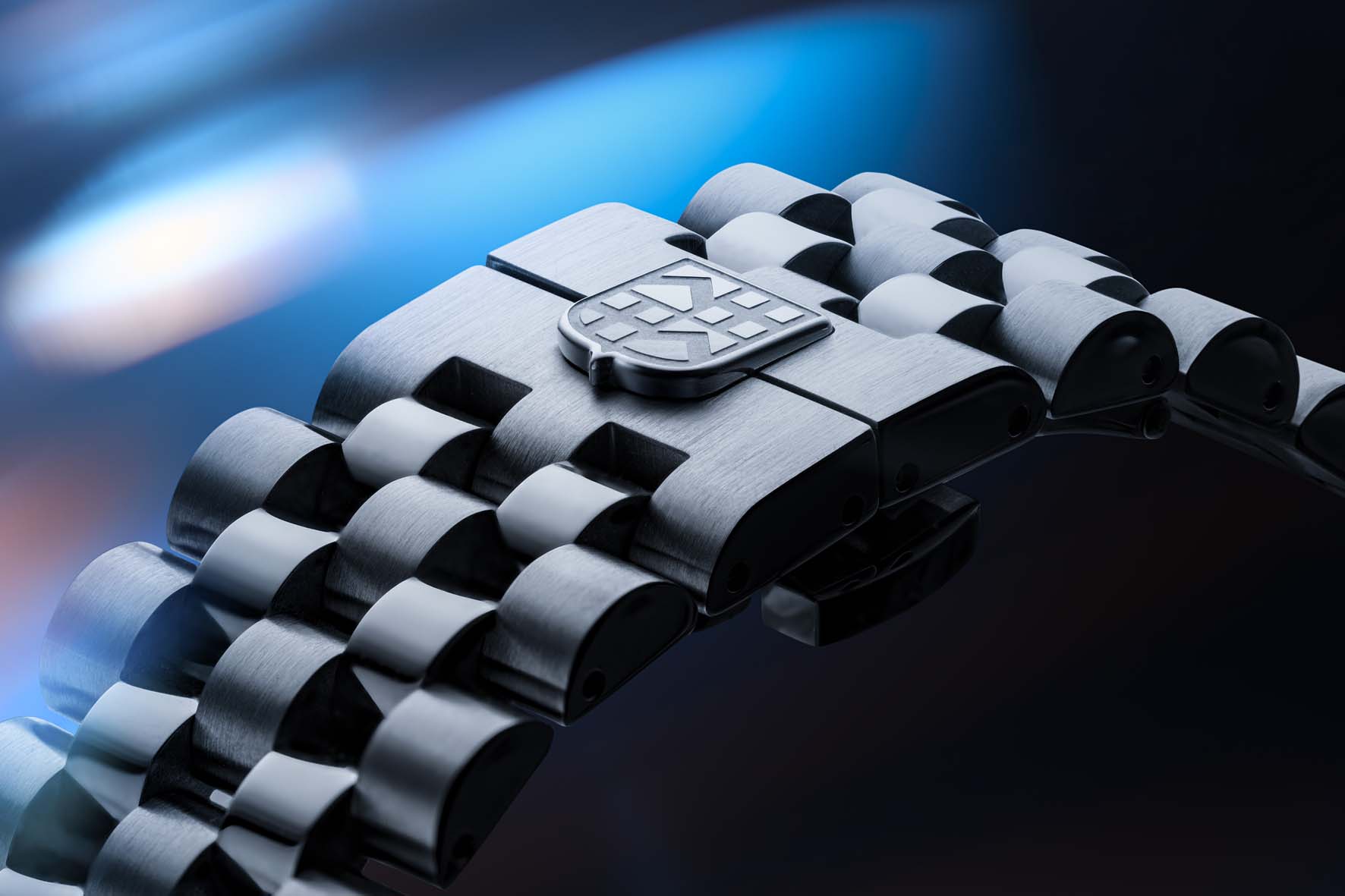
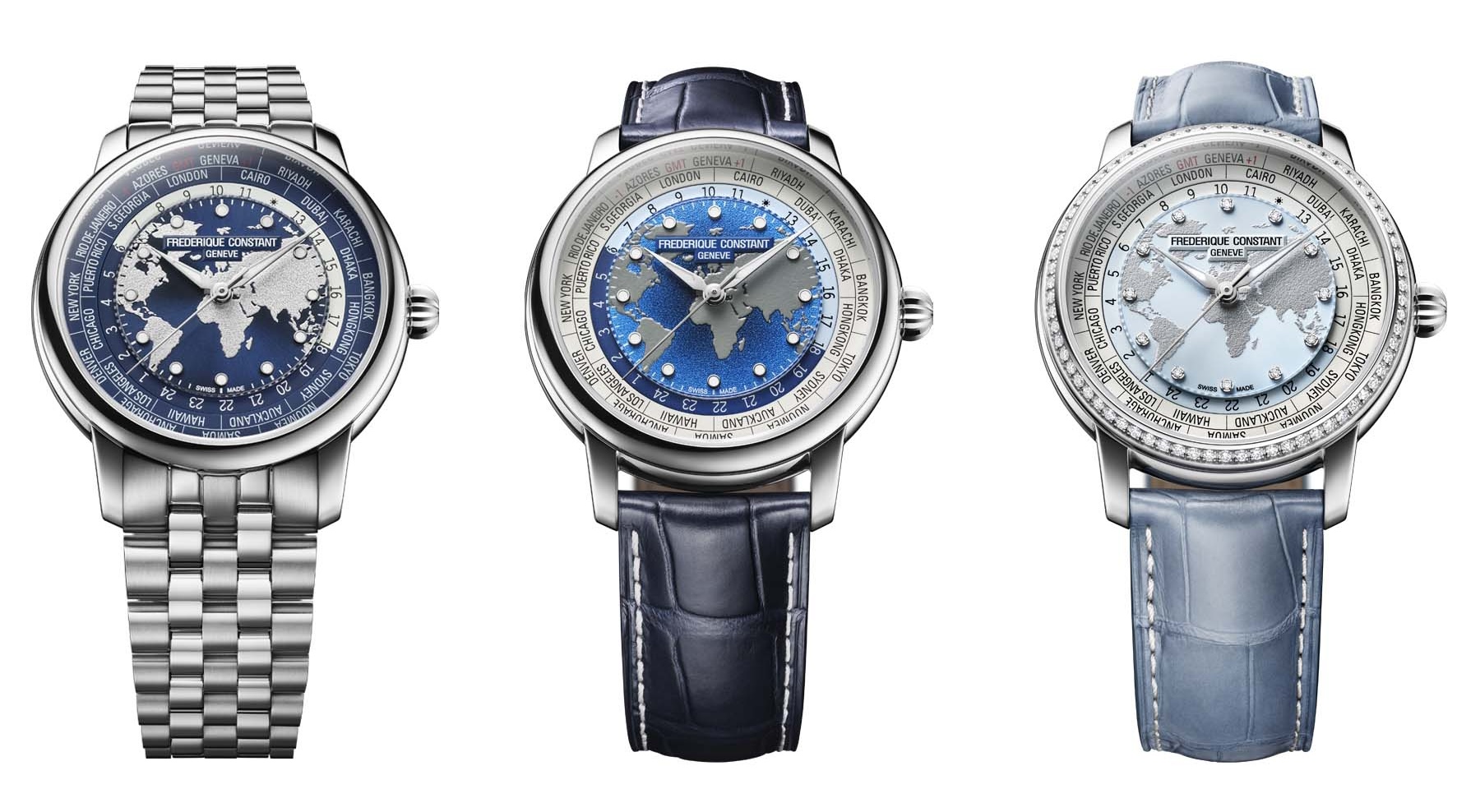
Frederique Constant’s designers have retained the same colour scheme of white and blue that characterised some of the previous models, focusing instead on the details. The result is three new variants, with various colour and strap options. There is a Classic Worldtimer Manufacture featuring navy blue oceans on the dial surrounding the embossed grey continents, whilst the hour and city rings are also blue. Of particular interest is the version with gradient blue oceans and a grené finish, a light blue and dark blue 24-hour ring, and a cream-coloured hour ring. This version comes with an interchangeable blue alligator strap or a five-row steel bracelet, with alternating satin-finished and mirror-polished surfaces. The navy blue model is available with a bracelet only, featuring a convenient butterfly clasp.
To mark the launch of the new collection, the manufacture has also adorned the Classic Worldtimer Manufacture with precious stones. There is, in fact, a limited-edition model, produced in a run of 88 pieces, featuring 70 brilliant-cut diamonds on the bezel – totalling 0.785 carats – and 12 diamond-set hour markers, with a combined weight of 0.053 carats. Its ice-blue dial with a sunburst finish is particularly striking, against which the grey embossed world map stands out. The watch is complemented by two interchangeable alligator straps.
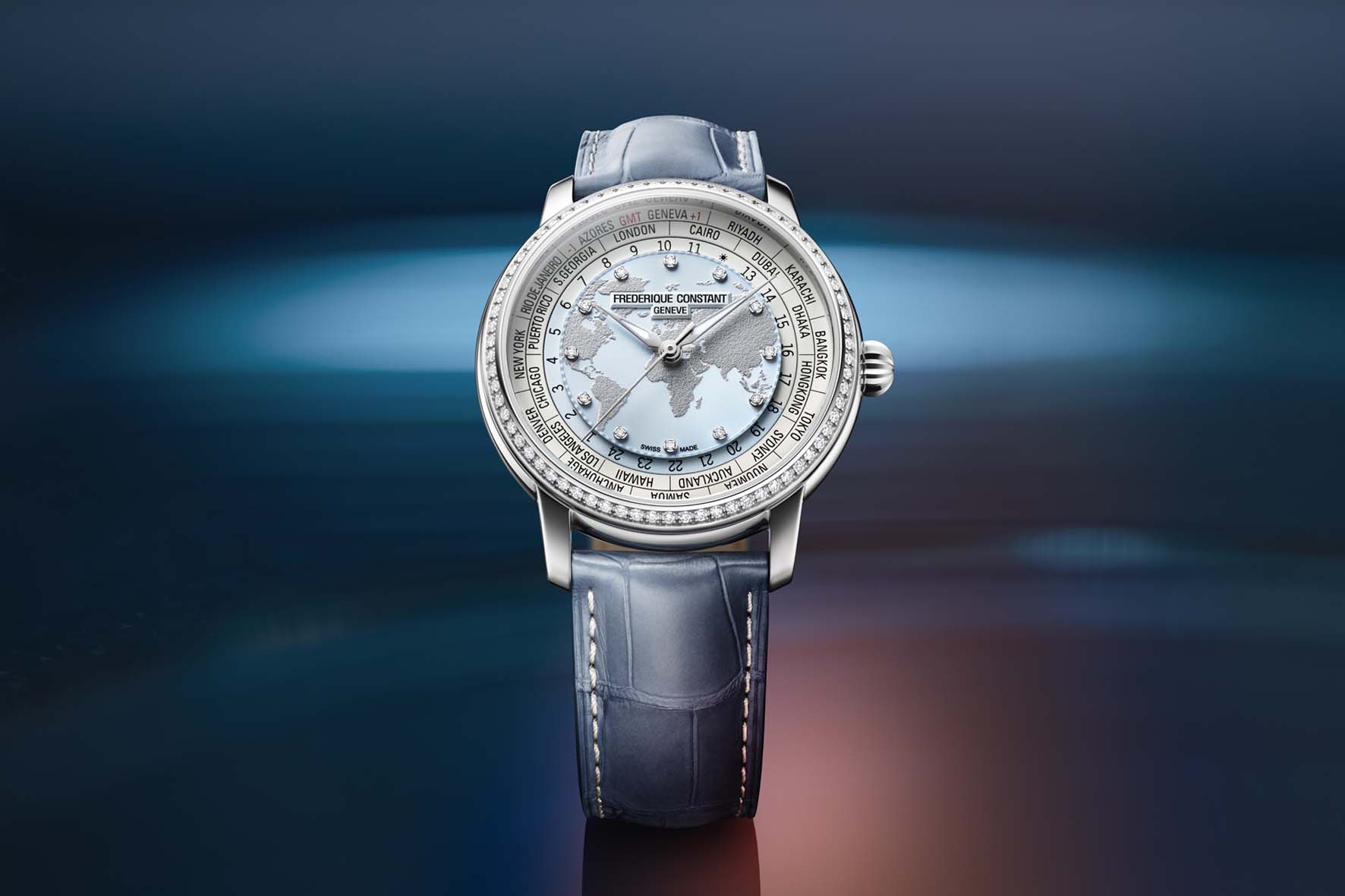
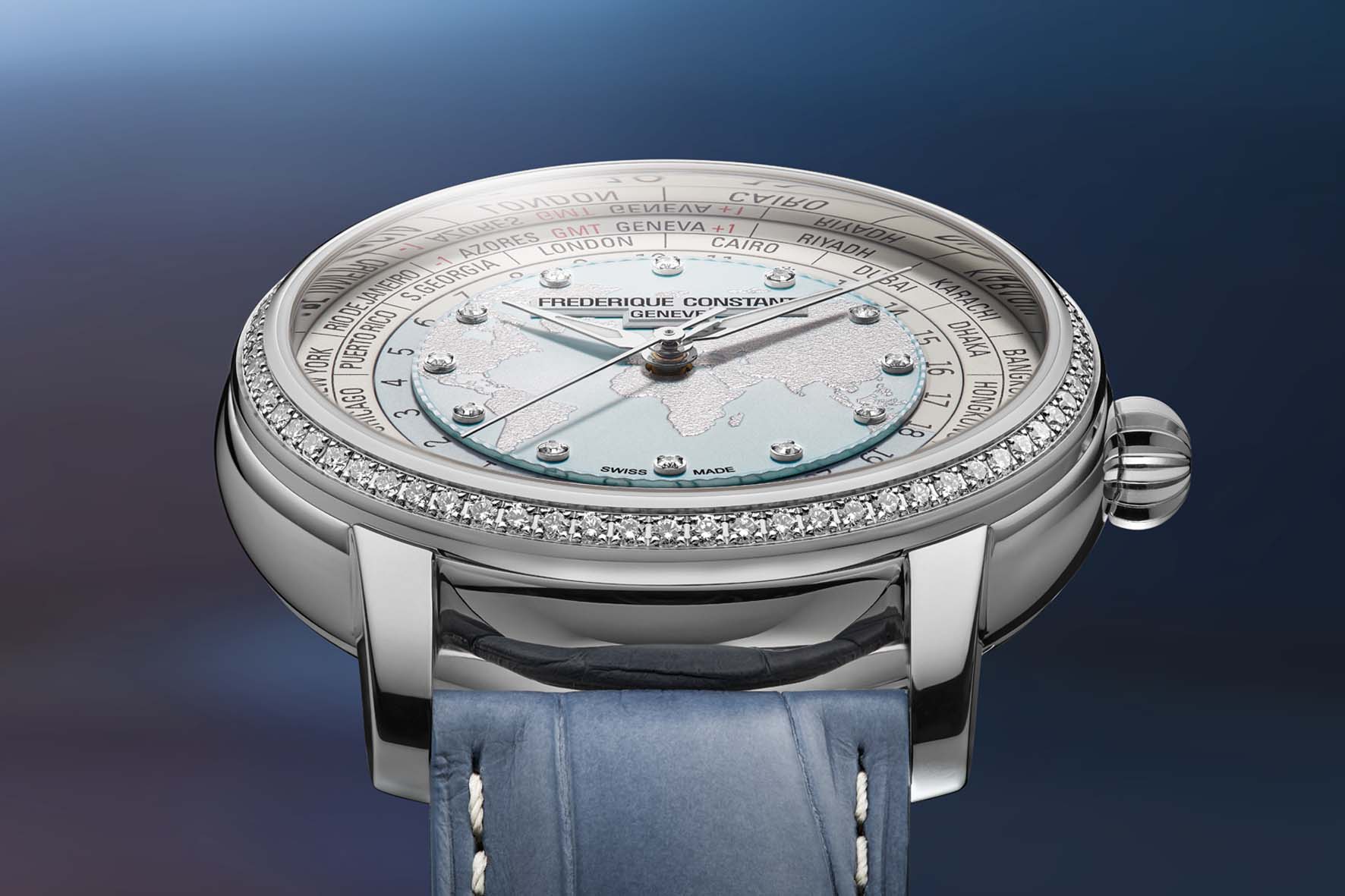
All the new models fully confirm the nature of the Classic Worldtimer Manufacture as a true world timer. The simultaneous display of the time across all 24 reference time zones is accompanied by the names of the cities representing them, shown around the edge of the dial. When the home or reference city is aligned at 12 o’clock, the 24-hour disc indicates the corresponding time in all other time zones, alongside a two-tone day/night indicator.
THE FREDERIQUE CONSTANT FC-719 CALIBRE
A final word on the calibre, where the brand has made another significant update. Firstly, this is the 35th movement developed by the manufacture in its short history. The FC-719 automatic calibre is essentially an evolution of the FC-718, the most obvious improvement being the increase in power reserve. The power reserve has been increased by around 90 per cent, rising from 38 to 72 hours. This result was achieved both by lengthening the mainspring and by revising the composition of the metal alloy from which it is made.

The movement – visible through the transparent case back – operates at 28,800 vibrations per hour and is distinguished by its meticulous finishing, which includes both perlage and radial Côtes de Genève patterns. The satin-finished rotor is also decorated with a spiral motif. The work carried out by Frederique Constant’s engineers on the calibre, in terms of its dimensions, is particularly noteworthy. The new world time module adds just 24 components and 1.6 mm in thickness to the previous movement: an excellent result for a complication that displays all 24 reference time zones simultaneously in real time.
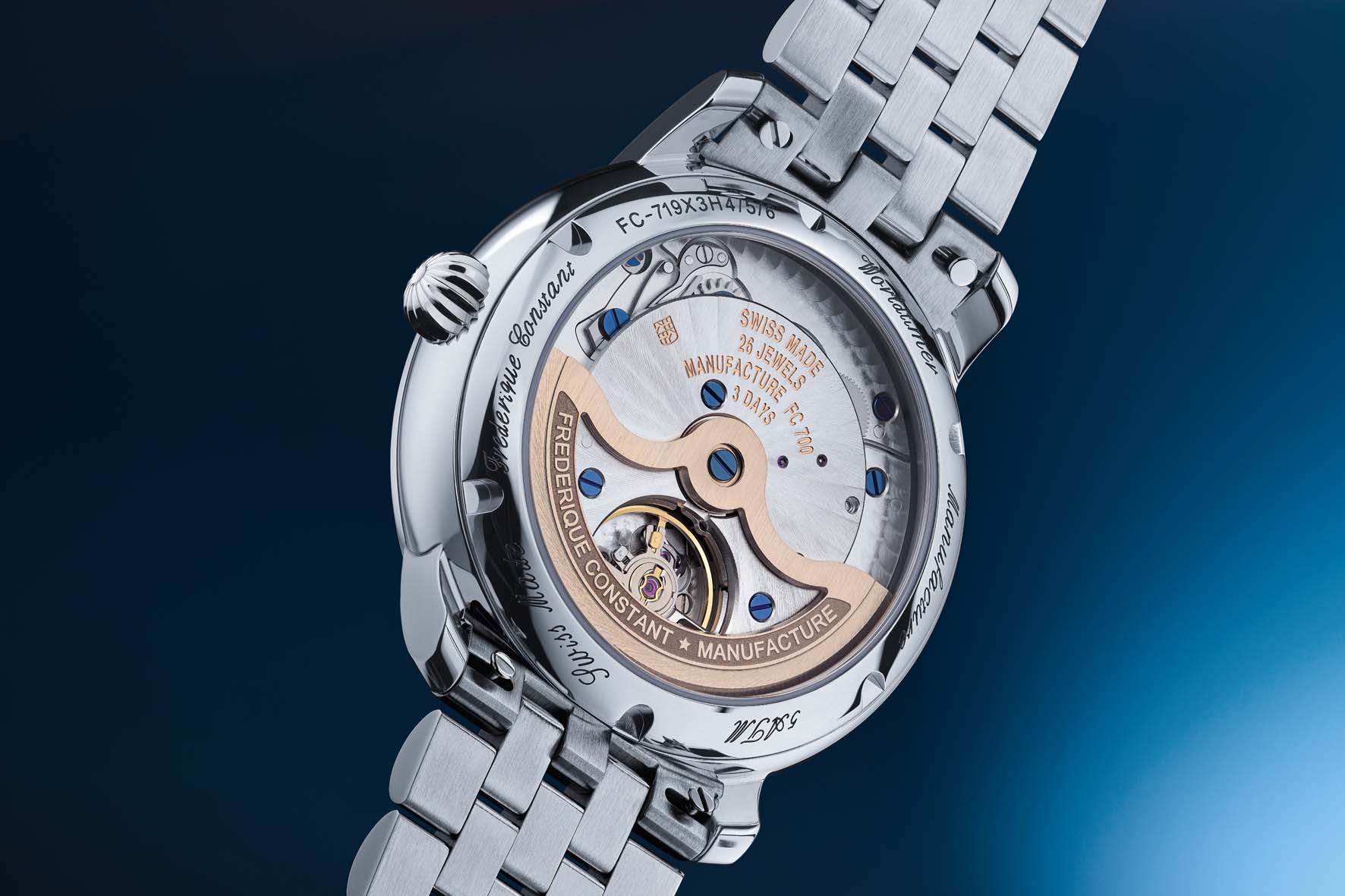
The beauty of the watch also lies in the fact that the new version of Frederique Constant’s Classic Worldtimer Manufacture translates mechanical complexity into ease of use. All adjustments can be made via the large onion-shaped crown, which is also a hallmark of the collection. To wind the watch, pull the crown out to the first position; to select the city on the time zone disc, move it to the second position and turn it anti-clockwise; the local time is set by pulling the crown out further, to the third position. This approach not only enhances practicality but also offers a significant advantage: the absence of integrated pushers helps to maintain the case’s water resistance up to 5 bar.
CONCLUSIONS AND PRICES
Essentially, the restyling process that led to the launch of the new Classic Worldtimer Manufacture models demonstrates Frederique Constant’s ability to listen to market demands and respond accordingly. The trend towards smaller case diameters has led to a revised case design. The increased power reserve meets the growing demand for reliable movements that allow the watch to be left in a drawer for two days or more without issue. The clean design of the dial appeals to those who prefer an aesthetic that does not compromise functionality.
In short, this is a good demonstration of the brand’s ability to position a product with undiminished appeal on the market. All this without compromising the brand’s commitment to craftsmanship, even when it comes to pricing. As Frederique Constant has always aimed to offer high-quality, affordable Swiss watches, its approach to positioning has also been carefully considered. The diamond-set model costs € 7,995, whilst the other two are priced at € 4,995. Although they cost € 400 more than the 42 mm models with a date display, the brand has managed to keep them under € 5,000. This is a sound strategy in an increasingly competitive price segment, which is often populated by watches that fall short in terms of quality. This is certainly not the case here
By Davide Passoni