

We have said it before: what Frederique Constant has achieved in less than four decades, in terms of calibre development and aesthetic evolution, is truly remarkable. This steady improvement in the overall quality of its watches reaches a new high with the recently unveiled Classic Tourbillon Perpetual Calendar Manufacture.
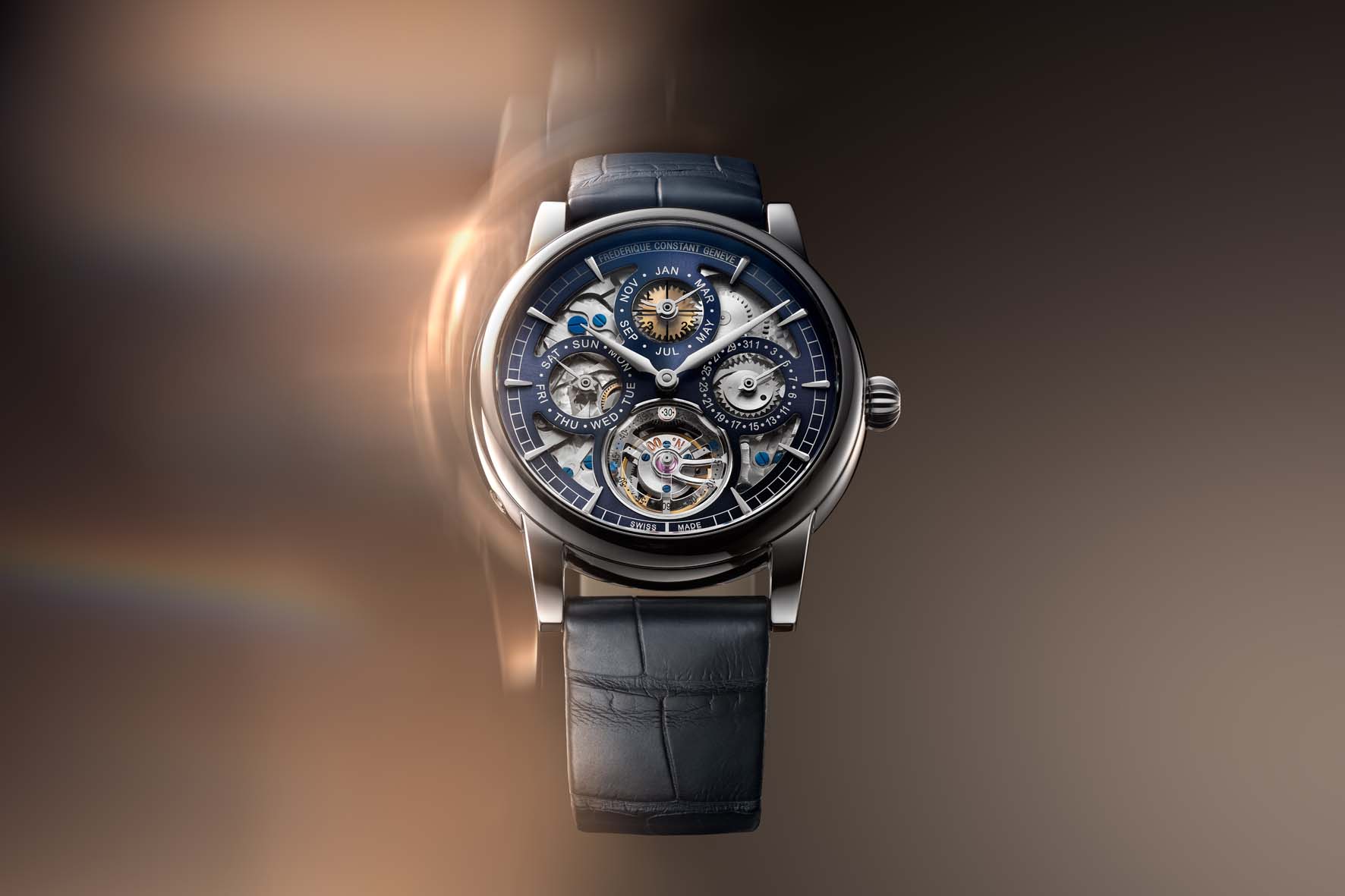
Whilst the combination of a tourbillon and a perpetual calendar is not new to Frederique Constant’s Classic collection, the new Classic Tourbillon Perpetual Calendar Manufacture takes this concept to an even higher level. It does so through the intricate craftsmanship of its dial, whose skeletonised construction makes extensive use of carefully finished sapphire crystal. The result is a combination of mechanics and transparency unlike anything previously seen from the Geneva-based brand.
SAPPHIRE AND TRANSPARENCY IN THE CLASSIC TOURBILLON PERPETUAL CALENDAR MANUFACTURE
The watch’s standout feature is, of course, the dial. This is both because, in a perpetual calendar with a tourbillon, it is the focal point of its complications, and because of the solution Frederique Constant has applied to the skeletonisation. The manufactory’s craftsmen have worked with sapphire crystal without using the conventional single disc used for the dial, supported by a brass plate to integrate the various elements and sub-dials. Here, each sub-dial aperture is formed from an ultra-thin sapphire disc, whilst the perpetual calendar indicators remain on the brass plate. The remaining part of the sapphire dial, which surrounds the sub-dials, is not a single shaped disc, but rather four distinct crescent-shaped sections, each machined separately and fixed to the case middle. In total, therefore, there are seven sapphire sections, each independent of the others.
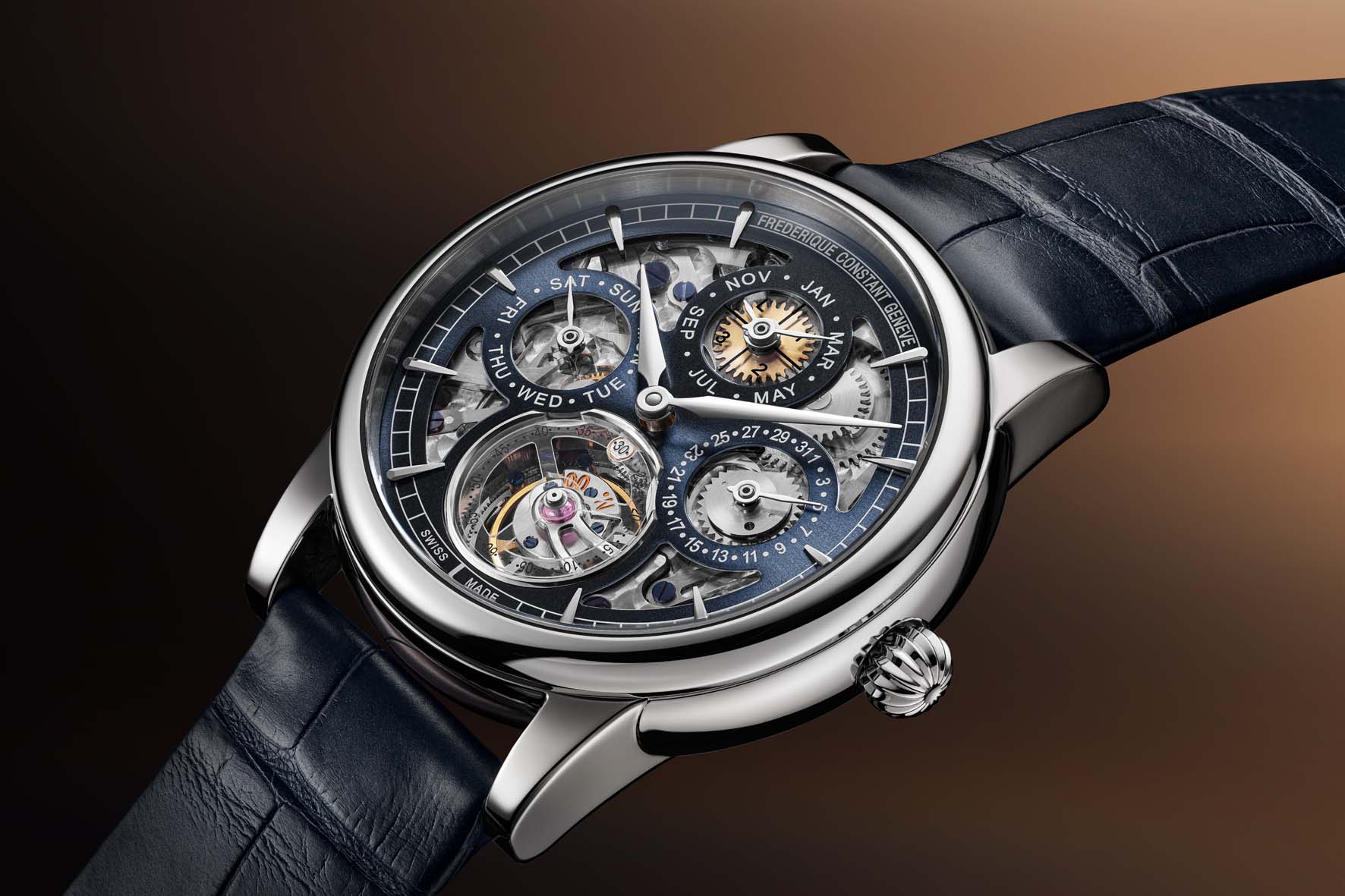
The result is a dial that feels both light and three-dimensional, retaining the familiar layout of other watches in the collection. In the new Classic Tourbillon Perpetual Calendar Manufacture, however, it gains an additional detail: an aesthetic and mechanical refinement involving the tourbillon.
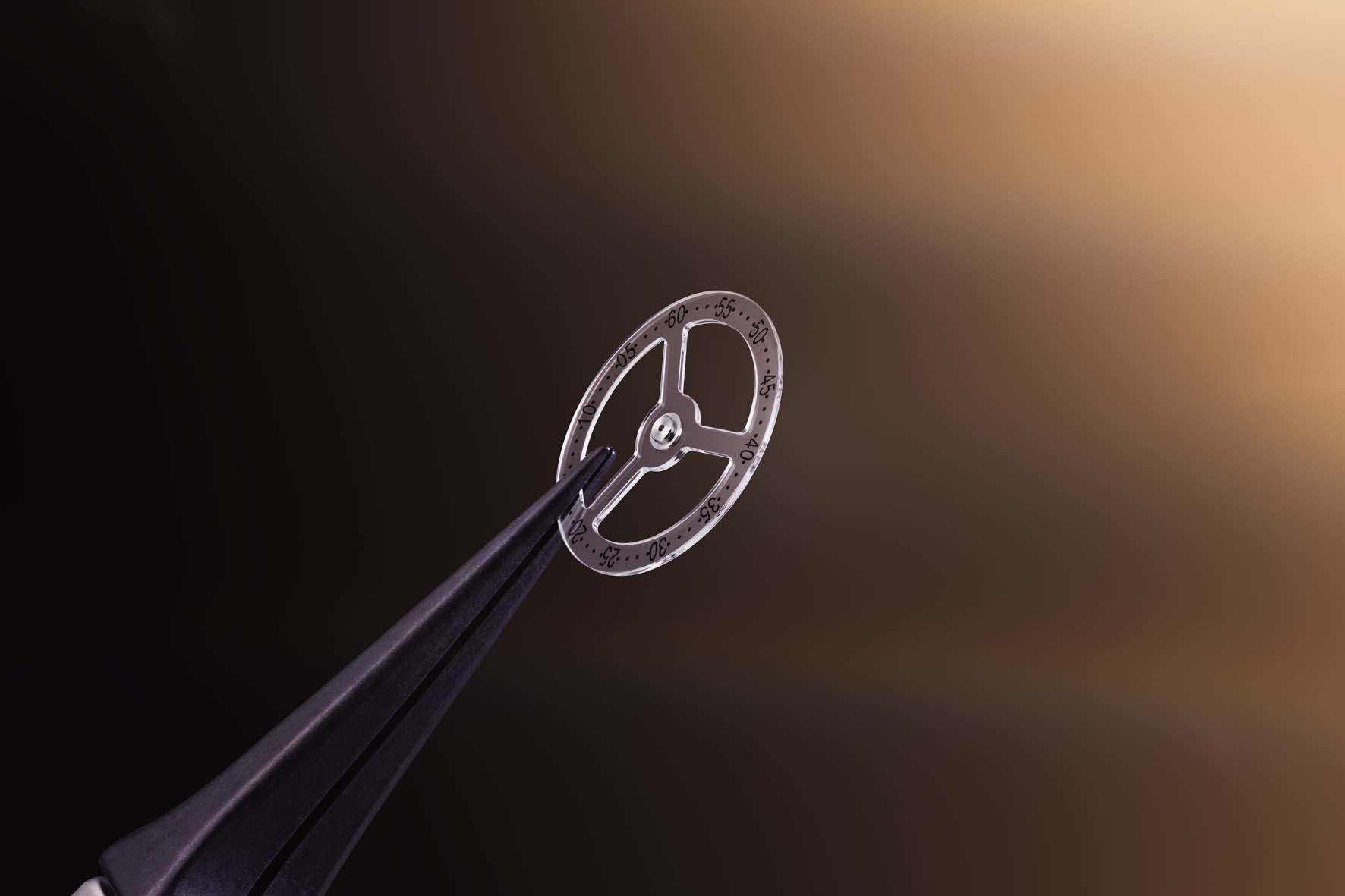
Where a one-minute tourbillon also displays the small seconds, we would normally expect to see a small hand attached to its cage. Here, Frederique Constant has opted for a different and innovative solution: a small seconds indicator that the brand describes as ‘discreet’. An ultra-thin disc of transparent quartz, which displays the seconds, is anchored to the tourbillon cage and thus completes a full rotation in one minute. The passing seconds are indicated within a gold-rimmed aperture situated at the end of the vertical arm of the tourbillon’s upper bridge. In other words, rather than a hand moving against a fixed seconds scale, the scale itself rotates with the tourbillon, with the seconds revealed through the aperture.
THE FREDERIQUE CONSTANT FC-975 CALIBRE
As for reading the information on the dial, the Classic Tourbillon Perpetual Calendar Manufacture follows the layout also adopted in the other watches in the collection. At 12 o’clock, the month is indicated by a hand on the outer ring of the sub-dial. Inside this, divided into four sections, a smaller hand indicates the leap-year cycle on a scale from 1 to 3: the fourth year is indicated by the letter L, which stands for ‘leap year’. Completing the layout of the other displays, the sub-dial at 3 o’clock displays the date, while the one at 9 o’clock shows the day of the week.
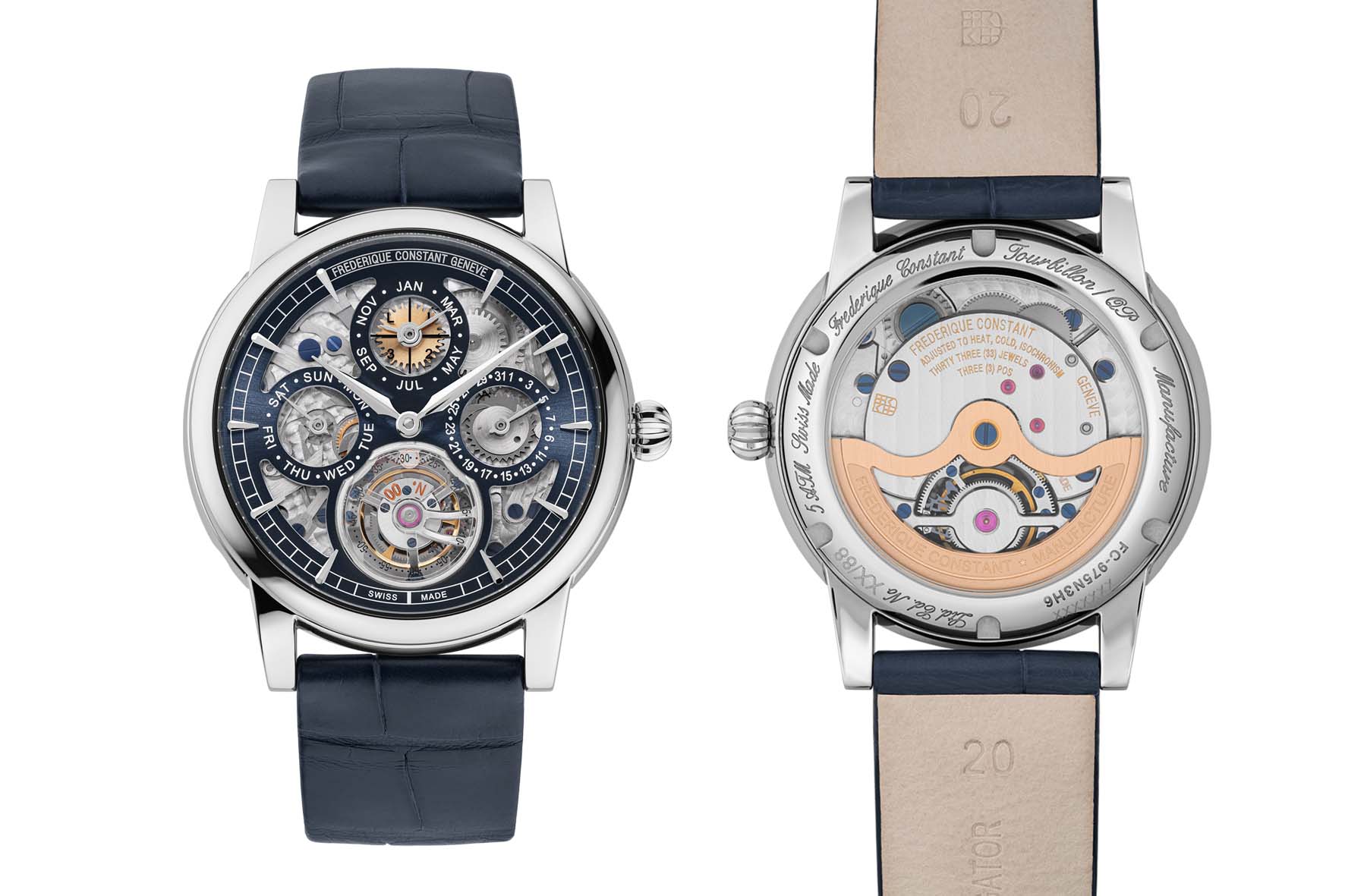
All these displays are driven by the in-house calibre FC-975, developed specifically by Frederique Constant to manage both the perpetual calendar and the tourbillon. The calibre is also used in other references within the collection, and this is not the first time Frederique Constant has chosen to put it on display. Never before, however, has this been achieved through the intricate arrangement of sapphire crystals that adorns this Classic Tourbillon Perpetual Calendar Manufacture.
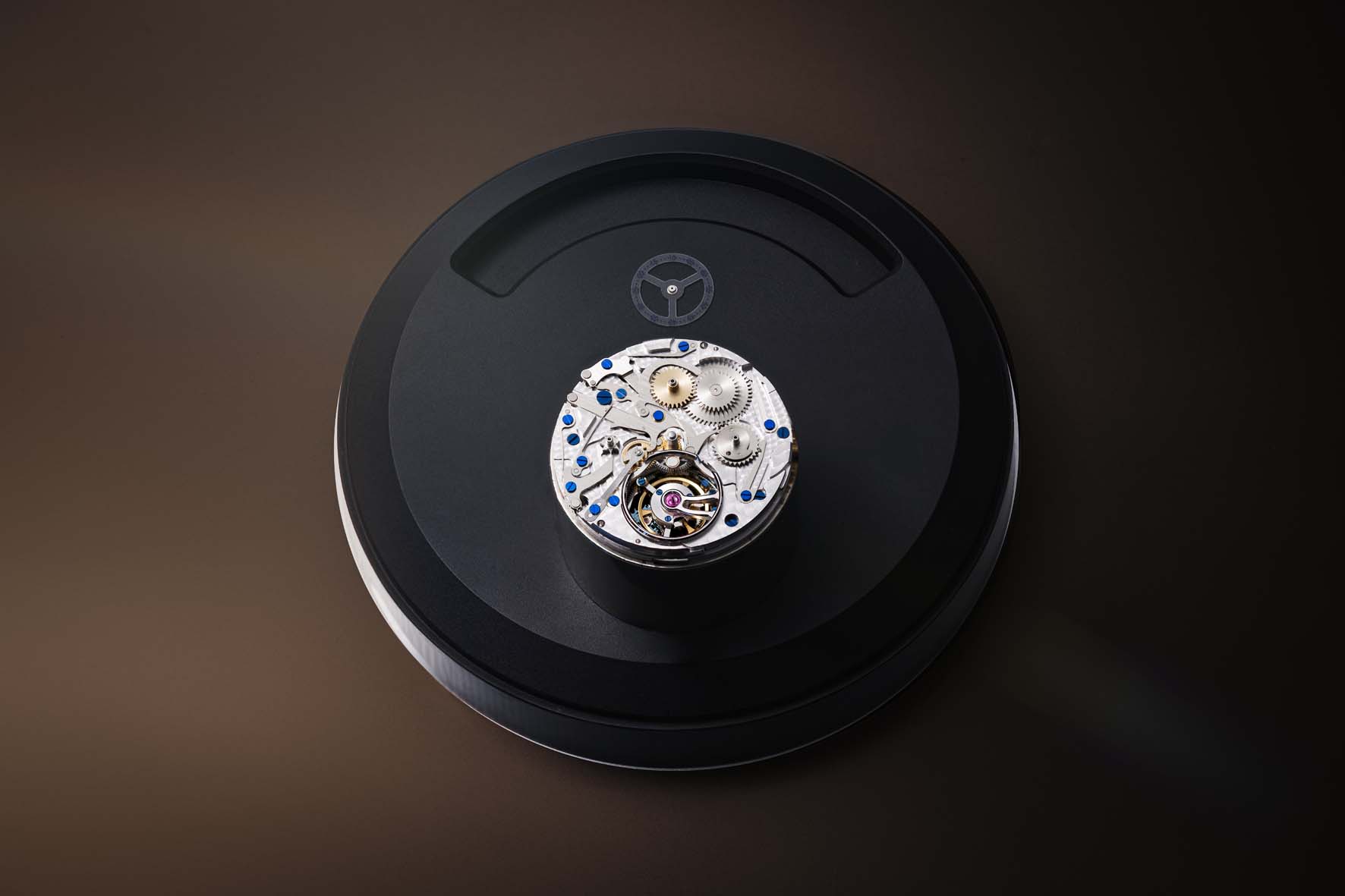
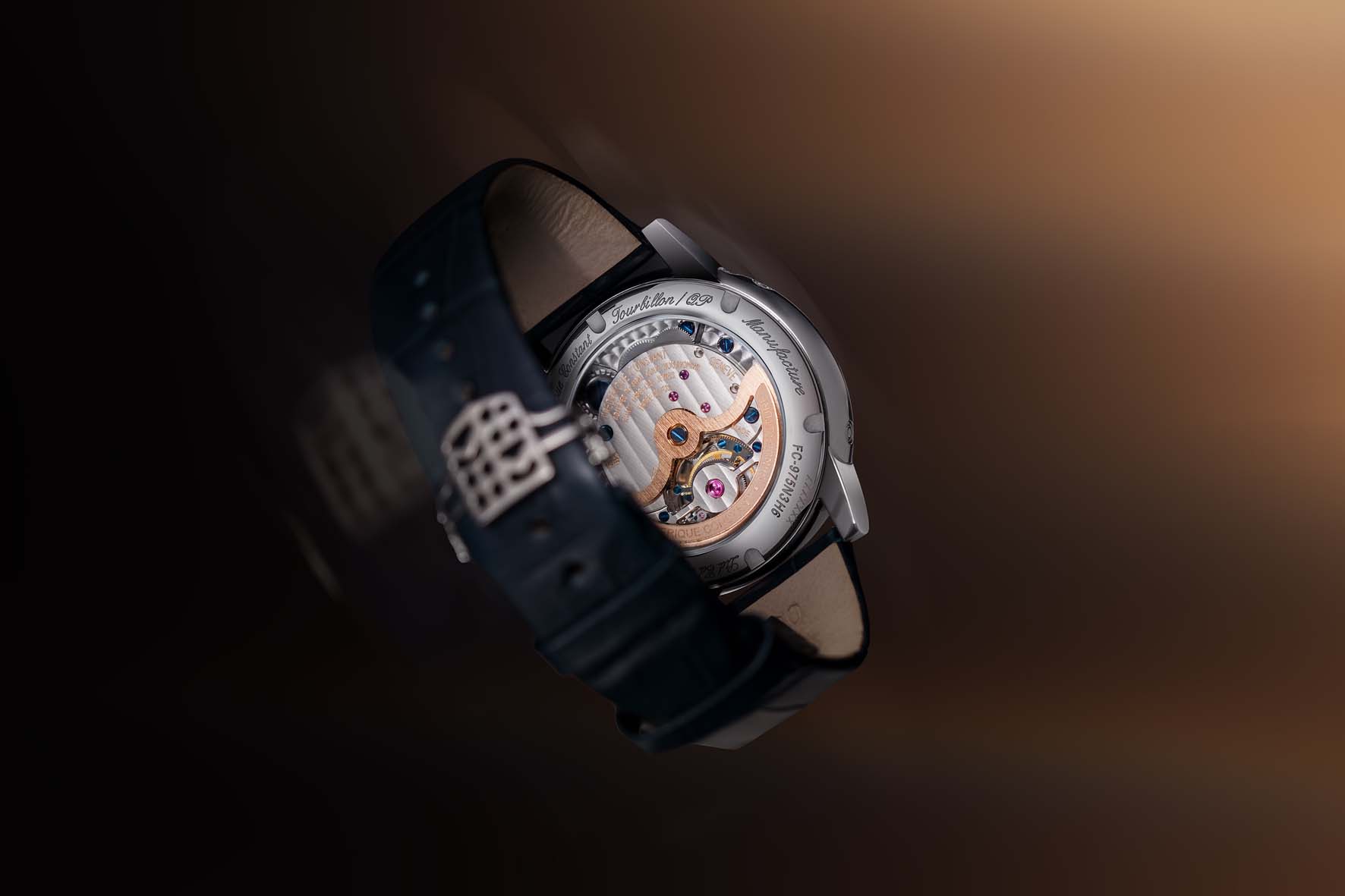
The transparent dial and case back allow you to appreciate the perlage finish on the bridges and mainplate, the vertical Côtes de Genève finishing, and the rose gold electroplating that characterises the skeletonised oscillating weight. Speaking of transparent elements, an engraving bearing the limited edition number is visible on the tourbillon cage: for this watch, as with other limited editions from Frederique Constant, the edition is limited to 88 pieces. The FC-975 automatic calibre operates at 28,800 vibrations per hour and has a relatively modest power reserve of 38 hours.
THE CASE AND THE PRICE
Contrary to our usual practice, we have left the details of the case until the end. The three-piece Classic case is crafted from fully polished stainless steel and retains its familiar design, complete with the distinctive oversized onion-shaped crown. The watch is water-resistant to 5 bar. The main difference from other Classic Tourbillon Perpetual Calendar Manufacture references lies in the diameter, reduced from 42 to 40 mm, with a thickness of 12.69 mm. The limited-edition number is also engraved on the case back.
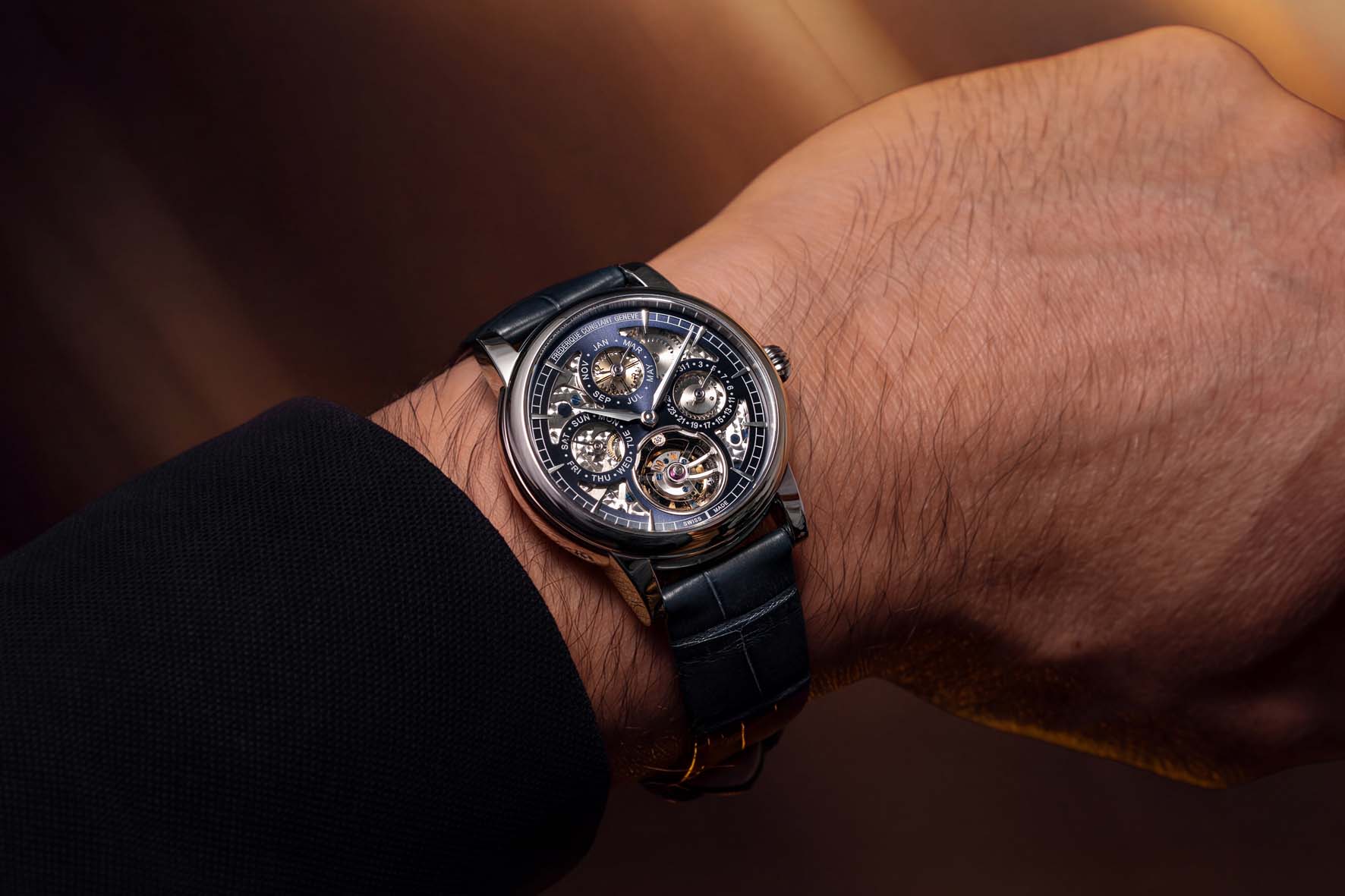
Beyond the intricate sapphire construction and the sub-dials already discussed, the dial also stands out for its navy blue accents, which feature on both the sub-dial rings and the chemin de fer minute track. The applied, rhodium-plated, diamond-cut hour markers contrast with the dial, as do the dagger-shaped hour and minute hands, also rhodium-plated. The price? € 26,995, in line with Frederique Constant’s top-of-the-range references.
In this regard, we must not forget that with the Classic Tourbillon Perpetual Calendar Manufacture, we are looking at a watch that brings together two of the most prized and sought-after complications in watchmaking. It is further proof that the manufacture’s vision of offering Swiss timepieces of the very highest quality at an affordable price is not merely a marketing claim, but a reality and, above all, a promise kept. Year after year. In a market where the major brands have embarked on a seemingly unstoppable race to raise prices, this is, in our view, a key distinguishing factor and a decisive consideration when choosing a watch for collectors seeking fine watchmaking.
By Davide Passoni