

Some watches become benchmarks over time. Not necessarily because they change, but because they manage to preserve their identity. The Datograph Perpetual by A. Lange & Söhne is one of them. Introduced in 2006, it marked an important milestone in the history of the Saxon manufacture, bringing together a flyback chronograph, a perpetual calendar and the unmistakable outsize date in a Lange wristwatch for the first time.
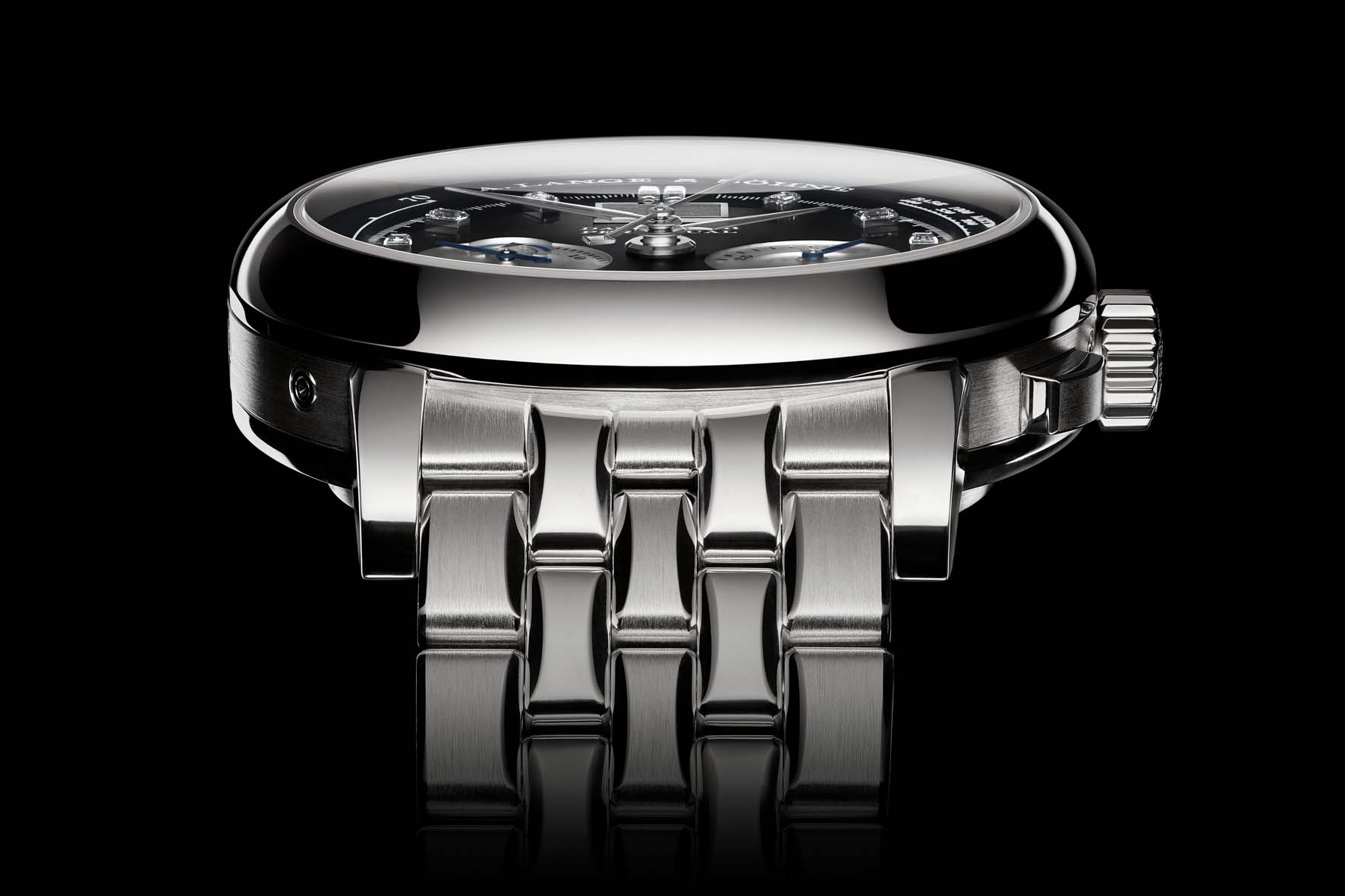
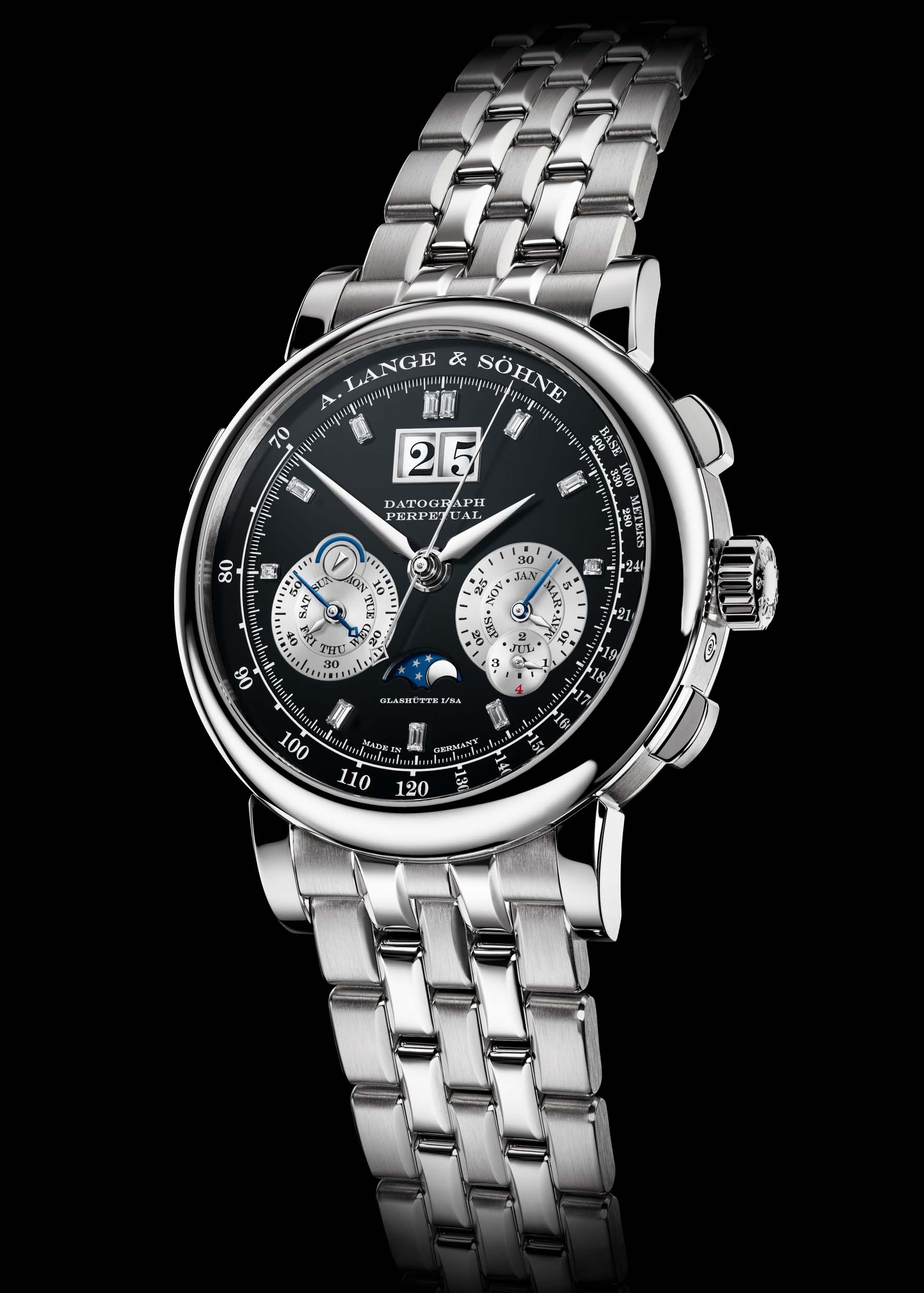
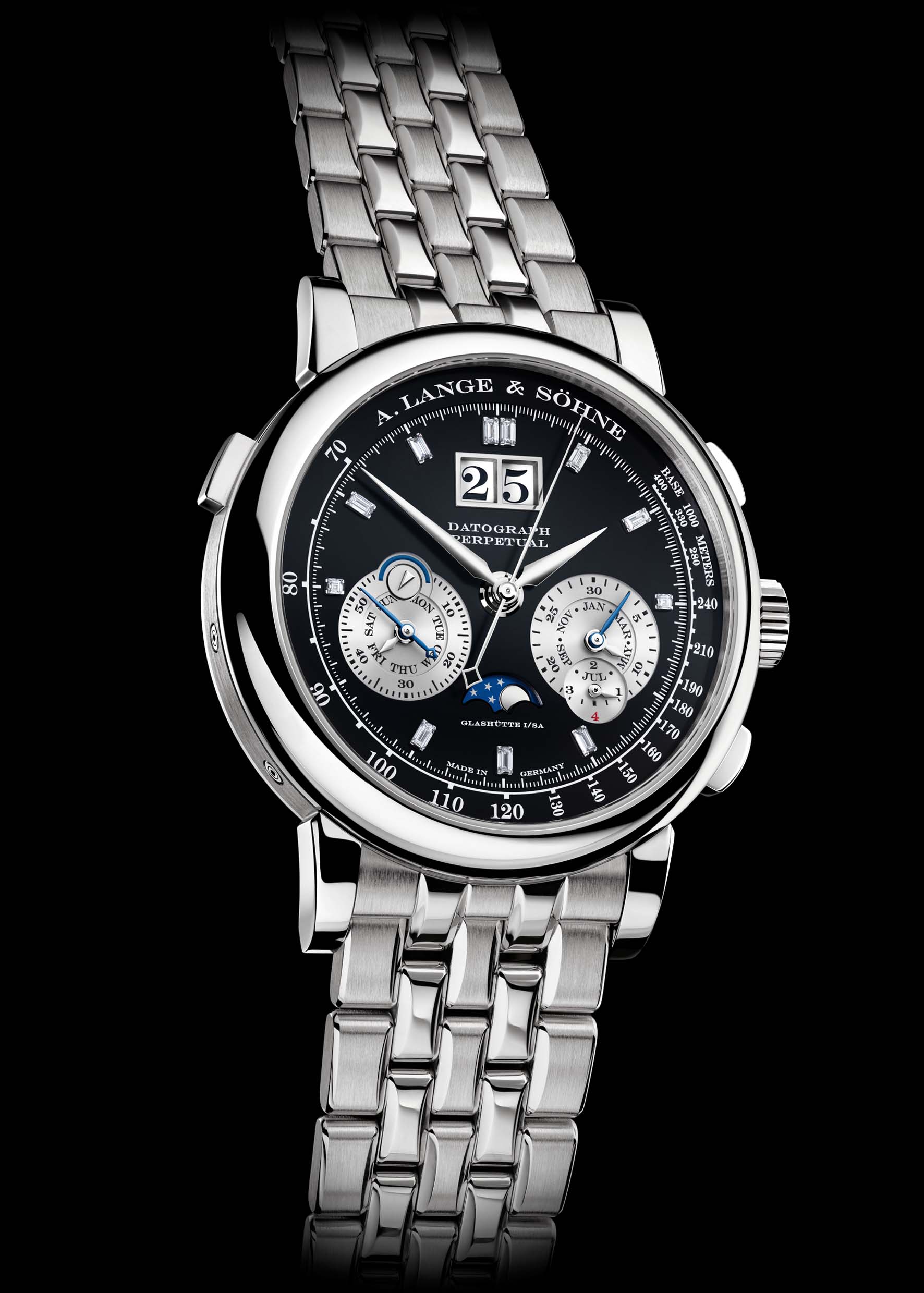
To celebrate the 20th anniversary of the model, Lange has unveiled a new interpretation that retains its mechanical complexity while giving it a distinctly different character. Reference 410.136E, limited to just 50 pieces, combines a platinum 950 case with a black dial featuring baguette-cut diamond hour markers. Completing the design is a bracelet crafted entirely from platinum, one of the most interesting features of this anniversary edition.
A CLASSIC WITH A NEW CHARACTER
The Datograph Perpetual has always been an exercise in balance. Bringing together two such elaborate complications is not only a mechanical challenge: it also means arranging a wealth of information on the dial without compromising legibility. Lange had already met that challenge in 2006 with a layout that would become instantly recognisable.
The new version retains that same layout, but introduces an unprecedented aesthetic combination. For the first time in the standard Datograph Perpetual collection, the 925 silver dial has a black finish, providing a striking contrast with the two rhodium-finished subsidiary dials. Traditional hour markers give way to eleven baguette-cut diamonds, individually applied by hand and weighing approximately 0.13 carats in total.
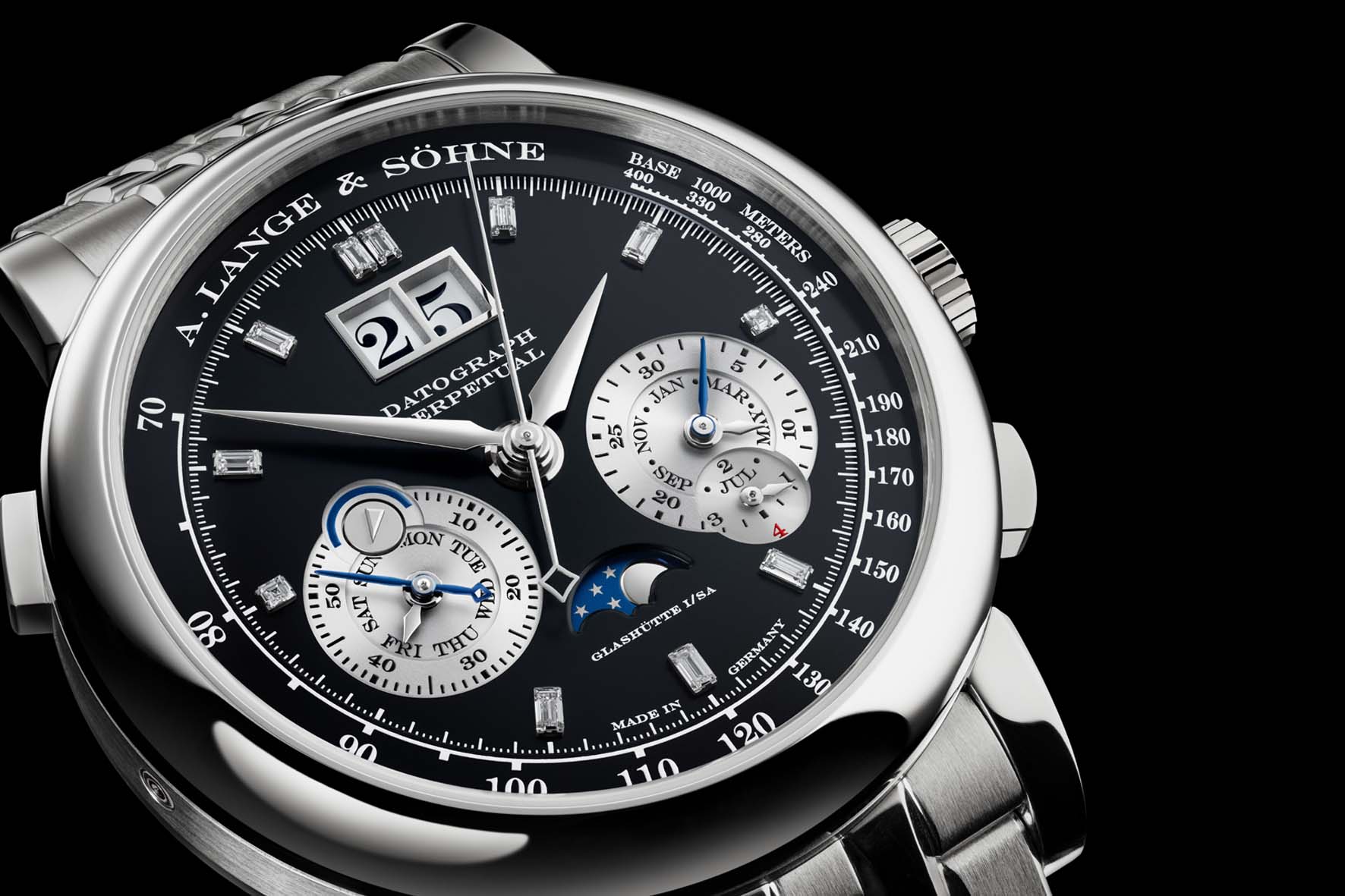
It is an unusual choice for a manufacture known for its restraint, but the effect remains understated. The diamonds’ linear geometry echoes that of the traditional markers, allowing them to blend into the dial without compromising its identity.
The arrangement of the indications remains faithful to the original. The outsize date sits at 12 o’clock, while the two subsidiary dials, positioned slightly below the horizontal axis, organise the chronograph and calendar displays. At 9 o’clock are the small seconds, day of the week and day/night indication; at 3 o’clock, the chronograph minute counter shares its space with the month and leap-year displays. The moon-phase display at 6 o’clock completes a complex yet remarkably legible composition.
THE RETURN OF THE PLATINUM BRACELET
If the dial is the most immediately noticeable change, the bracelet is arguably what most clearly defines the personality of this edition.
The case retains the proportions of the original model, measuring 41 mm in diameter and 13.5 mm in thickness, but is now paired with a five-row bracelet crafted entirely from platinum 950 and fitted with a folding clasp. Polished surfaces alternate with brushed ones, while the angled links bring out the interplay of light across the metal. The result is a visual continuity between case and bracelet that gives the watch a distinctly different presence on the wrist compared with strap-equipped versions.
More than a stylistic decision, this is also a nod to a particular chapter in A. Lange & Söhne’s history. As early as the second half of the 1990s, certain models could be fitted with precious-metal bracelets made by Wellendorff, a long-established German fine-jewellery company founded in Pforzheim in 1893 and renowned for its expertise in working with precious metals.
Available in gold or platinum, these bracelets were exceptionally expensive and chosen by relatively few clients. Over the years, they have become highly sought after by collectors. The original Datograph Perpetual of 2006, launched with a platinum case and silver-coloured dial, could also be ordered with a bracelet in the same metal.
Twenty years later, Lange revisits a configuration closely linked to the model’s history, introducing an entirely new five-row bracelet that reinterprets that tradition in a contemporary form.
TWO COMPLICATIONS, TWO WAYS OF MEASURING TIME
At the heart of the Datograph Perpetual is the dialogue between two complications operating on very different timescales: the chronograph, designed to measure short intervals, and the perpetual calendar, conceived to track the passage of years.
The former relies on a traditional column wheel and features a flyback function, allowing an ongoing timing sequence to be reset and restarted instantly with a single press of a pusher. The precisely jumping minute counter makes elapsed time easy to read, while the central chronograph seconds hand allows readings to one-fifth of a second.
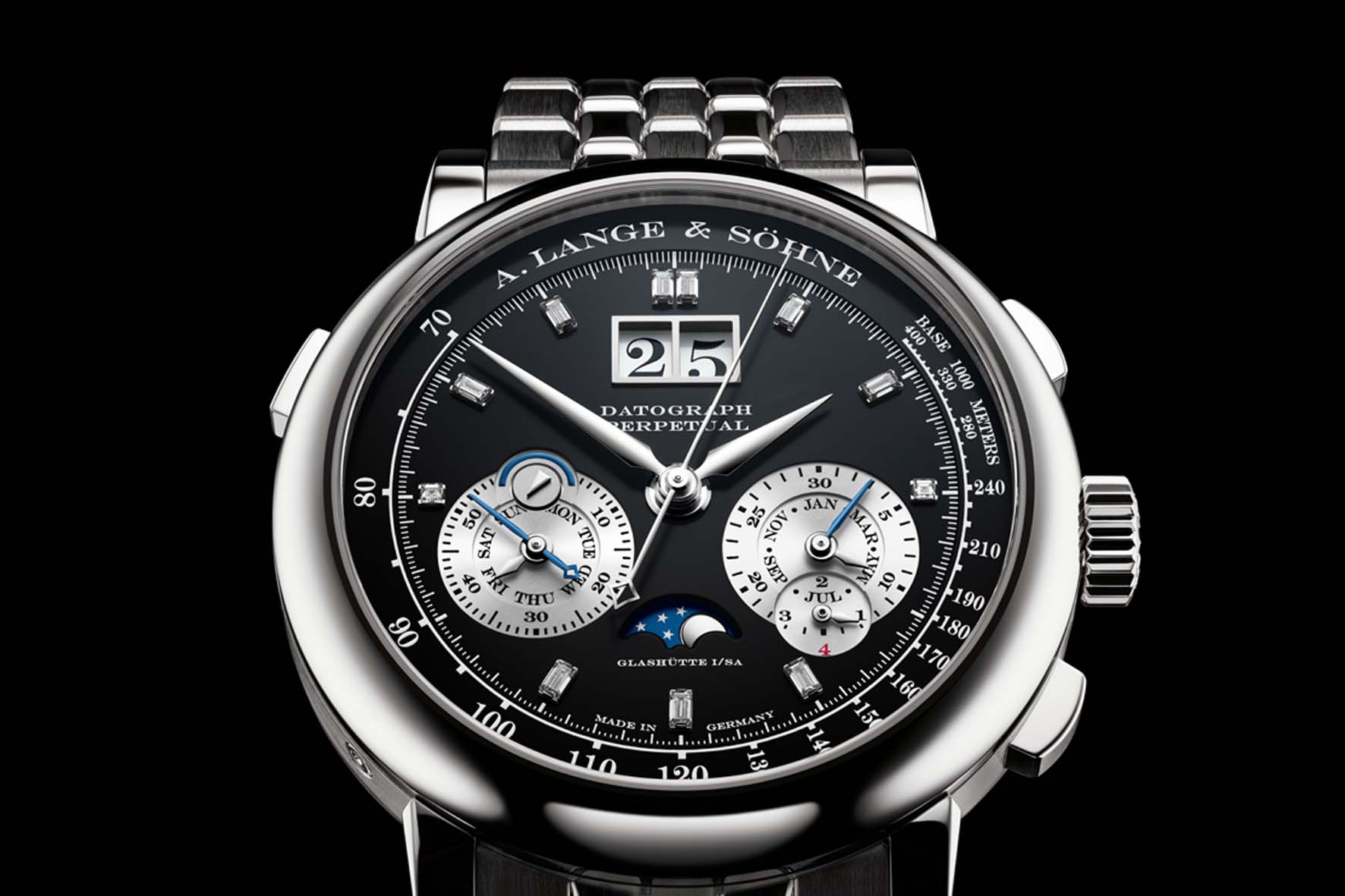
The perpetual calendar, by contrast, works on a much longer timescale. Its mechanism automatically accounts for the varying lengths of the months and the cycle of leap years, keeping the indications correct without manual intervention as long as the watch continues to run. Assuming the watch runs continuously, the calendar will not require correction until 1 March 2100, because under the rules of the Gregorian calendar, that year will not be a leap year.
The moon-phase display follows the same principle of long-term precision: it is designed to deviate from the actual lunar cycle by just one day after 122.6 years of uninterrupted operation.
Despite the complexity of these mechanisms, adjustment remains relatively straightforward. A pusher at 10 o’clock advances all the calendar indications simultaneously, while recessed correctors allow the individual displays to be adjusted separately. A safety mechanism also prevents the rapid-correction pusher from being activated inadvertently.
THE L952.1 CALIBRE: MECHANICS IN THE SPOTLIGHT
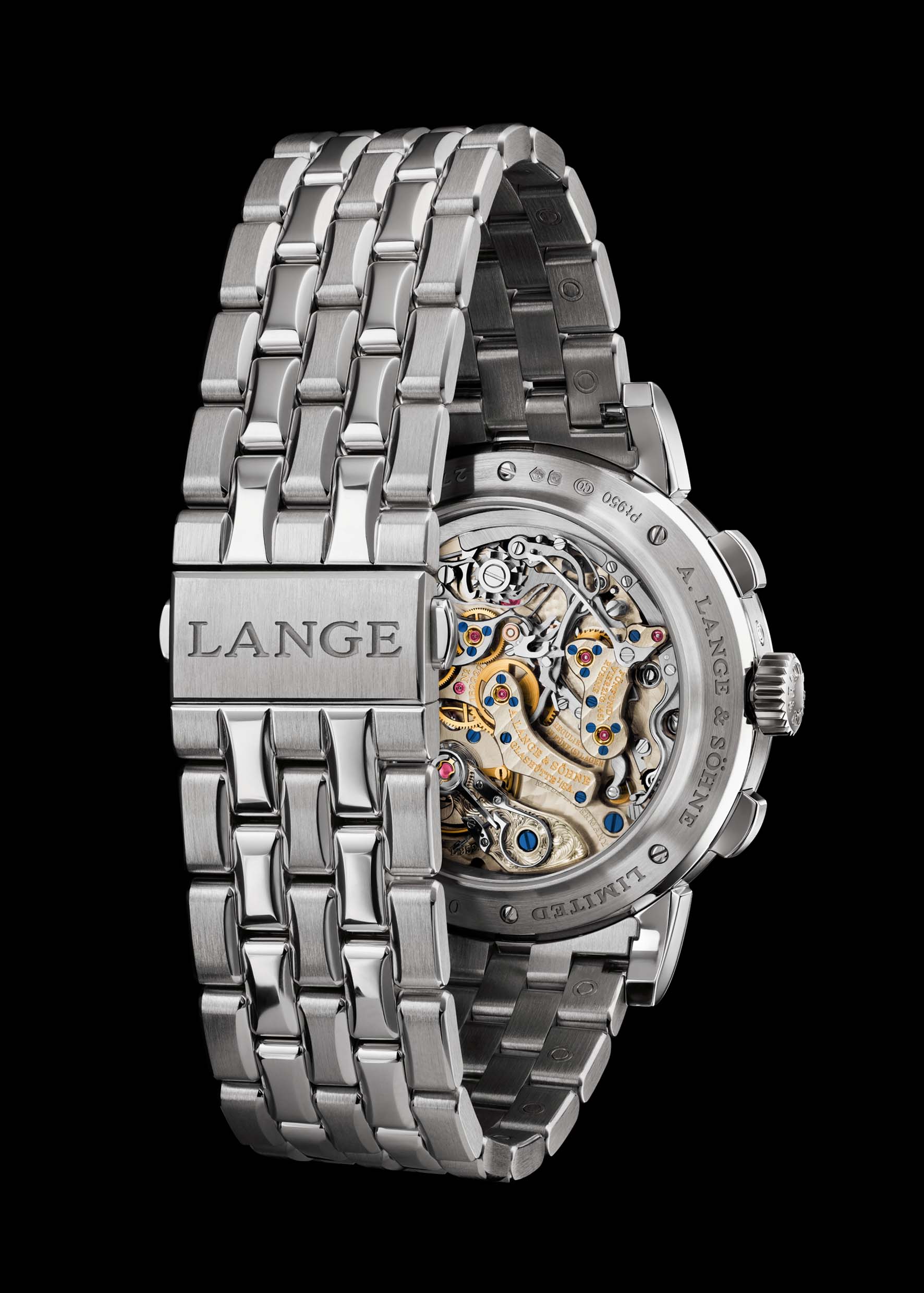
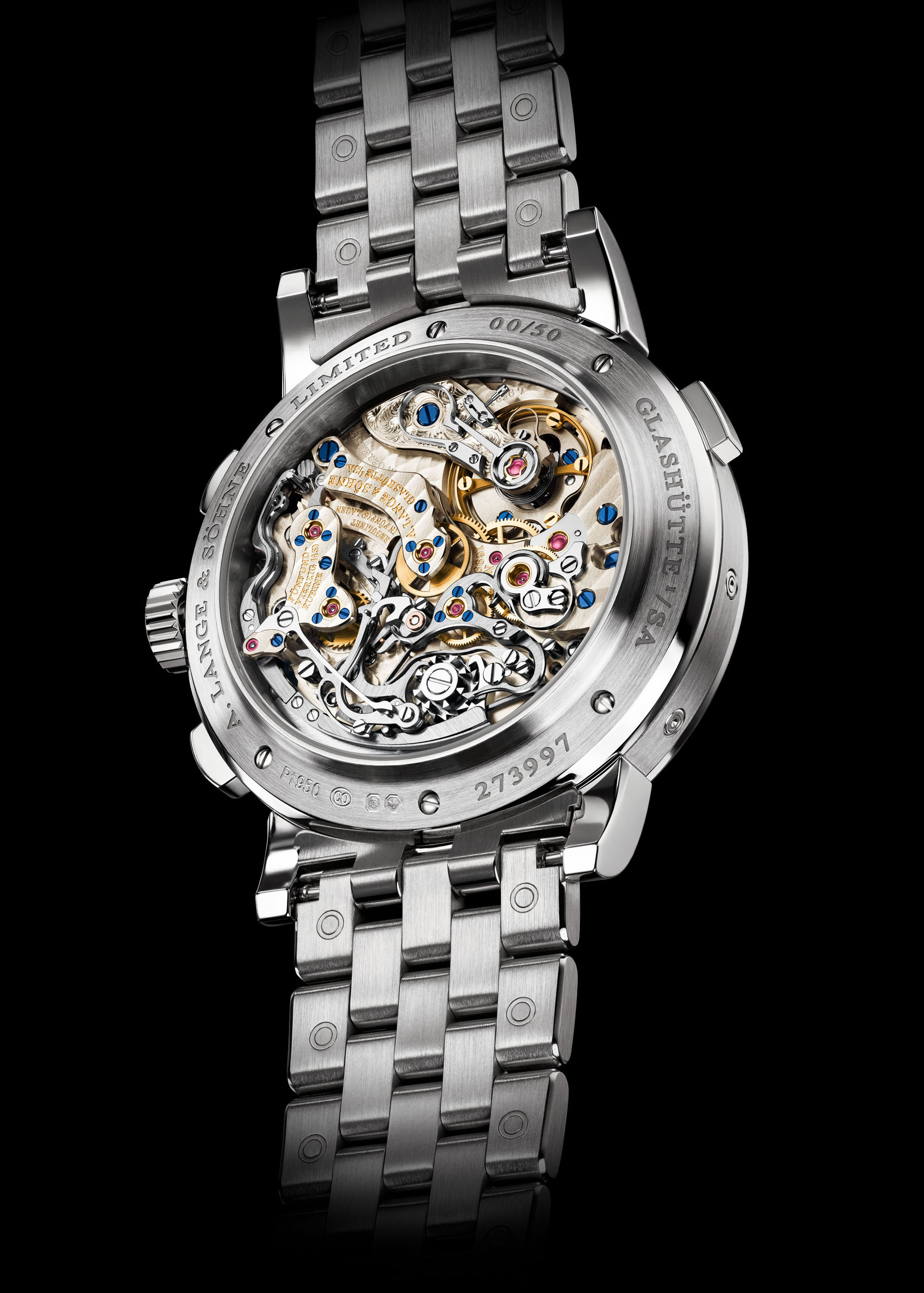
Visible through the sapphire-crystal caseback is the manufacture calibre L952.1, a manually wound movement comprising 556 components, no fewer than 223 of which are devoted to the perpetual calendar alone.
Its architecture remains unchanged from earlier versions of the model and continues to stand as one of the most elaborate expressions of Lange’s chronograph-making tradition.
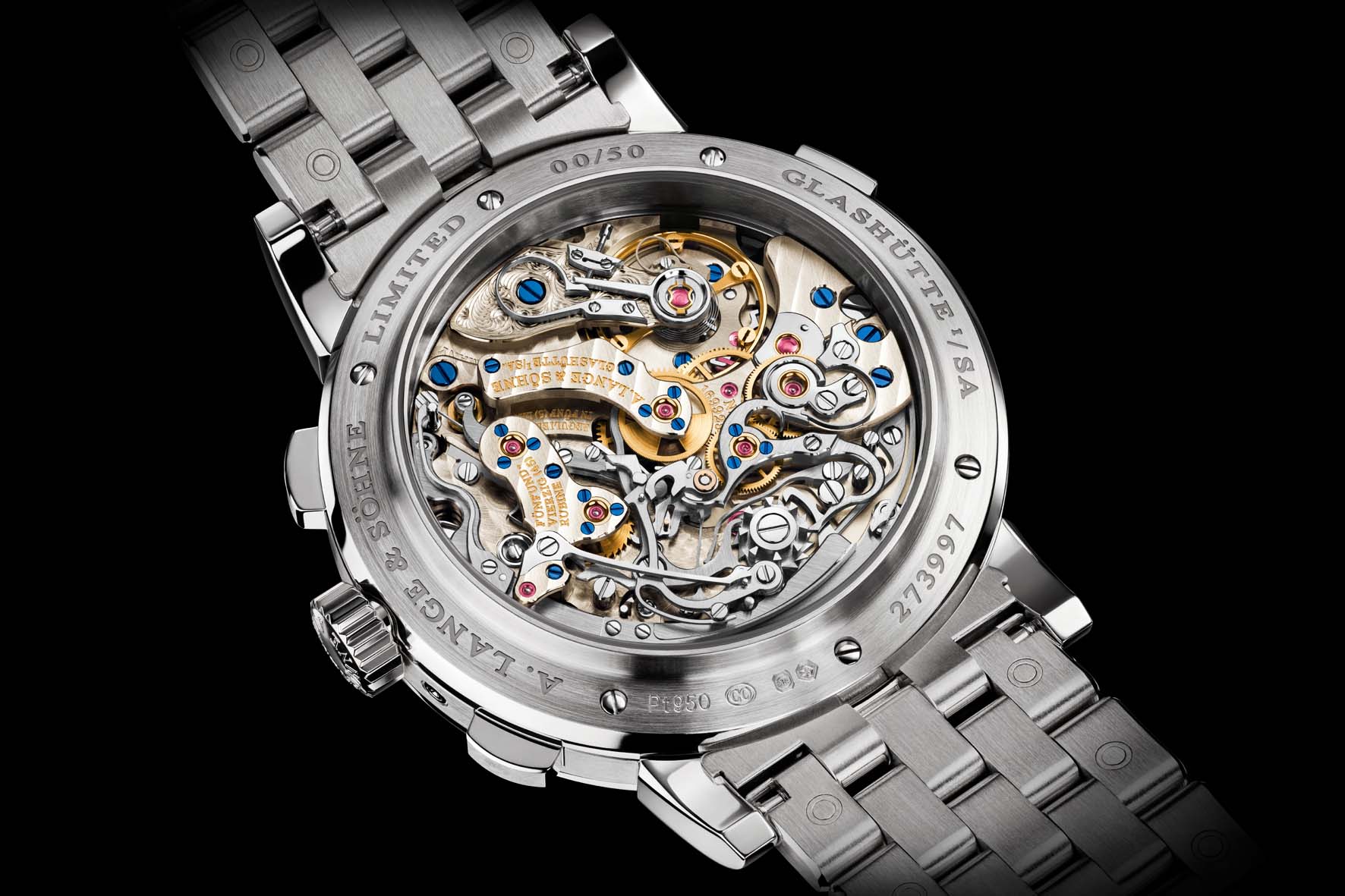
The three-dimensional construction reveals an intricate system of levers, operating levers and gears, coordinated by the column wheel that controls the chronograph functions. Particularly interesting is the length of certain levers, which must reach the offset subsidiary dials while leaving enough room for the outsize-date mechanism.
The movement beats at 18,000 vibrations per hour, equivalent to 2.5 Hz, and provides a power reserve of 36 hours, unchanged from the original model.
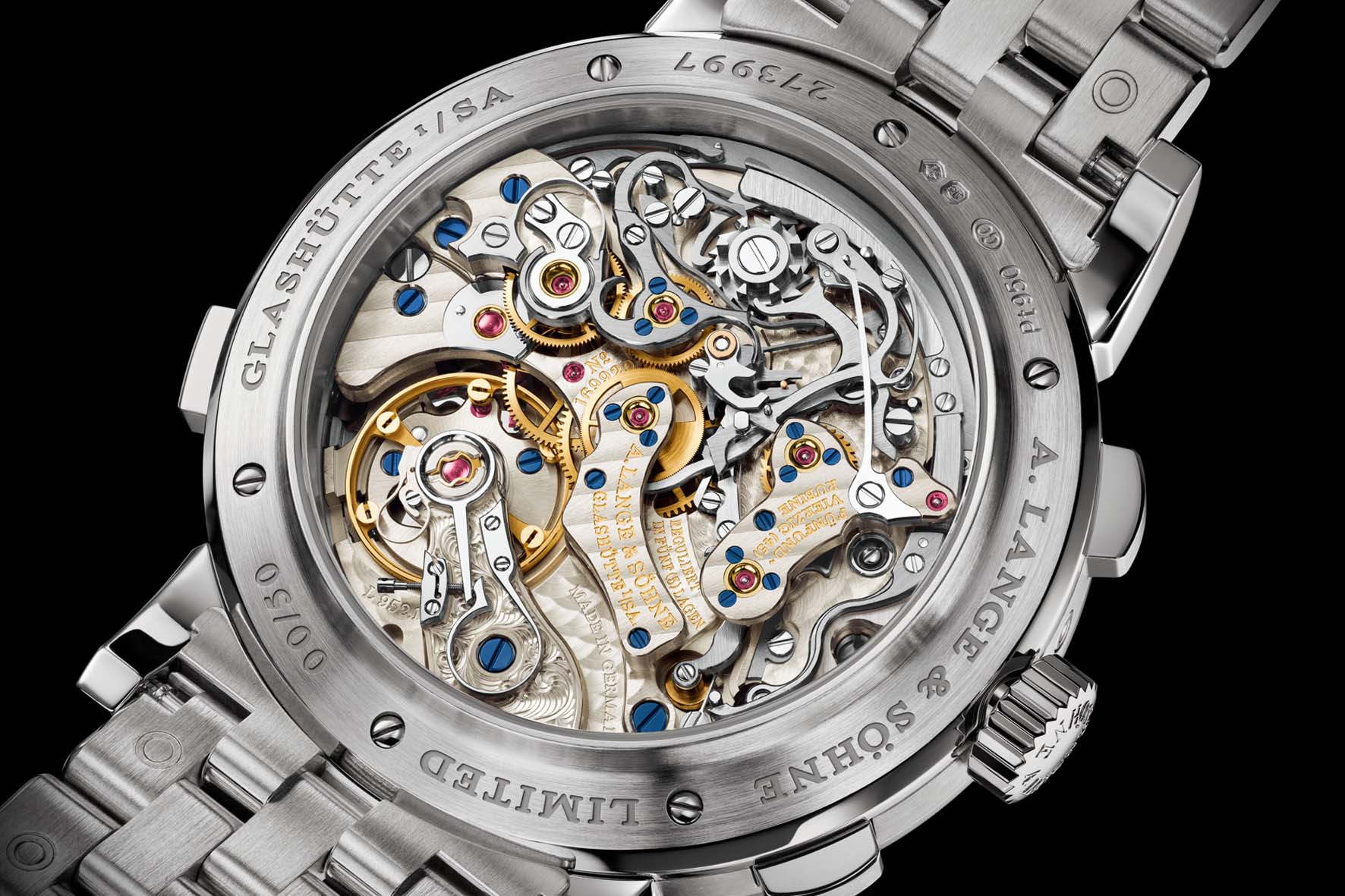
In keeping with the traditions of the Saxon manufacture, plates and bridges are made of untreated German silver, while the finishing includes traditional decorative techniques, blued screws, screwed gold chatons and the characteristic hand-engraved balance cock. The calibre also undergoes Lange’s double-assembly process: it is first assembled and adjusted, then taken apart for its final finishing before being assembled once again.
It is through the caseback that one of the defining qualities of Lange watchmaking becomes most apparent: mechanics designed not only to perform with precision, but also to be admired for their construction and the standard of their finishing.
TWENTY YEARS ON, THE SAME IDENTITY
With this new edition, A. Lange & Söhne celebrates 20 years of the Datograph Perpetual without attempting to reinvent it. The architecture, complications and arrangement of the displays remain those that have defined its character since 2006.
What changes most is the way the watch presents itself on the wrist. The platinum bracelet, black dial and diamond markers lend it a more jewellery inspired character and a stronger visual presence, without altering the underlying principles that made the original so successful.
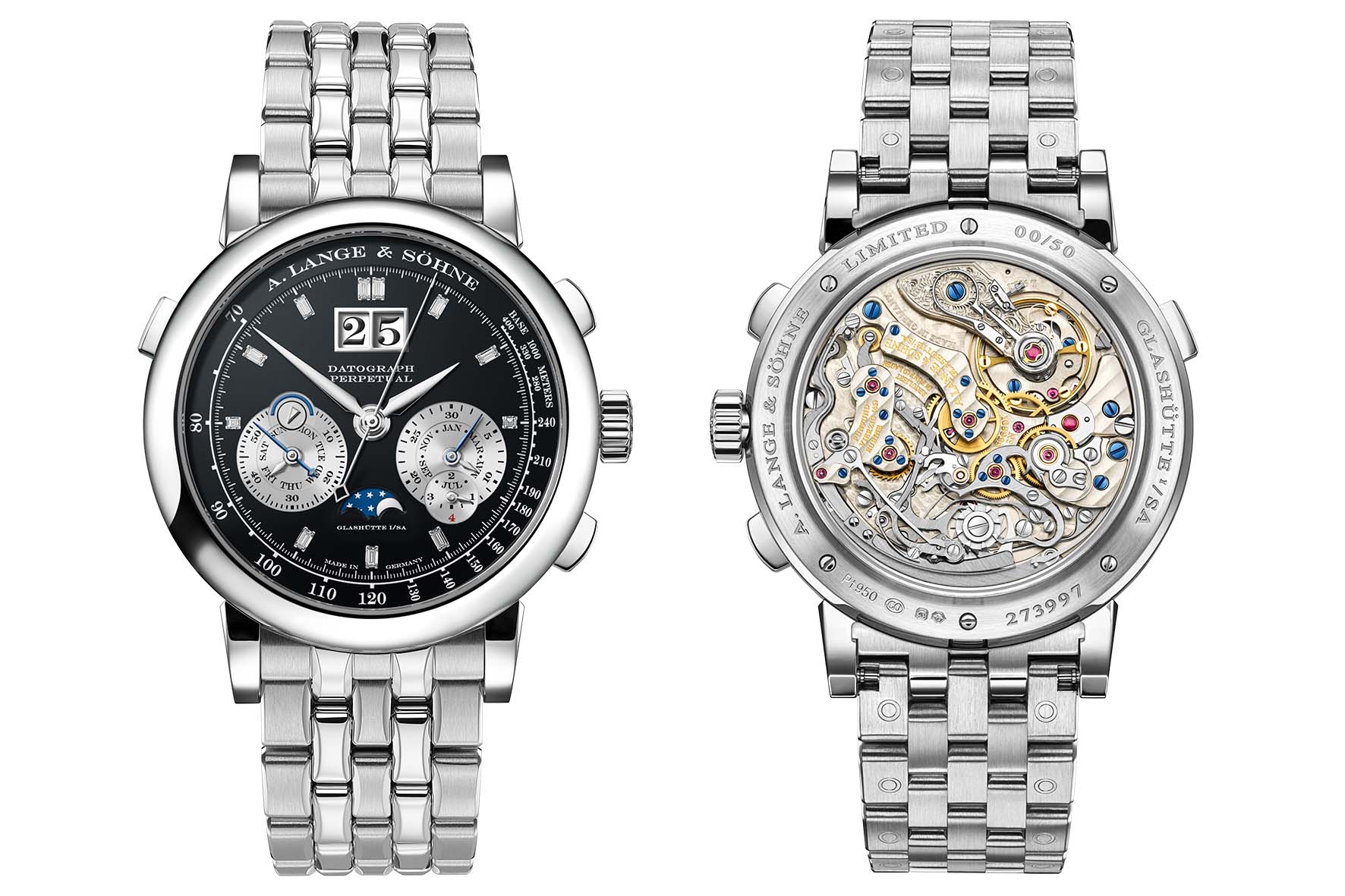
Produced in 50 individually numbered pieces, the new reference 410.136E is a tribute to the first two decades of one of the Saxon manufacture’s great classics. By looking to its own history, Lange shows that a fresh interpretation of a classic does not always require a change to its mechanics.
By Jacopo Giudici