

Throughout the history of watchmaking, certain watches and complications have become inseparable from the names of their creators. Few examples illustrate this better than François-Paul Journe and his Chronomètre à Résonance. Following an unsuccessful experiment with a pocket watch in the early 1980s, Journe put his research into acoustic resonance aside before returning to it in the 1990s.
This time, his ambition was to develop a resonance movement for a wristwatch. Work began in 1994, and by 1998 he had a functioning prototype, which he discreetly wore at the Basel watch fair. The prototypes were publicly unveiled there the following year. But what makes the phenomenon of resonance so compelling, and how did it find its place in watchmaking?
THE PHENOMENON OF RESONANCE: FROM HUYGENS TO BREGUET
The Dutch scientist Christiaan Huygens, inventor of the pendulum clock in the 17th century, is widely credited with the first documented observation of resonance in horology. He noticed that two pendulum clocks connected by a common support could eventually synchronise their oscillations.
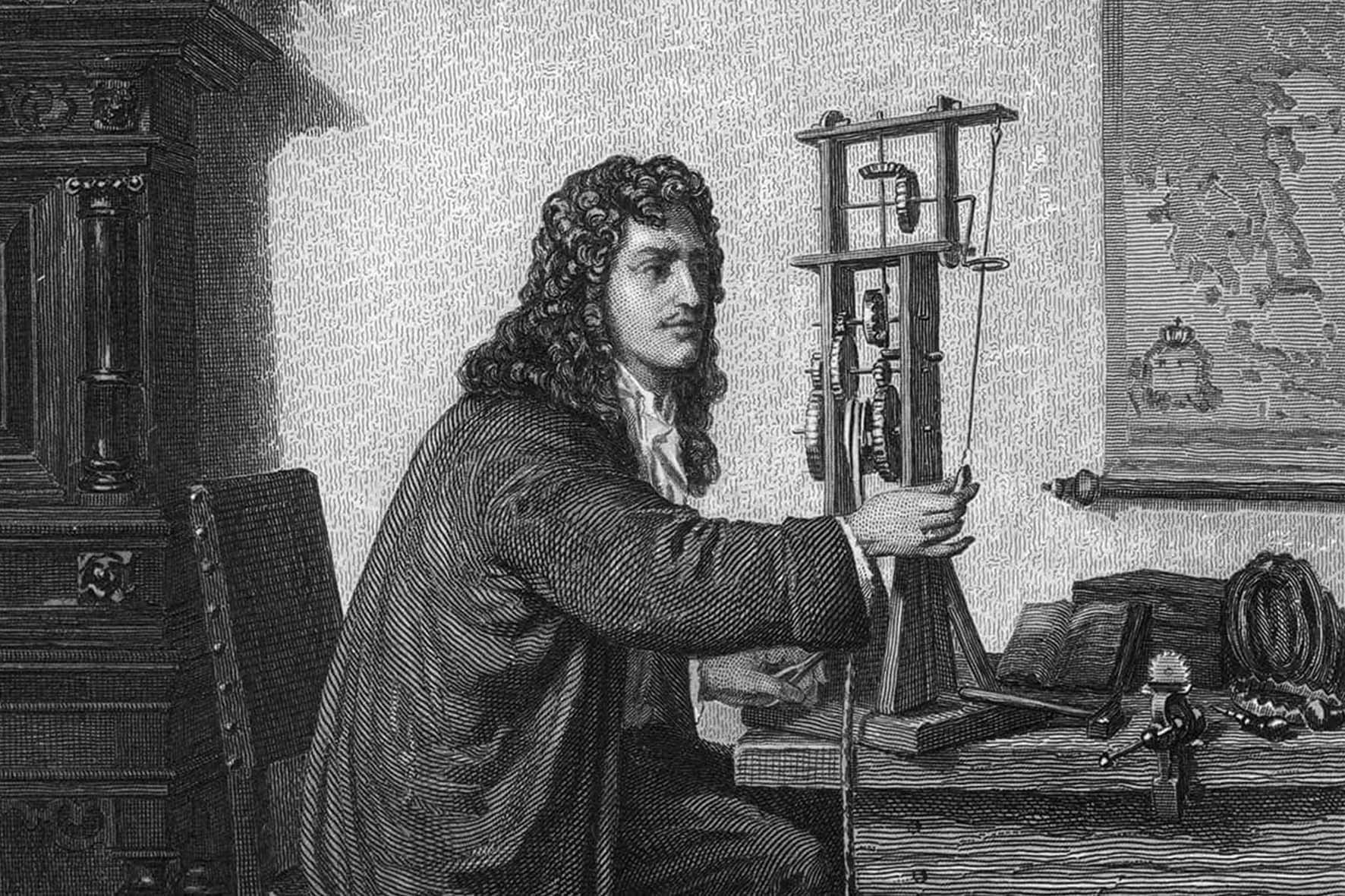
Between the 18th and 19th centuries, French watchmaker Antide Janvier, who served as clockmaker to King Louis XVI, developed regulators specifically designed to explore resonance. By incorporating two pendulums into a single clock, he observed that they could synchronise and help compensate for variations in their rates. Their opposing motion also helped counteract disturbances transmitted through the shared structure.
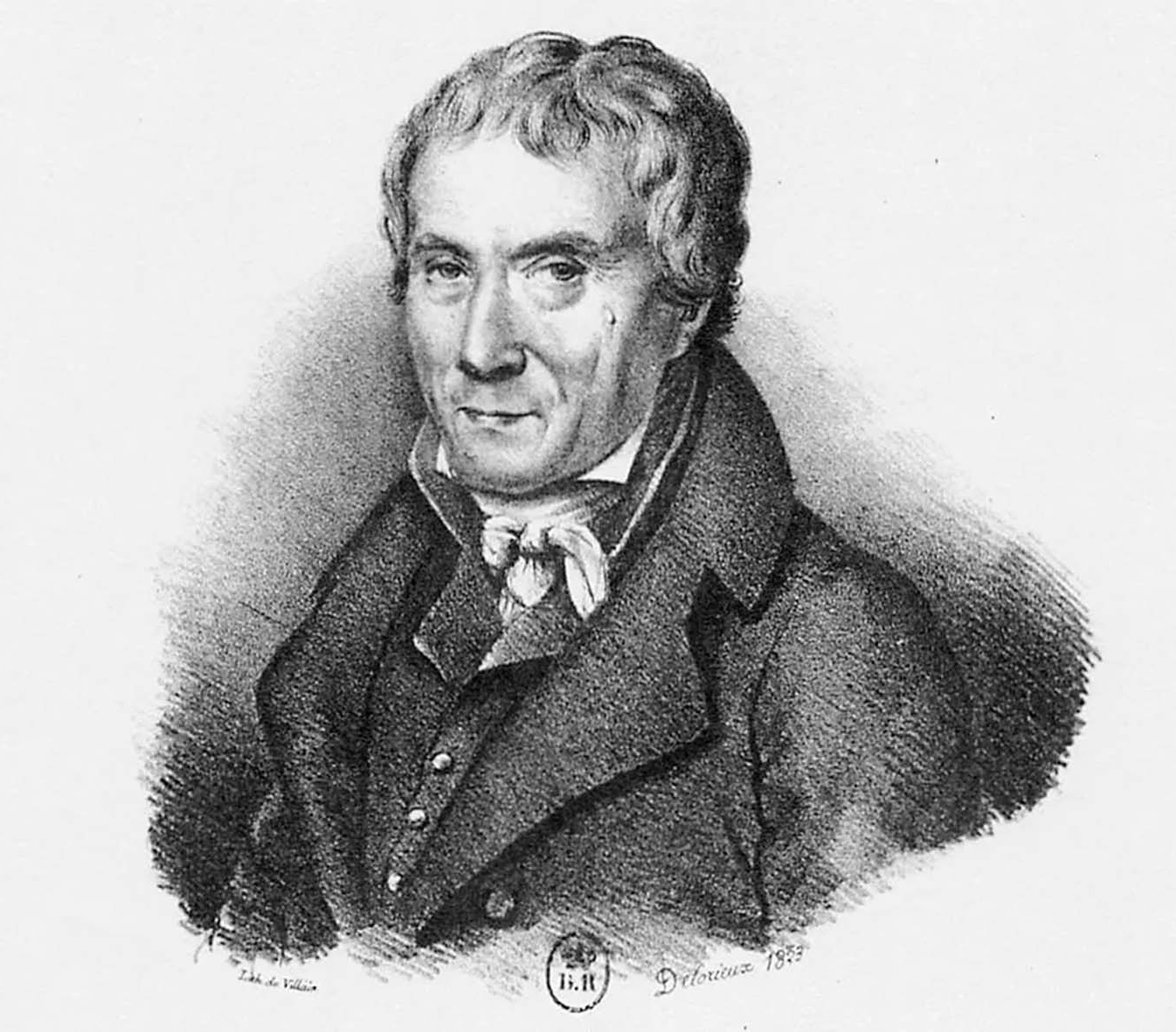
Abraham-Louis Breguet subsequently explored the principle in his own resonance regulators before applying it to pocket watches. Among his achievements was a pocket watch fitted with two escapements, extending the possibilities of a phenomenon previously investigated in larger clocks.
FRANÇOIS-PAUL JOURNE AND THE BIRTH OF THE CHRONOMÈTRE À RÉSONANCE
Huygens, Janvier and Breguet all played crucial roles in understanding resonance and bringing it into practical horology. François-Paul Journe carried that legacy into contemporary watchmaking with one of his most recognisable creations: the Chronomètre à Résonance.
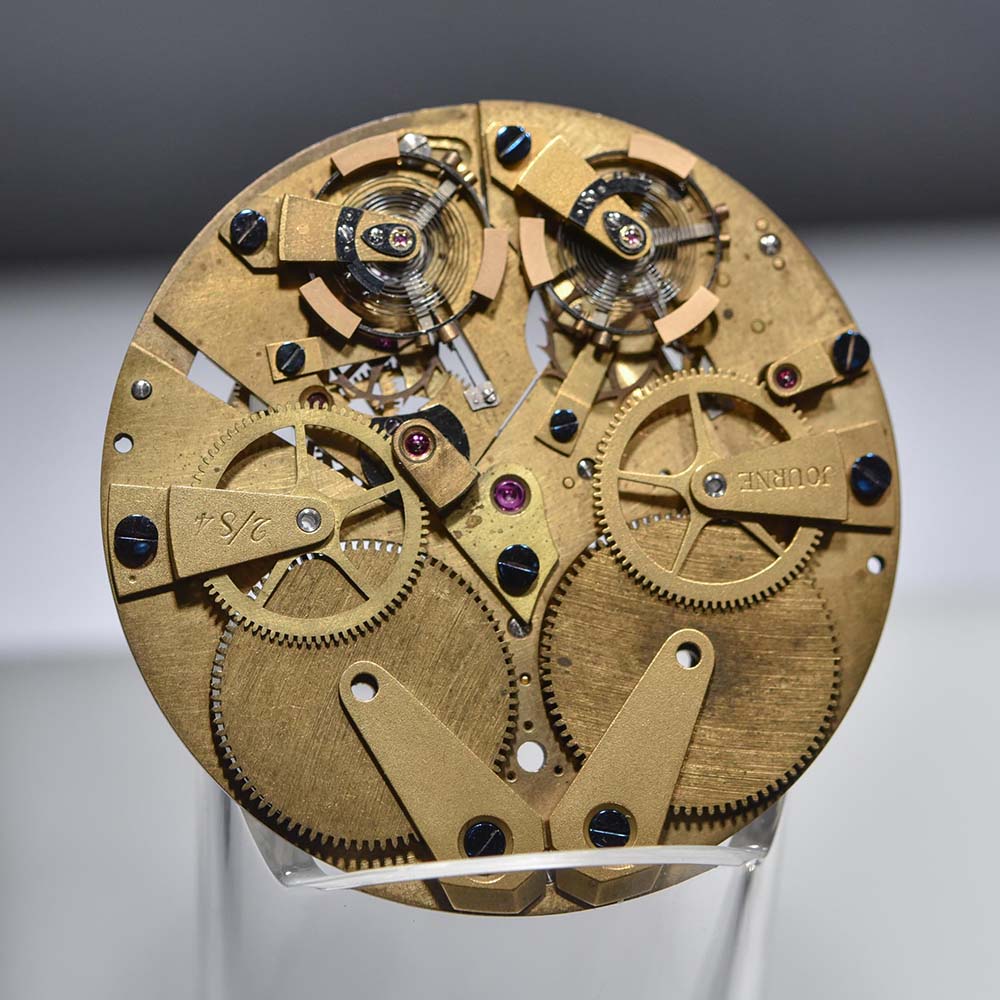
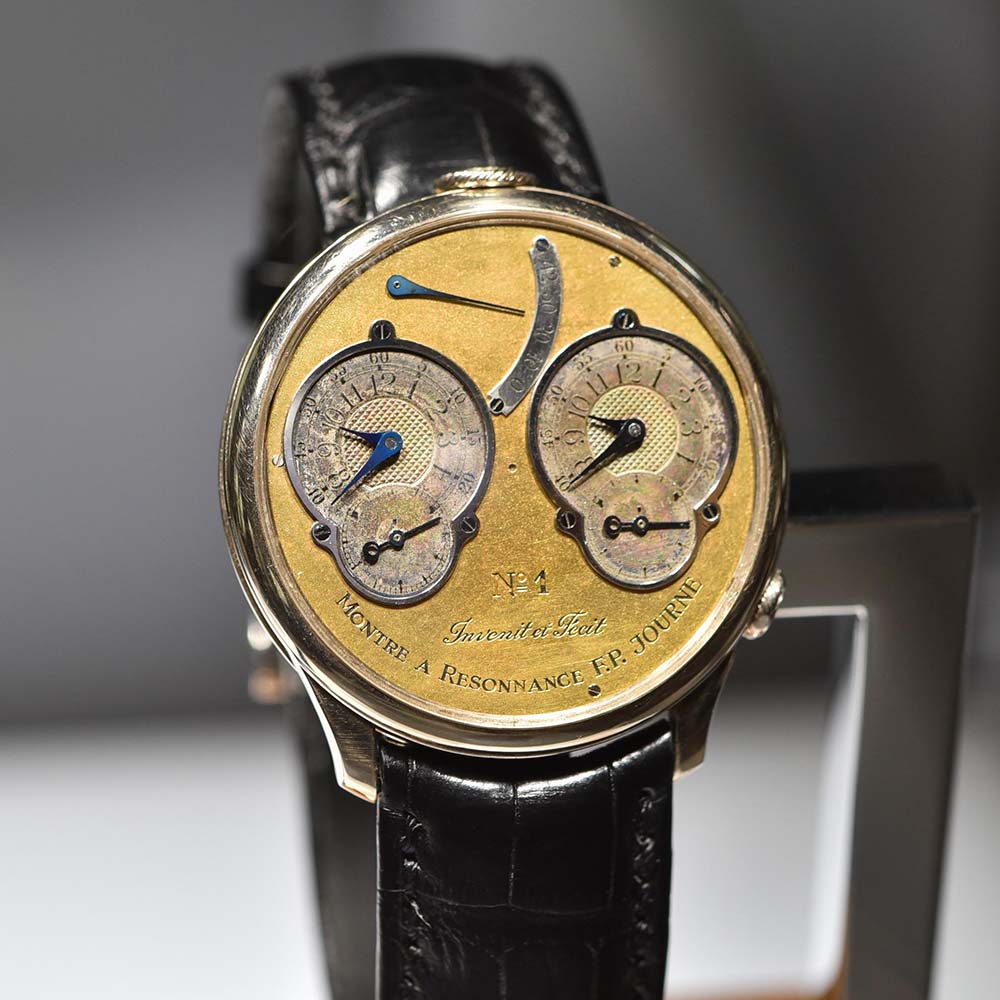
The principle rests on two independent regulating systems housed in the same watch, with their balance wheels positioned exceptionally close to one another. Through resonance, the two balances can synchronise while oscillating in opposite directions. If a sudden wrist movement disturbs their rates, one may accelerate while the other slows, allowing the combined system to counteract the disturbance as the balances return to synchronisation.
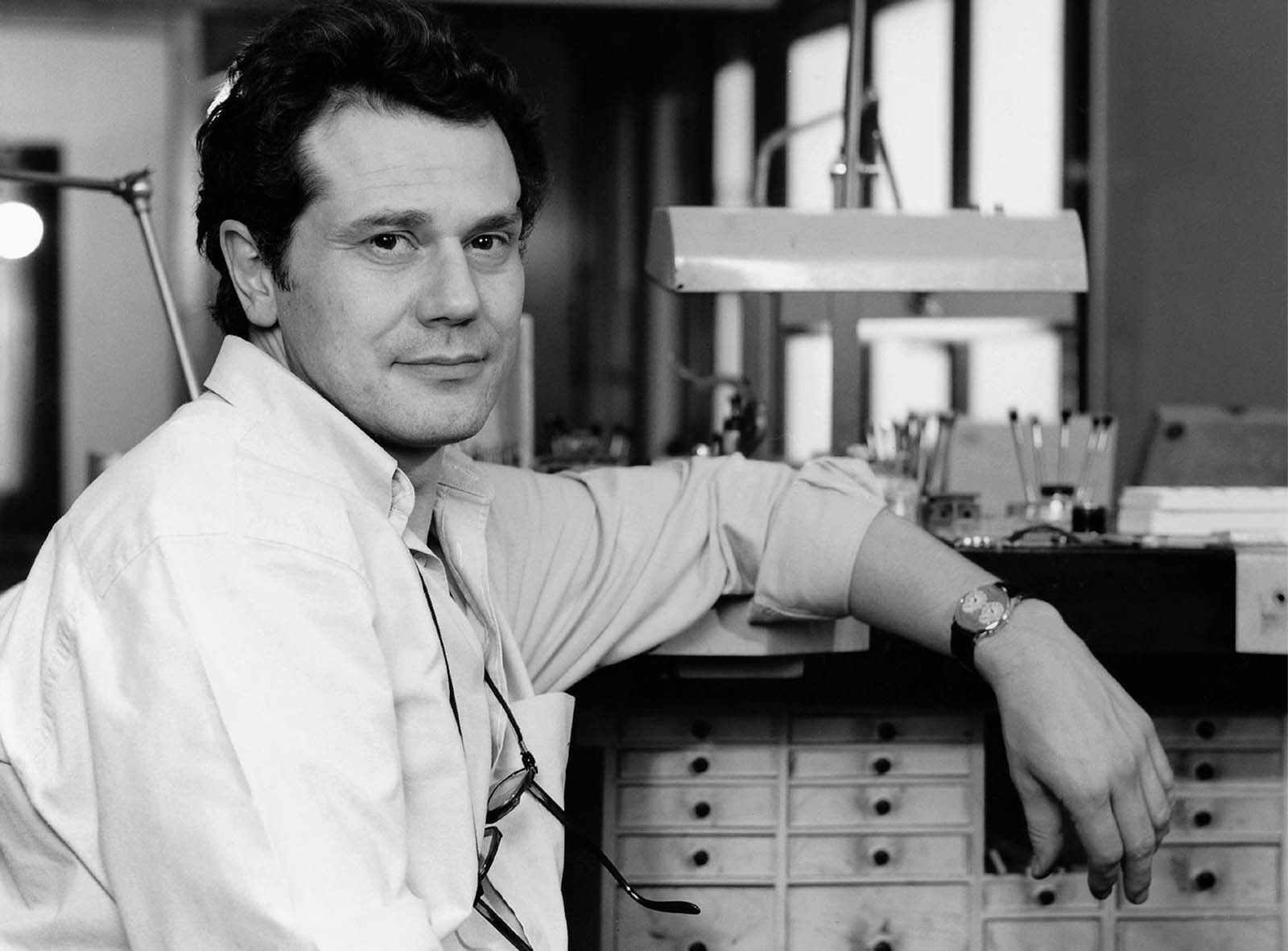
In 2000, Journe brought this concept to the wrist with the Chronomètre à Résonance. Over the following decades, the model evolved through several generations and inspired a number of special editions, including watches created for individual F.P. Journe boutiques. Some of the most significant versions are explored below.
THE FIRST CHRONOMÈTRE À RÉSONANCE
Introduced in 2000, the Chronomètre à Résonance debuted as a souscription wristwatch and was the manufacture’s second wristwatch model after the Tourbillon Souverain. It subsequently became an established collection. The early watches featured rhodium-plated brass movements and 38 mm cases in platinum or 18K 6N gold, with dials in white, yellow or rose gold. Journe also produced a limited edition of 99 pieces with a ruthenium-finished dial and a 40 mm platinum case.
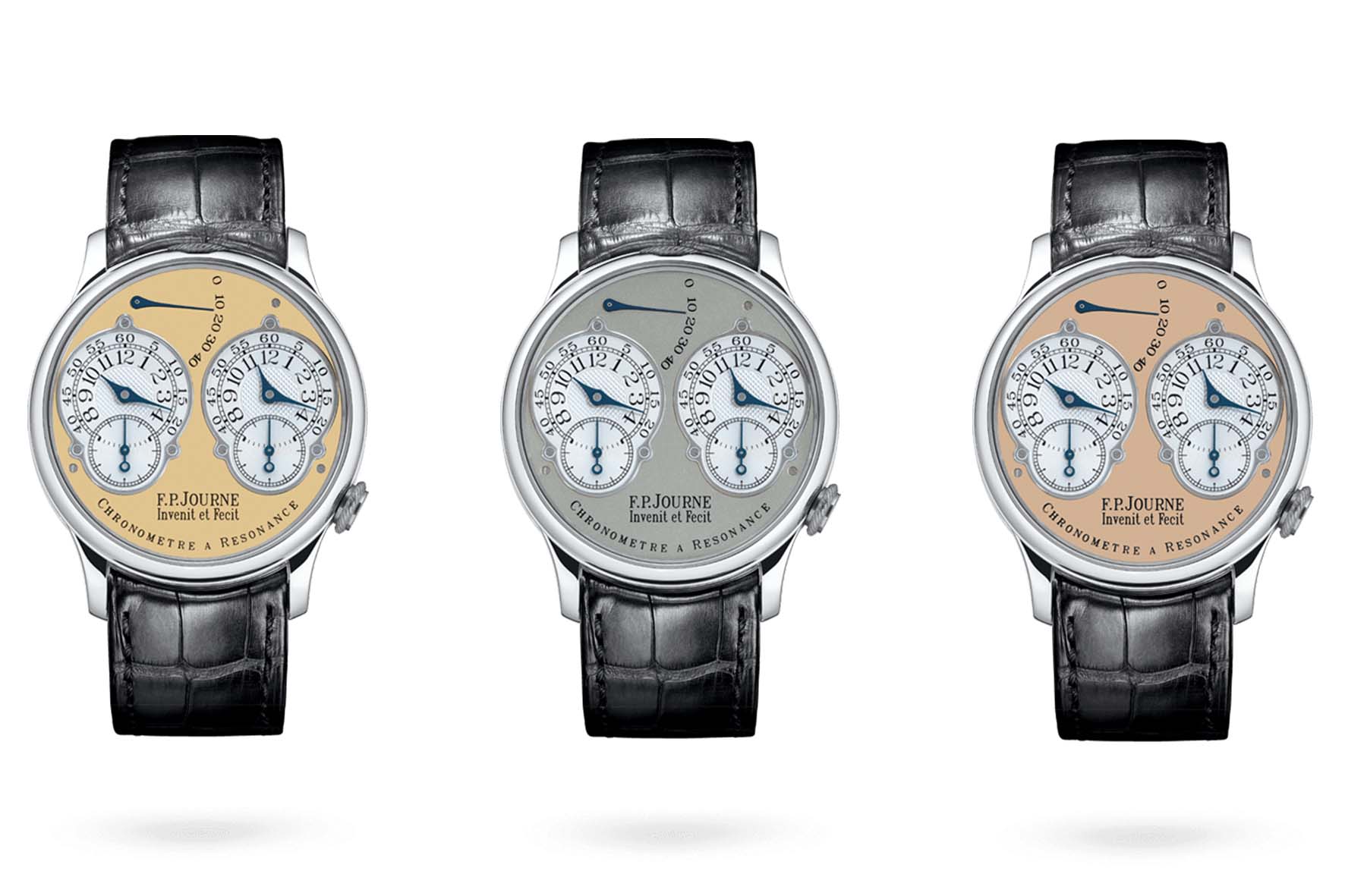
The movement’s architecture drew inspiration from Breguet’s work, bringing two free-sprung balances into close proximity. Vibrations transmitted through their shared mainplate could encourage the balances to synchronise. The challenge was also one of regulation: to enter and maintain resonance, the difference between the two balances’ daily rates had to remain within five seconds, measured cumulatively across six positions. The result embodied Journe’s relentless pursuit of precision.
FROM THE R SERIES TO THE RN SERIES
The RN Series accompanied a major change in the manufacture’s history: the introduction of movements made from 18K rose gold in 2004. The second generation of the Chronomètre à Résonance was offered in a 40 mm case alongside the existing 38 mm size, while retaining the model’s familiar proportions. Rose gold also joined the available case materials, echoing the new movement construction.
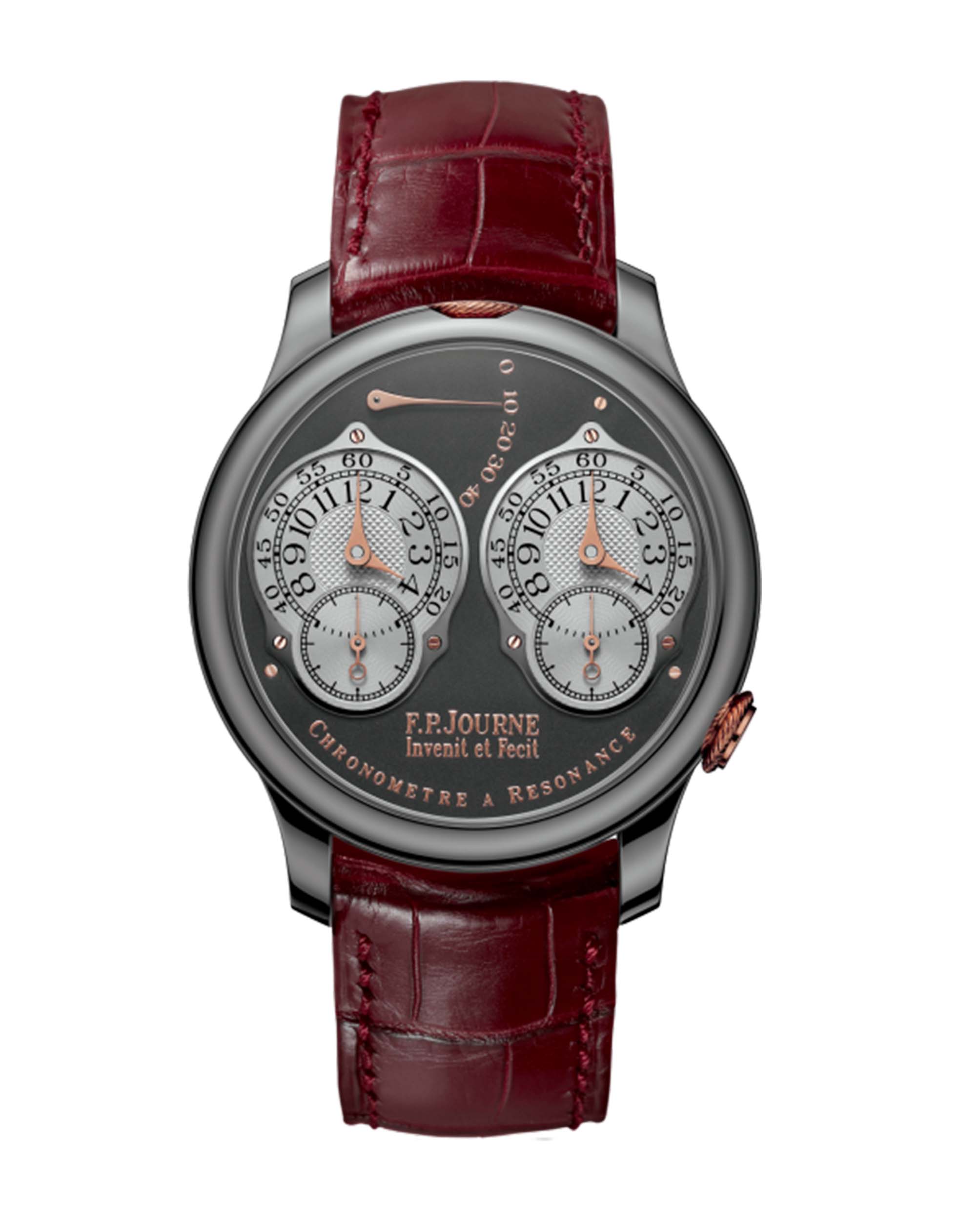
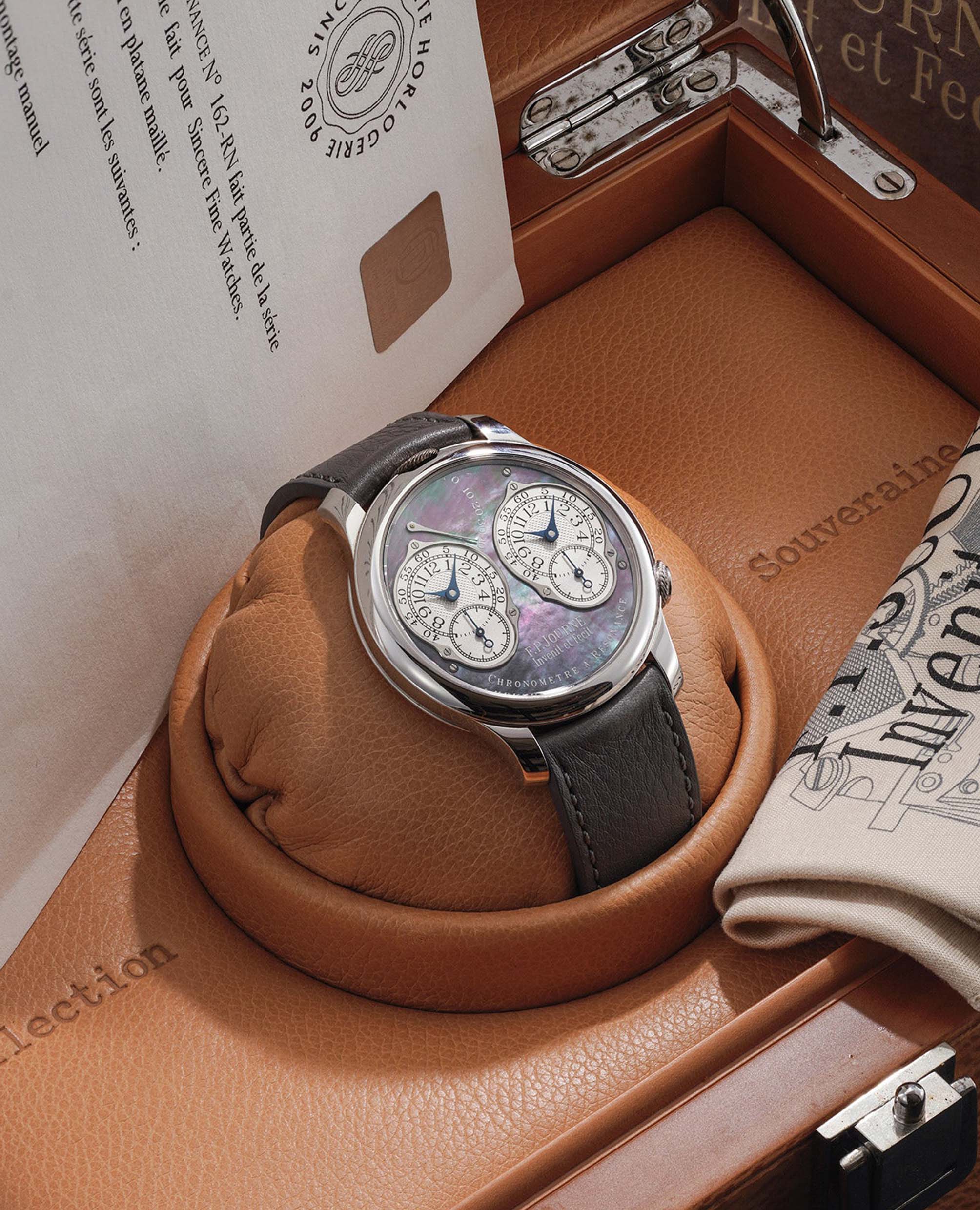
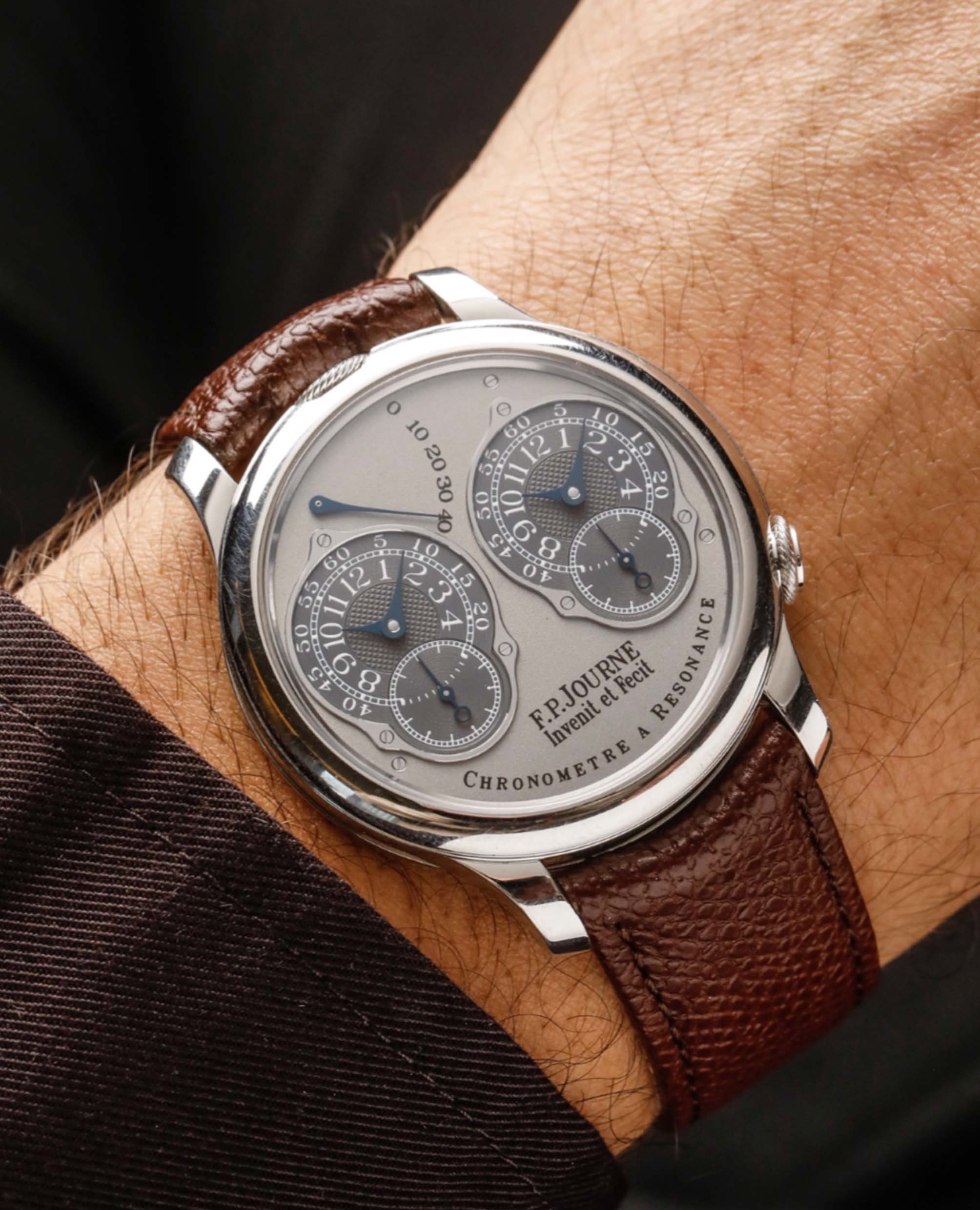
The principal displays and much of the design remained unchanged, providing a recognisable foundation for special editions. In 2006, the Chronomètre à Résonance Tokyo Anniversary celebrated the boutique’s second anniversary with 12 examples featuring polished titanium cases and ruthenium-treated gold dials. In 2009, a five-piece edition for a Milan retailer combined a platinum case with a white-gold dial and dark-grey ruthenium-treated subdials. Around 2006, Sincere Fine Watches received a ten-piece edition in rose gold with a black mother-of-pearl dial.
TEN YEARS OF THE CHRONOMÈTRE À RÉSONANCE
The collection reached a turning point on its tenth anniversary. Rather than simply introducing new materials, François-Paul Journe revisited both the appearance and the mechanics of the Chronomètre à Résonance.
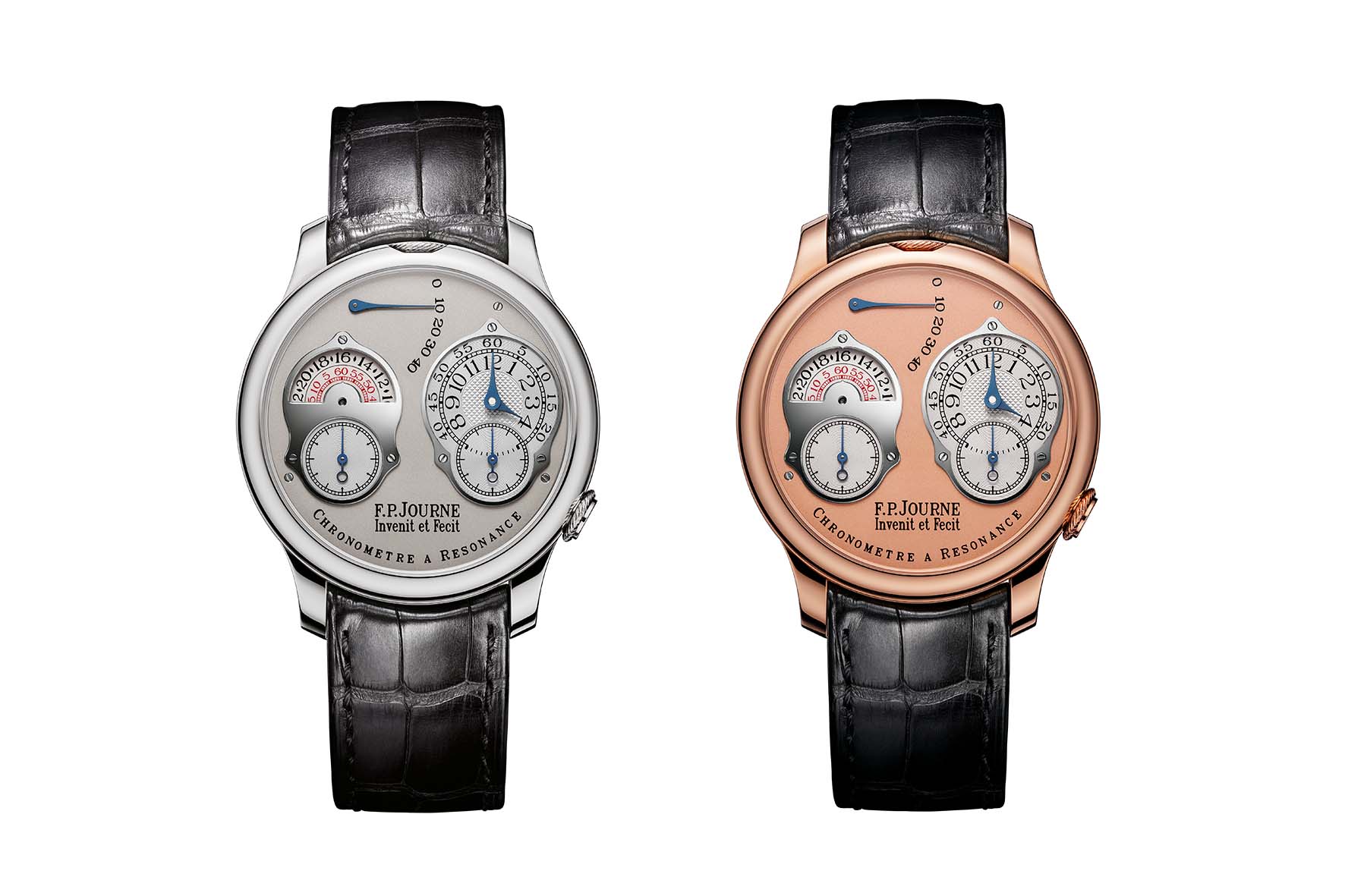
For the RT Series, Journe replaced the traditional symmetrical pair of 12-hour displays with a striking new arrangement. On the left, a digital, rotating 24-hour indication occupied the upper half of the subdial, while the right-hand display retained its analogue 12-hour format. The unusual design earned the model the nickname ‘parking meter’ among collectors, recalling the appearance of older mechanical parking meters.
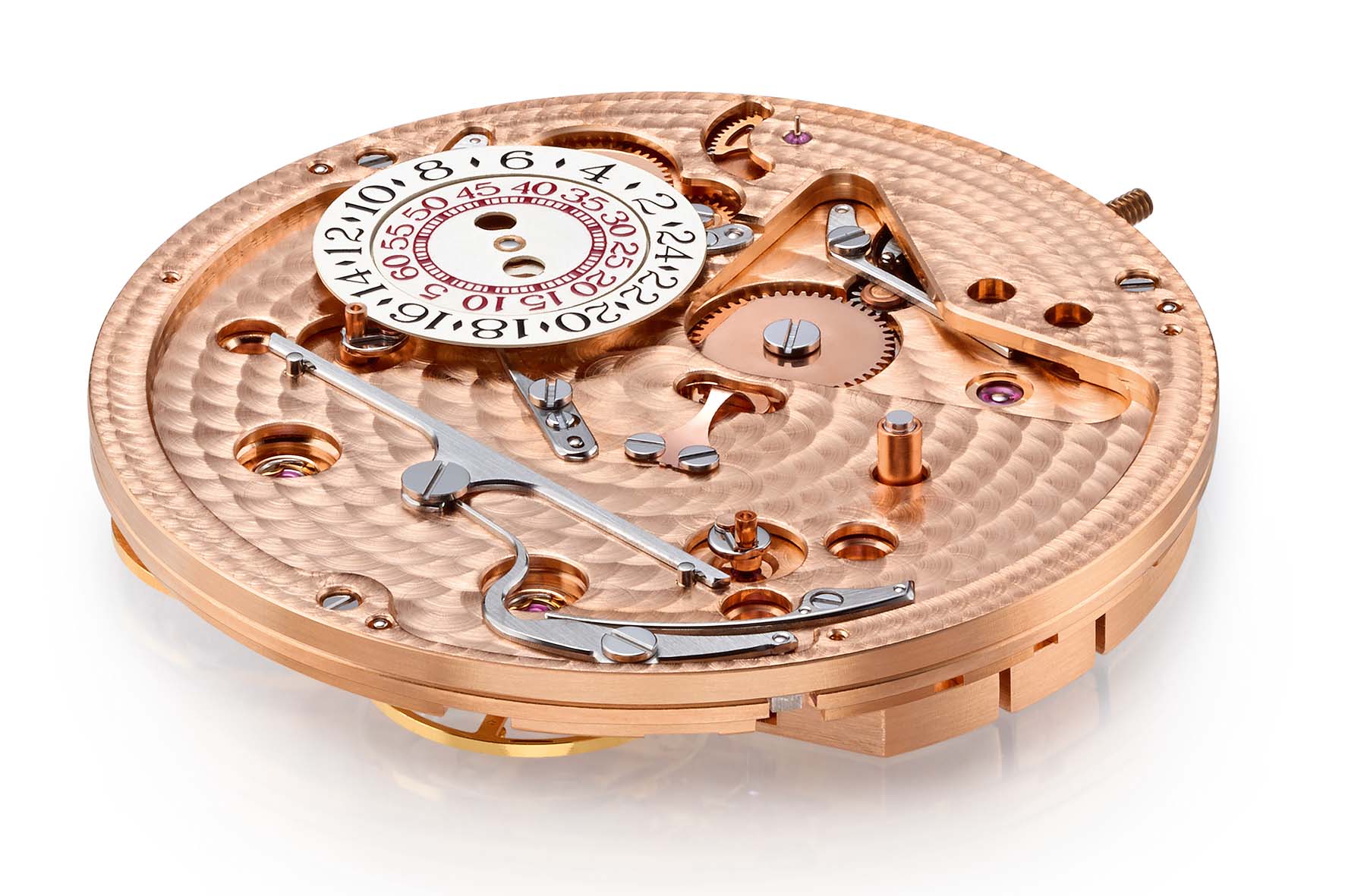
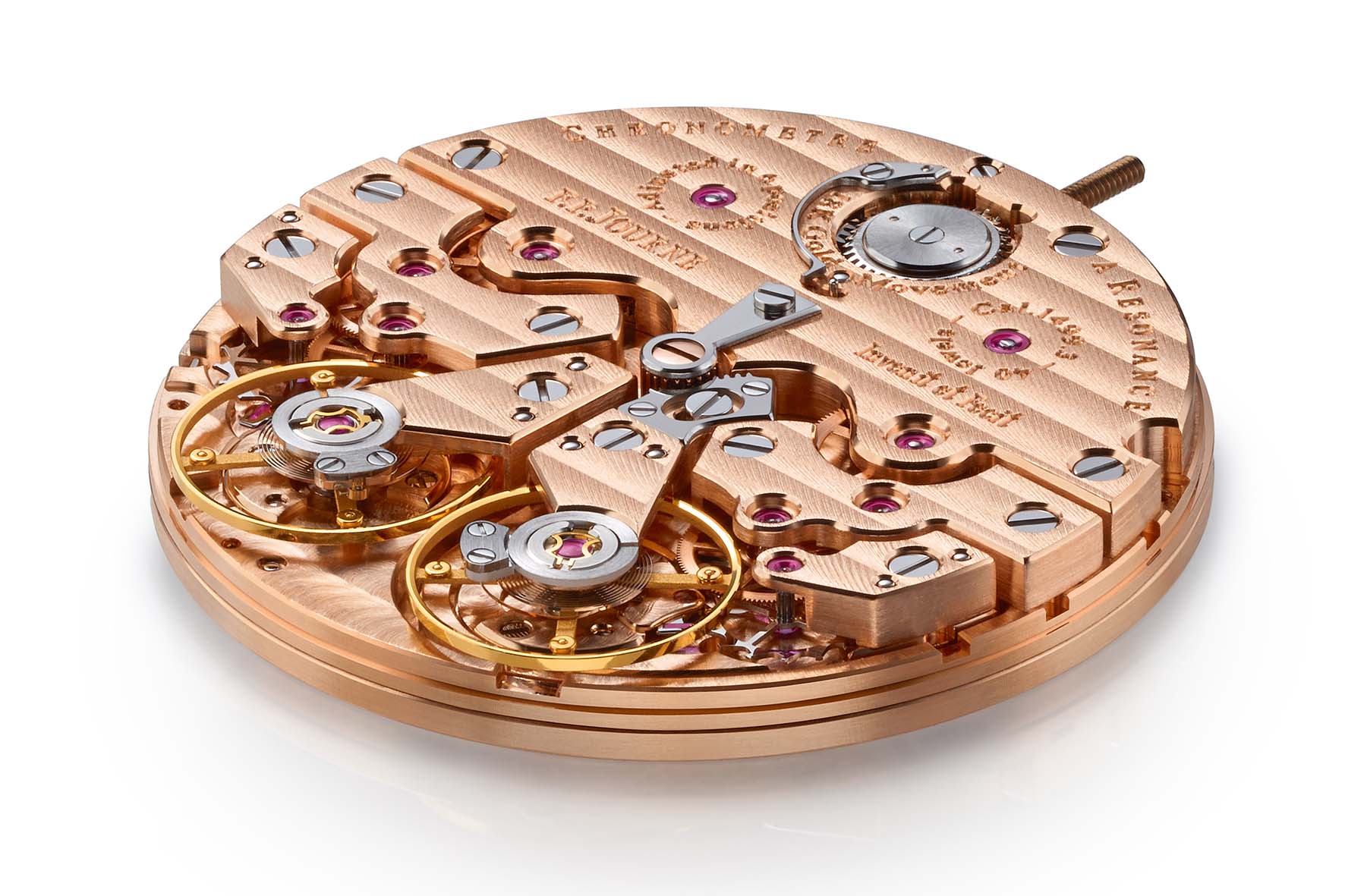
The transformation went beyond the dial. Accommodating a 24-hour indication required changes to the transmission mechanism and the power needed to drive the display. Despite the visual differences between the two subdials, the overall composition retained the balance associated with the collection. The RT Series remained in production until 2019.
THE “RTA SERIES”
In 2019, the analogue RT appeared, a short-lived version commonly known among collectors as the RTA Series. Drawing on elements of the preceding generations, it brought back two visually symmetrical subdials while retaining the technical developments of the RT. The ‘parking meter’ display was gone, but its underlying mechanical concept remained.
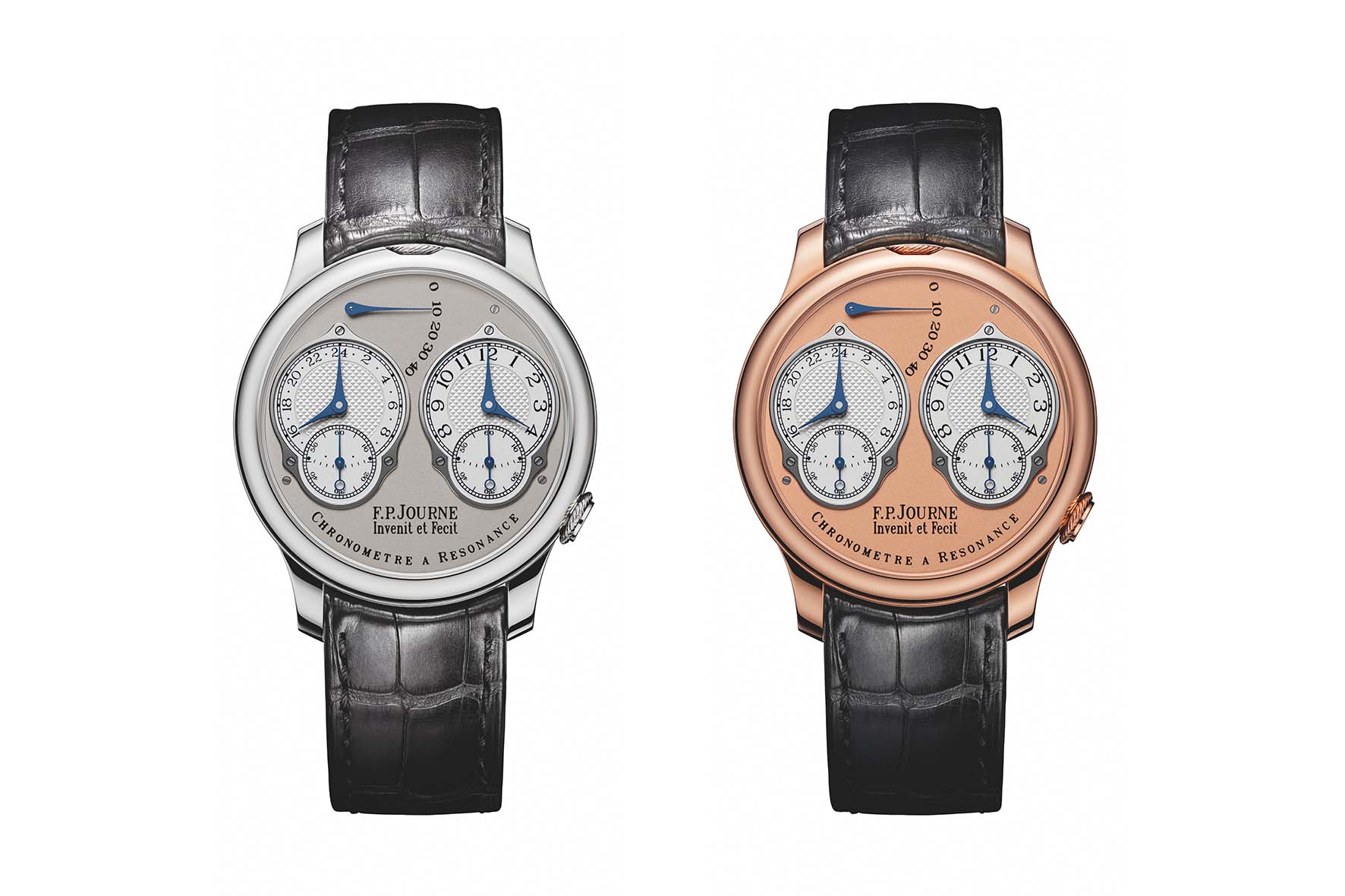
The left-hand subdial still displayed reference time on a 24-hour scale, using the movement architecture developed for the RT Series. Offered in 40 mm cases in platinum or rose gold, the RTA could be fitted with a leather strap or a matching precious-metal bracelet.
THE CHRONOMÈTRE À RÉSONANCE TODAY
The RTA remained in production for only a year, just before the Chronomètre à Résonance celebrated its 20th anniversary. The timing suggested that a more comprehensive redesign was approaching. By then, the model had become one of the clearest expressions of Journe’s distinctive approach to watchmaking.
The next chapter began with the completely redesigned Calibre 1520, introduced in the RQ Series. Its 42-hour power reserve came from a single mainspring barrel, rather than the two separate barrels used in earlier versions to supply the movement’s two regulating systems.
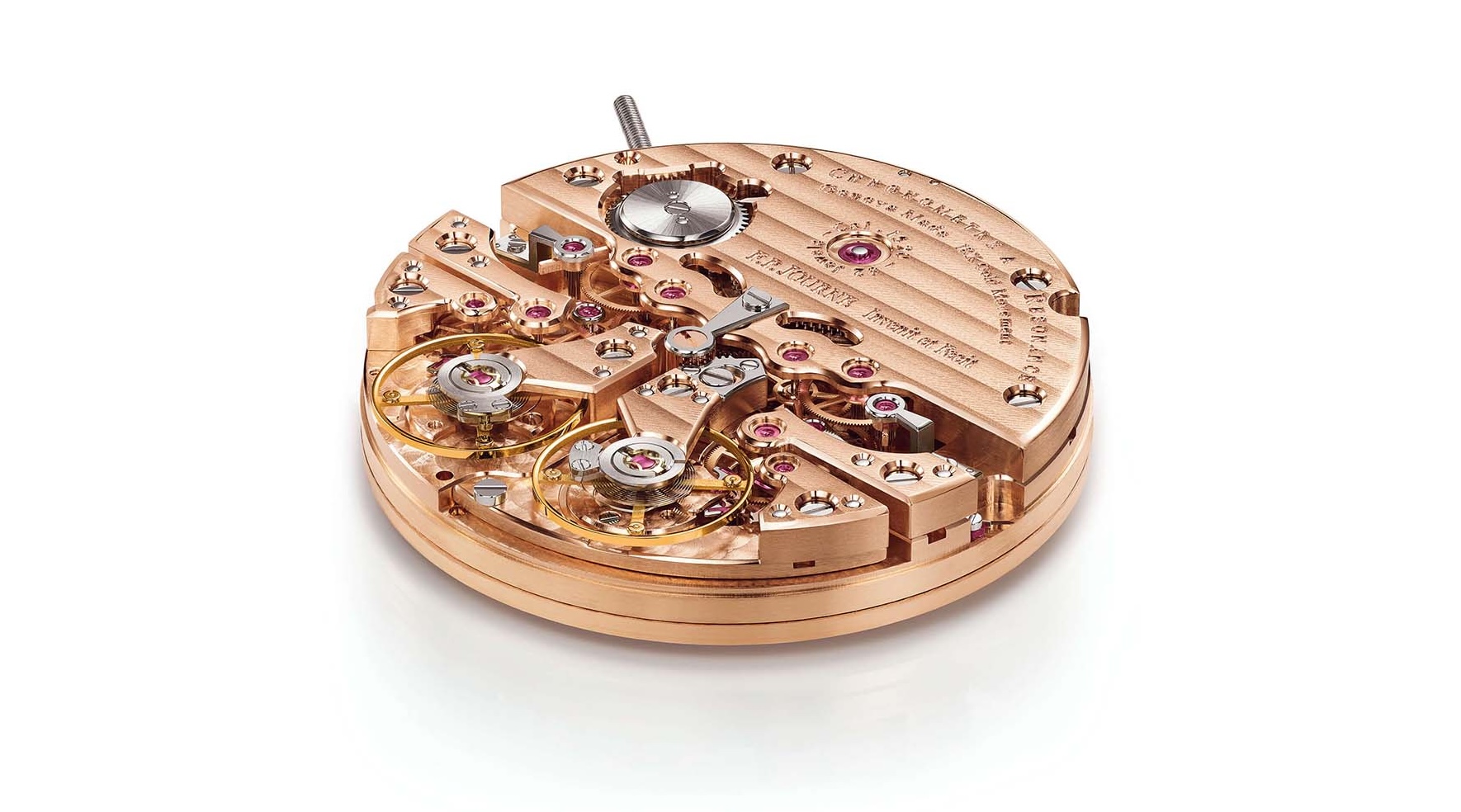
A differential distributes energy from the single barrel to two separate gear trains. Each is equipped with a one-second remontoir d’égalité, a constant-force mechanism that delivers energy to its escapement at regular one-second intervals. Together, these systems provide a more consistent driving force as the mainspring unwinds.
The RQ Series also introduced important visual changes. The two subdials retained the arrangement of the preceding generation, but an opening appeared in the centre of the dial, revealing the differential beneath the mainspring barrel and offering a direct glimpse of the revised movement architecture.
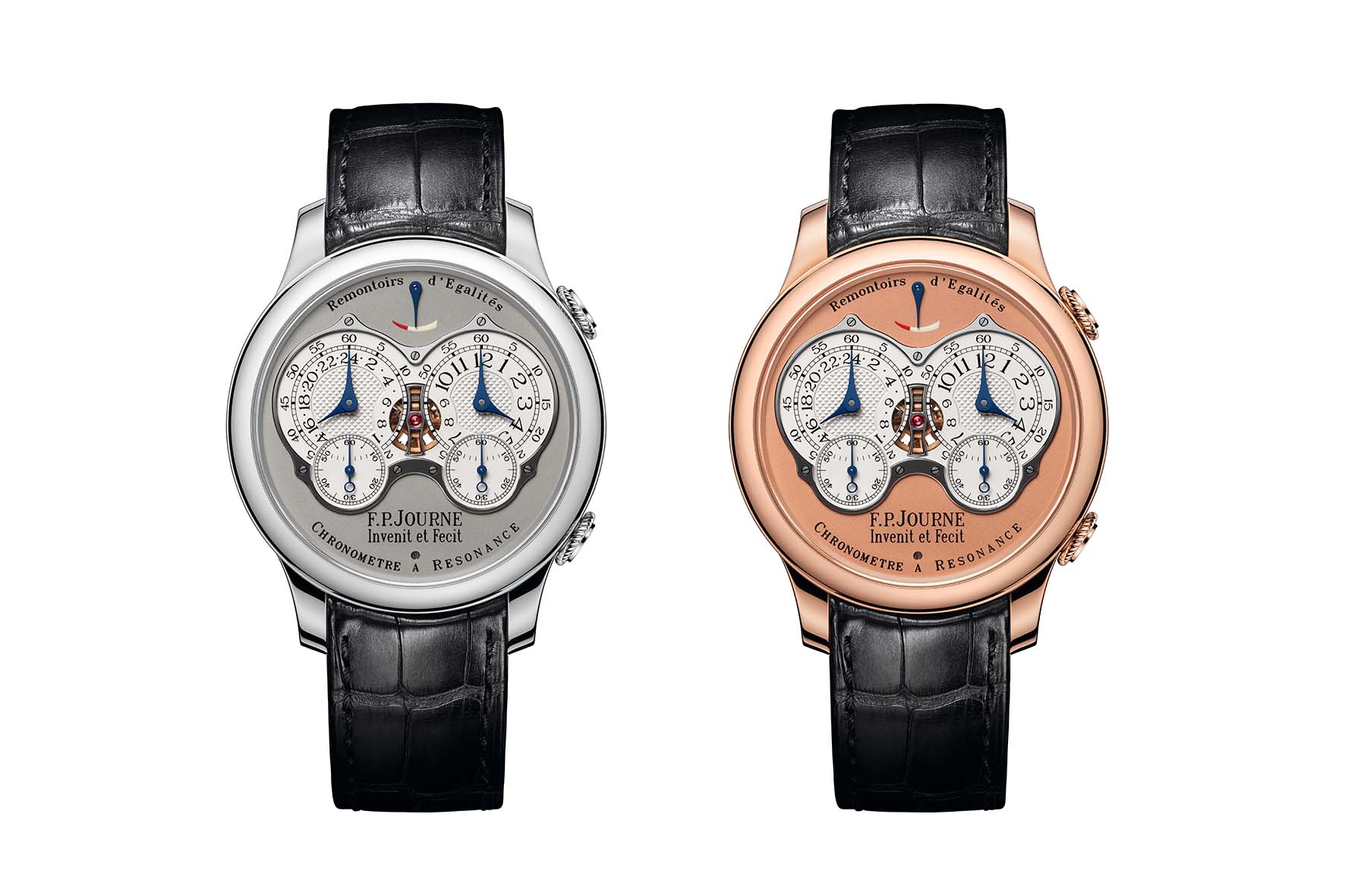
The power-reserve indicator at 12 o’clock became smaller and more discreet, with a red section indicating when the watch needed winding. The case also gained a new crown arrangement. The crown at 2 o’clock is used for winding and setting the time, while pulling the crown at 4 o’clock simultaneously resets both small-seconds indications to zero.
The redesigned movement was housed in 40 mm or 42 mm cases, offered in platinum or 18K 6N gold. The case measured approximately 11 mm in thickness, compared with around 9 mm for the previous generation.
CONCLUSIONS
Across its various generations, the Chronomètre à Résonance has retained the aesthetic codes and finishing details that make a François-Paul Journe watch immediately recognisable. Established early in his career, this visual language has remained consistent even as the mechanics have evolved.
Consider the distinctive teardrop-shaped hands, the guilloché decoration at the centre of the hour and minute subdials, and the exposed screws securing those displays to the main dial. The carefully drawn Arabic numerals lend the watch its unmistakable character. Other signatures include the crown’s rope-like knurled pattern and the use of unconventional finishes and materials, such as ruthenium.
Together, these elements capture the essence of Journe’s watchmaking. With the Chronomètre à Résonance, he transformed a demanding physical phenomenon into a practical pursuit of greater precision, creating a watch whose technical ambition is matched by its unmistakable identity.
By Davide Passoni