

In watchmaking communications, one often reads about a “fusion between tradition and innovation,” a “bridge between past and present,” or a “union of the old and the new.” Not always do these expressions go beyond pure marketing rhetoric. In the new Laureato Three Gold Bridges by Girard-Perregaux, however, they perfectly reflect both the construction philosophy and the idea behind the watch — a timepiece that unites the aesthetic codes and mechanical expertise that define nearly two and a half centuries of the La Chaux-de-Fonds manufacture’s history. Indeed, the watch’s very name says it all: the Three Bridges and the Laureato are two pillars on which Girard-Perregaux’s history has been built — and continues to stand — from its origins to the present day.
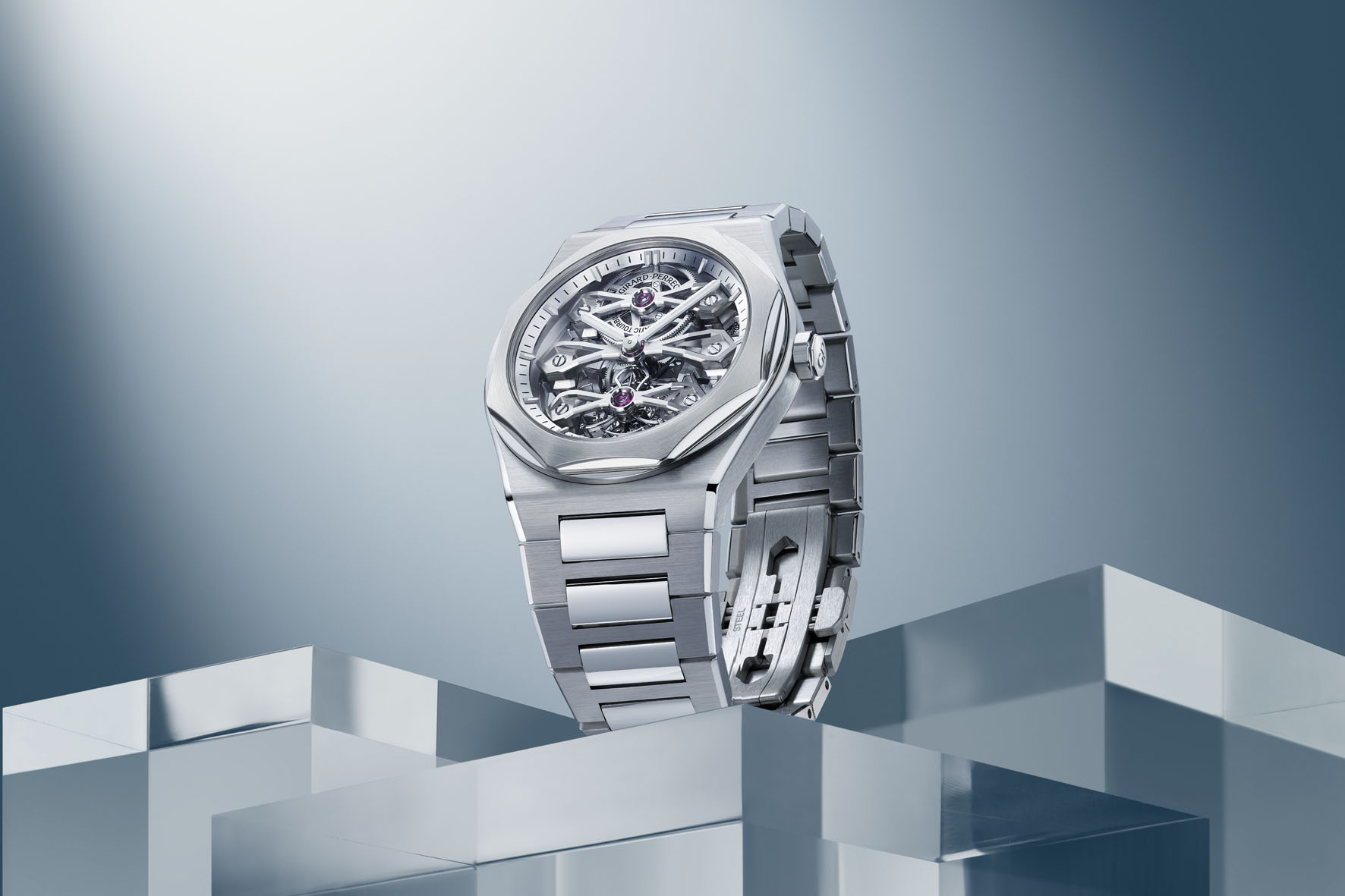
We’ve already discussed both in previous articles — the story of the Laureato here, and that of the Three Bridges here — but it’s worth recalling what secured Girard-Perregaux a place of honor in watchmaking history. Now let’s dive straight into the Laureato Three Gold Bridges, created to enrich the celebrations marking the 50th anniversary of one of the brand’s most iconic timepieces. Commemorating this milestone with one limited edition and one non-limited version that bring together the finest elements of the manufacture’s tradition is, we think, an intelligent and meaningful way to reaffirm a level of technical excellence rarely seen today.
LAUREATO THREE GOLD BRIDGES: THE BRIDGES AND THE CALIBRE
Let’s start with the name itself — Laureato Three Gold Bridges. The “Three Bridges” have been both a technical and aesthetic signature of the Maison since 1867, when Constant Girard made them the visual centerpiece of his watches. Today, they appear on the dial of a Laureato that is a masterclass in both style and mechanical craftsmanship. At its heart lies the GP09620 calibre — the stage upon which, thanks to the three bridges, Girard-Perregaux’s technical artistry performs. This calibre — demonstrating the brand’s dedication to the creation — is not a skeletonized version of an existing movement (as often happens) but was designed entirely from scratch. From the beginning, the manufacture’s philosophy has been clear: technique and aesthetics are conceived together, inseparable from each other. Constant Girard’s goal was to make his movements visible — and, being visible, beautiful to behold. Hence the obsessive attention to finishing and the uncompromising approach to haute horlogerie that naturally leads to such mechanical artistry.
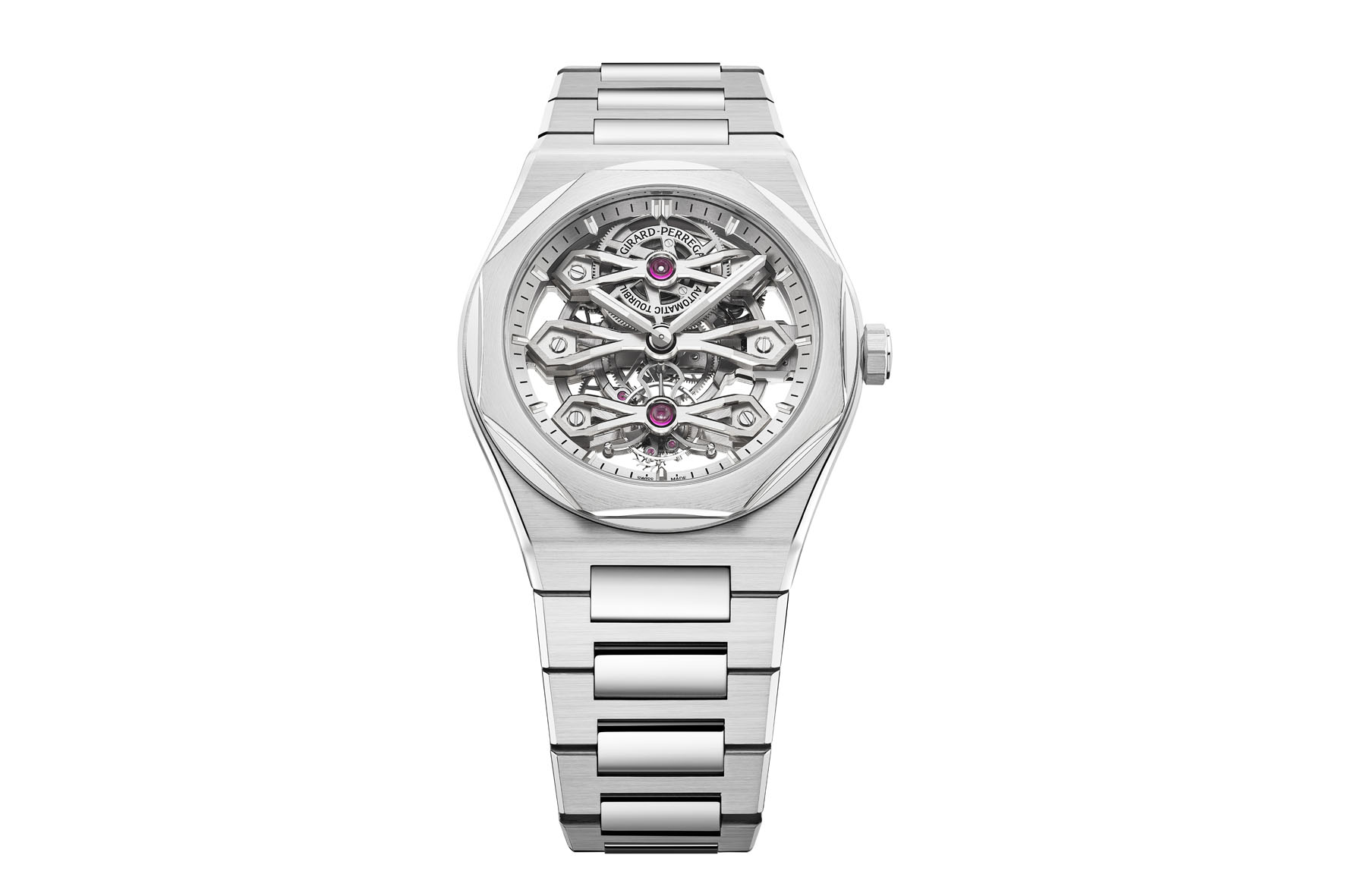
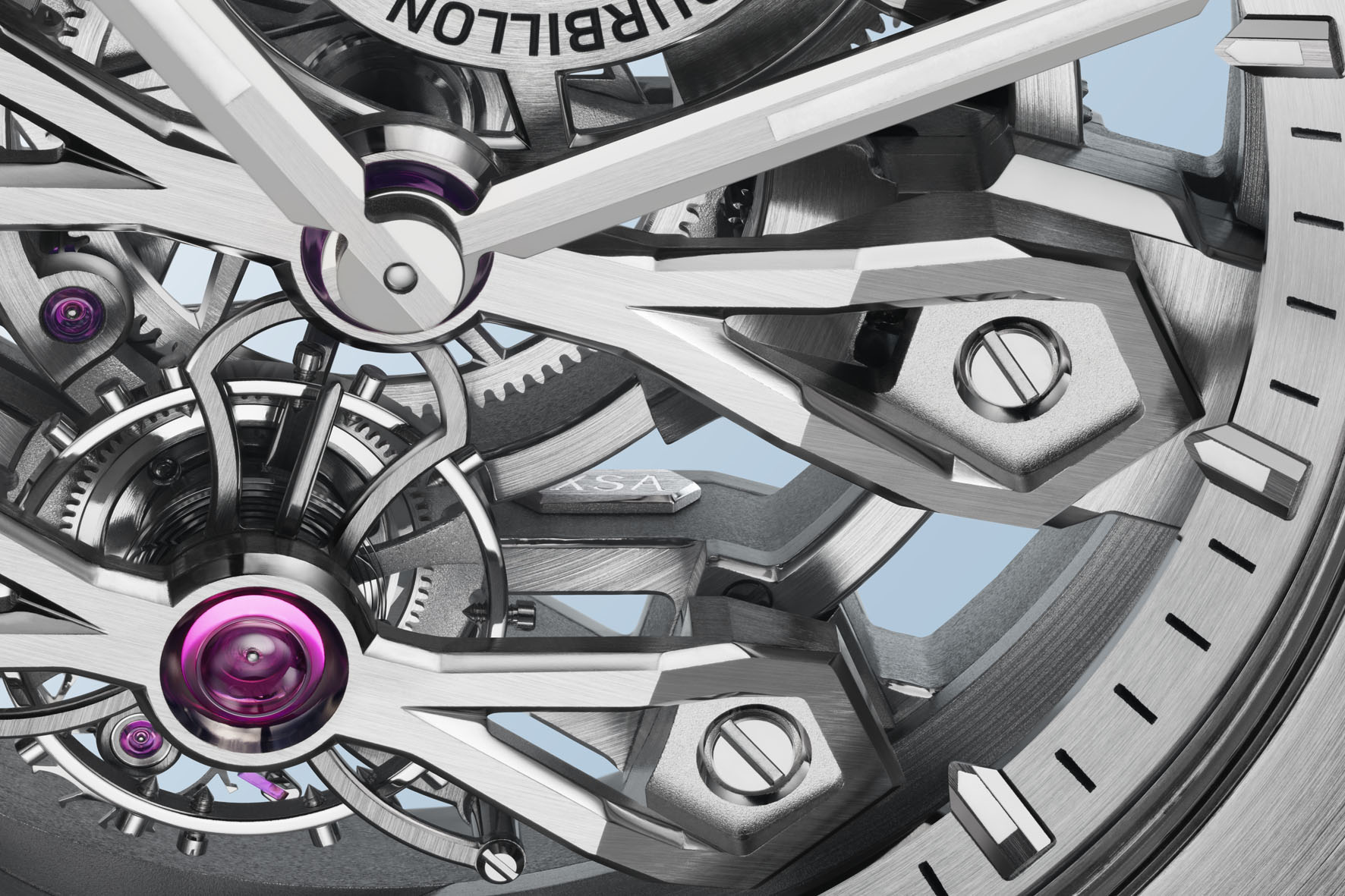
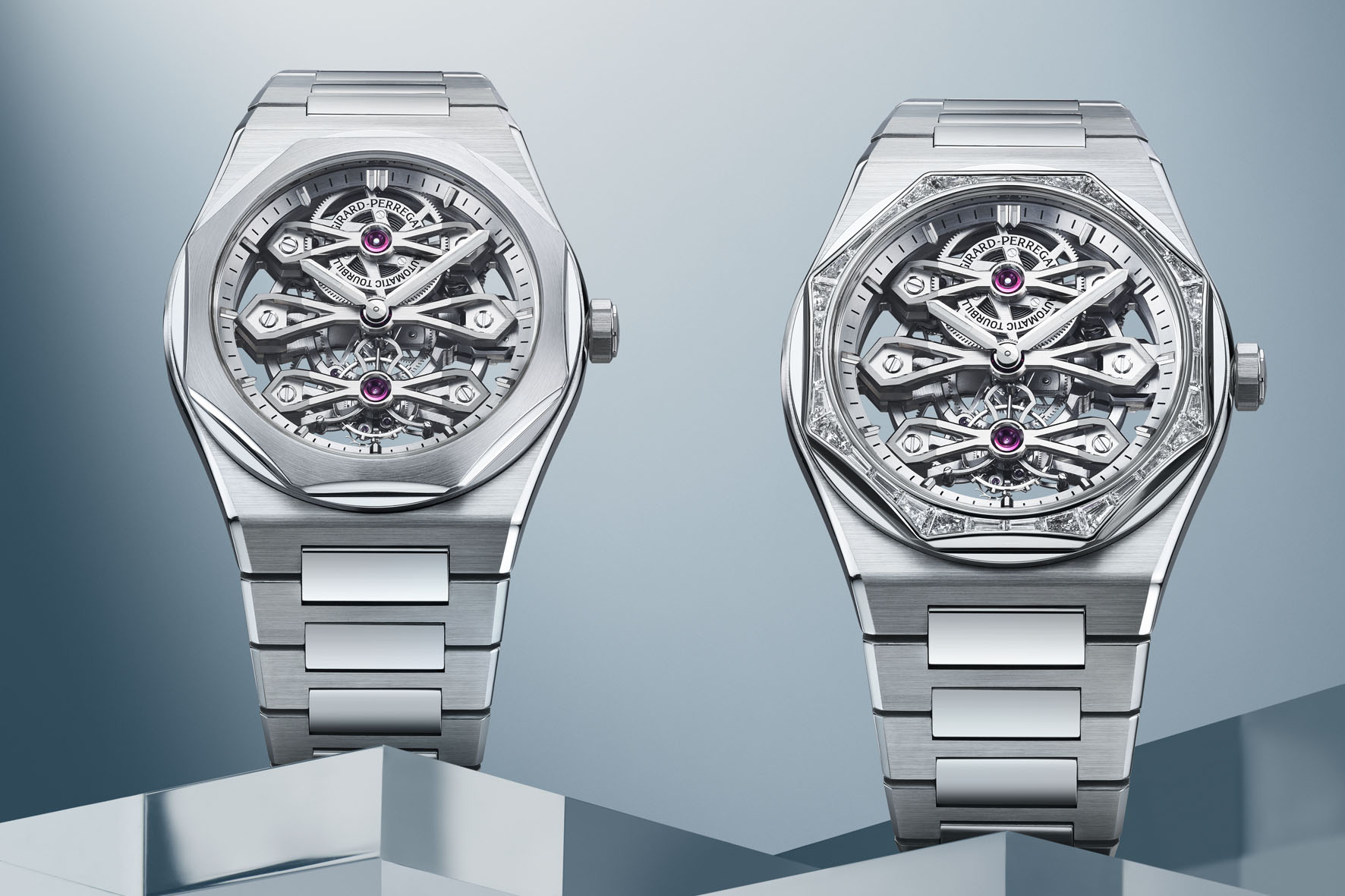
The Girard-Perregaux workshop engineered the entire GP09620 calibre — which offers a minimum 55-hour power reserve — around six skeletonized bridges forming its structural backbone. As the name implies, three of these bridges — crafted in solid white gold and shaped in the Maison’s signature arrow design — define the aesthetic of the watch, being visible from the dial side. Their vertical alignment is both stylistic and functional: the upper bridge supports the barrel, the central one aligns with the gear train, and the lower one supports the tourbillon.
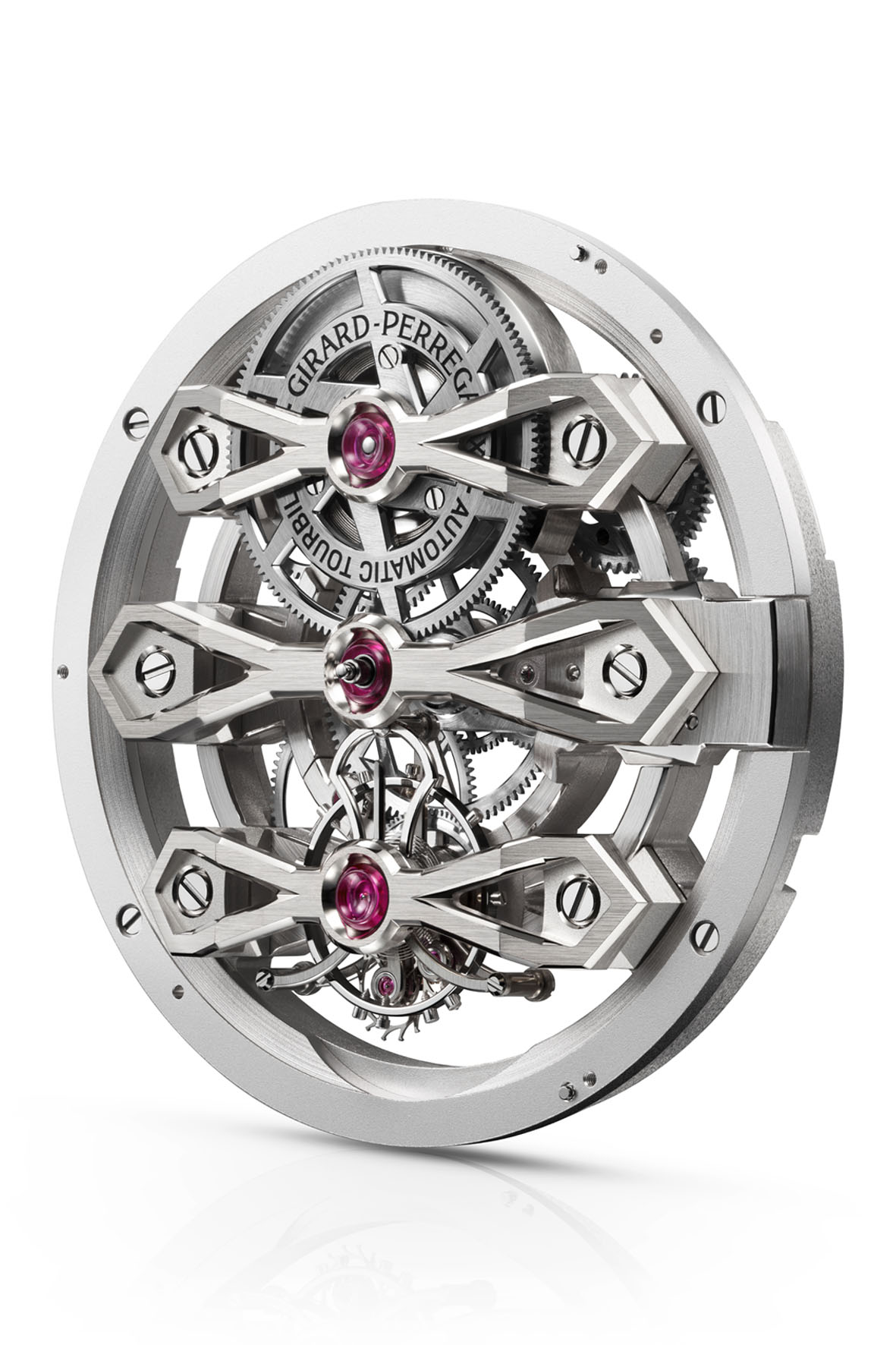
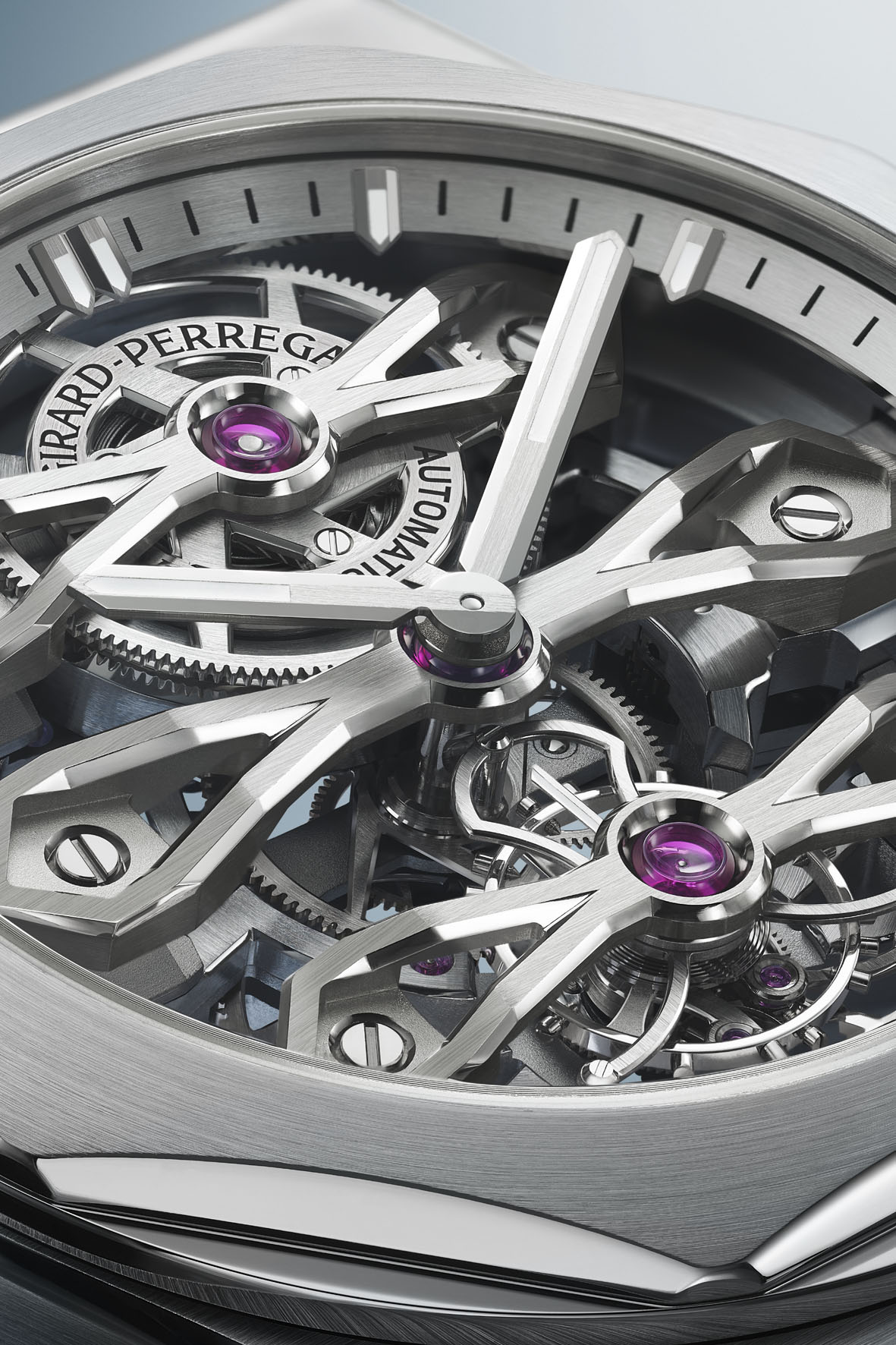
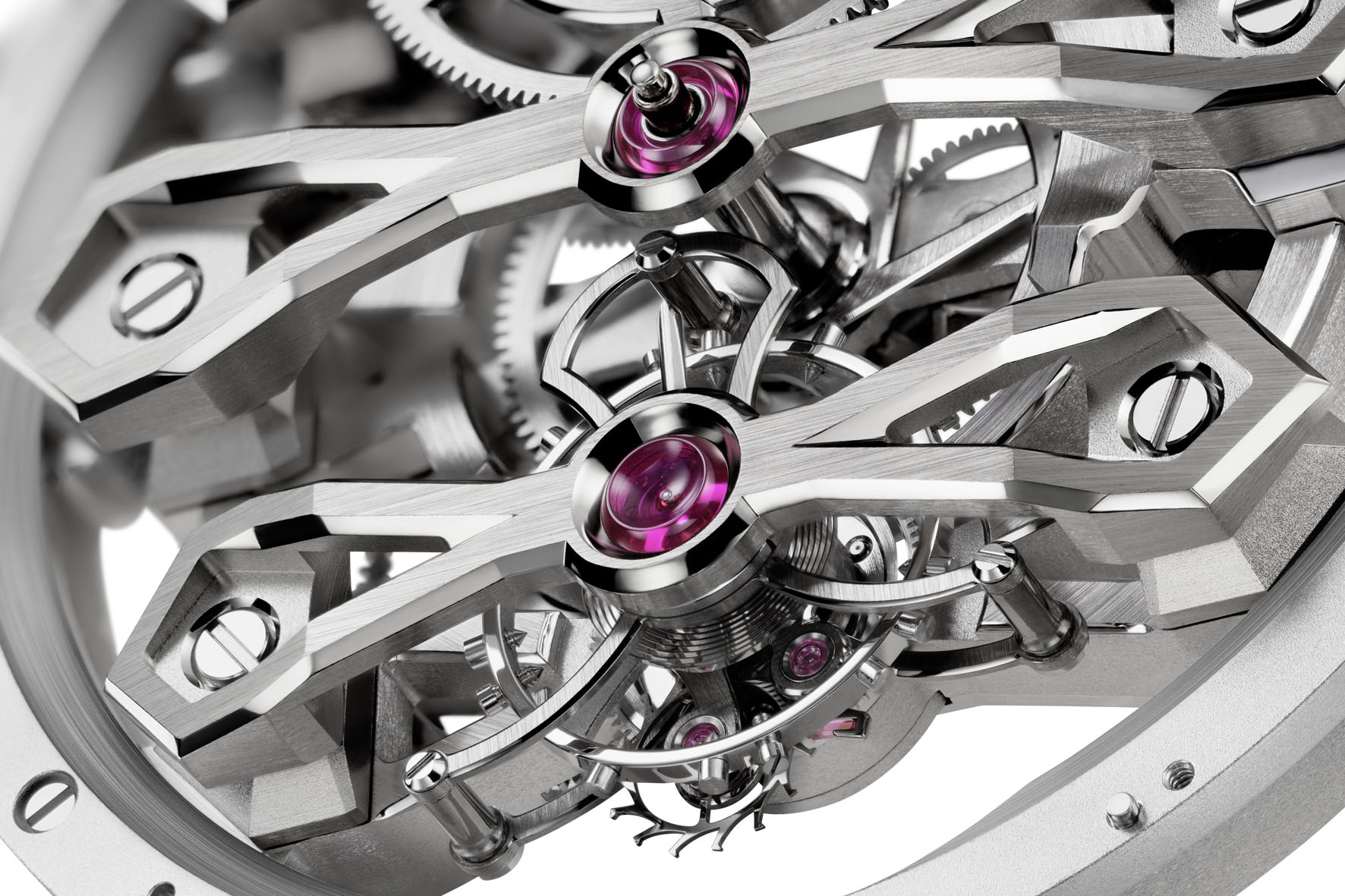
The tourbillon, naturally, remains the heart of the calibre. Positioned at 6 o’clock, it marks the culmination of a visual journey that guides the eye from the barrel to the tourbillon through the sequence of bridges. This carefully designed architectural layout confirms the dual — functional and aesthetic — nature of the three bridges that give the watch its name. The tourbillon cage, shaped like a lyre and crafted from titanium, is another hallmark of the Maison’s design language. The small seconds hand connected to the tourbillon brings additional animation to the GP09620 calibre, making its beat rate of 21,600 vibrations/hour all the more perceptible.
THE FINISHES
Three of the six bridges are visible from the dial side, while the other three can be admired through the sapphire crystal caseback. The reverse view offers another delightful detail: the platinum micro-rotor positioned behind the barrel, ensuring automatic winding. The micro-rotor solution — much like the peripheral rotor — is, in our view, particularly elegant, lending grace to the movement’s architecture while preserving the view of its intricate mechanics and exquisite finishing. We’re talking about 418 hand-polished bevels, including 362 internal angles, and mirror-polished surfaces — all operations requiring countless hours of manual work that only a traditional, excellence-driven manufacture like Girard-Perregaux can guarantee.
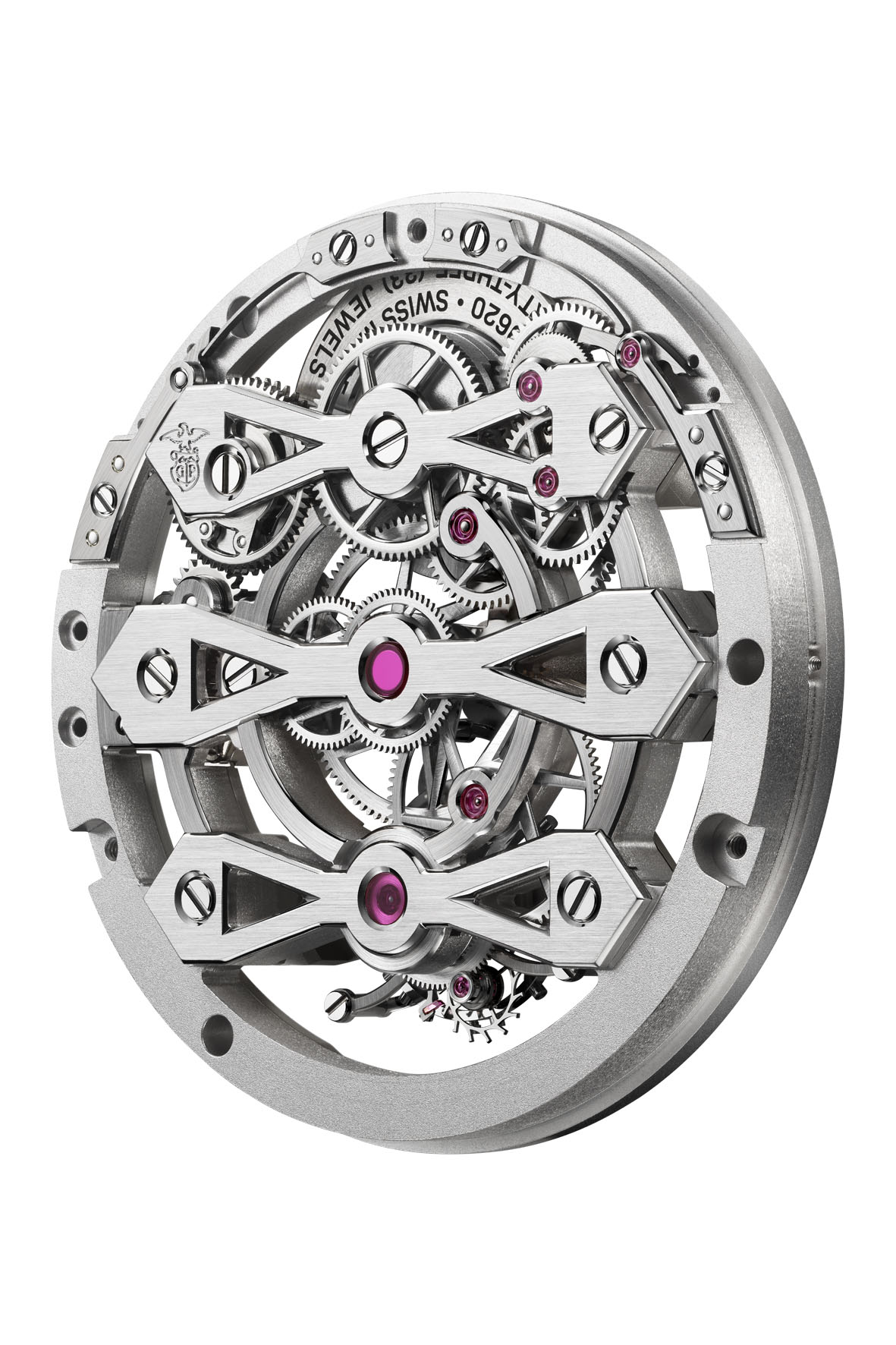
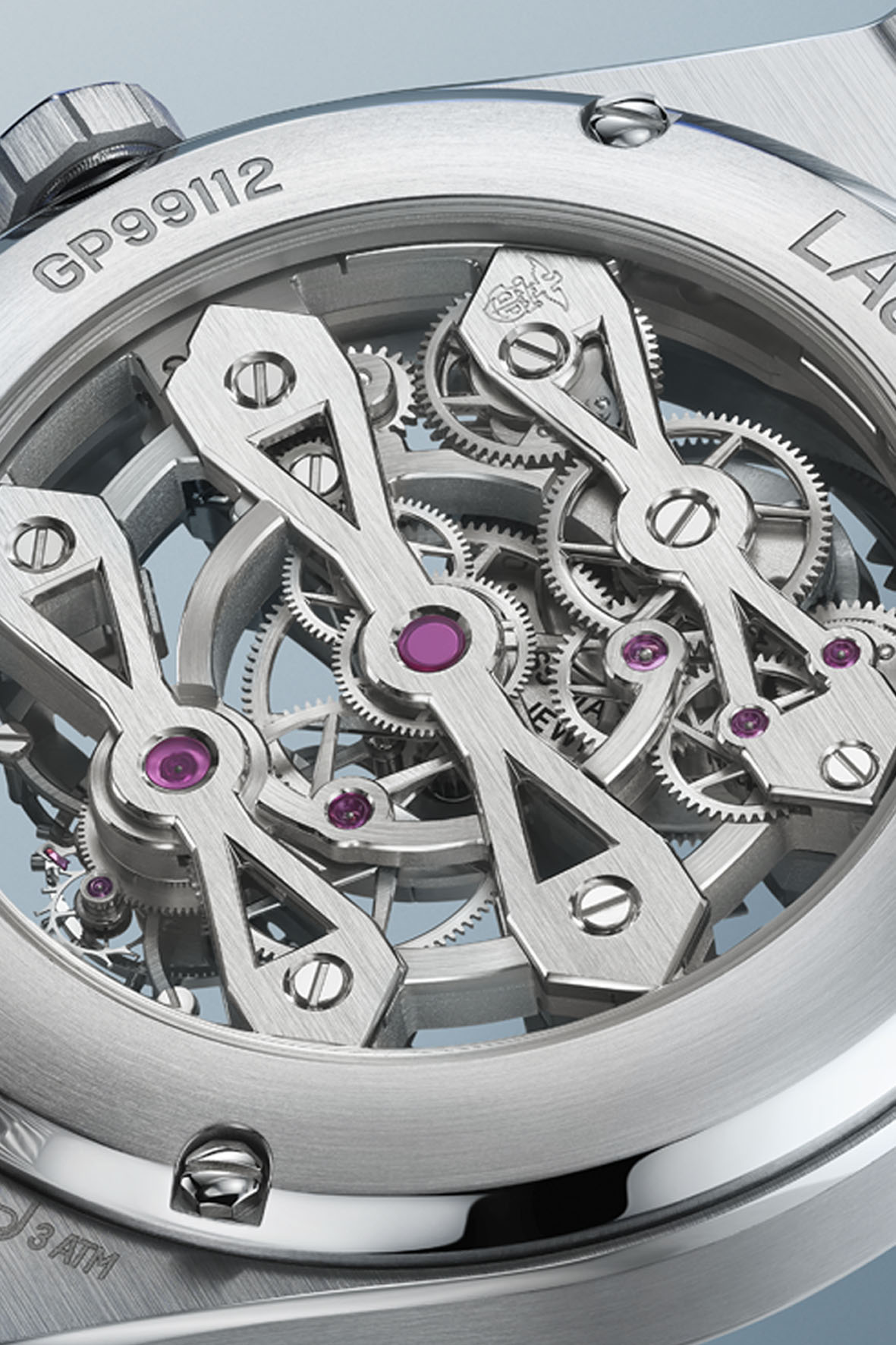
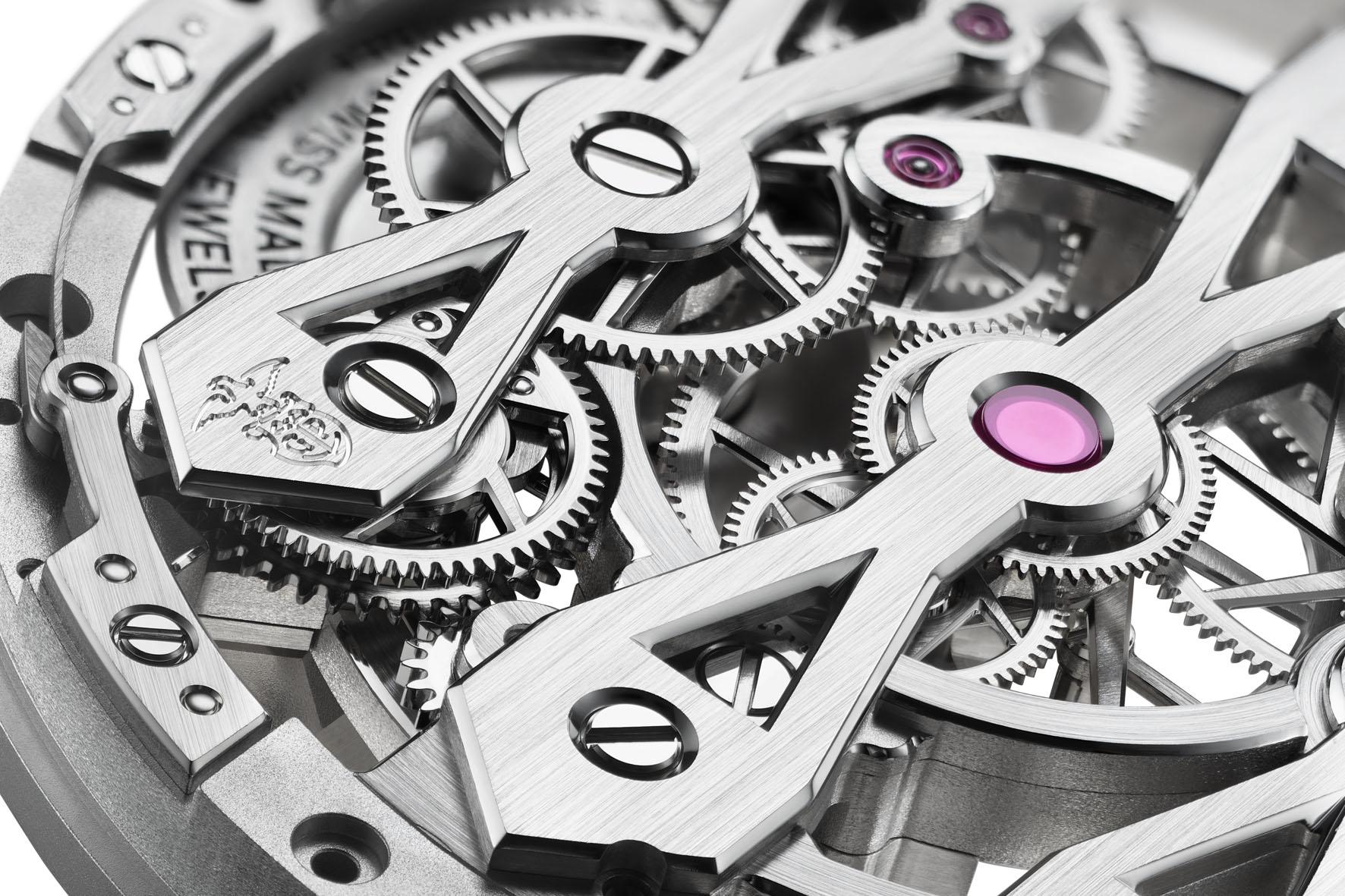
As a testament to this human craftsmanship, each tourbillon bridge bears a tiny plaque — in the same white gold — engraved with the initials of the master watchmaker who assembled and finished the piece.
THE GIRARD-PERREGAUX AESTHETIC OF THE LAUREATO THREE GOLD BRIDGES
This exceptional mechanical display can be admired thanks to the near absence of a conventional dial. Yet, thanks to Girard-Perregaux’s careful design, legibility remains excellent. The baton-shaped hands are filled with luminescent material; the white gold hour markers, mounted on the inner plate, add to the watch’s sense of lightness. The discreet yet well-proportioned rehaut enhances readability without overwhelming the intricate architecture.
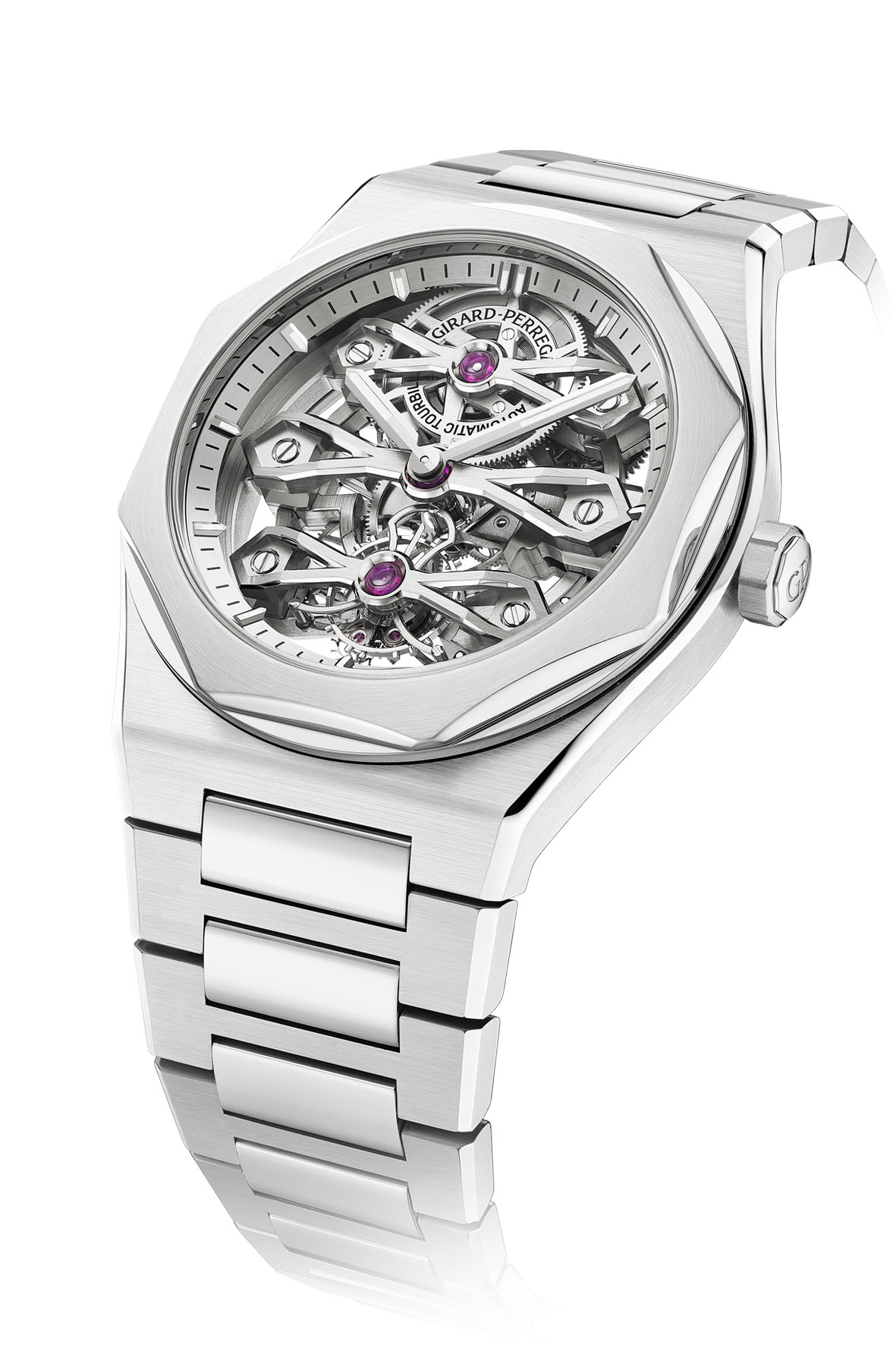
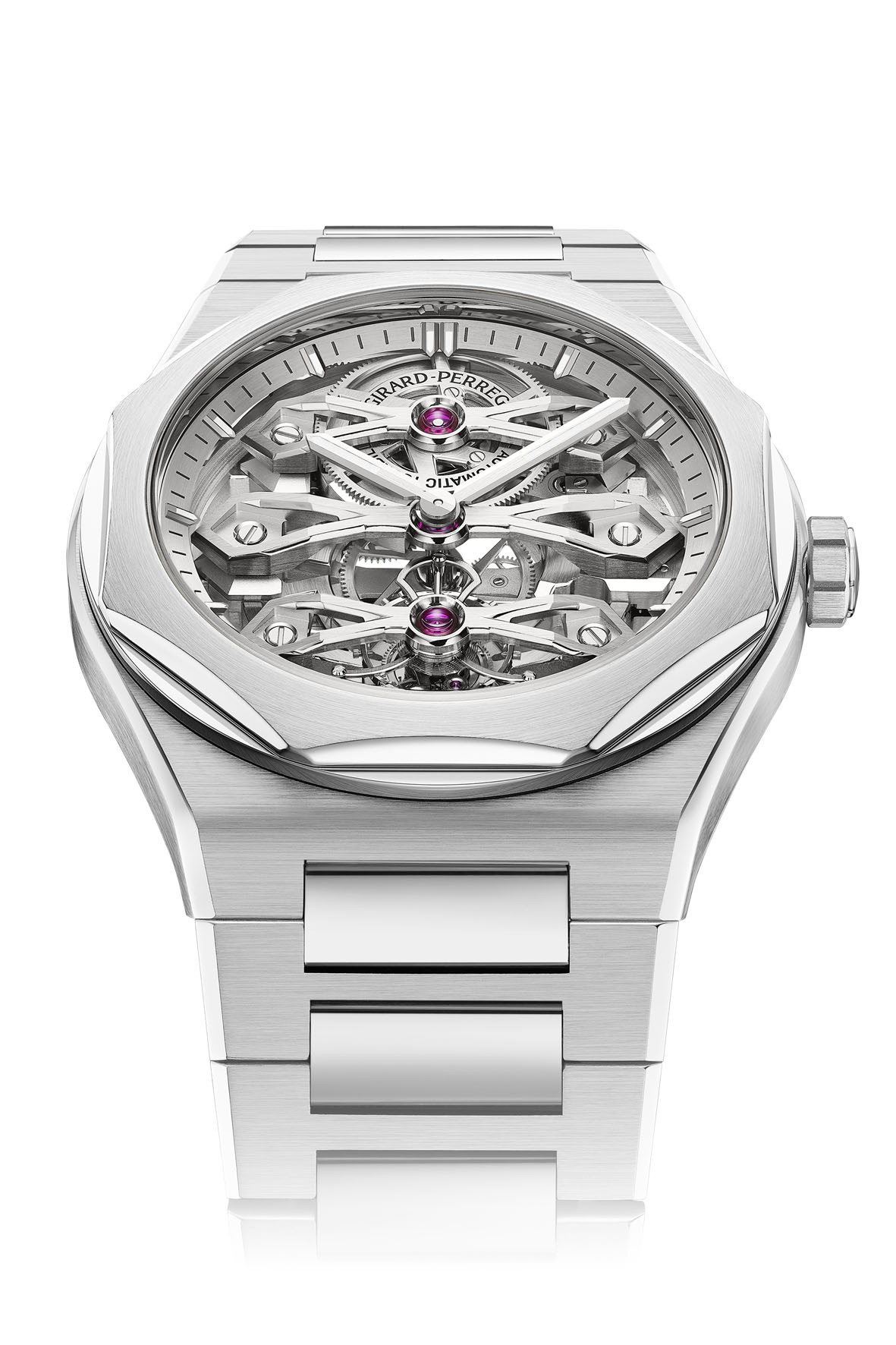
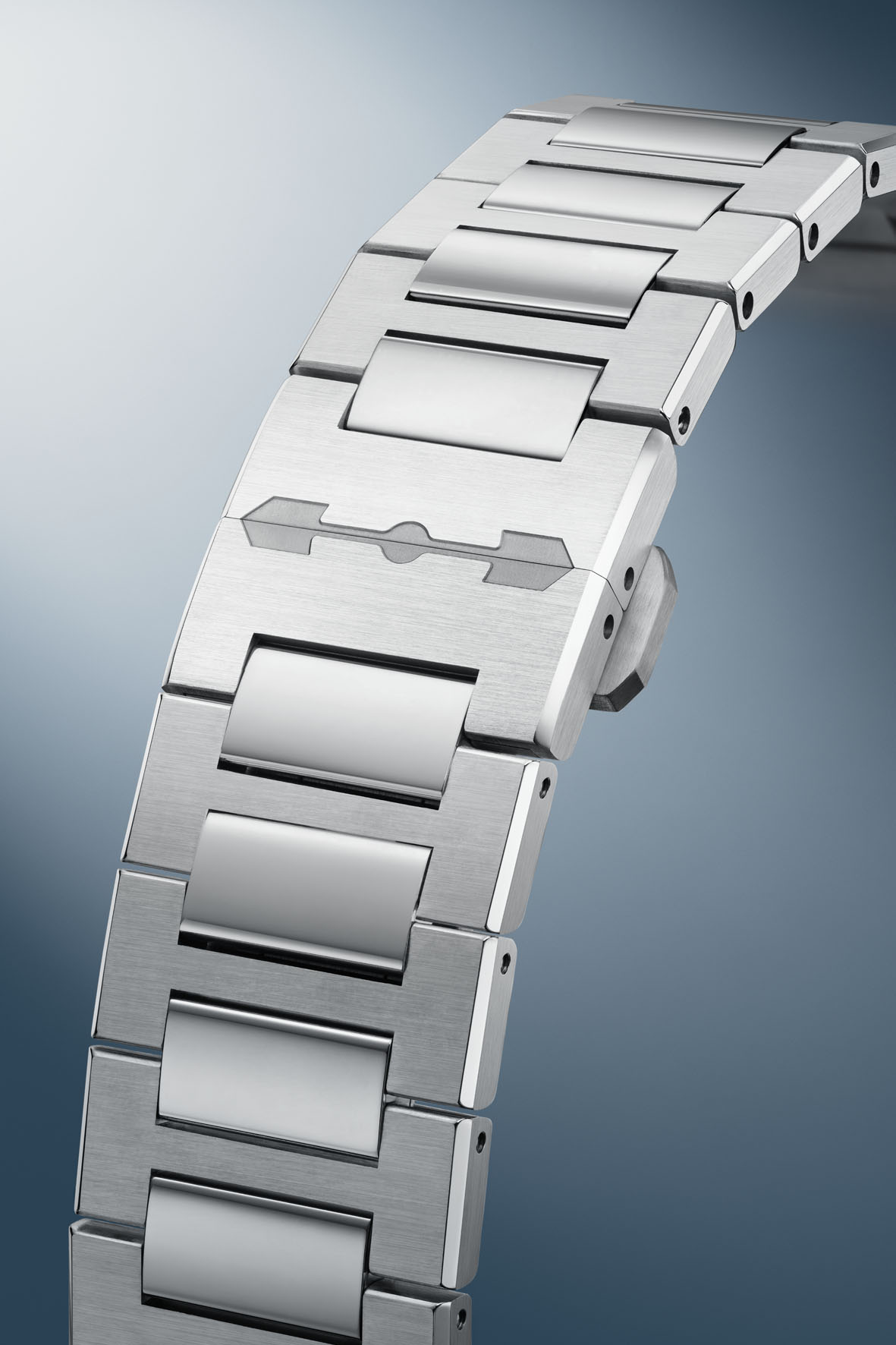
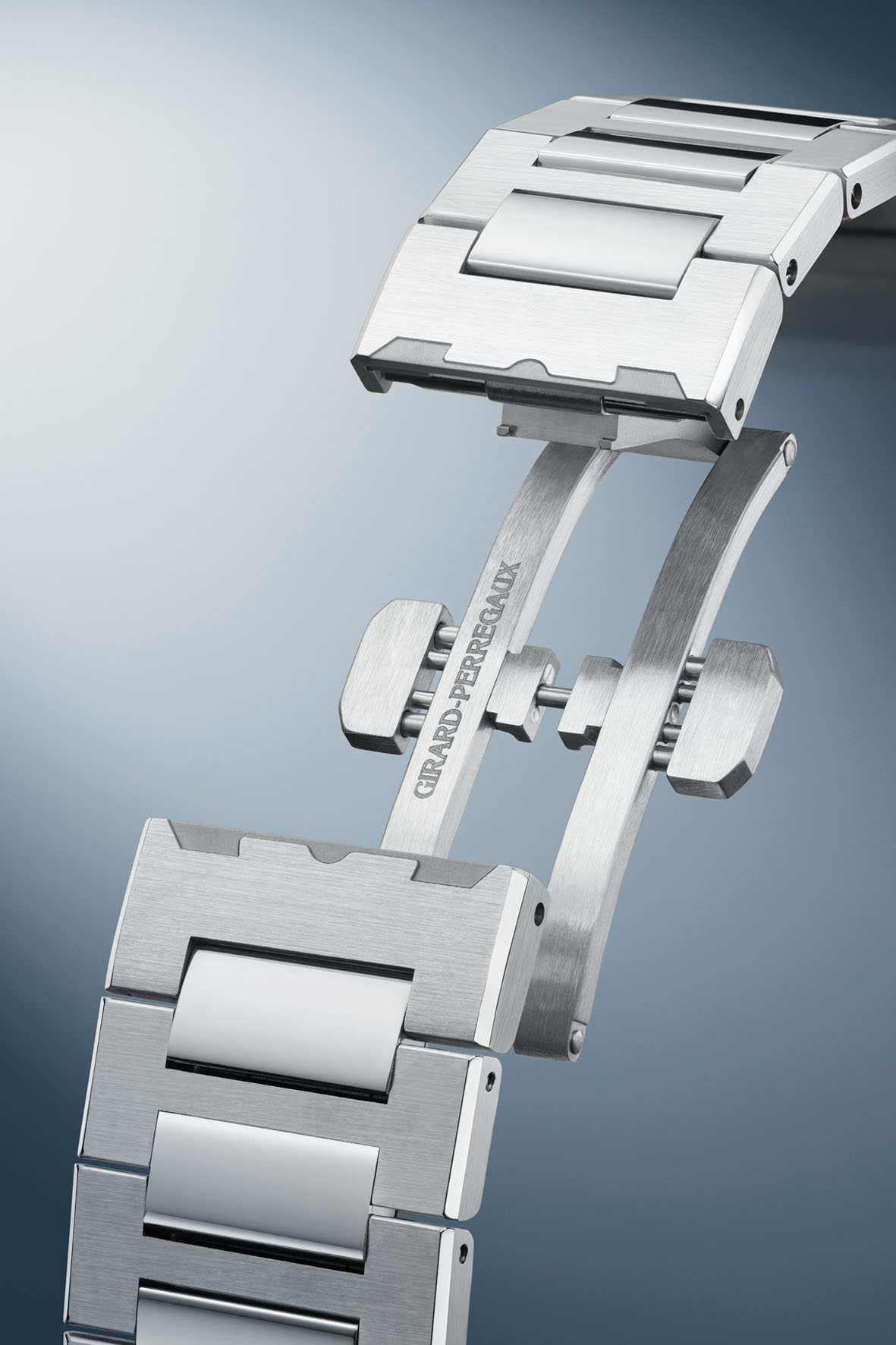
The Laureato Three Gold Bridges’ case and integrated bracelet, both in steel, combine ergonomics with high-end finishing. Measuring 41 mm in diameter and 10.85 mm thick (11.25 mm for the diamond-set version), the case is topped by the collection’s signature octagonal bezel — here in white gold — with newly refined facets that catch the light beautifully. The octagonal motif continues in the crown and in the bracelet’s deployment clasp, ensuring a cohesive and elegant design throughout.
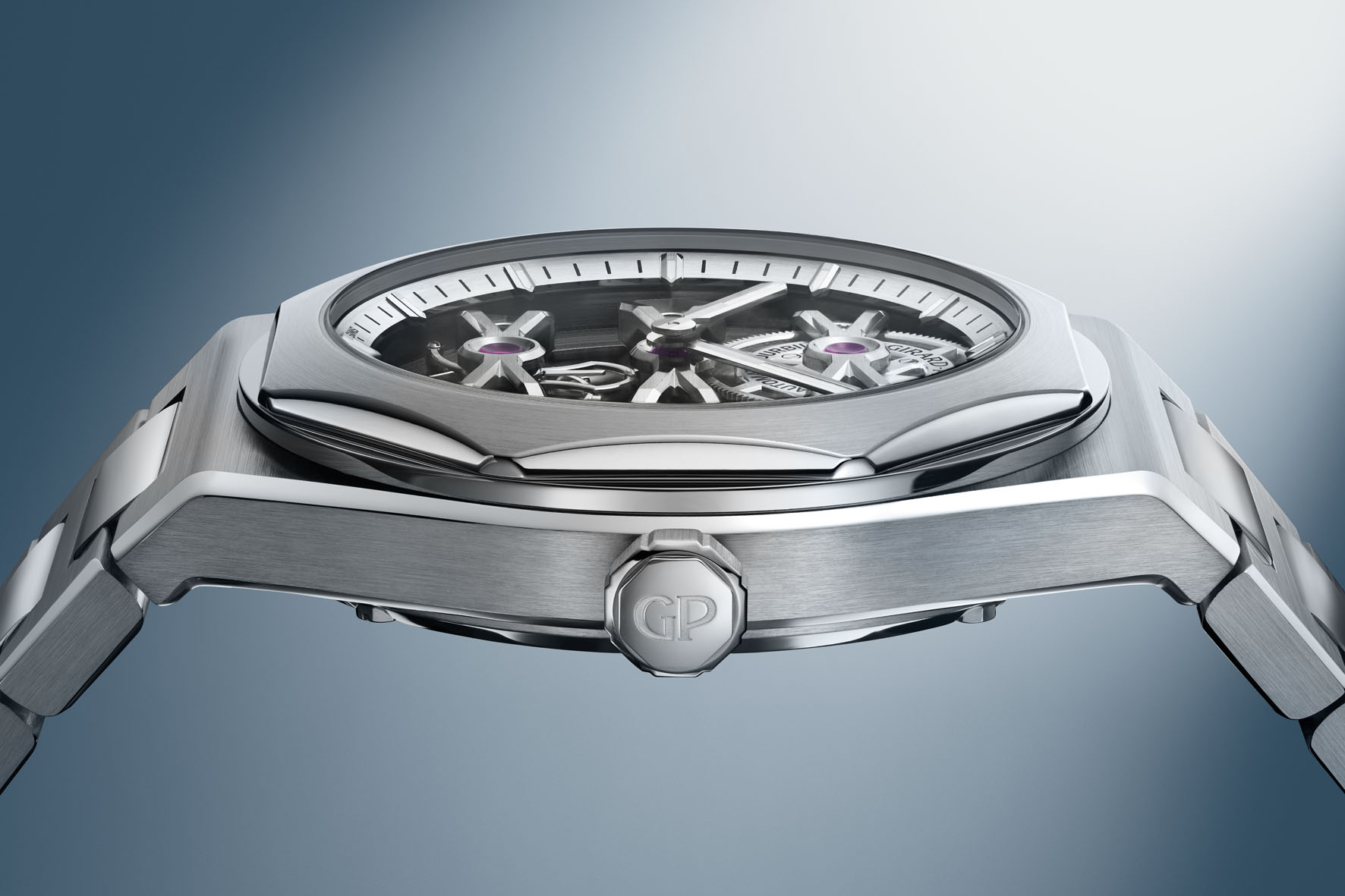
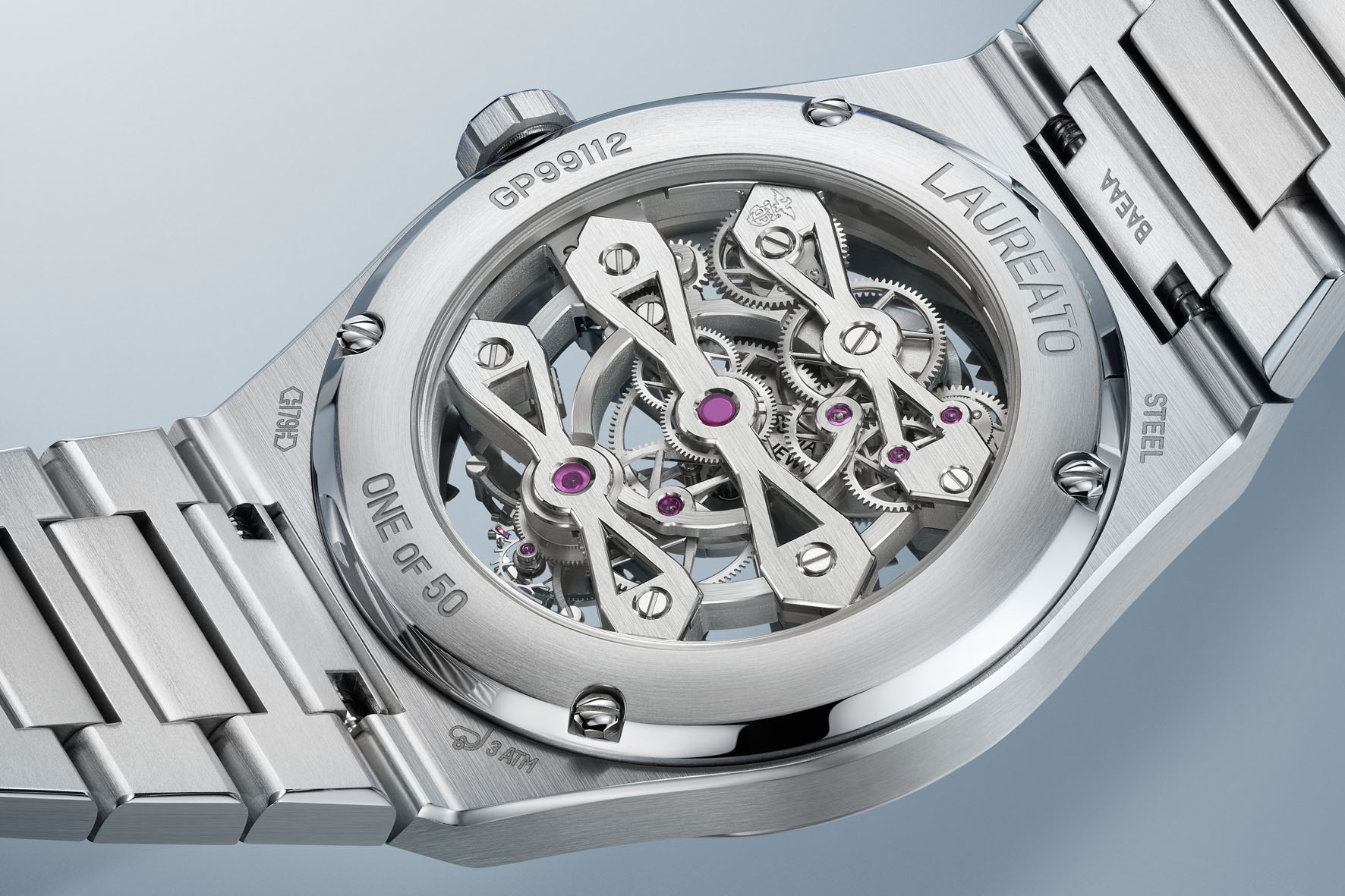
As mentioned earlier, the Laureato Three Gold Bridges is a limited edition of 50 pieces, priced at €181,000 each. There is also a non-limited version, distinguished by its luxurious bezel set with 32 baguette-cut diamonds totaling approximately 3.2 carats. The slightly differing carat weights and shapes of the stones challenged the gem-setter, who aligned them perfectly. The bezel height was optimized to maximize brilliance, giving this version slightly greater thickness — 11.25 mm — and, naturally, a higher price of €245,000.
GIRARD-PERREGAUX AND THE THREE BRIDGES: A REVOLUTIONARY IDEA
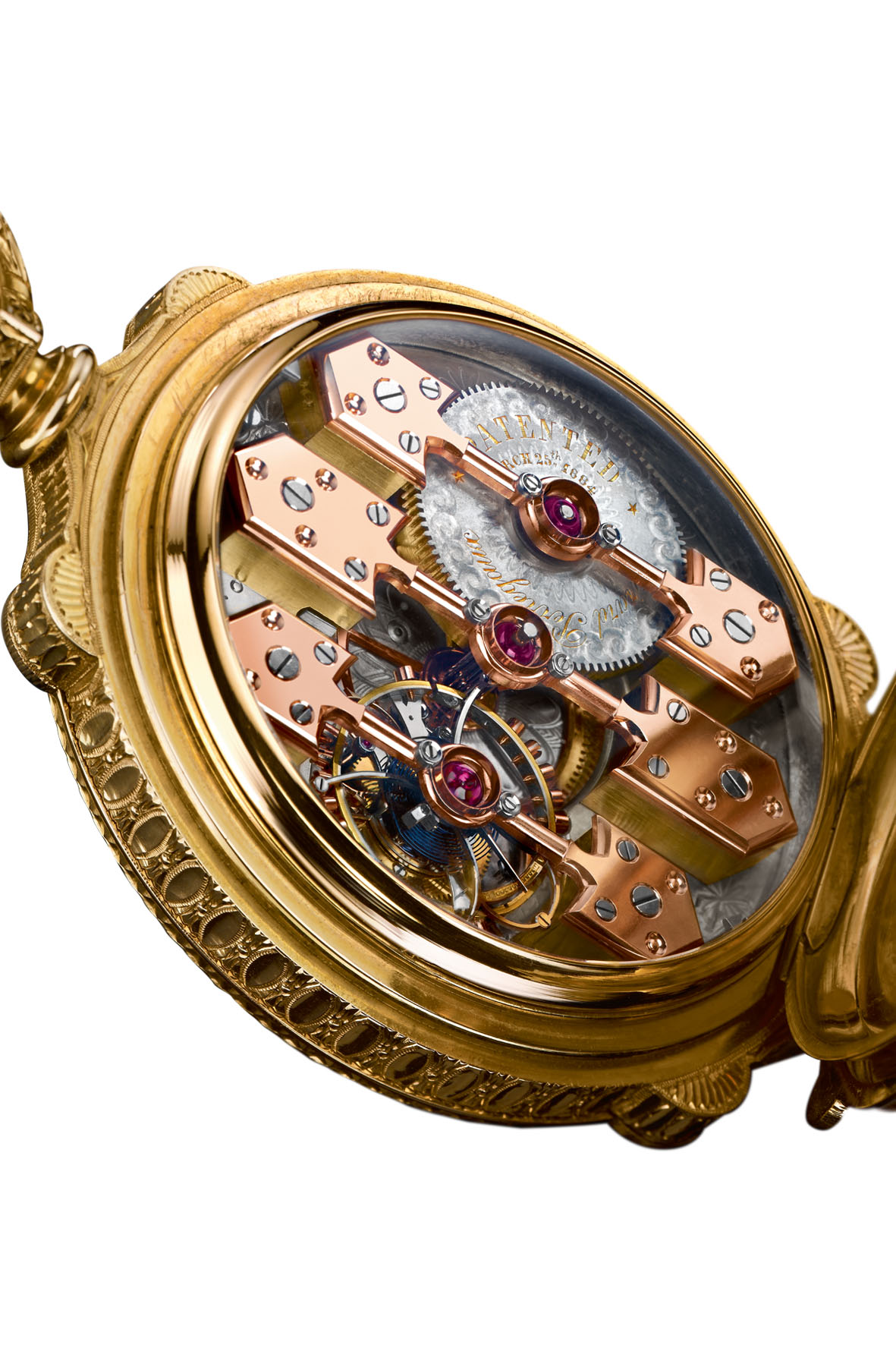
Finally, a closer look at the Three Bridges themselves — a concept fundamental not only to Girard-Perregaux but to watchmaking as a whole. Conceived in 1860 by Constant Girard, what would become the Maison’s hallmark was nothing short of revolutionary. Before the Three Bridges, watchmaking was dominated by a purely mechanical, utilitarian approach in which aesthetics took a back seat to precision and reliability. Everything changed in 1867, when Constant Girard presented a tourbillon with three parallel bridges at the Paris Universal Exhibition.
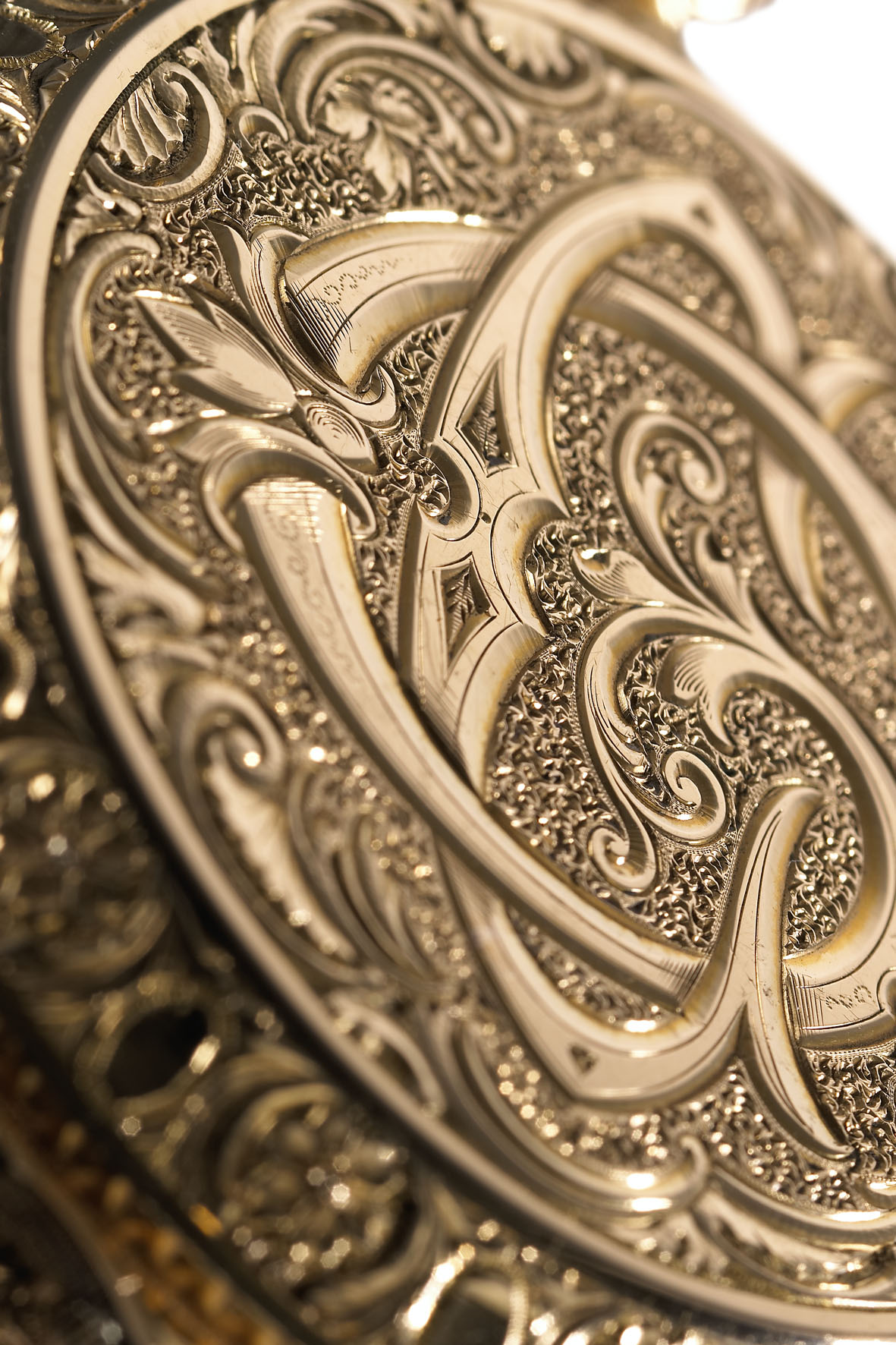
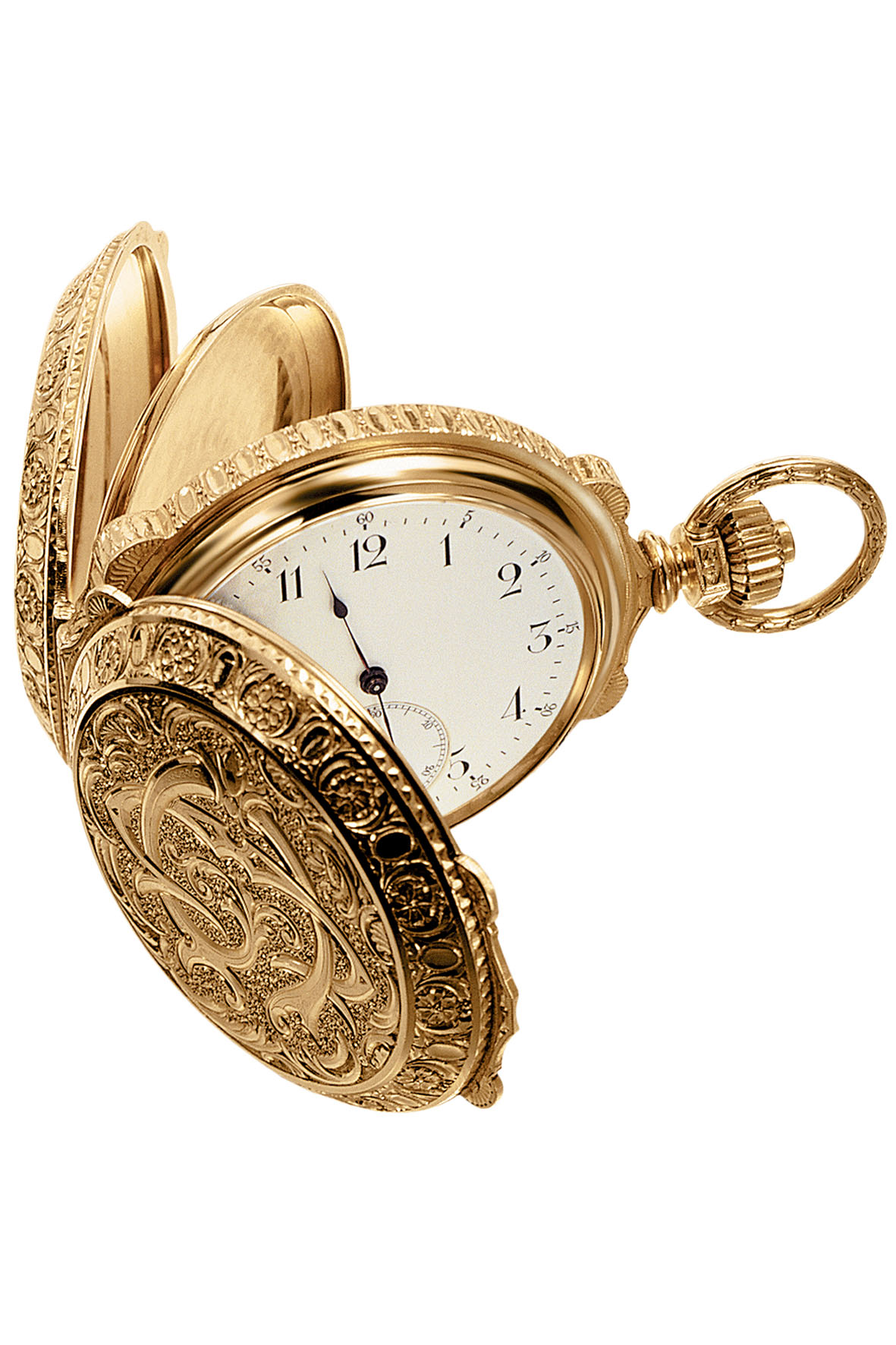
This marked a new conception of the movement — a composition in which the barrel, gear train, and balance wheel were aligned beneath three bridges. No longer merely invisible mechanical supports, the bridges became visual, architectural elements designed to be admired. Twenty-two years later, at another Paris Expo, Constant Girard’s La Esmeralda — featuring these same Three Bridges — won the Gold Medal, confirming that watchmaking could henceforth be understood in architectural as well as mechanical terms.
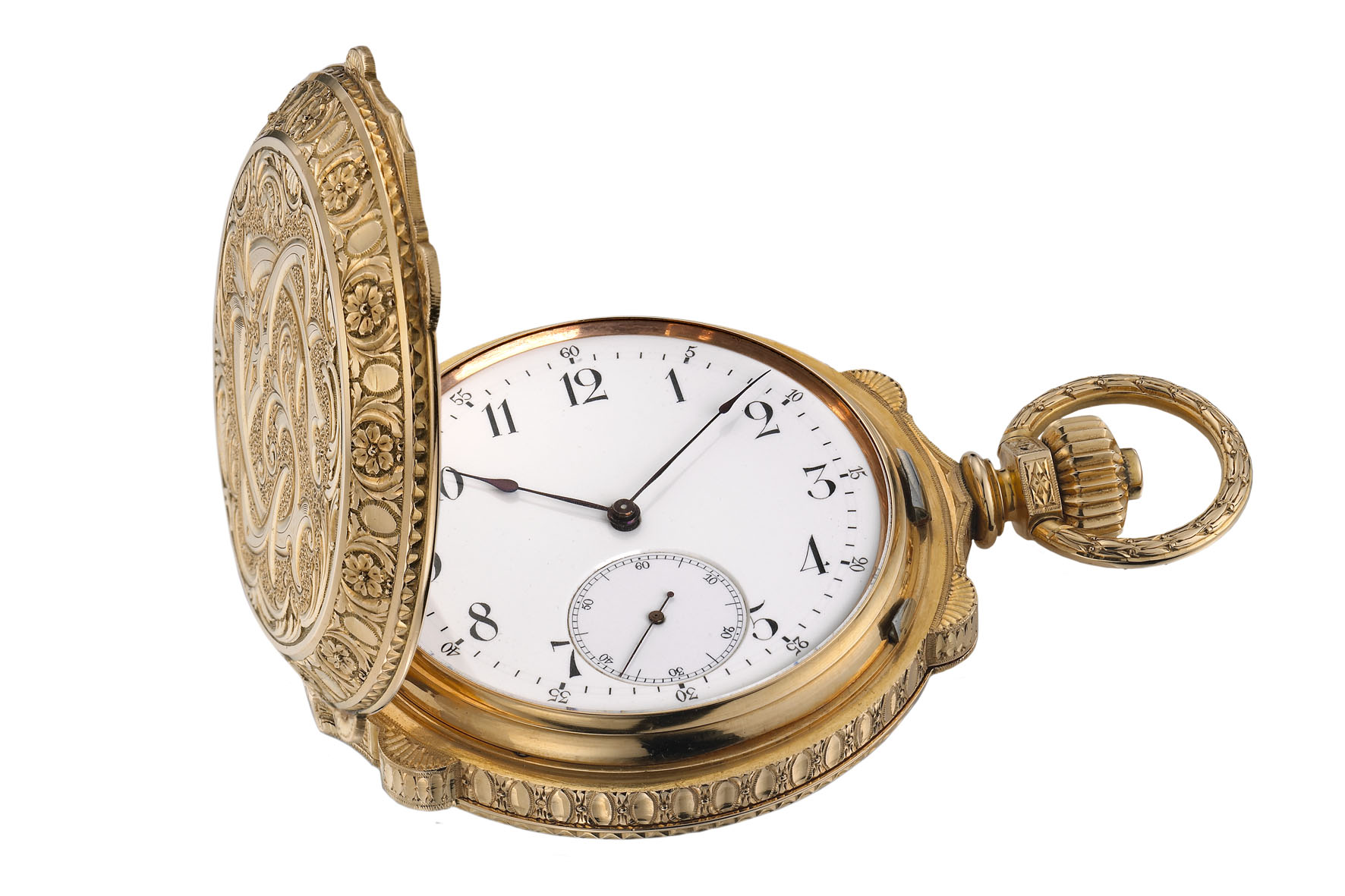
Recognizing the revolutionary nature of his creation, on March 25, 1884, Constant Girard patented it at the U.S. Patent Office (as no such system existed in Switzerland at the time), securing the authorship of the first watch movement conceived as an object of design — a functional structure made visible, capable of moving the eye as well as the mind.
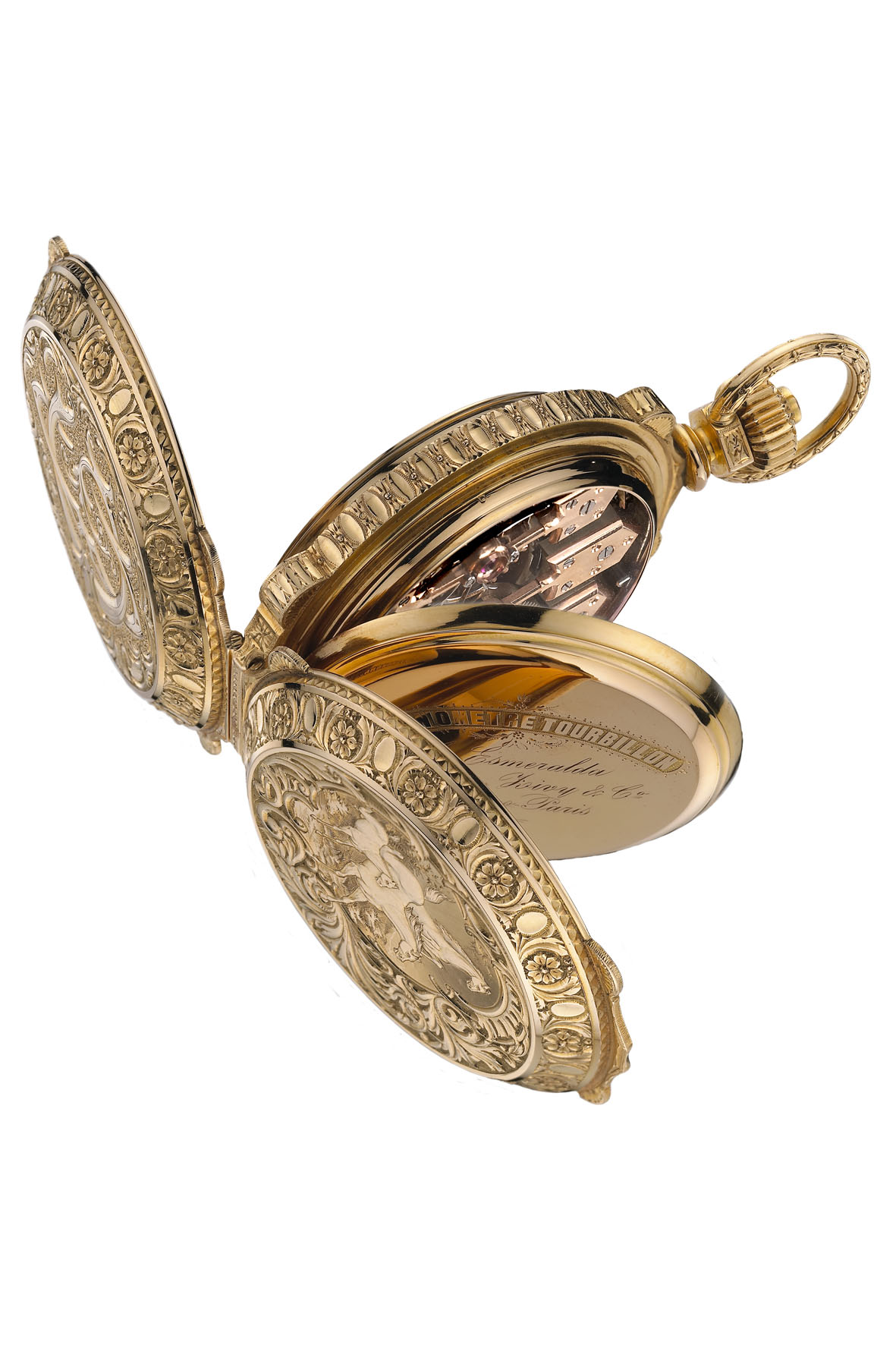
Precision, proportion, and timeless allure — in creating the Laureato Three Gold Bridges, Girard-Perregaux clearly kept these three ideals in mind. The result meets them all, making the 50th anniversary of one of the brand’s most beloved watches the perfect opportunity to show how Constant Girard’s legacy continues to live on.
By Davide Passoni