

Zenith’s consistency is a fact, maintained over more than 160 years of history. Today, as in 1865, the brand is synonymous with watches that combine design and technology, aesthetics and mechanics, emotion and rationality. The manufacture has brought these characteristics to all its models, both the more technical and complex ones (such as the DEFY Skyline) and the so-called Revival models, which explicitly refer to the great pieces of the past. We are referring mainly to those that Zenith presented at the turn of the 1960s and 1970s, following the launch and great success of the El Primero calibre.
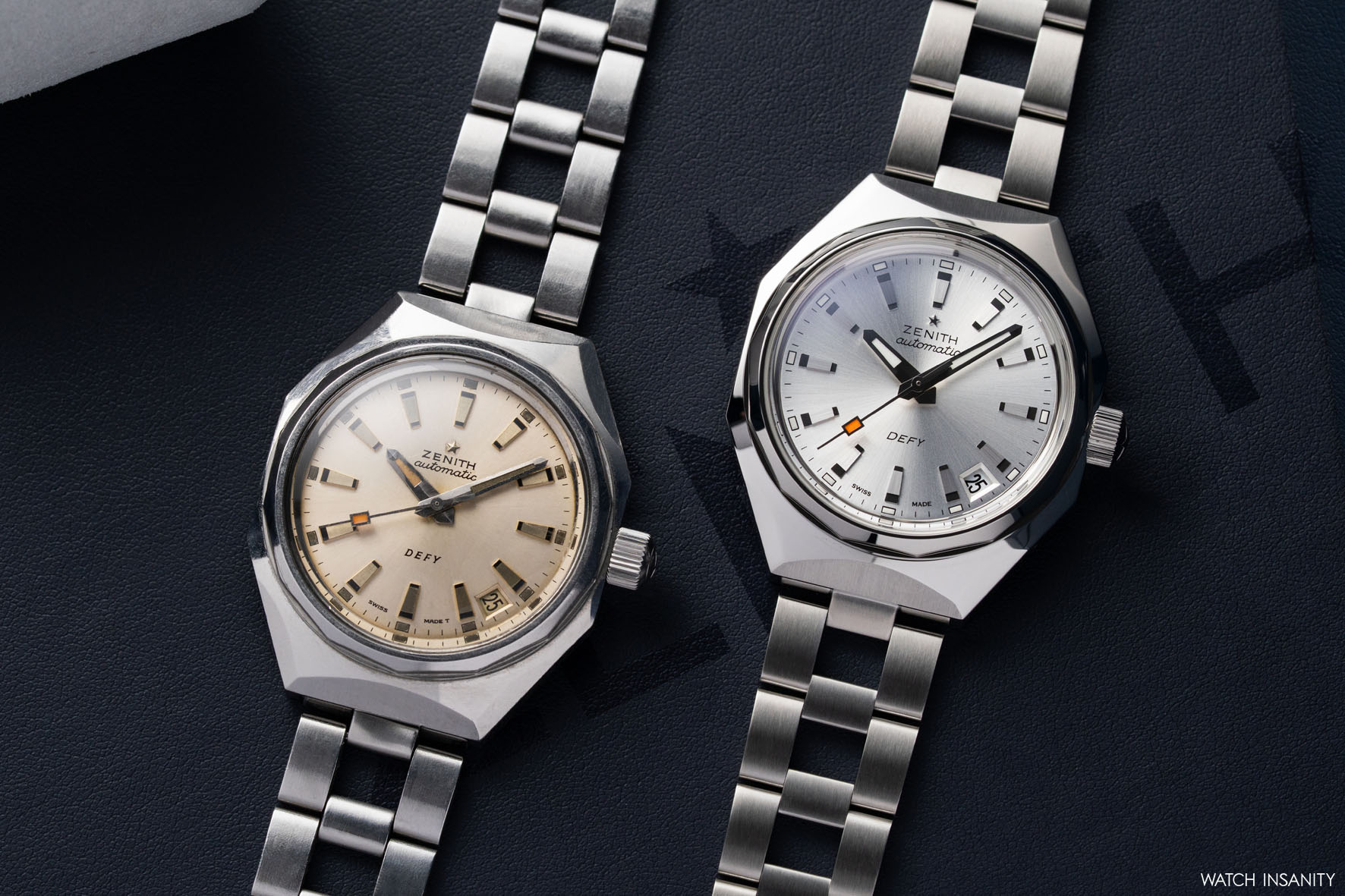
At LVMH Watch Week 2026 – held this year in Milan, further putting the spotlight on a city already illuminated by the Olympic showcase – Zenith presented, among others, a watch from the DEFY line that nods to that era and enriches the collection with another piece with strong historical DNA: the DEFY Revival A3643. In 2022, the Maison presented the DEFY Revival A3642, a reinterpretation of one of the first DEFY watches from 1969, and in 2023, the Revival version of the model from 1971. This new watch completes a trio of excellence, recalling another legendary reference from 1969.
ZENITH DEFY REVIVAL A3643: THE CASE AND DIAL
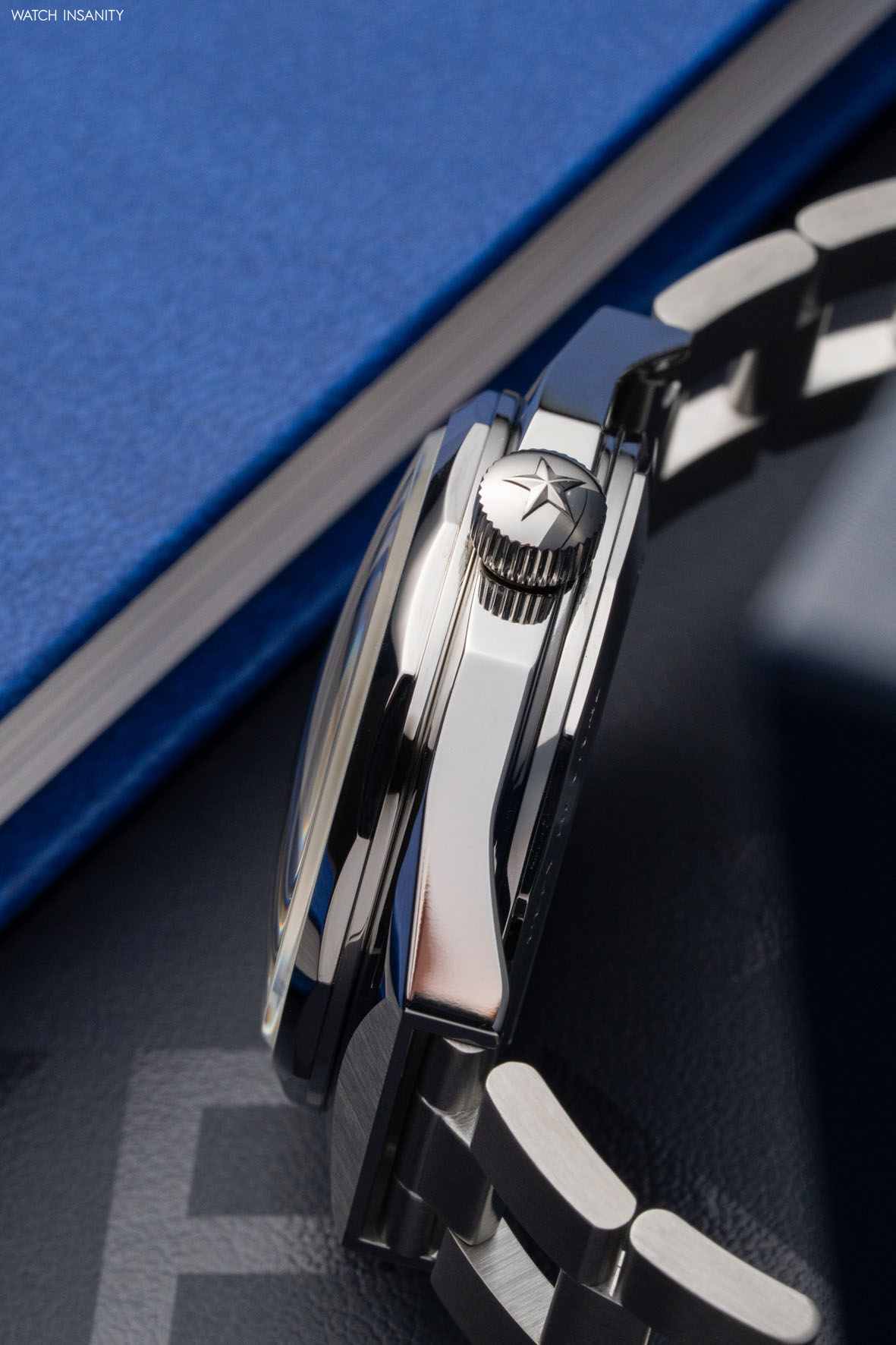
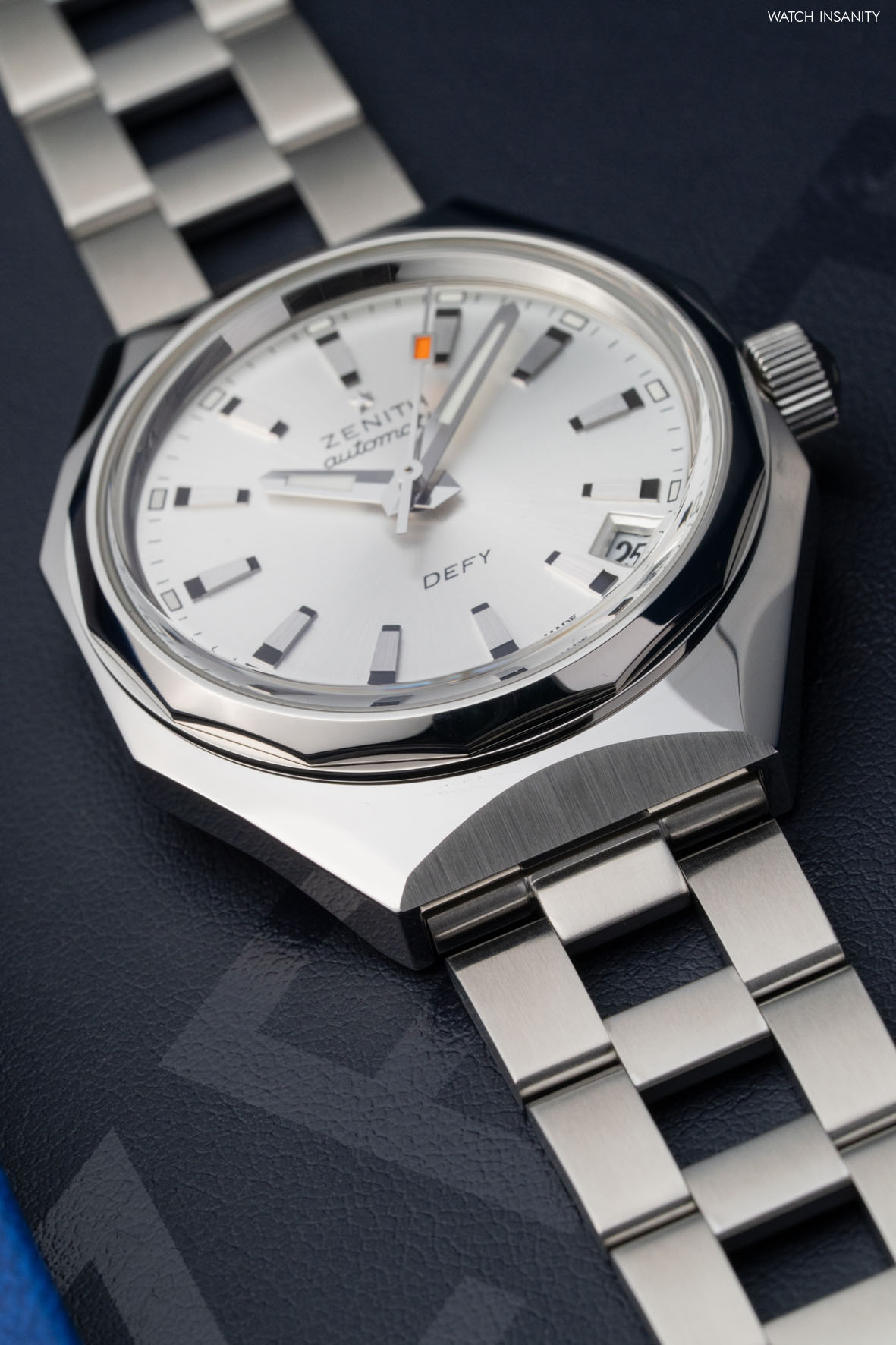
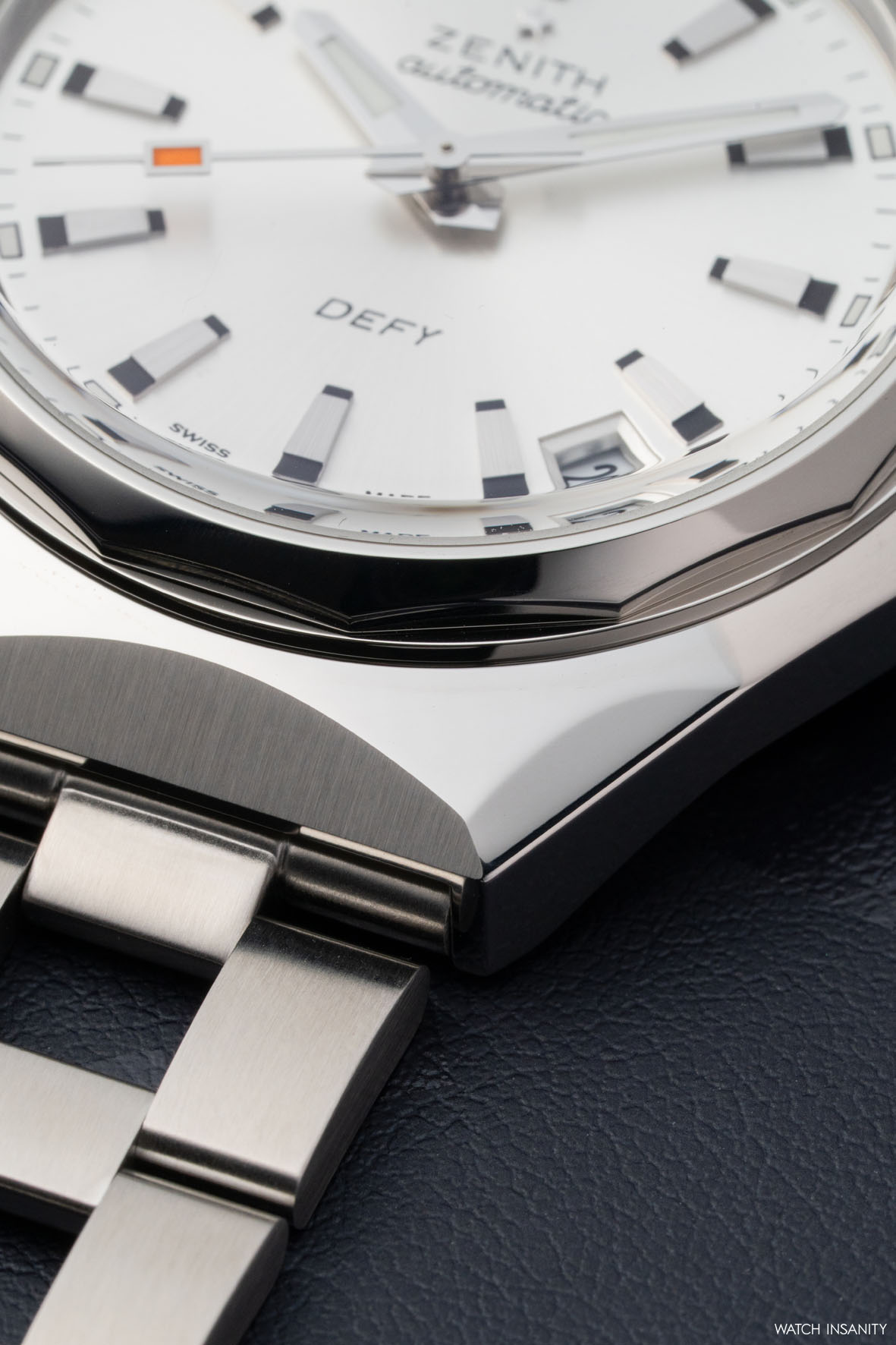
For those familiar with Zenith, the new DEFY Revival A3643 has all the features that have made this collection so popular since the 1970s, starting with the 37 mm diameter, 13.6 mm-thick case, whose design has gone down in history. When it was first launched, this case earned the watch the nickname “time safe” due to its water resistance of 30 bar, a remarkable feat for the time. The case of the new watch has been crafted by Zenith with a combination of polished and satin finishes designed to highlight its structure. In particular, the polished bezel, with its characteristic 14 sides, illuminates the DEFY Revival A3643.
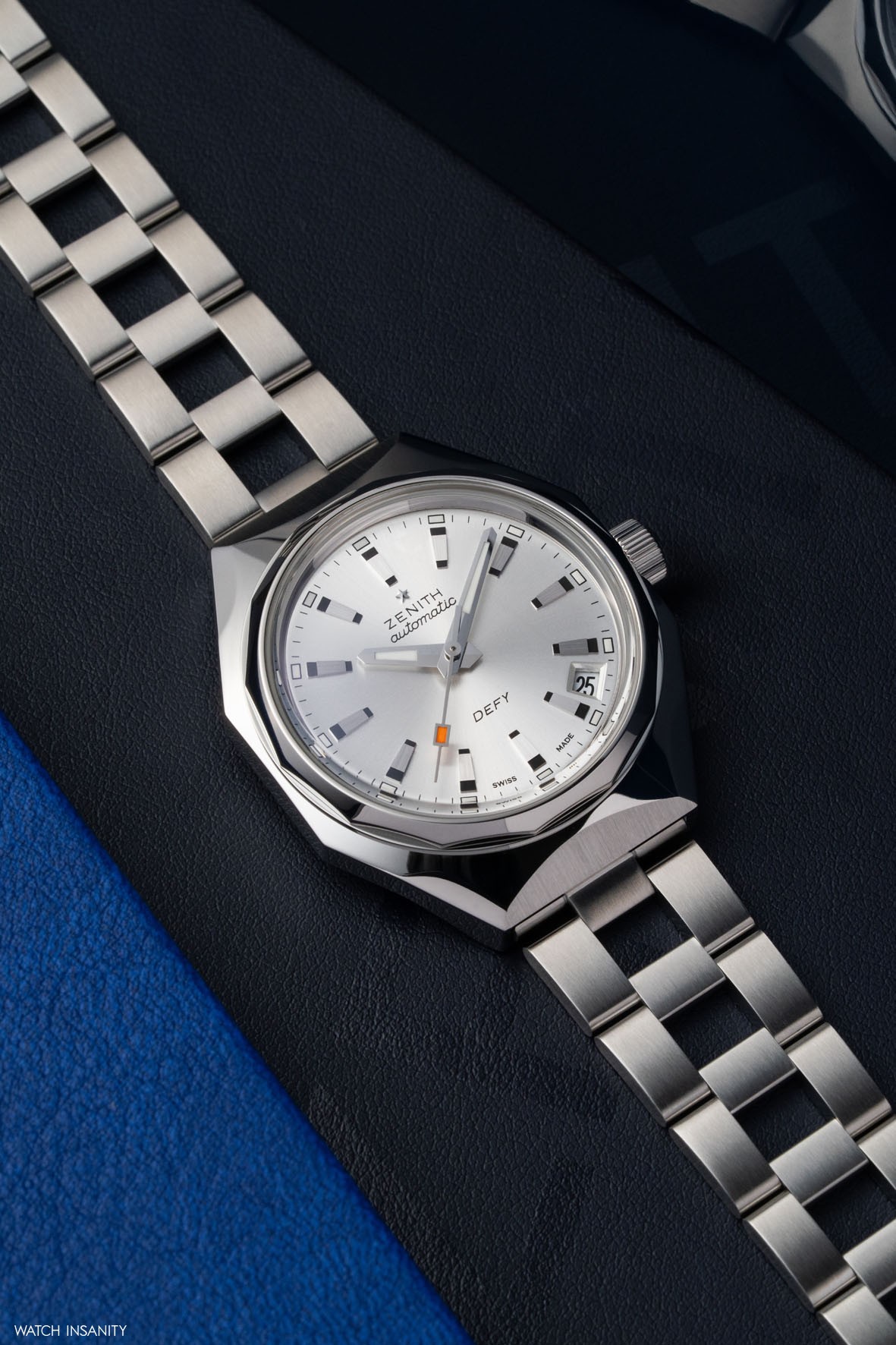
The other point to focus on is the dial, where Zenith has once again chosen to give its best. The construction of the applied steel hour markers is a philological reference to those of the DEFY presented in 1969, but updated using current manufacturing techniques. As in that model, the hour markers on the DEFY Revival A3643 also feature a double level: a satin-finished upper part and two slanted, glossy black lacquered side elements, all contributing to optimal readability. Readability is further enhanced by the rectangular luminescent blocks positioned at the hour markers on the edge of the dial, around the minute track.
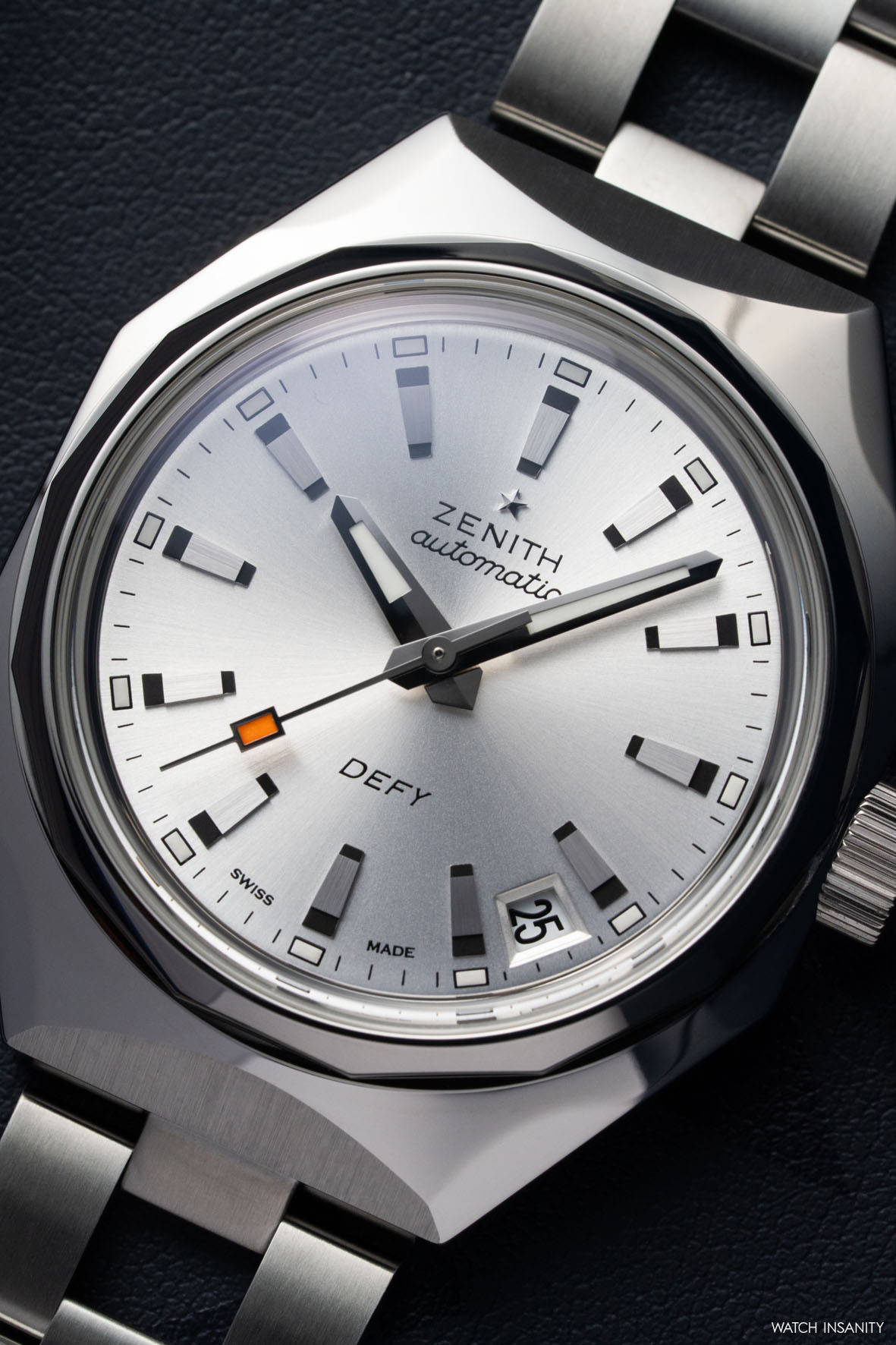
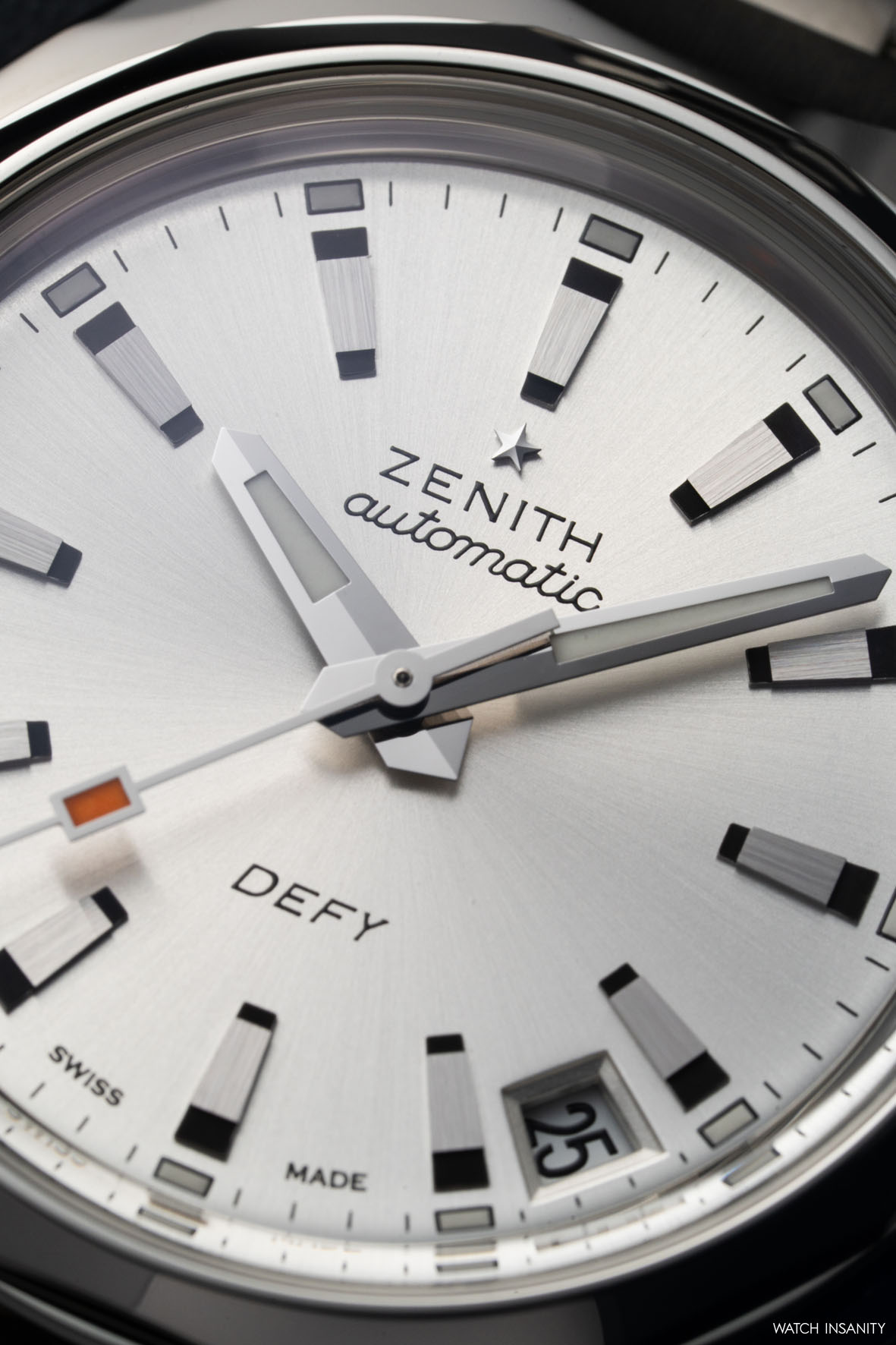
The hour and minute hands are faceted and dagger-shaped, as in the vintage references, while the central seconds hand is “paddle-shaped”: a striking orange rectangle, positioned two-thirds of the way along its length, touches the inner facet of the hour markers and adds a touch of colour to the whole. It stands out even more in the monochrome design of the watch, with its sunburst finish on the silver dial — another reference to the 1969 model. The date window at 4:30, enclosed in an elegant, asymmetrical and flared aperture, is another nod to the original.
THE BRACELET AND CALIBRE OF THE ZENITH DEFY REVIVAL A3643
The steel “ladder” bracelet, which we have already seen on previous DEFY Revival models, is a direct reference to that era. Its design was characteristic of the bracelets produced in those years by the famous Swiss company Gay Frères. Even today, in the imagination of those who love watches but do not have in-depth technical knowledge, the “ladder” bracelet is synonymous with the 1970s. In the DEFY Revival A3643, Zenith has given it a satin finish and fitted it with a folding clasp, also featuring a historically inspired design.
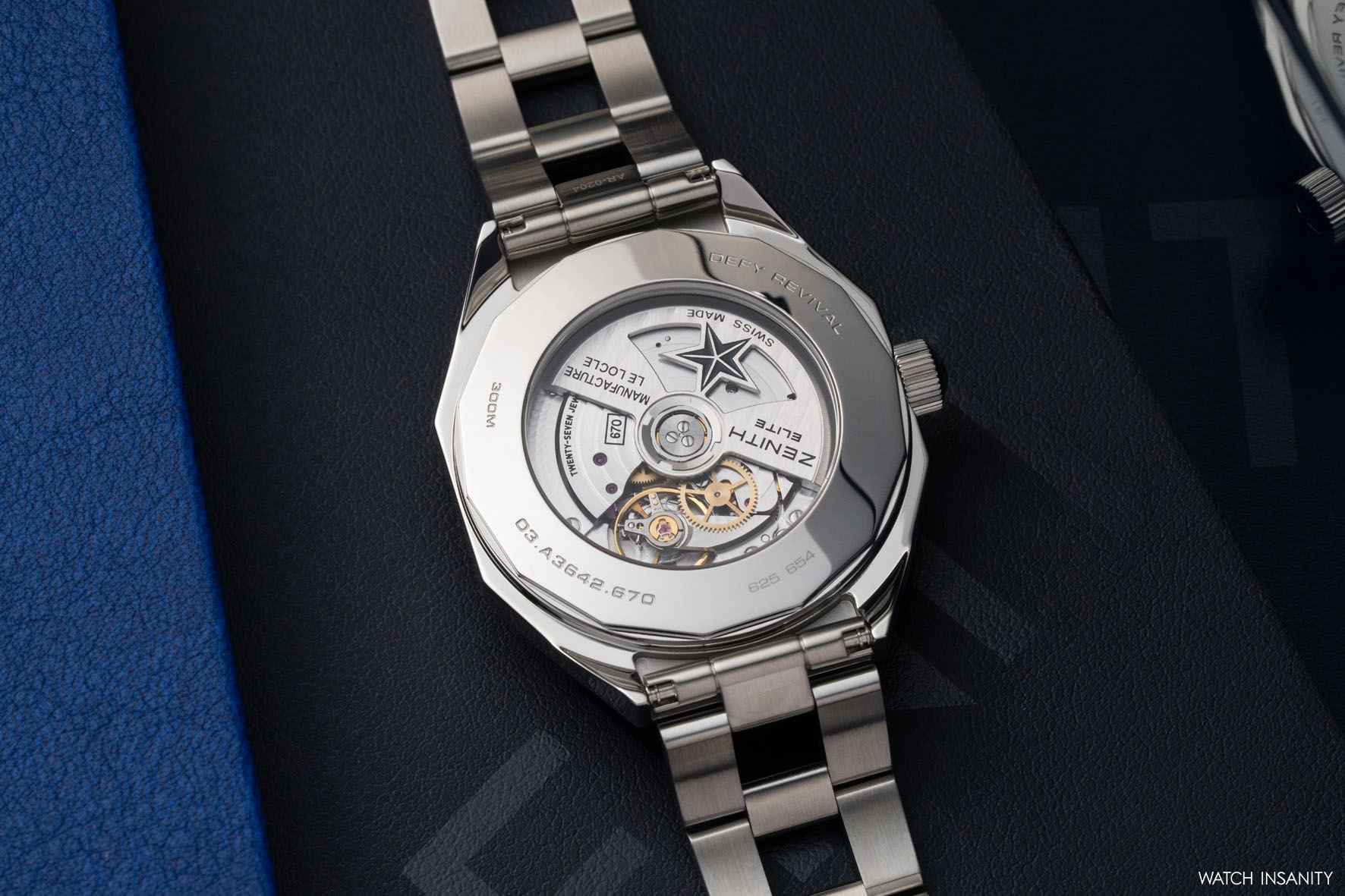
The case houses the Elite 670 calibre, which Zenith developed based on the Elite 680. It is a reliable automatic movement, beating at 28,800 vibrations per hour and offering approximately 50 hours of power reserve. Zenith has chosen to make it visible through a sapphire crystal case back, primarily so that the star-shaped oscillating weight that characterises it can be appreciated, finished with Côtes de Genève to enhance its aesthetics.
FIND THE DIFFERENCES
The watch is priced at € 7,900, an attractive figure for those who love reissues of historic models, especially when they remain faithful to their predecessors. We appreciated just how faithful the DEFY Revival A3643 is to the original DEFY A3643, having been able to hold both in our hands at the same time. We struggled to find differences, which would be difficult to spot were it not for the (few) signs that time has left on the 1960s model. Indeed, in terms of the size and design of the case, the bracelet and, above all, the dial, Zenith has surpassed itself in bringing back a beauty already admired 56 years ago. Even the lettering of “Zenith”, “Automatic” and “DEFY” is the same as it was back then. What’s missing? Of course, the letter “T” next to the words “Swiss Made” — as there is no tritium in this watch — and the “28,800” inscription under “Automatic” (when present), indicating the movement’s frequency.
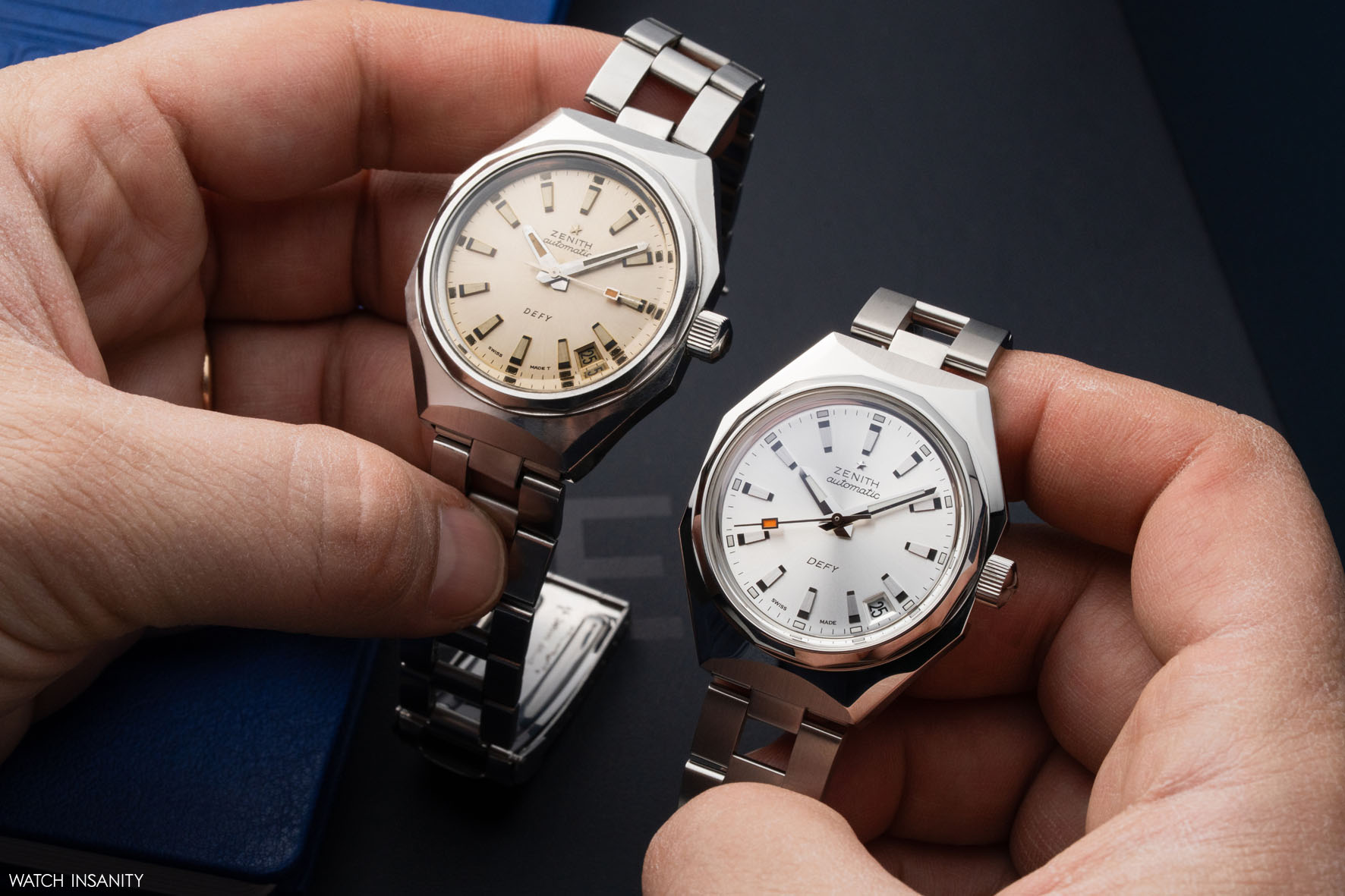
And it is precisely there, in the case, that the biggest difference between yesterday’s model and today’s lies. Where today we find the Elite 670 calibre, the original watch was powered by the automatic 2562 PC calibre made by MZM (Movado-Zenith-Mondia). Also beating at 28,800 vibrations per hour, it offered a more limited power reserve of around 38 hours and, of course, was not visible, as the DEFY A3643 featured a steel case back. In this respect, we believe Zenith has chosen the best possible path, enhancing the modern appeal of a reference with an antique flavour. Consistency, indeed…
By Davide Passoni