

Rotocall. A name that may be less familiar, especially to younger watch enthusiasts. Yet it refers to a cult watch from the 1980s. Seiko’s original Rotocall, launched in 1982 with reference A828-6019, paved the way for a new generation of multifunction digital watches. However, it was the next model – known to insiders as A829-6029 – that became famous as the Astronaut Watch for its use in space missions and, ultimately, beloved by collectors for the nickname by which it went down in history: Rotocall. A digital quartz watch with a liquid-crystal display – very much in the spirit of the 1970s and 1980s – it was equipped with a rotating bezel that served as a function selector, hence the nickname. It became a commercial success throughout that decade, and Seiko is now reviving it with the new Urban Sport Rotocall.
SEIKO ROTOCALL: THE POWER OF A NICKNAME
As mentioned above, the Seiko Rotocall belongs to a select group of watches that can boast a few trips beyond Earth’s atmosphere – without necessarily landing on the Moon. Launched in 1984, it was worn by numerous astronauts on NASA and ESA missions aboard the Space Shuttle. They took it into orbit not for marketing purposes, but because, in most cases, it was their personal watch.

Among them were Americans Anna Fisher, Charles D. Walker, Terry Hart, and Kathryn Dwyer Sullivan; Dutchman Wubbo Ockels; and Paul Desmond Scully-Power—the first Australian to go into space and the first astronaut with a beard – all of whom helped cement its reputation.
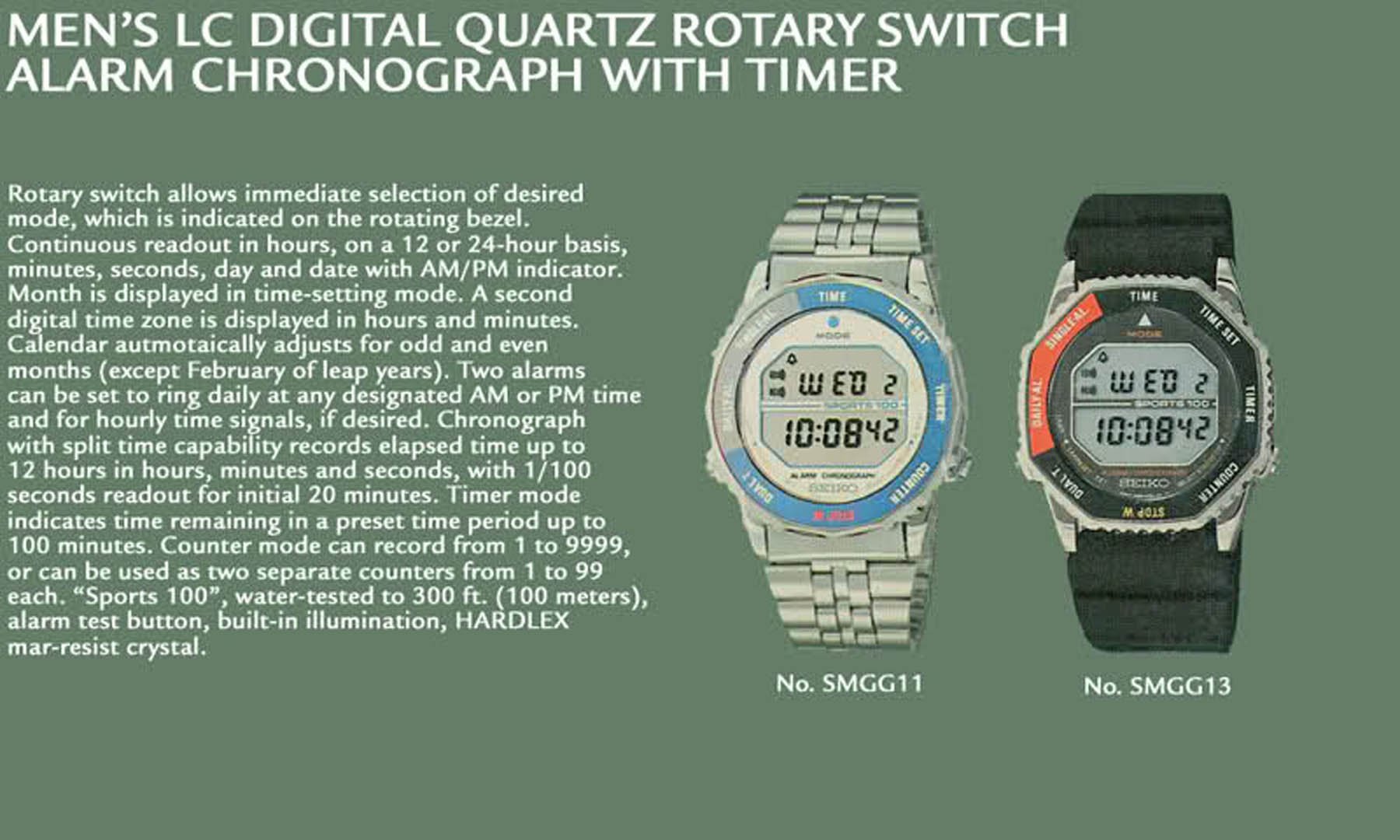
The fact that it now returns to the market with the Rotocall name prominently displayed is, in itself, a point of pride for Seiko. After all, how many watches from the Japanese brand are better known by their nickname than by their reference number? Apart from Seiko’s typically alphanumeric model codes – hardly easy to remember – names such as Pogue, Monster, Tuna, Sumo, and Willard stand out. Rotocall is undoubtedly a name worthy of being brought back into vogue.
DIGITAL WATCH AND ROTATING BEZEL
As explained in a period advertisement, the idea behind the Seiko Rotocall was quite simple: there was no need to press buttons to switch between functions – just rotate the bezel. For those unfamiliar with digital watches of the time, this might seem trivial, but selecting functions via tiny buttons, often difficult to press, was anything but user-friendly. With the Rotocall, all you had to do was grasp the bezel and turn it – an intuitive action for anyone accustomed to mechanical watches. Combining a rotating bezel with a digital watch was, therefore, a genuinely surprising innovation.
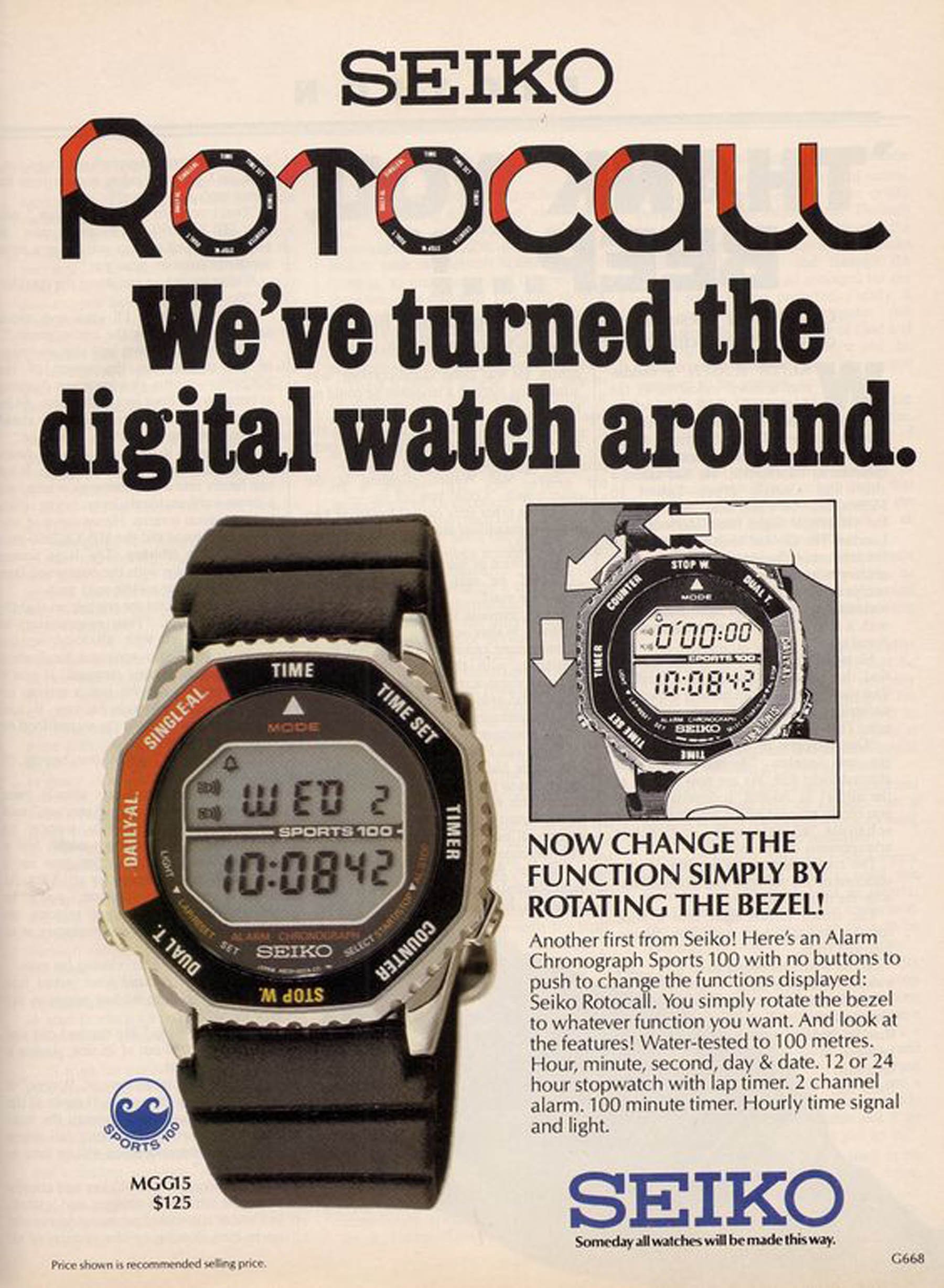
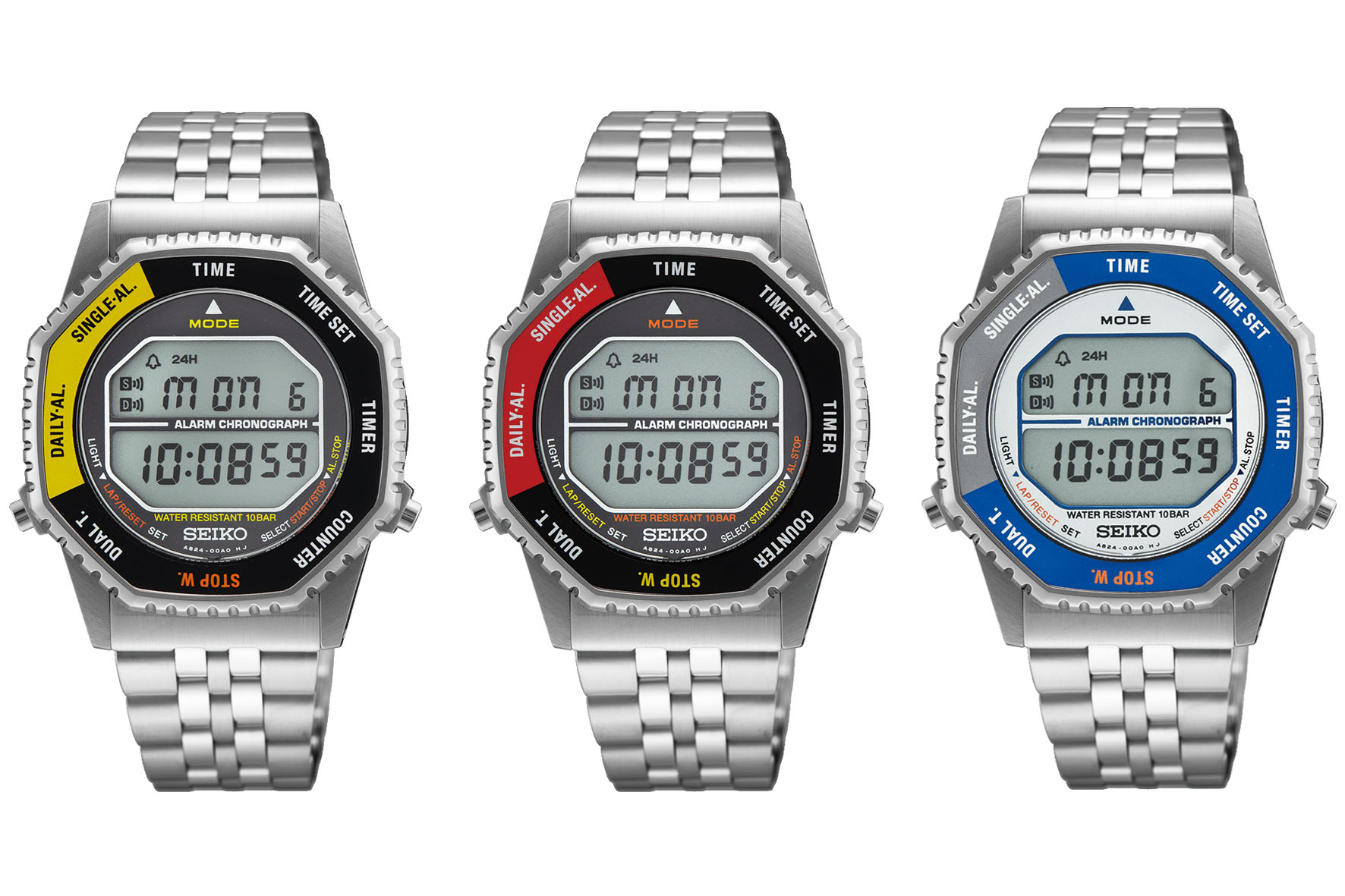
Then, as now, turning the bezel allowed users to select functions such as dual time zone, single alarm, daily alarm (highlighted by coloured backgrounds on the bezel insert), timer, and countdown timer – in addition, of course, to time adjustment. Yet the bezel was only one of the features that made the watch so popular, features that Seiko has faithfully revived in its new collection.
URBAN SPORT ROTOCALL: SEIKO MAKES IT MODERN
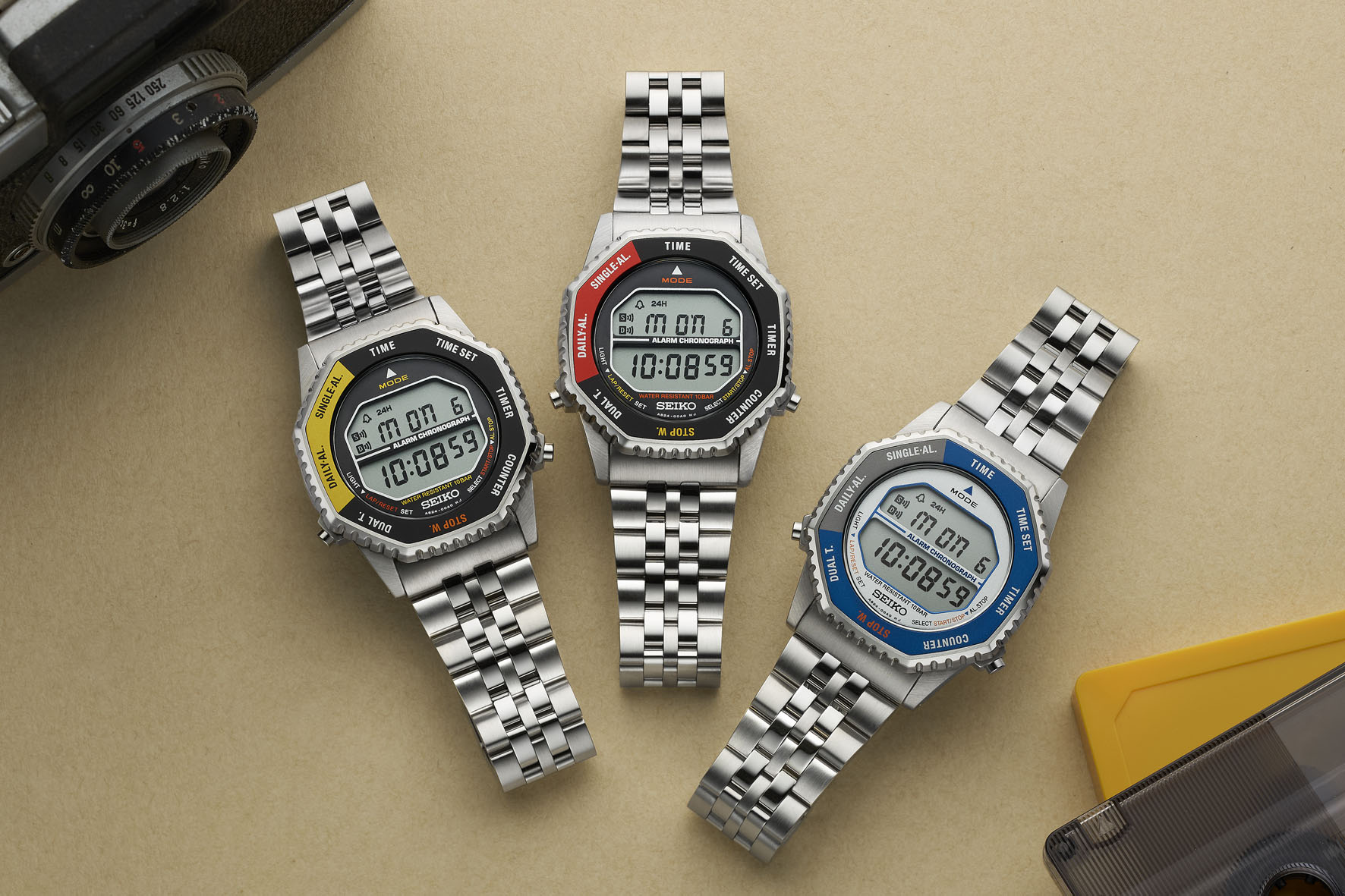
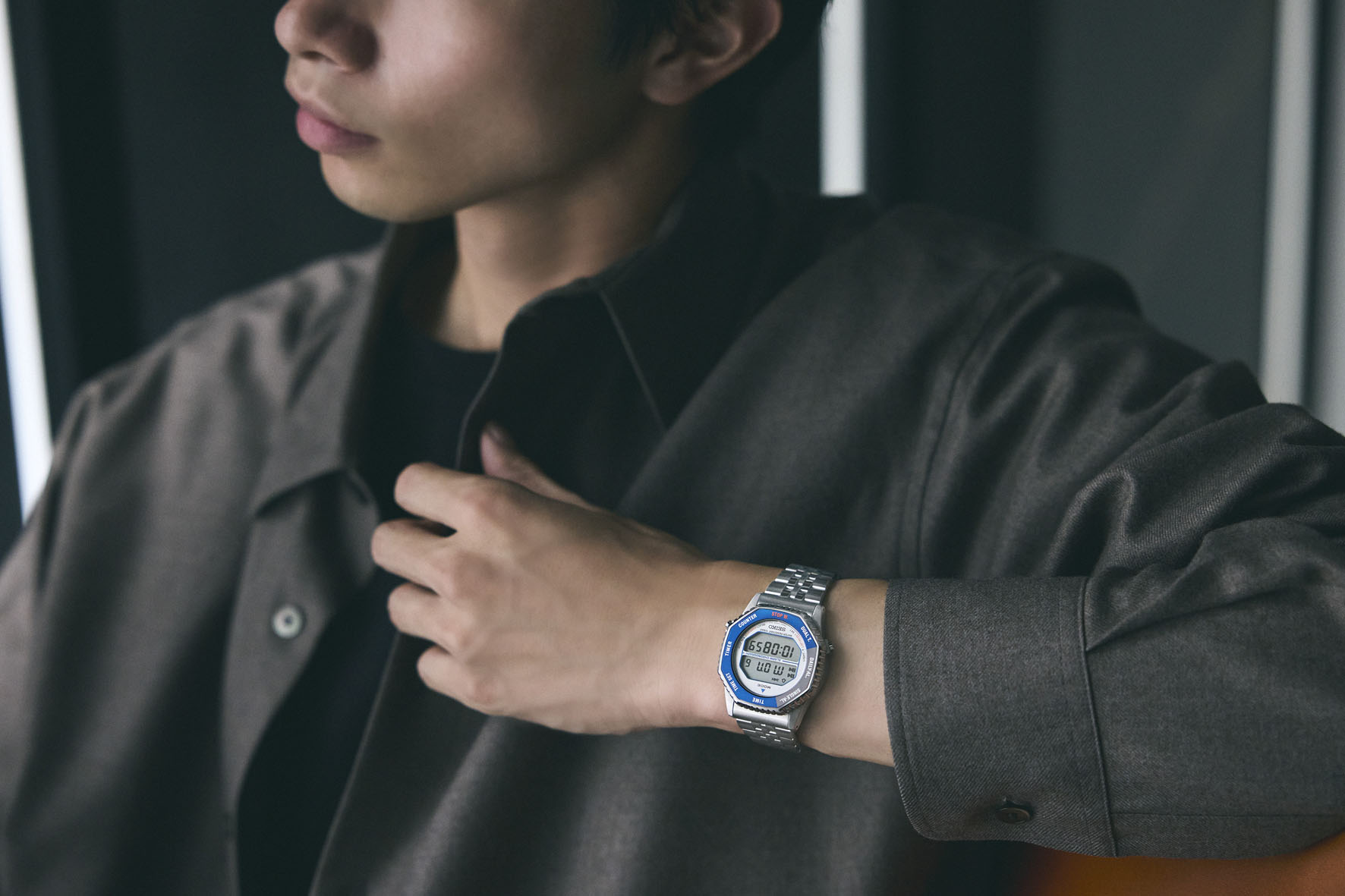
The Urban Sport Rotocall is practical, versatile, and fun to wear. It measures 37 mm in diameter and 10.54 mm in thickness and, despite its steel case and bracelet, remains light and comfortable. The flat lugs integrate seamlessly with the slim case profile, allowing the octagonal bezel to stand out.The bezel controls a wide range of functions: chronograph (up to 99 hours, 59 minutes, and 59 seconds, with 1/100-second increments), time and date with automatic calendar, timer, counter, dual time zone, and alarm. The font used for the numerals and words on the LCD display faithfully reproduces that of the original watch. Compared to the model from forty years ago, Seiko has introduced two additional functions: AM/PM indication and a low-battery warning.
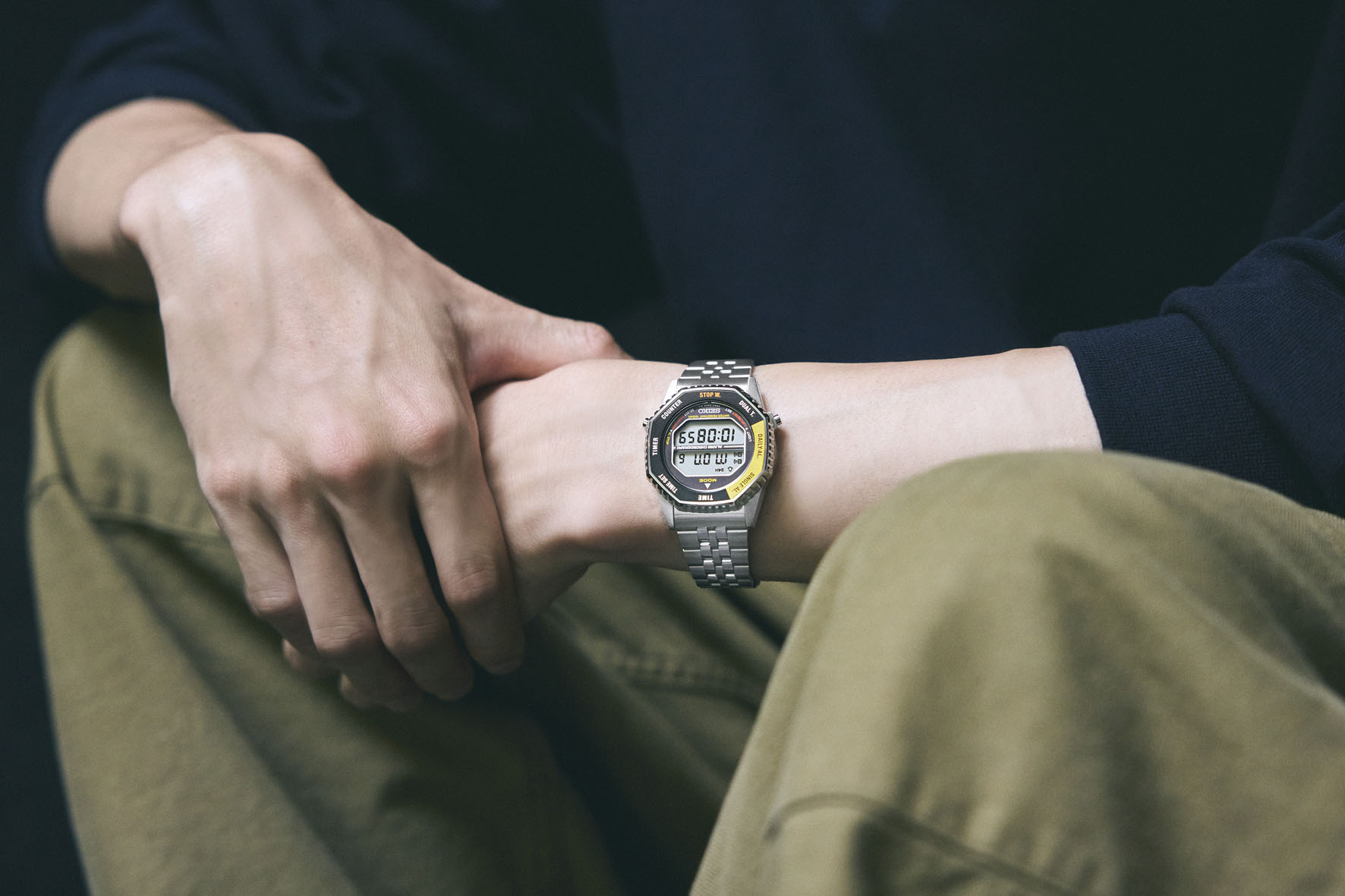
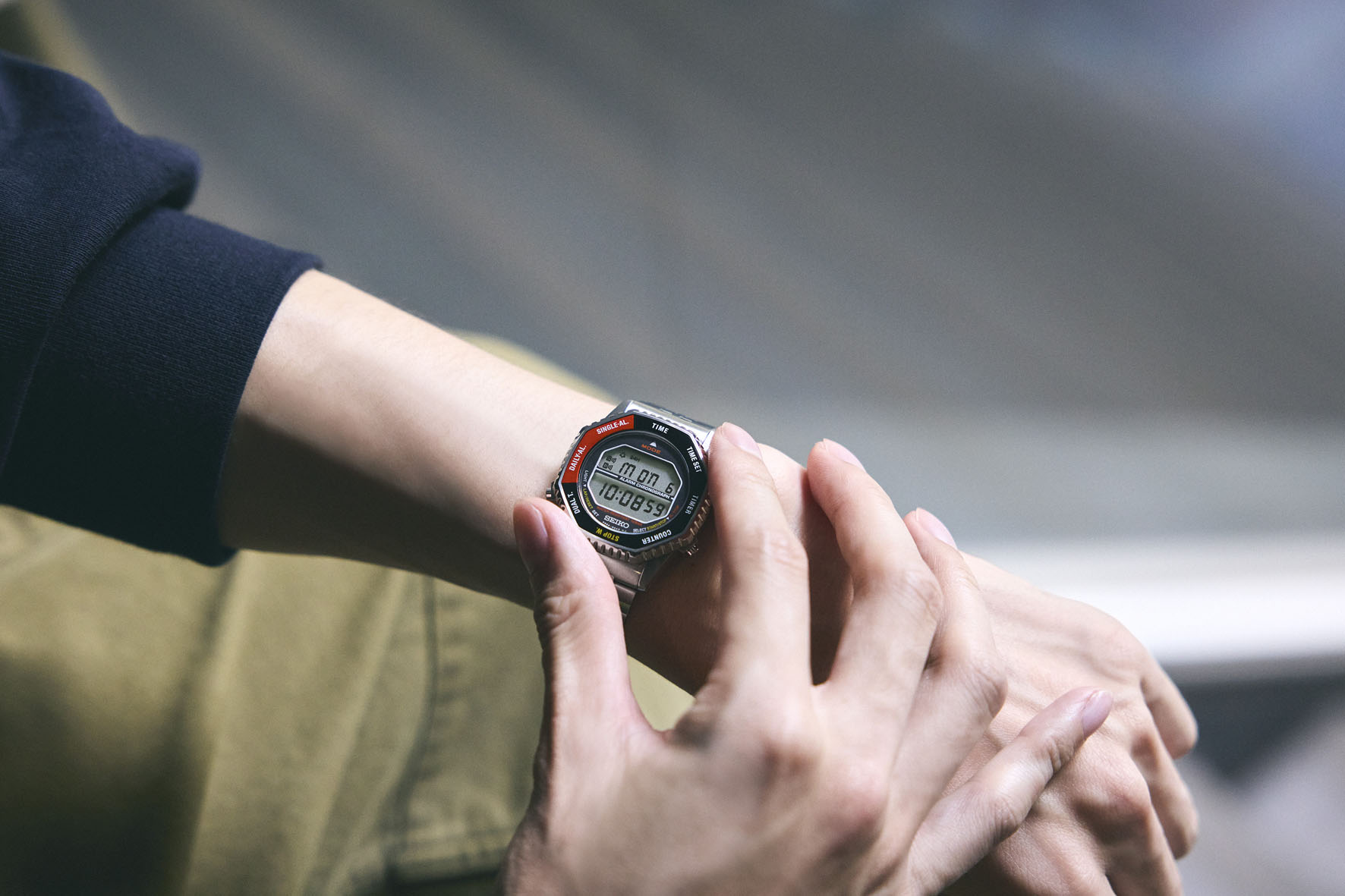
The Urban Sport Rotocall is offered in three references, each featuring different colour combinations for the aluminium bezel indicator ring – tones inspired by the vibrant aesthetics of the 1980s. The SMGG17P1 pairs black and yellow, the SMGG19P1 black and red, and the SMGG21P1 blue and silver. Seiko has positioned the collection at a competitive price point of €. 570.
With this strategy, the intent behind the Urban Sport Rotocall is clear: to appeal to a new audience of consumers who appreciate Seiko but may not yet have been drawn to its current lineup. The project taps into the brand’s historical heritage while riding the wave of nostalgia for the distinctive watchmaking style of the 1980s. In essence, it’s a meeting point between past and present – a design that resonates both with those who lived through that era and those who wish they had. All it takes is a watch to travel through time – just turn the bezel.
By Davide Passoni