
Roger Dubuis: Excalibur Spider Flyback Chronograph
16 August 2025At the beginning of his career, Mr. Roger Dubuis worked for nine years in a Swiss Maison where he exclusively worked on chronograph movements. There, he acquired know-how and expertise, but also love for the complication. Naturally, when he started his namesake company in 1995, the chronograph was part of the very first watches he created.

That same complication has remained a symbolic and integral part of Roger Dubuis’ watchmaking ever since then, and after 30 years of evolution, the journey has culminated in this fifth chronograph generation, first released in 2023, and which the Maison is now taking to new heights with the launch of the new Excalibur Spider Flyback Chronograph.
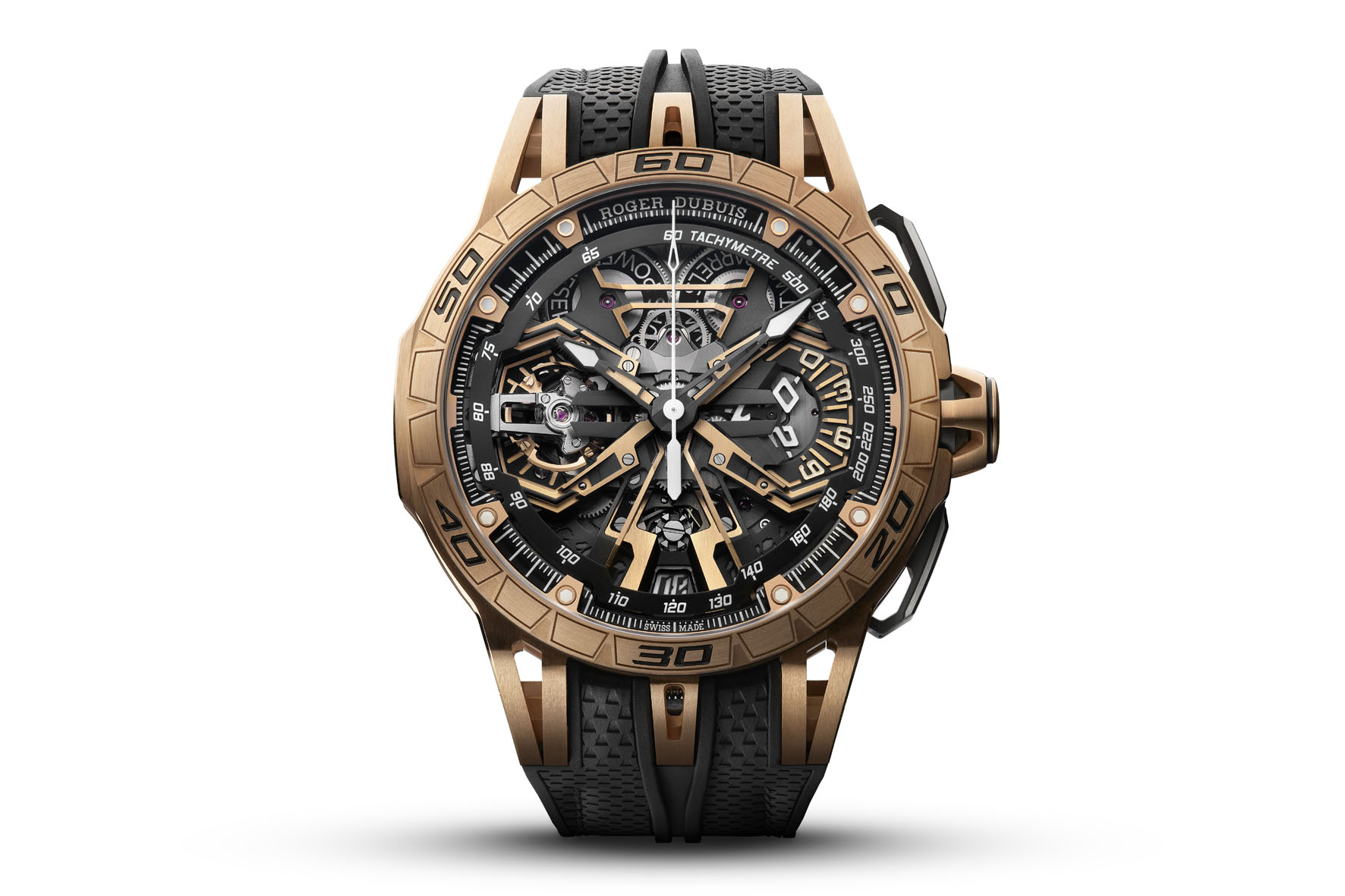
As an integrated movement, the entire calibre has been designed to both tell and measure time – a complete development approach that gives the watchmaker more scope for creativity and allows them to play with the aesthetics.
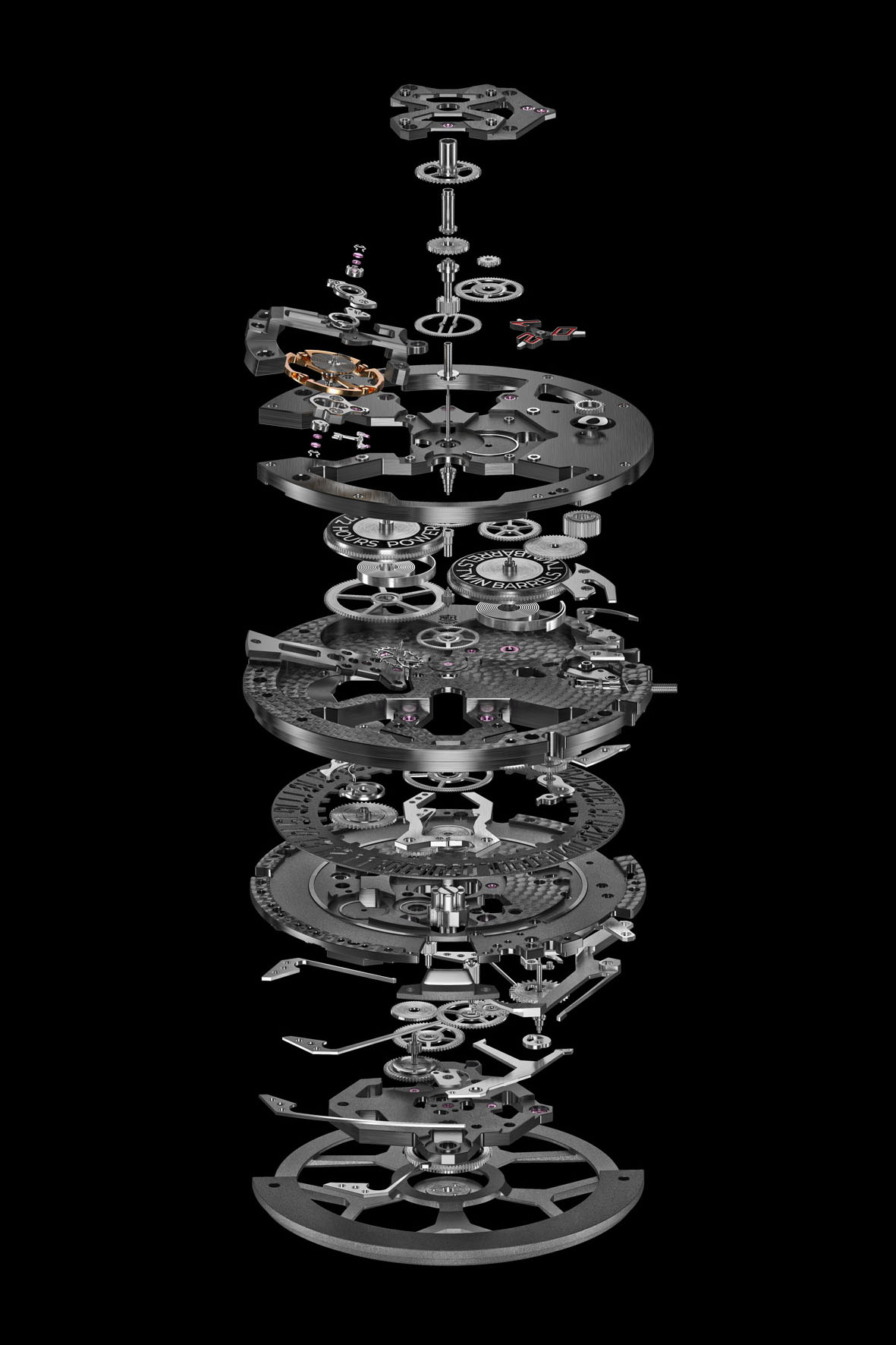
One of the historically iconic features of the calibre is the column wheel – prominently on display for the wearer at 6 o’clock. A revered component in high horology, and a mechanical hallmark, the column wheel not only improves the visual aspect of the watch, but also enhances the feel of the pushers, making their operation more fluid and responsive. It is also responsible for managing the chronograph’s start, stop, and reset functions, making it vital to the timepiece’s performance.
In this calibre, the column wheel is intricately machined from stainless steel and is finished with a poli zinc decoration – a demanding technique that creates a high shine, and is usually reserved for components that have an unusual shape.
The vertical clutch, too, is a mechanism that connects to tradition, while ensuring performance. It is also a very similar system that is used in cars to change gears.
PTENTED INNOVATIONS
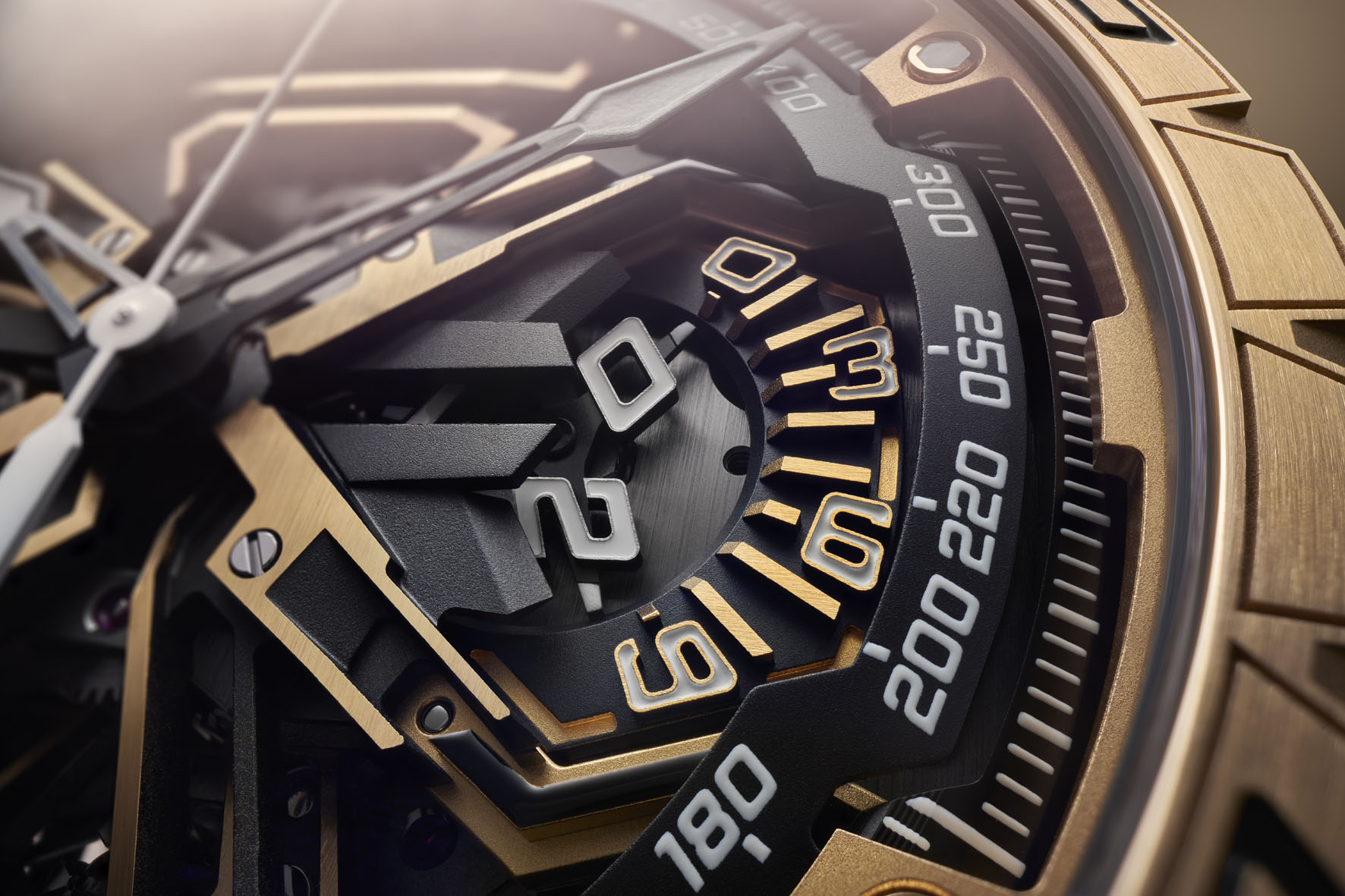
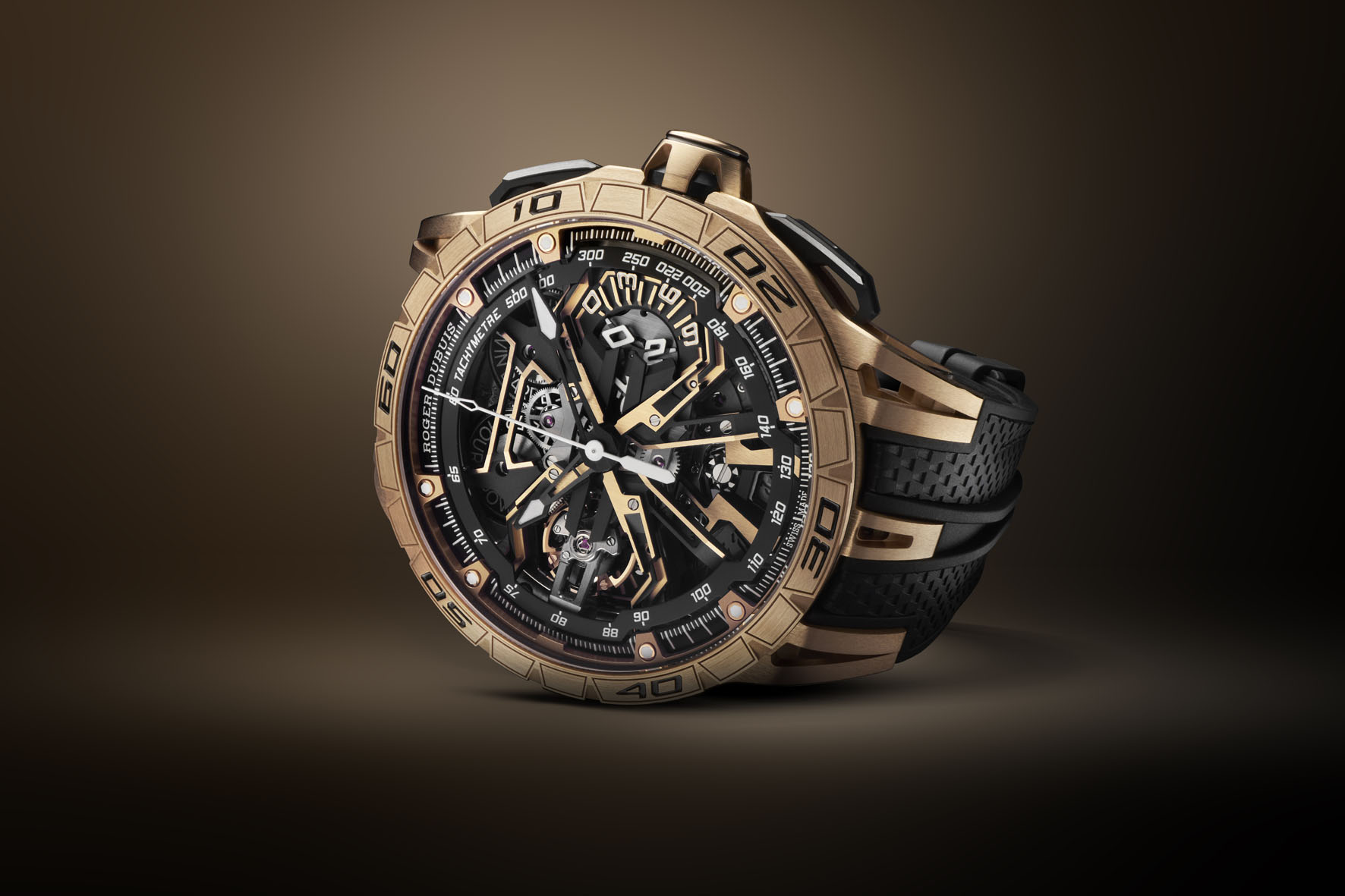
Located at 3 o’clock, the 120° Rotating Minute Counter (RMC) is a theatrical feature crafted in an isotoxal shape. This counter showcases a patent-pending display that bears the digits 0, 1, and 2. As its tripartite hands rotates, it moves gracefully past the 0–9 digits on the right, with oversized red numerals ensuring easy readability. Once the chronograph is activated, the RMC puts on a dynamic and engaging visual performance.
The second innovation of interest is the patent-pending Second Braking System (SBS), which is included in the movement’s vertical clutch mechanism. It adds significant stability to the chronograph seconds hand and reduces its flickering.
DETAILS THAT MAKE THE DIFFERENCE
At 9 o’clock, Roger Dubuis has placed one of its emblematic components. The tilted balance wheel is set at a 12° angle, providing ideal visibility for the wearer, while also delivering the same inertia as a tourbillon. Its performance is enhanced by diamond-coated silicon escapement components, which provide anti-magnetic properties for lasting precision.
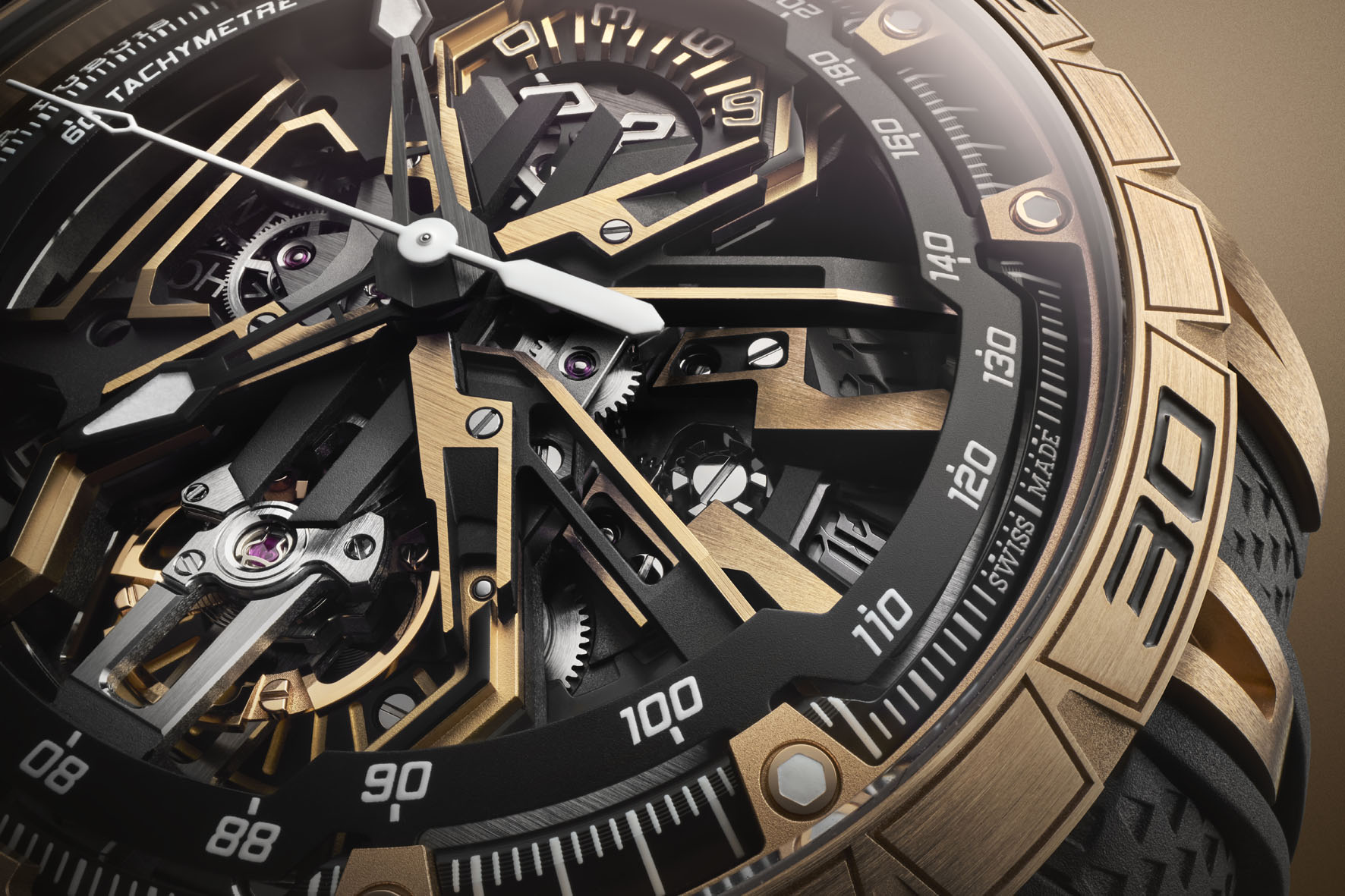
For impact on the wrist, the timepiece is crafted with a 45 mm skeletonized case in 18K pink gold and features skeletonized pushers. Its warm tones are contrasted by a black rubber strap, which is equipped with a Quick Release system.
Yet it’s the symmetrical dial of the watch that truly draws the wearer into the magic of the aesthetics. Almost like a living display, it reveals different moving parts all working in seamless harmony. And the more you look, the more layers are revealed, with distinctive surfaces and different heights all contributing to the expressive geometry.
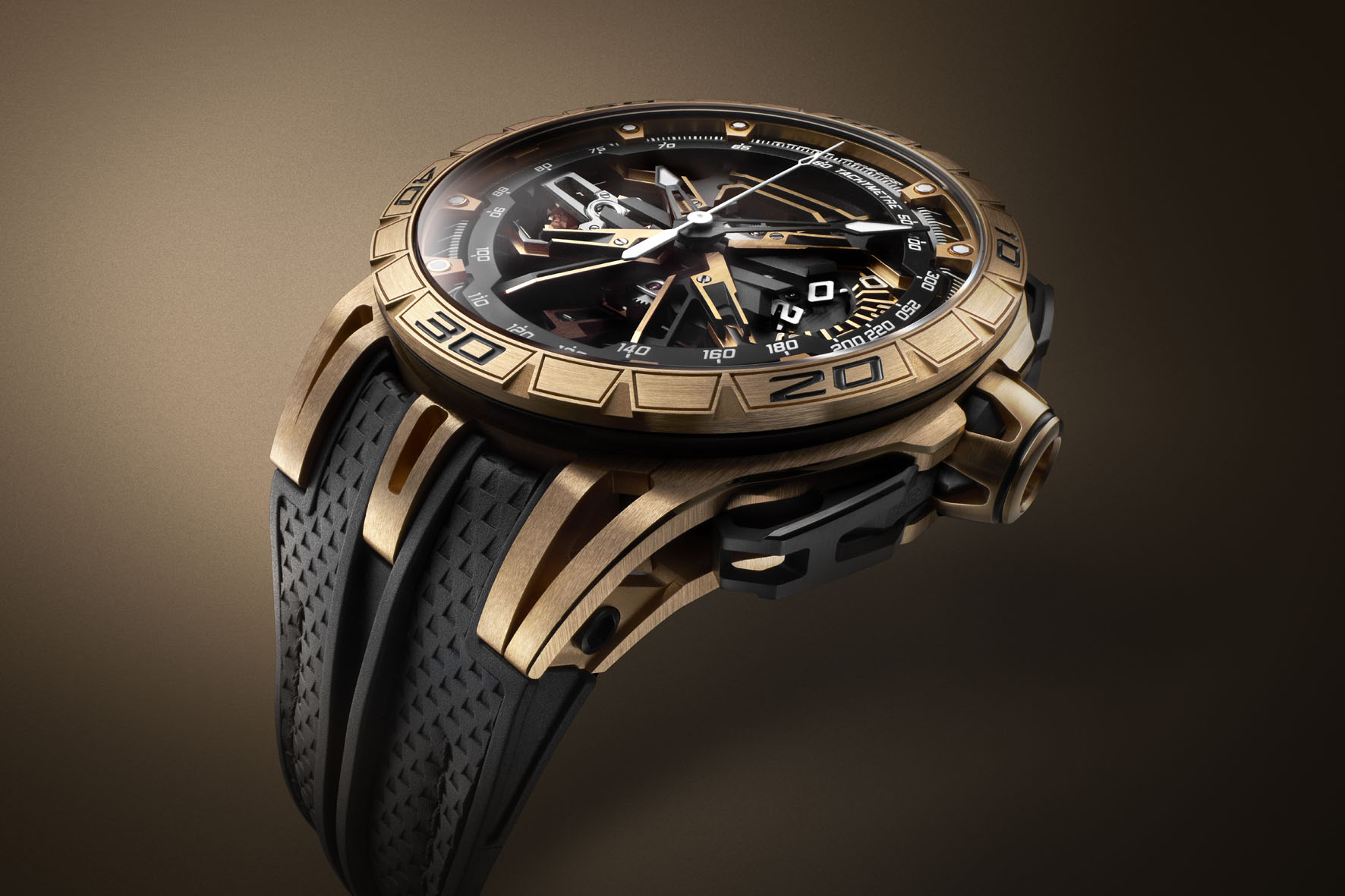
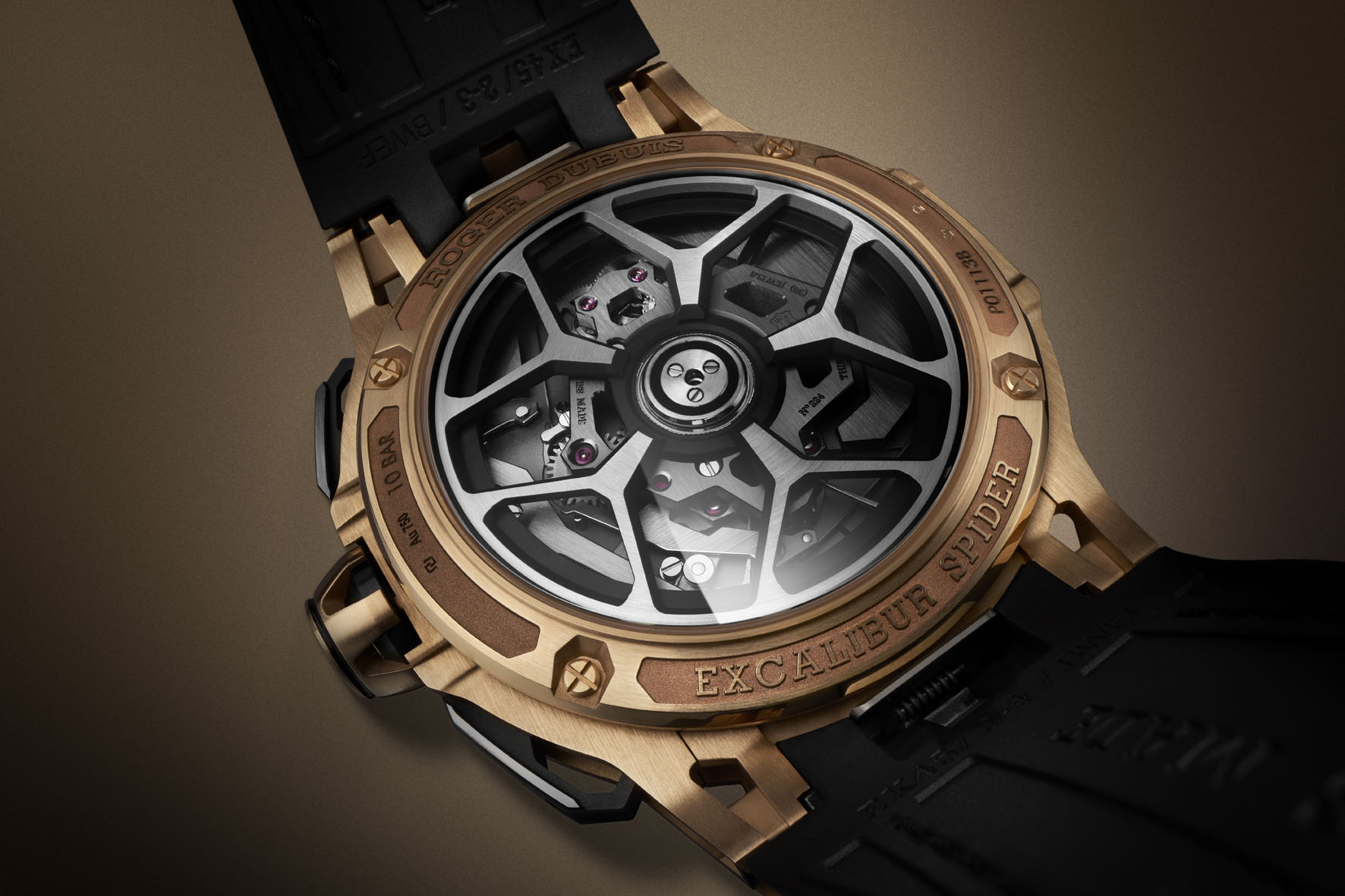
Connecting the watch with the chronograph’s motorsport DNA, the rotor on the caseback has been shaped with five arms, like the rims of a supercar’s wheel, which are further accentuated with the signature sharp lines of Roger Dubuis.
Only 88 of these timepieces will be made available, a reference to the lucky number of Mr. Roger Dubuis. This same number appears highlighted on the watch’s tachymeter scale – adding a subtle but meaningful difference within the design.
As well as offering 72 hours of power reserve, the watch meets the standard of the prestigious Poinçon de Genève. To achieve the mark, the Maison has meticulously decorated all 333 components using a total of 16 distinct finishing techniques.