
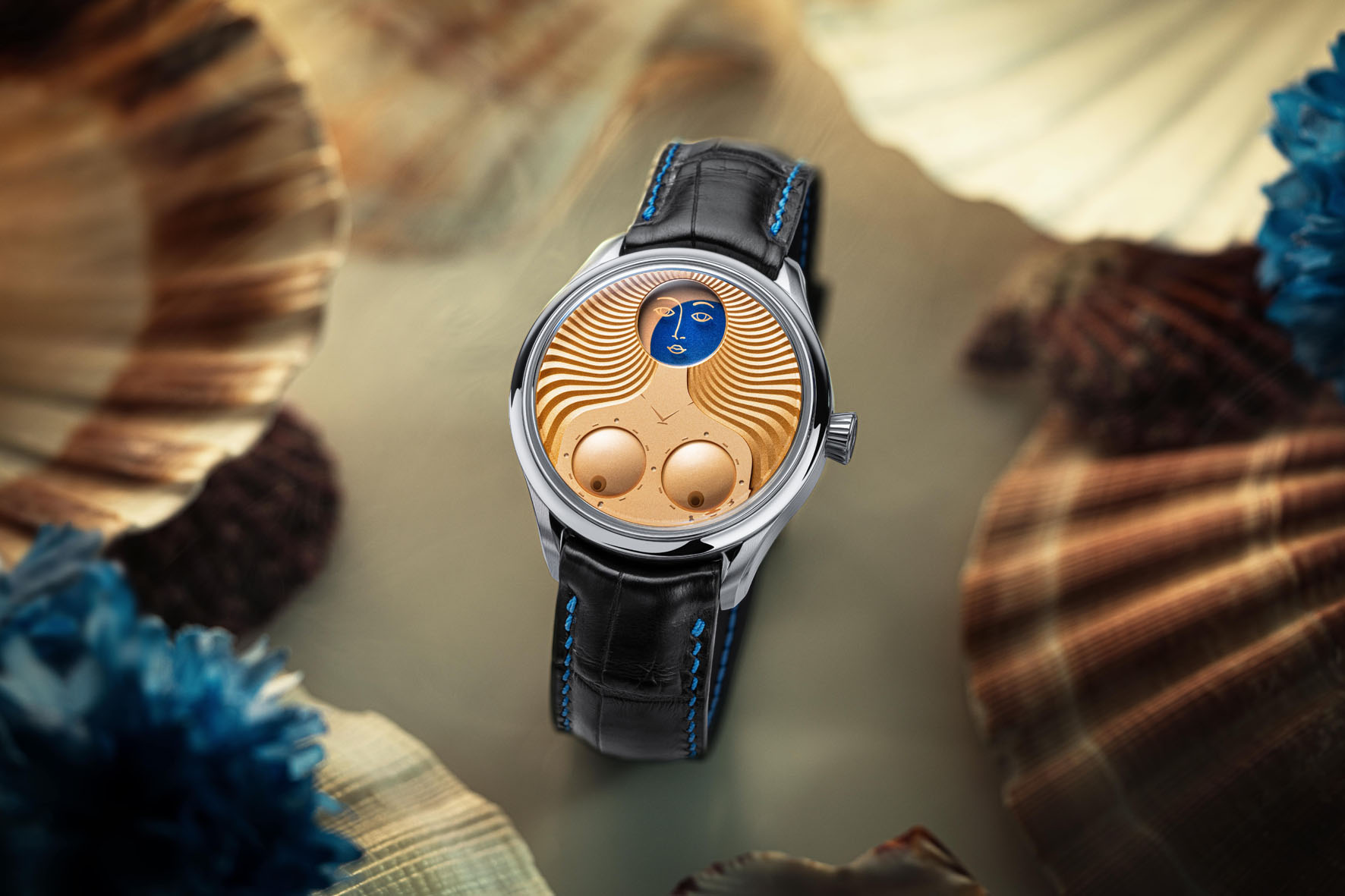

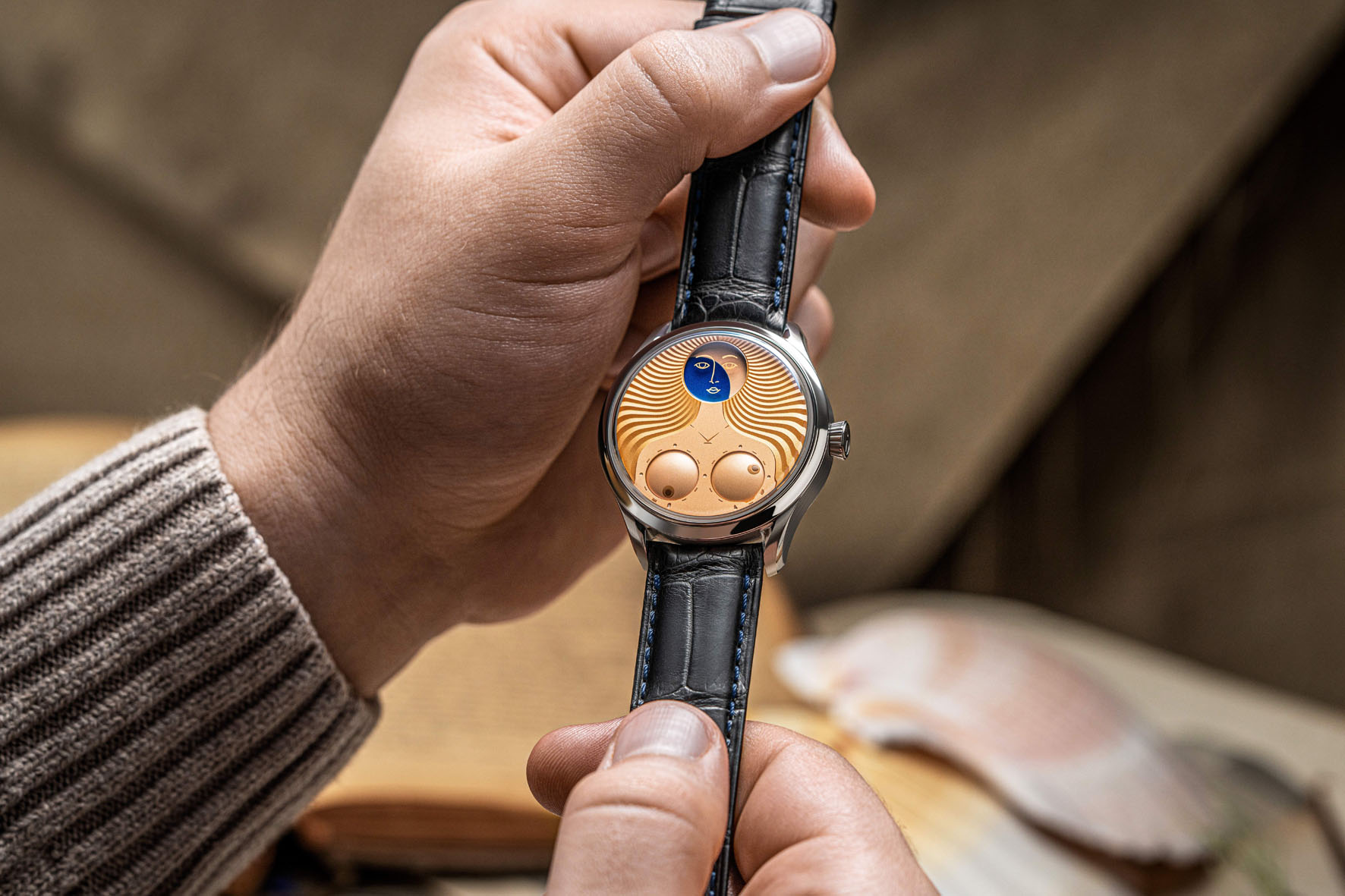
In contemporary independent watchmaking, the line between function and expression is increasingly fluid. Konstantin Chaykin’s work unfolds precisely within this space, where technical design and imagination evolve in parallel from the very outset. In his creations, the dial becomes a vehicle for narrative experimentation: no longer a neutral, functional surface, but a symbolic space through which time is interpreted rather than simply measured. Seen from this perspective, the meeting with Jacopo and Mattia Corvo of GMT Great Masters of Time appears entirely natural, rooted in a shared commitment to author-driven watchmaking and its cultural dimension. VENUS is born from this shared vision as a limited edition of 99 pieces that brings one of the most iconic subjects in Western art into Chaykin’s distinctive vocabulary. Inspired by Sandro Botticelli’s The Birth of Venus, the watch does not employ figurative elements as decorative references, but as a structural device: the body of the goddess becomes the architecture of the dial, accommodating hours, minutes, and moon phases within a composition that merges mythology, astronomy, and mechanical rigour.

VENUS CHAYKIN’S FORMAL RESEARCH: FROM THE WRISTMONS TO VENUS
In Konstantin Chaykin’s work, the Wristmons mark the moment when watchmaking openly embraces its narrative dimension. Dials take on anthropomorphic features; indications become eyes, expressions, and faces, resulting in timepieces that behave more like characters than neutral objects. This is not an illustrative exercise: the visual construction always stems from a precise function, and every element retains a clearly defined mechanical role, arranged within a composition conceived with near-architectural care. From here, Chaykin develops what he defines as “erotomorphism”: not a provocation, but a formal exploration of the human figure and its symbolic dimension. With VENUS, this line of research moves further, shifting away from the face to engage with the body and with imagery that demands balance and restraint. Sensuality remains implicit, filtered through astronomical and mythological references; the artistic language is structural rather than decorative.
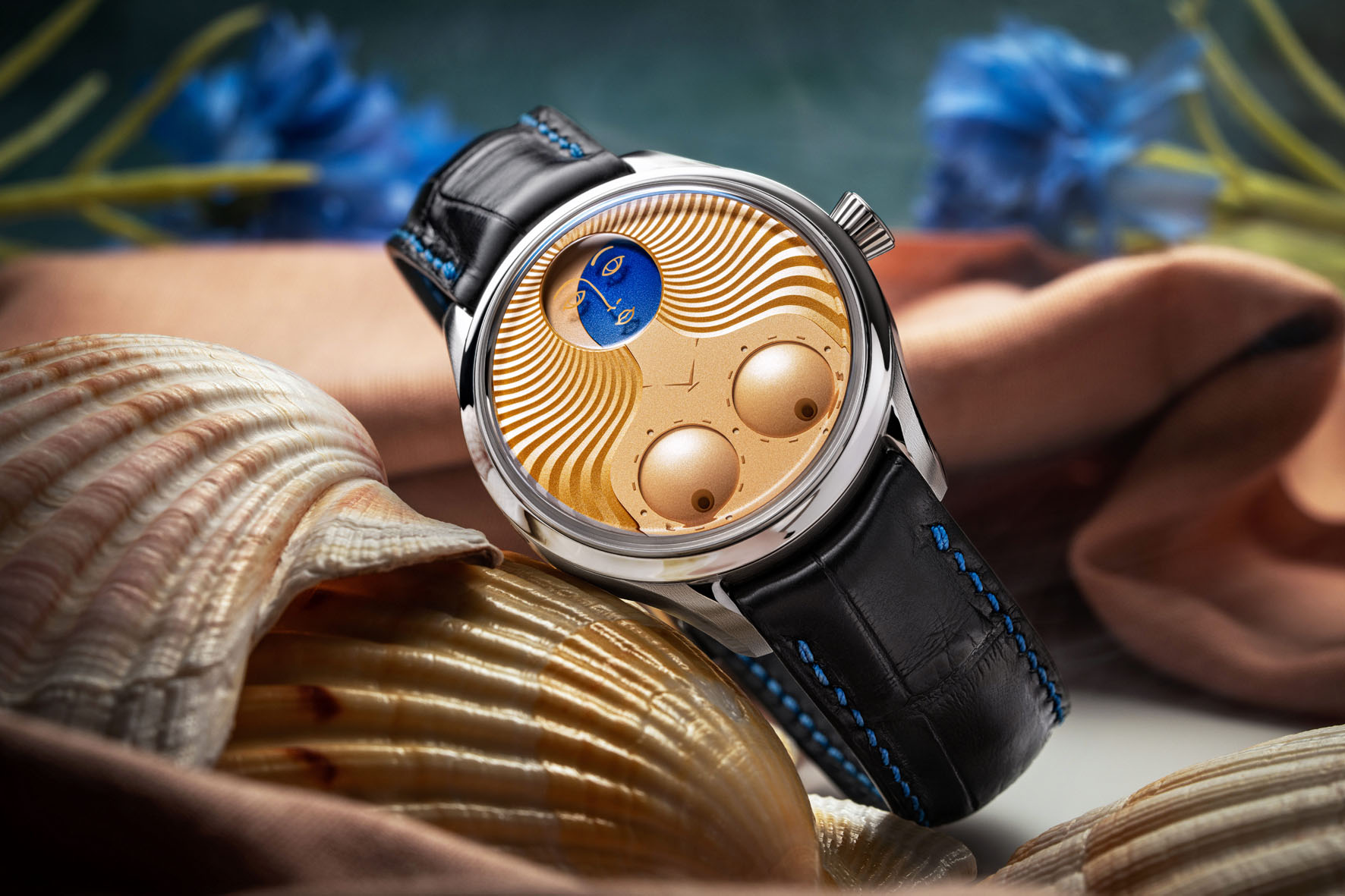
The idea of a watch dedicated to Venus first surfaced in 2018, shortly after the debut of the Wristmons, but remained undetermined for several years. It re-emerged only later, when Chaykin created Goddess of Time Tempa, a painted work auctioned in Geneva in 2024. It is at this point that the project finds a clear direction and evolves into VENUS: the body of the goddess is no longer conceived as an image to be observed, but as a functional architecture, designed to structure and ensure a coherent reading of time.
VENUS: FORM, FUNCTION, AND MECHANICS
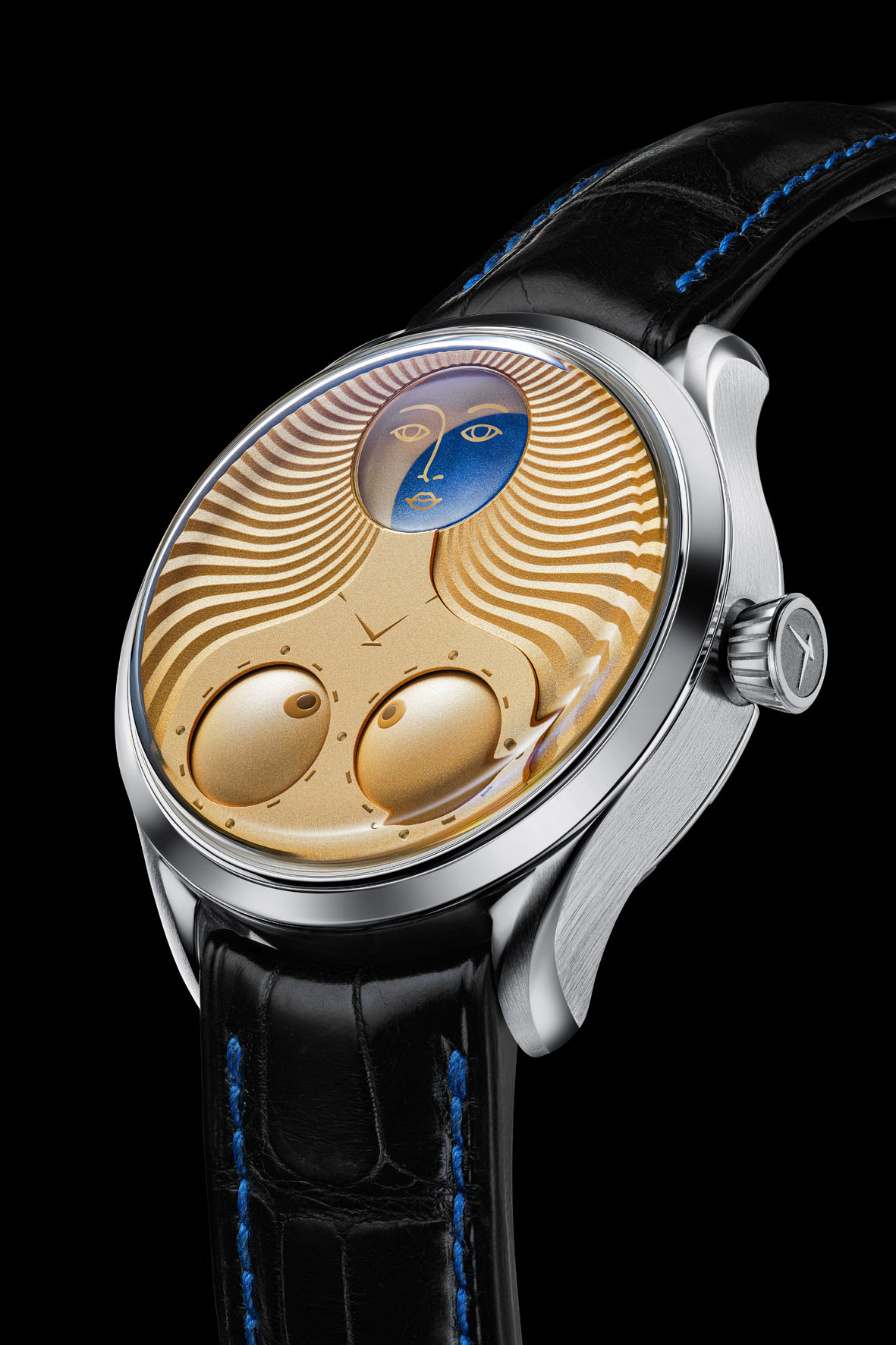
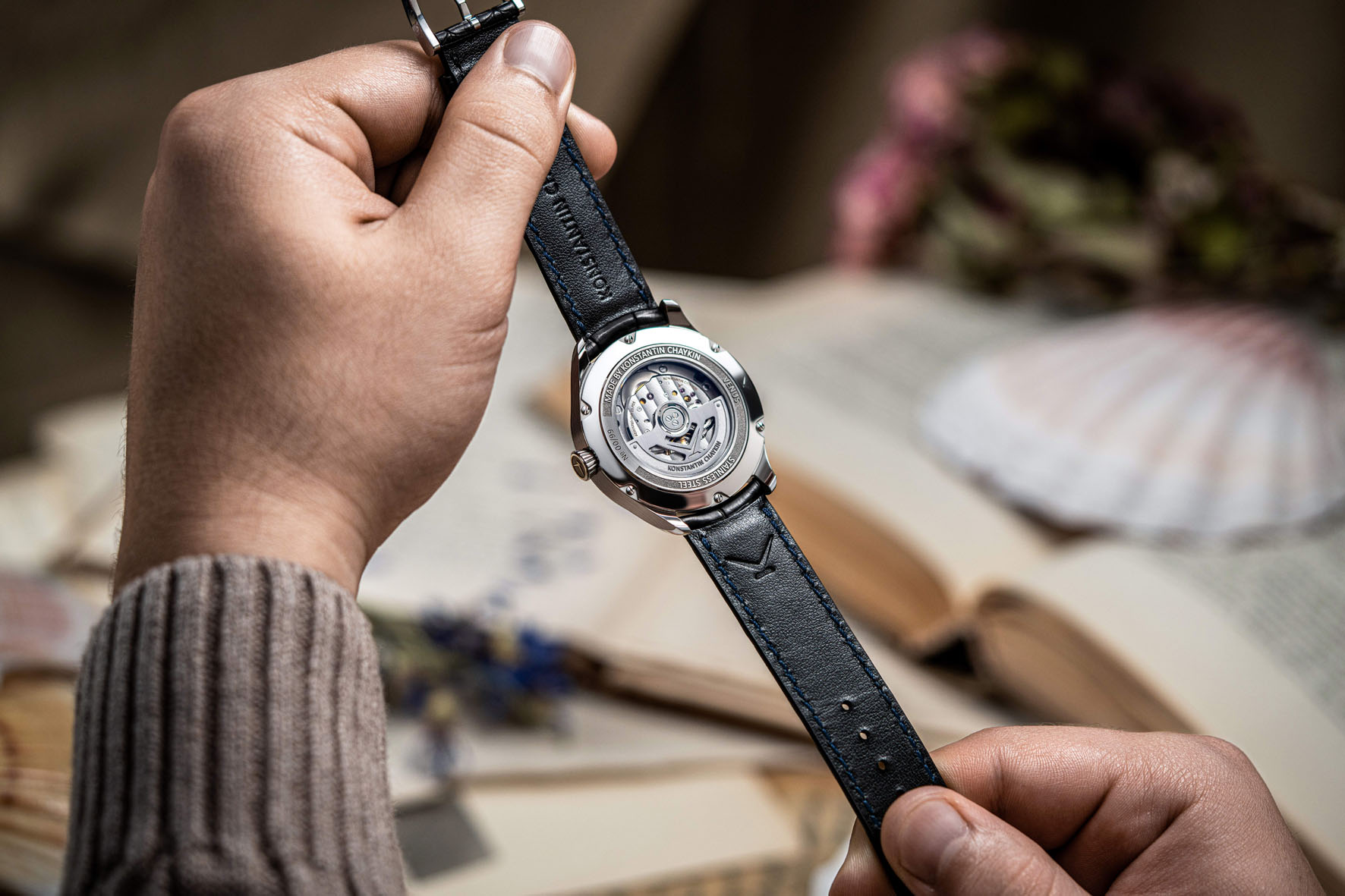
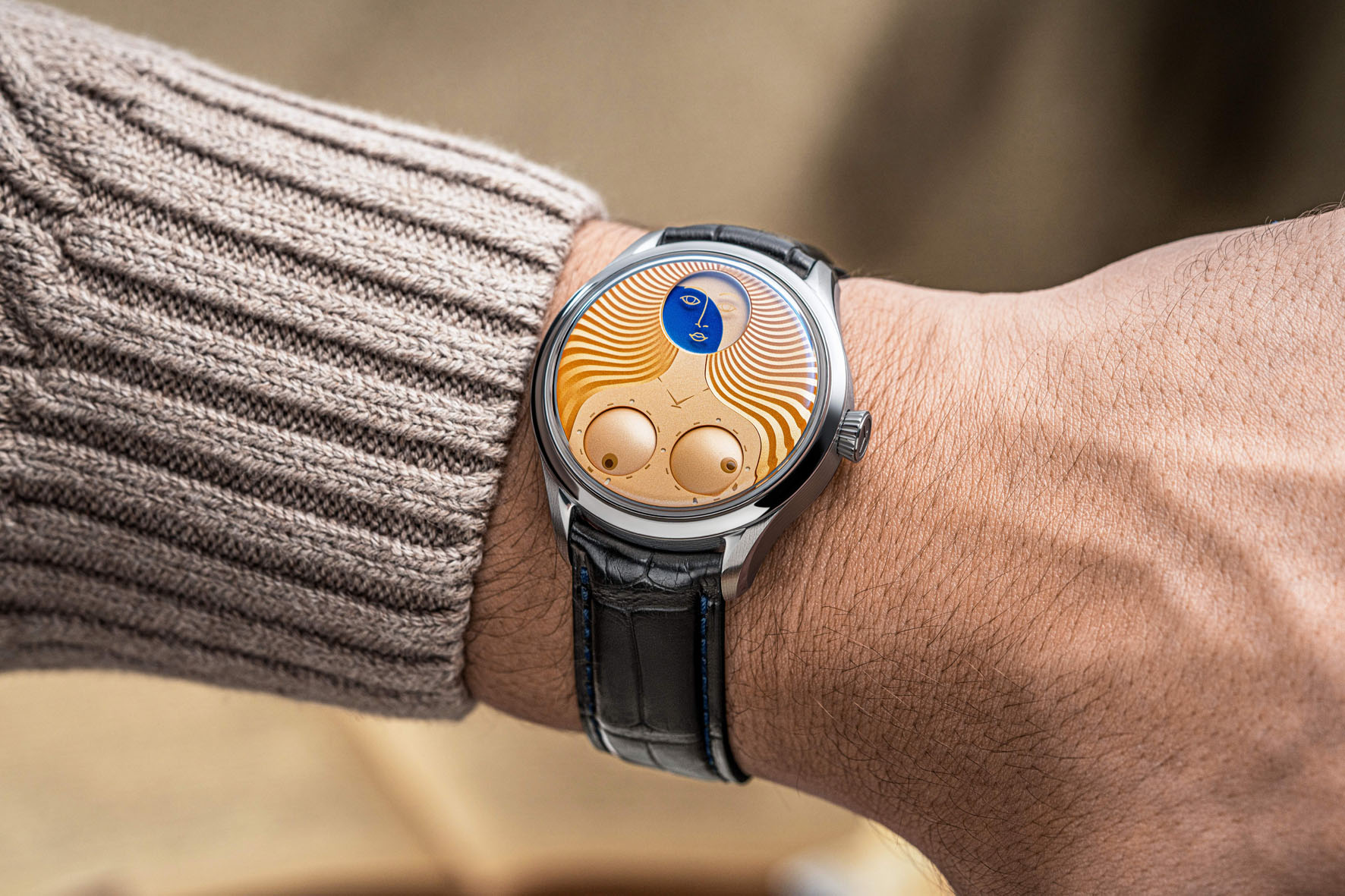
From a construction perspective, VENUS explores a complex balance between formal expression and watchmaking function. The 40 mm stainless-steel case is deliberately restrained in its proportions, providing a neutral framework for a visually dense dial. A slim bezel maximises the dial aperture, while a single crown at 3 o’clock maintains the clarity of the design and the overall compositional balance.
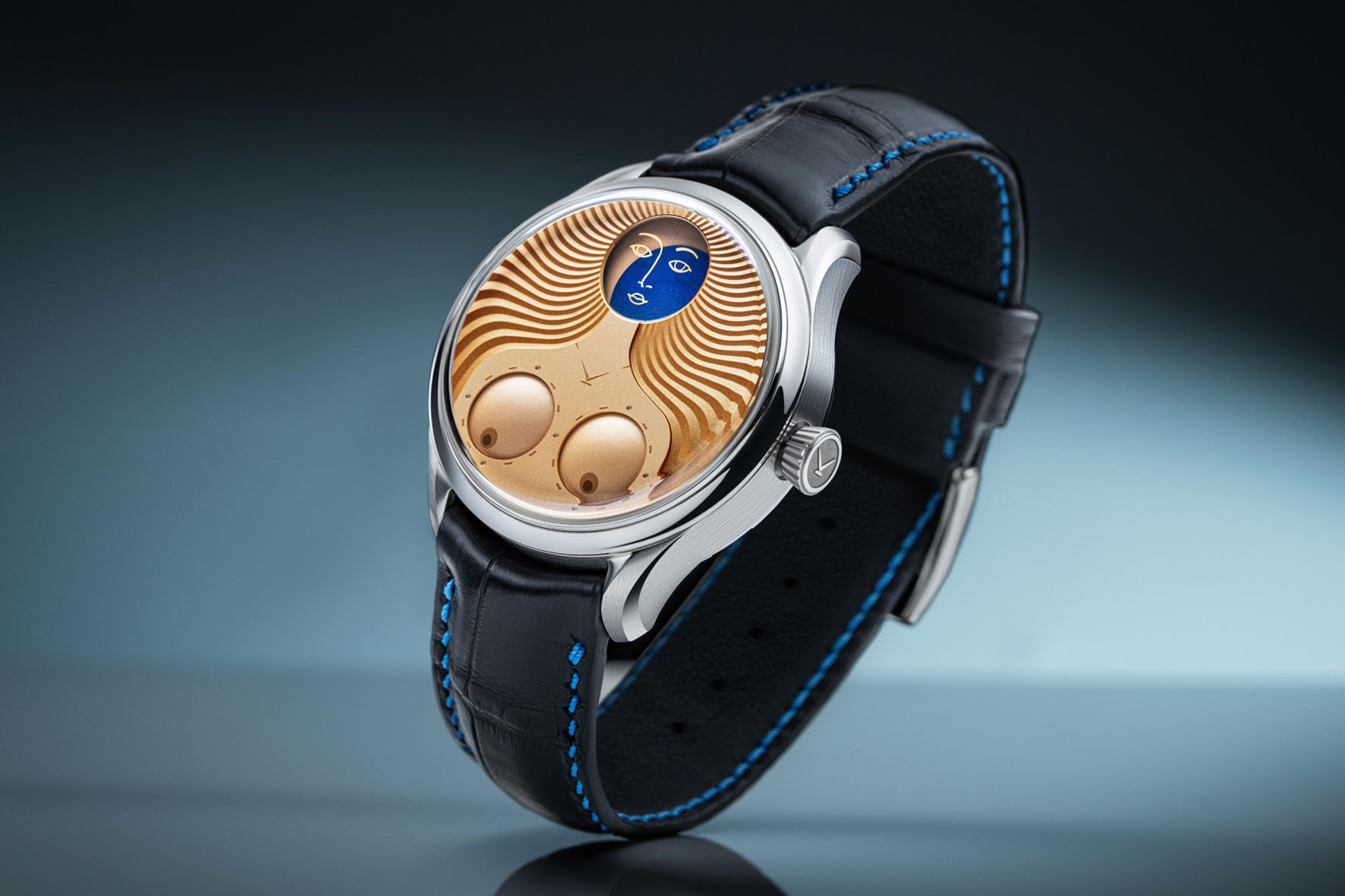
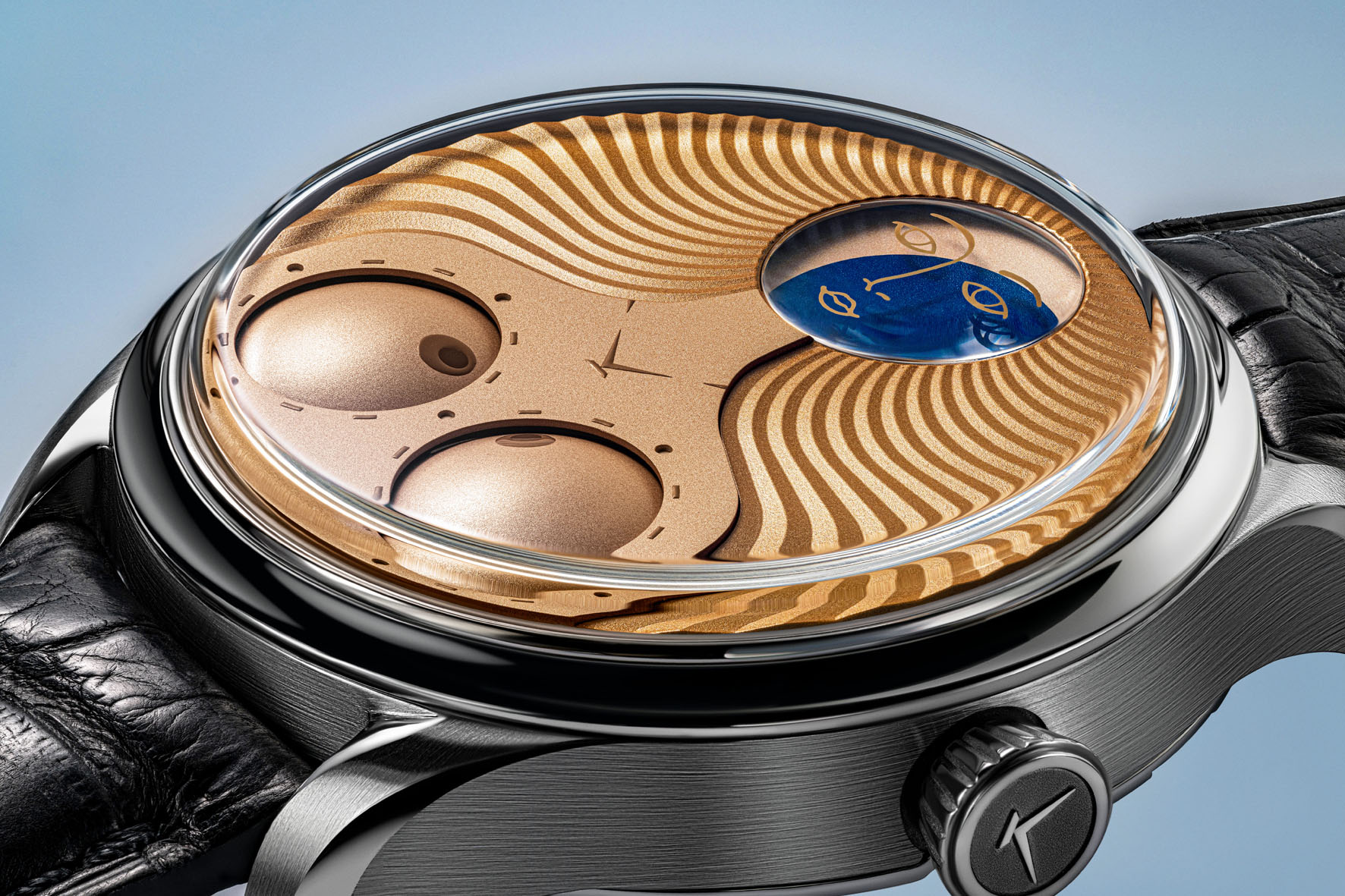
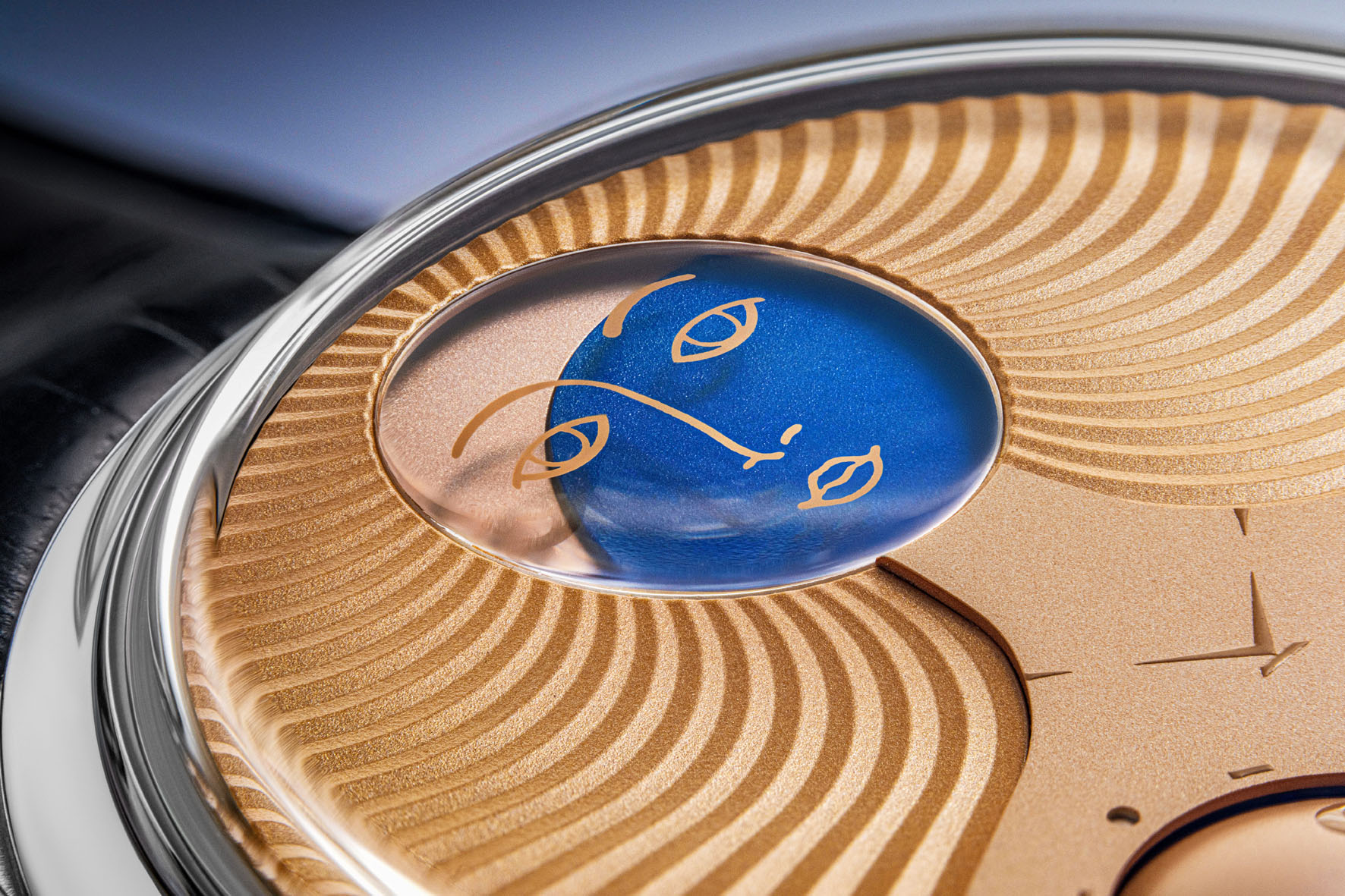
The dial, finished in GMT Great Masters of Time’s signature 4N rose-gold hue, is conceived as an architectural relief rather than a flat plane. Guilloché engraving, articulated across multiple zones, creates a flowing, wave-like pattern designed to echo the movement of Venus’s hair, surrounding and enhancing the central figure and turning the background into an active element of the composition. Time indications are fully integrated into the goddess’s stylised form: hours and minutes are displayed on carefully proportioned sub-dials, while the moon-phase indication occupies the centre, rendered by a deep blue disc that recalls the face of the goddess, reinforcing the astronomical dimension of the theme. Choosing to embed the complications within the figure itself, rather than layering them on top, represents one of the project’s most demanding design challenges. Legibility is preserved through careful calibration of scale, colour contrast, and depth, ensuring that the richness of the iconography never compromises the watch’s primary function.
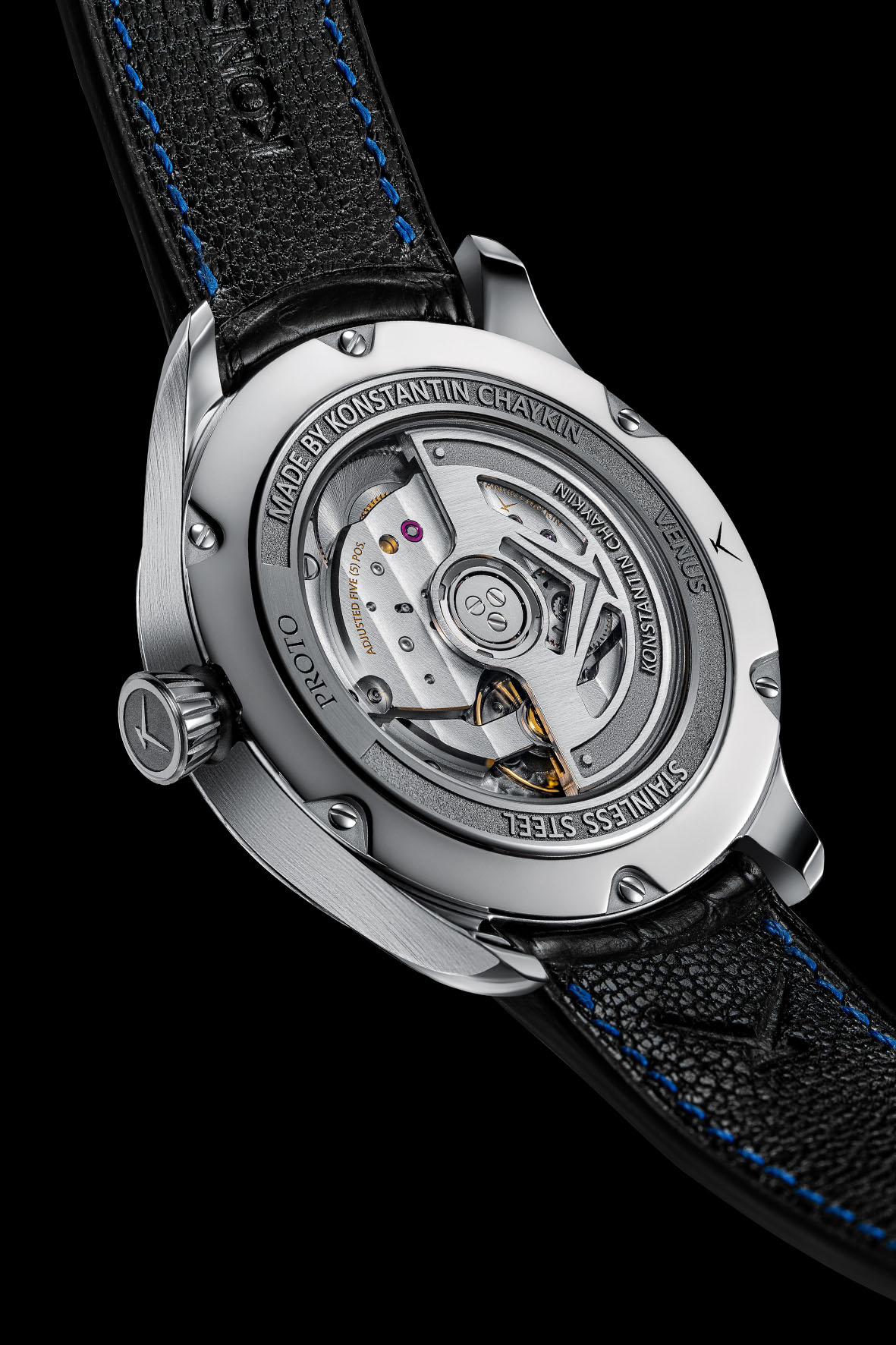
From a mechanical standpoint, VENUS is powered by the automatic calibre K.18-25, developed by Konstantin Chaykin on the La Joux-Perret G200 base and visible through the caseback. Offering a 68-hour power reserve, the movement provides a robust platform for the integration of Chaykin’s proprietary “joker” module. Here, the module goes beyond a simple reworking of the Wristmons’ familiar language, being specifically adapted to a more complex figurative structure in which each indication is required to interact with the geometry of the dial. The result is a timepiece that, while relying on a high-grade industrial base, retains a distinctly author-driven character. Technical solutions are never showcased as an end in themselves, but employed as instruments to enable a coherent visual construction, in which movement, module, and dial are conceived as parts of a single, integrated system. This approach belongs to a precise curatorial framework, capable of supporting the project and giving it structure.
THE CURATORIAL ROLE OF GMT GREAT MASTERS OF TIME
It is precisely within this perspective that the role of GMT Great Masters of Time becomes clear. Shaped by a curatorial rather than a commercial mindset, GMT has built a distinct identity within independent watchmaking, focusing on projects in which the author’s vision remains firmly at the centre. The meeting between Jacopo and Mattia Corvo and Chaykin, which began in 2023, stems from this shared outlook: a mutual desire to create an object that goes beyond the idea of a simple limited edition, taking shape instead as a project with a clearly defined cultural foundation. References to Italy’s great artistic tradition therefore become a structural part of the dialogue between the two sides. Botticelli’s The Birth of Venus is not treated as an image to be evoked, but as a conceptual model around which the watch is developed. Within this context, GMT acts as a mediator between Chaykin’s imagination and a cultivated, contemporary reading of artistic heritage, granting the watchmaker full expressive freedom while accompanying the project through a two-year development process. The result is a timepiece that reflects a balance between two visions, the outcome of a true four-hands collaboration: on one side, Chaykin’s formal and narrative radicalism; on the other, GMT’s attention to proportions, finishes, and overall coherence.
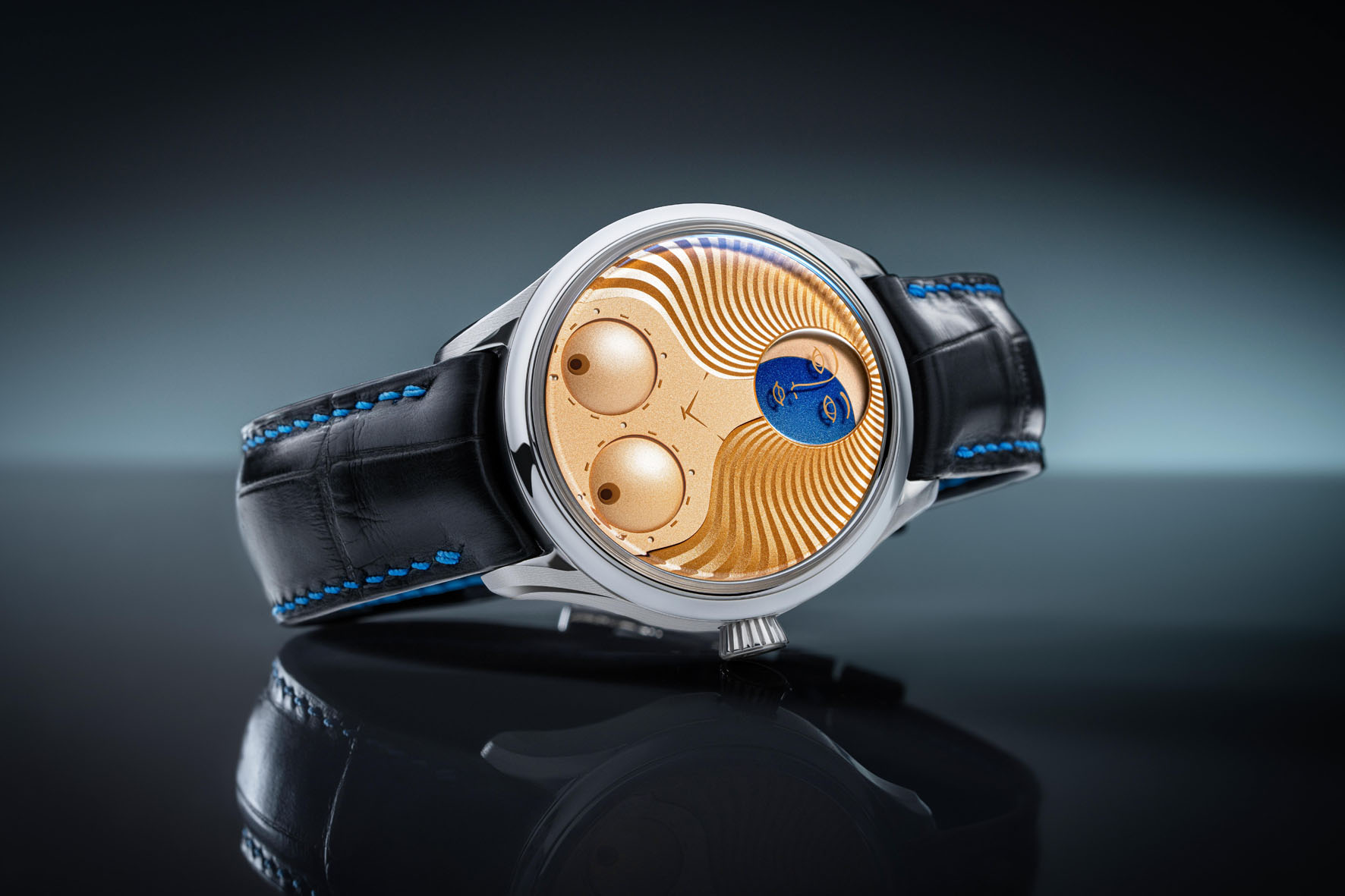
VENUS is produced in a limited edition of 99 pieces and was preceded by the creation of two prototypes. One of these was offered at auction on 11 December 2025 during an exclusive event held at the Cattedrale dell’Immagine in Florence: the prototype watch was sold for approximately €. 41,000, while Chaykin’s painting dedicated to Venus achieved around €. 4,300. The entire proceeds were donated to LILT – the Italian League for the Fight Against Cancer, contributing to the acquisition of a medical scanner dedicated to breast cancer diagnosis.
The regular production series will be released from 2026 and distributed exclusively through GMT Great Masters of Time and Konstantin Chaykin, with a retail price set at €. 21,460 + VAT.
By Elisa Copeta