
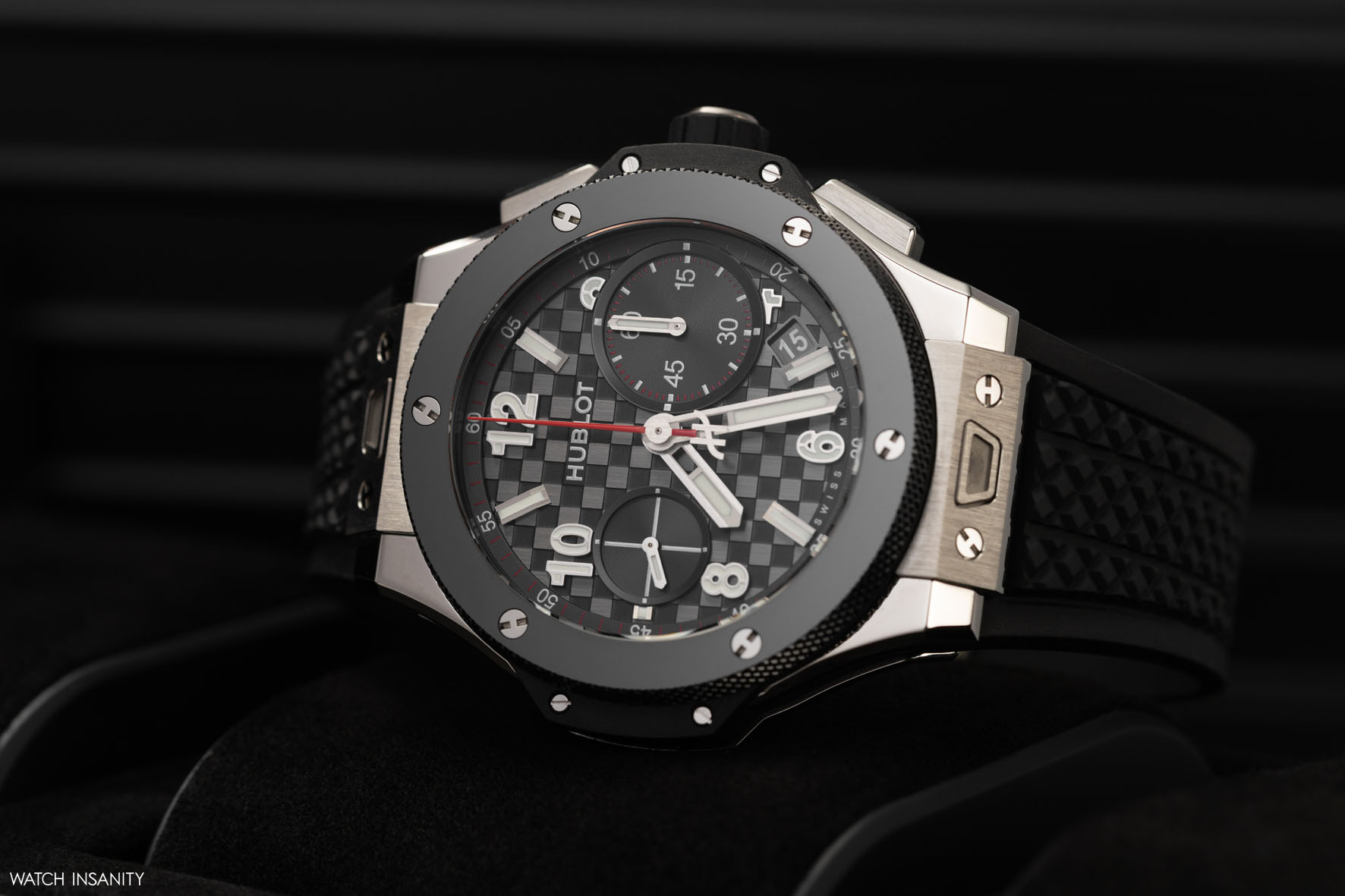

Per fare la storia non serve sempre avere alle spalle una lunga storia. Scritto così sembra paradossale, ma se si pensa al Big Bang di Hublot le cose stanno esattamente in questo modo. Un cronografo che compie 20 anni nel 2025 è stato in grado di segnare così profondamente le tendenze dell’orologeria e di rubare il cuore a collezionisti e appassionati, da diventare parte della storia in soli due decenni. In un 2025 ricco di ricorrenze per molti marchi dell’orologeria, Hublot non poteva lasciarsi sfuggire l’occasione di festeggiare il compleanno di uno dei suoi “campioni”.

Lo ha fatto presentando a Watches and Wonders non uno, ma la bellezza di cinque cronografi, rivisitando alcune delle pietre miliari più significative della storia della collezione. E lo ha fatto a modo suo, applicando a questi orologi che, ha identificato come Big Bang 20th Anniversary, il proprio pay-off, The Art of Fusion. Si tratta infatti di cinque modelli in edizione limitata che fondono il design del Big Bang originale con quello dell’attuale Big Bang Unico. Un quintetto che sfoggia l’estetica e lo spirito propri del Big Bang delle origini, mescolati però con materiali e movimenti che sono lo stato dell’arte della ricerca che Hublot continua a portare avanti non solo dal 2005, ma fin dai propri inizi. Perché è li che bisogna arrivare per capire fino in fondo tanto lo spirito della collezione, quanto gli orologi attuali.
BIG BANG E L’INTUIZIONE DI JEAN-CLAUDE BIVER
Se Hublot nacque nel 1980, la scintilla che portò alla creazione del Big Bang scoccò diversi anni dopo. Jean-Claude Biver aveva da poco assunto la posizione di Ceo del marchio, nel 2004, quando intuì subito il potenziale di Hublot: una combinazione di materiali raramente utilizzati insieme, come l’oro e il caucciù, un design senza compromessi e uno stile unico, completamente diverso da ciò che offriva l’orologeria contemporanea. Così, nel giro di pochi mesi, fu presentato a Baselworld 2005 il cronografo Big Bang.

Sebbene il termine “Big Bang” possa far venire subito in mente lo spazio, in realtà il nome si riferisce più precisamente all’esplosione originale da cui ha avuto inizio il nuovo corso di Hublot. Il Big Bang era rivoluzionario e non aveva nulla di discreto. Aveva la familiare lunetta dei primi modelli MDM del brand, un cinturino in gomma e una cassa complessa e spigolosa. L’orologio era un mix di materiali diversi e di diverse finiture.
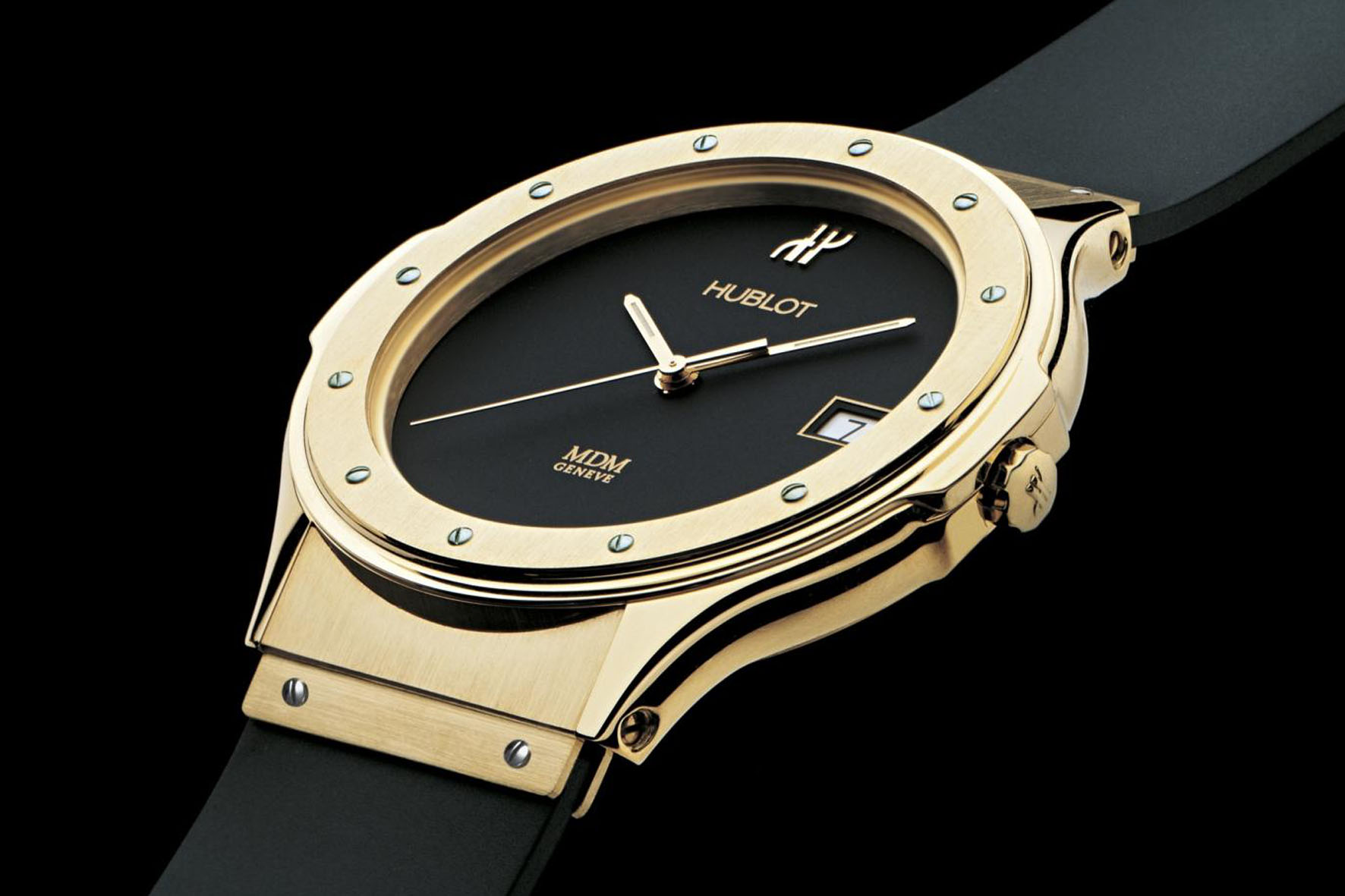
Oltretutto si posizionava in un segmento premium, sfidando direttamente i cronografi più classici e affermati. Aveva un movimento ETA, una scelta che fu molto criticata nonostante il fatto che tutti i marchi, compresi i più importanti, abbiano prima o poi utilizzato movimenti cronografici di fornitura per i propri orologi. Tutto ciò dimostrava che il nuovo cronografo di Hublot rappresentava un’innovazione, se non persino una minaccia.
INFLUENCER ANTE LITTERAM
Il nuovo cronografo Big Bang fu un successo fenomenale che portò Hublot in un’altra dimensione. Inoltre, portò con sé una nuova forma di marketing dirompente, che fu una sorpresa per un’industria orologiera abituata a ragionare principalmente degli standard tecnici. In questo senso, grande merito va a Biver, capace di intuire il cambiamento del mercato in atto in quegli anni e di proporre una risposta mirata e adeguata.

Hublot ha perseguito negli anni la sua personale strategia di marketing, posizionandosi sempre dove meno ci si sarebbe aspettati di trovarla, a dispetto di scettici e critici. Ci è riuscita, probabilmente, anche e soprattutto grazie al Big Bang, che è diventato progressivamente il suo fiore all’occhiello, facendo spazio anche al Big Bang Unico.
Divenuto con il tempo uno dei cronografi più influenti dell’orologeria, si è fatto conoscere per le sue linee nette, decise, per le casse e le lunette realizzate con materiali contemporanei, per il suo look high-tech e per la sua affidabilità. Un mix che ancora oggi colpisce alle fondamenta l’orologeria contemporanea, così come 20 anni fa, quando il Big Bang si presentò inatteso, non compreso subito e, forse, nemmeno tanto benvenuto. Il tempo ha dato ragione a Hublot e i cinque modelli dell’anniversario ne sono una prova.
BIG BANG 20TH ANNIVERSARY TITANIUM CERAMIC
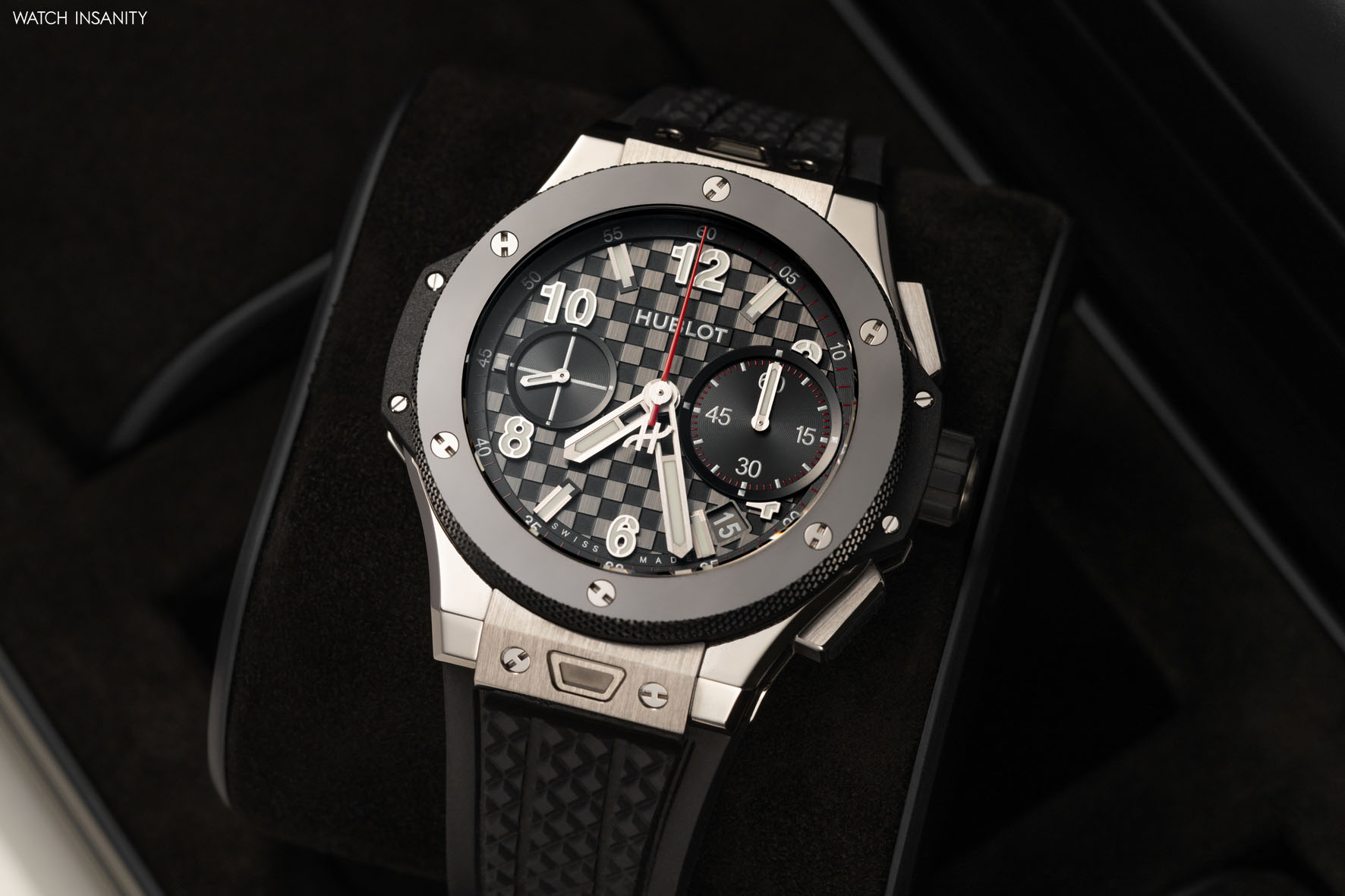
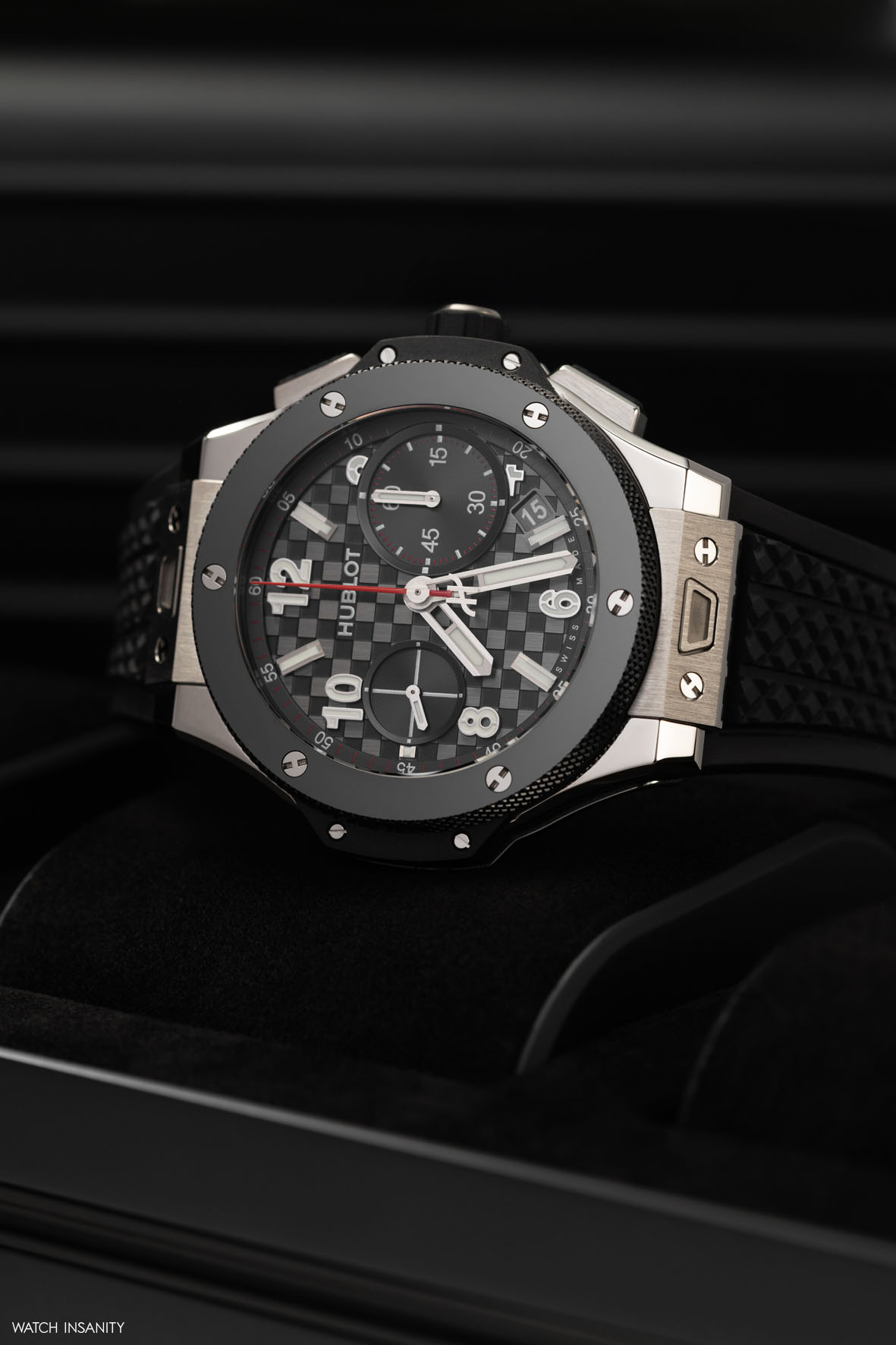
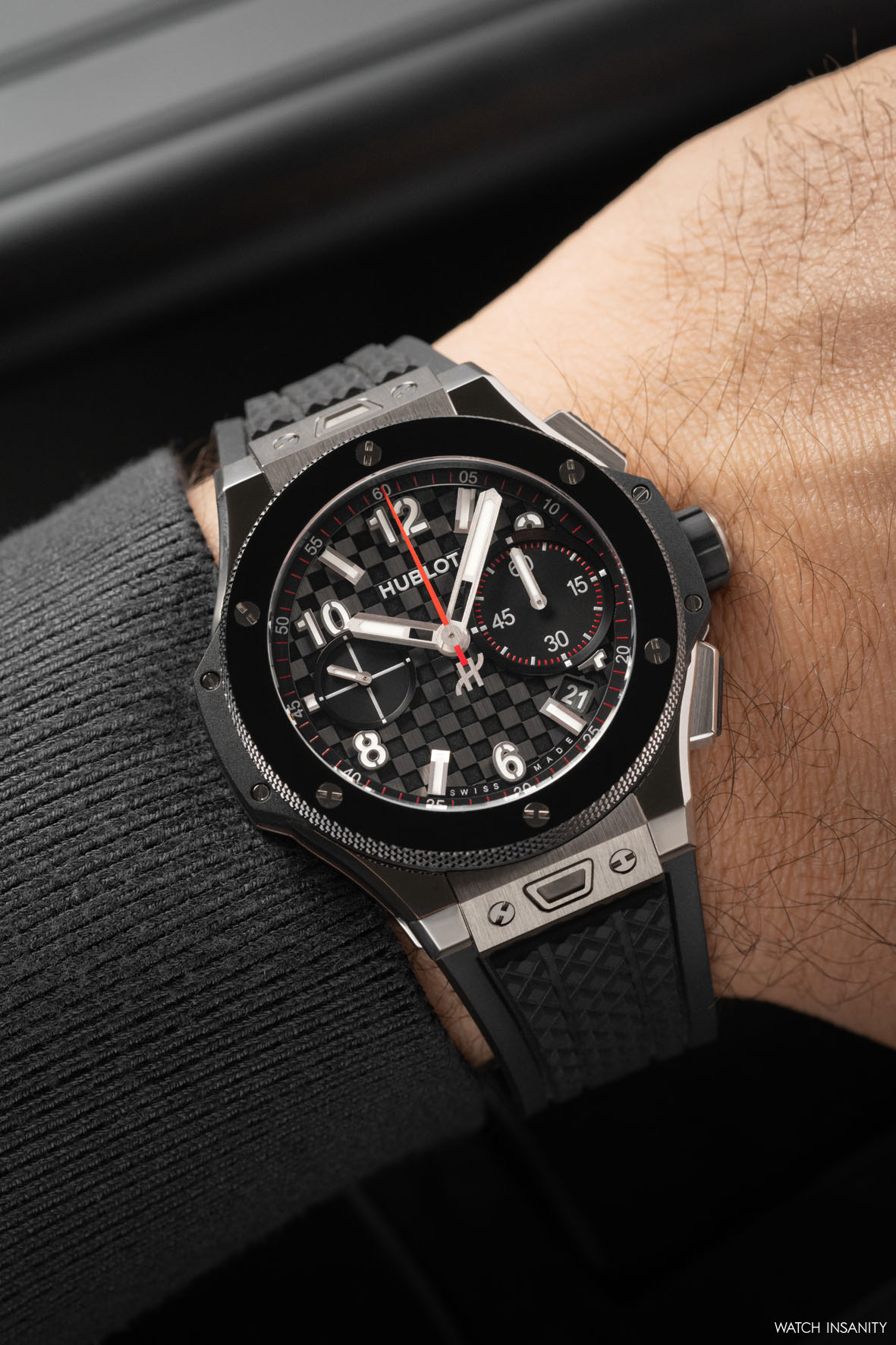
Tutti gli orologi Big Bang 20th Anniversary condividono la stessa misura di cassa – 43 mm di diametro, 13,20 mm di spessore -, lo stesso movimento – calibro MHUB1280.20YEARS – e la stessa struttura del quadrante effetto fibra di carbonio satinato stampato. Ciò che cambia è il materiale della cassa. In questo caso, ci focalizziamo sulla versione che maggiormente richiama da vicino il Big Bang originario, ossia quella con la cassa in titanio e ceramica.
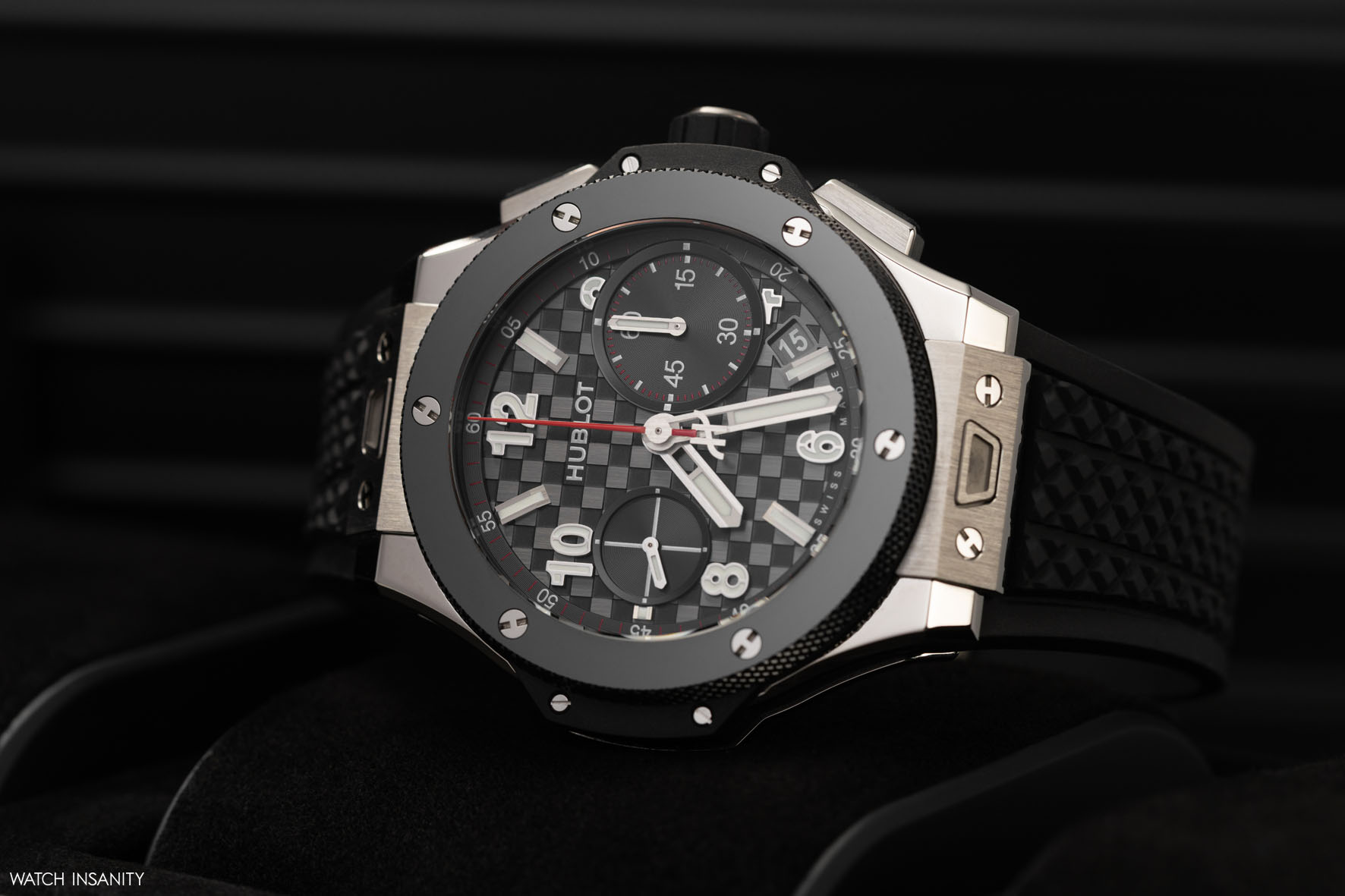
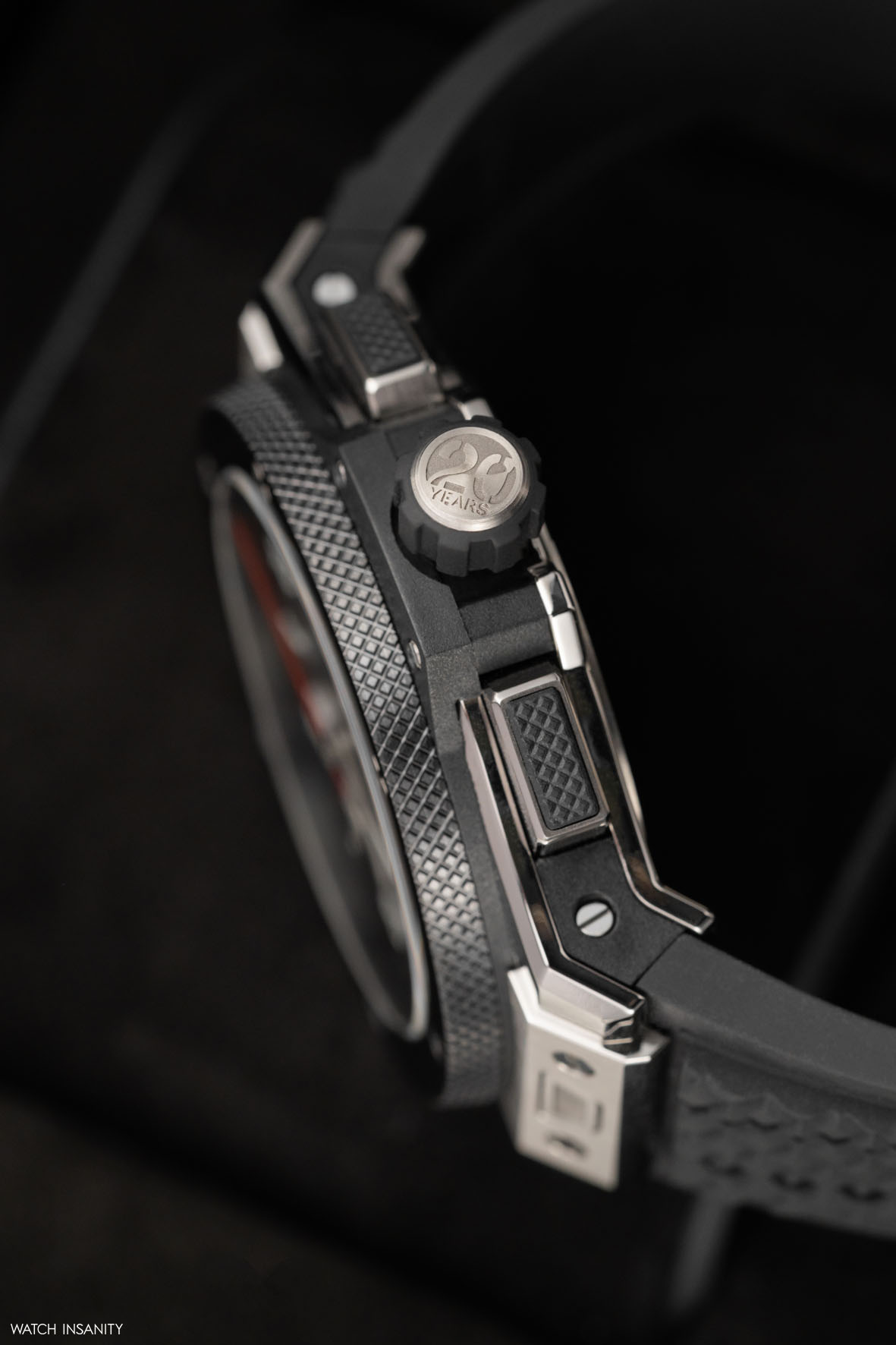
L’estetica è quella classica, appunto, nella quale il titanio lucido e satinato della cassa contrasta con energia con gli inserti in ceramica nera della carrure e, soprattutto, con l’imponente lunetta. È anch’essa in ceramica e si caratterizza per il fianco decorato da un motivo strutturato, a rete, che prova ad alleggerirne la presenza alla vista. Le classiche sei viti in titanio a forma di H la fissano saldamente alla cassa.
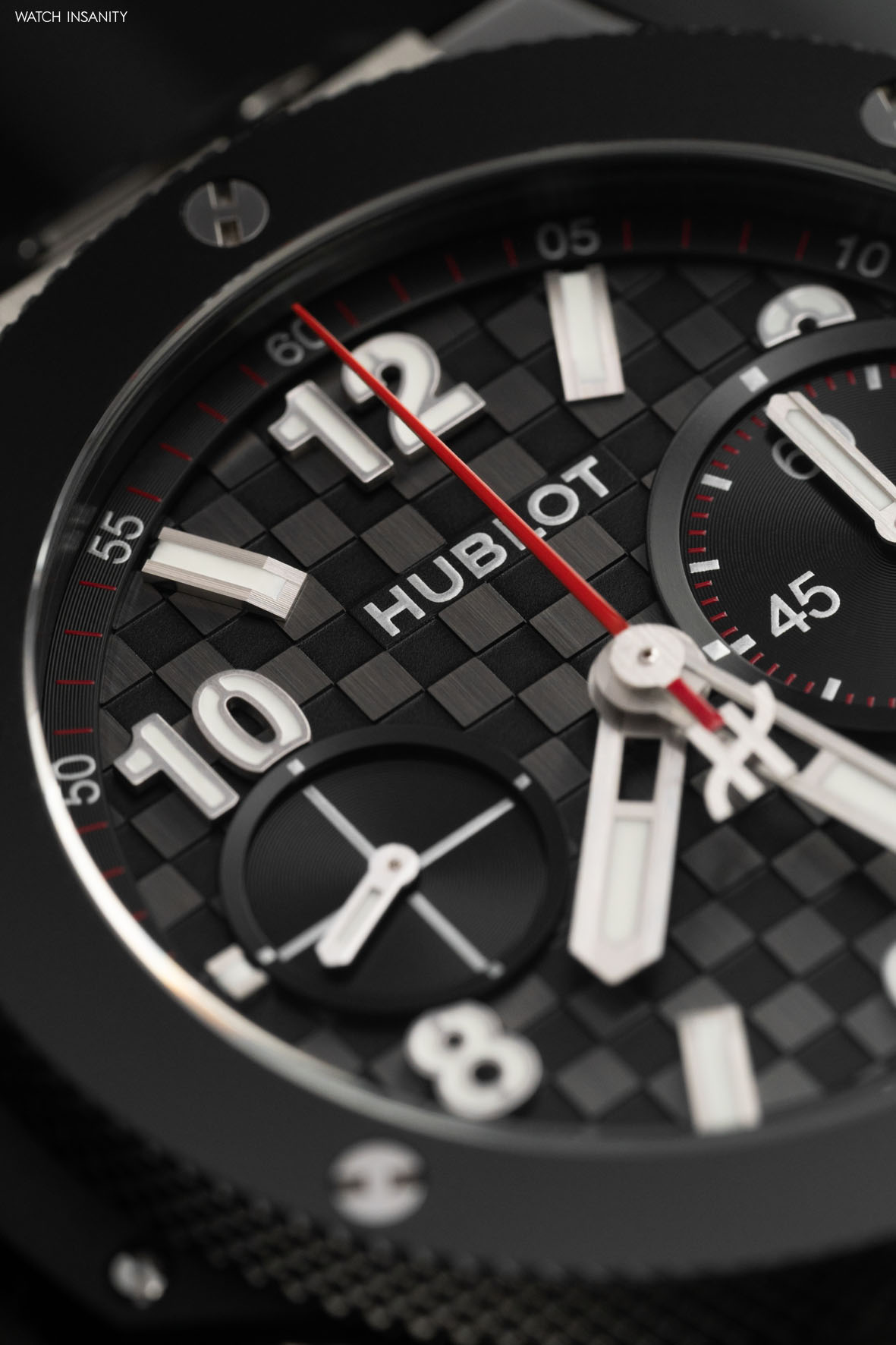
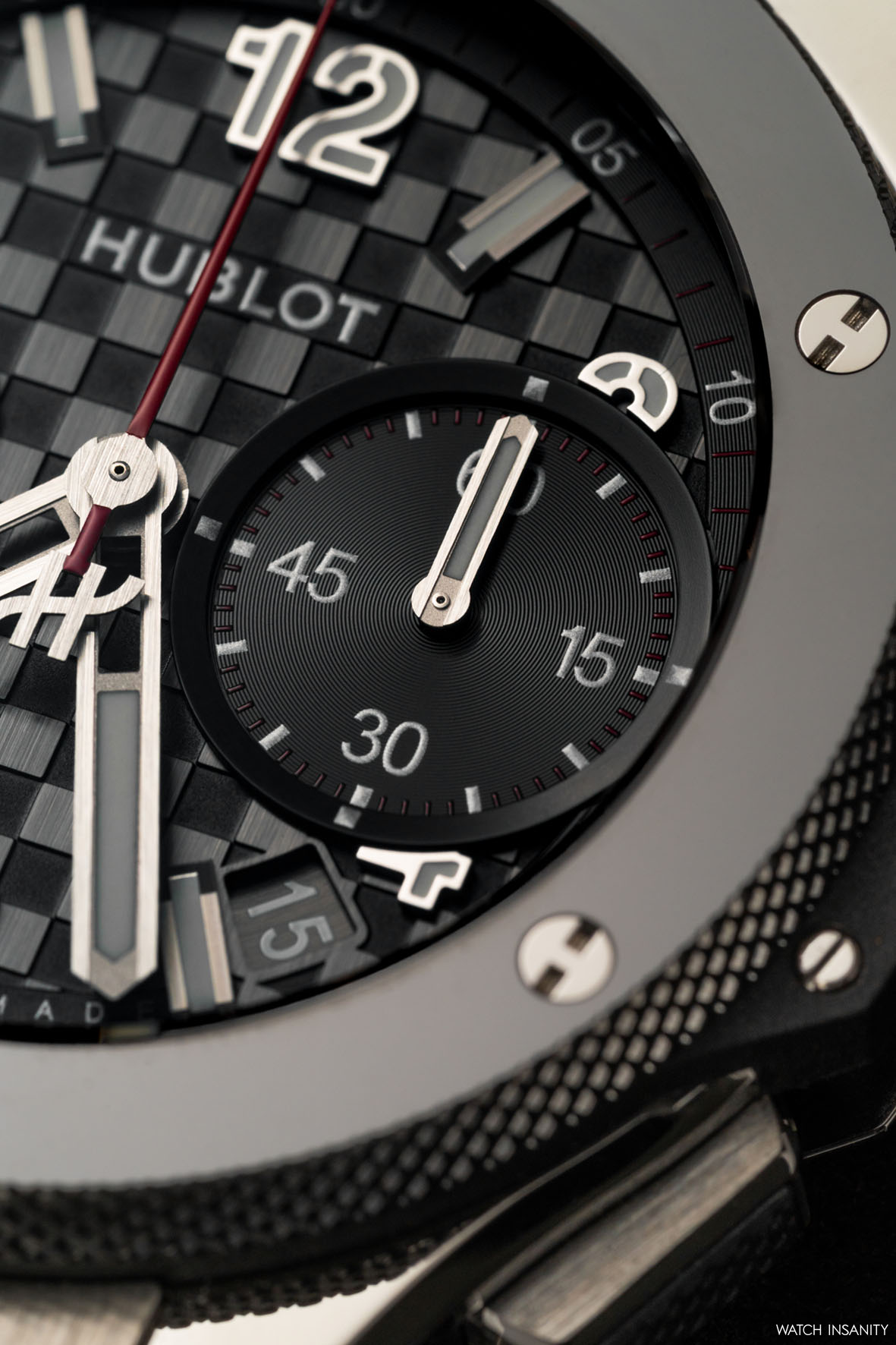
Il quadrante, come detto, ha un motivo a fibra di carbonio, nero profondo, e contrasta con gli indici bianchi, ben coperti da materiale luminescente. I bastoni degli indici dispari sono alternati ai numeri arabi dei pari. Ad accentuare la profondità data dal motivo a fibra di carbonio ci pensano i due contatori, delle ore al 3 e dei secondi continui al 9. Oltre alla svasatura, la loro finitura circolare, a contrasto con quella a carbonio del quadrante, contribuisce a muovere l’effetto visivo dell’insieme. Un po’ sacrificata da questa struttura è la finestra del datario, a ore 4:30, anche perché Hublot ha scelto un disco data nero: se da un lato, positivamente, non rompe l’omogeneità estetica del quadrante, dall’altro, appunto, rischia di rendere anonimo il datario.
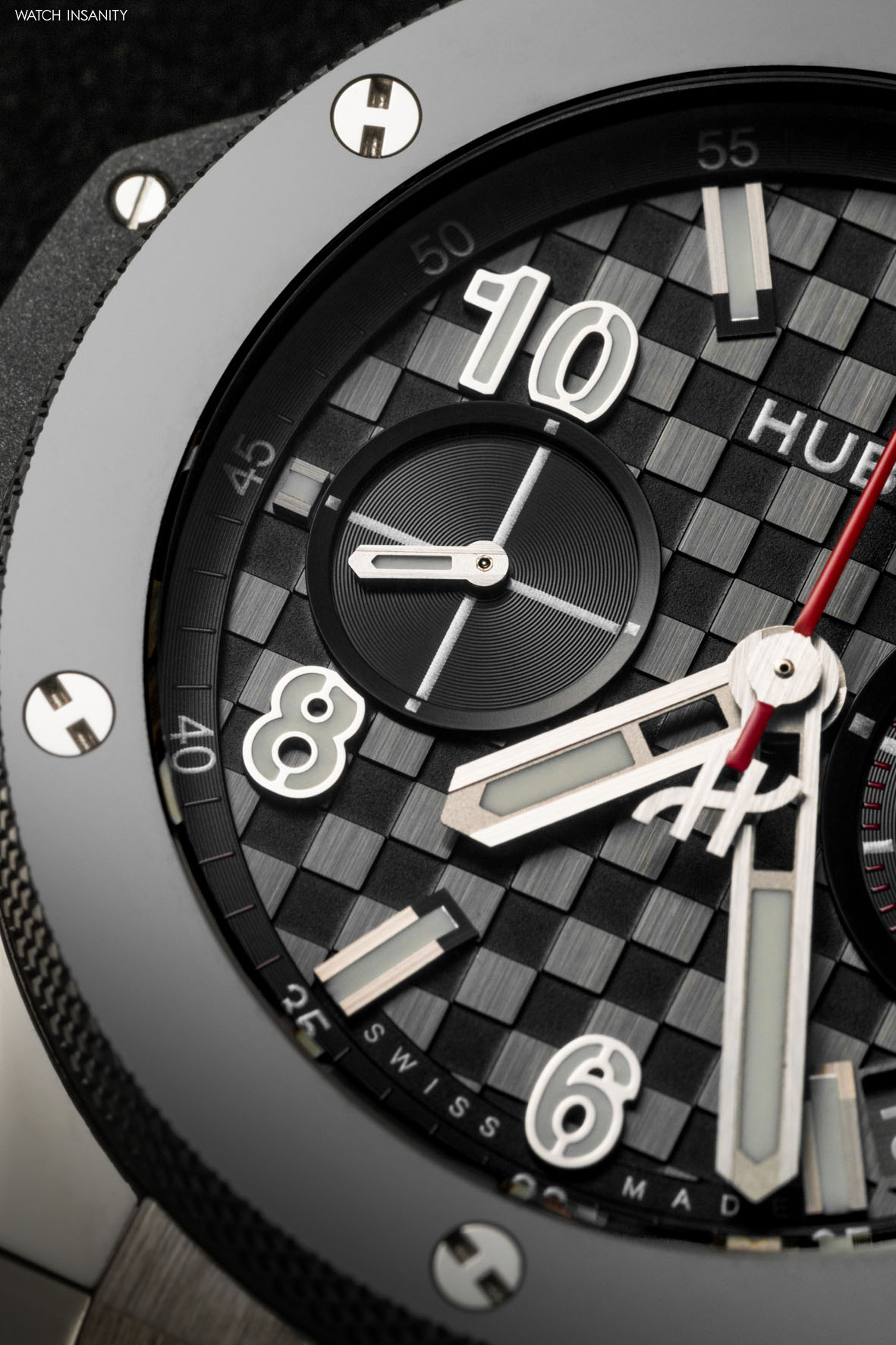
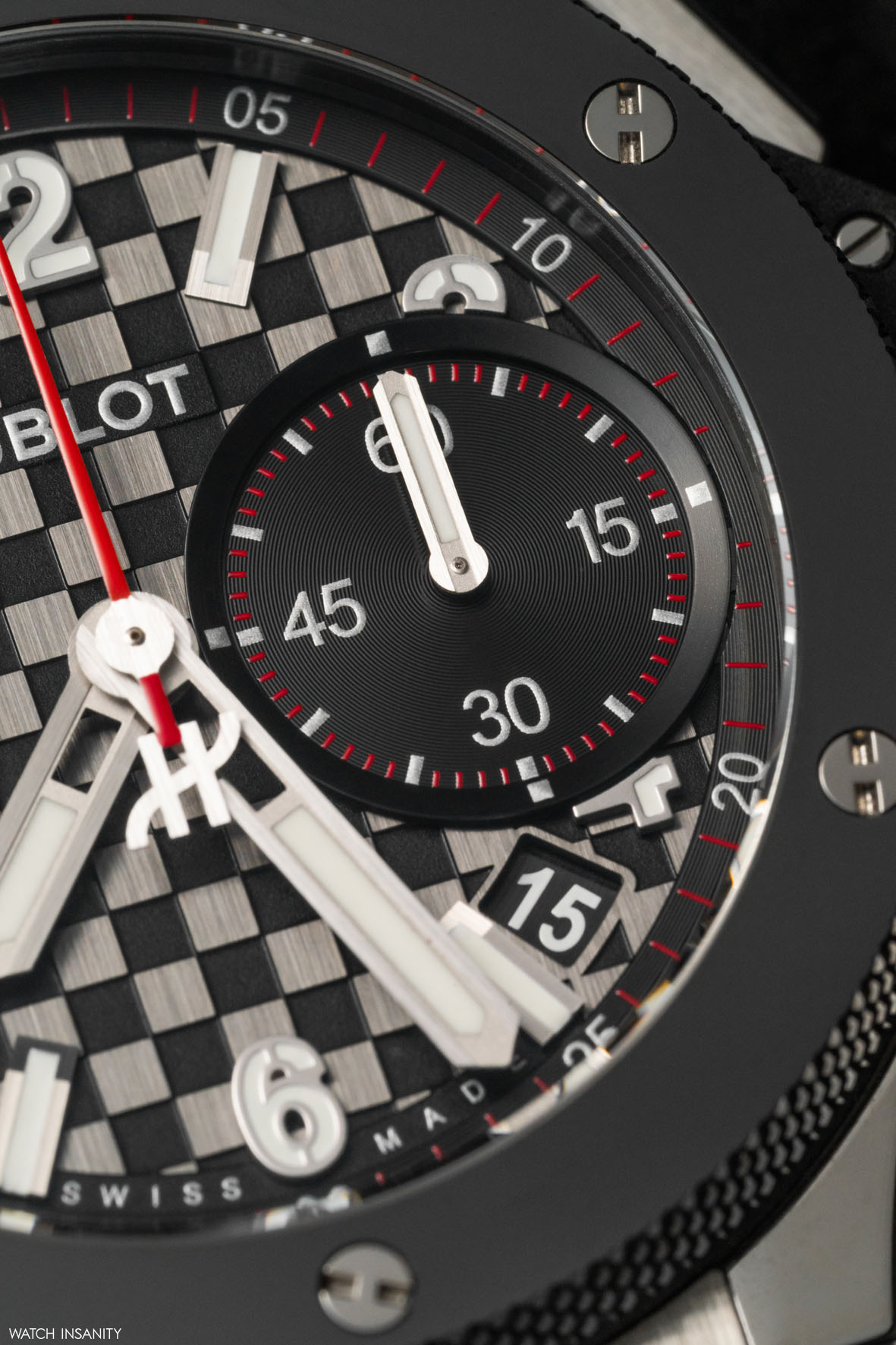
A muovere ulteriormente l’estetica dell’orologio ci sono alcuni misurati tocchi di rosso: la lancetta dei secondi cronografici, con contrappeso a forma di logo Hublot, la minuteria del contatore delle ore e quella periferica del quadrante.
DNA FIRMATO HUBLOT
Per il movimento dei Big Bang 20th Anniversary, Hublot ha scelto di andare sul sicuro con il collaudato calibro MHUB1280, che il marchio ha ribattezzato MHUB1280.20YEARS. L’omaggio ai vent’anni della collezione si esplicita sostanzialmente nella personalizzazione della massa oscillante con la scritta 20 YEARS. Massa oscillante che è in King Gold e che, visibile attraverso il fondello in vetro zaffiro, contrasta con la rodiatura color antracite dei ponti e della platina.
Il calibro MHUB1280.20YEARS è un movimento cronografico di manifattura UNICO, automatico e con funzione flyback e ruota a colonne. Lavora a 28.800 alternanze/ora e ha una riserva di carica di circa 72 ore. È uno dei calibri cronografici più affidabili non solo di Hublot ma, in generale, del settore. Non stupisce quindi che il marchio ne abbia fatto il punto di forza di questa intera, nuova collezione Big Bang.
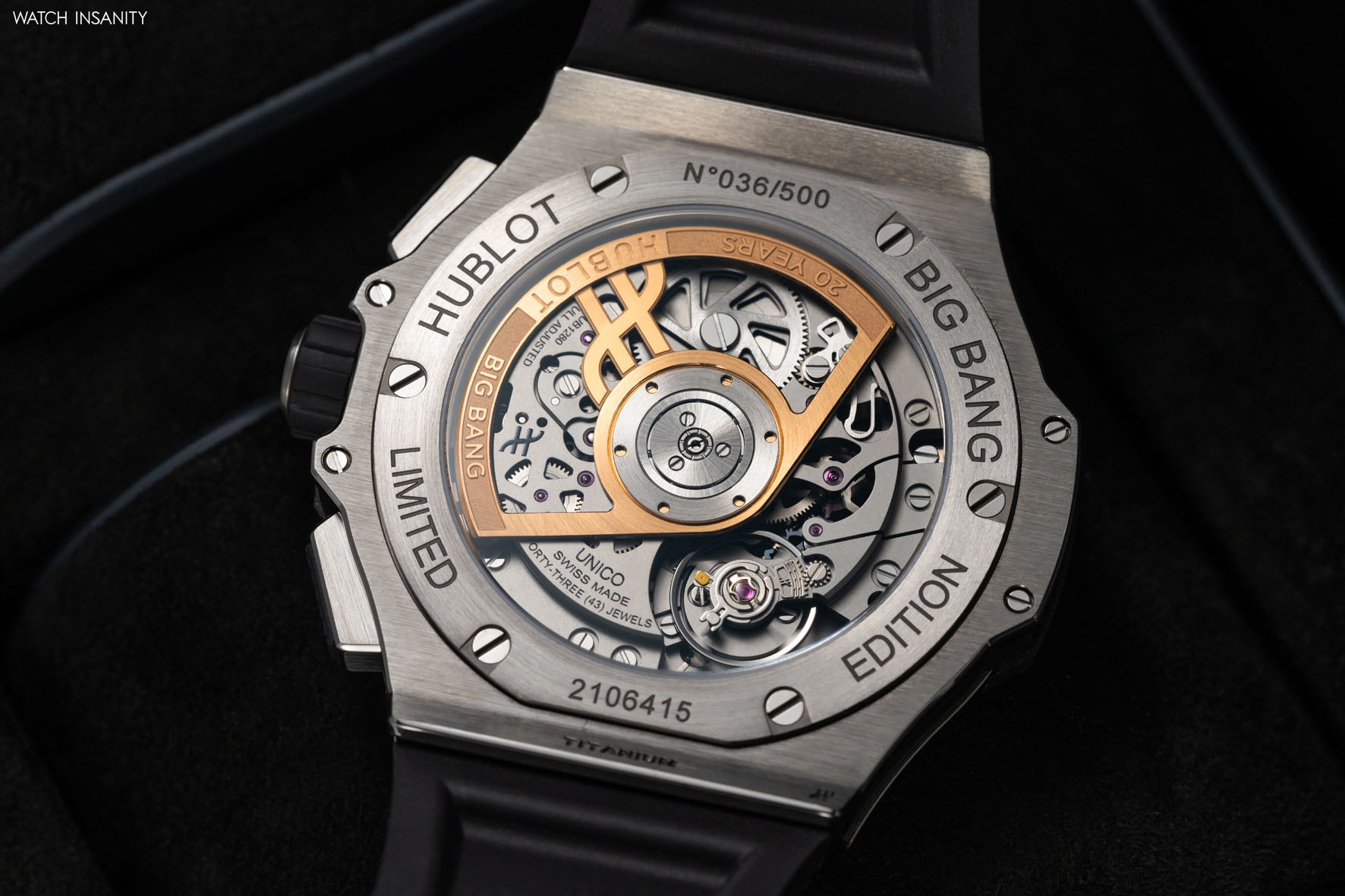
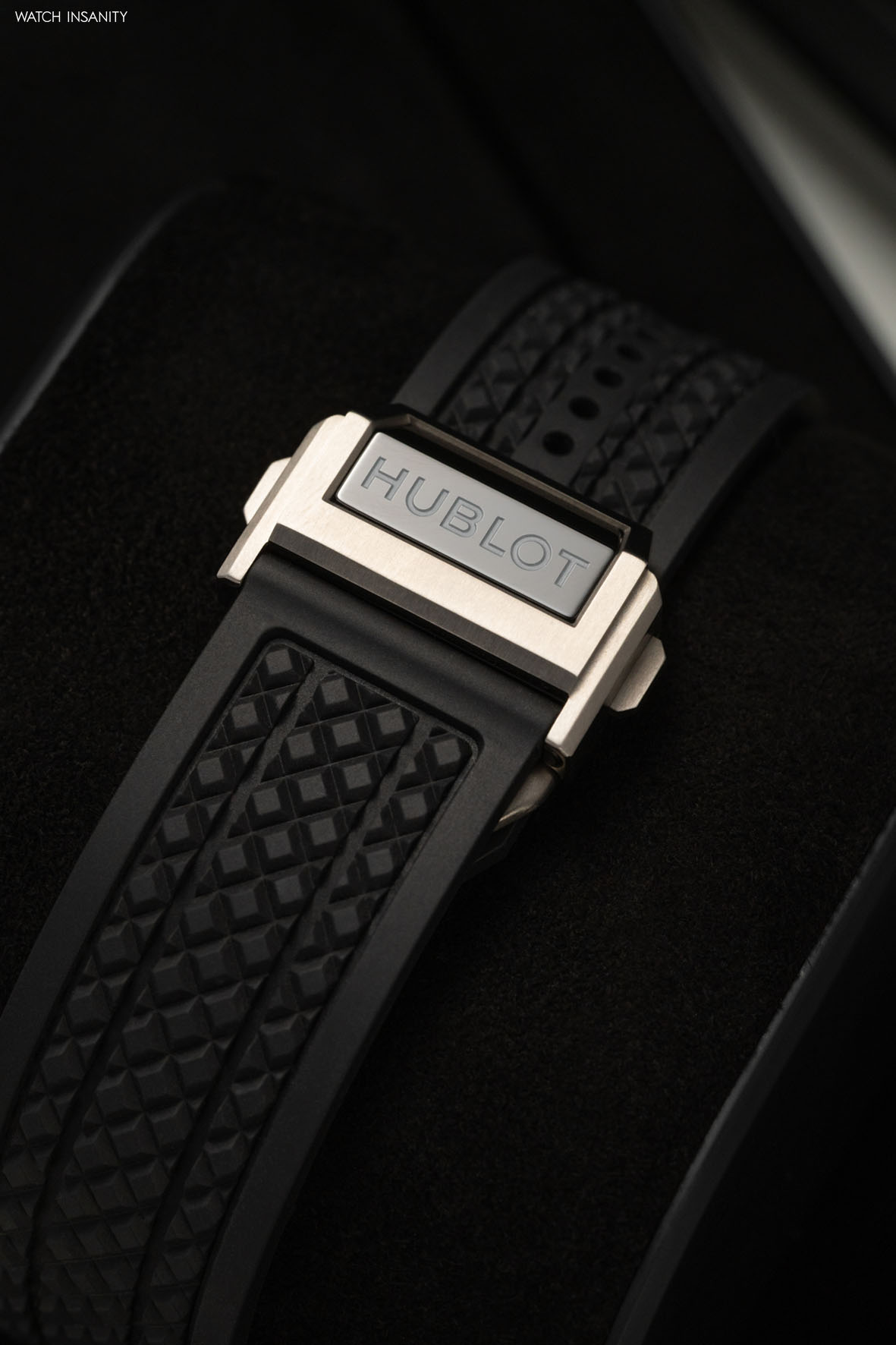
Le anse della cassa sono dotate del sistema proprietario di Hublot One Click, che consente lo sgancio rapido e la sostituzione del cinturino. In questo caso si tratta del classico cinturino strutturato di Hublot, che ha la fibbia in ceramica nera e in titanio, come la cassa. Questo orologio è in edizione limitata di 500 pezzi, a un prezzo di 21.600 euro.
Come scritto all’inizio, ciò che differenzia i cinque Big Bang 20th Anniversary è il materiale della cassa. Oltre a questo, aggiungiamo, anche i numeri dei pezzi delle edizioni limitate. Oltre alla referenza in titanio e ceramica abbiamo quelle in King Gold e ceramica (250 pezzi, 39.900 euro), ceramica rossa Red Ceramic (100 pezzi, 33.000 euro), ceramica nera All Black (500 pezzi, 26.200 euro) e Magic Gold (100 pezzi, 42.200 euro).
Come si vede, con questa rosa di cronografi Hublot ha scelto di mantenere la collezione nel segmento premium, non solo in termini di prezzo ma anche di esclusività e di materiali. Una strategia in linea con lo spirito di una linea che continua a piacere e a ispirare a vent’anni di distanza dalla sua nascita. Se il Big Bang che ha dato origine all’orologeria svizzera è avvenuto diversi secoli fa, quello che ha definitivamente consacrato Hublot è molto più recente. Di sicuro, però, non meno dirompente.
By Davide Passoni