

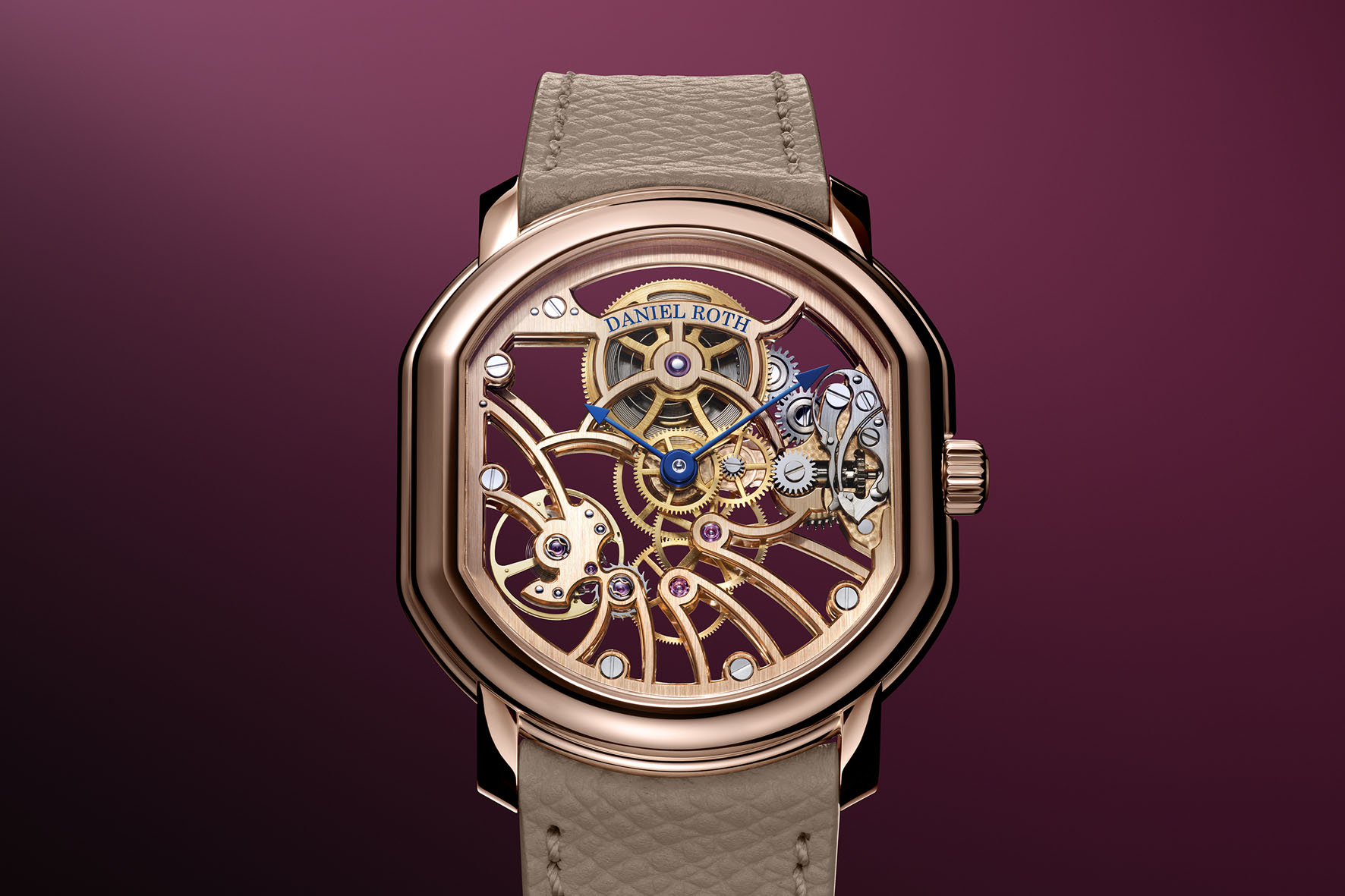
In high watchmaking, skeletonisation is never merely decorative. When approached with integrity, it is a demanding exercise in technical responsibility, one that leaves no decision concealed. Every bridge must justify its presence beyond structure alone, becoming part of a coherent architectural language; every internal angle stands as direct evidence of the watchmaker’s hand and discipline. It is from this uncompromising pursuit of transparency that the Extra Plat Rose Gold Skeleton emerges, marking one of the most articulate statements in the contemporary revival of Daniel Roth. Far from a stylistic variation or a commemorative gesture, the watch represents a clear conceptual evolution: reimagining one of the Maison’s most restrained designs as an expression of mechanical architecture, while preserving its defining proportions, balance, and structural rigour.
DANIEL ROTH: DISCIPLINE, FORM AND INDEPENDENCE
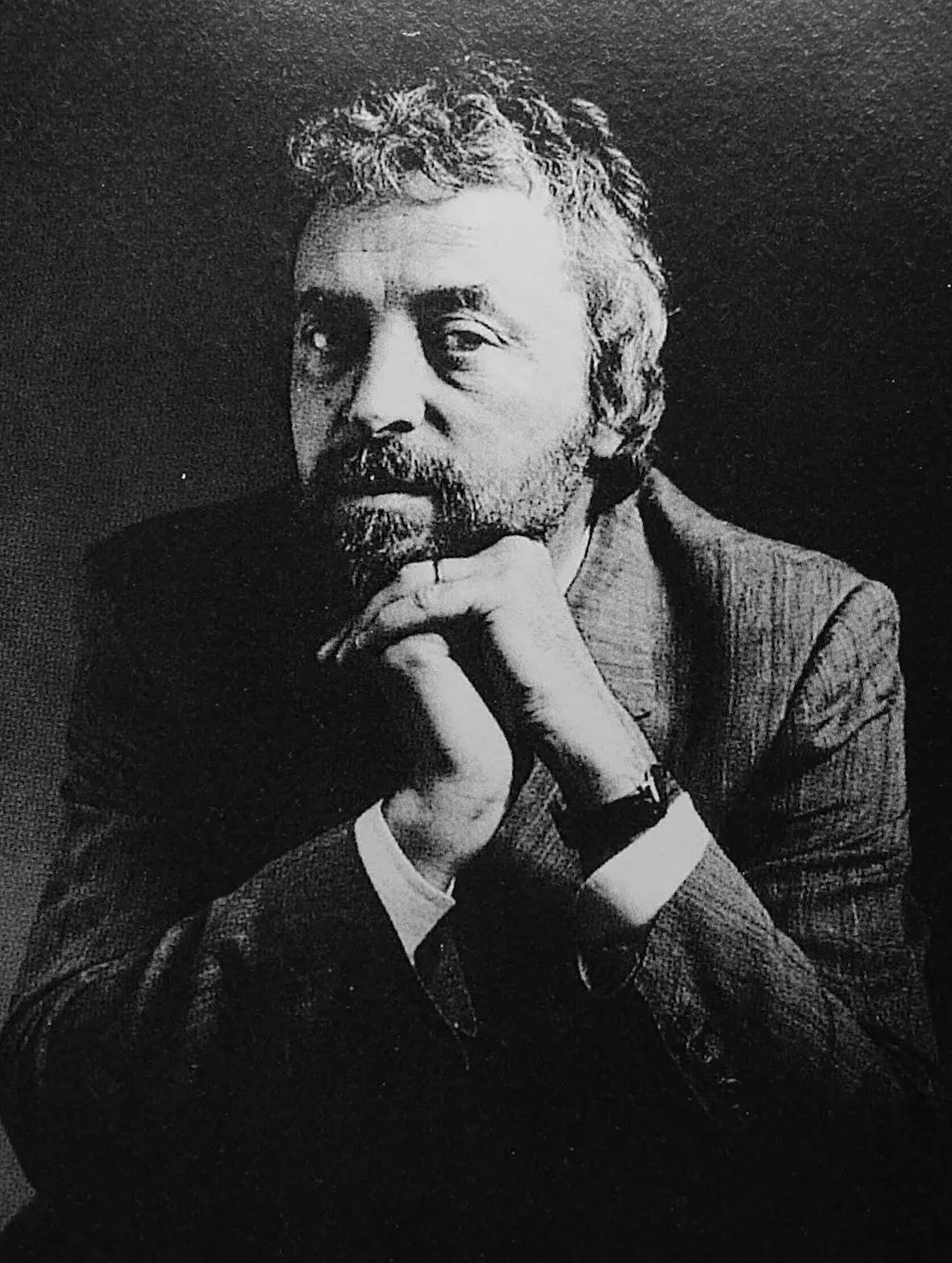
Any meaningful reading of this watch begins with its creator. Daniel Roth was among the defining voices of independent watchmaking from the late 1980s into the early 1990s, at a time when independence carried neither the mythology nor the market-driven prestige it does today. Trained at Audemars Piguet and Breguet, Roth developed an early and highly personal approach to haute horlogerie, one in which mechanical complexity was always governed by legibility, proportion, and an aesthetic stripped of excess. While the tourbillon became a central field for his technical inquiry, it was the double-ellipse case that would emerge as one of the most recognisable design signatures in contemporary watchmaking.
Within this philosophy, the Extra Plat occupies a position of particular importance. Roth described it as a “silent complication”: thinness was never a shortcut, but a demonstration of total control over design, tolerances, and finishing standards. That same vision finds continuity today within an industrial context profoundly different from that of the brand’s early years. The contemporary revival of Daniel Roth now unfolds within the ecosystem of La Fabrique du Temps Louis Vuitton, founded by Michel Navas and Enrico Barbasini and established as one of the most advanced centres of Swiss high watchmaking. This integration does not dilute the Maison’s identity; rather, it expands its expressive potential by providing the technical expertise and artisanal resources necessary to support such a disciplined approach. In the 1990s, a small number of skeletonised Daniel Roth watches were produced in extremely limited quantities, conceived primarily as exercises in technical mastery rather than as fully developed collections. Skeletonisation, however, never evolved into a formal design language within the Extra Plat line, leaving this territory largely unexplored in the brand’s historical output. It is precisely this absence, rather than any established tradition, that provides the conceptual starting point for the new model.
EXTRA PLAT SKELETON: A CONSIDERED CONTINUITY
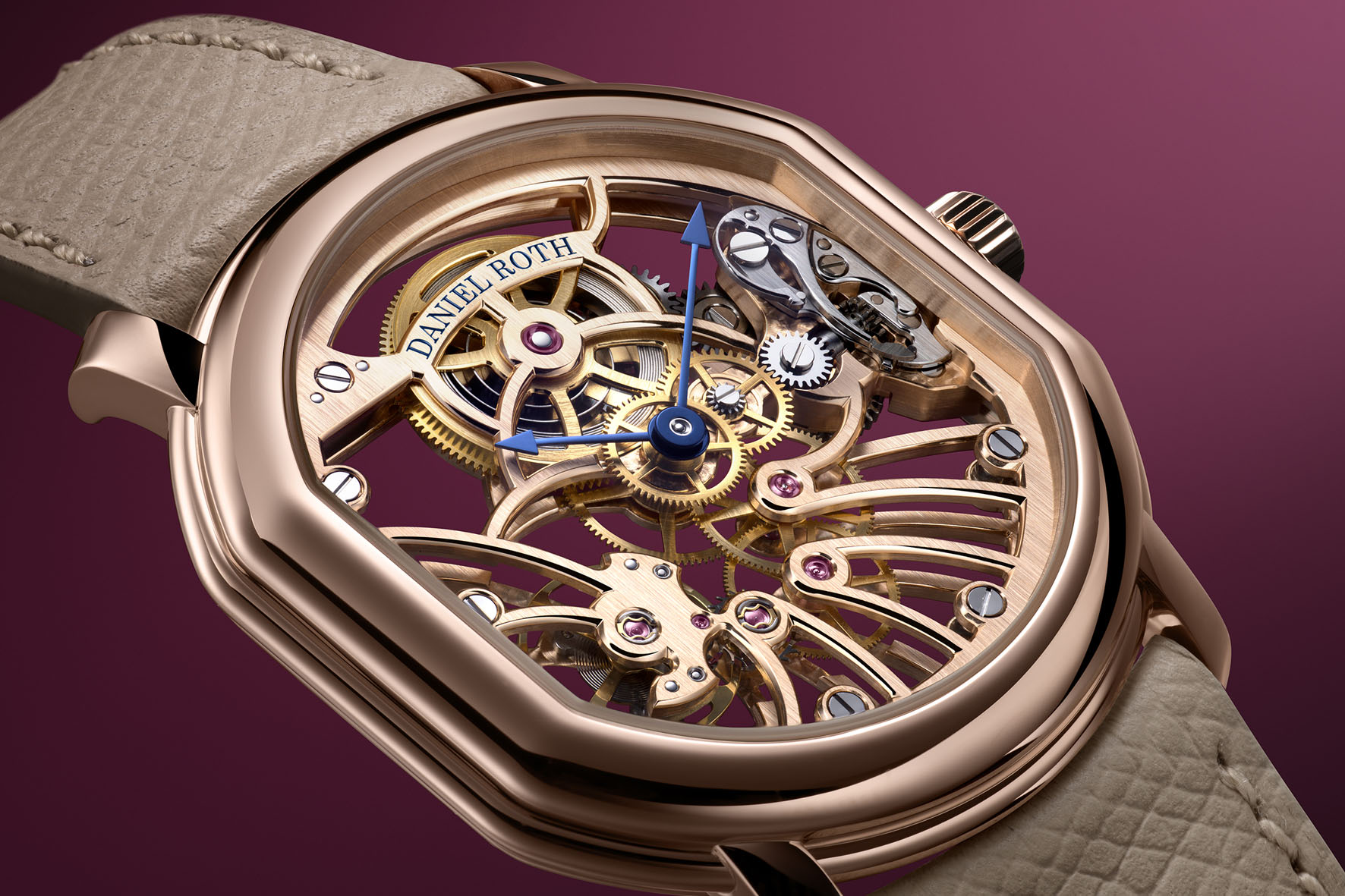
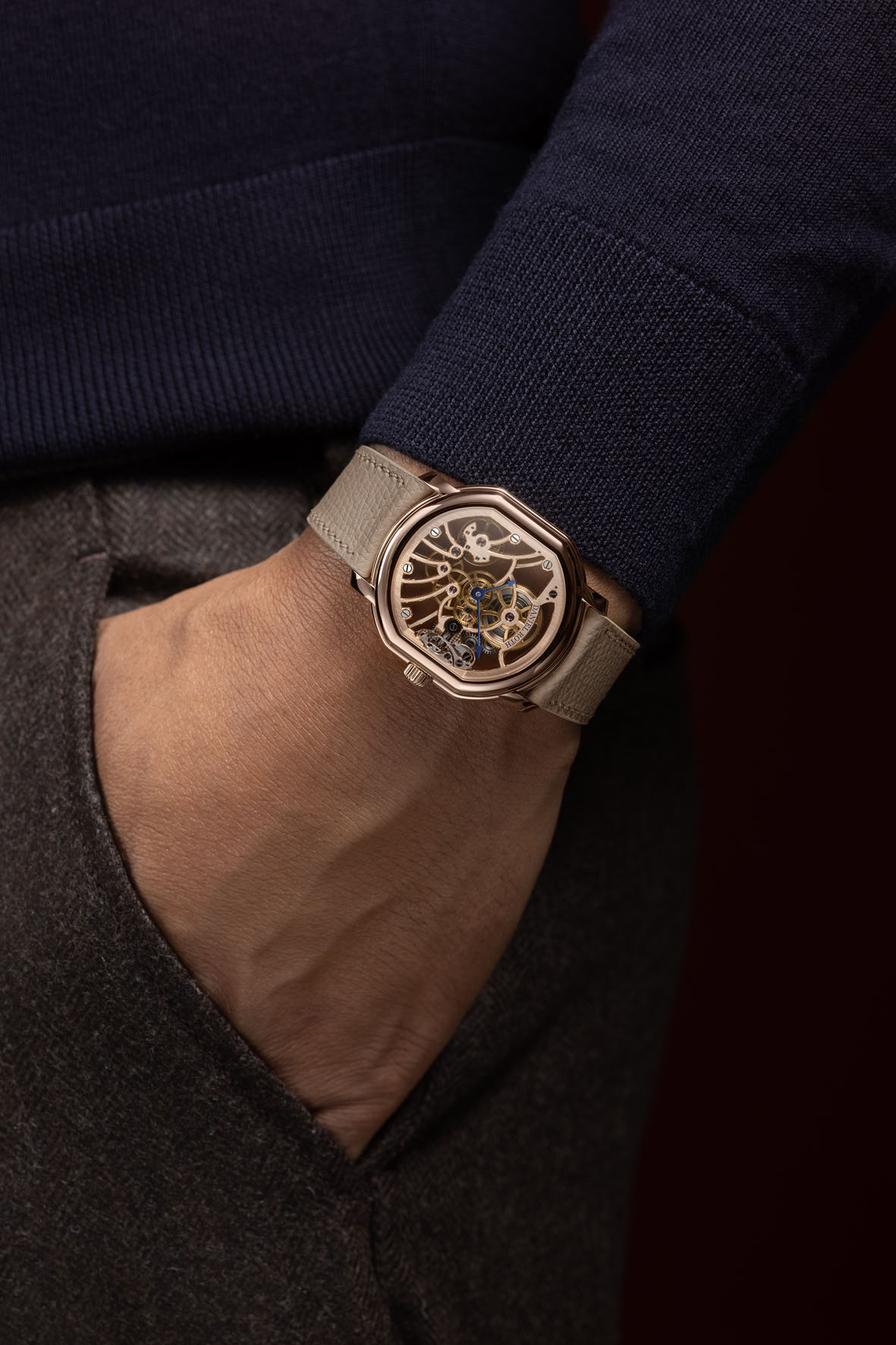
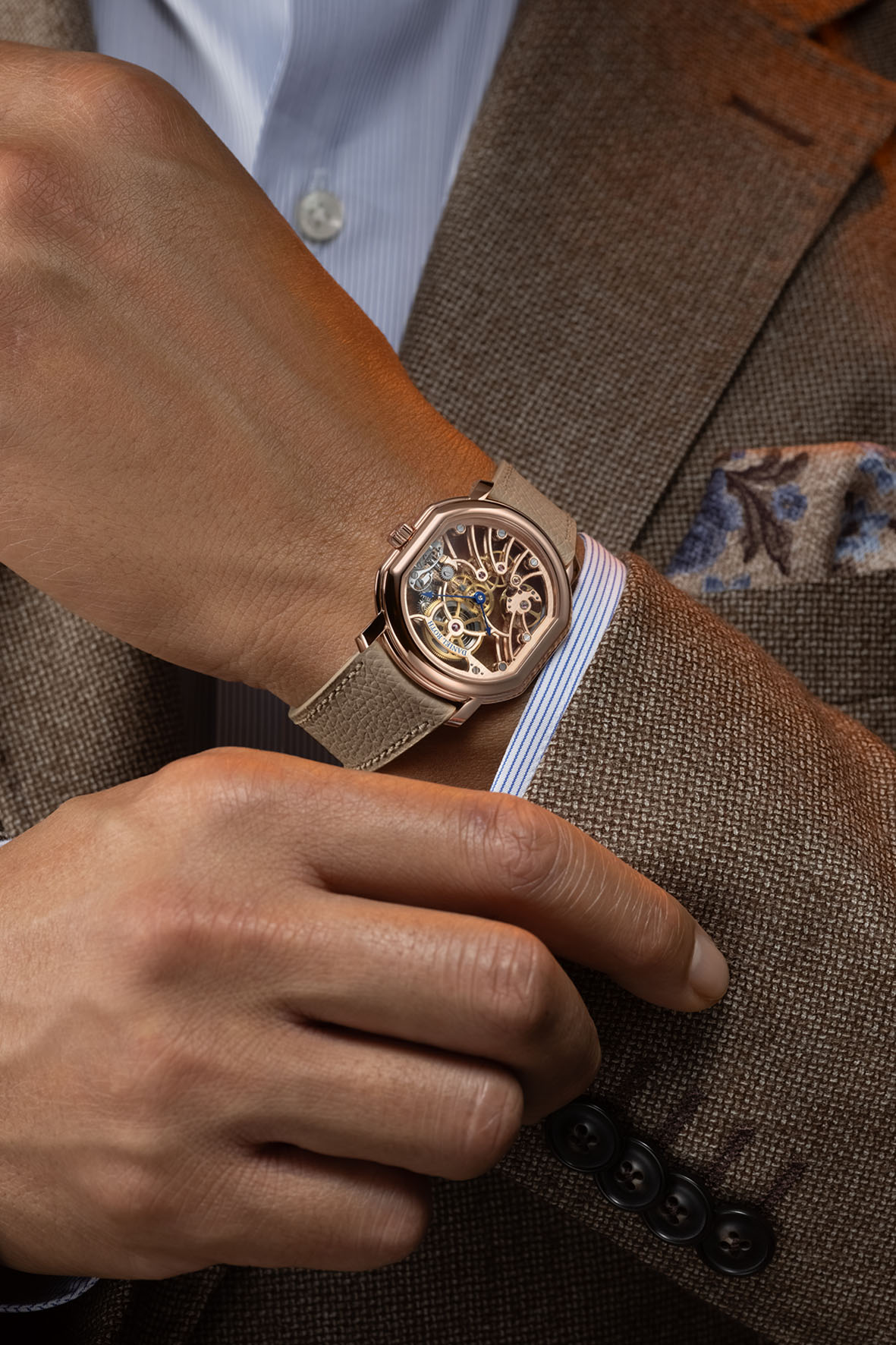
Although skeletonisation appeared sporadically in Daniel Roth’s historical production, it was never applied in a systematic way to the Extra Plat line. This is precisely what lends the current interpretation its significance: not a revival, but an evolution fully aligned with the original spirit of the model. The case retains its iconic double-ellipse geometry, with balanced proportions (38.6 × 35.5 mm) and an overall thickness of just 6.9 mm — an impressive figure given the complexity of the fully visible movement.
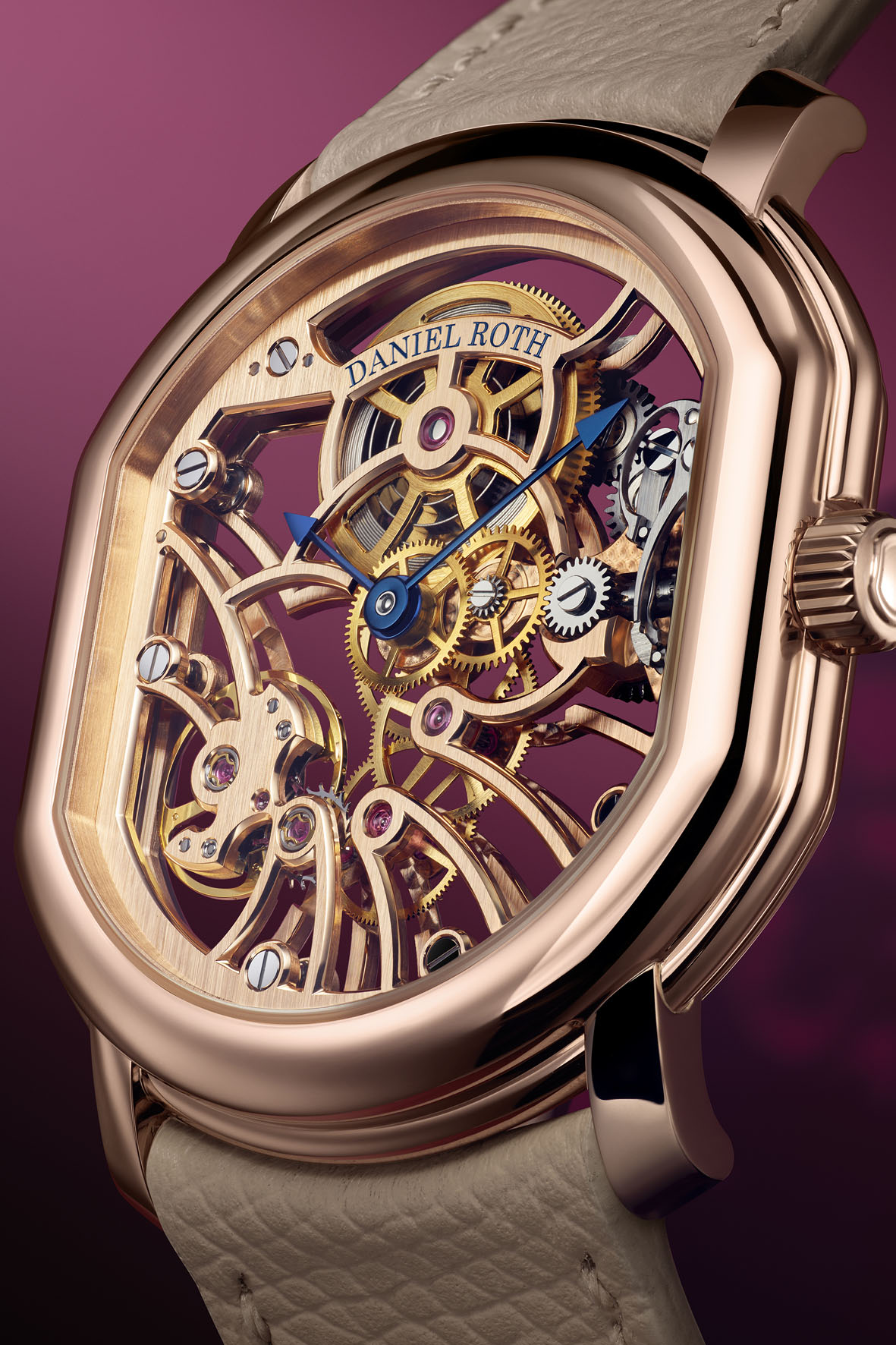
The result is a watch that remains genuinely wearable, far removed from any demonstrative or exhibition-driven intent. Opening the dial does not compromise legibility: blued steel hands stand out clearly against the mechanical backdrop, while the open-bridge construction guides the eye along a rational path, architectural rather than decorative in nature.
DR002SR: THE EXPOSED MECHANICAL ARCHITECTURE OF THE CALIBRE
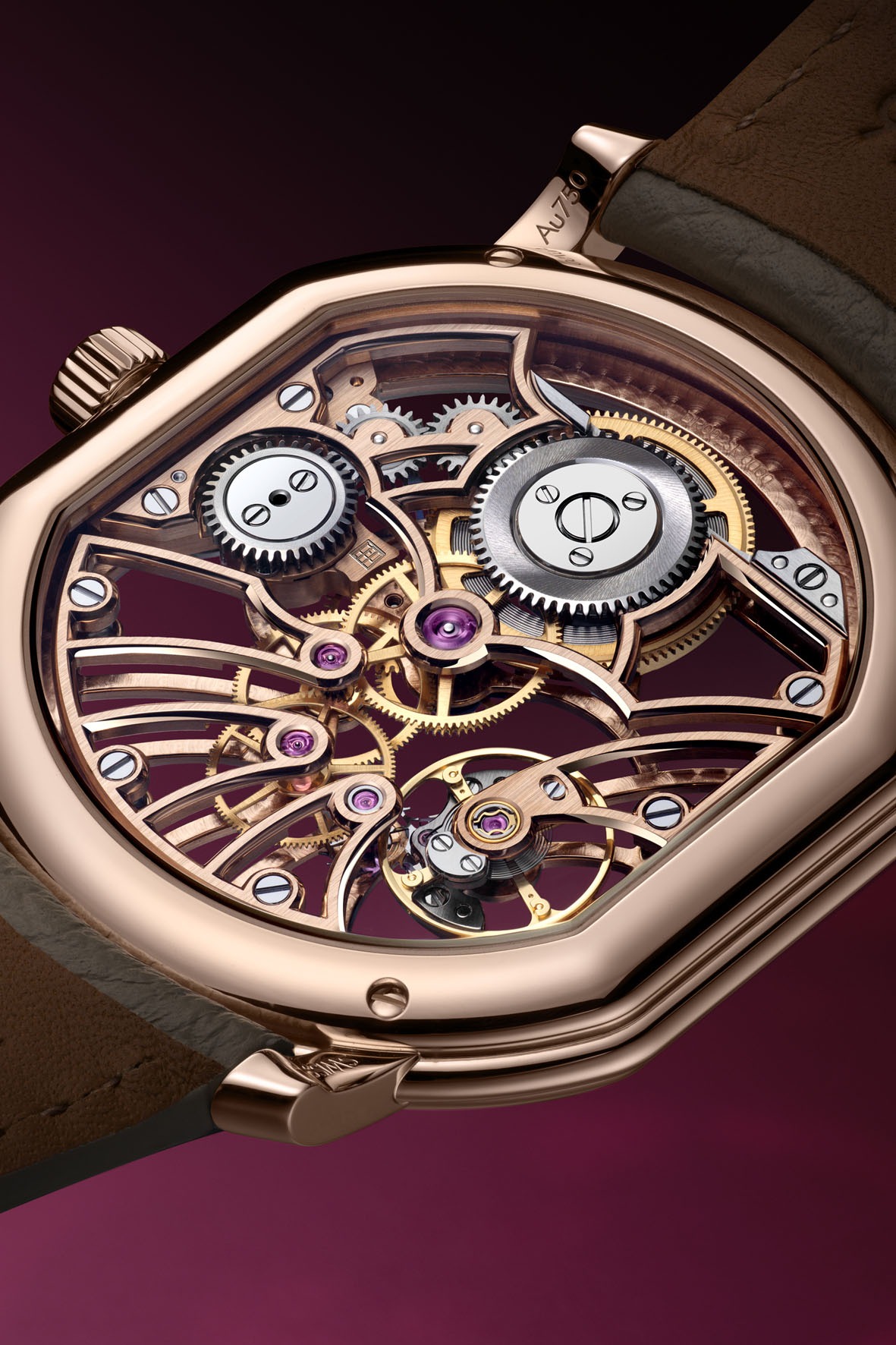
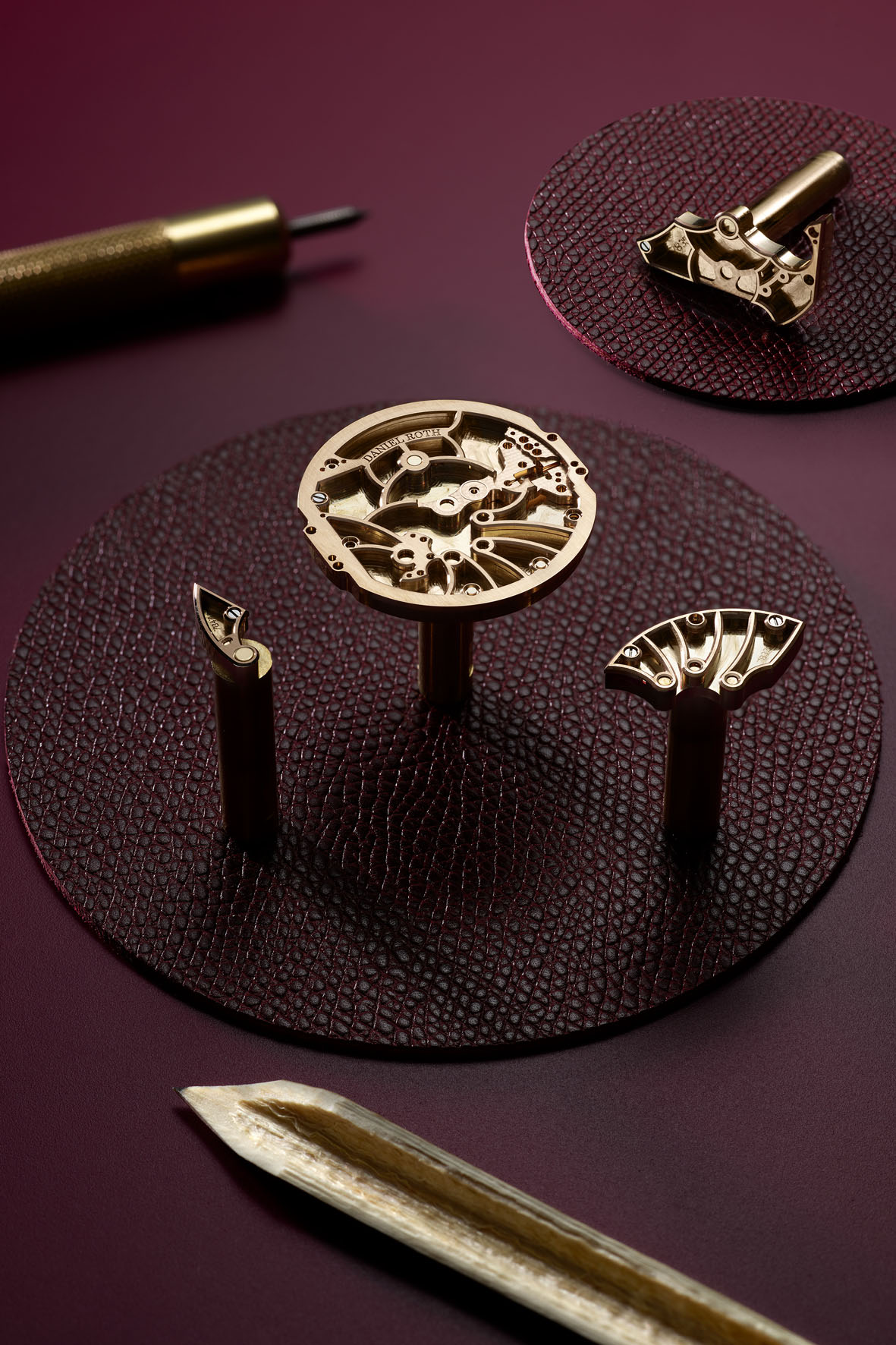
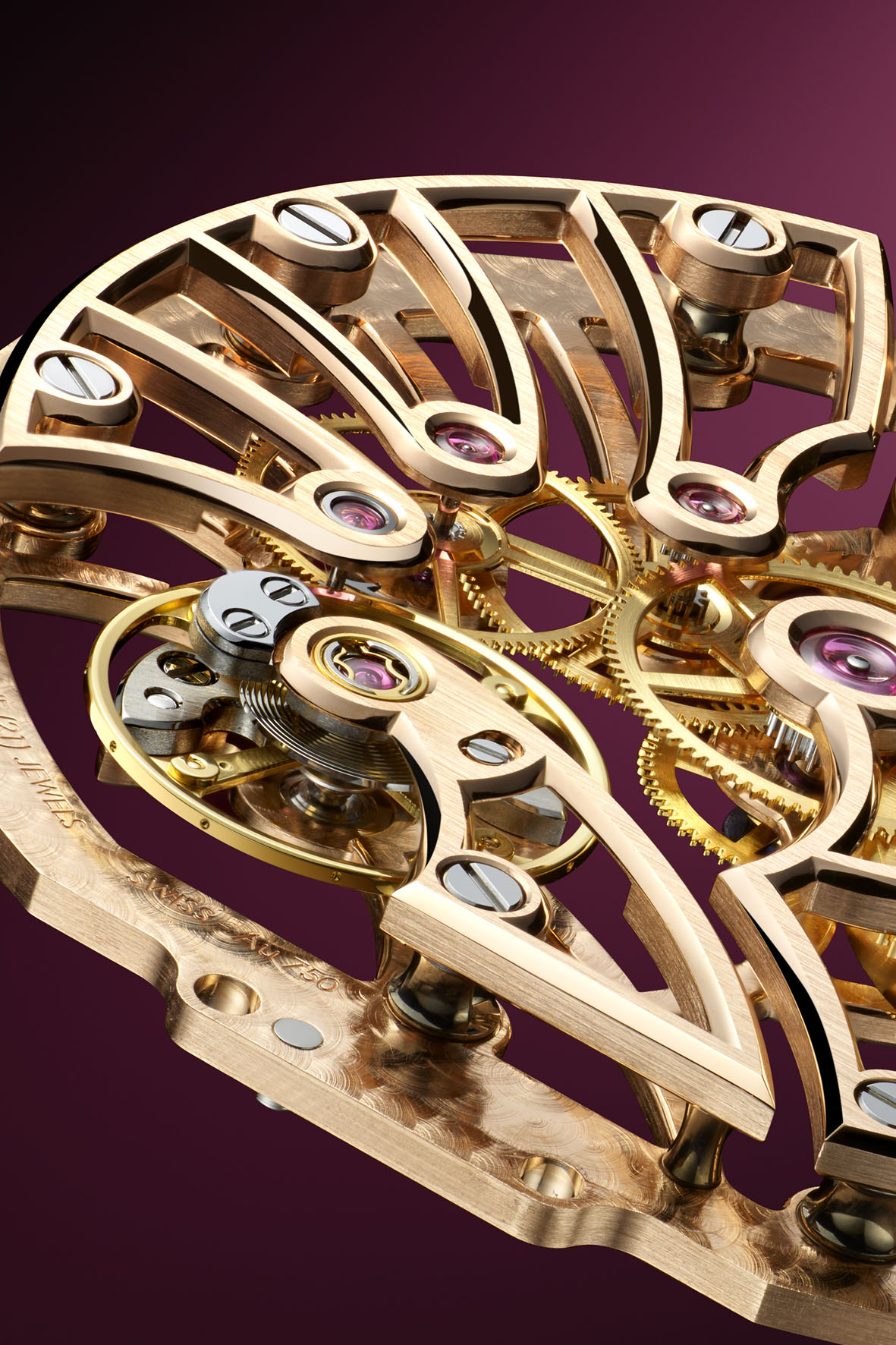
At the core of the Extra Plat Rose Gold Skeleton lies the calibre DR002SR, a manually wound movement developed and assembled at La Fabrique du Temps Louis Vuitton. Derived from the DR002, its architecture has been fundamentally reworked to accommodate skeletonisation without sacrificing structural integrity, following a design approach in which stability, rigidity, and visual clarity are treated as inseparable priorities. Bridges and mainplate are crafted in solid 18k 5N rose gold, a decision driven by both technical and aesthetic considerations. The material allows for exceptionally precise surface treatment, enhancing chamfers, internal angles, and polished finishes, while ensuring chromatic continuity with the case itself. The contrast with black-polished steel components further reinforces the movement’s three-dimensional presence.
From a technical standpoint, the calibre features a free-sprung balance, operates at a frequency of 4 Hz, and delivers a power reserve of 65 hours. What defines the movement, however, is not its technical profile but the coherence of its construction. Even with the bridges extensively opened, the movement never feels fragile or compromised; on the contrary, it conveys a clear sense of structural assurance and purpose. Function remains the guiding principle throughout, shaping every decision despite the movement’s full visual exposure. Such discipline is made possible by the manufacturing culture behind the project. La Fabrique du Temps Louis Vuitton functions not simply as a production site, but as an integrated horological ecosystem, where designers, engineers, and finishers work in continuous dialogue. Within this framework, skeletonisation was never treated as an aesthetic goal in its own right, but as the logical consequence of an architecture conceived from the outset to remain legible, stable, and uncompromisingly finished in every detail.
FINISHING: SKELETONISATION AS A LANGUAGE
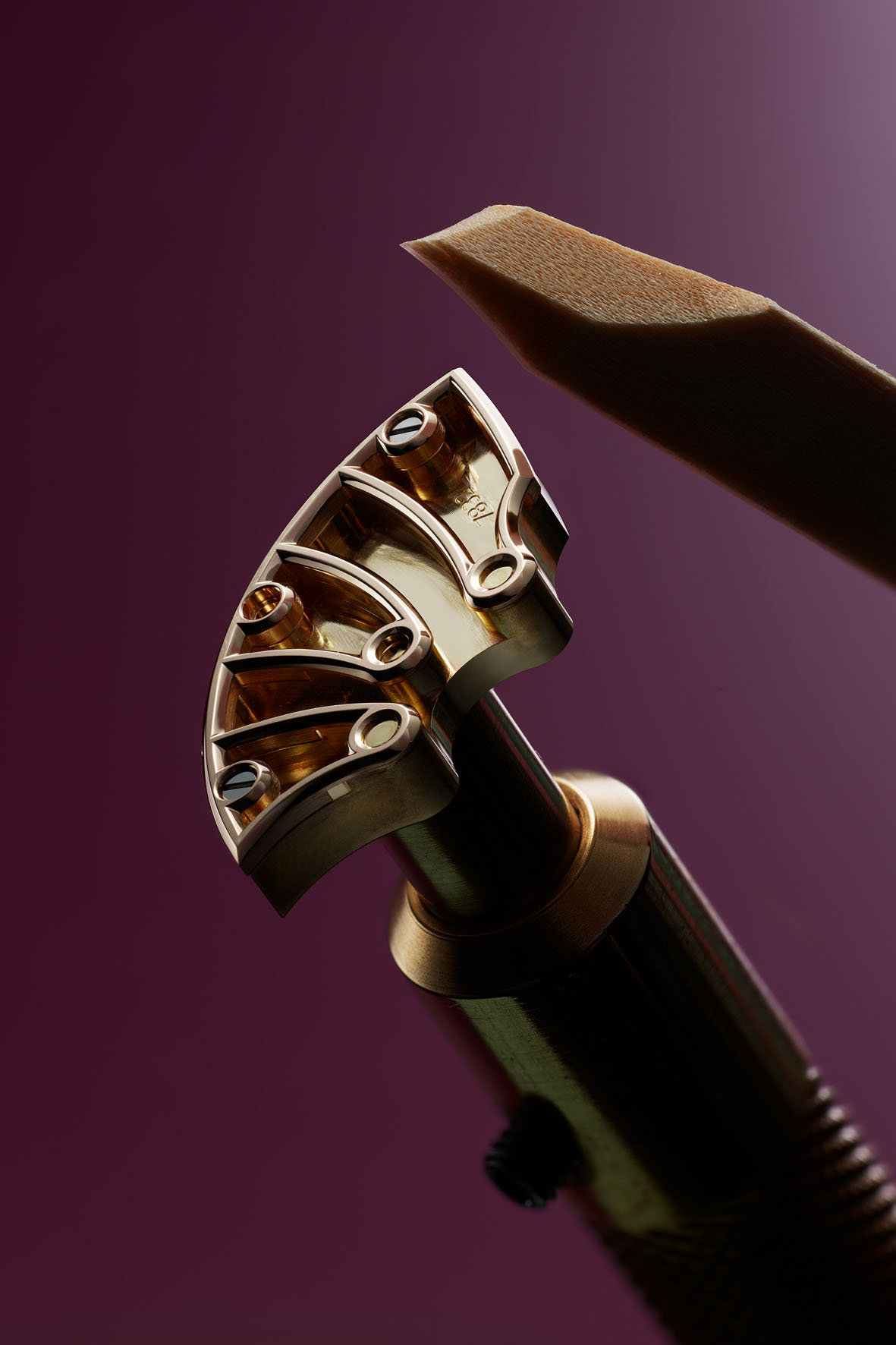
Ultimately, what sets the Extra Plat Rose Gold Skeleton apart is not transparency itself, but the way finishing is used as an expressive tool. Throughout the movement, sharp internal angles — beyond the reach of CNC machining — signal an uncompromising level of handcraft, with every chamfer executed and polished entirely by hand. Skeletonisation is therefore not treated as a visual end in itself. Instead, it exposes the full extent of the artisans’ work: opening the movement multiplies the number of surfaces to be finished, dramatically increasing the amount of manual labour required for each individual watch. For the trained eye, the result is unmistakable. The movement can be examined from virtually any angle without revealing unfinished or compromised areas, a demanding standard that remains exceptional even by contemporary high-watchmaking criteria.

REDEFINING ELEGANCE THROUGH THE EXTRA PLAT
Within the Extra Plat family, which includes six models in total spanning both solid-dial executions and the skeletonised interpretation, the Rose Gold Skeleton occupies a singular position. It is the most conceptually charged expression of the collection. Placed in context, the watch makes its intent immediately clear: skeletonisation is not introduced as ornament, but as a disciplined working method, one that reshapes the entire identity of the Extra Plat.
Produced in small annual quantities and available from January 2026 at a price of CHF 85,000 before taxes, the Extra Plat Rose Gold Skeleton is clearly aimed at collectors who understand restraint not as simplification, but as a higher order of complexity. In doing so, Daniel Roth takes a position that sets it apart from many contemporary approaches to skeletonisation, allowing the complete exposure of the mechanism itself to serve as the ultimate proof of rigour.
By Elisa Copeta