

Bernhard Lederer is undoubtedly one of the most skilled and surprising contemporary master watchmakers. Literally obsessed with the precision of his timepieces, he makes chronometry one of his favourite areas of work. And the beauty of it is that, in addition to being shockingly accurate, the watches that come out of his workshop are aesthetically flawless. As demonstrated by the Central Impulse Chronometer InVerto, protagonist of this article. It is no coincidence that the Swiss brand based between Neuchâtel and Saint-Blaise joined the Pisa 1940 collection last spring, which has exclusive rights for Milan and offers it for sale in the Flagship Store at Via Verri 7. The retailer on Via Verri knows a thing or two about quality, and had no doubts when it came to adding the brand to its portfolio.
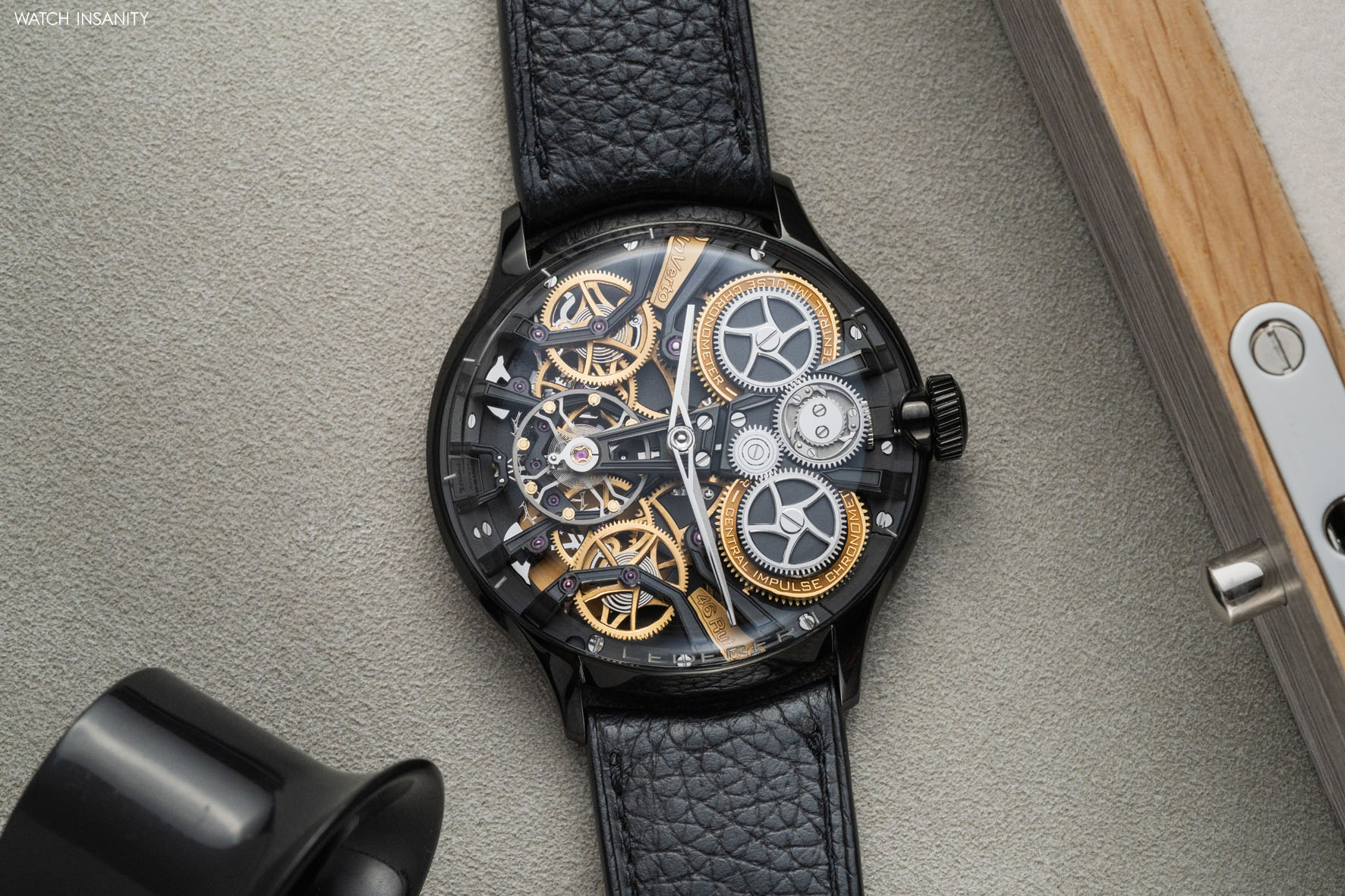
CENTRAL IMPULSE CHRONOMETER INVERTO: THE GENESIS
An obsession with precision, as we said. An obsession that, in 2021, led Bernhard Lederer in the direction of the Central Impulse Chronometer, one of the most interesting technical concepts of recent years. Inspired by George Daniels‘ independent double wheel escapement, Herr Lederer developed a high-performance double wheel escapement driven by two independent gear trains, each with its own barrel and a constant-force remontoir d’égalité. Initially, four versions of the watch were presented: two limited editions in white gold, one in steel, and one in rose gold. The Central Impulse Chronometer InVerto is the evolution of this concept towards the idea of a watch in which mechanical excellence becomes visible.
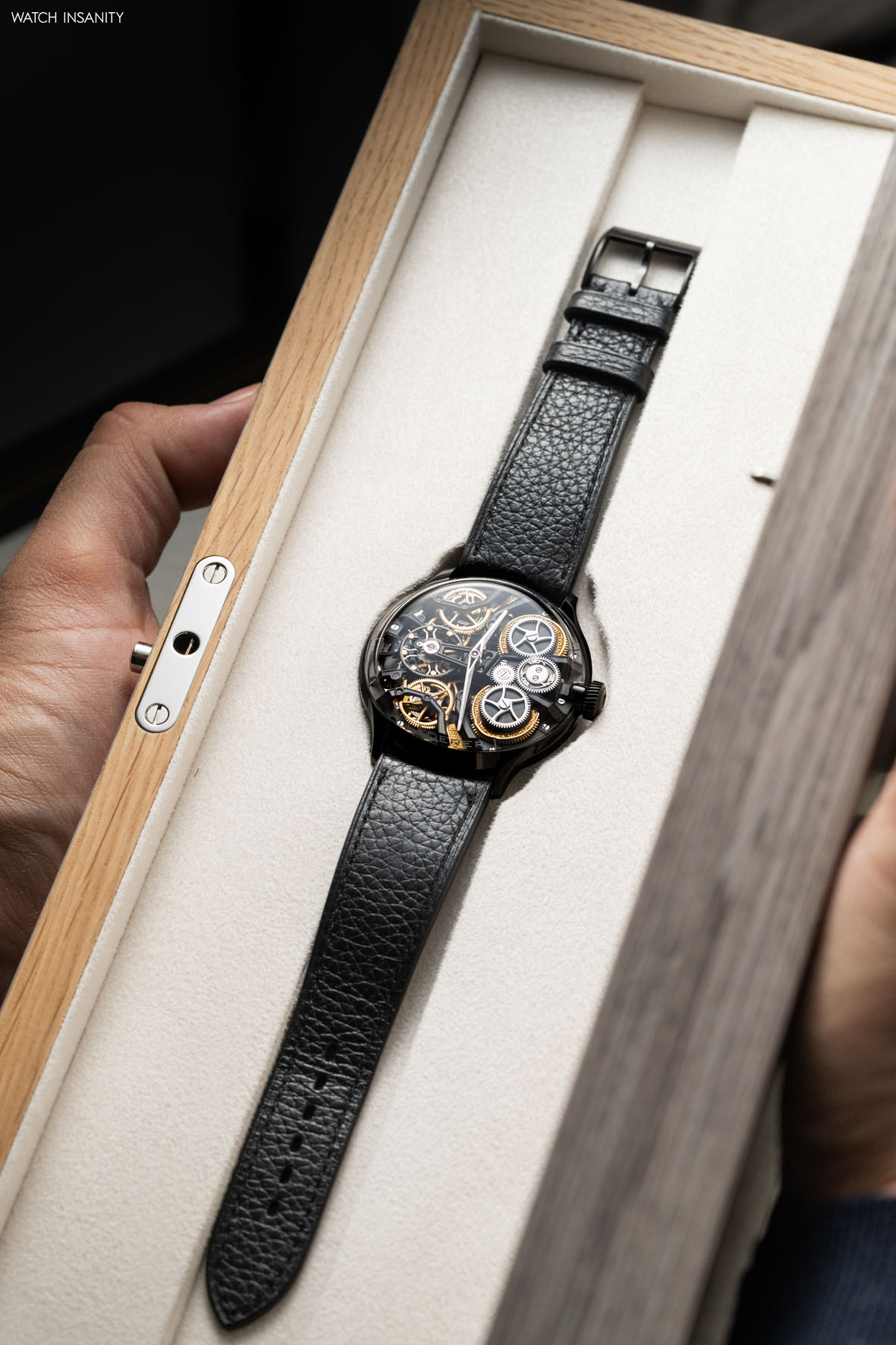
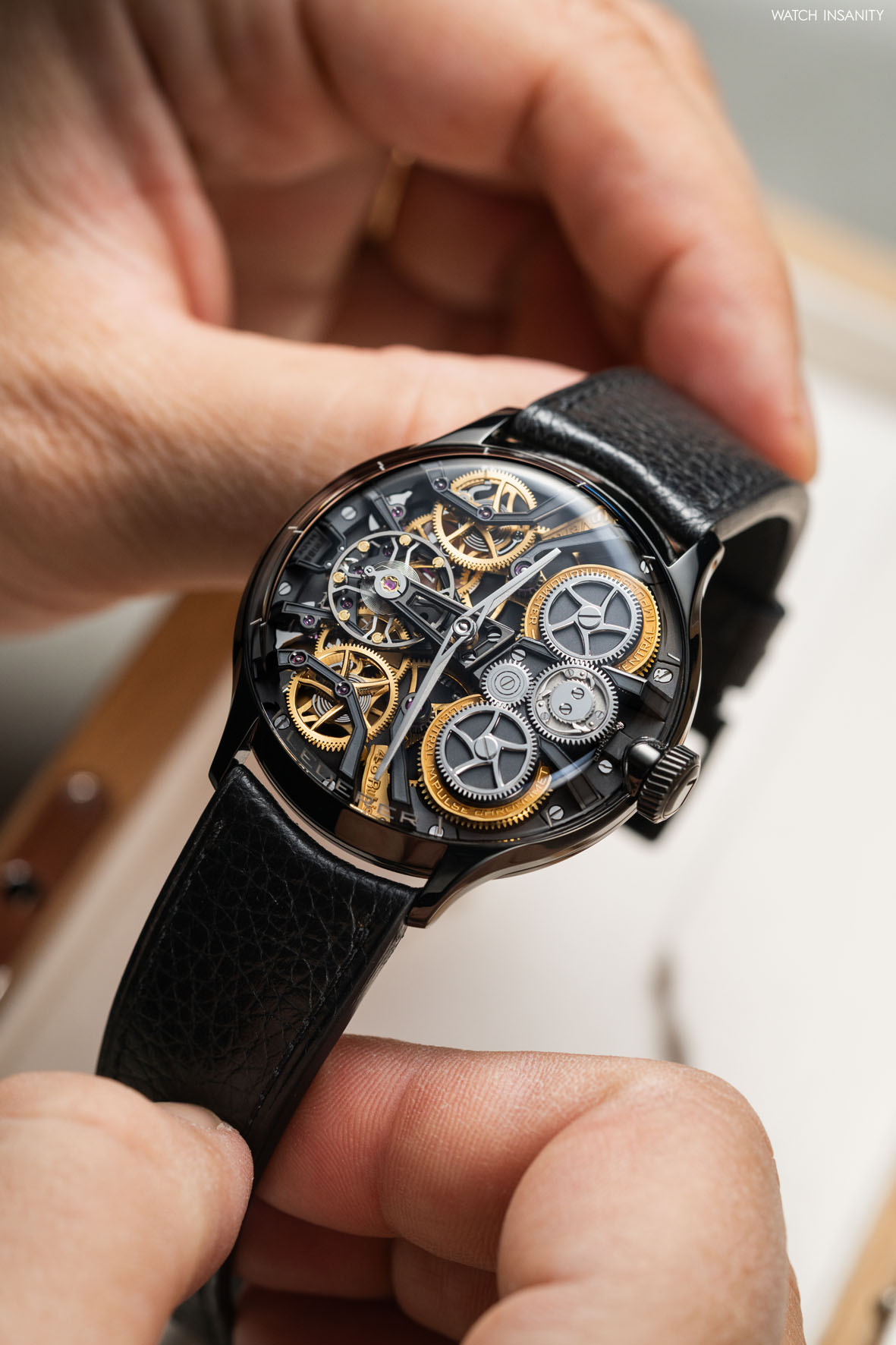
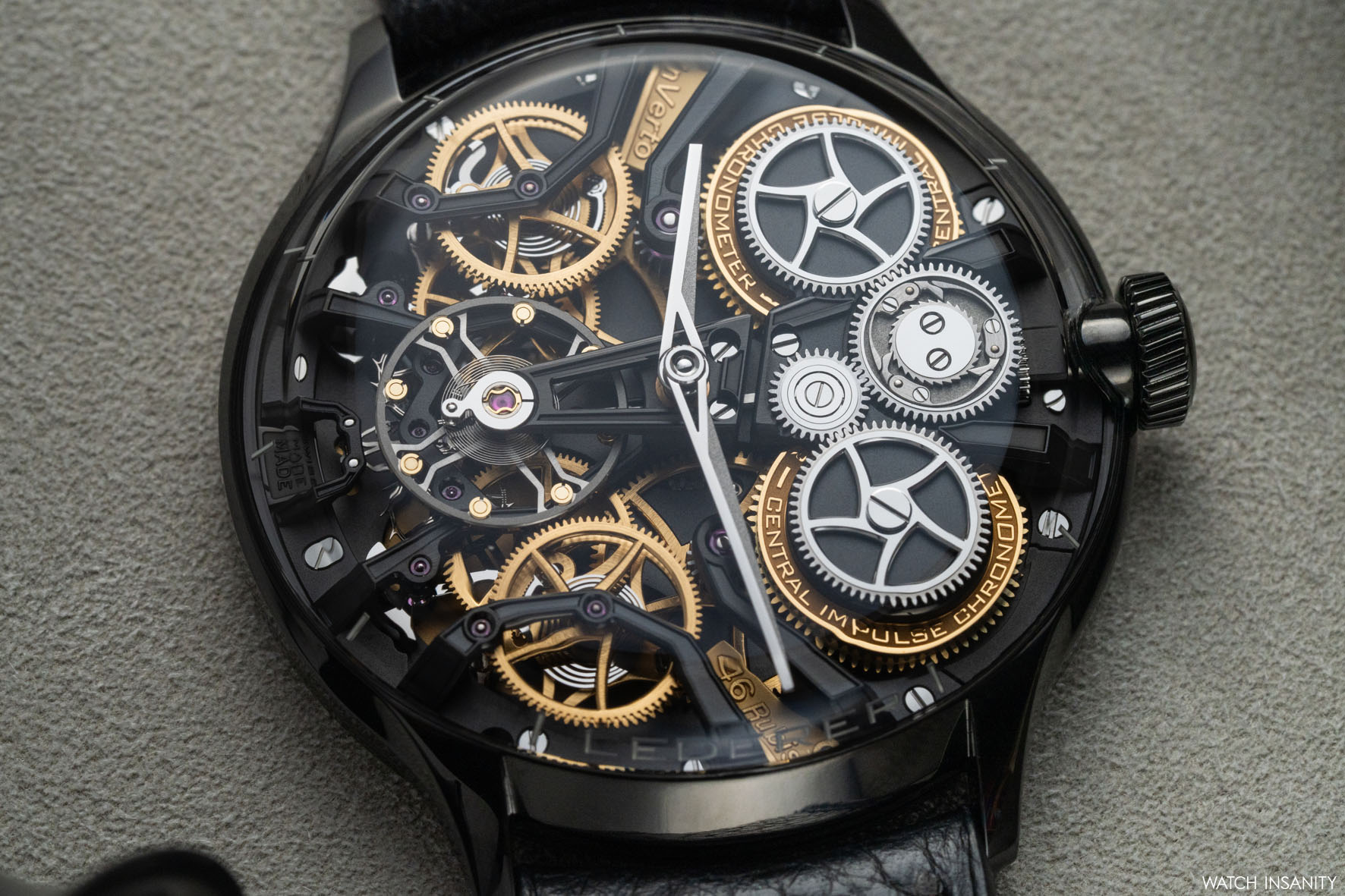
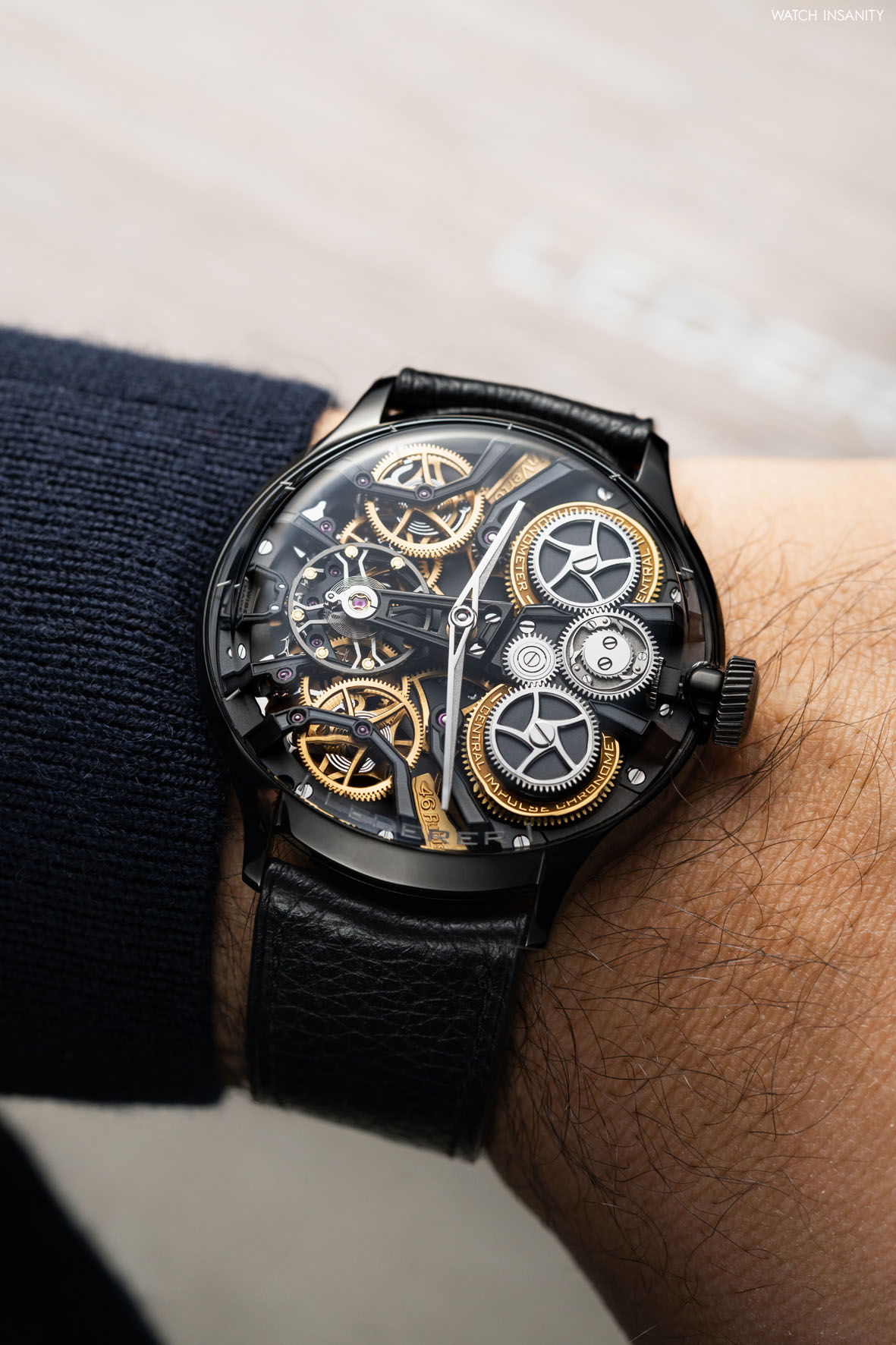
However, this idea is not new, as the design of the Lederer Central Impulse Chronometer InVerto is based on one unique piece originally developed for the Only Watch charity auction in 2023. In the InVerto, in addition to fulfilling its practical function, the Central Impulse Chronometer movement becomes a design element in its own right. The mechanism designed by Lederer takes centre stage, thanks to a domed sapphire crystal that offers a complete view of the calibre’s complexity. The mechanism has been flipped to offer a frontal look from the dial side, allowing a complete view of the ingenuity and architecture of the calibre as the watch is worn.
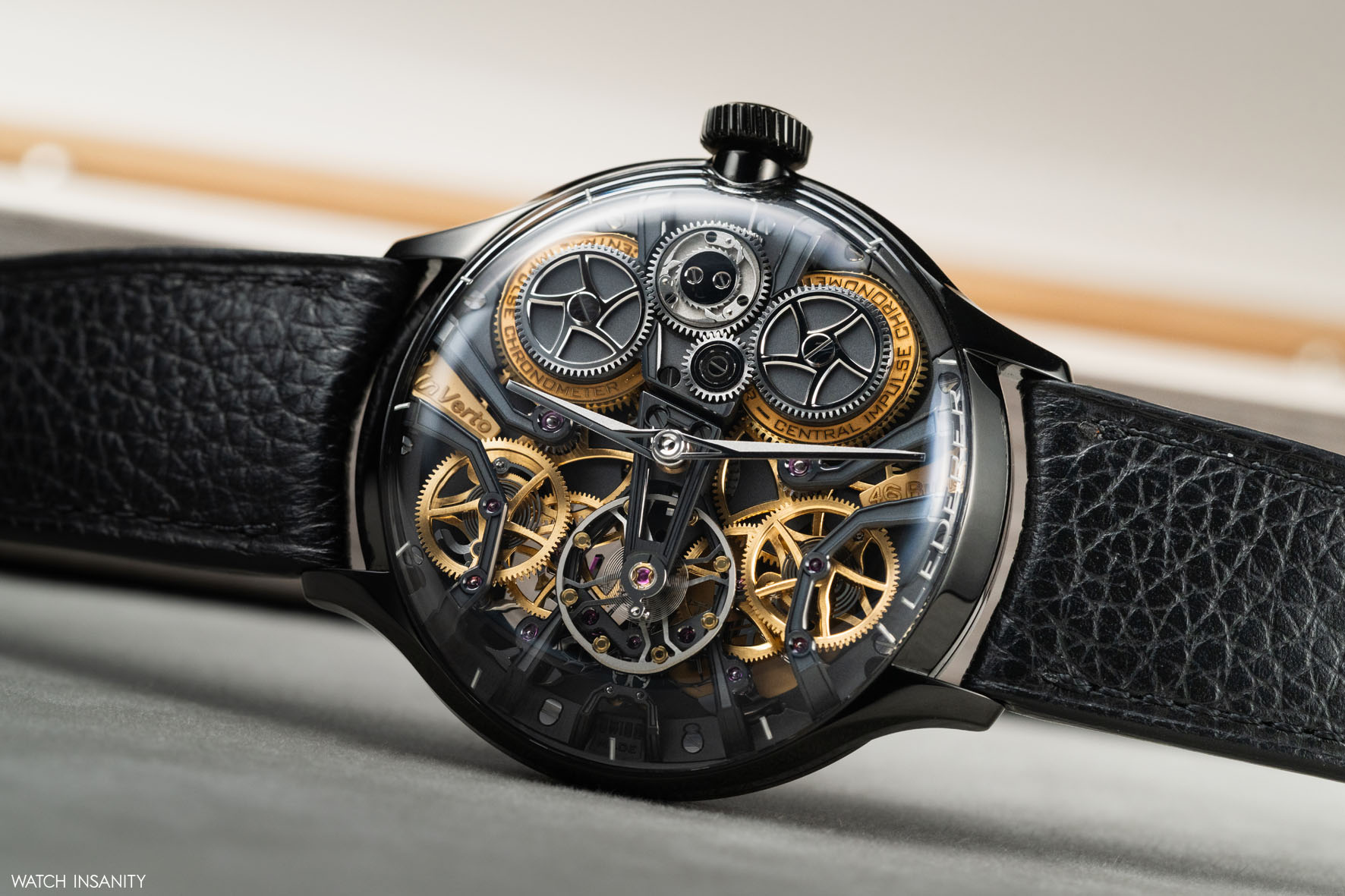
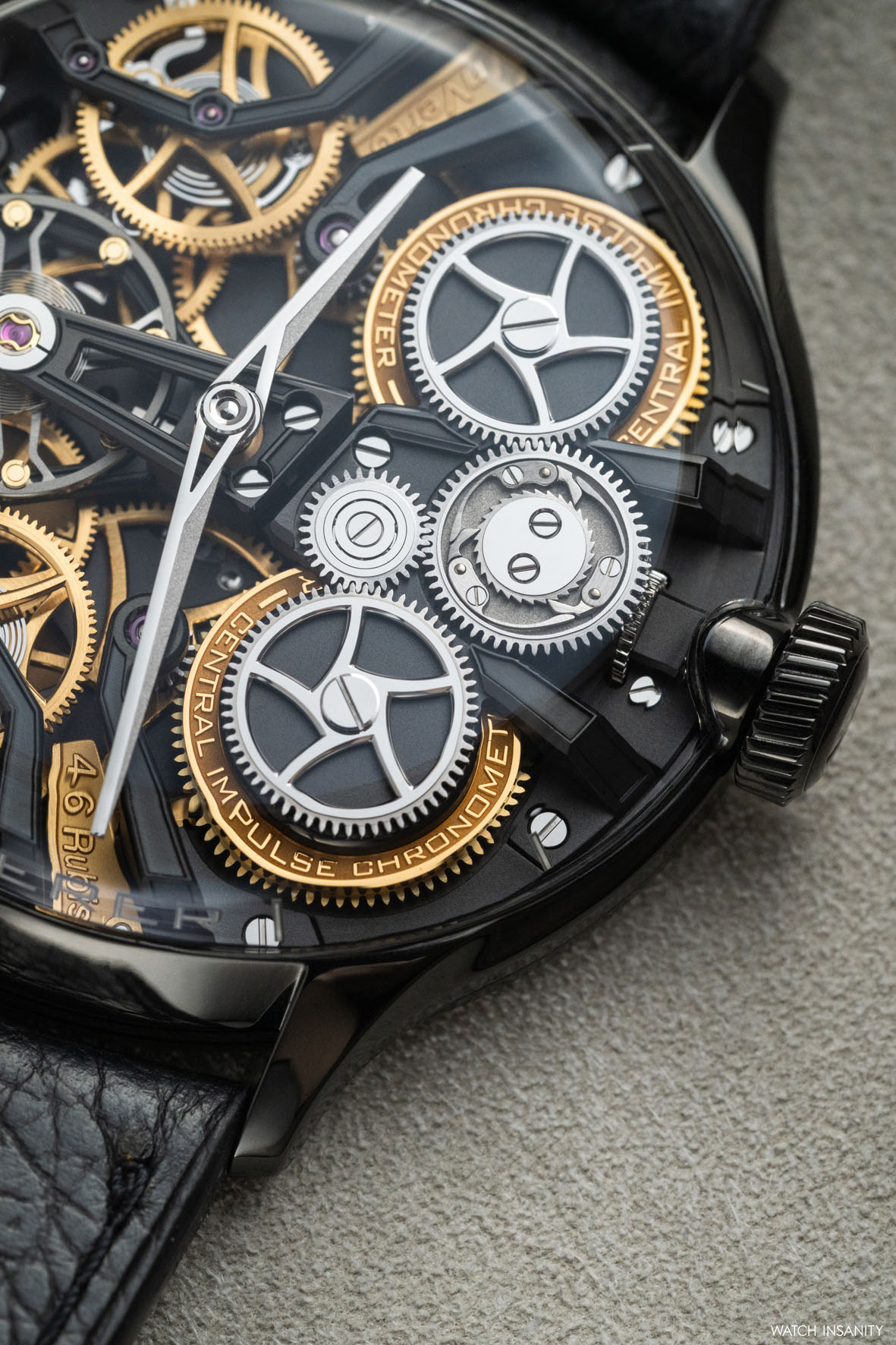
What was traditionally visible on the back is now centre stage on the dial, where the entire mechanism is exposed, with no hidden parts. Its symmetrical architecture exposes the two twin barrels and independent gear trains, each equipped with a 10-second remontoir. The large balance wheels and escapement tick rhythmically at 9 o’clock, enhancing the overall visual appeal of the Central Impulse Chronometer InVerto.
LEDERER AND THE MECHANICS OF THE WATCH
This is aesthetic appeal – but above all mechanical appeal – and responds to an intuition of Bernhard Lederer, who chose to ‘challenge’ the history of watchmaking and mechanics. He started from the consideration that for over 400 years, the escapement has been the focal point of the watchmakers’ quest for precision and fluidity. With the Central Impulse Chronometer InVerto, Lederer chose to go beyond the Swiss lever escapement, which dominates modern mechanical watches, to follow Breguet’s intuition and focus on a bidirectional tooth escapement, convinced of its superior efficiency.
With the tooth escapement, the impulse is transferred as directly as possible from the escape wheel to the balance wheel. For his pocket watches, Breguet had devised a double escapement wheel system that worked alternately, connected by a pair of additional wheels that, however, consumed a lot of energy. Breguet’s innovation, known as Échappement Naturel, was taken up by George Daniels for some pocket watches, in particular the Space Traveller I and Space Traveller II.
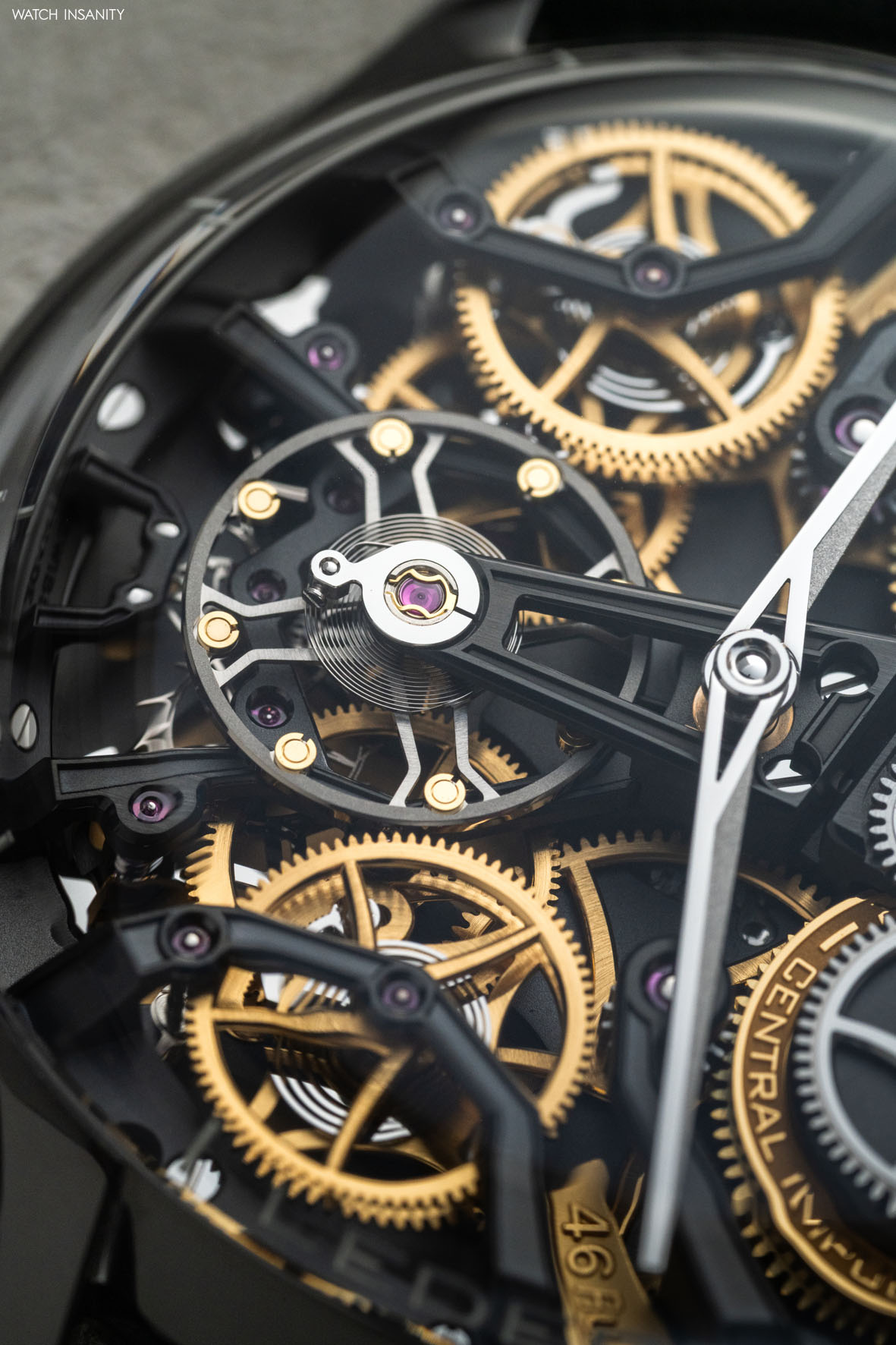
Daniels’ escapement, which operated at a low frequency (2 Hz) and required the watch to be rotated to start the movement, was ideal for pocket watches but not for wristwatches. Bernhard Lederer, on the other hand, wanted to get there, to the wrist. He began by increasing the frequency of the escapement to 3 Hz, thanks to a solution in which the geometry of the escapement wheels ensures optimal chronometric performance in everyday use.
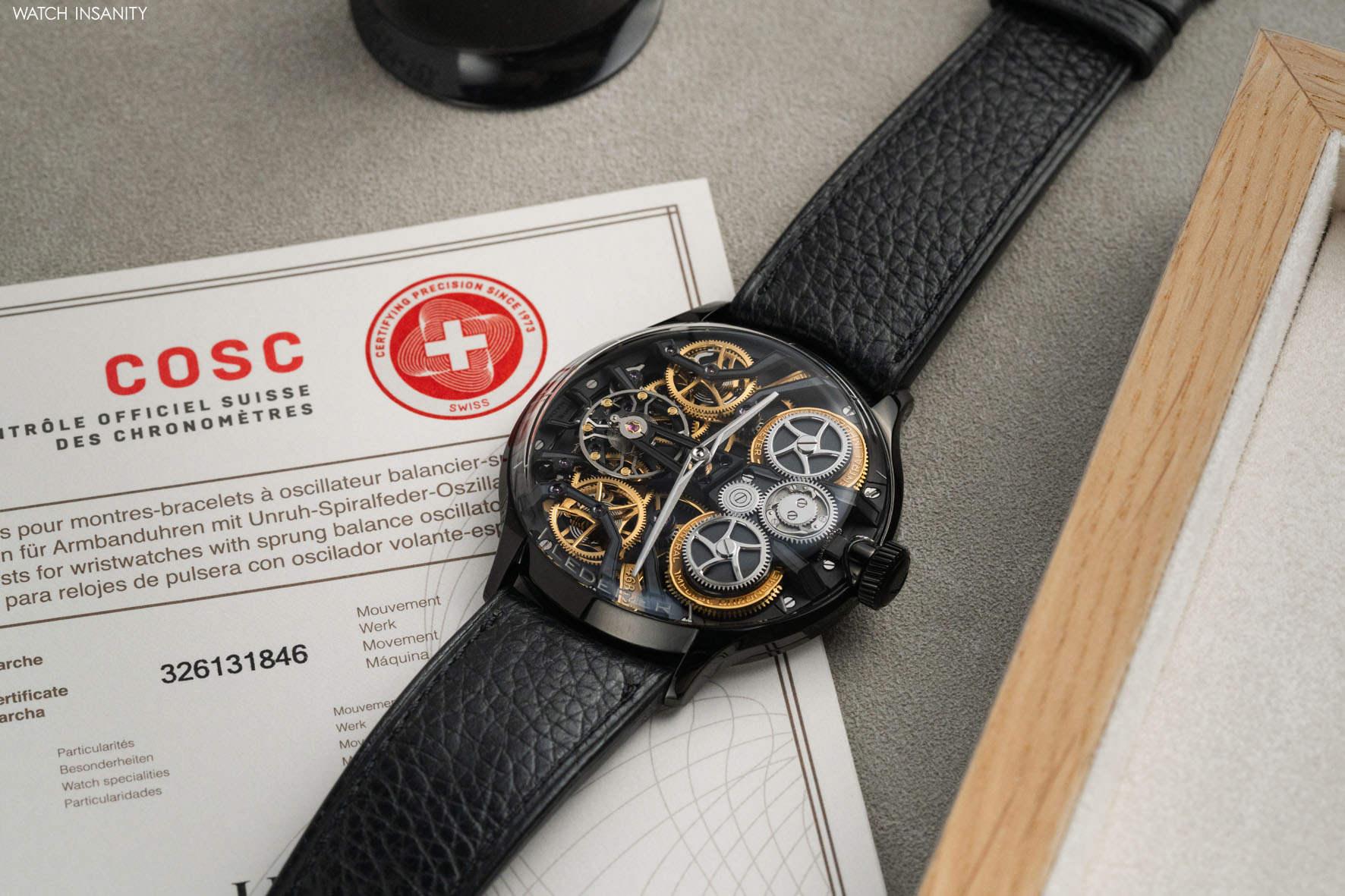
Essentially, Lederer’s patented invention positions the transmission of the impulse to the balance wheel along a central line (hence the name Central Impulse Chronometer) and combines the escapement with a constant-force remontoir d’égalité. This system stores energy before the escapement, ensuring its constant release. The Central Impulse Chronometer is equipped with two remontoirs of this type, each with its own gear and barrel. The combination of two remontoirs with the escapement is an absolute novelty in watchmaking and guarantees remarkable chronometric precision and exceptional frequency stability. The impeccable nature of this precision is certified by the Besançon Observatory and the COSC. This is recognition of the mastery of Bernhard Lederer and the work of the more than 25 highly skilled watchmakers who work with him in his workshop.
CENTRAL IMPULSE CHRONOMETER INVERTO: EVERYTHING IN PLAIN SIGHT
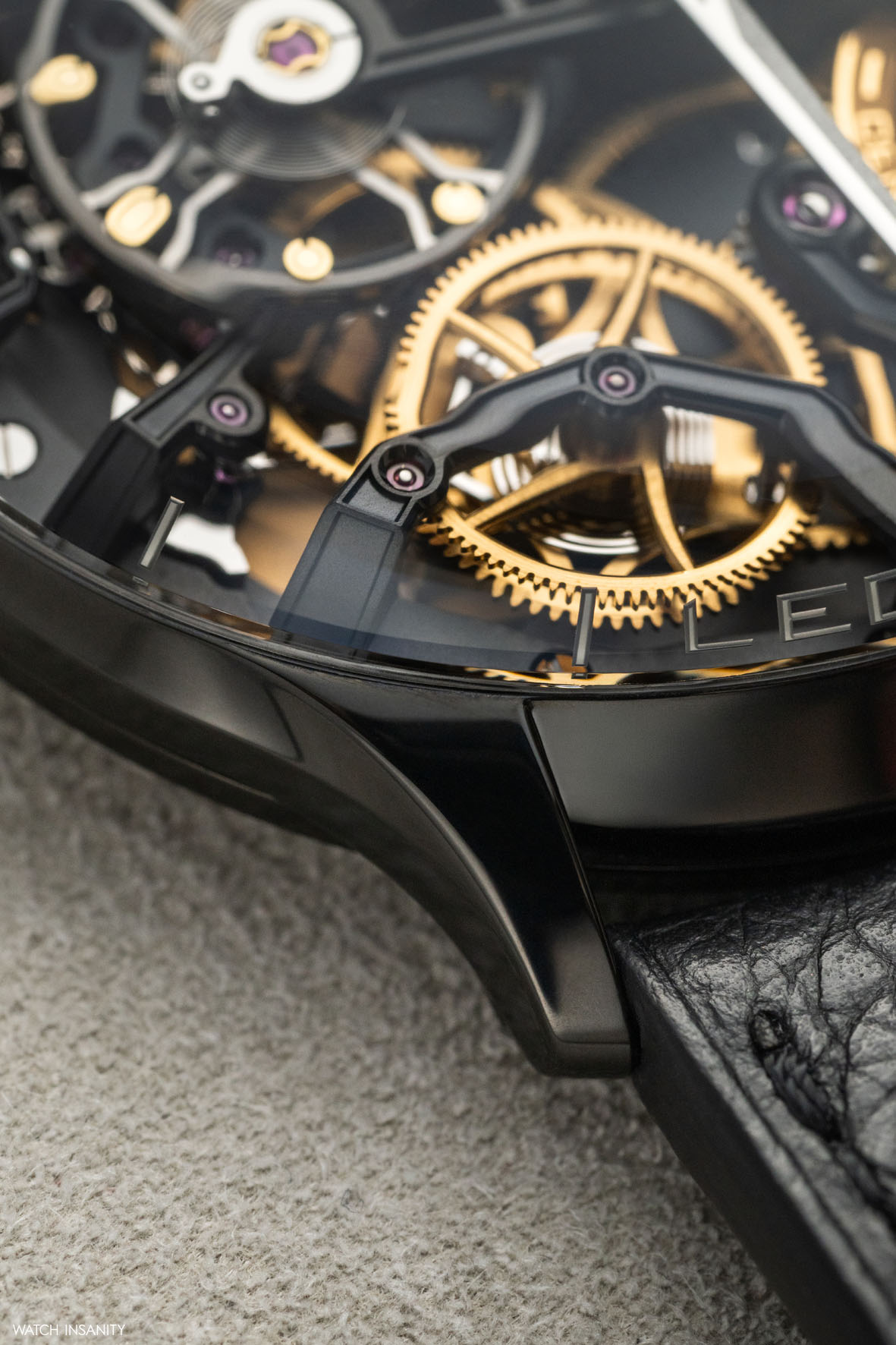
Moving from mechanics to aesthetics, the Central Impulse Chronometer InVerto differs from its predecessor created for Only Watch mainly in its colour choice. The unique piece destined for auction was characterized by bright colours, while here we have a very appealing dark look. The 44 mm diameter, 12.2 mm thick case is made of steel with a black DLC treatment and a beautiful domed glass protecting the calibre, which operates at 21,600 vibrations/hour with a 42-hour power reserve. The bridges are satin-finished and hand-beveled, the wheels have a circular grained finish and hand-beveled spokes, the stone settings are polished by hand, and the steel components are mirror-polished.
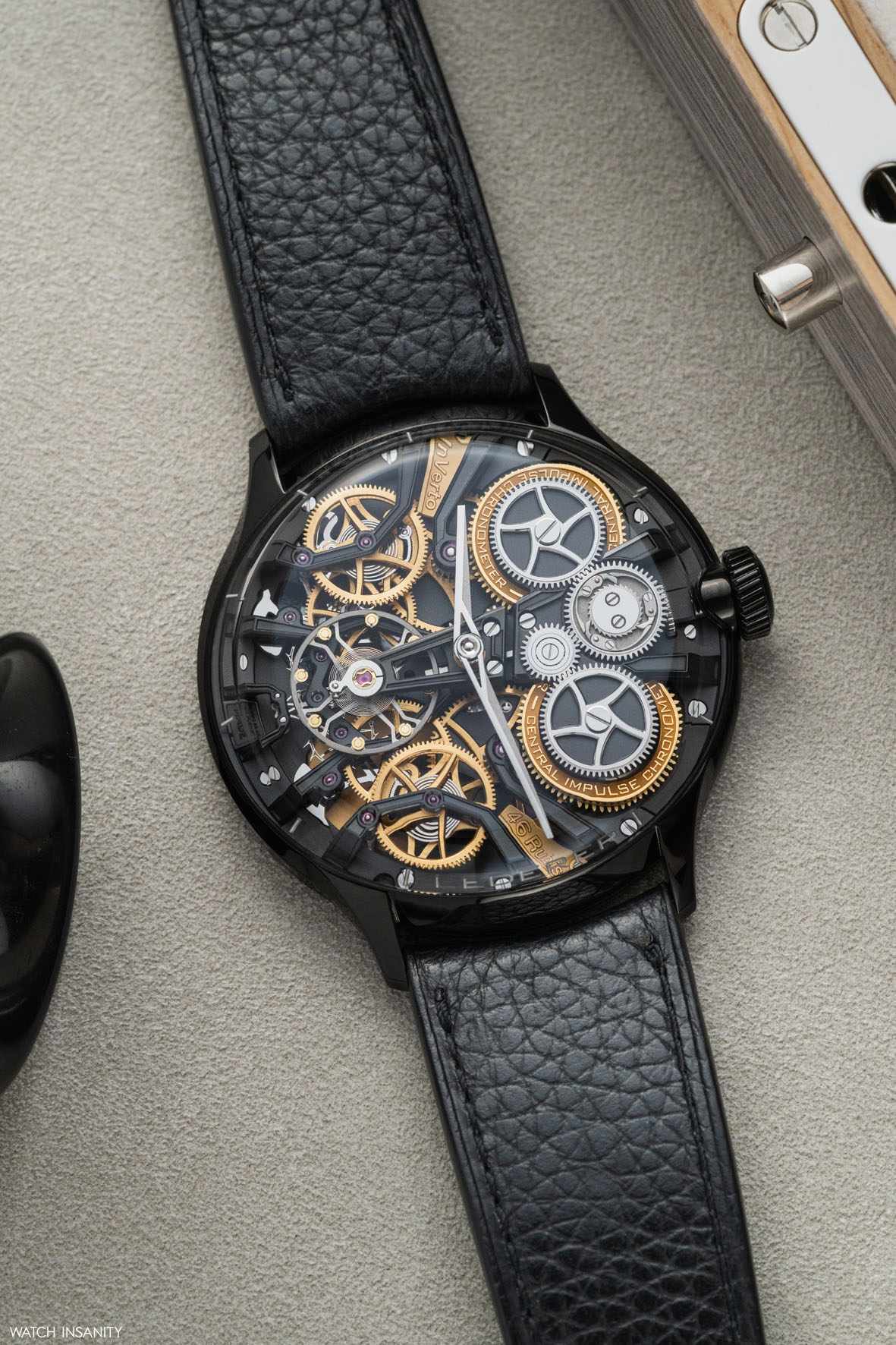
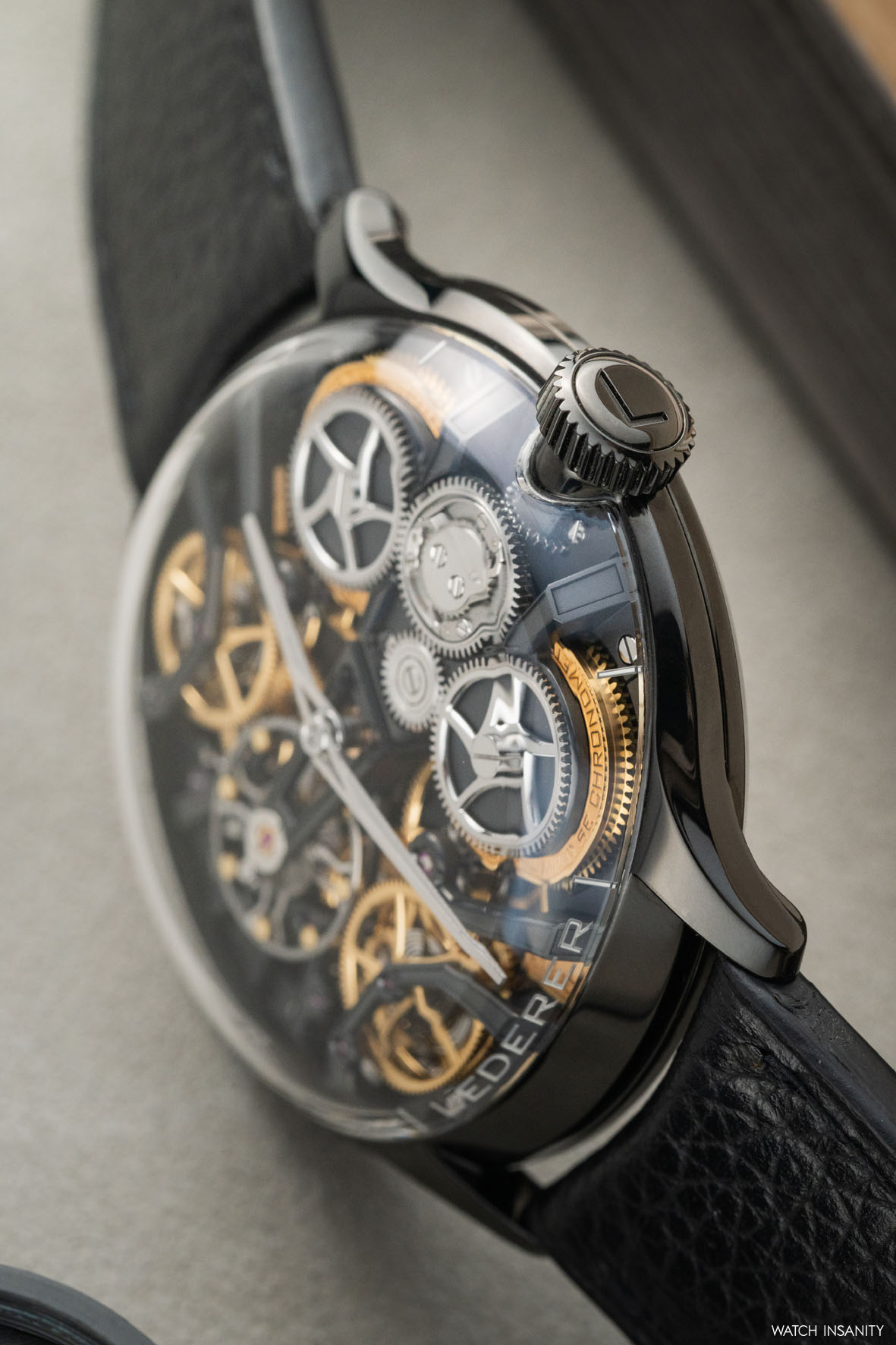
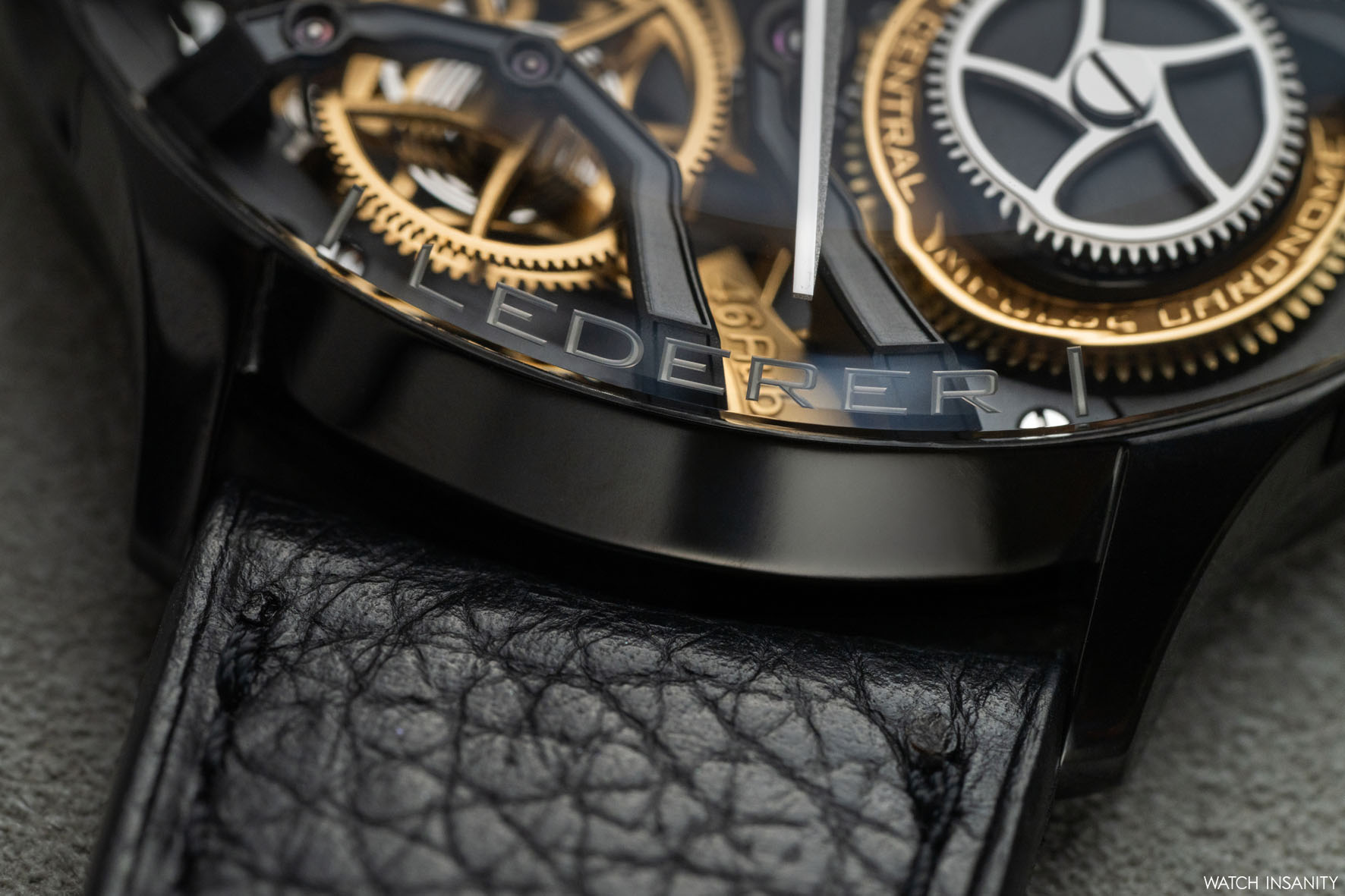
The central line of wheels, which gives the Central Impulse Chronometer its name, is a striking feature and stands out thanks to the different finishes of the parts. Inside the sapphire crystal, at 6 o’clock, is the Lederer logo, clearly visible but positioned so as not to disturb or obstruct the view of the hand-wound calibre 9018. The same principle inspired the idea of always placing the hour markers inside the glass. The combination of the domed sapphire crystal, the polished finish of the black case, and the different finishes of the wheels has a striking effect: despite the total dark look of the Central Impulse Chronometer InVerto, the watch is, in our opinion, very luminous.
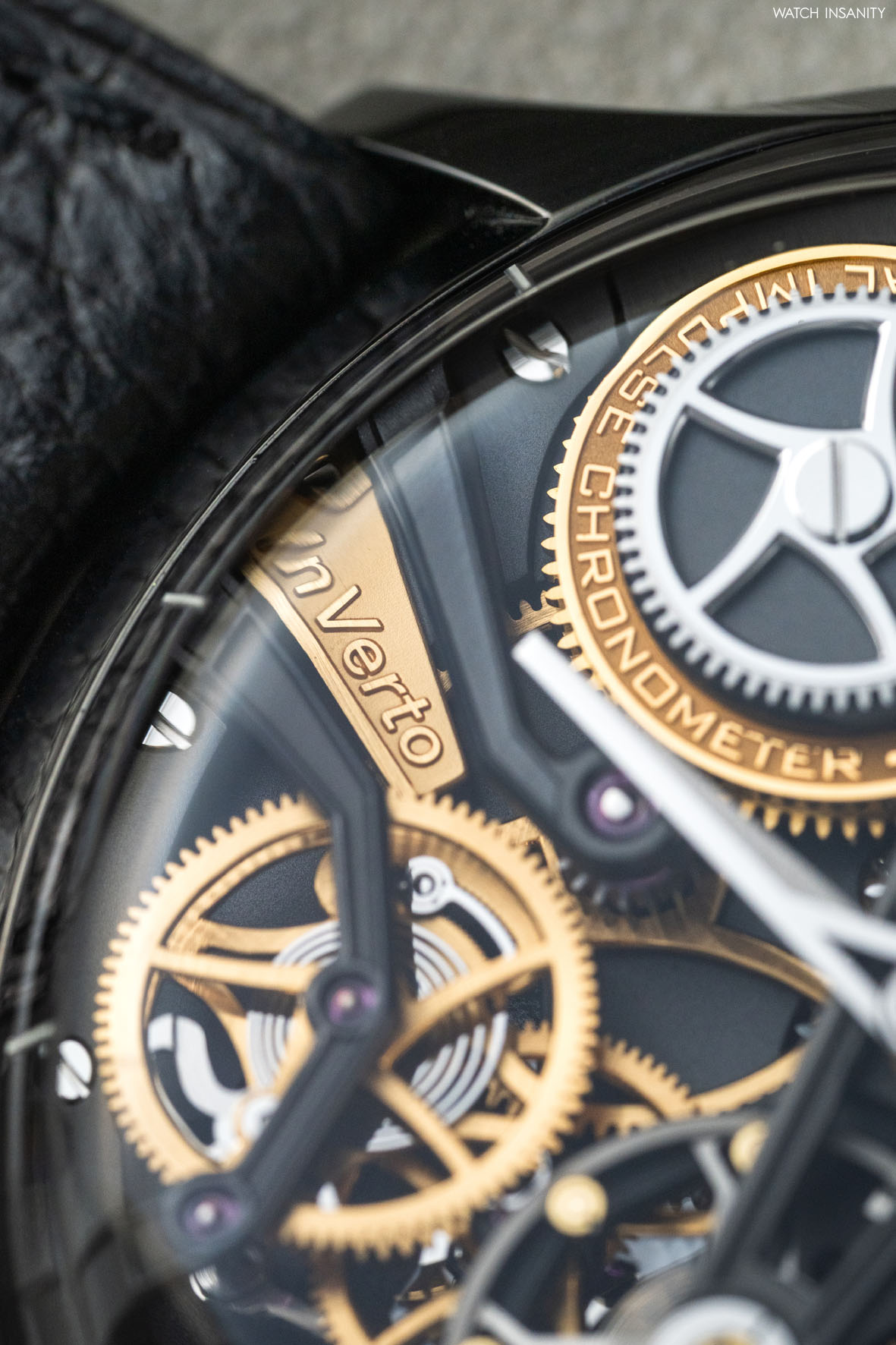
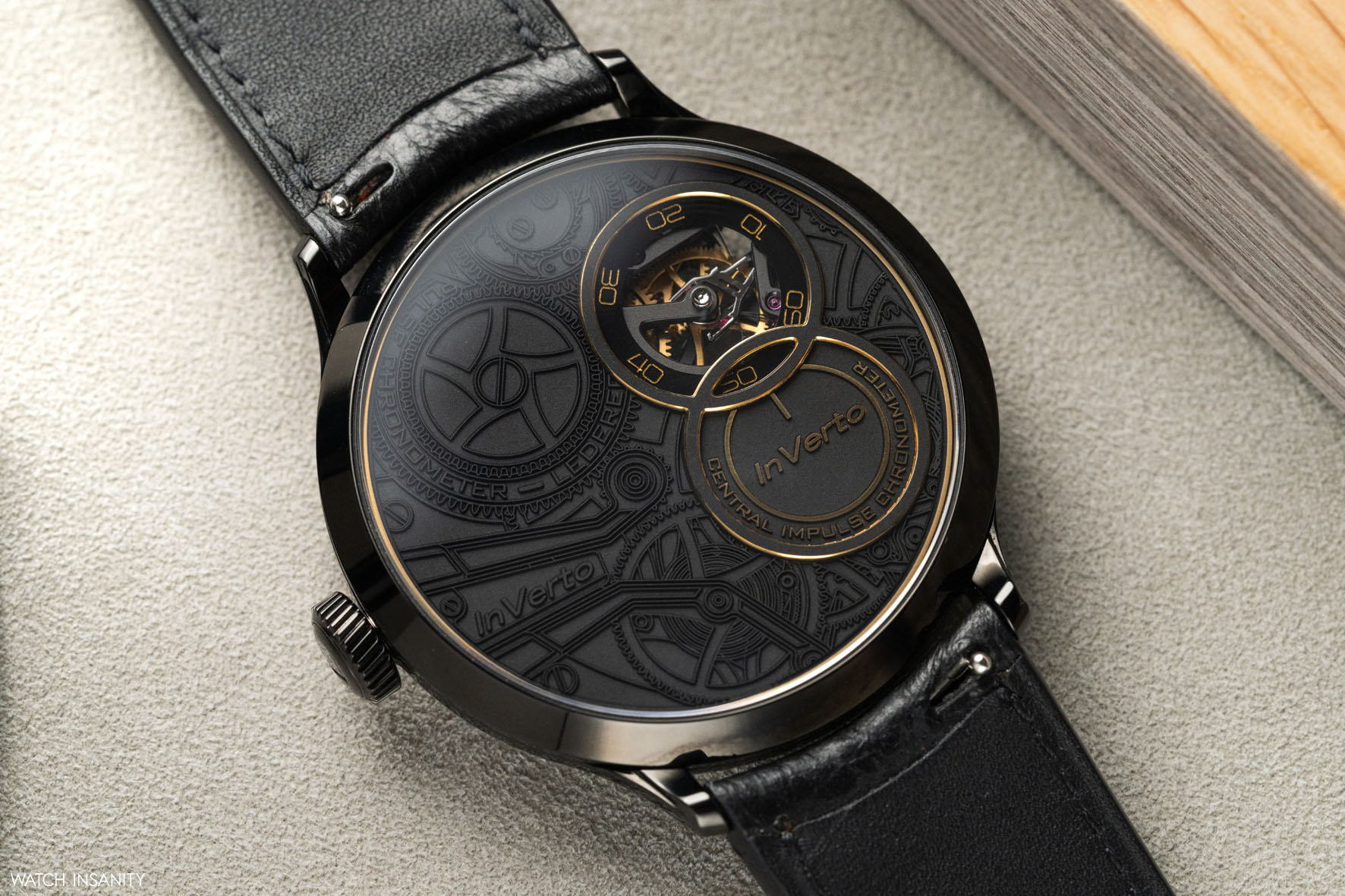
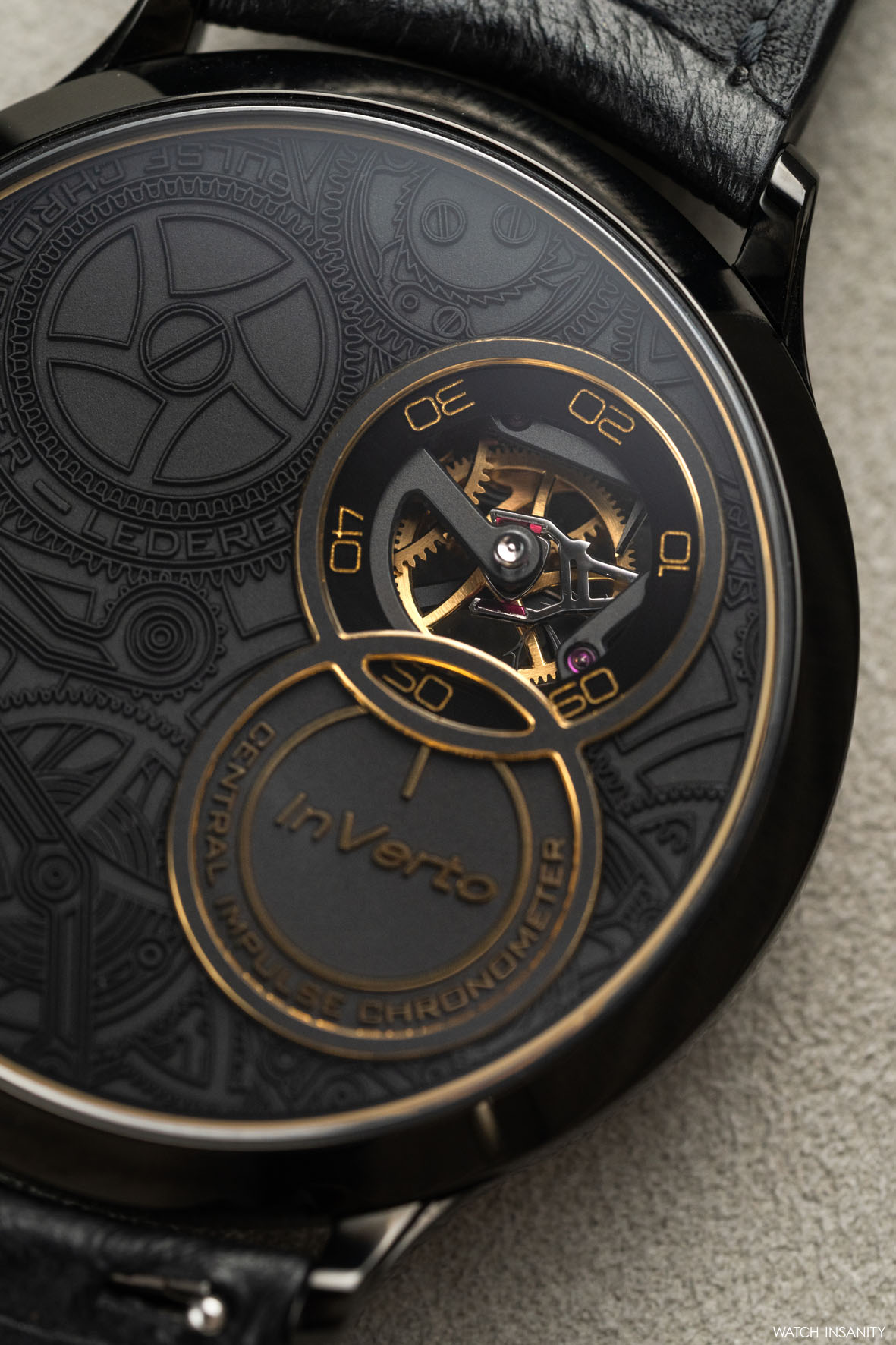
While it is true that flipping the calibre to make it completely visible is the watch’s standout feature, another surprising touch can be found on the case back, where two interlocking circles in the shape of an 8 evoke the dial of the earliest Central Impulse Chronometer versions. And, since Bernhard Lederer leaves nothing to chance, the hand-stitched black leather strap with a pin buckle is also very beautiful. Only 18 pieces have been made, each available for 150,000 Swiss francs excluding taxes.
In essence, therefore, the Central Impulse Chronometer InVerto is, in our opinion, one of the most interesting watches in its price range. Because it has a profoundly reinvented look, because it comes from one of the most highly regarded contemporary master watchmakers, because it is born of a drive for innovation that dates back to the pioneers of haute horlogerie in the 19th and 20th centuries. In a market that in many ways tends towards standardization, timepieces like these are a ray of light and a manifesto of distinction.
By Davide Passoni