

The “official” name of the latest mechanical marvel from the Le Brassus manufacture is as long as the piece itself—and the engineering, development, research, and production process behind it are equally exceptional and complex. Because, let’s say it right away, this watch is one of the most remarkable we’ve seen on the market in recent years. And the best part is that we had the chance to preview it directly at the manufacture, together with a very small group of colleagues.
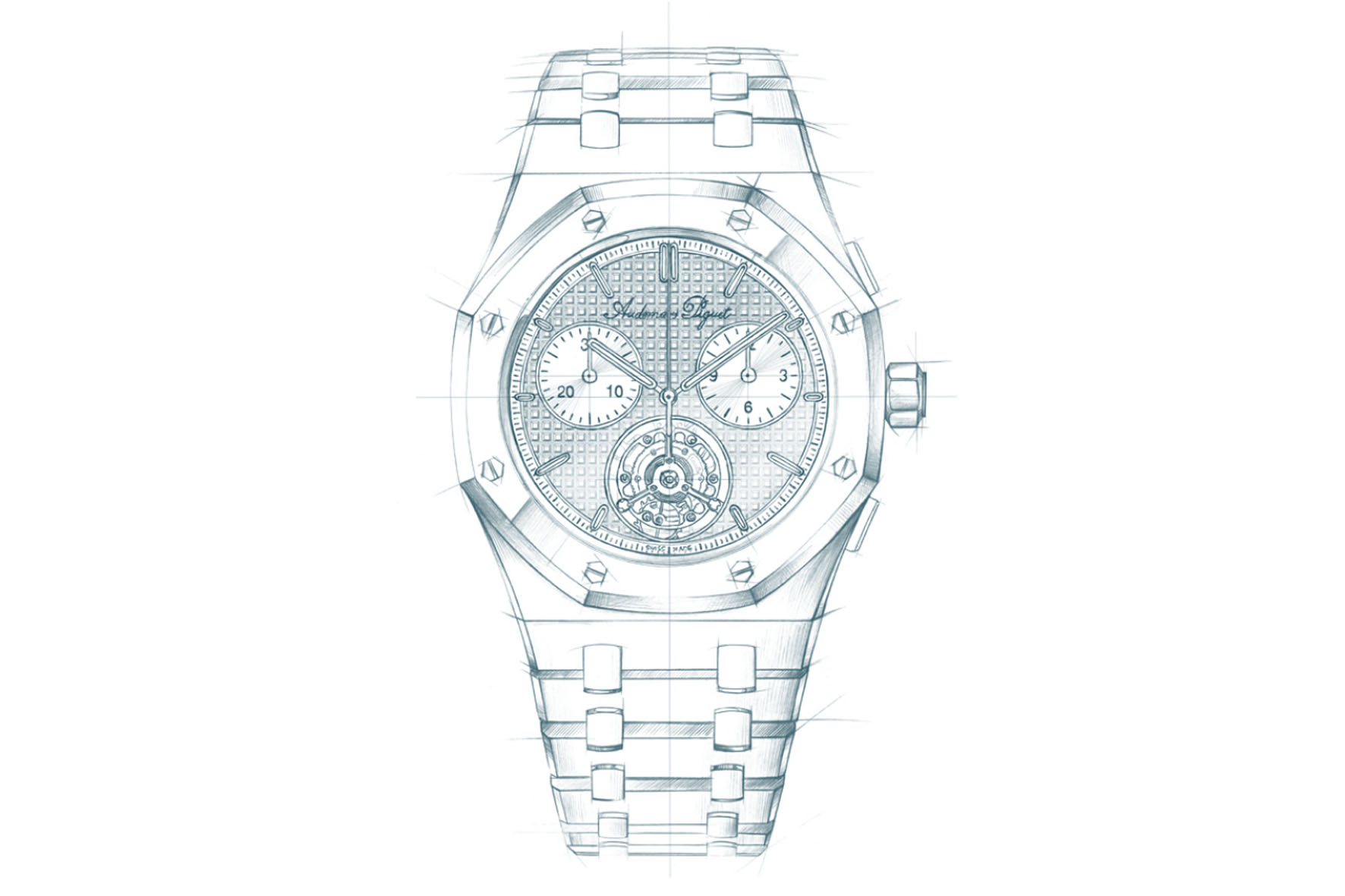
This privilege allowed us to handle it, wear it, and hear firsthand from its creators about the challenges faced during its development. So complex, in fact, that it stands as the definitive piece in the RD series: the Royal Oak Jumbo RD#5 (as we’ll call it from now on—it’s simpler and more familiar) is the last RD ever to be made. Audemars Piguet will now move forward with a new project called FABLAB—and it could hardly have chosen a better reference to close this chapter. Incidentally, it took five years to develop and even resulted in a new patent.
AUDEMARS PIGUET AND BMG
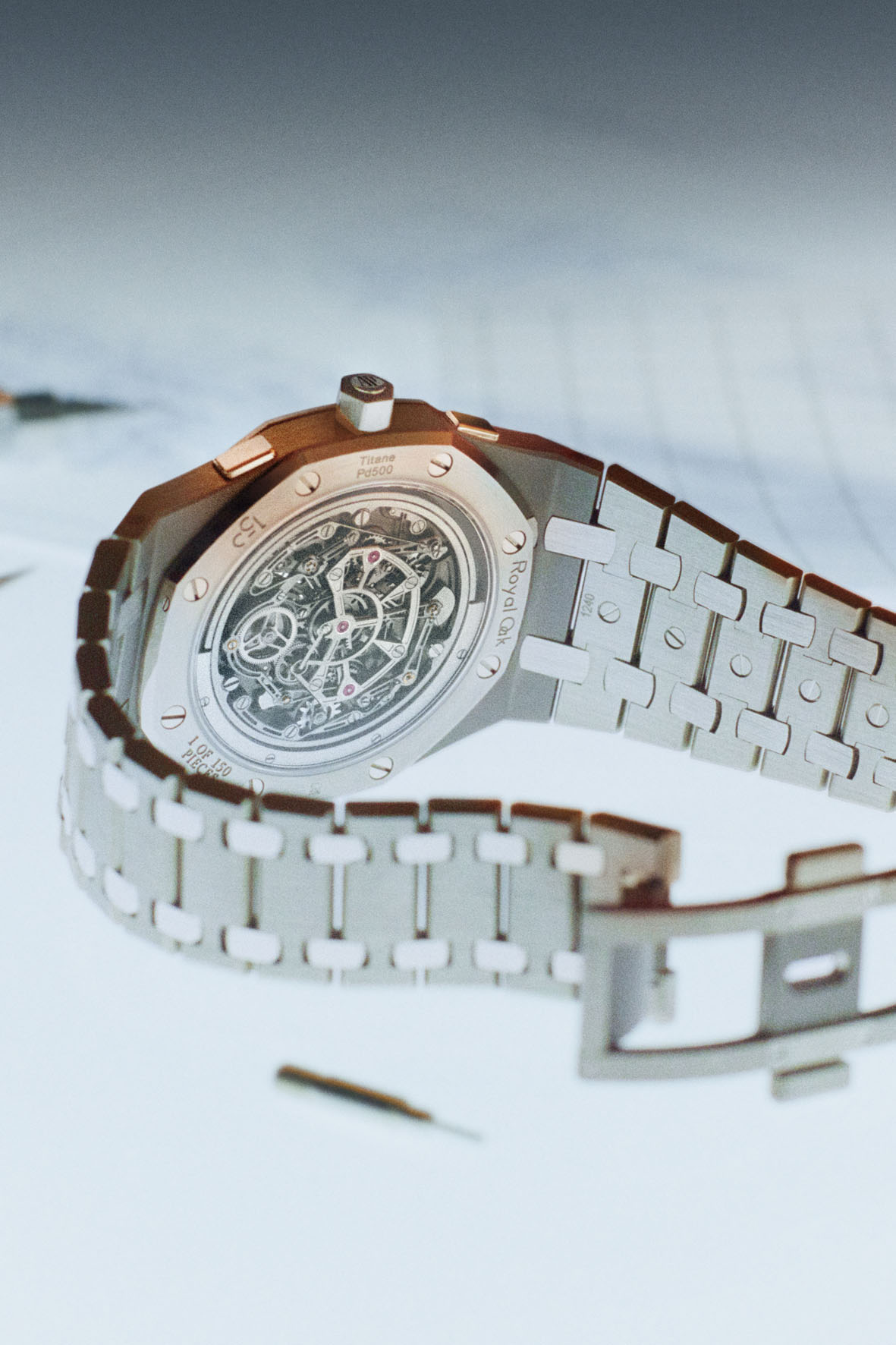
The first marvel of the Royal Oak Jumbo RD#5 lies in combining a flying tourbillon with a flyback chronograph while maintaining the proportions of the Royal Oak Jumbo 16202ST—without altering its thickness (8.1 mm) or diameter (39 mm). The case is crafted from titanium and innovative Bulk Metallic Glass, a material that combines strength, lightness, and brilliance.

The defining traits of Bulk Metallic Glass are hardness and elasticity—qualities that derive more from its production process than from its composition. When molten metal is cooled rapidly, its atoms don’t arrange themselves into the classic crystalline structure; instead, they remain in a disordered state similar to glass—hence the name Bulk Metallic Glass, or BMG. Discovered in the last century, this material allows for virtually scratch-proof watch cases whose elasticity helps absorb minor impacts and instantly recover their shape. In 2021, Audemars Piguet introduced its first BMG alloy based on precious metals and enriched with palladium, offering a look similar to platinum but lighter and more resilient.
ROYAL OAK JUMBO RD#5: MECHANICAL FINESSE
When designing the Royal Oak Jumbo RD#5, Audemars Piguet’s engineers had a clear goal in mind: to enhance ergonomics and wearer experience—just as they did with the RD#4. First, the chronograph with flying tourbillon had to fit within a case identical in size to that of the Royal Oak Jumbo. Second, all functions had to be controlled by a single button. This led to the development of a function selector operated by a button coaxial with the crown.


This push-button, the mechanical brain of the RD#5, engages a dedicated column wheel that lets the wearer switch between winding and time-setting modes. Unlike other watches, there are no windows or hands on the dial to indicate which function is active. Instead, a red ring appears on the push-button when the watch is in time-setting mode and disappears otherwise—an intuitive alternative to the traditional pull-out crown.

Perhaps the greatest challenge was to give the RD#5’s button a uniquely refined tactile feel. It requires 10 to 25 times less pressure to operate than a conventional chronograph. The activation travel is shorter, offering a clearer and faster tactile response. Achieving this required a major redesign of the movement. To measure the forces involved, Audemars Piguet developed a new device called Force Dimension, capable of quantifying the pressure applied to pushers, the traction on the crown, and the torque of its rotation.
INTELLIGENT ENERGY MANAGEMENT
To achieve this refined user experience, Audemars Piguet devised a new system of racks and pinions to drive the chronograph’s kinetic chain. Traditionally, chronographs rely on a heart-shaped cam: mounted on each wheel’s pin, its asymmetric shape ensures that, when the reset hammer presses on it, the hand always returns precisely to zero.

While practical and efficient, this mechanism demands significant energy due to the cam’s geometry and the resulting tension within the chronograph mechanism—often making pushers stiff to operate.
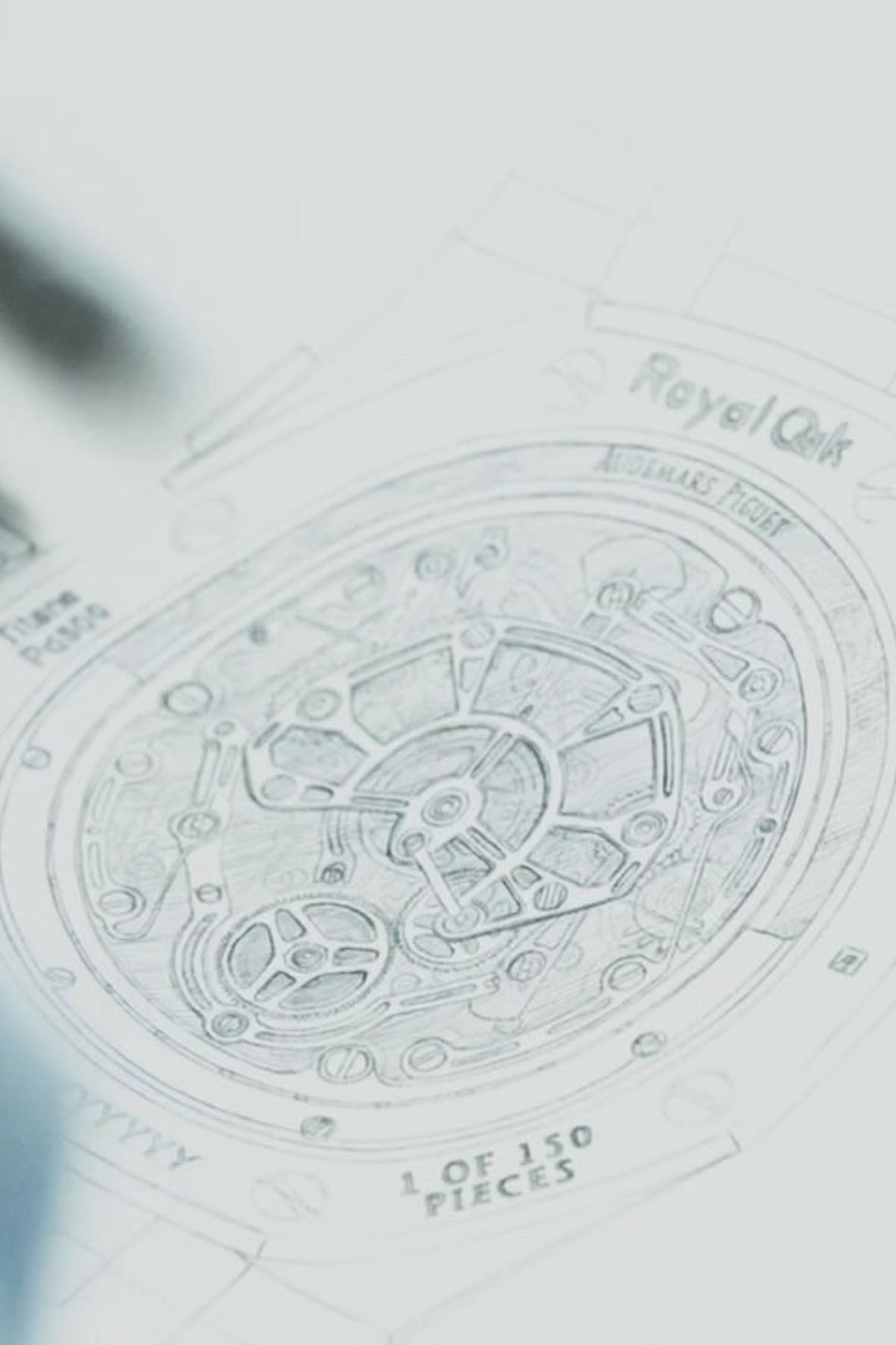
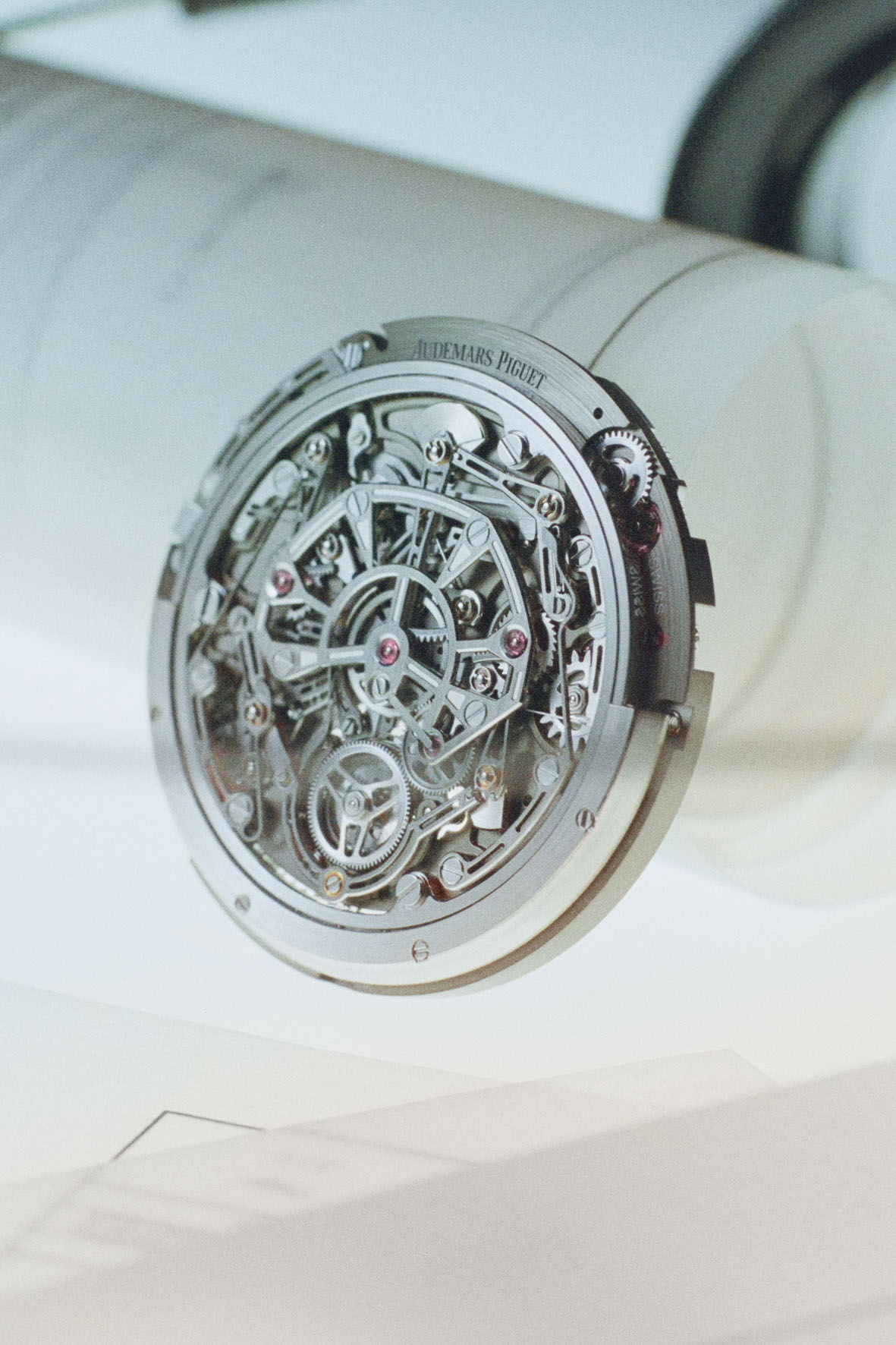
To avoid this, Audemars Piguet implemented an entirely new rack-and-pinion system in the Royal Oak Jumbo RD#5. The idea is to accumulate energy during chronograph operation and release it during reset, ensuring precision and smoothness. When the button is pressed, stored energy is simply released rather than generated anew, creating a distinctive and exceptionally fluid feel. To ensure sufficient speed, the reset mechanism uses a lightweight chronograph seconds wheel and a titanium seconds hand to minimize inertia. A single component releases all racks simultaneously to reset hours, minutes, and seconds, while start and stop are controlled by a column wheel engaging or disengaging the clutch.
CALIBRE 8100: INNOVATION BY AUDEMARS PIGUET
The development of the new calibre 8100 for the RD#5 also introduced an innovative clutch system. The goal was to merge the benefits of vertical and horizontal clutches. In this movement, the chronograph is coupled via gear wheels rather than friction, as in a traditional vertical clutch. The oblique profile of the gear teeth ensures a smooth, precise connection while keeping the architecture compact—fitting perfectly within the 16202ST case dimensions, as required from the outset. Alongside the redesigned rack system, the use of the compact mechanical base from the RD#3’s tourbillon helped minimize thickness—an impressive example of Audemars Piguet’s internal engineering optimization.
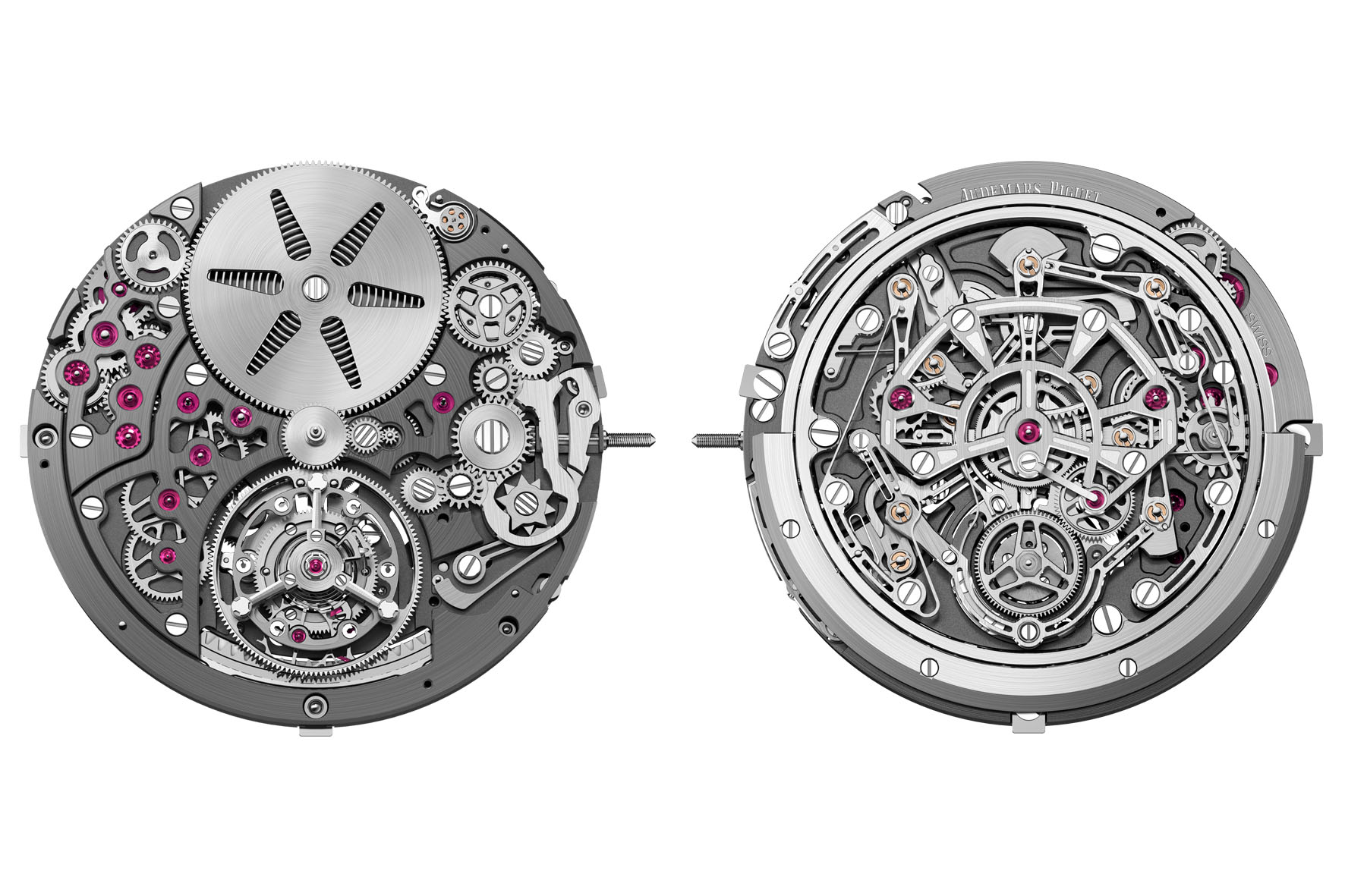
It would have been a shame to conceal the extensive work behind this movement (which beats at 21,600 vph and offers a 72-hour power reserve). The domed sapphire crystal caseback—mirroring the crystal over the dial—reveals the calibre 8100, complete with a peripheral rotor that leaves the entire chronograph mechanism visible.
THE AESTHETICS OF THE ROYAL OAK JUMBO RD#5
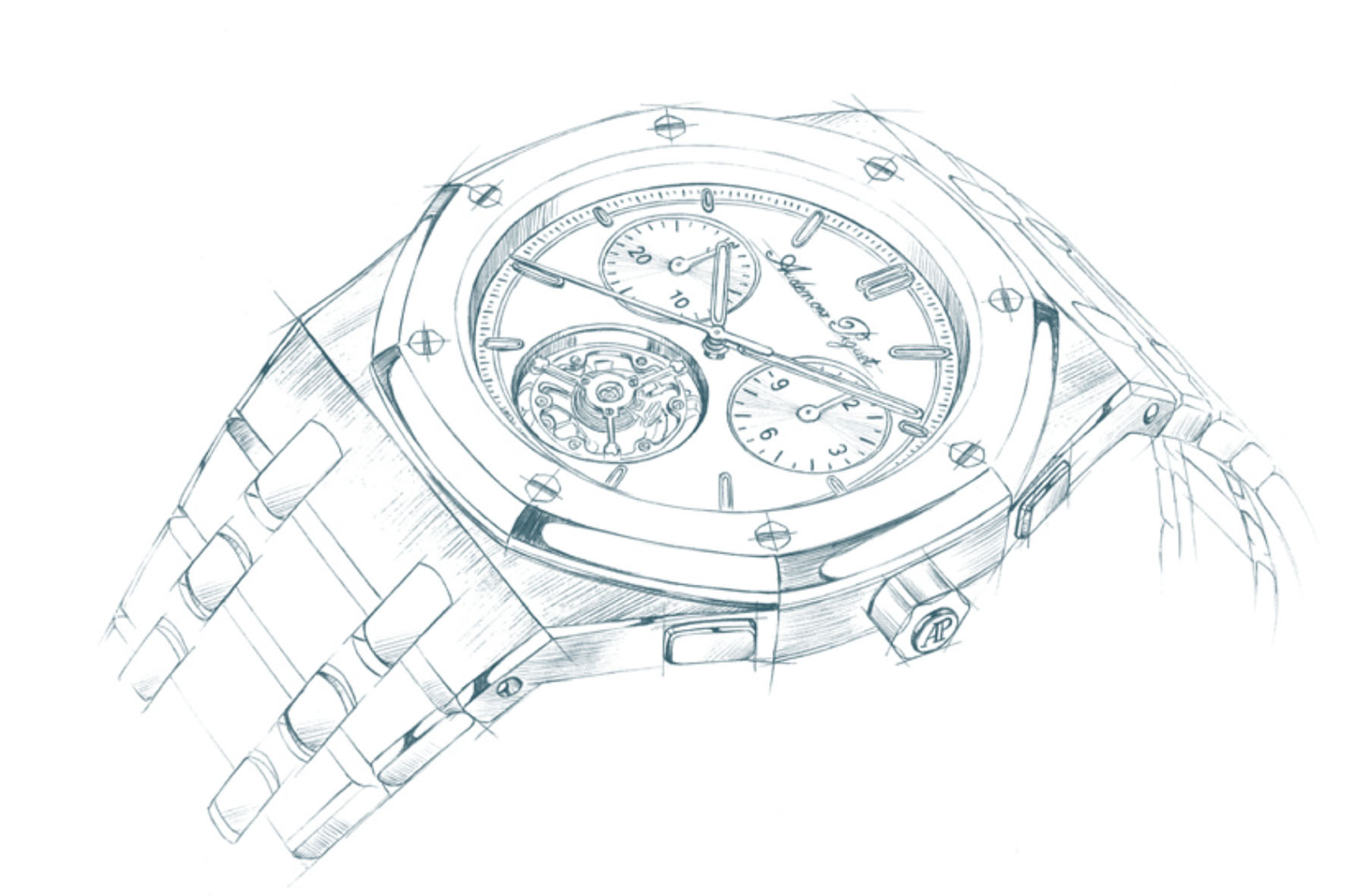
Beyond its mechanical brilliance, the Royal Oak Jumbo RD#5 also boasts the unmistakable face of the Royal Oak. It faithfully follows the collection’s codes, from the Bleu Nuit, Nuage 50 dial color to the Petite Tapisserie pattern. The Audemars Piguet logo is beautifully rendered, inspired by a vintage design from the Maison’s archives.

The chronograph subdials, decorated with a snail pattern, are subtly shifted upward to create more room for the tourbillon aperture without upsetting the balance of the design. The hour markers are crafted in 18-carat rhodium-plated rose gold, while the hands are in 18-carat white gold with luminescent coating. The case—water-resistant to 2 bar—along with the bezel and bracelet, all in titanium and BMG, alternate between polished and satin-brushed finishes.
The result is a refined, lightweight, and remarkably comfortable watch (we’ve tried it ourselves), where the exquisite mechanics play hide and seek beneath the dial—revealing themselves through details like the tourbillon cage—and fully displaying their artistry through the sapphire back. A captivating creation that only 150 lucky owners will experience: the Royal Oak Jumbo RD#5 is limited to just 150 pieces, priced at 265,000 Swiss francs before taxes. Then again, true elegance and exclusivity are beyond price.
By Davide Passoni