

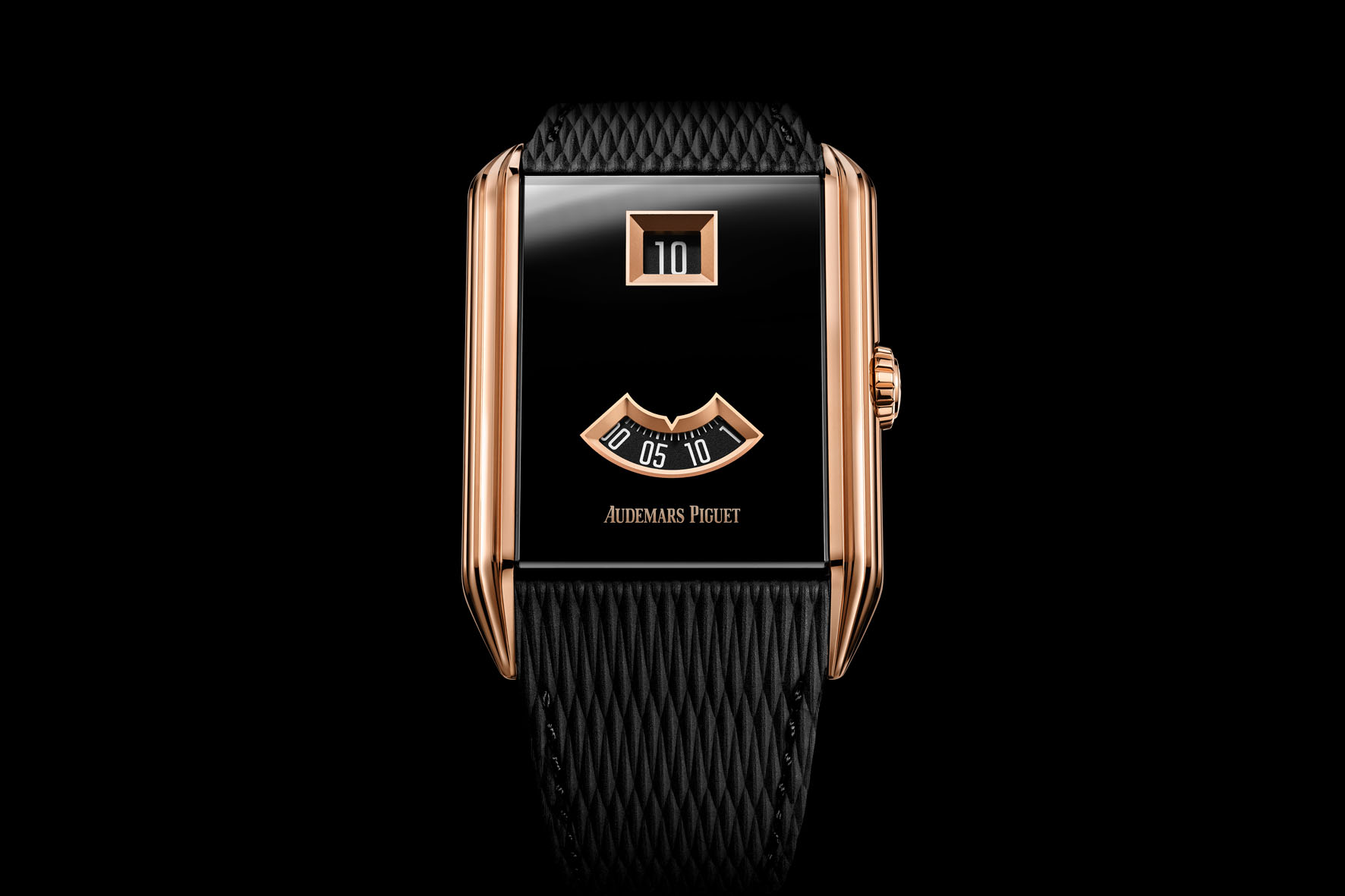
With the Neo Frame Jumping Hour, Audemars Piguet revisits one of the most emblematic complications in watchmaking: the jumping hour display. The watch combines a newly developed selfwinding movement with a strongly distinctive rectangular case, inspired by a rare 1929 timepiece yet conceived according to fully contemporary construction principles. Neither a strict re-edition nor a purely stylistic exercise, the Neo Frame Jumping Hour introduces the first automatic jumping hour ever developed by the Manufacture, marking a significant milestone within Audemars Piguet’s historical production.
HOW JUMPING HOURS WORK
Jumping hours challenge the conventional reading of time by replacing the hour hand with a digital indication that advances instantaneously every sixty minutes, while the minutes are displayed separately in a continuous, trailing manner. First developed in the 17th century to enhance the legibility of night clocks, this system was later adapted for both pocket watches and wristwatches.
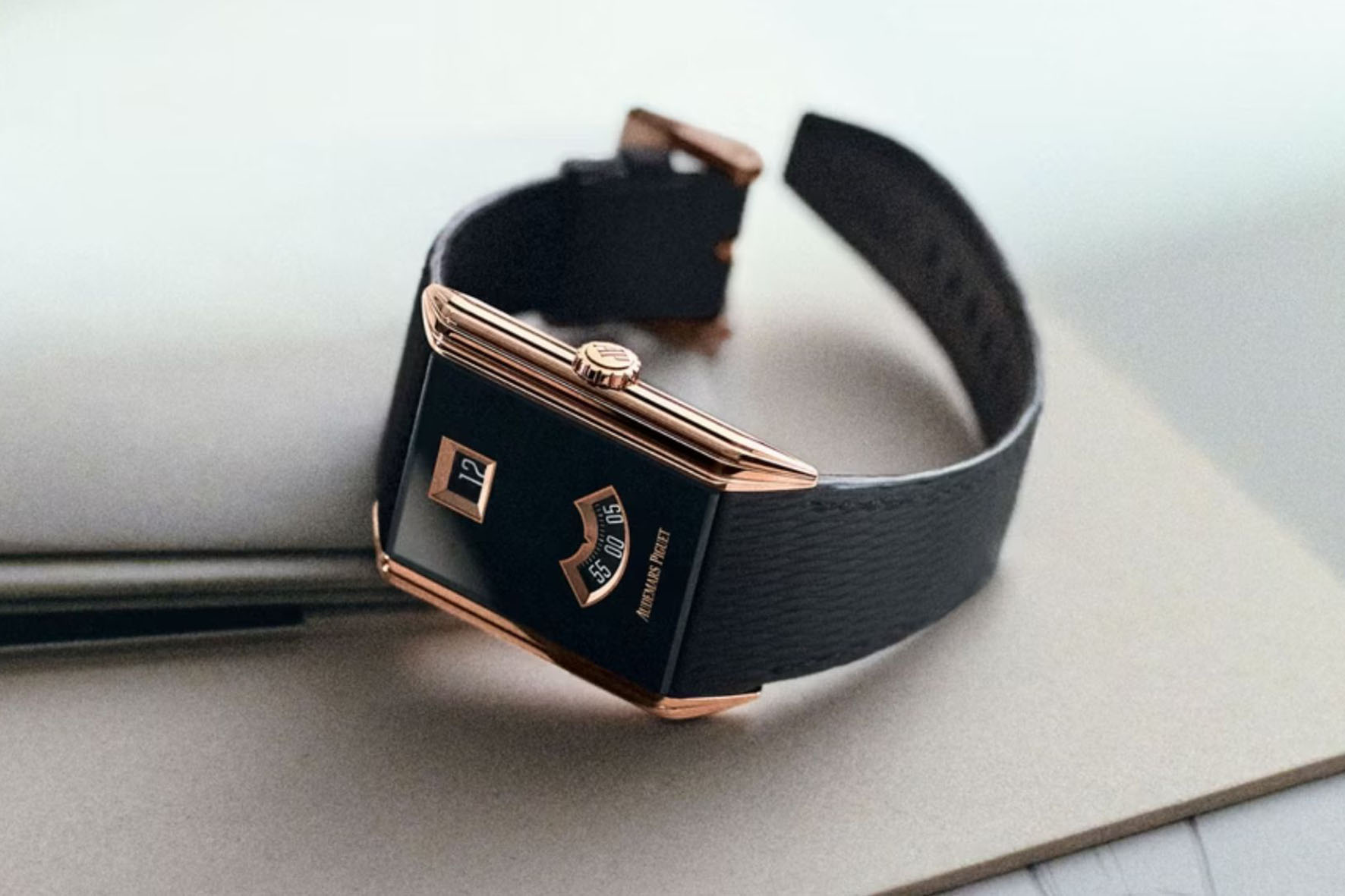
The complication reached its peak between the 1920s and 1930s, in a historical context shaped by technological progress, architectural influences and a growing emphasis on functional clarity. During this period, Audemars Piguet emerged as one of the foremost exponents of the jumping hour display, producing 347 examples between 1924 and 1951. These timepieces were most often housed in square or rectangular cases, featuring one or multiple apertures that reinforced both legibility and design coherence.
THE 1929 PRE-MODEL 1271: THE STARTING POINT FOR THE NEO FRAME JUMPING HOUR
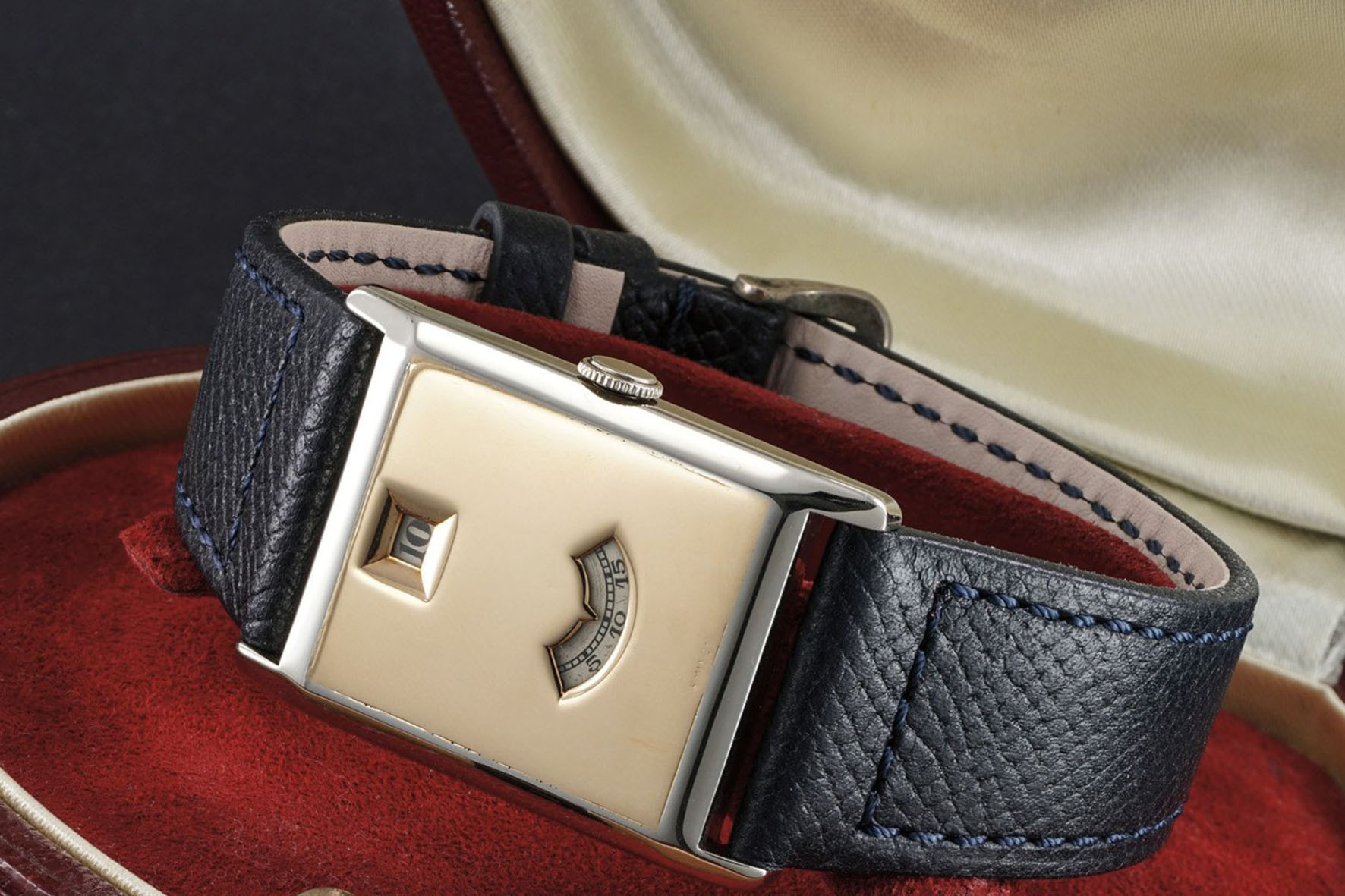
Among Audemars Piguet’s early jumping hour wristwatches, the 1929 pre-model 1271 stands out as a defining reference. Limited to just 14 pieces, it was one of the first wristwatches to adopt a twin-aperture layout for hours and minutes, offering a clearer, more immediate reading of time at a moment when display logic itself was being rethought. Its significance was not confined to mechanics alone. The rectangular case expressed a broader shift taking place at the end of the 1920s, as watchmaking began to absorb the language of architecture and industrial design, favouring structure, proportion and functional clarity over ornament. The Neo Frame Jumping Hour revisits this conceptual foundation, translating it into a contemporary idiom through updated materials, recalibrated proportions and modern construction techniques.
THE CASE AND THE STREAMLINE AESTHETIC
That forward-looking vision finds its concrete expression in the case of the Neo Frame Jumping Hour, whose design draws from Streamline Moderne, also known as Paquebot or Ocean Liner style, a late evolution of Art Deco shaped between Europe and the United States and deeply informed by Bauhaus principles. In this design language, function, materials and structural discipline take precedence, inspired by transatlantic liners, railway engineering and large-scale industrial architecture, where form and function were conceived as a unified whole.
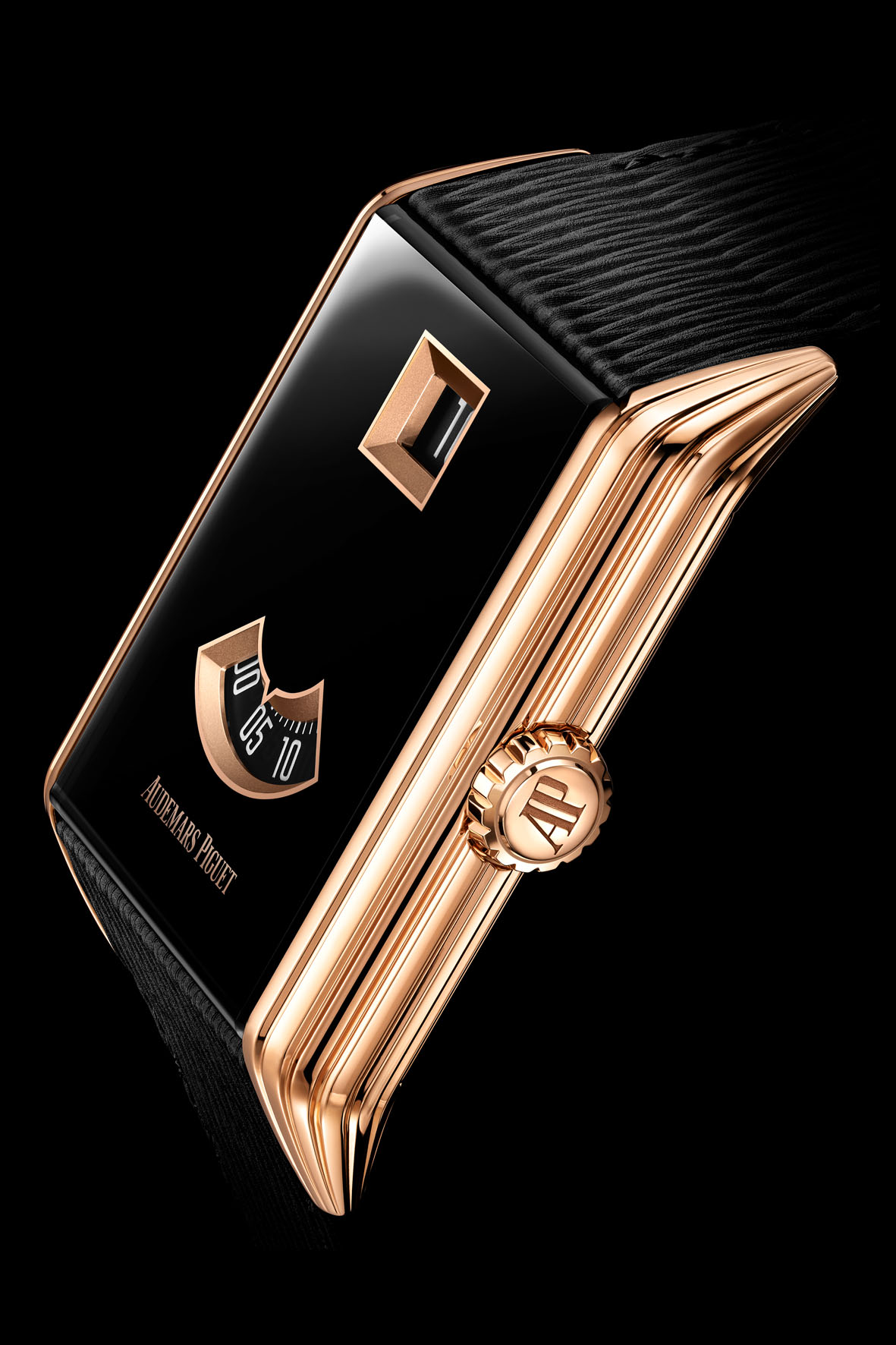
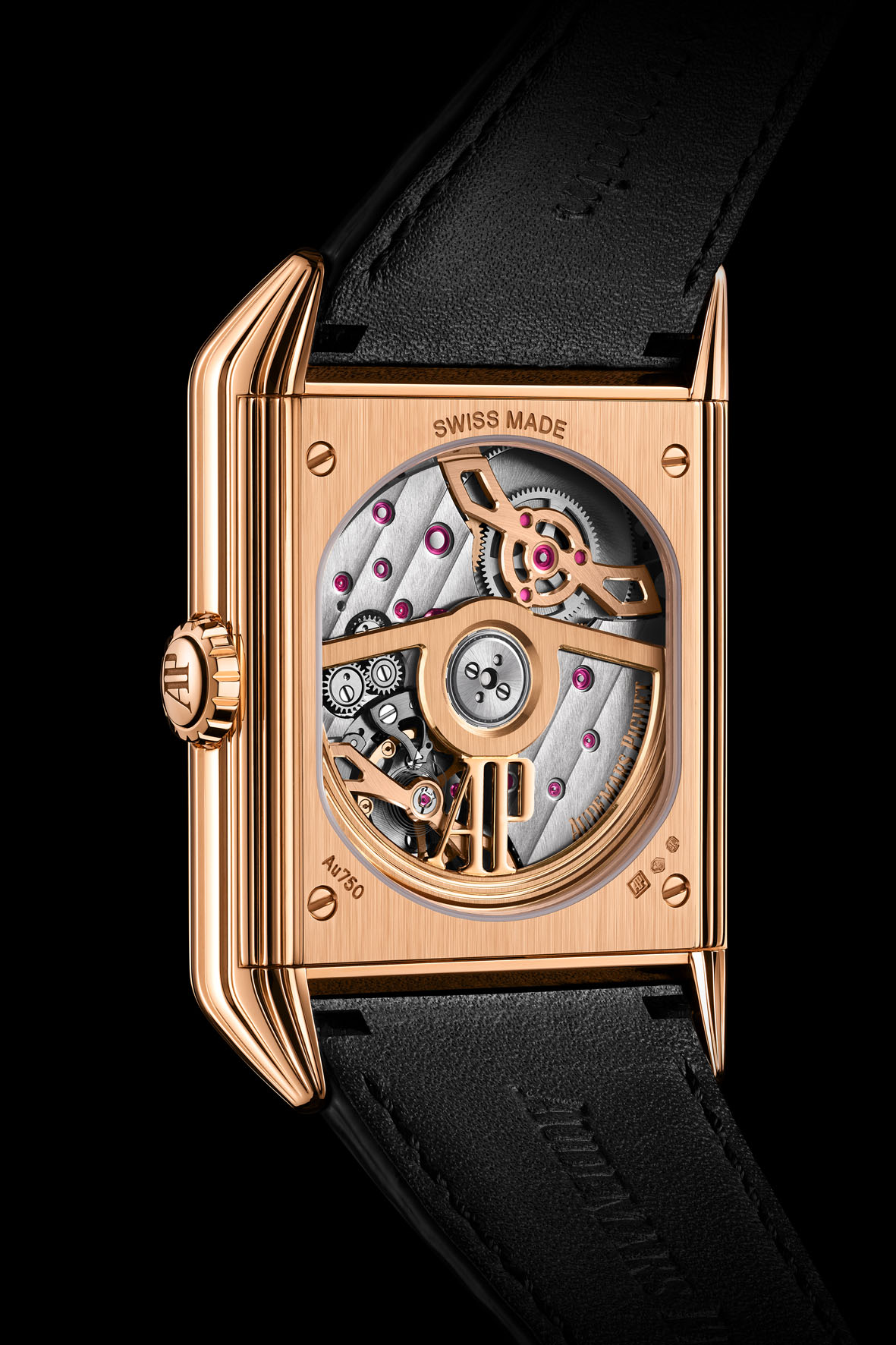
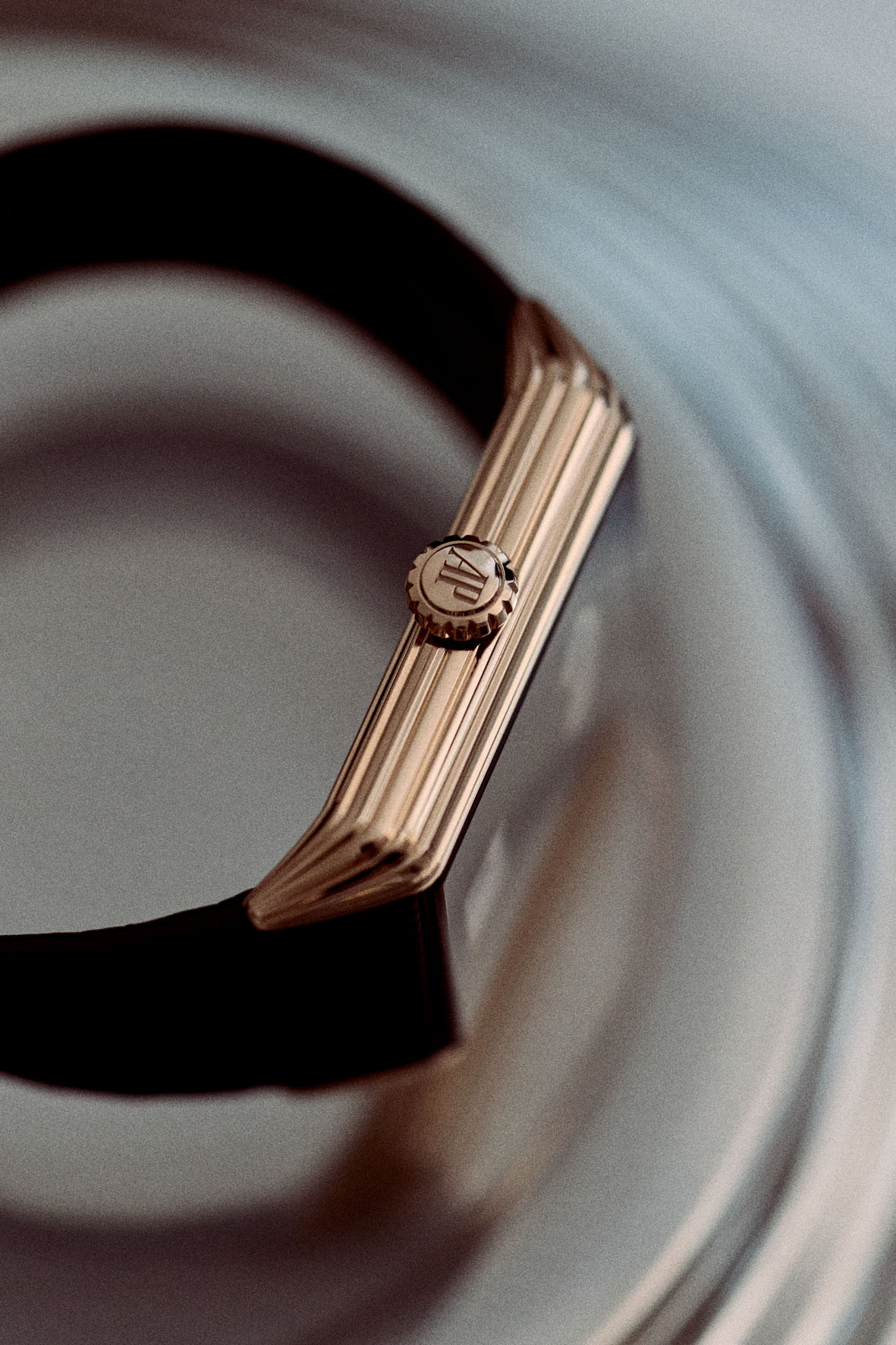
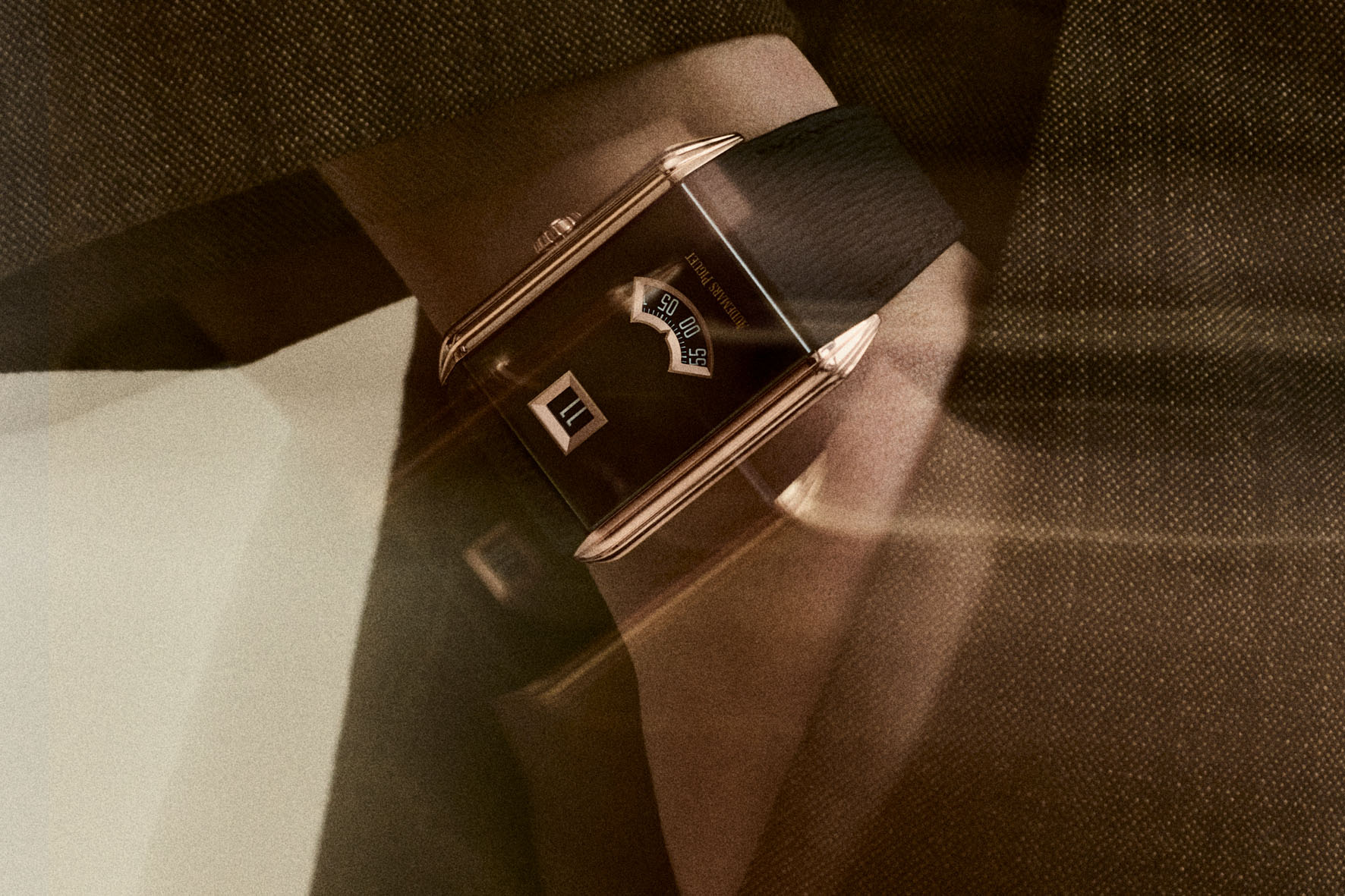
Crafted in 18-carat pink gold, the rectangular case measures 34.6 × 34 mm (excluding the lugs) and remains remarkably slim at 8.8 mm thick. Vertical gadroons, eight on each side, run the full length of the case, gradually tapering toward the lugs to create a pronounced sense of tension and forward motion. Far from serving a purely decorative role, this motif forms an integral part of the watch’s architecture and is echoed on the caseback, the crown and even the oscillating weight. Achieving this level of formal coherence requires extremely precise CNC machining, followed by meticulous manual alignment to ensure perfect continuity across all components.
THE SAPPHIRE CRYSTAL DIAL
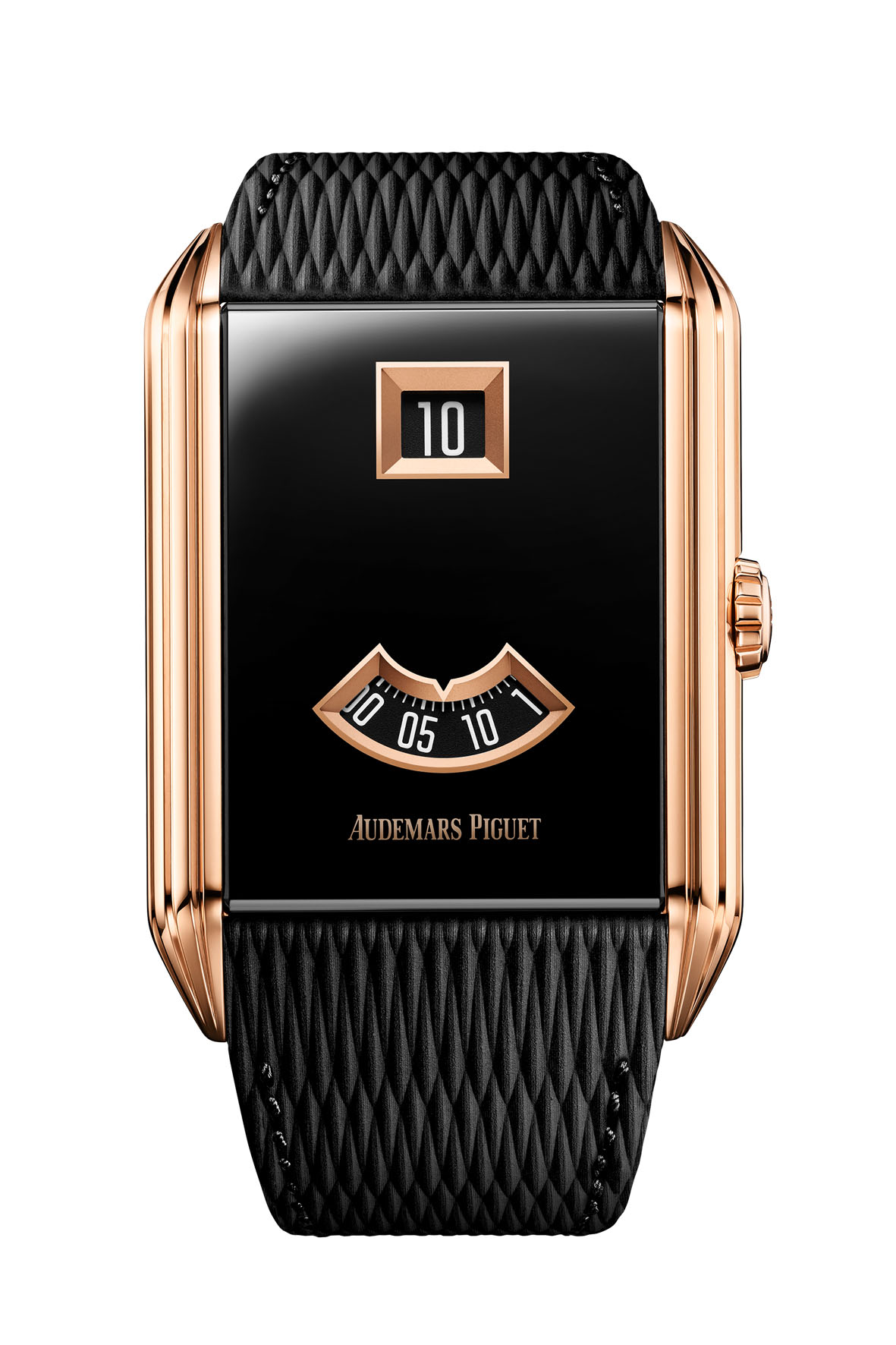
In the Neo Frame Jumping Hour, sapphire is no longer a protective element, it becomes the very foundation of the dial. What was once shielded by metal in the 1929 original is here deliberately exposed, turning the crystal into a structural and visual focal point. The result is a controlled two-tone composition, where the depth of black PVD-treated sapphirecontrasts with the warmth of pink gold accents. Freed from any metal framing at 12 and 6 o’clock, the crystal dominates the dial architecture.
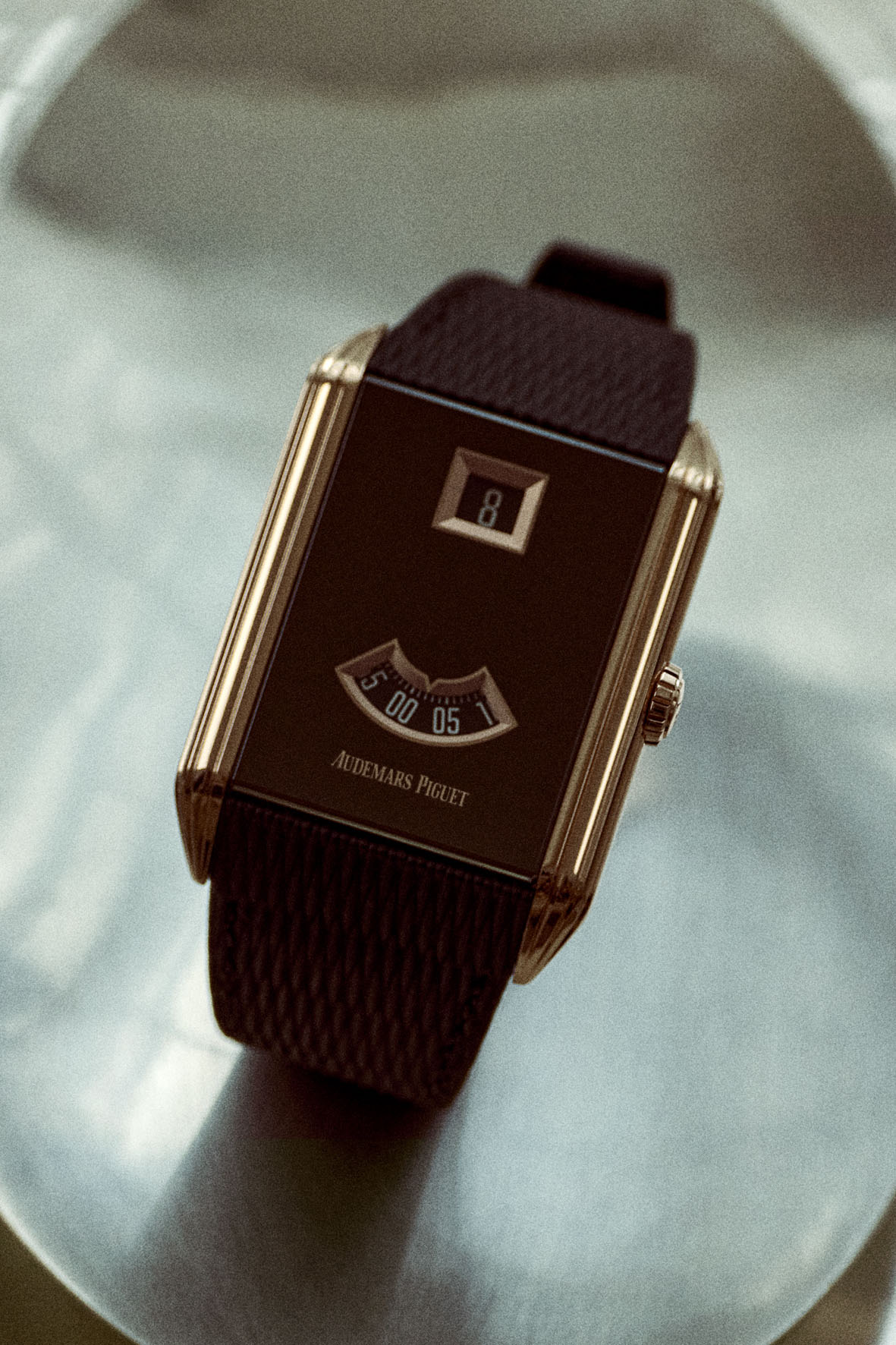
Time is read through two precisely cut apertures, micro-blasted in gold tones, revealing the jumping hour and the continuously advancing minutes in white numerals against a black ground. The Audemars Piguet signature, discreetly positioned at 6 o’clock, blends seamlessly into the composition rather than asserting itself. This apparent visual clarity conceals a highly complex construction. With no bezel to secure the crystal, the dial plate is directly bonded to the sapphire and then mechanically fixed to the case, a bespoke solution developed exclusively for this watch. The approach allows the Neo Frame Jumping Hour to reconcile architectural purity with mechanical robustness, achieving water resistance to 20 metres without altering the integrity of the design.
CALIBRE 7122: AUDEMARS PIGUET’S FIRST AUTOMATIC JUMPING HOUR
The Neo Frame Jumping Hour is driven by Calibre 7122, a movement conceived to address a challenge rarely explored in modern watchmaking: combining an instantaneous jumping hour with a continuously flowing minute display in a selfwinding architecture. While its construction is rooted in the base architecture of Calibre 7121, best known for powering the Royal Oak “Jumbo”, its functional intent is entirely distinct. Developed fully in-house, Calibre 7122 comprises 293 components and operates at 4 Hz, delivering a 52-hour power reserve.
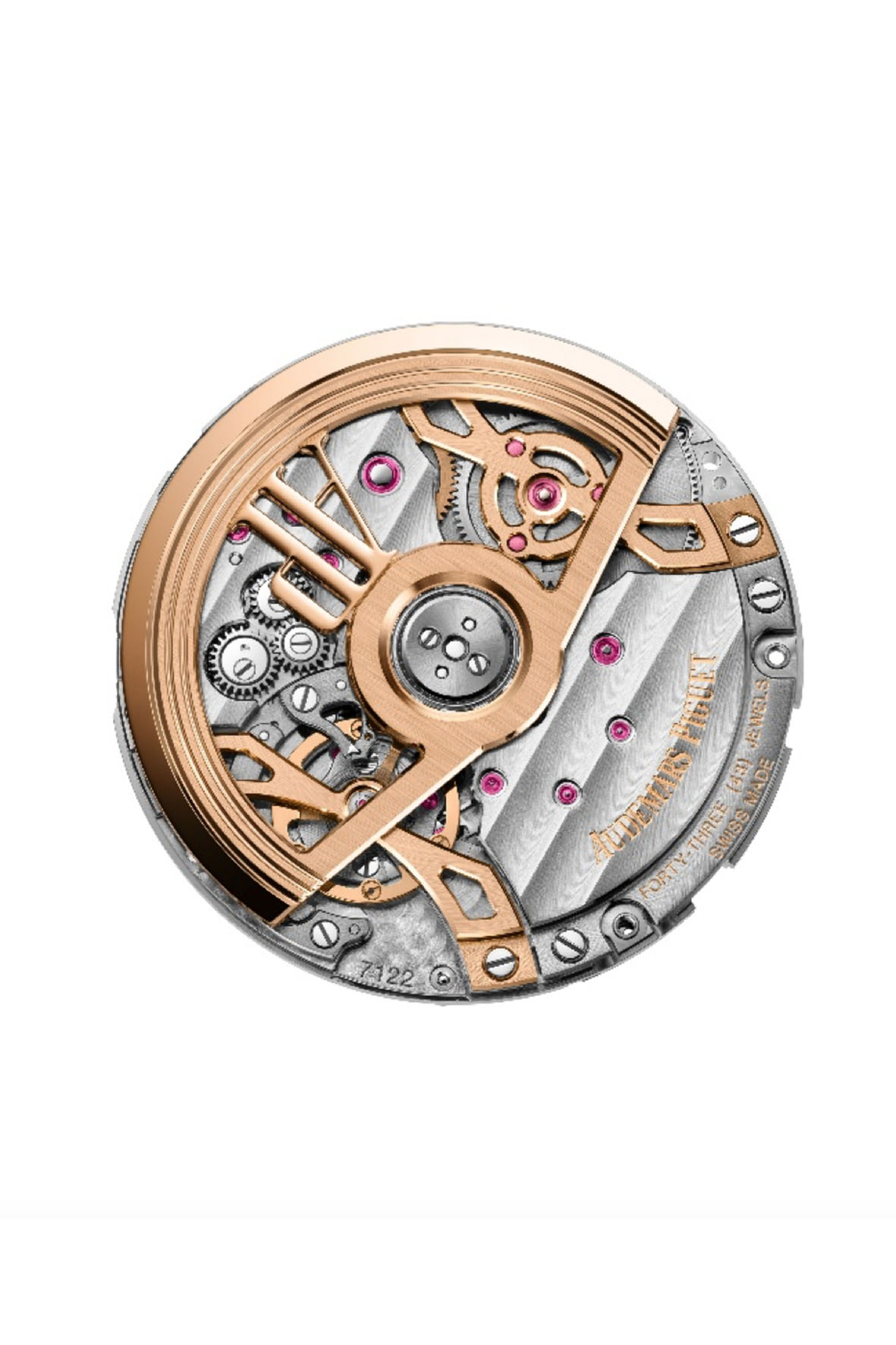
Particular attention was devoted to everyday reliability. A patented shock-protection system mechanically locks the hour mechanism in the event of impact, preventing accidental jumps and ensuring stable operation in daily use. To further optimise performance, the hour disc is crafted from lightweight titanium, while the minute disc is made from a copper alloy, balancing mass, inertia and durability. Seen through the sapphire caseback, the movement reveals a restrained yet sophisticated decorative language, with Côtes de Genève, satin-finished surfaces and carefully executed anglage. A dedicated pink gold oscillating weight completes the composition, underscoring the calibre’s dual vocation: technical innovation and haute horlogerie refinement.
PRICE AND FINAL THOUGHTS
The Neo Frame Jumping Hour is paired with a black textured calfskin strap developed exclusively for this reference. Shaped to follow the case without interruption, it extends the watch’s geometry rather than simply supporting it, while the leather’s surface picks up on the rhythm of the fluted case. An 18-carat pink gold pin buckle completes the ensemble, maintaining material and proportional continuity throughout. The Neo Frame Jumping Hour is priced at €65,400 for reference 15245OR.OO.A206VE.01, positioning it firmly in the upper segment of the market
More importantly, it demonstrates how a historical complication can be reinterpreted without resorting to nostalgia. Rather than relying on visual spectacle, the project is built on coherence, between design, mechanics and construction, bringing the jumping hour back into a contemporary context. This is not a watch conceived to impress at first glance, but one intended for those who value clarity of display, engineering integrity and the continuity of a design language capable of transcending time.
By Elisa Copeta